Historigraph
Published 11 May 2022
(more…)
September 25, 2022
200 Medals Won in an Hour – The Raid on Zeebrugge, 1918
QotD: Sparta’s military reputation as “the best warriors in all of Greece”
… the Spartans seemed to have leaned into Herodotus’ image of them as the best warriors in all of Greece and the eternal opponents of all kinds of tyranny. Spartan “messaging” in the war against Athens portrayed Athens itself as a “tyrant city” ruling over the rest of Greece (which was, to be fair, pretty accurate at the time). Likewise, the image of military excellence the Spartans put forward is picked up and represented clearly in the writings of Xenophon, Plato, Aristophanes and Thucydides (though he is, at least, more skeptical that the Spartans are supermen) and in turn picked up and magnified by later writers (Diodorus, Plutarch, etc) who rely on them. Other states sought out Spartan military advisors, famously Syracuse (advised by the mothax Gylippus) and Carthage (by Xanthippus, a Spartan mercenary).
That reputation could be a real military advantage. Greek hoplite armies arranged themselves right-to-left according to the status of each polis‘ army (poleis almost always fight in alliances). Since Sparta was always the leader of its alliance, the Spartan king and his force always took the right – opposite the weakest part of the enemy army. You may easily imagine the men facing the Spartans – they know the Spartan reputation for skill (and do not have the advantage of me telling them it is mostly hogwash) and by virtue of where they are standing know that they do not have the same reputation. Frequently, such match-ups resulted in the other side running away before the Spartans even got into spear’s reach (e.g. Thuc 5.72.4).
There’s a story in Xenophon, embedded in the larger Battle of Lechaeum, which I think illustrates the point well. Early on, the Argives (the men of Argos, always the enemy of Sparta) meet and rout a group of Sicyonians (who are allies of Sparta). A passing Spartan cavalry company under a Pasimachus sees this and rushes in; getting off their horses, they grab the Sicyon shields (marked with the city’s sigma) and advance against the Argives. But whereas later in the battle the arrival of the Spartans will trigger panic and retreat, here the Argives do not know they are fighting Spartans (because of the shields) – and so they advance with confidence; Pausimachus with his small force is crushed. As he attacks Pausimachus declared (according to Xenophon), “By the two gods, Argives, these Sigmas will deceive you” (Xen. Hell. 4.4.10; the “two gods” or “twin gods” here are Castor and Pollux).
I rather think that Pausimachus was deceived by the lambda his own shield may have carried (there is debate about if Spartan shields always had the lambda device, I tend to think they did not). Pausimachus expected to surprise the Argives with his Spartan skill. Instead, he found out – fatally – that the magic was never in the Spartan, it was in the image of Sparta that lived in the mind of his opponent.
Bret Devereaux, “Collections: This. Isn’t. Sparta. Part VI: Spartan Battle”, A Collection of Unmitigated Pedantry, 2019-09-20.
September 24, 2022
Life Inside a Panzer – Tank Life Part 1 – WW2 Special
World War Two
Published 23 Sep 2022The German Panzers are high on the list of the most feared and respected weapon systems of the Second World War. Much of their effectiveness however did not simply stem from technical or tactical superiority, but was achieved through rigorous training and the tight camaraderie of their crews. Days, weeks, or even months on end, the men operating a Panzer would stay together, maintaining the tank, and training for the battle to come. Through summer and winter, heat and snow, mud and rain, the tank would become their home.
(more…)
PayPal shuts down the Free Speech Union’s account for some reason
Ellie Wheatley on PayPal’s arbitrary decision to cut off the Free Speech Union’s account without notice:
The irony of the Free Speech Union’s PayPal account being shut down is that it proves we are in need of the union more than ever.
The online payment company shut down the FSU’s account (thus making it more difficult for people to donate) without any clear explanation as to why it did so. The same was done to its founder, Toby Young, and his online newspaper, the Daily Sceptic.
The shame is, PayPal is an innovative tech company that has made transferring money almost seamless for millions across the world. You can donate money to an organisation within seconds; there’s no faff trying to find your credit card, or having to re-type your details for the twentieth time that week. It’s a brilliant service that has made life easier for many people, businesses and charities. PayPal is not a political company, it’s a tech company worth over $102bn, so why have they been banning other organisations from using their services?
Although PayPal said they couldn’t comment on the decision, they did proclaim that they “weren’t discriminatory”, but is this really true?
Is it unclear whether they shut down these accounts simply because they disagreed with what the FSU and Toby Young stand for. Although PayPal hasn’t clarified what exactly FSU and Toby Young did wrong, it appears that they must have breached their acceptable use policy. This includes myriad of things but the most prominent are hate speech and “misinformation” on topics such as the COVID vaccine.
Hate speech is one thing (although it seems that anything can be deemed offensive and hateful now) but “misinformation” about topics being a breach of policy takes us down a dark and sinister path.
Misinformation is a term that is often used to label content that goes against the elite or prevailing “groupthink” point of view. Questioning mainstream thought is unacceptable, and it breaches Big Tech’s policy, thus you can (and often will) be shut out.
Business Intrigue Gone Wrong: High Powers for Oman
Forgotten Weapons
Published 16 May 2022The story of the Browning High Power pistols with Omani national crests is an interesting one. It begins with a man named Paul Van Hee brokering a contract for Cadillac-Gage “Commando” armored cars for the Omani government in the late 1960s. These were to be equipped with FN MAG machine guns, and it came to Van Hee’s attention that Oman might also be interested in High Power pistols. He wasn’t an FN agent, but figured he could make that deal happen (and presumably make a nice profit on it).
Van Hee imported 36 new High Powers into the US, and then had them engraved with Omani crests (although the first 9 were accidentally engraved backwards). Around the time he was showing the guns to the Omani delegation, though, the deal fell apart. FN got wind of it and arranged the sale themselves, eventually shipping 5,000 pistols to Oman (without any special markings).
The demonstration guns remained in the US, and were sold off onto the collector market having never actually seen Oman. Interestingly, they are exempted from the NFA when fitted with original Belgian shoulder stocks, like this one is.
(more…)
QotD: The evolution of the domestic corridor
I live in an ancient city, in a medium-old apartment — one that is rapidly approaching its bicentennial. Like any building in continuous occupation for nearly 200 years, form and function have changed: it’s been retrofitted with indoor plumbing, gas central heating, electricity, broadband internet. The kitchen has shrunk, a third of it hived off to create a modern (albeit small) bathroom. The coal-burning fireplaces are either blocked or walled over. Three rooms have false ceilings, lowered to reduce heating costs before hollowcore loft insulation was a thing. What I suspect was once the servants’ bedroom is now a windowless storeroom. And rooms serve a different function. The dining room is no longer a dining room, it serves as a library (despite switching to ebooks a decade ago I have a big book problem). And so on.
But certain features of a 200 year old apartment remain constant. There are bedrooms. There is a privy (now a flushing toilet). There is a kitchen. There is a living room. And there is a corridor.
This apartment was built around 1820, for the builder of the tenement it’s part of: he was a relatively prosperous Regency working man and his family would have included servants as a matter of course in those days. And where one has servants, one perforce has corridors so that they may move about the dwelling out of sight of the owners. But it was not always so.
Rewind another 200 years and look around a surviving great house, such as Holyrood Palace, also in Edinburgh. Holyrood largely dates to the 16th and 17th century, and reflects the norms of that earlier era, and if you tour it one thing is noteworthy by its absence: corridors. The great houses of that period were laid out as a series of rooms of increasing grandeur, each leading to the next. Splendid wide main doors in the centre of each wall provided access for nobility and people of merit: much smaller, unadorned doors near the corners allowed servants to scuttle unobtrusively around the edges of the court. Staircases ascended through grand halls at the centre of such houses (accessible from doors leading to the main function rooms around the periphery): servants’ areas such as the kitchen, stores, and pantry might boast their own staircases, and the master apartments of a great house had their own stairs leading to privy or ground floor.
But the corridor in its modern, contemporary sense seems to have started out as a narrowing and humbling of the grand halls and assembly rooms of state, reduced in scope to a mere conduit for the workers who kept things running — before, of course, they later became commonplace.
Charles Stross, “Social architecture and the house of tomorrow”, Charlie’s Diary, 2019-04-29.
September 23, 2022
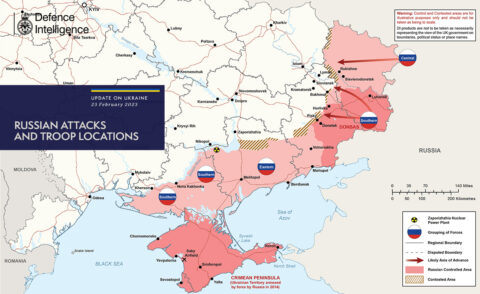
Lessons from the Eighteenth Century for the Russo-Ukraine conflict
In Strategika, Edward Luttwak considers what lessons can be drawn from wars of the past to help inform the ongoing Russian invasion of Ukraine:
Every war must end, but no war need end quickly — neither world war makes it to the top ten in longevity. The nearest parallel to the Ukraine war – the Dutch War of Independence (1568–1648), fought between a smaller but more advanced nation, and the world-spanning Spanish Empire, the superpower of the age – persisted for eighty years because the Spanish kept losing, but there was so much ruination in that declining power.
In our own days, expeditionary wars fought against enemies far away who could hardly fire back, lasted for many years as the different war-ending theories promoted by fashionable generals were tried seriatim to no avail, till the day when evacuation was preferred even if utterly ignominious.
The eighteenth-century wars fought by rival European monarchs who could all converse in French with each other, were enviously admired in the bloody twentieth century, because they allowed much commerce and even tourism to persist — utterly unimaginable even in Napoleon’s wars, let alone the two world wars — and because they ended not in the utter exhaustion of the collapsing empires of 1918, nor in the infernal destructions of 1945, but instead by diplomatic arrangements politely negotiated in-between card games and balls. The 1763 Treaty of Paris that ended the Seven Years’ war and French America, inadvertently opening the way for the American republic, was not drafted by the victorious British Prime Minister Lord Bute, but by his very good friend the French foreign minister Étienne-François de Stainville, duc de Choiseul, who solved the three-way puzzle left by the French defeat by paying off Spain with Louisiana, Britain with money-losing Canada, and regaining the profitable sugar islands for France, which still has them.
And instead of the winners charging the losers with incurable bellicosity as Versailles did with Germany, or stringing them up individually as war criminals, as in the ending of twentieth-century wars, eighteenth-century winners were more likely to console the losers just short of “better-luck next time” — and in a century in which there was war every single year without exception from 1700 to 1800, if one war ended another necessarily started or at least persisted, allowing a “next time” soon enough.
By contrast, the ensuing nineteenth-century wars held no lessons at all for the twentieth century, which was equally bereft of a Napoleonic superman at the start and ample tropical lands easily conquered later on, while the Crimea expedition in the middle was mostly a counter-example of how not to wage war, and the Franco-Prussian war was just as sterile: all it proved was that there really was only one Helmuth von Moltke who could win wars by parsimonious force, unlike his homonymous nephew who lost a five-year war in its first five weeks; and that there really was only one Otto von Bismarck, who crowned his incomplete 1871 unification of German lands by refusing to complete it by unifying all Germans as the Italians were unified, lest the world combine to make a bigger Germany smaller.
Clearly only the eighteenth-century precedents apply to the Ukraine War. Neither Putin nor Zelensky speaks French but neither needs it to converse in their Russian mother-tongue, and if they do not actually talk (Putin demurely said that he could not possibly be expected to negotiate with Kiev’s drug addicts and Neo Nazis), their officials certainly can, and do so often.
When it comes to the persistence of commerce in war — the habit that Napoleon wanted to break with his Blocus Continental against British exports — every day Russian gas flows to the homes and factories of Ukraine on its way into Western Europe, with Ukraine transferring money to Russia every day, even as it attacks its faithful customer. And, Ukrainian wheat is now shipped past Russian navy vessels to reach the hungry Middle East, after a negotiation unthinkable in twentieth-century wars, or in Napoleon’s either.
In Russia, sanctions have certainly diminished easy access to imported luxuries in local franchised shops, but they still arrive via Turkey at a slight premium … or discount depending on the previous Moscow markup. All over Russia the sanctions have been felt in all sorts of ways because the country was actually more internationalized than anyone realized, including Putin no doubt (arriving in Tomsk at 0600 one winter morning at a temperature of minus infinity, the one place to eat was McDonalds).
But unlike China, which must choose between fighting and eating protein — some 90% of its chicken, pork, and beef is raised on imported cereals plus some 150 million metric tons of soya per annum from U.S. and Canadian Pacific ports, or the Atlantic ports of Brazil and Argentina that would be an ocean too far for China-bound vessel – Russia produces all its own staple foods and can therefore fight and eat indefinitely, and neither does it import any energy as China must.
In other words, just as Russian propaganda has claimed from day one, the sanctions cannot stop the war materially, even if they played a large role in the flight of tens of thousands of elite Russians, once again diminishing the human capital of the largest European nation, as the Bolsheviks and Civil War did a century ago, and the opening of borders did again a generation ago.
It is a problem that the sanctions, which end the war by stopping Russia, might cause defections from the Western camp if the winter happens to be unusually cold, a subject on which Angela Merkel – so enthusiastically applauded for closing nuclear power stations and preferring Russian piped gas over American and Qatari liquified gas – has remained strangely silent.
A Short History of Ships Cats – Floating Felines, Maritime Moggies and Kleptomaniac Kittens
Drachinifel
Published 26 Feb 2020A quick look at the origins of a vital part of the ship’s maintenance crew, and some notable examples.
(more…)
September 22, 2022
RAF Coastal Command vs U-Boats
The History Guy: History Deserves to Be Remembered
Published 5 Oct 2020The contest between aircraft and U-Boats during the Second World War was one of competing technological innovations, culminating with a decisive struggle in the summer of 1943. The History Guy tells the forgotten story of the development of anti-submarine warfare and the contest between the aircraft of RAF Coastal Command and U-Boats of the Kriegsmarine in the Bay of Biscay.
(more…)
Waking – or shaking – NATO’s freeloaders (like Canada)
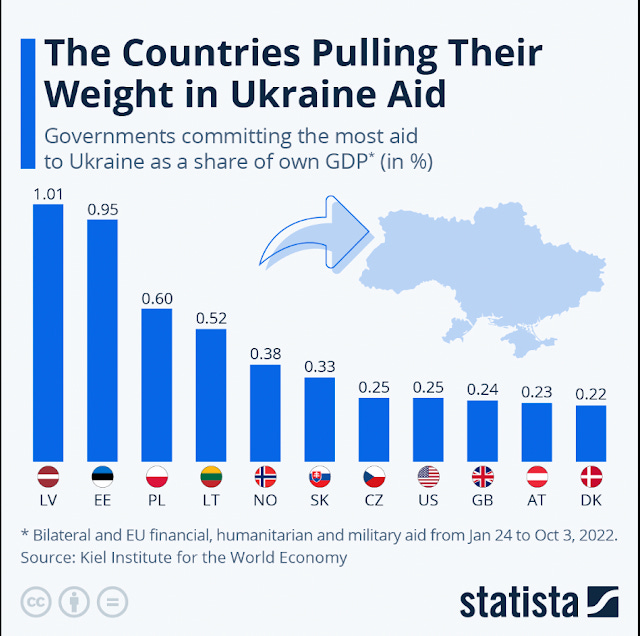
CDR Salamander has a proposal to encourage cheapskate freeloaders like Justin Trudeau’s Canada (although it didn’t start with him … Canada has been freeloading militarily since the early 1970s) to take on more like a fair share of NATO’s needs:
President Vladimir Putin on Wednesday ordered Russia’s first mobilisation since World War Two and backed a plan to annex swathes of Ukraine, warning the West he was not bluffing when he said he’d be ready to use nuclear weapons to defend Russia.
In the biggest escalation of the Ukraine war since Moscow’s Feb. 24 invasion, Putin explicitly raised the spectre of a nuclear conflict, approved a plan to annex a chunk of Ukraine the size of Hungary, and called up 300,000 reservists.
This should not be a shock to anyone. If it is, perhaps you should consider investing your time in cat-blogging.
It should bring to the front that NATO can no longer allow unserious nations to play like they are anything but security free-riders. They need to contribute their fair share or pay some consequence. Alliances have benefits and responsibilities. You should not have one without the other.
While percentage of GDP is an imperfect measure of contribution, it is better than all the other ones. It is as simple benchmark of national effort.
As these are the best numbers we have, let’s look at 2021 and then forward.
It is amazing that after all Russia has shown Western Europe — both of its nature and the nature of modern warfare — that so many of our NATO allies continue to slow walk defense spending, doing the very minimum to be a full and fair partner in the alliance.
Russian victory — however they define it — or Russian defeat — however Ukraine defines it — will not change the geography or nature of Russia. She is not going anywhere.
So, what’s to be done to encourage nations like Canada to put up or shut up? This might help:
“Out years” are where dragons live, so anyone not on guide-slope to 2%+ by the end of 2023 – when one way or another the Russo-Ukrainian War should be over – will find someway to not get there in a wave of excuses and bluffing.
We should call their bluff.
As such, and this is generous, we need to finally pursue PLAN SALAMANDER for NATO “Flags-to-Post” that I first proposed almost six years ago.
In NATO, General and Flag Officer billets are distributed amongst nations in a rather complicated way, but this formula is controlled by NATO – and as such – can be changed.
Entering argument: take the present formula for “fair distribution” and multiply by .75 any nation that spends 1.5% to 1.99% GDP on defense. Multiply by .5 any nation that spends between 1.25% to 1.499%. Multiply by .25 1.0% to 1.240%. If you fall below 1%, you get nothing and your OF5 (Col./Capt) billets are halved.
1.25x for 2.01%-2.25%. 1.5X for 2.26%-2.75%; 1.75x for 2.76% -3.0%. 2x for +3.01%.
The math gets funky when a lot of people get over 2%, but we can refine it later. Doesn’t cost a penny and will unquestionably get the attention of those nations. Trust me on this. By January 1st, 2024 no more excuses. A small and symbolic punishment, but a good start that may be all that is needed. This is not the second half of the 20th Century any more.
September 21, 2022
The Medieval Saint Diet
Tasting History with Max Miller
Published 20 Sep 2022
(more…)
Radom’s Vis 35: Poland’s Excellent Automatic Pistol
Forgotten Weapons
Published 9 Feb 2016In the 1920s Poland began looking for a new standard military pistol, and tested a variety of compact .380s. The representative from FN brought along an early iteration of the High Power (along with their other entry) even though it was much too large and heavy to meet the Polish requirements. After a couple iterations of testing, it became clear to the Polish Ordnance officers that the High Power was a much more effective service pistol than the compact guns they had been instructed to look for.
Lo and behold, the ultimate choice was a domestic design based largely on the High Power (a direct deal with FN was not an option after Poland’s relationship with FN had suffered through problems with the wz.28 version of the BAR). Toss in a delay to redesign the early decocking mechanism to satisfy the Cavalry (who didn’t realize that the decocker wasn’t actually meant to be used, but rather to just add another claim to the patent), and by 1935 the pistol was finished and formally adopted.
The Vis 35 is one of the best automatic pistols of WWII in terms of both handling and quality. In total 46,000 were made pre-war for Poland’s military, and German occupation forces built another 300,000+ during the war.
(more…)
September 20, 2022
Hannah Arendt in postwar Germany
In Quillette, Roger Berkowitz discusses what Hannah Arendt found when talking to Germans after the Second World War, which she characterized as their collective “escape from reality”:
In 1949, when Hannah Arendt (1906–1975) went to Germany as part of the New York-based Jewish Cultural Reconstruction Commission, she was struck by the way the Germans showed an “at times vicious refusal to face and come to terms with what really happened”. This “escape from reality”, as Arendt named it, meant that the reality of the Holocaust and the death factories was spoken of as a hypothetical. And when the truth of the Holocaust was admitted, it was diminished: “The Germans did only what others are capable of doing”.
The Germans, at times, simply denied the facts of what had happened. One woman told Arendt that the “Russians had begun the war with an attack on Danzig”. What Arendt encountered was a “kind of gentleman’s agreement by which everyone has a right to his ignorance under the pretext that everyone has a right to his opinion”. The underlying assumption for such a right is the “tacit assumption that opinions really do not matter”. Opinions are just that, mere opinions. And facts, once they are reduced to opinions, also don’t matter. Taken together, this led to a “flight from reality”.
The focus of Arendt’s lifelong engagement with the human flight from reality was her encounter with ideologies, specifically Nazism and Bolshevism. In The Origins of Totalitarianism and other texts (especially her essay, “On the Nature of Totalitarianism“), Arendt defines an ideology as a system that seeks to explain “all the mysteries of life and the world” according to one idea. Nazism is an ideology that blames economic disaster, political loss, and the evils of modernity on the Jews — inhuman flotsam who must be exterminated to allow a master race to flourish. Bolshevism, on the other hand, “pretends that all history is a struggle of classes, that the proletariat is bound by eternal laws to win this struggle, that a classless society will then come about, and that the state, finally, will wither away”. The bourgeoisie are not simply class traitors, they are a dying class, and killing them only supports a law of history. As ideologies, both Nazism and Bolshevism insist on explaining the events of the world according to theories “without further concurrence with actual experience”. The result, Arendt argues, is that such ideologies bring about an “arrogant emancipation from reality”.
Because an ideology “looks upon all factuality as fabricated”, it “no longer knows any reliable criterion for distinguishing truth from falsehood”. As reality recedes, ideologies organize society to transform their ideas into living reality. If antisemitism as an ideology says that all Jews are beggars without passports, the fact of wealthy and established Jews must be eliminated. If Bolshevism says that the bourgeoisie are corrupt, they must admit their corruption or be killed. The realization of such ideological realities can be accomplished, of course, through terror.
But even before a totalitarian movement takes power and mobilizes the secret police in the machinery of terror, ideological movements can employ propaganda to deny and nullify facts, or change them. The Nazis, she writes, “did not so much believe in the truth of racism as desire to change the world into a race reality”. Similarly, the Bolshevist ideology that classes were dying was not something real, but something that had to be made real. The purges and terror that Stalin unleashed were supposed to “establish a classless society” by exterminating all social groups that might develop into classes. In both instances, the purpose of the ideology was to transform a mere opinion — race consciousness or class consciousness — into the “the lived content of reality”.
The point, as Arendt concludes, is that “ideological consistency reducing everything to one all-dominating factor is always in conflict with the inconsistency of the world, on the one hand, and the unpredictability of human actions, on the other”. What ideology demands is that man — an unpredictable and spontaneous being — cease to exist as such, that all humans be subjected to laws of development that follow ideological truth. That is why the turn from an unreliable reality to coherent fantasy requires an absolute elimination of human spontaneity and freedom.
The Byzantine Empire: Part 4 – Justinian, The Hand of God
seangabb
Published 1 Jan 2022Between 330 AD and 1453, Constantinople (modern Istanbul) was the capital of the Roman Empire, otherwise known as the Later Roman Empire, the Eastern Roman Empire, the Mediaeval Roman Empire, or The Byzantine Empire. For most of this time, it was the largest and richest city in Christendom. The territories of which it was the central capital enjoyed better protections of life, liberty and property, and a higher standard of living, than any other Christian territory, and usually compared favourably with the neighbouring and rival Islamic empires.
The purpose of this course is to give an overview of Byzantine history, from the refoundation of the City by Constantine the Great to its final capture by the Turks.
Here is a series of lectures given by Sean Gabb in late 2021, in which he discusses and tries to explain the history of Byzantium. For reasons of politeness and data protection, all student contributions have been removed.
(more…)
QotD: Why purple was such a rare colour in the flags of the pre-industrial era
Today, we are used to the effectively infinite range of colors offered by synthetic dyes, but for pre-modern dye-workers, they were largely restricted to colors that could be produced from locally available or imported dyestuffs. If you wanted a given color of fabric, you needed to be able to find something in the natural world which, when broken down could give you a chemical pigment that you could transfer to your fabric in a durable way. That put real limits on the colors which could be dyed and the availability of those colors. Some colors simply couldn’t be produced this way – a good example were golden or metallic colors. If something in a dress was to be truly golden (and not merely yellow), the only way to do that prior to synthetic dyes and paints was to use actual gold, weaving small strands of ultra-thin gold wire into the cloth or embroidering designs with it. Needless to say, that was something only done by the very wealthy. Alternately, if the dye for a given hue or color came from something rare or foreign or difficult to process (for instance, in all three cases, Tyrian or royal purple, which came from the murex sea snails – if you have ever wondered why no country has purple as a national color this is why, before synthetic dyes, coloring your flags and uniforms purple would have been bonkers expensive), then it was going to be expensive and rare and there just wasn’t much you could do about that.
Bret Devereaux, “Collections: Clothing, How Did They Make It? Part IVa: Dyed in the Wool”, A Collection of Unmitigated Pedantry, 2021-04-02.