
Published on 23 Feb 2016
One of the of the practice questions from our “Growth Rates Are Crucial” video asks you to compare real GDP per capita for two countries that start at the same place, but grow at different rates. It’s a little tricky:
Suppose two countries start with the same real GDP per capita, but country A is growing at 2% per year and country B is growing at 3% per year. After 140 years, country B will have a real GDP per capita that is roughly ________ times higher than country A. (Hint- you may want to review the “Rule of 70” to answer this question.)
We asked our Instructional Designer, Mary Clare Peate, to hold virtual “office hours” to guide you through how to solve this problem. Join her as she discusses your questions!
April 17, 2017
Office Hours: Rule of 70
Comments Off on Office Hours: Rule of 70
April 14, 2017
Alberta’s new problem of “rising income support caseloads”
Colby Cosh sounds a warning note for Alberta’s NDP government:
… there is a danger — I say this with glum certainty that this centuries-old accepted truth will incite tantrums — in permitting the dole to grow too large. One need only look at the United States’s current addiction to federal and other disability programs. The U.S. reformed welfare as Alberta (and eventually Ontario) did, but disability schemes involving armies of doctors, lawyers and administrative judges became an equally huge species of para-welfare.
The result is a national orgy of prescription opioids and suicide, as policy inertia encourages millions to make a bad back or a trick knee the centre of an unproductive, isolated life. The bottle of OxyContin absolves and soothes; Donald Trump wins a presidential election.
I want no part of anything like this for Alberta. During my lifetime the province has been an economic colony, obsessed with competitiveness and quite short on the state’s version of “compassion.” We all knew we would get NDP economic policy when we voted NDP. They have un-flattened taxes, revived groovy ’70s industrial planning, taxed carbon, regulated farms, run planet-sized deficits, and sheltered the bureaucracy while businesses choked and private-sector workers struggled.
Only the very inattentive could have been unprepared for most of this, as a price to be paid for hosing out the Conservative stable, or even as a desirable correction. Welfare numbers signify a more fundamental, threatening change. It is one that the New Democrats may find more dangerous to its electoral future than all the rest put together, if Ontario history is any guide.
The growth in welfare rolls that can take place in a year may take 10 to reverse. And, of course, such growth suggests that other NDP nostrums, like hiking the minimum wage, aren’t working out. Why would anyone at all require state income support in labour’s paradise? Do NDPers need to look far to find a stalking, wrathful, hyperconservative Mike Harris figure in Alberta?
Comments Off on Alberta’s new problem of “rising income support caseloads”
April 13, 2017
Words & Numbers: Even Economists Can’t Do Their Own Taxes
Published on 12 Apr 2017
In honor of Tax Day, Antony Davies & James R. Harrigan talk about the absurdity of the US tax code. If your tax situation is more complicated or more uncomfortable than you like dealing with, you can pay another human being to do your taxes so you don’t have to. There are dependents, mortgages, deductions from energy-efficient household additions, charity, student loan interest … even with a Ph.D. in economics, it’s hard to understand!
Comments Off on Words & Numbers: Even Economists Can’t Do Their Own Taxes
April 11, 2017
The return of Jane Galt
Megan McArdle, who used to blog as “Jane Galt”, did an Ask Me Anything on Reddit:
I’m Megan McArdle, a columnist for Bloomberg View, covering business, economics, public policy and the latest in kitchen gadgets. Ask me anything!
[…]
[–]LegalInspiration 5 points 6 hours ago*
In the short, medium, and long terms, generally speaking, would you say the US as a political and civil society is screwed? If so, how screwed would you say it is? If that’s too argumentative, maybe a more polite way to phrase it is: Do you see the gradual disruption of national unity post WWII as something that will cycle within a set of sustainable boundaries, or will the trend continue long term to the point where the US is no longer sustainable as a coherent and singular entity?
[–]janegalt[S] 4 points 5 hours ago
A couple of decades ago, I toyed with the idea of writing a novel where the US broke up into two countries: Liberalstan and Fundamentalistalia. Back then I thought it was a metaphor; now I’m less sure. The country feels more divided than it has in my lifetime, or that of my parents. It may be the worst it’s been since the Palmer Raids; maybe the worst since the Civil War.
That said, to quote Adam Smith, “There’s a lot of ruin in a nation”. I think we have plenty of room to turn it around. But I think to do so, we need to think creatively about a kinder, gentler nationalism. Not the kind that says “Whee, let’s invade other countries”, but the kind that emphasizes love of country and the things we have in common–not the love we’ll grudgingly dole out after the nation has perfected itself, nor the things we’ll have in common after all those wretches in the other half of the country see the light and/or die. But love of each other right now, despite our many flaws.
Every country needs a certain amount of myth making, and a certain amount of irrational pride in itself to hold it together. That’s particularly true for America, which can’t derive a national identity from, well, not being America. I think a lot of people imagined that tearing down all the myth making, and disparaging that irrational love of country, would turn us into good global citizens. Only it turns out that the opposite of nationalism isn’t globalism; it’s tribalism. And the tribes are gearing up to make war on each other in a way that the US hasn’t seen for a long time.
[…]
[–]TJIC1 4 points 6 hours ago
You are libertarian – but a “pragmatic” one who suggests / acknowledges that gov is necessarily going to end up in pretty much every corner of everything, and that the space of reasonable policy debate is small changes at the margin. This seems to suggest that we will never repeal FDR innovations like ignoring the 9th and 10th amendment, changing commerce clause to read “Federal gov can do whatever it wants”, etc. What’s the best we can hope for for liberty? What we have today – a modern welfare state where USG consumes 30% of economy and regulates everything from toilet flushing to proper woods to make a guitar fretboard from?
…or a welfare state where USG consumes 50% of the economy?
…or 90%?
[–]janegalt[S] 5 points 5 hours ago*
The gap between real and ideal for libertarians is certainly wide, and I am less hopeful than I was twenty years ago that we’ll ever close it. I hate the “read whatever the government wants to do into the Constitution” jurisprudence that was required to enable the New Deal, and the fact that judges have appointed themselves to replace poets as the unacknowledged legislators of the world.
At some point as a commentator you have to decide whether to advocate for first best or eighth best policy. I’ve generally decided to advocate for what I think is politically realistic, rather than what I think is ideal. I think you need both kinds though–the compromisers need the hardline idealists to provide a sort of compass point, and the idealists need the compromisers to provide the actual movement in the right direction.
That said, this last election was very bad for libertarian ideas, representing a rejection of both our ideas about social policy, and those about political economy. I think libertarians have a lot of hard work ahead thinking about where we can realistically make advances in the next decade or so. I wish I knew the answer to that. My best guess is: the middle class entitlement state is not going to be rolled back. There may be some room for progress on America’s incredibly inefficient regulatory state, which would be a great boon for both economic liberty, and growth. I think the GOP will try to do tax cuts, but will fail to accomplish anything significant, for much the same reasons that their health care bill failed: there’s no money, and no public appetite for a tax cut that mainly benefits the affluent-to-rich (as it will have to, because at this point, the middle class and below don’t pay significant income taxes).
That said, we should also remember the progress that has been made on the liberty front. In 1944, FDR had the head of Montgomery Ward arrested for thwarting his war planning board; in 1952 Truman nationalized the steel mills. That stuff doesn’t happen any more, and a lot of the worst New Deal regulations have gone away. Police practices are way better than they were before Miranda and other decisions made sure that defendants knew their rights (I’m not saying they’re perfect, but they’re definitely better). And if you’re a minority or a woman, all sorts of legal discrimination has been erased over the last fifty years. Those are major victories for libertarians, and we shouldn’t think that there’s some golden age we’re falling away from. We’ve lost a few, but we’ve won a few too.
Comments Off on The return of Jane Galt
April 9, 2017
The Australian demographer’s Christmas
An amusing post at the Weekend Australian … an Advent Calendar for demographic tidbits:
The demographer’s Christmas is the day the ABS releases census results. It happens once every five years and that day, Tuesday 11 April, is fast approaching. Demographers are counting down the days until they can open their data presents. And now you can join in the fun with the demographer’s advent calendar.
Every day until the release we will be featuring a tasty data hors d’oeuvres to get you in the mood for a whole lot of Australian social demography.

H/T to Stephen Gordon for the link.
Comments Off on The Australian demographer’s Christmas
April 7, 2017
Unintended consequences of “good” policies
Megan McArdle discusses when some otherwise nice-seeming policy changes have not-so-nice unforeseen side effects:
What happens when you suddenly offer parents generous family leave benefits, paid at the expense of the government? You can probably think of dozens of outcomes. But here’s one you might not have been expecting: people die.
That’s the finding of Benjamin Friedrich and Martin Hackmann, in a new working paper at the National Bureau of Economic Research. The culprit? Nurses, who skew female, provide a lot of vital health care, and made heavy use of Denmark’s new paid family leave benefit when it passed in 1994. Since the supply of nurses was limited, and their skills could not easily be replaced, hospital readmissions went up, and more troublingly, mortality spiked among elderly patients in nursing homes.
Advocates of paid parental leave are no doubt bristling at the implication that their favorite benefit might kill people. But that’s not quite the right implication to take away from this paper. What it really highlights is how difficult it is to know how a given policy will turn out. Had officials understood that in advance, they might have taken steps to mitigate the effects — such as training extra nurses beforehand. The problem, in other words, wasn’t necessarily family leave policy, but the limited visibility policymakers have into the outcomes of their plans.
To see why, consider what the paper actually found. When parental leave came along, it reduced the supply of nurses. But that impact wasn’t felt evenly. In hospitals, where doctors make more of the medical decisions, it seems to have been costly to patient health. But in nursing homes, where nursing staff have more power over daily operations, it seems to have made a much bigger difference. Meanwhile, nursing assistants seem to have been little impacted by the change in leave policy; while they were also likely to make generous use of the leave, health-care facilities seem to have had little difficulty replacing them.
Comments Off on Unintended consequences of “good” policies
Growth Rates Are Crucial
Published on 12 Jan 2016
In the first video in this section on The Wealth of Nations and Economic Growth, you learned a basic fact of economic wealth — that countries can vary widely in standard of living. Specifically, you learned how variations in real GDP per capita can set countries leagues apart from one another.
Today, we’ll continue on that road of differences, and ask yet another question.
How can we explain wealth disparities between countries?
The answer? Growth rates.
And in this video, you’ll learn all about the ins-and-outs of measuring growth rates.
For one, you’ll learn how to visualize growth properly — examining growth in real GDP per capita on a ratio scale.
Then, here comes the fun part: you’ll also take a dive into the growth of the US economy over time. It’s a little bit like time travel. You’ll transport yourself to different periods in the country’s economic history: 1845, 1880, the Roaring Twenties, and much more.
As you transport yourself to those times, you’ll also see how the economies of other countries stack up in comparison. You’ll see why the Indian economy now is like a trip back to the US of 1880. You’ll see why China today is like the America of the Jazz Age. (You’ll even see why living in Italy today is related to a time when Atari was popular in the US!)
In keeping with our theme, though, we won’t just offer you a trip through ages past.
Because by the end of this video, you’ll also have the answer to one vital question: if the US had grown at an even higher rate, where would we be by now?
The magnitude of the answer will surprise you, we’re sure.
But then, that surprise is in the video. So, go on and watch, and we’ll see you on the other side.
Comments Off on Growth Rates Are Crucial
April 6, 2017
Words & Numbers: Taxing Robots Does Not Compute
Published on 5 Apr 2017
This week, Antony and James break down Bill Gates’ recent suggestion that companies that use robots instead of human workers should pay employment taxes in order to fund new welfare programs.
April 3, 2017
Ici Londres: Karl Marx didn’t get a single thing right
Published on 22 Mar 2017
Comments Off on Ici Londres: Karl Marx didn’t get a single thing right
March 30, 2017
Words & Numbers: The Arts Will Survive Without Your Taxes
Published on 29 Mar 2017
This week, James & Antony experiment with a slightly longer format, and get into the issue of government funding for the arts.
March 29, 2017
You can’t really understand history without considering the geography
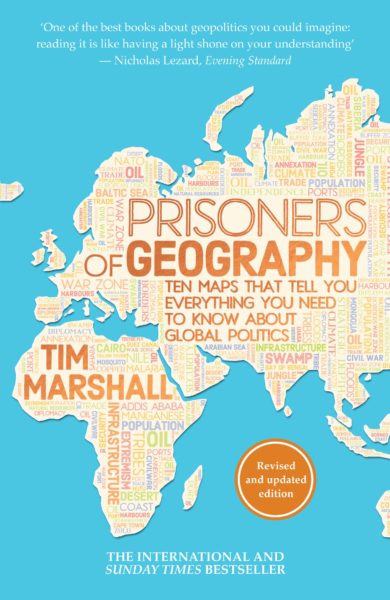
At Samizdata, Brian Micklethwait discusses Tim Marshall’s book, Prisoners of Geography:
Britain and Western Europe, and then the other parts of the world where English is the dominant language, have mostly been blessed with a degree of geographically conferred freedom of manoeuvre that is denied to the inhabitants of pretty much all other nations. That is why these places got rich first. And it also now means that we Euros and Anglos are able to believe, as a matter of practical political policy rather than merely as privately pious aspiration, in a wide range of idealistic things of very variable value – things like freedom, democracy, equality, human rights, freedom for women, “social justice”. and so on and so forth – things that geographically more constrained people can only, as yet, dream of, and which they often regard as more as a threat to their own ways of doing things than as any kind of promise.
[…]
The word “maps” being in its subtitle, along with the bombastic claim that these maps tell you all you need to know about the world, these maps ought to be really, really well done, from the graphic point of view. But to my admittedly fading eye, they seemed to be not that good. On their own, they tell you nothing like everything about the world, which is why you actually need to read the book to get the points of all the maps. I was particularly disappointed by how the mountains look in these maps. Along with rivers, mountains are a big deal in this book, as you would expect them to be. But, in these maps, the mountains often scarcely register. It doesn’t help that the maps are done only with black ink on white paper. Colour would have helped. But even black ink could have been used, I feel, with somewhat greater clarity. I had to look quite hard to work out where these various mountains were. But, as I say, maybe that’s just me. My eyesight is definitely not what it was.
The mountainous insight I recall with particular pleasure is Marshall’s observation that the hostility between India and China would have been and would now be far greater, were it not for the most impenetrably formidable mountains on earth being at the boundary between these two civilisations. Contrast those impenetrable Asian mountains with that famous gap in the mountains in northern Europe, which results in a gigantic military parade ground with no natural barriers stretching from the Pyrenees to the Urals.
In addition to knowing better about Europe’s mountains, I now sort of know a whole lot more than I did about the mountains of South America. South America is, for me, one of the less fascinating places in the world, because, being so geographically cut off from the rest of the world and being of significance mostly only to their northern neighbours, South American mistakes count for a lot less than mistakes can elsewhere, especially mistakes made by the USA and Europe of course. South America, you might say, is basically just a big clutch of European mistakes.
Speaking of European mistakes, Marshall is very good on the habit of late nineteenth century Europeans of drawing straight lines upon maps of foreign parts, in defiance of geographical and consequent social and cultural and now “national” realities on the ground. The USA gets along fine despite all the straight lines that it contains dividing its states, because these states are, fundamentally, still very united, at least in the sense that everyone in them is quarrelling about the same things within the same political institutions. But the Middle East is still trying to shake free of its baleful legacy of fake states, which Europeans and now also Americans, all motivated by the need for oil, have expended so much of their own treasure and so much Middle Eastern blood trying to keep in being.
Comments Off on You can’t really understand history without considering the geography
March 23, 2017
Words & Numbers: We’re Becoming a Nation of Pets
Published on 22 Mar 2017
This week, Antony & James take on the idea of “victimless crimes” and discuss the odd and growing trend of governments regulating some private activities such as pornography, while others like smoking marijuana are increasingly allowed. People imposing their values on others seems to boil down to an inability to appreciate that others have different preferences, but it all results in Americans losing freedom and instead becoming a nation of pets.
Learn more here:
https://fee.org/articles/were-becoming-a-nation-of-pets/
http://www.antolin-davies.com/research/trib0217.pdf
http://www.antolin-davies.com/research/philly0317.pdf
Comments Off on Words & Numbers: We’re Becoming a Nation of Pets
The rent is too damned high? I know – let’s kill the rental market!
Toronto’s real estate market has been insane for years, with prices for utter wrecks still approaching a million dollars. This has a knock-on effect for rental housing, with insufficient supply guaranteeing that rents will also go higher and higher. The Ontario NDP thinks they’ve got a silver bullet to fix the rental market: rent control! Chris Selley explains why this won’t work out the way eager would-be renters in Toronto might hope:
The NDP’s solution: rent control. MPP Peter Tabuns tabled a private member’s bill Monday that would extend limits on annual rent increases to units built after 1991 — thus closing a so-called “loophole” the Mike Harris Tories introduced in hopes people would build more new units. The Liberals followed quickly behind, with Housing Minister Chris Ballard promising “substantive rent control reform” — details to come.
You can see the attraction, politically. Robber baron landlords swoop in, cackling, forcing families onto the streets and auctioning off their homes, literally, to the highest bidder. The government can stop it. Why won’t the government stop it?
No doubt there are some very sympathetic stories out there. But we in the media tend to be very good at finding those, and it’s hard not to notice the preponderance of “victims” who could afford very high rent in the first place, and didn’t do their homework with respect to rent control or the lack thereof. A typical example: CBC introduced us to a 32-year-old who was paying $1,650 a month for a tiny one-bedroom condo, only to be sent couchsurfing by a whopping $950 increase.
[…]
The fact is, rent control would largely help high-end renters in a high-end market. The vast majority of units that aren’t rent controlled are condos. In October, CMHC pegged the condo-over-apartment rental premium in the GTA at 46 per cent for one-bedrooms, 54 per cent for two-bedrooms and 65 per cent for three-bedrooms.
The real challenge these days is finding an apartment, period: the vacancy rate in October was 1.3 per cent. Critics say the “loophole” didn’t actually incentivize building rental apartments, but closing the “loophole” certainly won’t. Indeed, it’s tough to see how it would accomplish much except transferring money from unit owners to their tenants. Many will like that idea on principle — but if owners can’t rent to the highest bidder, they are unlikely to suddenly rent for less to the youngest, most disadvantaged and most vulnerable people rent control ostensibly helps.
If you want central Toronto to be a more affordable place to live, you need to figure out how to boost supply. There are lots of different ideas out there. It’s a topic of constant discussion at City Hall and Queen’s Park alike. Rent control is nothing but a political distraction.
Comments Off on The rent is too damned high? I know – let’s kill the rental market!
QotD: The Economist
When I was living in a very remote part of the world I used to read The Economist from cover to cover, though it arrived two months late (communications in those days were not yet instantaneous). It made me feel that I was well-informed, if only in retrospect, despite my isolation. It was my window on the world.
Even then, though, I thought that it was dull and self-congratulatory, characterizing itself as of “the extreme centre.” I noticed that its reports at the front did not always coincide with the economic data at the back and that its prognostications were frequently belied by events — as, of course, most people’s prognostications are. Nevertheless, it managed to convey the impression that the disparities, insofar as they acknowledged them at all, were the fault of the events rather than of The Economist, and that the world had a duty to be as The Economist said it was and as it would be. The anonymity of the articles was intended to create the illusion that the magazine spoke from nothing so vulgar as a perspective, but rather from some Olympian height from which only the whole truth and nothing but the truth could be descried. It is the saving grace of every such magazine that no one remembers what he read in it the week before. Only by the amnesia of its readers can a magazine retain its reputation for perspicacity.
I found its style dull, too. How was it that correspondents from Lima to Limassol, from Cairo to Kathmandu, wrote in precisely the same fashion, as if everything that happened everywhere was fundamentally the same? Walter Bagehot, son-in-law of the founder of The Economist and its most famous editor, was a brilliant prose stylist and a wonderfully witty literary critic, among many other things; but The Economist has long been about as amusing as a speech by David Cameron. Its prose was the literary equivalent of IKEA furniture, prefabricated according to a manual of style; it tried to combine accessibility with judiciousness and arrived only at portentousness.
Who now reads it, and what for? I suppose there is a type of functionary who does not want to be caught out in ignorance of the latest political developments in Phnom Penh, or the supposed reasons for the latest uprising in Ouagadougou. The Economist is intellectual seriousness for middle management and MBAs. To be seen with it is a sign of belonging to, and of identifying with, a certain caste.
Theodore Dalrymple, “From Boring to Baffling”, Taki’s Magazine, 2015-08-01.
Comments Off on QotD: The Economist
March 20, 2017
Basic Facts of Wealth
Published on 5 Jan 2016
We know that there are rich countries, poor countries, and countries somewhere in between. Economically speaking, Japan isn’t Denmark. Denmark isn’t Madagascar, and Madagascar isn’t Argentina. These countries are all different.
But how different are they?
That question is answered through real GDP per capita—a country’s gross domestic product, divided by its population.
In previous videos, we used real GDP per capita as a quick measure for a country’s standard of living. But real GDP per capita also measures an average citizen’s command over goods and services. It can be a handy benchmark for how much an average person can buy in a year — that is, his or her purchasing power. And across different countries, purchasing power isn’t the same.
Here comes that word again: it’s different.
How different? That’s another question this video will answer.
In this section of Marginal Revolution University’s course on Principles of Macroeconomics, you’ll find out just how staggering the economic differences are for three countries — the Central African Republic, Mexico, and the United States.
You’ll see why variations in real GDP per capita can be 10 times, 50 times, or sometimes a hundred times as different between one country and another. You’ll also learn why the countries we traditionally lump together as rich, or poor, might sometimes be in leagues all their own.
The whole point of this? We can learn a lot about a country’s wealth and standard of living by looking at real GDP per capita.
But before we give too much away, check out this video — the first in our section on The Wealth of Nations and Economic Growth.
Comments Off on Basic Facts of Wealth


