Forgotten Weapons
Published on 30 Oct 2018Available from Amazon: https://amzn.to/2yy2zRf
Desert Sniper is an autobiographical account of Ed Nash’s time fighting as a volunteer with Kurdish forces against ISIS in Syria in 2015 and 2016. Nash had been working as a volunteer with the Free Burma Rangers when he decided in 2015 that the growing list of ISIS atrocities demanded action. With his background in journalism and experience as a liaison for the FBR, he thought he could do some good helping to fight one of the most starkly evil groups the 21st century has yet seen. So, he boarded a plane to the middle east.
Kurdish organization being somewhat subpar, his skills as a journalist were not exploited, and instead he went to a sniper tabor (fighting unit) with a Dragunov, which would be his primary weapon for the rest of his time in country. His book describes the experience from start to finish, including insight into Kurdish culture and politics, training, tactics, and more. He worked with both Kurdish men and women (a substantial fraction of the Kurdish fighters and commanders were female) and with other foreign volunteers like himself and various Special Forces teams from coalition nations like France, the UK, and the US.
There are several things that I particularly appreciate about Nash’s work. First is its honesty and lack of either bravado or squeamishness. Today’s popular sensibilities insist that doing violence must inevitably damage a person psychologically, but this is not true. When one believes in the rightness of one’s actions, one can survive combat without becoming a psychological victim of it. There are certainly physiological exceptions like the prolonged shelling experienced by many in WW1 and the brain injuries caused by pressure waves associated with bomb blasts, but if we are to believe Nash (and I do), one can engage in lethal violence for a just cause and sleep well at night afterward.
On a more technical side, Nash’s journalism experience shows in his writing. The book is engaging and informative, and never left me bored. He gives the reader a feel for the wide variety of situations that he found himself in and the many people we developed relationships with during his time.
Finally, Nash has a good familiarity with firearms, and writings clearly and rationally about them. The guns themselves are not the focus of the book, but when they are relevant they are explained in a way that gun nerds will appreciate. As a sniper, Nash used a Dragunov primarily, but also carried an AK as a secondary rifle. He also had experience with the Zagros and Ser heavy rifles, and cogently explains their use. His descriptions of the range limitations of his SVD will certainly spark interest in readers who are shooters. In fact, Nash provided me with the photo and video material for a video about these Kurdish arms a while back, although I did not identify him by name at that time.
Anyway, this is an inexpensive book and I found it to be an excellent read. Men and women who volunteer to fight like Nash did ought to have their stories more widely known, and recognized for seeing a bad situation and doing something extremely concrete about it, despite often facing daunting legal situations upon their return home as a result.
http://www.patreon.com/ForgottenWeapons
If you enjoy Forgotten Weapons, check out its sister channel, InRangeTV! http://www.youtube.com/InRangeTVShow
Contact: Forgotten Weapons
PO Box 87647
Tucson, AZ 85754
November 20, 2018
Book Review: Desert Sniper, by Ed Nash
November 6, 2018
QotD: Architectural modernism
In this scholarly, learned but also enjoyably polemical book, Professor Curl recounts both the history and devastating effects of architectural modernism. In no field of human endeavour has the idea that history imposes a way to create been more destructive, or more importantly destructive: for while we can take avoiding action against bad art or literature, we cannot avoid the scouring of our eyes by bad architecture. It is imposed on us willy-nilly and we are impotent in the face of it. Modern capitalism, it has been said, progresses by creative destruction; modern architecture imposes itself by destructive creation.
As Professor Curl makes clear, the holy trinity of architectural modernism — Gropius, Mies and Corbusier — were human beings so flawed that between them they were an encyclopaedia of human vice. They spoke of morality and behaved like whores; they talked of the masses and were utter egotists; they claimed to be principled and were without scruple, either moral, intellectual, aesthetic or financial. Their two undoubted talents were those of self-promotion and survival, combined with an overweening thirst for power.
Their intellectual dishonesty was startling and would have been laughable had it not been more destructive than the Luftwaffe. When they claimed to have no style because their designs were imposed on them by history, technology, social necessity, functionality, economy etc., and like Luther proclaimed they could do no other (which soon became the demand that others could do no other also), they remind me of the logical positivists who claimed to have no metaphysic. But if no given style or metaphysic is beyond the choice of he who has it, to possess a style or a metaphysic is inescapable in the activity of artistic creation or thought itself. And even my handwriting has a style, albeit a bad one.
In like fashion, as this book makes beautifully clear, the modernists were adept at claiming both that their architecture was a logical development to and aesthetic successor of classical Greek architecture and utterly new and unprecedented. The latter, of course, was nearer the mark: they created buildings that, not only in theory but in actual practice, were incompatible with all that had gone before, and intentionally so. Any single one of their buildings could, and often did, lay waste a townscape, with devastating consequences. What had previously been a source of pride for inhabitants became a source of impotent despair. Corbusier’s books are littered with references to the Parthenon and other great monuments of architectural genius: but how anybody can see anything in common between the Parthenon and the Unité d’habitation (an appellation that surely by itself ought to tell us everything we need to know about Corbusier), other than that both are the product of human labour, defeats me.
Theodore Dalrymple, “Architectural Dystopia: A Book Review”, New English Review, 2018-10-04.
November 2, 2018
QotD: Modern men are “the sorriest cohort of masculine Homo sapiens to ever walk the planet”
A new book claims even modern athletes could not run as fast, jump as high, or have been nearly as strong as our predecessors.
The book, Manthropology: The Science of the Inadequate Modern Male, by Australian anthropologist Peter McAllister, describes many examples of the inadequacy of the modern male, calling them as a class, “the sorriest cohort of masculine Homo sapiens to ever walk the planet.”
Given spiked running shoes, Indigenous Australians of 20,000 years ago could have beaten today’s world record for running 100 and 200 meters. As recently as last century, some Tutsi males in Rwanda could have easily beaten the current high jump world record, and bodybuilders such as Arnold Schwarzenegger would have been no match in an arm wrestle with a Neanderthal woman.
Twenty thousand years ago six male Australian Aborigines chasing prey left footprints in a muddy lake shore that became fossilized. Analysis of the footprints shows one of them was running at 37 kph (23 mph), only 5 kph slower than Usain Bolt was traveling at when he ran the 100 meters in world record time of 9.69 seconds in Beijing last year. But Bolt had been the recipient of modern training, and had the benefits of spiked running shoes and a rubberized track, whereas the Aboriginal man was running barefoot in soft mud. Given the modern conditions, the man, dubbed T8, could have reached speeds of 45 kph, according to McAllister.
McAllister also presents as evidence of his thesis photographs taken by a German anthropologist early in the twentieth century. The photographs showed Tutsi initiation ceremonies in which young men had to jump their own height in order to be accepted as men. Some of them jumped as high as 2.52 meters, which is higher than the current world record of 2.45 meters.
Lin Edwards, “Modern men are wimps, according to new book”, Phys.org, 2009-10-21.
October 24, 2018
Temporal privilege
In the latest issue of Libertarian Enterprise, Sarah Hoyt discusses reading a recent historical novel that she nearly threw at the wall:
What brought about this rant is that I just read a Pride and Prejudice Variation written by someone who swallowed Dickens hook line and barbed socialist sinker.
Dickens was an amazing writer. What he was not was an historian or an impartial observer. What he put in his books has tainted people’s perception of the past and encouraged the cardinal “socialist virtue” of envy. It causes people to think those richer than themselves are callous bastards. It teaches people to see the past through that lens.
This book was almost walled when the woman assured us that the middle and upper classes did not care about the disappearance of a serving-woman.
It wasn’t many years after that the murder of a series of prostitutes set Victorian England aflutter, and yes, that included the upper and middle classes.
In the same way she waxes pathetic about how death was common among the poor in the Regency. B*tch, death was common in the Regency, period. If your entitled, propagandized ass were plopped down in a society with no antibiotics and uncertain house-heating, you’d learn really quickly how common. Young ladies in the upper reaches of society routinely made two baby shrouds as part of their trousseau. They were expected to lose at least that many children. And while we’re talking of children, yeah, death in child birth was really common too. As was death in any of the male occupations which, as is true throughout history, took them outside the house. Even noblemen were around horses a lot, and spent quite a bit of time — if they were worth their salt — managing their own lands, fraught occupations in a time when any wound could turn “septic” and any cold could turn “putrid” and carry you off.
Yeah. The people in these close-to-the-bone societies didn’t give money to people who’d waste it. They sometimes set conditions on distributing largesse. And they had definite opinions on what behaviors were “good” and which “bad.”
They weren’t tight-ass moralists, as the left imagines. They were following precepts and behaviors proven to lead to success. Mostly success in staying alive.
They were poorer than us and in that measure they were a lot more realistic.
They had to be. The other way lay death.
Spitting on our ancestors for not obsessing about gender-fluid trilobites is in fact the ultimate expression of “temporal privilege.” The left is yelling at people poorer, unhealthier and less able than themselves.
And they’re proud of it.
October 23, 2018
Myers-Briggs Type Indicators as a “variety of psychobullshit rune-gazing”
In the latest issue of Reason, Katrina Gulliver reviews a new book on a pop psychology notion that escaped into the wild for a generation, wreaking havoc in corporate HR departments across the country:
The Myers-Briggs test and others like it were huge in the corporate world in the 1980s and ’90s. Individuals took them to see what kind of careers they should pursue; H.R. offices used them to decide who to hire or promote. In The Personality Brokers, Merve Emre explores how, precisely, this variety of psychobullshit rune-gazing was born.
Briggs and Myers were a mother and daughter who shared a personal fascination with psychology. Katharine Briggs, born in the last quarter of the 19th century, was one of the few women of her generation to gain a college degree. Like most female members of the upper-middle-class in her time, however, she didn’t pursue a career, instead marrying young and raising a family. Rather than the chemistry she had studied at college, children became her research subject.With an intensity that sounds frightening, Briggs believed she could develop a scientific approach to raising well-behaved, intelligent children. She seemed to do a good job with her daughter Isabel, and other parents soon sought her advice. Briggs was well-connected — her husband was a Washington bureaucrat, so of course she knew magazine editors. Soon she was writing columns for various publications about ideal parenting and child behavior.
As a devotee of psychology, she developed a correspondence with Carl Jung. She drew on his psychological theories to interpret the personalities of kids, the better to advise their parents on behavior management. The 16 “types” of the Myers-Briggs index directly relate to Jung’s thinking, and Jung’s approval of her ideas offered validation for her explorations.
But the commercial Myers-Briggs test came later, and it was far more her daughter’s achievement. Isabel Myers was also fascinated with psychological type. But being a generation younger, she was better placed to pursue this professionally. Again, she had the advantages of social connection: Her husband was an attorney, and she happened to know Edward Northup Hay, one of the first personality consultants in the United States.
In 1943, Hay allowed Briggs — despite her having no formal qualifications or experience — to offer her test to his clients. The takers were few: mostly small outfits, sometimes just a single test for a potential employee. She continued working to perfect the evaluation, trying it on friends and neighbors.
October 21, 2018
QotD: Footnotes
The absence of footnote references from the pages of this book may aggrieve some readers but will, I hope, please a larger number, who do not care for the untidy and irritating modern fashion of treating any historical study as a card-index rather than a book to be read. Footnote references are an inevitable distraction to the reader’s eye and mind. The justification for omitting them is not, however, merely one of narrative smoothness and page cleanlinness. Such references are only of value to a small proportion of readers — as a means to personal research or composition. By direction the student’s attention to an isolated quotation or piece of evidence, such footnote references are apt to give this a flase value; and can also be the means of conveying a false impression. They may enable the student to find out whether the author’s use of a quotation is textually correct, but they do not enable him to find out whether it gives a correct impression. For the true worth of any quotation can only be told by comparison with the whole of the evidence on the subject. Further, the practice of littering the pages with references is not even a proof that the author has consulted the sources. It is easy to copy a quotation — complete with footnote references! — from some previous writer, and a study of books on the Civil War, especially, suggests that this labour-saving device is not uncommon.
B.H. Liddell Hart, Sherman: Soldier, Realist, American, 1928.
October 13, 2018
The True Frontier – Alfred Bester – Extra Sci Fi
Extra Credits
Published on 9 Oct 2018Alfred Bester is known for bridging the gap between science fiction and detective comics, creating villains like Solomon Grundy in the Green Lantern and Superman stories and for his long-form stories The Demolished Man (which won the first Hugo award) and The Stars My Destination which influenced later writers.
October 12, 2018
Stephen Harper, premature populist?
Andrew Coyne reads the new book by former Prime Minister Stephen Harper, so you don’t have to:
Throughout his time as prime minister, theories abounded as to what philosophy of government, if any, could explain Stephen Harper’s apparently rudderless course. A few die-hards on the left persisted in describing his government as ideological or hard-right, even as it was borrowing billions, adding new regional development agencies and nationalizing the auto industry.
Others insisted he was a libertarian at heart who was either forced or tempted, by reality or expediency, to alter his approach once in power. A couple of loyalists essayed a reconstruction after the fact, in which the Harper government’s many disparate and contradictory policies were somehow made to fit into a single philosophical template called “ordered liberty.”Well now we have it from the proverbial horse’s mouth. The young firebrand who famously deserted Preston Manning for being too populist and not enough of a conservative now claims the mantle of populism for himself: if not as a whole-hearted adherent, then as the statesman who understands where others only condemn. His new book Right Here, Right Now, is indeed in large part an attempt to portray his own government, not as the cynical power-seeking machine it appeared to be, but as populist before its time. In defending populism, he defends himself.
And yet the mind it reveals is not that of the subtle, sometimes rueful voice of experience he clearly wishes the reader to imagine. It is, rather, all too conventional, even banal. What are presented as iconoclastic insights, in which the rise of populism is explained in terms of the failings of conservatism — former Conservative prime minister breaks with decades of conservative orthodoxy! — are a mix of received wisdom and undergraduate shibboleths, many of them long debunked.
QotD: More words we need in English
There are some words out there that are brilliantly evocative and at the same time impossible to fully translate. Yiddish has the word shlimazl, which basically means a perpetually unlucky person. German has the word Backpfeifengesicht, which roughly means a face that is badly in need of a fist. And then there’s the Japanese word tsundoku, which perfectly describes the state of my apartment. It means buying books and letting them pile up unread.
The word dates back to the very beginning of modern Japan, the Meiji era (1868-1912) and has its origins in a pun. Tsundoku, which literally means reading pile, is written in Japanese as 積ん読. Tsunde oku means to let something pile up and is written 積んでおく. Some wag around the turn of the century swapped out that oku (おく) in tsunde oku for doku (読) – meaning to read. Then since tsunde doku is hard to say, the word got mushed together to form tsundoku.
Jonathan Crow, “‘Tsundoku,’ the Japanese Word for the New Books That Pile Up on Our Shelves, Should Enter the English Language”, Open Culture, 2014-07-24.
October 7, 2018
QotD: Hitler’s over-arching “grand strategy”
… on the internal evidence of Mein Kampf, it is difficult to believe that any real change has taken place in Hitler’s aims and opinions. When one compares his utterances of a year or so ago with those made fifteen years earlier, a thing that strikes one is the rigidity of his mind, the way in which his world-view doesn’t develop. It is the fixed vision of a monomaniac and not likely to be much affected by the temporary manoeuvres of power politics. Probably, in Hitler’s own mind, the Russo-German Pact represents no more than an alteration of time-table. The plan laid down in Mein Kampf was to smash Russia first, with the implied intention of smashing England afterwards. Now, as it has turned out, England has got to be dealt with first, because Russia was the more easily bribed of the two. But Russia’s turn will come when England is out of the picture — that, no doubt, is how Hitler sees it. Whether it will turn out that way is of course a different question.
Suppose that Hitler’s programme could be put into effect. What he envisages, a hundred years hence, is a continuous state of 250 million Germans with plenty of “living room” (i.e. stretching to Afghanistan or thereabouts), a horrible brainless empire in which, essentially, nothing ever happens except the training of young men for war and the endless breeding of fresh cannon-fodder. How was it that he was able to put this monstrous vision across? It is easy to say that at one stage of his career he was financed by the heavy industrialists, who saw in him the man who would smash the Socialists and Communists. They would not have backed him, however, if he had not talked a great movement into existence already. Again, the situation in Germany, with its seven million unemployed, was obviously favourable for demagogues. But Hitler could not have succeeded against his many rivals if it had not been for the attraction of his own personality, which one can feel even in the clumsy writing of Mein Kampf, and which is no doubt overwhelming when one hears his speeches …. The fact is that there is something deeply appealing about him. One feels it again when one sees his photographs — and I recommend especially the photograph at the beginning of Hurst and Blackett’s edition, which shows Hitler in his early Brownshirt days. It is a pathetic, dog-like face, the face of a man suffering under intolerable wrongs. In a rather more manly way it reproduces the expression of innumerable pictures of Christ crucified, and there is little doubt that that is how Hitler sees himself. The initial, personal cause of his grievance against the universe can only be guessed at; but at any rate the grievance is here. He is the martyr, the victim, Prometheus chained to the rock, the self-sacrificing hero who fights single-handed against impossible odds. If he were killing a mouse he would know how to make it seem like a dragon. One feels, as with Napoleon, that he is fighting against destiny, that he can’t win, and yet that he somehow deserves to. The attraction of such a pose is of course enormous; half the films that one sees turn upon some such theme.
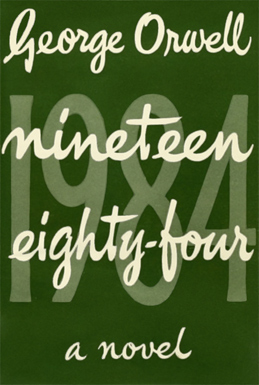
George Orwell, “Review of Mein Kampf” by Adolf Hitler”, 1940.
October 4, 2018
The True Frontier – Cordwainer Smith – Extra Sci Fi
Extra Credits
Published on 2 Oct 2018The godson of Dr. Sun Yat-Sen, Paul Linebarger led an exciting life of unusual achievements well before he got into writing science fiction — including setting up one of the United States’ first psychological warfare units. Under his pen name, he wrote the trend-bucking work Scanners Live in Vain.
September 29, 2018
QotD: Alanbrooke and Churchill
This was indeed a typical Churchillian soirée. Like most of those around the table, [Major-General Sir John] Kennedy too kept a diary. His account is graphic and chagrined. He noted at the time that AB [Alanbrooke] did not intervene on his behalf, “although I knew I had said nothing with which he did not agree.” His coda is equally pointed. “Later, I realized the wisdom of the technique which Brooke acquired after many stormy passages with the Prime Minister. Brooke found it an invaluable rule never to tell Churchill more than was absolutely necessary. I remember him once scoring out nine-tenths of the draft of a minute to the Prime Minister, remarking as he did so, ‘The more you tell that man about the war, the more you hinder the winning of it.'”
Footnote to Field Marshal Lord Alanbrooke, War Diaries, 1939-1945, 1957.
September 28, 2018
Arthur C. Clarke – Beyond Human – Extra Sci Fi – #2
Extra Credits
Published on 25 Sep 2018Arthur C. Clarke’s novel Childhood’s End explores his self-described “crypto-Buddhist” philosophy and the question of: are higher powers inherently, morally good, or is that something we decide as humans?
September 22, 2018
Arthur C. Clarke – Master of Science Fiction – Extra Sci Fi – #1
Extra Credits
Published on 18 Sep 2018Arthur C. Clarke is well known for his work on 2001: A Space Odyssey, but even more importantly he ventured into writing novels instead of just magazine serializations. Works like The City and the Stars asked big philosophical questions in science fiction.