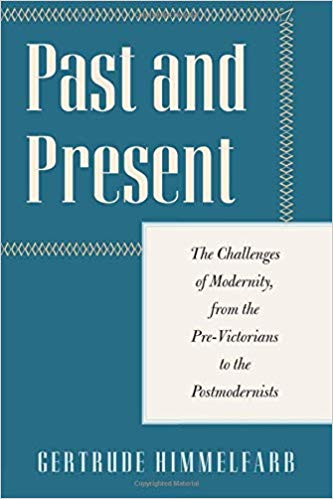
No one can question the dirtiness of international politics from 1870 onwards: it does not follow that it would have been a good thing to allow the German army to rule Europe. It is just possible that some rather sordid transactions are going on behind the scenes now, and that current propaganda “against Nazism” (cf. “against Prussian militarism”) will look pretty thin in 1970, but Europe will certainly be a better place if Hitler and his followers are removed from it. Between them these two books sum up our present predicament. Capitalism leads to dole queues, the scramble for markets, and war. Collectivism leads to concentration camps, leader worship, and war. There is no way out of this unless a planned economy can somehow be combined with the freedom of the intellect, which can only happen if the concept of right and wrong is restored to politics.
Both of these writers are aware of this, more or less; but since they can show no practicable way of bringing it about the combined effect of their books is a depressing one.
George Orwell, “The Road to Serfdom by F.A. Hayek / The Mirror of the Past by K. Zilliacus”, Observer, 1944-04-09.
July 8, 2019
July 6, 2019
QotD: How to learn
I can imagine an economics professor reading through The Literary Book of Economics in search of things he can use in his teaching. But I find it hard to imagine anyone else doing so on his own initiative, merely because he enjoyed reading it. There is a reason why a book is the length it is; a novel is not, with rare exceptions, a series of short stories. I conclude that most of the people reading [Michael] Watts’ book, most of the people it was written for, will be students reading it because their professor told them to. And, judging by my experience of students over the years, many of the students told to read it won’t.
That fits the pattern of most modern schooling at all levels. Someone else decides what you should learn, tells you what you must do to learn it, and makes some attempt to make sure you follow his instructions. It is not a model I think highly of. A much superior model in my view, if you can pull it off, is to get someone to learn something primarily because he finds it interesting. The best way of doing that is to provide students with things to read that are worth reading on their own, not things they read only because they are ordered to. Not even things they read only because they think the labor of reading them will pay off in future benefit.
That view of education is why both children of my present marriage were unschooled. It is also why all of my nonfiction books, with the partial exception of Price Theory, were targeted at the proverbial intelligent layman. They can be, and sometimes are, used as textbooks, but they were written with the assumption that if the reader did not find a chapter worth finishing he was likely not to finish it.
David Friedman, “Thoughts on Literature, Economics and Education”, Ideas, 2017-05-01.
July 5, 2019
QotD: The paradox of tolerance
In 1945, the philosopher Karl Popper wrote in his book, The Open Society and Its Enemies that “in order to maintain a tolerant society, the society must be tolerant of intolerance.”
This is now referred to as “the paradox of tolerance.”
Popper argues that unlimited tolerance is self-defeating. If a tolerant society is tolerant of the intolerant, the intolerant will defeat the tolerant. Therefore, tolerance is all well and good, but to defend itself, it must maintain a certain degree of intolerance towards the intolerant.
It it this defense of intolerance that radicals use to justify violence against their political opponents.
If one dares to question the legitimacy of “direct action” from communist groups against their political opponents, these groups will quickly cite this paradox of tolerance. When fascists are shooting up mosques and synagogues, it’s difficult to defend them against mere milkshakes.
Which is why the paradox of tolerance is constantly brought up to defend violence: It’s hard to argue against. Only the most strict pacifist will argue against violence in (the name of) self-defense. Karl Popper was right to point out that a tolerant society that is tolerant toward its enemies will be destroyed.
Nathan Kreider, “Misconceptions of the Paradox of Tolerance”, Being Libertarian, 2019-05-31.
June 28, 2019
QotD: “Intelligence” is just a noun
Howard Gardner has also convinced us that the word intelligence carries with it undue affect and political baggage. It is still a useful word, but we shall subsequently employ the more neutral term cognitive ability as often as possible to refer to the concept that we have hitherto called intelligence, just as we will use IQ as a generic synonym for intelligence test score. Since cognitive ability is an uneuphonious phrase, we lapse often so as to make the text readable. But at least we hope that it will help you think of intelligence as just a noun, not an accolade.
We have said that we will be drawing most heavily on data from the classical tradition. That implies that we also accept certain conclusions undergirding that tradition. To draw the strands of our perspective together and to set the stage for the rest of the book, let us set them down explicitly. Here are six conclusions regarding tests of cognitive ability, drawn from the classical tradition, that are by now beyond significant technical dispute:
- There is such a thing as a general factor of cognitive ability on which human beings differ.
- All standardized tests of academic aptitude or achievement measure this general factor to some degree, but IQ tests expressly designed for that purpose measure it most accurately.
- IQ scores match, to a first degree, whatever it is that people mean when they use the word intelligent or smart in ordinary language.
- IQ scores are stable, although not perfectly so, over much of a person’s life.
- Properly administered IQ tests are not demonstrably biased against social, economic, ethnic, or racial groups.
- Cognitive ability is substantially heritable, apparently no less than 40 percent and no more than 80 percent.
Charles Murray, “The Bell Curve Explained”, American Enterprise Institute, 2017-05-20.
June 25, 2019
QotD: Perpetual adolescence
JOHN DICKERSON, HOST: Before we leave, let me ask you about your book The Vanishing American Adult. You see a very serious problem here for America. Explain what you mean. It’s a nonpolitical problem.
SENATOR BEN SASSE: Yes, so this book is 100 percent not about politics, and it’s 99 percent not about policy. It’s about this new category of perpetual adolescence. And, first, let’s just say that, over the last two millennia or so, the emergence of a category called adolescence is a pretty special gift. We believe that, when our kids become biological adults, when they hit puberty, they don’t have to be fully formed, morally, emotionally, economically, educationally, in terms of household structure. They don’t have to go out and be fully adult immediately. They don’t have to go off to war, and they don’t have to become economically self-sufficient. That’s glorious, to have that protected space between childhood and adulthood. But it’s only glorious if you understand that it’s a transitional state, it’s a means to an end. Peter Pan’s Neverland is a hell. It’s a dystopia. And we don’t want to be — have our kids caught at a place where they’re not learning how to be adults. And, right now, we’re not tending to the habit formation aspects of a republic.
“Face the Nation transcript, May 14, 2017: Schiff, Sasse, Gates”, CBS News, 2017-05-14.
June 23, 2019
QotD: The American way of war
Back in 2015 and again in April 2016, I commented on what I consider to be a fairly consistent litany of failures in American strategic leadership since, about 1960. Just this month I saw a new article (almost a synopsis of his recent book) in Foreign Affairs by George Packer about noted (notorious to some) American diplomat “Richard Holbrooke and the Decline of American Power.”
One paragraph caught my eye:
We prefer our wars quick and decisive, concluding with a surrender ceremony, and we like firepower more than we want to admit, while counterinsurgency requires supreme restraint. Its apostles in Vietnam used to say, “The best weapon for killing is a knife. If you can’t use a knife, then a gun. The worst weapon is airpower.” Counterinsurgency is, according to the experts, 80 percent political. We spend our time on American charts and plans and tasks, as if the solution to another country’s internal conflict is to get our own bureaucracy right. And maybe we don’t take the politics of other people seriously. It comes down to the power of our belief in ourselves. If we are good — and are we not good? — then we won’t need to force other people to do what we want. They will know us by our deeds, and they will want for themselves what we want for them.
There is, I fear, a lot of truth in that little paragraph and I am also worried that the American fascination (mainly the Pentagon’s fascination) with process and organization has spread to Canberra, London, Ottawa, Wellington and even Berlin. The notion is that if we can just get our organizations and procedures right then everything will fall into line. We have forgotten that while good, sound organizations and sensible, simple, robust procedure do matter, they need to be in service to a sound strategic aim (a vision, if you like) and, sometimes, ad hoc organizations and “off-the-wall” procedures work best in new situations, whether counter-insurgency or all-out war against a peer.
Ted Campbell, “Following the blind leader (3)”, Ted Campbell’s Point of View, 2019-05-21.
June 20, 2019
A Clockwork Orange – Dystopias and Apocalypses – Extra Sci Fi
Extra Credits
Published on 18 Jun 2019Go to https://NordVPN.com/ExtraCredits to get 75% off a 3 year plan and use code
ExtraCreditsto get an extra month free. Protect yourself online today!A Clockwork Orange reflects a cultural fear of society’s moral decay in the 1960s. Its usage of a mashup slang language known as “nadsat” illustrates the complexities of rebellious youth culture. Ultimately, Anthony Burgess’s work asks us to think about if or when free will should ever be suppressed, but the major differences between the book and the film version of this story present contrasting takeaways.
Where the dystopias of Brave New World and 1984 warned against the easy slide into totalitarianism, and painted for us worlds in which freedom is nearly a forgotten thing… A Clockwork Orange presents us with a protagonist who has almost an excess of freedom, and in doing so it shows us the shift in societal fears.
June 16, 2019
Encountering Richard Mitchell’s Less Than Words Can Say
In Quillette, Mark Andre Alexander recounts his first brush with “The Underground Grammarian”:
My first upper division English class shocked me when a dinosaur English professor, Dr. David Bell — a professor in Richard Mitchell’s mold, but not yet a curmudgeon — gave me my first C on a paper, busting my A-student self-image. That wake-up call helped me to see that, although I was published, I had much to learn about writing. Worse, in my first graduate course, Bell’s “Austen and Bronte,” I discovered that I had much to learn about reading, and that I lacked the acuity to appreciate Jane Austen’s clear, witty, and precise prose.
Not long before, I’d read Richard Mitchell’s first book, Less Than Words Can Say. I don’t recall how I stumbled upon him. I’d probably read some opinion column that referred to his work. In a publication announcement in the Underground Grammarian, Mitchell described it as “a melancholy meditation on the dismal consequences of the new illiteracy.”
He had wanted to title the book The Worm in the Brain, pointing to the dangers of administrative rhetoric. The publisher rejected that title as “too frightening and grisly,” But I knew I had found a fellow traveler when I read his Foreword:
Words never fail. We hear them, we read them; they enter into the mind and become part of us for as long as we shall live. Who speaks reason to his fellow men bestows it upon them. Who mouths inanity disorders thought for all who listen. There must be some minimum allowable dose of inanity beyond which the mind cannot remain reasonable. Irrationality, like buried chemical waste, sooner or later must seep into all the tissues of thought.
With that prophetic book, I first experienced the “cleansing fire [that] leaps from the writings of Richard Mitchell,” as George F. Will later described it.
Mitchell did title the first chapter “The Worm in the Brain,” in which he told the story of a colleague who would send him a note whenever there was some committee meeting. At first the note read something like, “Let’s meet next Monday at two o’clock, OK?” But when he aspired to become assistant dean pro tem, the simple, perfect prose changed. “This is to inform you that there will be a meeting next Monday at 2:00.” After achieving that appointment, the note read, “You are hereby informed that the committee on Memorial Plaques will meet on Monday at 2:00.” The worm in the brain had done its work.
I began to notice the worm in the brain during my everyday interactions with friends and colleagues at the university, especially the English professors. It often took the form of a label which created an image in the brain that prevented thought. One such professor, smart and engaging, returned a paper analyzing a passage in the U.S. Constitution. She gave the paper an A, but added, “I can’t help but feel that your argument is wrong, although I can’t explain why. I showed it to my husband, and he thought that it was a conservative argument.”
That statement invalidated the A, and I experienced my first taste of how subtly an abstract label can paralyze an otherwise thoughtful mind. Years later, while teaching at a business college, I saw a more pronounced form of the same phenomena. During a Business English class, I chatted with a bright student who volunteered for the NAACP. We would discuss all kinds of interesting topics, such as the similarities and differences between Martin Luther King and Malcolm X.
That is, until I noticed a change. She had stopped talking to me like a fellow human being and started talking at me like a white male. I stopped her and asked if she noticed what she had just done. She hadn’t, so I pointed out that she had shifted from talking to me to talking to an image inside her head. I told her that I would hold my hand up and block my face every time she did it. As the conversation proceeded, and I raised my hand, lowered it, and then raised it again, she became aware of the worm in her brain, a mental-emotional implant that prevented her from treating me as a colleague when certain topics were engaged.
Her implant was creating rubbish, of course, but it was insidious by nature because it disguised itself as something in the real world. Worms in the brain are like that.
June 15, 2019
The real explanation for our lack of moonbases/Concorde 2’s/great walls/pyramids
Homoitalicus Blog responds to a new book [At Our Wit’s End by Edward Dutton and Michael Woodley of Menie] that concludes that we (western civilization) are headed toward a similar fate as the western Roman Empire:
The reason that these staggering feats of engineering haven’t been repeated is more to do with economics and politics than with any perceived lack of engineering Genius in the population. The authors fail to reflect that emerging from the massively centralised wartime economy of the West there was an enormous technological infrastructure of scientists and capable administrators just sat there with no more Nazis to fight, communist megalomaniacs to support, Atom bombs to build and test, or greatest seabourne invasions in history to plan and implement.
This was probably the greatest concentration of intellect ever harnessed to a single cause and hopefully we’ll never need to see its like again
With the war done and dusted some new purpose needed to be found for all this talent, the way of government being what it is, returning all these geniuses to normal boring peacetime activity was never an option.
Newly nationalised aircraft industries took the wartime inventions of jet engine and the rest and evolved them with massive amounts of financial input from the government into Concorde, truly a magnificent aircraft but one which could uncharitably be described as using taxpayers’ money to ferry plutocrats from one side of the Atlantic to the other. Whether it ever really paid for itself is a moot point and the unseemly haste with which it was dumped after the crash tends to imply that its 50-year-old airframes were becoming a burden, and the economic case for making a new generation of supersonic planes is weak – luckily the will in the west for another taxpayer-funded effort doesn’t seem to be there. That is progress.
Likewise the man on the moon, possible only because of the Cold War space race.
The authors might as well explain the fact that we haven’t build another pyramid of Giza or Great Wall of China.
Their assertion that a general decline in the amount of creativity (which is correlated strongly with g) is justified by the observable decline in the quality of the output of the BBC. However other possible reasons for this are the infestation of Cultural Marxism and its baleful handmaid, Political Correctness, which really mitigate against creative thought. It is impossible to imagine making The Life of Brian, or The Sweeney or countless other shows which we enjoyed in our youth nowadays largely for reasons of PC and the fact that the BBC’s mission is now brainwashing rather than entertainment. State broadcasters the world over will suffer from the same problem, as does (worryingly) the world of academe in which speakers of truth or opinion which lie outwith accepted and very tightly bounded acceptability, are routinely no-platformed or summarily sacked. The teaching of history and the humanities generally has been debased, and only the STEM subjects seem to have resisted (excluding the question of Climate Change which has taken on the trappings of a religion rather than serious science).
As a consequence it is impossible to separate the effects of CM from the mooted results of a generalised decline in intelligence, and the authors are wrong not to point this out.
They don’t consider either the likely effect of the 20th century’s great blood letting in the fields of Flanders. A substantial proportion of the best and brightest of a generation were ground into the mud there before being able to procreate. I would be surprised if that had no effect on the quality of the gene pool.
H/T to the Continental Telegraph for the link.
June 12, 2019
A Canticle for Leibowitz – Dystopias and Apocalypses – Extra Sci Fi
Extra Credits
Published on 11 Jun 2019A Canticle for Leibowitz is a book about cycles and violence — about the cost of progress. But it is also about the persistence of humanity’s quest for knowledge and endless resilience. Unlike other post-apocalyptic fiction tropes, it is focused on the lives and goings of everyday people, rather than on the setting itself, and is a critical work to study if you want to understand the post-apocalyptic genre better.
Inspired by his own experience being part of the bombing campaign that leveled the ancient monastery of Monte Cassino during World War 2 and the fear of nuclear annihilation that gripped America during the Cold War, Walter M. Miller Jr. imagined the world in a brand new dark age, ushered in by the hubris of humankind — in the only novel he ever published.
June 11, 2019
QotD: Advice to young men
Since Philip Dormer Stanhope, Earl of Chesterfield, published his celebrated letters to his morganatic son, in 1744, there has been no adequate book, in English, of advice to young men. I say adequate, and the adjective tells the whole story. There is not, of course, a college president or a boss Y.M.C.A. secretary, or an uplifting preacher in the United States who has not written such a book, but all of them are alike filled with bilge. They depict and advocate a life that no normal young man wants to live, or could live without ruin if he wanted to. They are full of Sunday-school platitudes and Boy Scout snuffling. If they were swallowed by the youth of today the Republic of tomorrow would be a nation of idiots.H.L. Mencken, “Another Long-Awaited Book”, Chicago Tribune, 1926-09-12.
June 10, 2019
The intended message of George Orwell’s Nineteen Eighty-Four
There are few novels which have been so enthusiastically claimed by partisans of both the right and the left — sometimes simultaneously — for misunderstood reasons. Orwell wasn’t warning us about technology (although he brilliantly illustrated how technology can be harnessed in service of the state), nor was he somehow warning us about the evils of current or recent politicans (Reagan, Bush, Trump). Orwell, a dedicated life-long socialist, was warning us of the dangers of totalitarianism, particularly the communist style of totalitarianism:
June 8, 2019, marks the 70th anniversary of George Orwell’s dystopian novel 1984. There will be no shortage of think pieces that will misinterpret its legacy. They will focus on social media, security cameras, data collection, and “fake news.” The problem? The novel was not a commentary on the downside of technology. It was meant to warn against the growing spread of communism.
In the decades since the time of its publication, the context of Orwell’s magnum opus has been lost. What remains in the cultural memory are simply fragments of the larger picture: government censorship, ubiquitous surveillance cameras, and Orwell’s clever neologisms (Newspeak, doublethink, and thoughtcrime, among others). This selective recall has led to a widespread misreading of the book’s original warning.
[…]
From the left, most present-day articles and blog posts project the character “Big Brother” onto President Donald Trump, like Eliot Namay’s column in the May 6 edition of the Charleston Gazette-Mail. They typically focus on Trump’s fevered populism and his penchant for impulsive speech, which can lead him to play fast and loose with facts.
Sales of 1984 spiked dramatically after his inauguration in 2017 when White House Press Secretary Sean Spicer (incorrectly) touted the “largest audience ever to witness an inauguration.” Trump advisor Kellyanne Conway later defended the claim on Meet the Press, blurting out the now infamous phrase, “alternative facts.” Scores of news stories compared her gaffe to Orwell’s “Newspeak” and “doublethink.” It’s also fairly common to read comparisons of Trump’s rallies to the “Two Minutes Hate” depicted in 1984.
Comparisons from the right, on the other hand, generally focus on the politically correct speech codes of colleges and universities or on the massive data gathering of big tech companies like Facebook and Google, warning readers that “Big Brother is Watching You.” Kalev Leetaru explores both of these issues in his May 6 column in Forbes, where he compares the social media de-platforming trend to Orwell’s “unperson” status. Notably, sales of 1984 also spiked in 2013 after Edward Snowden leaked details of the NSA’s mass collection of internet and phone records. A slew of articles followed, asserting that 1984 had arrived.
A certain amount of hyperbole is a characteristic of today’s reporting and commentary, but current comparisons to 1984 are inappropriate. Again, George Orwell was writing about a specific regime. Big Brother was an obvious reference to “Uncle Joe” Stalin, a uniquely evil dictator. Trump has his shortcomings, but he is no Stalin. A president who is prone to exaggeration does not equal a government-controlled press (which the Soviet Union had). The “Two Minutes Hate” recalled Stalin’s public demonization of Trotzky, who dared to criticize Stalin’s tactics. Data collection is a growing concern, to be sure, but it doesn’t precede a terrifying knock on the door from the KGB.
QotD: Robert Heinlein on “honest work”
The beginning of 1939 found me flat broke following a disastrous political campaign (I ran a strong second best, but in politics there are no prizes for place or show).
I was highly skilled in ordnance, gunnery, and fire control for Naval vessels, a skill for which there was no demand ashore — and I had a piece of paper from the Secretary of the Navy telling me that I was a waste of space — “totally and permanently disabled” was the phraseology. I “owned” a heavily-mortgaged house.
About then Thrilling Wonder Stories ran a house ad reading (more or less):
GIANT PRIZE CONTEST —
Amateur Writers!!!!!!
First Prize $50 Fifty Dollars $50In 1939 one could fill three station wagons with fifty dollars worth of groceries.
Today I can pick up fifty dollars in groceries unassisted — perhaps I’ve grown stronger.
So I wrote the story “Life-Line.” It took me four days — I am a slow typist. I did not send it to Thrilling Wonder; I sent it to Astounding, figuring they would not be so swamped with amateur short stories.
Astounding bought it… for $70, or $20 more than that “Grand Prize” — and there was never a chance that I would ever again look for honest work.
(“Honest work” — an euphemism for underpaid bodily exertion, done standing up or on your knees, often in bad weather or other nasty circumstances, and frequently involving shovels, picks, hoes, assembly lines, tractors, and unsympathetic supervisors. It has never appealed to me. Sitting at a typewriter in a nice warm room, with no boss, cannot possibly be described as “honest work.”)
Robert A. Heinlein, 1980.
June 9, 2019
QotD: What is economics?
Probably the most common definition is “the science of allocating scarce resources to diverse ends.” [Michael] Watts offers Marshall’s definition: The study of mankind in the ordinary business of life. Neither of those is what I think of as economics. Still less is it the study of the economy, which I suspect would come closest to what most people think the word means.
To me, economics is that approach to understanding behavior that starts from the assumption that individuals have objectives and tend to take the acts that best achieve them. That is what economists mean by “rationality,” and it is the assumption of rationality that is, in my view, the distinguishing characteristic of economics. What I am looking for are works that tell us something interesting about the implications of that assumption.
Someone at some point suggested Orwell’s Down and Out in Paris and London. It is an interesting book, although much too long for my purposes. But what makes it interesting, economically speaking, is not the vivid picture of poverty in the period between the wars but particular details relevant to implications of rational behavior.
I can give, by memory, an example. Orwell observed waiters in a fancy Paris restaurant, out of sight of the diners, spitting in the dishes they were going to serve. In an idealized market context, the waiter would never spit in the dish unless the value to him of doing so was more than the disvalue to the patron he was serving, which is unlikely. But throw in the inability of either the patrons or the waiter’s employers to monitor the waiter’s behavior and any benefit to the waiter of expressing his hostility is a sufficient incentive to make him do it. That suggests the further point that, when you cannot monitor someone’s behavior, his preferences matter — you want the job he is doing for you to be done by someone whose preferences are close enough to yours so that he will want to do what you would want him to do — even if nobody is watching.
Economics is not the study of the economy. A picture of poverty, or unemployment, or wealth, or economic growth, however accurate and vivid, does not in itself teach you any economics. A story such as Poul Anderson’s “Margin of Profit,” which deals with a wholly fictional future, does, because it demonstrates in that world an important implication of rationality that holds in our world as well — that in order to prevent someone from doing something you do not want him to do it is not necessary to make it impossible, merely unprofitable.
David Friedman, “Thoughts on Literature, Economics and Education”, Ideas, 2017-05-01.
May 31, 2019
QotD: How we gain weight
I first learned about [Stephan] Guyenet’s work from his various debates with Gary Taubes and his supporters, where he usually represents the “establishment” side. He is very careful to emphasize that the establishment doesn’t look anything like Taubes’ caricature of it. The establishment doesn’t believe that obesity is just about weak-willed people voluntarily choosing to eat too much, or that obese people would get thin if they just tried diet and exercise, or that all calories are the same. He writes
The [calories in, calories out or CICO] model is the idea that our body weight is determined by voluntary decisions about how much we eat and move, and in order to control our body weight, all we need is a little advice about how many calories to eat and burn, and a little willpower. The primary defining feature of this model is that it assumes that food intake and body fatness are not regulated. This model seems to exist mostly to make lean people feel smug, since it attributes their leanness entirely to wise voluntary decisions and a strong character. I think at this point, few people in the research world believe the CICO model.
[Debate opponent Dr. David] Ludwig and I both agree that it provides a poor fit for the evidence. As an alternative, Ludwig proposes the insulin model, which states that the primary cause of obesity is excessive insulin action on fat cells, which in turn is caused principally by rapidly-digesting carbohydrate. According to this model, too much insulin reduces blood levels of glucose and fatty acids (the two primary circulating metabolic fuels), simultaneously leading to hunger, fatigue, and fat gain. Overeating is caused by a kind of “internal starvation”. There are other versions of the insulin model, but this is the one advocated by Ludwig (and Taubes), so it will be my focus.
But there’s a third model, not mentioned by Ludwig or Taubes, which is the one that predominates in my field. It acknowledges the fact that body weight is regulated, but the regulation happens in the brain, in response to signals from the body that indicate its energy status. Chief among these signals is the hormone leptin, but many others play a role (insulin, ghrelin, glucagon, CCK, GLP-1, glucose, amino acids, etc.)
The Hungry Brain is part of Guyenet’s attempt to explain this third model, and it basically succeeds. But like many “third way” style proposals, it leaves a lot of ambiguity. With CICO, at least you know where you stand – confident that everything is based on willpower and that you can ignore biology completely. And again, with Taubes, you know where you stand – confident that willpower is useless and that low-carb diets will solve everything. The Hungry Brain is a little more complicated, a little harder to get a read on, and at times pretty wishy-washy.
But listening to people’s confidently-asserted simple and elegant ideas was how we got into this mess, so whatever, let’s keep reading.
Scott Alexander, “Book Review: The Hungry Brain“, Slate Star Codex, 2017-04-27.