Quotulatiousness

August 27, 2020

Margaret Murray’s highly influential The Witch-Cult in Western Europe

Filed under: Books, Britain, History, Religion — Tags: , , , , , , — Nicholas @ 03:00

In First Things, Francis Young discusses the impact Murray’s work had when it was published in the 1920s:

Just under a century ago, in 1921, one of the strangest books ever to be published by Oxford University Press appeared in print: The Witch-Cult in Western Europe by Margaret Alice Murray. By today’s academic standards — in fact, even by the standards of the 1920s — Murray’s book was filled with transparent flaws in methodology and research. Furthermore, the book’s author (a leading Egyptologist) was not qualified to write it. The few scholars then working on the history of European witchcraft dismissed Murray’s contribution. Yet in spite of this, The Witch-Cult in Western Europe became an instant hit and captured the imaginations of readers. Within three decades, the book had not only profoundly influenced cultural understandings of witchcraft, but also directly led to the rise of neopaganism and the foundation of a new religion, Wicca, that today has millions of adherents throughout the world.

Margaret Alice Murray (1863–1963) was born and brought up in British India — an upbringing that, as with so many Anglo-Indians of the nineteenth century, may have opened her mind to interests beyond Victorian culture. Determined to pursue a career of her own at a time when opportunities for women were limited, Murray tried out both nursing and social work before entering the progressive University College London in 1894, where she studied Egyptology under W. Flinders Petrie. Murray rapidly rose through the academic ranks, and by 1914, she was effectively running the Egyptology department. Her impressive achievements in advancing knowledge of ancient Egypt and higher education for women have, however, been largely overshadowed by her decision to take a detour into writing about European witchcraft.

In The Witch-Cult in Western Europe, Murray seized on some unusual testimonies in 16th-century Scottish witch trials to elaborate a radical theory: She claimed that what medieval and early modern people called witchcraft was, in fact, the last traces of a pagan fertility cult that originated in the Neolithic period. The witch trials of the 15th–17th centuries represented Christianity’s last attempt to stamp out this cult, which was practiced in secret covens (groups of thirteen people) who worshipped a horned god (who was mistaken for the devil). Knowledge of this cult was passed through families or, occasionally, to new initiates, but kept secret from the outside world.

Murray’s use of a single set of problematic sources from one country (Scotland) to argue that a previously unnoticed religion had existed since prehistory failed to meet basic historiographical and anthropological standards of research. She was given to making huge conceptual leaps on the basis of contentious interpretations of meager evidence. Using a small range of hostile trial records designed to discredit women accused of witchcraft (along with testimonies extracted under torture), Murray reconstructed what she believed were real religious practices lurking behind the demonological construct of the Witches’ Sabbath. In so doing, she brought together traditions of interpretation honed by the anthropologist Sir James Frazer (1854–1941), the author of The Golden Bough, and the French historian Jules Michelet (1798-1874). Murray followed Michelet in arguing that those accused of witchcraft were not the innocent victims of trumped-up charges, but were in fact adherents of a subversive cult; and she followed Frazer in her belief that prehistoric religious beliefs, associated with fertility, had survived into recent times.

August 25, 2020

How we used to “dine out” (and someday might be able to again)

Filed under: Books, Britain, Business, Europe, Food, France, History — Tags: , , , , , — Nicholas @ 03:00

In The Critic, Alexander Larman reviews The Restaurant: A history of eating out by William Sitwell:

The recent enforced lockdown closure was a potential death blow to the entire [restaurant] industry. Which makes William Sitwell’s luxurious book both a celebration and an unintentional requiem for what may be a bygone time.

His central thesis is clear: the history of dining out is also a social history of evolving cultures and tastes. This means that the subjects he writes about range from ancient Pompeii to the growth of the sushi conveyor belt restaurant, encompassing everything from medieval taverns and the French Revolution to the rise of Anglo-Indian cuisine.

It is a broad and impressive spectrum, but perhaps Sitwell has, like some of the less fortunate people he describes, bitten off more than he can chew. His opening chapter about Pompeii is rich in surprising detail (graffiti uncovered outside one tavern when it was excavated ranged from the poetic — “Lovers are like bees in that they lead a honeyed life” — to the crude — “I screwed the barmaid”) and an insightful evocation of the dining culture in Ancient Rome.

He is then, unfortunately, faced with the insurmountable difficulty that the restaurant, as we know it today, did not exist until the late eighteenth century, meaning that his definition of “eating out” has to do some extremely heavy lifting.

There is as much padding in the early chapters as there is around some of his subjects’ waistlines. Much of what he writes is very interesting and often amusing, such as the way in which coffee, first drunk in London around the time of the Restoration, became associated both with health-giving properties and reportedly making men impotent, withered “cock-sparrows”. Yet there are also lengthy sections that have little or nothing to do with restaurants, such as a potted history of the Industrial Revolution.

Nevertheless, when Sitwell finally gets into his stride and begins to write about eateries proper, his authority and enthusiasm are palpable. He describes the dawn of fine dining in Paris in the nineteenth century evocatively. London lagged behind, although gentlemen’s clubs such as the Athenaeum and Reform offered some delights for the wealthy thanks to chefs (French, naturally) such as Alexis Soyer who implemented what one biographer called “the most famous and influential working kitchen in Europe” in 1841, complete with gas-fired stoves, butcher’s rooms and a fireplace devoted to the roasting of game and poultry.

August 24, 2020

Theodore Dalrymple reviews White Fragility by Robin DiAngelo and How to Be an Antiracist by Ibram X. Kendi

Filed under: Books, Media, Politics, USA — Tags: , , — Nicholas @ 05:00

The two books share many characteristics, says the good doctor (in his “Anthony Daniels” guise), and the most noteworthy is a shared hectoring tone:

DiAngelo’s book displays a curious admixture of influences: the Chinese Cultural Revolution, Jimmy Swaggart, Freudian psychoanalysis, and Uriah Heep, the four of them being present in approximately equal proportion.

DiAngelo has apparently made a career of anti-racist struggle sessions in which ordinary employees of various organizations must confess publicly to their racism however hidden it might be, as university professors, primary school teachers, doctors working in slums, etc., had once in China to confess to bourgeois propensities and counter-revolutionary ideas. They may never have uttered a racist sentiment, they may never have been rude to a person of another race, let alone violent towards one, they may have friends of other races or even be married to a person of another race, but they carry racism deep within them like Original Sin, with this difference: there can be no redemption from it even after having read DiAngelo’s book and attended her struggle sessions. Personally, I should not be at all surprised if the end result of all her efforts, at least among the men she has “trained” (which is to say tried to indoctrinate), was to have acted as a recruitment officer for the Ku Klux Klan.

After thirty years of constant work of supposedly anti-racist training, she confesses — like the tearful Jimmy Swaggart — to being still guilty of racism herself, promising to reform, although reform is ex hypothesi impossible because racism is in her society’s DNA, as it were. One is reminded of the type of psychoanalysis which after thirty years of hourly sessions four times a week fails to get to the root of the analysand’s problem, let alone solve it, because it doesn’t even know what the problem is. But failure is also an opportunity, because, like psychoanalysis, the more anti-racist training fails, the more it is needed. DiAngelo, all credit to her, has found an economic niche for herself for the rest of her life. One has a sneaking admiration for such entrepreneurs. They are the asset-strippers of the soul.

As for Uriah Heep, DiAngelo has obviously heard, read, marked, learned, and inwardly digested (as my teachers used to demand of me) David Copperfield. Her oleaginous approach to all “people of color,” as she coyly calls them, makes Uriah Heep seem positively blunt and straight-talking. DiAngelo regards all nonwhite people, ex officio, as being incapable of exaggeration or unjustified self-pity, let alone of lying. As well as being sycophantic, this is, to coin a word, racist, for one of the most important manifestations of free will, and therefore of humanity itself, is the capacity to lie. In effect, then, she regards “people of color” as infra-human truth-uttering mechanisms: they speak, therefore what they say is true. No critical faculties need be applied to what they say.

[…]

DiAngelo is a tremendous moral narcissist. This is shown by her use of the term “people of color.” Until page 31, I thought that it meant black, but on that page I learned that it meant non-white. She shows no interest in the question of whether the Japanese, Chinese, Indians, Burmese, Vietnamese, Cambodians, Austronesians, Amerindians, and Africans, et al., would all be delighted to be put in the same category, let alone interest in their many cultures. On page 33, we read:

    White supremacy is more than the idea that whites are superior to people of color; it is the deeper premise that supports the idea — the definition of whites as the norm or standard of human, and people of color as a deviation from that norm.

Lumping non-white people together as “people of color” is precisely an instance of what she criticizes: this is what happens when moral rhetoric far outruns intelligence.

MATERA – James Bond and the City of Beige

Filed under: Architecture, Books, Europe, History, Italy — Tags: , , , — Nicholas @ 04:00

Lindybeige
Published 23 Aug 2020

Get your first audiobook and a monthly selection of Audible Originals for free when you try Audible for 30 days visit https://www.audible.com/lindybeige or text lindybeige to 500 500.

Matera is an city in Italy which has suddenly become famous. It is rather special and here I describe why.

Support me on Patreon: https://www.patreon.com/Lindybeige

Buy the music – the music played at the end of my videos is now available here: https://lindybeige.bandcamp.com/track…

Buy tat (merch):
https://outloudmerch.com/collections/…

Lindybeige: a channel of archaeology, ancient and medieval warfare, rants, swing dance, travelogues, evolution, and whatever else occurs to me to make.

▼ Follow me…

Twitter: https://twitter.com/Lindybeige I may have some drivel to contribute to the Twittersphere, plus you get notice of uploads.

My website:
http://www.LloydianAspects.co.uk

August 22, 2020

Debra Soh’s new book is “a cancel-culture grenade”

Filed under: Books, Health, Media, Politics — Tags: , , , , , , — Nicholas @ 05:00

Jen Gerson knows that any positive mention of Debra Soh’s The End of Gender: Debunking Myths About Sex and Identity has a strong resemblance to square-dancing in a minefield. Cancellations may fall like raindrops on the career of anyone so unenlightened as to even acknowledge the existence of such a work:

For that, at its heart, is what Soh’s book is: a lucid discussion of the best science we have to date on the nature of gender and sex, written for a lay audience. What gives the title its sizzle is not the content, but rather the cultural climate in which it is being published.

It maps the depth, scope and scale of current Culture War trenches in this particular theatre of battle. The End of Gender stomps on tripwires like the gender binary, whether transgender women are women, autogynephilia, Rapid Onset Gender Dysphoria, bathroom bans, and more.

It’s a cancel-culture grenade.

That’s not because these subjects ought to be contentious. Soh’s approach and tone are largely neutral. Rather, the controversy the book will inevitably incite is a reflection of a culture that has been warped into a state of existential terror by the very notion that these ideas can be responsibly discussed.

Soh begins by defining her terms.

So much of the debate around the most difficult topics of sex and gender stem from the simple fact that we are misusing the basic language. For example, sex and gender are not interchangeable concepts, even though they are often treated as such.

Sex is a term of biology. One’s sex, Soh argues, is determined by his or her gametes. With the exception of rare intersex disorders, 99 per cent of the population has a clearly defined biological sex that slots into one of two dimorphic categories: male or female.

Gender is more complicated. It’s now popular to state that there are more than two genders, but Soh disputes this. She argues that gender — or the set of characteristics that signal one’s sex to society — is also dimorphic. For 99 per cent of the population, gender correlates with sex. Further, even when expressions of gender are at odds with one’s biological sex, this, too, is mediated by biology. Whether one presents as gender typical or gender atypical is the result of prenatal testosterone exposure.

Soh notes that claiming to be gender non-binary, or gender fluid — or any one of a thousand variations that transcend the limiting concepts of male and female — is increasingly trendy, especially among teenagers and young adults. It seems to be the latest form of identity experimentation.

There are two reasons for this trend.

The first is that seeing the world through an intersectional framework encourages progressives to reverse the traditional hierarchies of race, sex and power. Therefore, claiming a marginalized identity — like genderqueer non-binary unicorn — accrues status within progressive peer circles.

The second is that the culture has undergone a massive awakening to transgender rights over the past decade. This has contributed expressive categories and vocabularies for people who otherwise might have struggled to find the language to explore their most authentic selves. As the cues, like cosmetics and dress, that we used to signal our gender are socially constructed, gender expression is limited only by our creativity.

History-Makers: Thucydides

Overly Sarcastic Productions
Published 21 Aug 2020

Start your free trial at http://squarespace.com/overlysarcastic and use code OVERLYSARCASTIC to get 10% off your first purchase.

Ahh ancient Greece, it has been entirely too long. Today we’ll take a look at the foundational work of my entire career path — Thucydides’ History of the Peloponnesian War, a book that almost single-handedly set the standard for how we engage in historical inquiry. Also it has the added benefit of being about Ancient Greece so win-win!

SOURCES & Further Reading: History of the Peloponnesian War by Thucydides, Histories by Herodotus, Hellenica by Xenophon, and the 4 straight years I spent studying this in university — Boy do I love doing a video about a topic I’m specifically trained in.

This video was edited by Sophia Ricciardi AKA “Indigo”. https://www.sophiakricci.com/
Our content is intended for teenage audiences and up.

PATREON: https://www.Patreon.com/OSP

DISCORD: https://discord.gg/kguuvvq

MERCH LINKS: https://www.redbubble.com/people/OSPY…

OUR WEBSITE: https://www.OverlySarcasticProductions.com
Find us on Twitter https://www.Twitter.com/OSPYouTube
Find us on Reddit https://www.Reddit.com/r/OSP/

August 15, 2020

Miscellaneous Myths: The Book Of Invasions

Filed under: Books, Europe, History, Humour, Religion — Tags: , , , , — Nicholas @ 04:00

Overly Sarcastic Productions
Published 14 Aug 2020

The quintessential Irish mythological text, and … it’s about getting steamrolled by invaders. Now that’s what I call brand consistency!

Our content is intended for teenage audiences and up.

PATREON: https://www.Patreon.com/OSP

DISCORD: https://discord.gg/kguuvvq

MERCH LINKS: https://www.redbubble.com/people/OSPY…

OUR WEBSITE: https://www.OverlySarcasticProductions.com
Find us on Twitter https://www.Twitter.com/OSPYouTube
Find us on Reddit https://www.Reddit.com/r/OSP/

August 11, 2020

Orwell’s “Notes on Nationalism”

Filed under: Books, Britain, History, Media, Politics, WW2 — Tags: , , , , , , — Nicholas @ 03:00

In Quillette, Adam Wakeling discusses George Orwell’s essay in the postwar magazine Polemic:

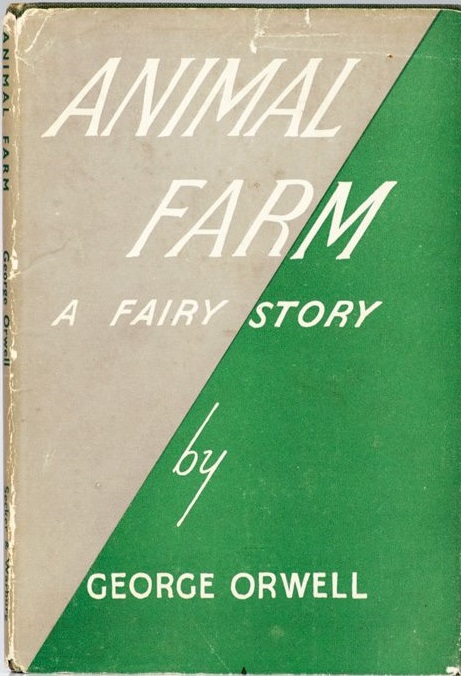
In the bleak post-war Britain of October 1945, an essay by George Orwell appeared in the first edition of Polemic. Edited by abstract artist and ex-Communist Hugh Slater, the new journal was marketed as a “magazine of philosophy, psychology, and aesthetics.” Orwell was not yet famous — Animal Farm had only just started appearing on shelves — but he had a high enough profile for his name to be a boon to a new publication. His contribution to the October 1945 Polemic was “Notes on Nationalism,” one of his best and most important pieces of writing. Amidst the de-Nazification of Germany, the alarmingly rapid slide into the Cold War, and the trials of German and Japanese war criminals, Orwell set out to answer a question which had occupied his mind for most of the past seven years — why do otherwise rational people embrace irrational or even contradictory beliefs about politics?

As a junior colonial official in Burma, the young Eric Blair (he had not yet adopted the name by which he would be known to posterity) had been disgusted by his peers and superiors talking up the British liberty of Magna Carta and Rule Britannia while excusing acts of repression like the massacre of Indian protestors at Amritsar in 1919. As a committed socialist in the late 1930s, he openly ridiculed those who claimed to be champions of the working class while holding actual working-class people in open contempt. And he had watched the British Communist Party insist that the Second World War was nothing more than an imperialist adventure right up until the moment when the first German soldier crossed the Soviet frontier, at which point it instantly became a noble struggle for human freedom.

Orwell’s most personally searing experience, though, had come in Barcelona in 1937. The previous year, he had travelled to Spain to fight in the Civil War on the Republican side. His poor relationship with the British Communist Party led him to enlist in the militia of an anti-Stalinist socialist party, the POUM (Partido Obrero de Unificación Marxista, or Workers’ Party of Marxist Unification). Even while it was fighting a bitter winter campaign in the Aragon mountains, the POUM was subject to a relentless propaganda campaign by pro-Soviet Republicans who insisted it was a secret front for fascism.

Over May and June 1937, the POUM and the other independent left-wing organisations in Barcelona were brutally suppressed by the Republican Government and Soviet-backed Communists. Orwell saw his friends and comrades smeared, arrested, and in some cases shot. He only made a narrow escape back into France himself. Upon his return to Britain, he found the British Communist Party resolute in its line that the POUM was a fascist party. Admitting that there could be a difference of opinion among left-wing groups with respect to the Soviet Union, or that the Spanish Communists could have acted unjustly, was unacceptable. And when Orwell published his own account of the events in Spain, Homage to Catalonia, few were interested in reading it. The betrayal of the POUM weighed on Orwell’s mind through the Second World War, and Animal Farm provided an outlet for his anger. But those bloody spring days in Barcelona also informed “Notes on Nationalism.”

“Notes on Nationalism” is not an ideal title, as Orwell was not talking only about loyalty to country. Rather, he used nationalism as a short-hand for any type of group loyalty — to a country, but also to a religion, a political party, or an ideology itself. A nationalist may be defined by his membership of a group, or by his opposition to one, which Orwell called “negative” nationalism. Orwell used anti-Semites as an example of the latter, as well as the “minority of intellectual pacifists whose real though unadmitted motive appears to be hatred of Western democracy and admiration of totalitarianism.” He then set out to explain how everyone — no matter how reasoned and level-headed — is capable of irrational and biased thinking when our sense of group identity is challenged.

He identified three characteristics of “‘nationalistic’ thinking.” First, obsession — the ideologue’s need to filter everything through an ideological lens. Entertainment is not entertaining unless it is orthodox. Second, instability — the ability of the ideologue to go from believing one thing to quickly believing another to follow the party line. And thirdly, indifference to reality. One of the most interesting aspects of “Notes on Nationalism” is the “inadmissible fact” — something which can be proven to be true and is generally accepted but cannot be admitted by the adherents of a particular ideology. Or, if the fact is admitted, it is explained away or dismissed as unimportant.

The ideas explored in “Notes on Nationalism” run through much of Orwell’s writing, most obviously his anti-totalitarianism and hatred of hypocritical pieties. But central to his argument is how nationalistic thinking exposes our inescapable biases. “The Liberal News Chronicle,” he wrote, “published, as an example of shocking barbarity, photographs of Russians hanged by the Germans, and then a year or two later published with warm approval almost exactly similar photographs of Germans hanged by the Russians.” This anticipated the doublethink of Nineteen Eighty-Four, in which atrocities “are looked upon as normal, and, when they are committed by one’s own side and not by the enemy, meritorious.” The first step down the deceptively short road to totalitarianism is believing that our political enemies pose such a grave threat that defeating them takes precedence over truth, consistency, or common sense.

August 7, 2020

A Career Anti-Fascist – George Orwell – WW2 Biography Special

World War Two
Published 6 Aug 2020

George Orwell is one of the most famous English writers in the modern age. But how did he become the man who would coin so many of the words we still use in our political debates?

Join us on Patreon: https://www.patreon.com/TimeGhostHistory
Or join The TimeGhost Army directly at: https://timeghost.tv

Follow WW2 day by day on Instagram @World_war_two_realtime https://www.instagram.com/world_war_two_realtime
Between 2 Wars: https://www.youtube.com/playlist?list…
Source list: http://bit.ly/WW2sources

Hosted by: Indy Neidell
Written by: Rune Væver Hartvig
Director: Astrid Deinhard
Producers: Astrid Deinhard and Spartacus Olsson
Executive Producers: Astrid Deinhard, Indy Neidell, Spartacus Olsson, Bodo Rittenauer
Creative Producer: Joram Appel
Post-Production Director: Wieke Kapteijns
Research by: Rune Væver Hartvig
Edited by: Mikołaj Cackowski
Sound design: Marek Kamiński
Map animations: Eastory (https://www.youtube.com/c/eastory)

Colorizations by:
Cassowary https://www.flickr.com/photos/cassowa…
Klimbim https://www.flickr.com/photos/2215569…

Sources:
Wellcome Images V0014461
Bundesarchiv
Narodowe Archiwum Cyfrowe
From the Noun Project: Pig by supalerk laipawat, Horse by supalerk laipawat, Goat by Laymik, Sheep by Laymik, Cow by supalerk laipawat, Chicken by supalerk laipawat, Farmer by Symbolon, Podium by Focus Lab

Soundtracks from the Epidemic Sound:
Howard Harper-Barnes – “London”
Johannes Bornlof – “Deviation In Time”
Johannes Bornlof – “The Inspector 4”
Skrya – “First Responders”
Jo Wandrini – “Puzzle Of Complexity”

Archive by Screenocean/Reuters https://www.screenocean.com.

A TimeGhost chronological documentary produced by OnLion Entertainment GmbH.

August 3, 2020

The Magic of Terry Pratchett by Marc Burrows

Filed under: Books, Britain — Tags: , , , — Nicholas @ 03:00

Rachel Cunliffe looks at a recent biography of the great science fiction/fantasy author Terry Pratchett by Marc Burrows:

A satirical sci-fi/fantasy writer might not seem the obvious choice to dissect the world-changing magnitude of an unforeseen pandemic — or so you might think if you’ve never read any of his books. But anyone familiar with the Pratchett’s oeuvre will know that the scouring wit and the unflinching grasp of humanity at its best and worst found within his pages would be the only true way to understand what has happened to our world since the start of the year.

Alas, we will never know how Sir Terry would have woven the government’s dysfunctional pandemic response, the etiquette of social distancing, mask and anti-mask culture or the mass shift to remote working into the realm of the Discworld (although we can be fairly confident that he would have done). But glimpses can be found in The Magic Of Terry Pratchett, a new biography by writer and comedian Marc Burrows.

This is the first full biography of the great man, from his upbringing in the quintessentially English hamlet of Forty Green, Buckinghamshire, to his battle with Alzheimer’s (which Pratchett dubbed “the Embuggerance”) and ferocious campaign for a law change to allow assisted dying — and featuring a whistle-stop tour of his 60-odd books.

It is, as Burrows admits from the start, the project of a committed fanboy. The author never actually got to speak to his literary hero (“This book is my chance to meet Terry Pratchett. It’s yours as well,” he explains early on), and has instead pieced together his life story through old interviews, archives, and conversations with friends and contemporaries.

The result is an engaging quest to get to know the man that both explores and adds to the mythology surrounding him. Pratchett was, as Burrows makes clear, a storyteller first and foremost, and some of his oft-repeated anecdotes — such as encountering a dead body age 17 on his first day as a junior reporter, or filing his copy from a shed on the roof — may have been based more on fantasy than reality. Where he cannot verify, Burrows sticks to the strategy taken by Tony Wilson in the film 24 Hour Party People: “When you have to choose between the truth and the legend, print the legend”.

As such, while this book will no doubt be of greatest interest to Pratchett fans, even those who have never opened a Discworld novel will find themselves entertained by its numerous detours — encompassing the educational apartheid of the 1950s, a surreal stint doing PR for Britain’s nuclear industry, and the once vibrant, now sadly endangered local journalism ecosystem.

August 1, 2020

EP Thompson: The Foremost Marxist in History | Historians who changed History

Filed under: Books, History, Politics — Tags: , , , — Nicholas @ 04:00

The Cynical Historian
Published 1 Nov 2018

Today let’s talk about Marxist historians. Edward Palmer Thompson makes perhaps the best introduction to the realm of Marxist history. His work on the English Labor Class, allows for a better understanding of the Marxist project, and how understanding class consciousness can lead to revolution.
————————————————————
references:
Beard, Charles. “Written History as an act of Faith”, The American Historical Review 39, no. 2 (January 1934), 219-231.

Marx, Karl. The Essential Marx. ed. Leon Trotsky, abridgment of Das Kapital, Vol. I. 1939; Mineola, N.York: Dover Publications, 2006. https://amzn.to/2MWygco

Thompson, E.P. “The Moral Economy of the English Crowd in the Eighteenth Century”, Past and Present, No. 50 (Feb., 1971), 76-136.

Thompson, E.P. The Making of the English Working Class. New York: Pantheon Books, 1963. https://amzn.to/2KFSESC

Special thanks to Dr. Colleen Hall-Patton for proofreading the script for this episode.
————————————————————
Support the channel through Patreon:
https://www.patreon.com/CynicalHistorian
or pick up some merchandise at SpreadShirt:
https://shop.spreadshirt.com/cynicalh…

LET’S CONNECT:
https://discord.gg/Ukthk4U
https://twitter.com/Cynical_History
————————————————————
Wiki:
Edward Palmer Thompson (3 February 1924 – 28 August 1993), usually cited as E. P. Thompson, was a British historian, writer, socialist and peace campaigner. He is probably best known today for his historical work on the British radical movements in the late 18th and early 19th centuries, in particular The Making of the English Working Class (1963). He also published influential biographies of William Morris (1955) and (posthumously) William Blake (1993) and was a prolific journalist and essayist. He also published the novel The Sykaos Papers and a collection of poetry. His work is considered to have been among the most important contributions to labour history and social history in the latter twentieth-century, with a global impact, including on scholarship in Asia and Africa.

Thompson was one of the principal intellectuals of the Communist Party in Great Britain. Although he left the party in 1956 over the Soviet invasion of Hungary, he nevertheless remained a “historian in the Marxist tradition”, calling for a rebellion against Stalinism as a prerequisite for the restoration of communists’ “confidence in our own revolutionary perspectives”. Thompson played a key role in the first New Left in Britain in the late 1950s. He was a vociferous left-wing socialist critic of the Labour governments of 1964–70 and 1974–79, and an early and constant supporter of the Campaign for Nuclear Disarmament, becoming during the 1980s the leading intellectual light of the movement against nuclear weapons in Europe.
————————————————————
Hashtags: #History #Marx #EPThompson #ClassConsiousness #Materialism #TheMakingOfTheEnglishWorkingClass

July 27, 2020

H.L. Mencken

Filed under: Books, History, Liberty, USA — Tags: , , , , , , — Nicholas @ 03:00

In the latest Libertarian Enterprise, Eric Oppen (with whom I’ve had a few brief email conversations) discusses the work of the “Sage of Baltimore”:

H.L. Mencken in 1928.
Photo by Ben Pinchot for Theatre Magazine, August 1928.

I would say that, on the whole, Mencken is still quite readable and enjoyable, and many of his observations on the American scene are still as valid as when he made them. He has his weaknesses. He’s not much of an historian, which limits him when he takes up historical subjects. He never got over what he saw as the unfair treatment the German cause got in the American press between 1914 and the entry of the US into World War One. He also often identifies people as Jewish or black when it’s not really relevant to what he’s saying, but this was more a custom of his time than out-and-out bigotry. While he often has uncomplimentary things to say about Jews, and blacks, his greatest scorn is reserved for “the lintheads” — his term for the poor whites of the South. He regarded them as barely worthy of human status.

[…] his views on most subjects were quite compatible with libertarian positions. He was an inveterate opponent of government overreaching (which was behind a lot of his ferocious opposition to Prohibition) and while I don’t think he’d approve of drug use, he’d see our War on (Some Unpopular) Drugs as the assault on the Constitution that it is. While he was by no means hostile to blacks, and went out of his way to promote black writers (many of the figures in the “Harlem Renaissance” owed a lot to his support), he’d also denounce affirmative action and our current frenzy of “anti-racism” in scathing terms. His views on the Civil Rights Act of 1964 and how it has been turned into an alternate, and superior, Constitution would probably scorch the paint off the walls.

Mencken’s views on people’s private lives would have infuriated many of his contemporaries. While he disapproved of homosexuality, referring to it negatively in entries in his private diaries, he was by no means a howling “homophobe.” His writings on the travails of Oscar Wilde are very sympathetic to Wilde’s sufferings, which Mencken thought were wholly disproportionate to what he was known to have done. Mencken referred to Lord Alfred Douglas, in a review of Douglas’ book about Wilde, as a Tartuffe — that is to say, a posturing hypocrite.

Having been a reporter for years in Baltimore, back when reporters were very like the old film noir view of them, Mencken was very much a man of the world, and inclined to great tolerance on others’ sex lives. When he wrote of prostitutes, he refrained from the sort of pious moralizing that was expected in his time. He said that prostitutes often actively preferred their profession to other work available to them, and that most of them ended up respectably married. He kept his own love life very private, and was a faithful husband to his wife throughout their brief marriage, but he does mention, here and there, having had other lovers, whom he does not name even in writings designated to come to light only long after everybody involved was dead. By his own account in his Diary, he lost his virginity at age fourteen to a girl of his own age, who had already had other experiences before him. He felt that such experiences, unless pregnancy happened, did no one any harm.

While he was an atheist, Mencken had no particular hostility to religion per se, no matter what the Fundamentalists of his day thought. His book Treatise on the Gods makes interesting reading, although it is marred, in my view, by Mencken’s lack of knowledge of languages. He praises Christianity for having “the most gorgeous poetry,” but as far as I know, he could not read Hebrew, Aramaic or Greek, and was thinking in terms of the King James Bible and the Book of Common Prayer. However, the book is still worth reading, although a serious student of the subject would find it limited.

If you’ve been a regular visitor to the blog, you’ll know I have a huge regard for H.L. Mencken’s work and there are many Mencken quotes that have done duty as QotD entries over the years.

July 26, 2020

J.K. Rowling receives an apology

Filed under: Books, Britain, Media, Politics — Tags: , , , , , , — Nicholas @ 03:00

In his first Weekly Dish newsletter, Andrew Sullivan reports on the retraction and apology by The Day to J.K. Rowling:

J.K. Rowling’s Harry Potter books have been pivotal for many Millennials in encouraging them to move away from traditional religious beliefs.

We’re used to public apologies by now, but this one is a little different. It comes from a magazine for schoolchildren in England, called The Day. It reads:

    We accept that our article implied that … JK Rowling … had attacked and harmed trans people. The article was critical of JK Rowling personally and suggested that our readers should boycott her work and shame her into changing her behaviour … We did not intend to suggest that JK Rowling was transphobic or that she should be boycotted. We accept that our comparisons of JK Rowling to people such as Picasso, who celebrated sexual violence, and Wagner, who was praised by the Nazis for his antisemitic and racist views, were clumsy, offensive and wrong … We unreservedly apologise to JK Rowling for the offence caused, and are happy to retract these false allegations and to set the record straight.

The Day had been referring to JK Rowling’s open letter on trans issues, which you can read in its entirety here and judge for yourself.

I have to say it’s good to see this apology in print. It remains simply amazing to me that the author of the Harry Potter books, a bone fide liberal, a passionate feminist and a strong supporter of gay equality can be casually described, as Vox’s Zack Beauchamp did yesterday, as “one of the most visible anti-trans figures in our culture.” It is, in fact, bonkers. Rowling has absolutely no issue with the existence, dignity and equality of transgender people. Her now infamous letter is elegant, calm, reasonable and open-hearted. Among other things, Rowling wrote: “I believe the majority of trans-identified people not only pose zero threat to others, but are vulnerable for all the reasons I’ve outlined. Trans people need and deserve protection.”

She became interested in the question after a consultant, Maya Forsteter, lost a contract in the UK for believing and saying that sex is a biological reality. When Forsteter took her case to an employment tribunal, the judge ruled against her, arguing that such a view was a form of bigotry, in so far as it seemed to deny the gender of trans people (which, of course, it doesn’t). Rowling was perturbed by this. And I can see why: in order either to defend or oppose transgender rights, you need to be able to discuss what being transgender means. That will necessarily require an understanding of the human mind and body, the architectonic role of biology in the creation of two sexes, and the nature of the small minority whose genital and biological sex differs from the sex of their brain.

This is not an easy question. It requires some thinking through. And in a liberal democracy, we should be able to debate the subject freely and openly. I’ve done my best to do that in this column, and have come to many of the conclusions Rowling has. She does not question the existence of trans people, or the imperative to respect their dignity and equality as fully-formed human beings. She believes they should be protected from discrimination in every field, and given the same opportunities as anyone else. She would address any trans person as the gender they present, as would I. Of course. That those of us who hold these views are now deemed bigots is, quite simply, preposterous.

[…]

It pains me to see where this debate has gone. There’s so much common ground. And I do not doubt that taking into account the lived experiences of trans people is important. But if we cannot state an objective fact without being deemed a bigot, and if we cannot debate a subject because debating itself is a form of hate, we have all but abandoned any pretense of liberal democracy. And if a woman as sophisticated and eloquent and humane as JK Rowling is now deemed a foul bigot for having a different opinion, then the word bigotry has ceased to have any meaning at all.

July 25, 2020

Shakespeare Summarized: The Tempest

Filed under: Books, Humour, Media — Tags: , , , , — Nicholas @ 02:00

Overly Sarcastic Productions
Published 5 May 2014

At last! It’s not a tragedy!

It may have been Shakespeare’s final play, but that doesn’t mean it’s my final summary! Hopefully, you lucky folks will get to hear my melodious rambling for a while yet.

PATREON: www.patreon.com/user?u=4664797

MERCH LINKS:
Shirts – https://overlysarcasticproducts.threa…
All the other stuff – http://www.cafepress.com/OverlySarcas…

Find us on Twitter @OSPYouTube!

July 22, 2020

A brief look at the life of Thomas Cromwell, Henry VIII’s “main fixer”

Filed under: Books, Britain, Government, History — Tags: , , , , , — Nicholas @ 05:00

Michael Coren discusses the career and reputation of Henry VIII’s powerful and capable Lord Chamberlain until he fell from favour and was executed in 1540:

Portrait of Thomas Cromwell, First Earl of Essex painted by Hans Holbein 1532-33.
From the Frick Collection via Wikimedia Commons.

The panoply of British history doesn’t include too many monsters. The nation was founded more on meetings than massacres, and other than the usual round of chronic blood-letting in the Middle Ages, and a civil war in the seventeenth-century, the English have left it to the French, the Russians, and the Germans to provide the mass murderers and the genuine villains. But if anyone was generally regarded as being unscrupulous, with a touch of the devil always around his character, it was Thomas Cromwell, the main fixer for Henry VIII in the 1530s, and according to the Oscar-winning movie A Man for all Seasons, the dark politician who had hagiographical Thomas More executed. For decades both on British television and in Hollywood epics it was this self-made man who was willing to smash the monasteries, torture innocent witnesses into giving false evidence, and assemble lies to have that nice Anne Boleyn beheaded.

This was the dictatorship of reputation. Historians provided the framework, and popular entertainment dressed it all up in countless Tudor biopics. But then it all began to change.

The first person to seriously challenge the caricature was himself a victim of lies and hatred. The revered Cambridge historian GR Elton was born Gottfried Rudolf Otto Ehrenberg, son of a German Jewish family of noted scholars, who fled to Britain shortly before the Holocaust. He’s also, by the way, the uncle of the comedian and writer Ben Elton. GR, Geoffrey Rudolph, was one of the dominant post-war historians, and insisted that modern Britain, with its secular democracy and parliamentary system, was very much the child of Thomas Cromwell the gifted administrator and political visionary.

So we had the Cromwell wars. On the one side were the traditionalist, often Roman Catholic, writers who insisted that Cromwell was a corrupt brute and a cruel tyrant; and the rival school that regarded him as the first modern leader of the country, setting it on a road that would distinguish it from the ancient regimes of the European continent. But there was more. While previous political leaders – the term “Prime Minister” didn’t develop until the early eighteenth-century – had sometimes been of relatively humble origins, and Cromwell’s mentor and predecessor Thomas Wolsey was the son of a butcher, they were invariably clerics. Cromwell wasn’t only from rough Putney on the edge of London, and the son of a blacksmith, but he was a layman, and someone who had lived abroad, even fought for foreign armies.

Here was have the embodiment of the great change: the autodidact who was multi-lingual, well travelled, reformed in his religion and politics, and prepared to rip the country out of its medieval roots. Yet no matter how many historians might believe and write this, the culture is notoriously difficult to change, and understandably indifferent to academics. Not, however, to novelists. And in 2009 the award-winning author Hilary Mantel published Wolf Hall, a fictional account of Cromwell’s life from 1500 to 1535. Three years later came the sequel, Bring Up the Bodies. Both books won the Man Booker Prize, an extraordinary achievement for two separate works. The trilogy was completed recently with The Mirror and the Light. The first two volumes were turned into an enormously successful stage play and a six-part television show. Forget noble academics working away in relative obscurity, this was sophisticated work watched and read by tens of millions of people. Cromwell was back.

“It is as a murderer that Cromwell has come down to posterity: who turned monks out on to the roads, infiltrated spies into every corner of the land, and unleashed terror in the service of the state”, wrote Mantel in the Daily Telegraph back in 2012. “If these attributions contain a grain of truth, they also embody a set of lazy assumptions, bundles of prejudice passed from one generation to the next. Novelists and dramatists, who on the whole would rather sensationalise than investigate, have seized on these assumptions to create a reach-me-down villain.”

« Newer PostsOlder Posts »

Powered by WordPress