Quotulatiousness

June 1, 2024

So who did write Shakespeare’s plays?

Filed under: Books, Britain, History, Media — Tags: , , , , — Nicholas @ 05:00

Mere mortals might be tempted to answer “Well, Shakespeare, duh!”, but to the dedicated conspiracist, the obvious is never the right answer:

This was long thought to be the only portrait of William Shakespeare that had any claim to have been painted from life, until another possible life portrait, the Cobbe portrait, was revealed in 2009. The portrait is known as the “Chandos portrait” after a previous owner, James Brydges, 1st Duke of Chandos. It was the first portrait to be acquired by the National Portrait Gallery in 1856. The artist may be by a painter called John Taylor who was an important member of the Painter-Stainers’ Company.
National Portrait Gallery image via Wikimedia Commons.

Was Shakespeare a fraud? The American writer Jodi Picoult seems to think so. Her latest novel By Any Other Name is based on the premise that William Shakespeare was not the real author of his plays. Specifically, in her story, the poet Emilia Lanier (née Bassano) pays Shakespeare for the use of his name so that she might see her work staged at a time when female playwrights were extremely rare.

The theory that Shakespeare was a woman isn’t original to Picoult. As with all conspiracy theories relating to the bard, the “true” Shakespeare is identified as one of the upper echelons of society (although not an aristocrat, Lanier was part of the minor gentry thanks to her father’s appointment as court musician to Queen Elizabeth I). Those known as “anti-Stratfordians” – i.e., those who believe that the man from Stratford-upon-Avon called William Shakespeare did not write the plays attributed to him – invariably favour candidates who had direct connections to the court. The general feeling seems to be that a middle-class lad from a remote country town could not possibly have created such compelling depictions of lords, ladies, kings and queens.

[…]

The notion that the actor Shakespeare could have hired out his identity to Lanier, or anyone else for that matter, makes no sense if one considers the collaborative nature of the theatrical medium. Shakespeare was the house playwright for the Lord Chamberlain’s Men (the company that became the King’s Men on the accession of James I). His job was to oversee productions, to write on the hoof, to adapt existing scripts in the process of rehearsal. (This is probably why his later plays such as Henry VIII contain so many stage directions; at this point he was almost certainly residing in Stratford-upon-Avon, and so was not available to provide the necessary detail in person.) It was never simply a matter of Shakespeare dropping off his latest script at The Globe and quickly scarpering. If he was being fed the lines, it is implausible that nobody in the company would have noticed.

[…]

The theory that Shakespeare’s contemporaries – fans and critics alike – would all collude in an elaborate deception requires a full explanation. The burden of proof is very much on the anti-Stratfordians, but proof doesn’t appear to be their priority. They seem to think they know more about Shakespeare than those who actually lived and worked with him. It’s oddly hubristic.

All of this nonsense began with the Baconian theory propounded by James Wilmot in 1785 and has never gone away. The candidates are usually university educated and aristocratic: Francis Bacon, Christopher Marlowe, the Earl of Rutland, the Earl of Oxford – even Queen Elizabeth I has been proposed. The anti-Stratfordian position seems to be based on a combination of class snobbery and presentism. They assume that the middle-class son of a glover who did not attend university could not have developed the range of knowledge needed to inform his plays. They forgot, or do not know, that the grammar school education of the time would have provided a firm grounding in the classics. Shakespeare would have been steeped in Ovid, Cicero, Plautus, Terence, and much more besides. Let’s not forget that Ben Jonson, the most scholarly of all his contemporaries, didn’t go to university either.

Moreover, the plays make clear that Shakespeare was a voracious reader. The idea that one must have direct experience in order to write about a subject is very much in keeping with the obsessions of our time, particularly the notion of “lived experience” and how writers ought to “stay in their lane”.

As I’ve joked in the past, I believe the theory that Homer didn’t actually write The Iliad and The Odyssey … it was another Greek chap of the same name.

May 28, 2024

Why a Tire Company Gives Out Food’s Most Famous Award

Filed under: Books, Business, Europe, Food, France, History, WW2 — Tags: , , , , , — Nicholas @ 02:00

Tasting History with Max Miller
Published Feb 20, 2024

Eugénie Brazier, the chef behind today’s recipe, was a culinary force to be reckoned with. She was described as “a formidable woman with a voice like a foghorn, rough language, and strong forearms”. Both of her restaurants won Michelin stars in the early 20th century, making her the first person to have six. No one else would earn six Michelin stars for 64 years.

By modern Michelin standards, this dish is pretty plain, but it’s still really good. The chicken is cooked simply in butter, and the cream sauce is absolutely fantastic. I was afraid the alcohol would overpower it, but it doesn’t. The sauce takes on a kind of floral woodiness instead of each individual alcohol’s flavor, and it’s so good.
(more…)

May 25, 2024

“Education” versus “learning”

Filed under: Books, Education, History, USA — Tags: , , , , — Nicholas @ 05:00

At Astral Codex Ten, Scott Alexander discusses some of the ideas from Bryan Caplan’s book The Case Against Education:

Source here. Note deranged horizontal axis.

Education isn’t just about facts. But it’s partly about facts. Facts are easy to measure, and they’re a useful signpost for deeper understanding. If someone has never heard of Chaucer, Dickens, Melville, Twain, or Joyce, they probably haven’t learned to appreciate great literature. If someone can’t identify Washington, Lincoln, or either Roosevelt, they probably don’t understand the ebb and flow of American history. So what facts does the average American know?

In a 1999 poll, only 66% of Americans age 18-29 knew that the US won independence from Britain (as opposed to some other country). About 47% of Americans can name all three branches of government (executive, legislative, and judicial). 37% know the closest planet to the sun (Mercury). 58% know which gas causes most global warming (carbon dioxide). 44% know Auschwitz was the site of a concentration camp. Fewer than 50% (ie worse than chance) can correctly answer a true-false question about whether electrons are bigger than atoms.

These results are scattered across many polls, which makes them vulnerable to publication bias; I can’t find a good unified general knowledge survey of the whole population. But there’s a great survey of university students. Keeping in mind that this is a highly selected, extra-smart population, here are some data points:

  • 85% know who wrote Romeo and Juliet (Shakespeare)
  • 56% know the biggest planet (Jupiter)
  • 44% know who rode on horseback in 1775 to warn that the British were coming (Paul Revere)
  • 33% know what organ produces insulin (pancreas)
  • 31% know the capital of Russia (Moscow)
  • 30% know who discovered the Theory of Relativity (Einstein)
  • 19% know what mountain range contains Mt. Everest (Himalayas)
  • 19% know who wrote 1984 (George Orwell)
  • 16% know what word the raven says in Poe’s “The Raven” (“Nevermore!”)
  • 10% know the captain’s name in Moby Dick (Ahab)
  • 7% know who discovered, in 1543, that the Earth orbits the sun (Copernicus)
  • 4% know what Chinese religion was founded by Lao Tse (Taoism)
  • <1% know what city the general Hannibal was from (Carthage)

Remember, these are university students, so the average person’s performance is worse.

Most of these are the kinds of facts that I would expect school to teach people. Some of them (eg the branches of government) are the foundations of whole subjects, facts that I would expect to get reviewed and built upon many times during a student’s career. If most people don’t remember them, there seems to be little hope that they remember basically anything from school. So what’s school even doing?

Maybe school is why at least a majority of people know the very basics – like that the US won independence from Britain, or that Shakespeare wrote Romeo and Juliet? I’m not sure this is true. Here are some other questions that got approximately the same level of correct answers as “Shakespeare wrote Romeo and Juliet“:

  • What is the name of the rubber object hit by hockey players? (Puck, 89%)
  • What is the name of the comic strip character who eats spinach to increase his strength? (Popeye, 82% correct)
  • What is the name of Dorothy’s dog in The Wizard of Oz? (Toto, 80% correct)

I don’t think any of these are taught in school. They’re absorbed by cultural osmosis. It seems equally likely that Romeo and Juliet could be absorbed the same way. Wasn’t there an Academy-Award-winning movie about Shakespeare writing Romeo and Juliet just a decade or so before this study came out? Sure, 19% of people know that Orwell wrote 1984 – but how many people know the 1984 Calendar Meme, or the “1984 was not an instruction manual!” joke, or have heard of the reality show Big Brother? Nobody learned those in school, so maybe they learned Orwell’s name the same place they learned about the other 1984-related stuff.

Okay, so school probably doesn’t do a great job teaching facts. But maybe it could still teach skills, right?

According to tests, fewer than 10% of Americans are “proficient” at PIIAC-defined numeracy skills, even though in theory you need to know algebra to graduate from most public schools.

I took a year of Spanish in middle school, and I cannot speak Spanish today to save my life; that year was completely wasted. Sure, I know things like “Hola!” and “Adios!”, but I also know things like “gringo” and “Yo quiero Taco Bell” – this is just cultural osmosis again.

So it seems most people forget almost all of what they learn in school, whether we’re talking about facts or skills. The remaining pro-school argument would be that even if they forget every specific thing, they retain some kind of scaffolding that makes it easier for them to learn and understand new things in the future; ie they keep some sort of overall concept of learning. This is a pretty god-of-the-gaps-ish hypothesis, and counterbalanced by all the kids who said school made them hate learning, or made them unable to learn in a non-fake/rote way, or that they can’t read books now because they’re too traumatized from years of being forced to read books that they hate.

It’s common-but-trite to encounter people who say things like “I love learning, but I hated school” — I’ve undoubtedly said that myself many times. A weird experience was having to study a book in school that I’d already read on my own: it was like an early form of aversion therapy … here’s something you loved once, let’s make you hate it now.

May 22, 2024

Scott Alexander reviews The Others Within Us

Filed under: Books, Health — Tags: , , — Nicholas @ 05:00

At Astral Codex Ten, Scott Alexander discusses teh new hawtness in psychotherapy as expounded in Robert Falconer’s new book The Others Within Us:

Internal Family Systems, the hot new1 psychotherapy, has a secret.

“Hot new psychotherapy” might sound dismissive. It’s not. There’s always got to be one. The therapy that’s getting all the buzz, curing all the incurable patients, rocking those first few small studies. The therapy that was invented by a grizzled veteran therapist working with Patients Like You, not the out-of-touch elites behind all the other therapies. The therapy that Really Gets To The Root Of The Problem. There’s always got to be one, and now it’s IFS.

Sufficiently new and popular therapies are hard to get. Therapist training starts slow – the founder has to train the second generation of therapists, the second generation has to train the third generation, and so on. IFS says they have a 10,000 person wait list for their training program. So lots of people have heard great things about IFS, maybe read a manual or two, but never tried it or met anyone who has.

What I gather from the manuals: IFS is about working with “parts”. You treat your mind as containing a Self — a sort of perfect angelic intellect without any flaws or mental illnesses — and various Parts — little sub-minds with their own agendas who can sometimes occlude or overwhelm the Self. During therapy, you talk to the Parts, learn their motives, and bargain with them.

For example, you might identify a Part of you that wants to sabotage your relationships. You will visualize and name it — maybe you call her Sabby, and she looks like a snake. You talk to Sabby, and learn that after your first break-up, when you decided you never wanted to feel that level of pain again, you unconsciously created her and ordered her to make sure you never got close enough to anyone else to get hurt. Then you and the therapist come up with some plan to satisfy Sabby — maybe you convince her that you’re older now, and better able to deal with pain, and you won’t blame her if you get close to someone and have to break up again. Then you see a vision of Sabby stepping aside, maybe turning off the Windmill Of Relationship Sabotage or something like that, and then you never sabotage your relationships again. It’s more complicated than that, but that’s the core.

All of this is the classic version everyone learns from the manual. Before we get to the secret, let’s examine two big assumptions in more detail.

First, this isn’t supposed to be just the therapist walking you through guided imagery, or you making up a story you tell yourself. The therapist asks you “Look inside until you find the part that’s sabotaging your relationship”, and you are supposed to discover — not invent, discover — that your unconscious gives it the form of a snake called Sabby. And you are supposed to hear as in a trance — again, not invent — Sabby telling you that she’s been protecting you from heartbreak since your last breakup. When you bargain with Sabby, it’s a two-way negotiation. You learn — not decide — whether or not Sabby agrees to any given bargain. According to Internal Family Systems (which descends from normal family systems, ie family therapy where the whole family is there at once and has to compromise with each other), all this stuff really is in your mind, waiting for an IFS therapist to discover it. When Carl Jung talked about interacting with the archetypes or whatever, he wasn’t being metaphorical. He literally meant “go into a trance that gives you a sort of waking lucid dream where you meet all this internal stuff”.

(After reading the IFS manuals, I tried most of their tricks for initiating this sort of trance and meeting Sabby or whoever. I got nothing. I notice most of the patients with great results are severely traumatized borderlines, ie the same people who often get multiple personality disorder after the slightest hint from a therapist that this might happen. We’ll get back to this analogy later.)

The second assumption is that everything inside your mind is part of you, and everything inside your mind is good. You might think of Sabby as some kind of hostile interloper, ruining your relationships with people you love. But actually she’s a part of your unconscious, which you have in some sense willed into existence, looking out for your best interests. You neither can nor should fight her. If you try to excise her, you will psychically wound yourself. Instead, you should bargain with her the same way you would with any other friend or loved one, until either she convinces you that relationships are bad, or you and the therapist together convince her that they aren’t. This is one of the pillars of classical IFS.

The secret is: no, actually some of these things are literal demons.


    1. Some people object to me calling it “new” – it was developed in the 1980s, and has been popular since the early 2010s. Still, the therapy landscape shifts slowly, and even an exponentially-growing therapy takes a long time to get anywhere.

May 21, 2024

QotD: First Nations warfare in eastern North America

For this week’s book recommendation, I am going with a recent release, Wayne E. Lee, The Cutting-Off Way: Indigenous Warfare in Eastern North America, 1500-1800 (2023). This is one of those books I have been waiting to come out for quite some time, as I studied under the author at UNC Chapel Hill and so had heard parts of this argument laid out for years; it is a delight to see the whole thing altogether now in one place.

Fundamentally, Lee aims in the book to lay out a complete model for Native American warfare in eastern North America (so the East Coast, but also the Great Lakes region and the Appalachian Mountains), covering both the pre-European-contact system of warfare and also how that system changes as a result of contact. In presenting this model of a “cutting-off” way of war, Lee is explicitly looking to supplant the older scholarly model, called the “skulking way of war”, which he argues has been fatally overtaken by developments in history, archaeology and anthropology. As a description of a whole system of war, Lee discusses tactics, the movement of war parties, logistics and also the strategic aims of this kind of warfare. The book also details change within that model, with chapters covering the mechanisms by which European contact seems to have escalated the violence in an already violent system, the impact of European technologies and finally the way that European powers – particularly the English/British – created, maintained and used relationships with Native American nations (as compared, quite interestingly, to similar strategies of use and control in contemporary English/British occupied Ireland).

The overall model of the “cutting-off” way of war (named because it aimed to “cut off” individual enemy settlements, individuals or raiding parties by surprise or ambush; the phrase was used by contemporary English-language sources describing this form of warfare) is, I think, extremely useful. It is, among other things, one of the main mental models I had in mind when thinking about what I call the “First System” of war.1 Crucially it is not “unconventional” warfare: it has its own well-defined conventions which shape, promote or restrict the escalation of violence in the system. At its core, the “cutting-off” way is a system focused on using surprise, raids and ambushes to inflict damage on an enemy, often with the strategic goal of forcing that enemy group to move further away and thus vindicating a nation’s claim to disputed territory (generally hunting grounds) and their resources, though of course as with any warfare among humans, these basic descriptions become immensely more complicated in practice. Ambushes get spotted and become battles, while enmities that may have begun as territorial disputes (and continue to include those disputes) are also motivated by cycles of revenge strikes, internal politics, diplomatic decisions and so on.

The book itself is remarkably accessible and should pose few problems for the non-specialist reader. Lee establishes a helpful pattern of describing a given activity or interaction (say, raids or the logistics system to support them) by leading with a narrative of a single event (often woven from multiple sources), then following that with a description of the system that event exemplifies, which is turn buttressed with more historical examples. The advantage of those leading spots of narrative is that they serve to ground the more theoretical system in the concrete realia of the historical warfare itself, keeping the whole analysis firmly on the ground. At the same time, Lee has made a conscious decision to employ a fair bit of “modernizing” language: strategy, operations, tactics, logistics, ways, ends, means and so on, in order to de-exoticize Native American warfare. In this case, I think the approach is valuable in letting the reader see through differences in language and idiom to the hard calculations being made and perhaps most importantly to see the very human mix of rationalism and emotion motivating those calculations.

The book also comes with a number of maps, all of which are well-designed to be very readable on the page and a few diagrams. Some of these are just remarkably well chosen: an initial diagram of a pair of model Native American polities, with settlements occupying core zones with hunting-ground peripheries and a territorial dispute between them is in turn followed by maps of the distribution of actual Native American settlements, making the connection between the model and the actual pattern of settlement clear. Good use is also made of period-drawings and maps of fortified Native American settlements, in one case paired with the modern excavation plan. For a kind of warfare that is still more often the subject of popular myth-making than history, this book is extremely valuable and I hope it will find a wide readership.

Bret Devereaux, “Fireside Friday, September 29, 2023 (On Academic Hiring)”, A Collection of Unmitigated Pedantry, 2023-09-29.


    1. Itself an ultra-broad category with many exceptions and caveats.

May 13, 2024

Archaeological Publishing – the unpalatable truth

Filed under: Architecture, Books, Britain, History — Tags: , , , , , — Nicholas @ 04:00

Classical and Ancient Civilization
Published May 11, 2024

Some anecdotes about publishing archaeological sites

May 7, 2024

Charles Holden and the Ministry of Truth

Filed under: Architecture, Books, Britain, History — Tags: , , , — Nicholas @ 02:00

Jago Hazzard
Published Jan 28, 2024

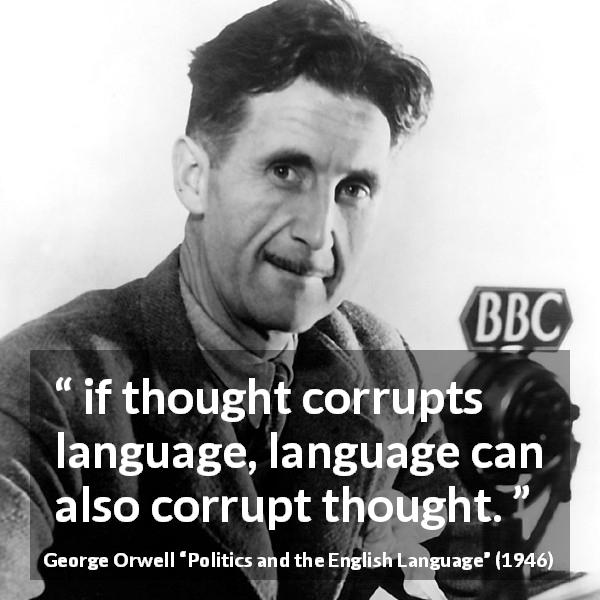
The strange connection between George Orwell and the London Underground.

QotD: Cicero’s De Senectute

Filed under: Books, History, Quotations — Tags: , , , — Nicholas @ 01:00

“Everyone wants to get old; and everyone complains once they have,” wrote Cicero in his De Senectute (On Old Age). “So great is the inconstancy and perversity of foolishness.” The De Senectute was one of the most commonly assigned books in American high schools a century ago; you can still find the old textbooks moldering in second-hand bookshops. It is one of the most thoroughly relevant books ever written, as we invariably get old if we do not die young: Why not consider what makes old age a worthwhile stage of our lives? It is a book we could wish more Americans would read, as this year’s election cycle only seems to confirm that America is an old country. The book’s message is easily conveyed: Nature is not your enemy. “In this we are wise,” Cicero writes, “we follow nature, as our best guide, almost as our god.” Cicero uses a theatrical metaphor: “Old age is the final scene in life’s drama.” The drama is penned by Nature herself: “The rest of the play is well designed; do you believe Nature neglected to consider how it all would end?”

John Byron Kuhner, “Marlene Dietrich’s War on Nature”, First Things, 2024-02-05.

May 6, 2024

Kulak on banned fantasy novels hated by Feminists

Filed under: Books, History, Politics, USA — Tags: , , , , , , — Nicholas @ 03:00

There are books that get banned for all sorts of reasons — histories that tell the “wrong” facts, books beloved by terrorists, political tracts by wild-eyed fanatics, etc. — but they’re not the ones Kulak is talking about here:

… the fiction books that are banned are usually fictionalized versions of those, works like Camp of the Saints, or The Turner Diaries, despite their ability to move people emotionally are not banned for their emotional content but for their political content (and in the case of The Turner Diaries its accurate instructions on bomb making)

HOWEVER! There is one series that was driven from bookstores, and by the late 90s was almost totally disappeared based purely on the … “feelings” … it generated in its readers. A fantasy series set entirely on another world with more or less nothing to say about politics back on earth, awakened … stirrings … in its readers so disturbing to the powers that be it had to be stopped.

The Chronicles of GOR by John Norman (Pen-name of Philosophy Professor John Lange)

Begun in 1966 and continuing to … today (he’s 92), the 38 book series is a Pulp Science Fantasy series in the vein of Edgar Rice Burroughs’ “Barsoom” series (shout out to John Carter of Postcards From Barsoom)

It has a lot of neat fantasy/historical/military hypotheticals to get the young male mind going “what if Vikings raided Japanese samurai cities with flying monsters?” but the thing that outraged the feminists and what they’d never admit enraged them, was its effect on female readers.

Norman has a lot of theories about sex … theories which his millions of books sold suggest are very true. Theories which recent DNA discoveries have confirmed.

At SEVERAL points in the genetic record you and nearly everyone on earth, have approximately 17 female ancestors for every 1 male ancestor.

This was of course the result of patriarchal warfare, polygamy, and sexual slavery … The kind familiar to any readers of the Iliad.

Indeed Norman cites Homer, Freud, and Nietzsche as the primary influences on his philosophy.

But whereas this produced the ancient and then modern warfighting man boys and young men idolize from the Iliad, through Rome, to the Mongols, to the adventures and conquests of early modern Europe. And whose feuds and daring consume half the plot of Norman’s stories …

The real controversy is what it produced of the women.

Women are natural slaves Norman tells and in the later books shows (the books greatly improved over time: don’t read them in order)

While these periods of slaving warfare between peoples and tribes produced modern technical, competent, highly coordinated and cooperative man … In women it produced natural slaves. Women who’d long for the chain, women who’d desire nothing so much as to be owned and to submit to a powerful violent man not of their choosing … women who’d never feel so “””empowered””” as when they obey, and surrender the spirits, bodies, and wombs which they cannot defend. Who’d never feel so loved and wanted as when they are abused and disdained.

This is the world and theory of mind Norman paints with a philosopher’s attention to completeness … 38 books deconstructing and undoing not only modern feminist ideas of equality, but Christian ideas of the equality of the soul and nobility of the feminine spirit. By any standard maybe the most sexist misogynistic books ever written, not out of ignorance or resentment but a philosopher’s indifference to any social or ethical preening that might impede the truth …

And women freaking loved it.

I encountered Captive of Gor at a mainstream book store in Mississauga in about 1975, and I was amazed that it was available for sale in still-pretty-conservative Ontario. I read several of the other books in the series, but I had no idea the author was still adding new volumes down to the present day. I can’t remember the last time I saw one for sale, but I guess the fans can still get their hands on them even if ordinary book stores no longer carry them.

May 3, 2024

So, what Richard Hanania is really saying is “US civil rights law is bad”

Filed under: Books, Government, Law, Media, Politics, USA — Tags: , , , , , — Nicholas @ 03:00

Scott Alexander reviews Richard Hanania’s recent book The Origins of Woke: Civil Rights Law, Corporate America, and the Triumph of Identity Politics:

The Origins Of Woke, by Richard Hanania, has an ambitious thesis. And it argues for an ambitious thesis. But the thesis it has isn’t the one it argues for.

The claimed thesis is “the cultural package of wokeness is downstream of civil rights law”. It goes pretty hard on this. For example, there’s the title, The Origins Of Woke. Or the Amazon blurb: “The roots of the culture lie not in the culture itself, but laws and regulations enacted decades ago”. Or the banner ad:

he other thesis, the one it actually argues for, is “US civil rights law is bad”. On its own, this is a fine thesis. A book called Civil Rights Law Is Bad would – okay, I admit that despite being a professional Internet writer I have no idea how the culture works anymore, or whether being outrageous is good or bad for sales these days. We’ll never know, because Richard chose to wrap his argument in a few pages on how maybe this is the origin of woke or something. Still, the book is on why civil rights law is bad.

Modern civil rights law is bad (he begins) for reasons baked into its history. The original Civil Rights Act of 1964 was supposed to be an ad hoc response to the outrageous level of anti-black racism going on in the South, which protests and TV news had finally brought to the attention of the white majority. There was broad support for a bill which was basically “don’t be the KKK”.

Sex discrimination got tacked on half as a joke, half as a poison pill by its enemies to make the bill unpalatable (fact check: true – but there’s a deeper story, see this Slate article for more details). Ideas about “affirmative action” and “disparate impact” weren’t tacked on at all; the bill’s proponents denied that it could be used to justify anything of the sort, and even agreed to include language in the bill saying it was against that. Still, after the bill was passed, a series of executive orders, judicial decisions, and bureaucratic power grabs put all those things in place.

The key point here is that “quotas”, or any kind of “positive discrimination” where minorities got favored over more-qualified whites, were anathema to lawmakers and the American people. But civil rights activists, the courts, and the bureaucracy really wanted those things. So civil rights law became a giant kludge that effectively created quotas and positive discrimination while maintaining plausible deniability. This ended up as the worst of both worlds. Hanania specifically complains about1:

Affirmative Action

Hanania’s take on affirmative action involves the government sending companies a message like this:

  1. We notice your workforce has fewer minorities than the applicant pool.
  2. If this remains true, we’ll sue you for millions of dollars and destroy your company. So by the next time we check, your workforce had better have exactly many minorities as the applicant pool.
  3. But you’re not allowed to explicitly favor minority applicants over whites. You certainly can’t do anything flagrant, like set a quota of minority employees equal to their level in the applicant pool.
  4. Have fun!

(here “the applicant pool” is an abstraction, often but not always the same as the general population, which is poorly defined and which bureaucracies can interpret however they want. It’s definitely not the same thing as the actual set of qualified applicants to the business!)

This satisfied the not-really-paying attention white electorate, because politicians could tell them that “quotas are illegal, we’re sure not doing anything like that”. And it satisfied civil rights activists, because inevitably businesses/departments came up with secret ways to favor minorities until representation reached the level where they wouldn’t get sued.

A recent case illustrates the results of this double-bind. The FAA hires air traffic controllers. They used to judge applicants based on a test which measured their skills at air traffic control. This resulted in comparatively few black air traffic controllers. Various civil rights groups put pressure on them, and they replaced the test with a “biographical questionnaire”. The questionnaire asked weird unrelated questions about your life, and you got points if you gave the answer that the FAA thought black people might give (for example, if you said your worst subject was science). This still didn’t get them enough black employees, so they secretly told black communities exactly what answers to put on the questionnaire to go through.

It’s easy to blame the FAA here, but (Hanania says) civil rights law almost forces you to do something like this. People tried simpler things, like keeping a test but giving minority applicants extra points. The courts and civil rights bureaucracy struck these down as illegal. The almost-explicit policy was that you had to get more minority employees, but you had to hide it carefully enough that the American people (who were still against racial preferences) wouldn’t catch on.


    1. I’ve included three of Hanania’s four civil rights law subtopics. The book covers a fourth, Title IX (mostly focusing on women’s sports in college). Although the book provides lots of examples about how the laws here are unfair and outrageous, I can’t bring myself to care about college sports enough to give it the same subtopic status, as, say, the hiring process for all the corporations in America.

May 2, 2024

When Malcolm Muggeridge investigated P.G. Wodehouse for MI6

Filed under: Books, Britain, Germany, History, Military, WW2 — Tags: , , , , , , — Nicholas @ 04:00

Alan Ashworth explains the circumstances under which the great P.G. Wodehouse became the subject of an MI6 (Britain’s Secret Intelligence Service) treason investigation near the end of the Second World War:

P.G. Wodehouse, circa 1904.
The American Legion Weekly, 24 October, 1919 via Wikimedia Commons.

[Malcolm Muggeridge:] “I first made Wodehouse’s acquaintance in circumstances which might have been expected to shake even his equanimity. This was in Paris just after the withdrawal of the German occupation forces. As Wodehouse well understood, the matter of his five broadcasts from Berlin would now have to be explained; and in the atmosphere of hysteria that war inevitably generates, the consequences might be very serious indeed. It would have been natural for him to be shaken, pale, nervous; on the contrary I found him calm and cheerful. I thought then, and think now more forcibly than ever, that this was due not so much to a clear conscience as to a state of innocence which mysteriously has survived in him.”

Muggeridge explains that he was attached to an MI6 contingent and a colleague “mentioned to me casually that he had received a short list of so-called traitors who cases needed to be investigated, one of the names being PG Wodehouse”. Muggeridge readily agreed to take on the case, “partly out of curiosity and partly from a feeling that no one who had made as elegant and original a contribution to the general gaiety of living should be allowed to get caught up in the larger buffooneries of war”. He duly visited Wodehouse at his hotel that same evening and the author described what had happened to him from the collapse in 1940 of France, where he was living with his wife Ethel, to his internment at a former lunatic asylum in Tost, Poland.

“The normal wartime procedure is to release civilian internees when they are sixty. Wodehouse was released some months before his sixtieth birthday as a result of well-meant representations by American friends – some resident in Berlin, America not being then at war with Germany. He made for Berlin, where his wife was awaiting him. The Berlin representative of the Columbia Broadcasting System asked him if he would like to broadcast to his American readers about his internment and foolishly he agreed, not realising the broadcasts would have to go over the German network and were bound to be exploited in the interest of Nazi propaganda.” [Here are German transcripts of the offending items.]

Muggeridge goes on: “It has been alleged that there was a bargain whereby Wodehouse agreed to broadcast in return for being released from Tost. This has frequently been denied and is, in fact, quite untrue but nonetheless still widely believed.”

Wodehouse came under virulent attack, particularly from Cassandra, the Daily Mirror columnist William Connor, who denounced him as a traitor to his country. Public libraries banned his books. Wodehouse wrote to the Home Secretary admitting he had been “criminally foolish” but said the broadcasts were “purely comic” and designed to show Americans a group of interned Englishmen keeping up their spirits. But the damage was done and the stigma stuck. After the war he spent the rest of his life in America.

In words that resonate half a century after their publication, Muggeridge says: “Lies, particularly in an age of mass communication, have much greater staying power than the truth.

“In the broadcasts there is not one phrase or word which can possibly be regarded as treasonable. Ironically enough, they were subsequently used at an American political warfare school as an example of how anti-German propaganda could subtly be put across by a skilful writer in the form of seemingly innocuous, light-hearted descriptive material. The fact is that Wodehouse is ill-fitted to live in an age of ideological conflict. He just does not react to human beings in that sort of way and never seems to hate anyone – not even old friends who turned on him. Of the various indignities heaped upon him at the time of his disgrace, the only one he really grieved over was being expunged from some alleged roll of honour at his old school, Dulwich.”

[…]

Muggeridge records that, when the war ended, the Wodehouses left France for America. “Ethel has been back to England several times but Wodehouse never, though he is always theoretically planning to come. I doubt if he ever will [he didn’t, dying in 1975 at the age of 93]. His attitude is like that of a man who has parted, in painful circumstances, from someone he loves and whom he both longs for and dreads to see again.”

Gad Saad’s latest “affront to human dignity” kerfuffle

Filed under: Books, Cancon, Media — Tags: , , , , — Nicholas @ 03:00

Gad Saad managed to do more than just ruffle the feathers of the Québécois last year by calling the Quebec accent “an affront to human dignity”:

In my 30-year career as a professor and public intellectual, I have never shied away from tackling sacred cows. As a free speech absolutist, I firmly believe that short of the usual caveats (e.g., direct incitement to violence, defamation), free speech is a deontological principle that is inviolable. As a Jewish person, I support arguably the most offensive speech possible, namely the denial of the Holocaust. Such is the price that we must pay to live in a truly free society.

As I explain in my 2020 book, The Parasitic Mind: How Infectious Ideas Are Killing Common Sense, the operative zeitgeist in the West is that one’s speech should be tempered in order to minimize the prospect of hurt feelings. This is a terrible reflex in that it forces people to engage in arguably the most pervasive form of censorship, self-censorship. The reality though is that truth must be anti-fragile to mockery, derision, satire, criticism and scrutiny. If it cannot withstand such stressors, it is undoubtedly false. Or as the philosopher Peter Sloterdijk remarked in Critique of Cynical Reason (p. 288): “How much truth is contained in something can be best determined by making it thoroughly laughable and then watching to see how much joking around it can take. For truth is a matter that can stand mockery, that is freshened by any ironic gesture directed at it. Whatever cannot stand satire is false.”

This brings me to a bewildering episode that I faced last summer. The cancel mob came for me albeit in a truly unexpected manner. On July 25, I appeared on Joe Rogan’s podcast for the ninth time to promote the release on that day of my latest book, titled The Saad Truth About Happiness: 8 Secrets for Leading the Good Life (paperback edition to be released on May 14, 2024). My conversations with Joe are always fun, informative and far-ranging. At one point during our chat, we were jocularly discussing various accents that I found to be auditorily unappealing. I remarked that my family and I had just returned from Portugal, and accordingly I had found the Portuguese accent to be less than attractive. I then qualified Hebrew as “violently ugly”. But it was the third accent that unleashed the tsunami of rage, insults, threats and calls to have me fired from my 30-year professorship. I jokingly said that the French-Canadian accent was an “affront to human dignity”. The sentence in question has become a trademark hyperbolic humorous phrase that I use when expressing an over-the-top esthetic opinion. It is a running gag that has appeared on numerous occasions on my X (formerly Twitter) feed. I have referred to The Beatles, musicals, Lionel Messi haters, fans of Cristiano Ronaldo, and the song “Ironic” by Alanis Morissette as an affront to human dignity/decency. If my wife burns our dinner, I might joke with her that the dish is an affront to human dignity.

In the past, I have triggered the ire of many ideological groups including Islamists, trans activists and vegans. But nothing compared to the unbridled hate that I received from some of my fellow Quebecers, which was largely set off by an article written by Marc Cassivi in La Presse regarding my apparent “linguistic genocide”. My stellar 30-year record as an academic and international bestselling author had never managed to capture the attention of French-Canadian society but once I dared to joke about the local accent, I had committed a linguistic capital crime. And it was time for me to pay!

April 28, 2024

QotD: “I love Big Brother!”

Filed under: Books, Government, Quotations, USA — Tags: , , — Nicholas @ 01:00

I suppose my defeatist attitude is precisely what they — they being governments and corporations — are trying to cultivate with all of this oppression.

I don’t relish the Winston Smith role. I’ll just pass on the rats in Room 101 and skip right to the mindless, thoughtless bliss of Big Brotherly love without having to have it beaten into me.

Actually, it seems that Orwell was mistaken. Oppression does not have to mean dismal living conditions, horrible food, telescreen propaganda and rusty rationed razor blades. Big government can control people far more effectively by giving them a small slice of comfort and domesticity. Allow them a modest home. Encourage them to accumulate trinkets and toys and the occasional status symbol. Allow commercial marketing to develop the propaganda that shapes opinion and mood and sets people on the desired path.

Commercial marketing is far more effective than state propaganda — “Drivers Wanted” has recruited more people than any poster featuring a stern and serious Uncle Sam. Keep them somewhat comfortable, keep them acquisitive rather than inquisitive, keep them entertained rather than informed — and no-one will be seriously tempted to pursue an alternative.

Jonathan Piasecki, private e-mail, 1999-07-07 (originally published, with permission, on the old blog, 2005-06-24).

April 25, 2024

Jeremy Black reviews Empireworld by Sathnam Sanghera

Filed under: Books, Britain, History — Tags: , , , — Nicholas @ 03:00

The author of a book on the same topic says that Sathnam Sanghera’s work “really should have devoted more attention to the pre-Western history“:

With its pretensions and authorial conceit, Sanghera’s book is actually rather a good laugh. He apparently is the word and the way for Britain, which “cannot hope to have a productive future in the world without acknowledging what it did to the world in the first place”, a process that is to be done on his terms in order to overcome a British allergy to the unattractive aspects of the imperial past.

Stripped to its essentials, this is a book that repeats well-established themes and serves them up in a familiar fashion. Although 461 pages long, only 247 are text and, with a generous typeface that is a pleasure to read, there is only so much space for his analysis. Unfortunately, that is what is on offer.

It might be thought appropriate to establish what was different or familiar in British imperialism in a Western European context by comparing in detail, say, Britain’s Caribbean empire with those of France, Spain and the Dutch. It might be thought useful to assess Britain as an Asian imperial power alongside Russia or the Ottomans, China or the Persians.

It might be appropriate to follow the direction of much of the world history approach over the last half-century and assess empires as shared projects in which there were many stakeholders, British and non-British. To turn to the British empire, it might be useful to discuss the oldest “colony”, Ireland, or to assess policy in (Highland) Scotland. It could be appropriate to consider how the causes, context, course and consequences of British imperialism varied greatly.

Sanghera has not risen to the challenge. His study is conceptually weak, methodologically flawed, historiographically limited and lacking basic skills in source assessment. This is a pity, as his position as a journalist, and his link with Penguin, provide an opportunity for using his abilities as a communicator to expand public understanding of the subject.

Sanghera criticises “an enervating culture war on the theme of British empire”. He rightly draws attention to the flaws of the “balance sheet” view of British empire, but I am less confident than he is about how best to consider what he terms “a culture war”. The promotion of “understanding” for which he calls is scarcely value-free, nor does he adequately address the degree to which there have always been “culture wars” in both Britain and its colonies and former colonies. Unsurprisingly so, as there were substantive issues at stake, and questions of goal and identity were very much part of the equation.

From reading journalists’ comment pieces, it is hard to avoid the sense that they feel that there is a correct view (theirs, what a surprise) and that others are variously culture wars, populist, ignorant, etc. This is the standard approach to history, notably national history, and, particularly in the case of Britain, empire and slavery. Yet, such a stance scarcely captures the complexities of the issue, a problem very much seen in Sanghera’s work, despite his claim to nuance.

April 23, 2024

Debating the economic impact of the Raj on India

At The Daily Sceptic, Nigel Biggar looks at a few books making or refuting the narrative on how much or how little British rule in India extracted or contributed to the economic life of the subcontinent:

Beyond slave-trading and slavery, what were the economic effects of British imperial dominance? Can they be reduced to Britain’s leeching wealth from exploited subject peoples?

For over a century, that is what Indian nationalists have claimed. It is also what the politician Shashi Tharoor claims in his 2016 book, Inglorious Empire: What the British Did to India. Against him, however, the Bengali-born, LSE-based economic historian Tirthankar Roy has declared of the nationalist critique that “generations of historians … have shown that it is not [true]”. Pace Tharoor, the statistic that India produced 25 per cent of world output in 1800 and 2–4 per cent in 1900 does not prove that India was once rich and became poor: “[i]t only tells that industrial productivity in the West increased four to six times during this period … The proposition that the Empire was at bottom a mechanism of surplus appropriation and transfer has not fared well in global history”.

On the contrary, the British Empire’s commitment to free trade gave Indian entrepreneurs new opportunities to grow. Some of them visited England in the late 19th Century, observed the workings of manufacturing industry, imported machinery and expertise to India, built factories employing Indians, and then outcompeted Manchester. This is exactly how the Tata Iron and Steel Company began in Bombay – the same company that now owns what remains of the British steel industry.

What is more, colonial governments often protected native producers against British business, in order to moderate economic and social disruption, partly because they genuinely cared for the welfare of native people and partly because they didn’t want to have to manage the political unrest that foreign commercial intrusion could excite. Famously, in 1910-11 colonial officials barred Lever Brothers from acquiring concessions in Nigeria on which to establish palm-oil processing mills with widespread hinterlands, since Africans were already producing for the world markets and generating tax revenue and because the alienation of large areas of land risked provoking native opposition.

Further still, the British were the leading exporters of capital from the mid-19th Century to at least 1929. Between 1876 and 1914, Britain invested over a third of its overseas capital in the Empire, over 19% of it in India. Of course, British investors often made a profit out of this. That’s the thing about investment: you tend to want to grow your money, not waste it. But if the British gained, so did colonial peoples. Take railways. By 1947, British India had 45,000 miles of railway track, most of it constructed with private capital, whereas five years later un-colonised China still had less than 18,000 miles. For sure, the railways served military purposes. But they also served commercial and economic ones: one estimate reckons that when the railway network reached the average district, real agricultural income rose by about 16%. And it served the welfare purpose of efficient famine relief, too.

A basic reason why the British sent their capital overseas to the Empire, enabling the growth of businesses and the building of infrastructure, was that colonial states provided sufficient political stability and legal certainty to make the risks of financial ventures worth taking. (Badenoch hints at this in her reference to the economic effects of the Glorious Revolution of 1688.) That explains why Australia’s economic growth compares so favourably with that of many Latin American countries, and why, between the 1860s and 1890s, Australia was the richest country on earth.

In sum, the considered judgement of the Swiss historian Rudolf von Albertini, whose work – according to the world’s “leading imperial economic historian”, David Fieldhouse – was based “on exhaustive examination of the literature on most parts of the colonial world to 1940”, was simply this: “colonial economics cannot be understood through concepts such as plunder economics and exploitation”.

« Newer PostsOlder Posts »

Powered by WordPress