
If post-Collapse Egypt is Britain, then perhaps post-Collapse Phoenicia is America: a relative backwater, dwarfed by the Great Powers of its day, that suddenly leaps to global prominence when the opportunity arises … but in doing so, changes in some very fundamental ways. Which raises a question about Cline’s subtitle, “The Survival of Civilizations”: what does it actually mean for a civilization to survive?
Sometimes the answer is obvious. The Assyrians and Babylonians clearly survived the Collapse: if you compare their architecture, inscriptions, artwork, settlement patterns, and political structures from the Late Bronze Age to the Iron Age, they are recognizably the same people doing the same things and talking about them in the same way. The Egyptians, too, are plainly the same civilization throughout their (very long!) history, even if they were notably weaker and less organized after the Collapse. The Hittites, just as obviously, did not survive (at least not outside their tiny rump states in northern Syria). But the Greeks and the Phoenicians are both murkier cases, albeit in very different ways.
On the one hand, Mycenaean civilization — the palace economy and administration, the population centers, the monumental architecture, the writing — indisputably vanished. The Greeks painstakingly rebuilt civilization over several hundred years, but they did it from scratch: there is no political continuity from the Mycenaean kingdoms to the states of the archaic or classical worlds. And yet as far as we can tell, there was substantial cultural continuity preserved in language and myth. Admittedly, “as far as we can tell” is doing a lot of work here: Linear B was only ever used for administrative record-keeping, so we can’t compare the Mycenaeans’ literary and political output to their successors the way we can in Assyria or Egypt. We can’t be sure that the character, the vibe, the flavor of the people remained. But the historical and archaeological records of the later Greeks contain enough similarities with the descendants of the Mycenaeans’ Indo-European brethren that the answer seems to be yes.
By contrast, civilization never collapsed in central Canaan. No one ever stopped having kings, writing, building in stone, or making art. The Bronze Age population centers were continuously occupied right up to … well, now. And yet their way of life shifted dramatically, to the point that we call them by a new name and consider them a different people. Cline thinks this is a success story: borrowing an analytical framework from a 2012 Intergovernmental Panel on Climate Change report, he praises their “transformation”,1 which “include[d] actions that change the fundamental attributes of a system in response to actual or expected impacts”. (The Assyrians, by contrast, merely “adapted”, while the Egyptians barely “coped”.) But does there come a point when the change is so great, so fundamental, you’re no longer the same civilization? Can the Ship of Theseus really be said to have “survived”?
In the final section of his book, titled “Mycenaeans or Phoenicians”, Cline asks how we’ll react to the societal collapse we all sort of know is coming sooner or later. Our world just is too complicated, too interconnected, to survive a really massive shock (or, as in the Late Bronze Age, a “perfect storm” of smaller ones). Even the relatively mild disruptions of the past few years have revealed fragilities and vulnerabilities that we’ve done nothing to shore up since. Of course, he has an answer: Transform! Innovate! Flourish amidst chaos! Become a new iteration of yourself, like the bog-standard Canaanite cities that reinvented themselves as an Iron Age mercantile superpower and turned the Mediterranean into a “Phoenician lake”. But at what price?
Or, to think of it another way, what would you prefer for your society five hundred years from now?
Behind Door Number One: governmental collapse, abandonment of the population centers, dramatic reduction in societal complexity, and then a long, slow rebuilding where your time and your people are remembered only as myth — but when civilization is restored, it’ll be by people whose the desires, values, attitudes, and beliefs, their most basic ways of understanding the world, are still recognizably yours. They may have no idea you ever lived, but the stories that move your heart will move theirs too.
And behind Door Number Two: expansion, prosperity, and a new starring role on the world stage — but a culture so thoroughly reoriented towards that new position that what matters to you today has been forgotten. Do they remember you? Maybe, sort of, but they don’t care. They have abandoned your gods and your altars. Those few of your institutions that seem intact have in fact been hollowed out to house their new ethos. A handful of others may remain, vestigial and vaguely embarrassing. But boy howdy, line goes up.
Obviously, given our druthers, we’d all be the Assyrians: seize your opportunities, become great, but don’t lose your soul in the doing. But if it comes down to it — if, when the IPCC’s warning that “concatenated global impacts of extreme events continues to grow as the world’s economy becomes more interconnected” bears out, the Assyrian track isn’t an option — then I’d take the Greek way.
I don’t care whether, on the far side of our own Collapse, there’s still a thing we call “Congress” that makes things we call “laws”. Rome, after all, was theoretically ruled by the Senate for five hundred years of autocracy as all the meaning was leached from the retained forms of Republican governance. (Look, I’m sorry, you can call him your princeps and endow him with the powers of the consul, the tribune, the censor, and the pontifex maximus, but your emperor is still a king and the cursus honorum has no meaning when the army hands out the crown.) I don’t even really care if we still read Shakespeare or The Great Gatsby, although it would be more of a shame to lose those than the Constitution. But I do care that we value both order and liberty, however we structure our state to safeguard them. I care that we’re the sort of people who’d get Shakespeare and Fitzgerald if we had them around. Maybe we should start thinking about it before our Collapse, too.
Jane Psmith, “REVIEW: After 1177 B.C., by Eric H. Cline”, Mr. and Mrs. Psmith’s Bookshelf, 2024-07-08.
- “Transformation” is always a term worth taking with a pinch of salt because so often it’s a euphemism for “total civilizational collapse”. In the chapter on the Hittites, for example, Cline quotes one archaeologist to the effect that “[a] deep transformation took place in the former core of the empire around the capital Hattusa, resulting in a drastic decrease in political complexity, a shift to a subsistence household economy and a lack of evidence for any public institutions”. Relatedly, one of my children recently transformed a nice vase into a pile of broken glass.
In this case, though, Cline really does mean transformation.
October 18, 2025
QotD: Civilizational survival after the Bronze Age Collapse
October 16, 2025
“The ‘big secret’ of the Soviet archives was that the communists really were communist”
Big Serge talks to historian Sean McMeekin, the author of Stalin’s War and other works that some call “revisionist” for their different views of “settled” historical events:
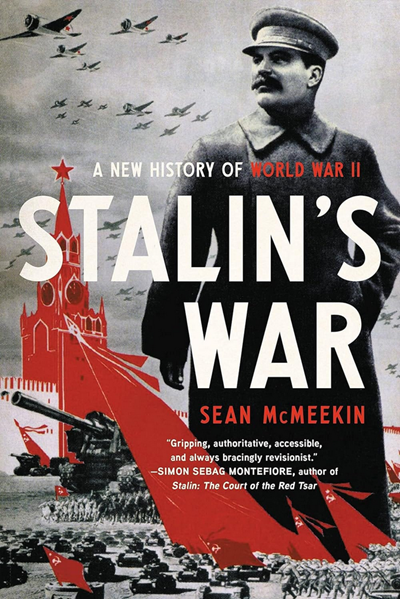
Big Serge: “One of the first things that stands out about your work is that you have found success writing about topics which are very familiar to people and have a large extant corpus of writing. World War One, the Russian Revolution, World War Two, and now a broad survey of Communism – these are all subjects with no shortage of literature, and yet you have consistently managed to write books that feel refreshing and new. In a sense, your books help “reset” how people understand these events, so for example Stalin’s War was very popular and was not perceived as just another World War Two book. Would you say that this is your explicit objective when you write, and more generally, how do you approach the challenge of writing about familiar subjects?”
Dr. McMeekin: “Yes, I think that is an important goal when I write. I have often been called a revisionist, and it is not usually meant as a compliment, but I don’t particularly mind the label. I have never understood the idea that a historian’s job is simply to reinforce or regurgitate, in slightly different form, our existing knowledge of major events. If there is nothing new to say, why write a book?
Of course, it is not easy to say something genuinely new about events such as the First World War, the Russian Revolution, or World War Two. The scholar in me would like to think that I have been able to do so owing to my discovery of new materials, especially in Russian and other archives less well-trodden by western historians until recently, and that is certainly part of it. But I think it is more important that I come to this material – and older material, too – with new questions, and often surprisingly obvious ones.
For example, in The Russian Origins of the First World War, I simply took up Fritz Fischer’s challenge, which for some reason had been forgotten after “Fischerites” (most of them less than careful readers of Fischer, apparently) took over the field. In the original 1961 edition of Griff nach der Weltmacht (Germany’s “Bid” or “Grab” for World Power, a title translated more blandly but descriptively into English as Germany’s Aims in the First World War), Fischer pointed out that he was able to subject German war aims to withering scrutiny because basically every German file (not destroyed in the wars) had been declassified and opened to historians owing to Germany’s abject defeat in 1945 – while pointing out that, if the secret French, British, and Russian files on 1914 were ever opened, a historian could do the same thing for one of the Entente Powers. I had already done a Fischer-esque history on German WWI strategy, especially Germany’s use of pan-Islam (The Berlin-Baghdad Express), inspired by a similar epigraph in an old edition of John Buchan’s wartime thriller Greenmantle – Buchan predicted that a historian would come along one day to tell the story “with ample documents”, joking that when this happened he would retire and “fall to reading Miss Austen in a hermitage”. So it was a logical progression to ask, if Fischer can do this for Germany’s war aims, why not Russia?
Readers may have missed the obvious Fischer inspiration for Russian Origins owing to the editors at Harvard/Belknap, who thought my original title – the obviously Fischer-inspired Russia’s Aims in the First World War – was boring and unsexy. Probably this helped sell books, but it did lend my critics an easy line that I was “blaming Russia for the First World War” rather than simply applying a Fischer-esque lens to Russia’s war aims. Some also called me Russophobic, which is understandable, though I think it misses the point. To my mind, subjecting Russian strategic thinking, wartime diplomacy and maneuvering to the same scrutiny as those routinely applied to Germany and the other Powers is taking the country seriously on its own terms, rather than ignoring Russia, as nearly every historian of, say, Gallipoli has done.
A book on Russian war aims was also long overdue. Other than an underwhelming Chai Lieven study from 1983 and a few articles, no one had really done this for Russia since Soviet scholars and archivists had (with very different motivations) published annotated volumes of secret Russian diplomatic correspondence back in the 1920s. For me, this was a door wide open, and I walked right in. Stalin’s War is in many ways a sequel to Russia’s Aims in the First World War (my own title!), written in a similar spirit, albeit much longer and in some ways more ambitious.
With the Russian Revolution, it was probably still harder to say anything really new, particularly after the popular histories of Richard Pipes and Orlando Figes (and a huge new literature written partly in response to them) came out in the 1990s. And I do not think my “take” was quite as revisionist or controversial as those on WWI or WW2. What I did try to do, in order to add something new to the story, was to combine my own research in a number of areas (Russian army morale reports before and after Order No. 1, depositions taken after the July Days, police reports from 1917, Bolshevik finances and expropriation policies, etc.) with new work done by others since 1991 on, especially, Russia’s military performance in WWI (a topic almost completely ignored in Cold War era literature on the Revolution, both Soviet and western), to reinterpret both the February and October Revolutions. In full disclosure, I would have preferred to write an ambitious history on just 1917, where I had the most original material and new points to make, but my publisher wanted a one-volume “comprehensive” history of the Revolution, so that is what I wrote. Like most historians and writers, I like to think that I write entirely from inspiration with a free hand, but of course there are all kinds of factors that play into our work.
Getting back to your question – while I have certainly done original research for all of these books, I am hardly the only historian to take advantage of Russian archives opened after the collapse of the USSR in 1991 – including, I should add, all the incredible archival material compiled by Russian researchers in the 1990s and 2000s into huge published volumes of Soviet-era documents. I think it is my mindset that differentiates me from other scholars who have taken similar advantage of this opportunity. Simon Sebag Montefiore, for example, uncovered incredibly rich veins of new material for Stalin. Court of the Red Tsar, as Antony Beevor did for Stalingrad, both of which books made an enormous splash. They’re not exactly “revisionists”, though. Rather, these historians retell stories already partly familiar, but with reams of fascinating new details that greatly enrich the story. I think this is a wonderful way to write history, and thousands of readers evidently agree. It is just not what I do.”
Big Serge: “I’m glad you brought up The Russian Origins of the First World War. This was the first of your books that I read, and I found it interesting for a counterintuitive reason, in that its arguments seem like they should be obvious and not particularly controversial. The essence of the book is that the Tsarist state had agency and tried to use the First World War to achieve important strategic objectives. That should be obvious, after all this was an immensely powerful state with a long pedigree of muscular foreign policy, but people are very accustomed to the Guns of August sort of narrative where all the agency and initiative is with Germany, and everyone else is reduced to the role of objects in a story where Germany is the sole subject.
It makes me think somewhat of a quip that Dr. Stephen Kotkin has used in interviews about his Stalin biographies, when he says that the “big secret” of the Soviet archives was that the communists really were communist. His point is that, even in a very convoluted and secretive regime, sometimes what you see really is what you get. I think you made a similar sort of point with Russian Origins. If I could paraphrase you, the big reveal is that the big, powerful Tsarist Empire was behaving like a big powerful empire, in that it had cogent war aims and it consistently sought to work towards those – so consistently in fact that the war aims were initially largely unchanged after the fall of the monarchy in 1917. You’re saying something very similar with Stalin’s War: the shocking secret here is that a powerful, expansionist, heavily militarized Soviet regime acted like it and worked aggressively to pursue its own peculiar interests.
How do you conceptualize this? It strikes me as a little bit odd, because, as you say, there is sometimes a bit of a stigma round the label “revisionist”, but your books generally present schemas that are fairly intuitive: Tsarist Russia was a big, powerful empire that pursued big imperial aims; Stalin was the protagonist of his own story and exercised a muscular, self-interested foreign policy; the Bolsheviks used extraordinary violence to conquer an anarchic environment. Are you surprised that people are surprised at these things?”
Dr. McMeekin: “I wish I was surprised, and perhaps at first I was, but I suppose that, over the years, I have become inured to the shocked! Shocked! reactions I receive when I point out fairly obvious things. Historians, like most groups, tend to be pack animals, who like to run in safe herds. When it comes to a familiar subject such as the outbreak of World War I, the literature tends to groove around well-trodden themes and questions. Certainly it has done since Fischerites took over the field: it’s Germany all the time, with perhaps a nod to Austria-Hungary in the Serbian backstory, or Britain with the naval race. France and Russia had almost disappeared from the story, as if one of the two major continental alliance blocs was irrelevant. I was heartened that my own treatment of Russia’s role in the outbreak of the war and Russia’s war aims garnered attention and shaped the conversation, both in itself and through Christopher Clark’s bestseller Sleepwalkers (which draws on Russian Origins). By contrast, Stefan Schmidt’s pathbreaking 2009 study of the French role in the outbreak of the war (Frankreichs Aussenpolitik in der Julikrise 1914), which Clark and I draw on heavily, has still not been translated into English, making barely a ripple in the profession. Clark and I have poked around with English-language publishers, trying to gin up interest in a translation, but so far without luck.
With the Second World War, I suppose the “shock” value is still greater, and perhaps therefore even less surprising. In Germany, after all, there are laws on the books making it illegal to “trivialize” the Holocaust, for example by foregrounding Soviet war crimes on the eastern front, and of course whole areas of the war such as the Molotov-Ribbentrop Pact, Soviet war plans in 1941, and even Lend-Lease are highly sensitive in Russia, though I’ll note that there has been a curious exception for the “full-on” revisionism of Rezun-Suvorov (Icebreaker, etc.) – perhaps because his thesis is so extreme as to be easily caricatured, or maybe just because his books sell so well, it has never been difficult to find them in Russian bookstores. In a way, I also think the popularity of Suvorov’s books in Russia relates to the way they do take the Soviet Union seriously as a great power, as I do, of course – whether or not one agrees with his thesis, and I’m sure many of his Russian readers do not, it is less condescending than western histories that treat the Soviets as passive victims of fate in the Barbarossa story before Stalin woke them up.
I was perhaps more surprised at the visceral reaction to Stalin’s War in Britain, particularly my discussion of Operation Pike (eg British plans to bomb Soviet oil installations in Baku in 1940), which sent certain reviewers into paroxysms of rage I found absolutely bewildering. If anything, I should have thought my sharply critical treatment of Hopkins and Roosevelt would have offended Americans far more gravely than my slightly more sympathetic portrayal of Britain’s wartime statesmen, but it was quite the opposite. Certainly some American Roosevelt admirers were annoyed, but this was nothing like British reviewers’ hysteria over Operation Pike. Curiously enough I had dinner not long ago with one of these reviewers, and he brought up Stalin’s War. He was very civil, full of British charm, but he still wanted desperately to know why I had argued that Britain “should have gone to war against the Soviet Union instead of Nazi Germany”. As always when I am accused of this – another reviewer stated this point blank in the TLS – I simply asked him if he could locate a passage in the book where I had stated any such thing? The entire subject of World War II has become so encrusted with emotion and taboos that I think it clouds people’s vision. They see ghosts.”
October 13, 2025
Stephen Fry’s Odyssey weighed in the balance and found wanting
Bryan Mercadente received a copy of Stephen Fry’s latest foray into Greek mythology and not only is not impressed, he writes, “Every page wasted on Fry is a page stolen from the real thing. The copy my aunt has given me for my birthday is already skimmed with disgust and thrown into the dustbin: it is too disgusting for the charity shops.”

The Iliad and Odyssey are the founding works of our civilisation. They are poems of war, loss, exile, and return. The hero of The Odyssey is a liar, a man of cunning and cruelty, but also a survivor who longs for home. The Homeric poems have come to us out of the Bronze Age. They have survived the collapse of at least two civilisations, and will survive the collapse of our own. They survive because they are already perfect. The hexameters carry an austere music. Their formulaic epithets — “ῥοδοδάκτυλος Ἠώς“, “πόδας ὠκὺς Ἀχιλλεύς“, “δῖος Ὀδυσσεύς” — are the memory-tricks of a sung tradition, but they also give the poems a dignity that no one who reads them can ever forget. Like The Iliad, The Odyssey was not written to be read in comfort with a cup of tea. It was composed to be chanted in smoky halls to men who might be dead tomorrow.
Stephen Fry knows none of this. Or if he knows it, he does not care. His Odyssey is Homer without the difficulty. It is Homer stripped of his grandeur, reduced to banter and “relatable” anecdotes. The Observer praised it for bringing “contemporary relevance” to the myths. That line is damning enough. Homer does not need contemporary relevance. A book that has spoken to audiences across three thousand years already possesses the only relevance that matters. To make Homer relevant is to make him trivial.
The Guardian called the book “relatable and full of humour“. Again, the praise condemns. Relatable? Homer is not relatable. The world he describes is harsh and alien. His heroes live by honour and die by the sword. They weep like children and sacrifice to gods who may or may not answer. That strangeness is the point. It is what makes Homer worth reading. To make him “relatable” is to gut him of meaning.
The Irish Independent calls Fry “A born storyteller“. This blurb, like the others, is the language of people who cannot read. No serious critic would praise a reteller of Homer as “a born storyteller”, as if the original poet were not the greatest storyteller of them all. These blurbs are not criticism. They are advertising slogans. And they work. The book is a bestseller.
Why, then, is Fry’s book a bestseller? Not because of merit. It sells because of Stephen Fry himself. For thirty years, he has been cultivated as a “national treasure”. He is the ideal leftist intellectual: clever enough to appear learned, shallow enough never to disturb. He quotes Wilde, sprinkles in Latin tags, and sprinkles them badly. His claque tells us that he is bipolar, gay, witty, and charming. He is on panel shows, chat shows, and literary festivals. He is always agreeable, always moderate, and always applauded.
Fry has built a career on the fact that the English middle classes like to feel cultured without effort. They want Plato without philosophy, Shakespeare without metre, Wagner without subversion, Homer without Greek. They want to be reassured that the classics are not difficult or dangerous, but fun. Fry gives them what they want. He domesticates the wild. He reduces epic to anecdote. He packages civilisation as entertainment.
It is not enough to call this dumbing down. It is worse. Dumbing down implies a reduction in complexity. What Fry does is not simplification but falsification. The Odyssey is not a sequence of funny stories about gods and monsters. It is about endurance and the fragility of human life under the indifference of the divine. To make it “funny” is to destroy it. It is as if someone rewrote the Inferno as a travel blog or recast the Iliad as a football commentary. The whole point of the work is lost.
Popularity, however, is not a defence. It is an indictment. Books that sell by the million are almost always worthless. They are consumed because they flatter the prejudices of the public. They make readers feel clever without having to be clever. They make them feel cultured without culture. They are the literary equivalent of processed food: cheap, sweet, addictive, fattening.
What, then, is the harm? Why not let people have their Fry and be happy? So what if his writing is as inconsequential as his suicide attempts? The harm is that time is short. Every hour spent on Stephen Fry is an hour not spent on Homer. It is an hour subtracted from Gibbon, Johnson, or Shakespeare. It is an hour less of life. The opportunity cost is everything. Bad books are not neutral. They are parasites. They feed on the hours that might have been spent on good ones.
October 12, 2025
Inventing boring Sundays – a British innovation
Ed West ruminates on the phenomenon of boring British Sundays and explains how they got that way:

Nietzsche thought that this was the whole idea, that the English designed Sundays that way in order to encourage people to appreciate the working week. In Beyond Good and Evil, he described how “The industrious races complain a great deal about having to tolerate idleness: it was a masterpiece of the English instinct to make Sunday so holy and so tedious, a form of cleverly invented and shrewdly introduced fasting, that the Englishman, without being aware of the fact, became eager again for weekdays and workdays.”
There may be some truth in this, so that before the Industrial Revolution there was the “Industriousness Revolution”, with a new emphasis on work rather than leisure. This is something which Joseph Henrich noted from studying reports from the Old Bailey between 1748 to 1803, and “spot-checks” observations about what Londoners were doing at a particular moment:
The data suggest that the workweek lengthened by 40 percent over the second half of the 18th century. This occurred as people stretched their working time by about 30 minutes per day, stopped taking “Saint Mondays” off (working every day except Sunday), and started working on some of the 46 holy days found on the annual calendar. The upshot was that by the start of the 19th century, people were working about 1,000 hours more per year, or about an extra 19 hours per week.
Before the Industriousness Revolution it was common for people to enjoy a number of saints’ days as holidays, including the three-day weekends offered by these “Saint Mondays”. That all changed with the arrival of Protestantism, with its scepticism towards saints’ days, William Tyndale arguing that these were only celebrated by convention and that there wasn’t anything special about them.
While they were keen to abolish holidays, the reformers also believed in making the Sabbath more godly, and so the Boring English Sunday was invented. This followed from a growing sense that leisure time was wasted time, but it was also the case that many of the Protestant reformers just didn’t like people having fun. In God is an Englishman, Bijan Omrani noted how “From the end of the 1500s, Puritan preachers condemned the way people generally spent their Sundays: ‘full heathenishly, in taverning, tippling, gaming, playing and beholding bear-baitings and stage-plays, to the utter dishonour of God'”.
Theologian William Perkins believed that Sunday “should be a day set apart for the worship of God and the increase in duties of religion”. Lincolnshire cleric John Cotton said in 1614 that it should be unlawful to pass Sunday without hearing at least two sermons; the idea of going to church twice would have filled my ten-year-old self with intense horror.
Hugh Latimer asked: “What doth the people do on these holidays? Do they give themselves to godliness, or else ungodliness … God seeth all the whole holidays to be spent miserably in drunkenness, in glossing, in strife, in envy, in dancing, dicing, idleness, and gluttony”.
Latimer also disliked holidays for quite modern-sounding reasons related to social inequality, noting that “in so many holidays rich and wealthy persons … flow in delicates, and men that live by their travail, poor men … lack necessary meat and drink for their wives and their children, and … they cannot labour upon the holidays, except they will be cited, and brought before our officials”.
The reverse argument is now made against allowing supermarkets to drop Sunday trading hours – that it pressures working people into excessive toil so that Waitrose shoppers don’t suffer any inconvenience. Although, reading Latimer, I can’t help but suspect that his real objection was to people having fun.
The reformers won, and English Sundays became notably dull. Banjani quoted children’s writer Alison Uttley, who said of Sundays that “Nobody ever read a newspaper or whistled a tune except hymns”.
QotD: Male privilege revealed
Vincent described herself as a “bull dyke” and held strong feminist views. She expected, throughout the course of the experiment to uncover the secrets of male privilege and the societal advantages that, she was sure, are afforded to men. She anticipated that living life as a man would validate her beliefs that men lead easier lives and wield unchecked power. She figured that, at the very least, she could enjoy a couple of years as a powerful male.
Vincent disguised herself as a man by getting a new hair style and giving herself a fake five o’clock shadow, among other things. She had always been considered rather masculine in her usual feminist and lesbian circles, so she figured she could pass rather easily as a man, if perhaps a slightly effeminate one. She was right.
Her initial assumptions changed when Vincent discovered that men, contrary to her expectations of power and privilege, face their own unique set of pressures and struggles. Men, she discovered, were expected to suppress any signs of vulnerability. This quickly led to feelings of extreme isolation that she did not expect. Nobody “had her back” because, as far as they knew, she was just a man, and should “man up”. She quickly realized that men do not have inherently easier lives. Her preconceived notions of in-born male advantage evaporated. She was getting worried.
She realized that women do not have empathy for the struggles of men.
Norah, as Ned, experienced the behavior of women toward men firsthand. At one point, she tried dating women as a man. She figured this would be incredibly easy for her. Not only was she a woman herself and knew how women think, but she was also a lesbian and already liked women. She worried at first that she’d be too good at it and would have to tell interested women that she was a woman to stop them from pursuing her.
The reality was sharply different from her expectations. Her apparent femininity came across as her simply being an effeminate man. This caused women to be disinterested in her and their rejections were dismissive, cold, and often extremely brutal. Women would sometimes treat her with suspicion or outright hostility as they assumed her intent was negative.
These interactions eventually led Vincent to start developing misogynistic thoughts. That’s right: women treated her so poorly when they believed her to be a man that she started to develop misogynistic thoughts.
Interestingly, many of the supposedly straight women she had attempted to date, even those who had been brutal and cold toward her, immediately expressed interest in a lesbian “hook-up” when she told them she was a woman who had been disguised as a man for the sake of journalism.
Perhaps there’s no such thing as a “straight woman”. Is there even a such thing as a lesbian?
CTCG, “UNDERCOVER: A Feminist’s Year Living as a Man”, Codex Trivium Cosmic Genesis, 2025-06-16.
October 8, 2025
QotD: Porn is always in the vanguard of new technologies
I remember seeing something years ago that commented on how soon after the development of photography we got pictures of naked women.
5 Florins says after Gutenberg invented the printing press and mass printed the Bible, guys were buying presses and cranking out copies of Thee Hornee Shepard and Thee Shye But Readye Milkmaide. 😍
(“T’would say it be a bodice ripper, but we’ve not invented bodices yet” – Johannes of Cologne, Ye Cologne Courier Newspapere)
mmack, commenting on “Why the Internet Stinks Now”, Founding Questions, 2025-07-03.
Update, 9 October: Welcome, Instapundit readers! Please do have a look around at some of my other posts you may find of interest. I send out a daily summary of posts here through my Substack – https://substack.com/@nicholasrusson that you can subscribe to if you’d like to be informed of new posts in the future.
October 7, 2025
An unexpected Gen Z “influencer” – Shakespeare
Ted Gioia describes the plight of a young man who had to move home after college and falls into a state of depression thanks to his hopeless situation and his dysfunctional home and social life. His name is Hamlet:
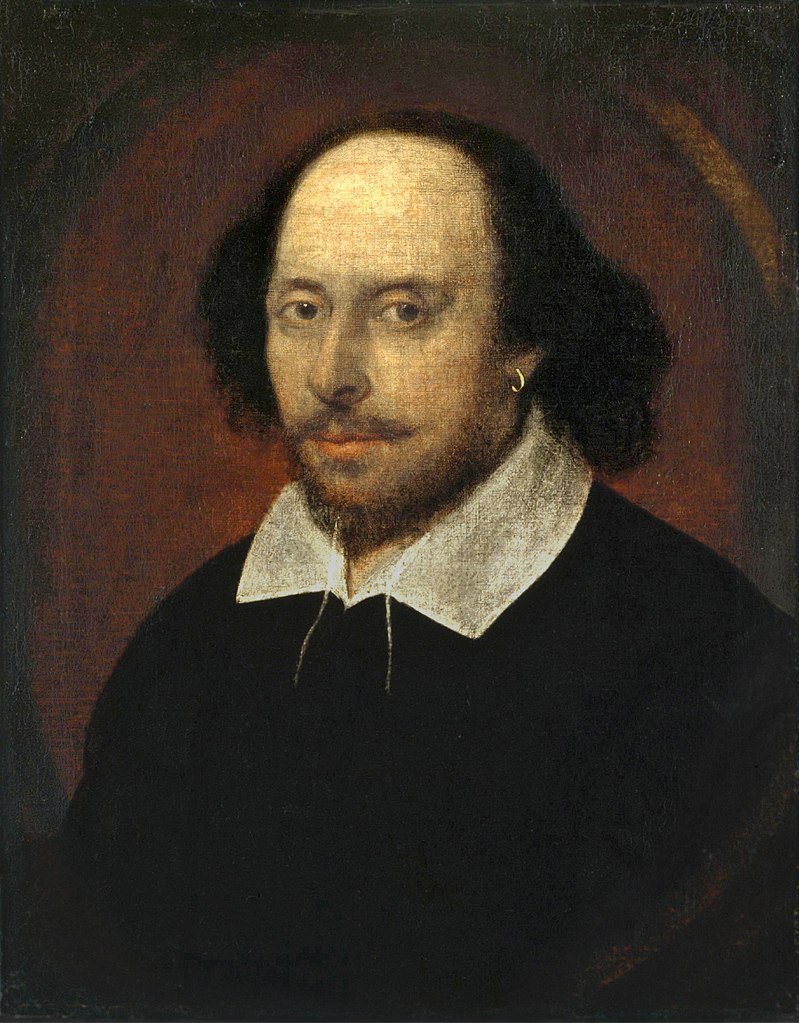
This was long thought to be the only portrait of William Shakespeare that had any claim to have been painted from life, until another possible life portrait, the Cobbe portrait, was revealed in 2009. The portrait is known as the “Chandos portrait” after a previous owner, James Brydges, 1st Duke of Chandos. It was the first portrait to be acquired by the National Portrait Gallery in 1856. The artist may be by a painter called John Taylor who was an important member of the Painter-Stainers’ Company.
National Portrait Gallery image via Wikimedia Commons.
It’s almost uncanny how relevant it feels right now.
So if I were directing Hamlet in the current moment, I’d give the title character an iPhone and game console. I’d have the characters onstage share photos on Instagram — and put up a big screen so the audience could see them posted in real time.
Hamlet could add pithy captions to his social media images. What a piece of work is a man! or maybe The lady doth protest too much!
Yes, Hamlet is many things, but one of them is, perhaps, a failed influencer.
Along the way, we may have answered the classic question about this play. For generations, critics have wondered why Hamlet wastes so much time, and can’t be bothered to take action.
Maybe he’s just too busy gaming and scrolling.
Okay, it sounds ridiculous. But is it really? Shakespeare possessed tremendous insight into the human condition — perhaps more than any author in history. So maybe he really did grasp the dominant personality types of our own time.
The Prince of Denmark still walks in our midst. And maybe — just maybe — careful attention to this play might help us, in some small degree, to heal the Hamlets all around us. Their number is legion.
Of course, the larger reality is that Shakespeare has proven himself relevant to every time and place. We can see that easily be examining how other generations viewed this same play.
Hamlet‘s original audience, four hundred years ago, clearly enjoyed the spectacle of violence and adultery. Nine key characters die during the course of the play — most of them murdered. Audiences loved these kinds of dramas back then, and Shakespeare always knew how to please the crowd.
But more sophisticated viewers, circa 1600, would have seen Hamlet as a political commentary — a reflection of all the tensions and rivalries of Elizabethan England. Nobody knew better than Shakespeare that monarchy is a dangerous game, and he always looked for opportunities to refer to current events in roundabout ways.
But two hundred years later, the Romanticists were in ascendancy, and they saw Hamlet as a very different kind of play. They ditched the politics, and embraced the Prince of Denmark for his pathos and personality. They tapped into the intense emotional currents of Shakespeare’s heroes — and the plays seemed perfectly suited for this kind of interpretation.
It’s no exaggeration to say that Hamlet continued to change for each new generation. He always feels timely and relevant.
A hundred years ago, critics began grappling with psychology and the unconscious — and Hamlet was a perfect character for these kinds of interests. In his 1900 book The Interpretation of Dreams, Freud focused on Hamlet as a case study in repression.
And who could disagree?
But fifty years later, Hamlet changed again. It now was the perfect play for those who had survived World War II. Jan Kott insists, in his book Shakespeare, Our Contemporary, that these old plays were more relevant than ever during the Cold War — just as timely as Beckett or Sartre or Brecht or Ionesco.
October 6, 2025
Fatherland: Alternate History with a Point
Feral Historian
Published 11 Oct 2024The 1992 novel by Robert Harris is a great example of the otherwise generally mediocre “Germany won WWII” alternate history premise. By removing the regime from its current almost mythologized status as a unique and singular evil, instead portraying it as merely a repressive state in a Cold War, Fatherland illustrates an uncomfortable truth about realpolitik and atrocities.
00:00 Intro
00:55 The Case
02:20 Out of Myth, into the Mundane
06:13 Detente and Bureaucracy
09:11 HBO’s Adaptation
10:01 Ignoring Inconvenient TruthsCORRECTION: Somehow I put up a picture of Bormann when I was talking about Buhler.
🔹 Patreon | patreon.com/FeralHistorian
🔹 Ko-Fi | ko-fi.com/feralhistorianAnd my own book, not alternate history, Ninti’s Gate is available on kindle and in paperback,
🔹 https://www.amazon.com/dp/B0CYXH9BWD
October 5, 2025
QotD: Why go to the Moon or Mars?
But this misses the point. Yes, space colonization appeals because it’s part of the wizardly dream of innovation, of building new and exciting things, and thus has an aesthetic draw that goes beyond practical arguments. Yes, long-term we probably shouldn’t put all our civilizational eggs at the bottom of one gravity well. And yes, many humans have a Promethean (Faustian? Icarusian?) drive to expand, to explore, to see what’s beyond the horizon. All of which is a pull to space.
Now pause for a moment and think about what would actually happen if you decided to set up your terran terraforming in, say, the Owyhee Desert of southwestern Idaho. There’s a river in parts of it. It rains occasionally, and snows in the winter. Whatever techniques you were planning to generate power and conserve water on Mars would certainly work in Idaho — more efficiently, for solar, since we’re closer to the source, and with more margin of error if you can add water to the system. Plus the desert is full of exciting minerals you can mine to sell or even to extract water from! And the second you tried, the Bureau of Land Management (which owns most of the Owyhee, and indeed most of the American West) and the Environmental Protection Agency (which has opinions about mining) and the ranchers (who would also like to use that water, thank you) will come down on you like a ton of bricks.
That’s the push to space.
The dream of space colonization is partly about all the ways it would be cool to live on Mars or the Moon. But it’s also, implicitly or explicitly, a claim that it’s easier to solve enormous technical challenges (air! water! food! solar radiation!) than it is to solve societal challenges on Earth. Terraforming is hard; eunomiforming is harder.1
Jane Psmith, “REVIEW: The Powers of the Earth, by Travis J.I. Corcoran”, Mr. and Mrs. Psmith’s Bookshelf, 2024-04-29.
- Though to his credit Corcoran has a diverse portfolio: in addition to the space colonization dreams, he’s tackling the “terraform Terra” angle with an active homestead (he’s written some guides) and the “improve society somewhat” approach through more direct political engagement than I’ve ever done.
October 4, 2025
The “nation of shopkeepers” is now the nation of problematic “Centrist Dads”
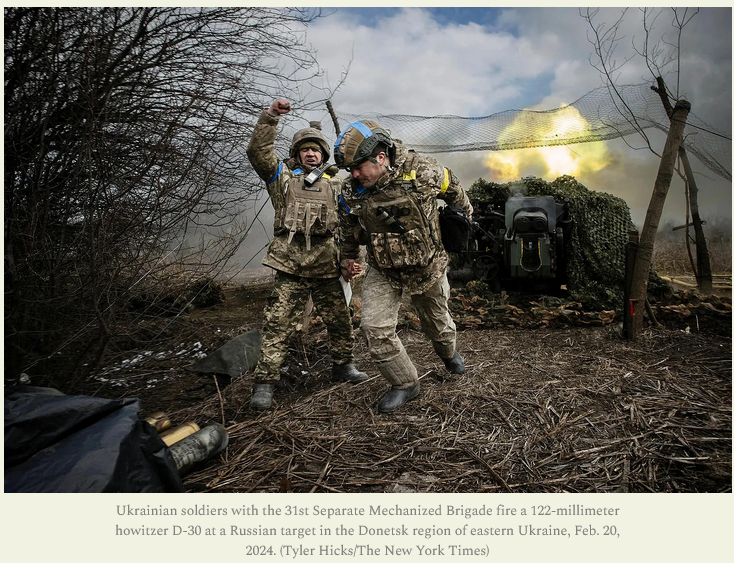
Dr. Robert Lyman on the common misunderstanding of the nature of war and even their own imperial history among British voters:
I’ve been involved with the practice and study of war for the past 44-years. I have five degrees in history and the study and practice of war, and I have written 19 books on the subject and have contributed to the writing of 10 more, with 3 more of my own in train. The net result of this, observing international events and Britain’s response to them over recent times, is to conclude that Britain – and Britons – have a problem about war. The problem is that at a very fundamental or essential level we simply don’t understand it. I see eyebrows rising everywhere at this assertion, protests arising in the usual places to suggest that if we don’t understand war, how on earth did we create an empire? Worrying swathes of academia and our impressionable young – I know, I’ve taught them – believe that Britain is and has been a nation of rapacious warlords that conquered a major part of the world by the use of violence and disrespect for others. We don’t have time to refute that silly nonsense here, apart from observing that the primary nature of the British Empire wasn’t one that was secured or maintained by violence.
But, to the subject at hand. A product of long decades readying, studying, teaching and writing about war has led me to the conclusion that as a nation, both politically and culturally, we are too squeamish about the practice of war to be any good at either preventing it, or preparing for it. Put simply, our problem is that we are just too nice. Centrist Dads spend their entire lives seeking compromise, and worrying when a middle way cannot be found. It is only when, deep into a war we hoped wouldn’t wash up against our shores, that we come to the shocking realisation that people are trying to destroy us and as a result we find ourselves forced into the process of trying to master the business of organizing violence on a massive scale, and unleashing it as effectively as we can against our enemies. We always seem to be playing catch up, because we haven’t prepared adequately in the first place for the inevitability of war in a fractious world.
[…] Kit Kowol’s superb (and recent) Blue Jerusalem describes in embarrassing detail the ignorance evinced by politicians and military thinkers in the 1930s who hoped to avoid the sharp end of war by buying only bombers, or ships, or of relying on persuading the enemy population to coerce their leaders into ending a war they had themselves started. Perhaps if we dropped leaflets on Herr Hitler he would see the error of his ways, and end all this silliness? Very few people in Britain on the eve of the Second World War could bring themselves to comprehend the extent of the fascist animus either for democracy in general, or the Jews in particular, both seen by the Nazis as preventing the creation of a Grosse Deutschland and allowing Germany to regain her status as primus inter pares in continental Europe. It was only as Belsen was liberated nearly six-years later that the penny seemed to drop in the befuddled British mind that these people were bad, really bad, after all. It is one of the accepted reasons for the Allied failure to destroy the railways feeding Auschwitz: decision-makers in London or New York never truly comprehended the scale of the slaughter then underway across Occupied Europe.
This is where are again. Evidence for the worryingly widespread intellectual softness that dominated political thinking through the 1930s, which I would describe as a Centrist Dad problem, is everywhere. At an event last year with General Lord Dannatt where he gave what I considered to be a pretty straight forward talk on the security threats facing the UK, and what we should do about them, I overheard a comfortable middle class couple at the end complaining that he was being “too pessimistic”. They couldn’t see any cause for alarm. I was almost too shocked to reply. These are the sort of people who cannot quite understand why Hamas and Israel don’t just kiss and make up. It must therefore be Israel’s fault that there is no two-state solution in the Middle East. I read this sort of commentary every day in the broad sheets. It is particularly well expressed by the weekly output of two well-known podcast blatherers, archetypical Centrist Dads, one a retired politician – you know the two I mean – who consistently demonstrate that they have a fragile grasp on the animus that is generated in the hearts of those who despise us, no real understanding of the security steps we need to take to prevent it, nor of the kind of war required to eliminate such threats.
The starting point of these blatherers is what the journalist Jake Wallis Simon and the security commentator Andrew Fox describe as the “Wykehamist proposition”, which is that we should treat all people, hostile or otherwise, on the basis of our own benign ideological predilections. Accordingly, if we want to prevent someone attempting to kill us, regardless of the enemy’s motives, all we need to do is to sit round a table together, assume we all want the same positive outcomes from our conversation, and proceed amicably to resolve our differences. The sad reality is that this is not how the world works, nor is it how humans behave. If they have been to taught from childhood to despise you and everything about you, to the extent that they want to kill you – as Hamas and its ilk see Jews – no amount of so-called Wykehamism is going to persuade them to do otherwise. I suggest that the opposite approach is required. We need to treat threats to ourselves and our friends seriously, both in political and in military terms, and prepare accordingly. As General Lord Dannatt and I suggest in our book, stern, decisive military active to prevent Herr Hitler from remilitarising the Rhineland may well have prevented the entire Second World War from breaking out at all. To understand how to deal with war and threats of war, we need a political class that understands the scale of the threat we face and is prepared to undertake decisive action to nip hostility in the bud when it might occur. If we can resolve our differences amicably then of course we must always do so. But where an enemy does not want to play this game we must be determined to use force – and if necessary extreme violence – to protect our interests, and our people. This might involve dropping leaflets over the Ruhr but it might also entail dropping incendiaries on Berlin. In other words, to defend ourselves as a country, we must have the capability and the willingness to exercise the full-throated management of violence. We must also accept that it is the legitimate function of other democracies – like Israel – to do the same.
October 2, 2025
How “Roman” is Times New Roman?
toldinstone
Published 24 May 2025Today’s video explores the long history of “Roman” fonts.
Chapters
0:00 Introduction
0:42 The Latin Alphabet
1:53 Rustic capitals
2:21 Uncial
2:50 Carolingian miniscule
3:32 Gothic
4:24 The Book
5:26 The first fonts
6:05 Littera Antiqua
6:46 Aldus Manutius and his successors
7:40 Times New Roman
8:07 How Roman?
QotD: The gap between the author and the reader
The Psellus book was a memoir, and so its author was presenting himself fairly directly to his audience, if in a self-edited fashion. Fiction adds a layer of veiling between creator and reader, ranging from a thin gauze to a thick stage curtain. People are naturally curious about anything hidden by a curtain, and always want to peek. (When thinking about this as a shy writer, I always channel that famous line from the Wizard at the climax of the movie The Wizard of Oz — “Pay no attention to that man behind the curtain!”) But if readers can’t get an actual look, they will make up the writer in their heads, constructed from their own knowledge and expectations much as they mentally construct the fictional characters they’re reading about.
I got an accidental peek at this process many years ago at a science fiction convention, where I fell into a conversation in the booksellers’ room with a (male) reader who was very surprised to discover I was a woman — by whatever assumptions, he had not processed my name on the cover as female. (This, I later discovered, is not uncommon in my foreign-language translations, where the genders of English names are less recognizable.) Quickly, before his mental image was overwritten by our encounter, I got him to describe the author whom he had imagined had written the books he’d enjoyed (Vorkosigan Saga science fiction stories, at the time.) It included some odd details — male, mid-thirties, dark-haired, East Coast upper class — rather like my fictional character Ivan Vorpatril, really. Nothing at all like the beleaguered (if also mid-thirties) Midwestern housewife and mother I actually was. Yay curtain.
Lois McMaster Bujold, introduction to the Taiwanese edition of The Curse of Chalion by Fantasy Foundation/Cite Publishing, 2020-03-25.
September 28, 2025
The beginning woodworker … an easy mark
On his Substack, Christopher Schwarz posts a weekly “earlywood” article pulled from his extensive back-catalogue of woodworking books and magazine articles. This week, he addresses the plight of the beginner in the woodworking hobby just before the internet became ubiquitous:
When people begin woodworking, most go through a phase (I did) in which they are willing to soak up every single piece of information they can find. Many will subscribe to multiple woodworking magazines, buy astonishing numbers of woodworking books, seek out catalogs and advertisements for woodworking tools, and buy anything they can afford that looks remotely useful.
This is when people are vulnerable. They need guidance. Unfortunately, woodworking is a mostly solitary pursuit. And so we spend incredible, astonishing and shocking amounts of money on equipment, books and instruction. And most of it is of questionable worth.
Because of this phenomenon:
- The woodworking magazine business had a glut of magazines. When we ran the numbers in the 1990s, we surmised that there should be three magazines serving woodworkers. Instead, there were more: Fine Woodworking, WOOD, American Woodworker, Woodsmith, Shopnotes, Workbench, Popular Woodworking, Woodworker’s Journal, Woodshop News, Woodcraft, Weekend Woodcrafts, Woodwork and a host of specialized magazines. What propped up these magazines? Beginners. Eventually, most woodworkers winnow their subscriptions down to one or two magazines. But the spendthrift beginner made it possible for many magazines to survive.1
- The woodworking book industry produced a glut of books. In the 1990s, my mailbox was stuffed with new woodworking books every week. It wasn’t unusual to see seven or eight new woodworking titles in a month. That’s coo-coo. Why did this work? New woodworkers wanted the latest information. New books are better than old books (duh!). And so publishers churned out books that had an 18-month life cycle before disappearing forever.2
- The woodworking tool industry thrives on new SKUs. After covering woodworking tool manufacturers for nearly three decades, it’s obvious that they introduce new products every year to goose sales. That’s why you have a new crop of cordless drill/drivers every year. And it’s also why you have a rash of odd products that seem (on the surface) to be innovative – silicone glue brushes, painter’s pyramids, many router table jigs, marrying a chisel with a rasp, aluminum squares, putting a laser on everything, oddball and worthless sanders (the Black & Decker Mouse; Porter-Cable Profile Sanders), and battery-powered clamps and tape measures. The list is endless, and it’s not a modern phenomenon. When my grandfather was woodworking in the 1970s, he was charmed by a jig that let you cut dovetails with a corded drill. The only people who are dumb enough to fall for these products are beginners and woodworking journalists. Beginners don’t know better, and journalists need copy to fill the empty space between the covers.3
Some of you might be thinking I’m exaggerating my experiences. I’m not. The good news is that the Internet did a Half-Nelson on most of these stupid business practices. When people now go through their “indiscriminate sponge” phase, they do it on YouTube and soak up as much ridiculousness as they wish.
For free. Mostly.
Eventually, they will be able to ignore the tool-chugging nincompoops and focus on what’s important: Building basic skills using simple and robust tools (and maybe a few well-built machines).
Honestly, it’s a good thing to be a bit jaded about the woodworking tool and publishing industries. It makes you a better consumer and encourages us to do better. So please, for the sake of the future of the craft, don’t buy the Bench Cookies.
- Some modern context follows. Many of these magazines have disappeared or have been consolidated. But you know what? I still think we have too many woodworking magazines these days. Or not enough. I forget which is right.
- More modern context follows. Most of these publishers have gone tits up. And good riddance. We don’t need a new book every year on advanced router techniques.
- Modern context follows. Nothing has changed here.
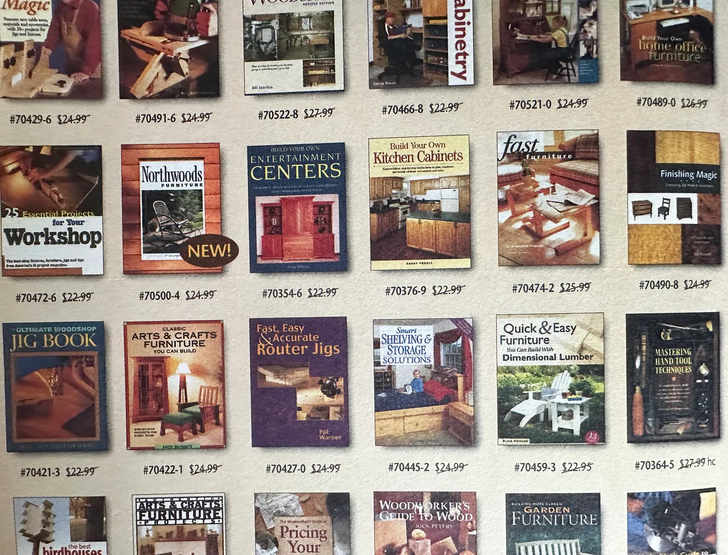
I matched this profile of the “indiscriminate sponge” beginner and I had huge numbers of woodworking books and magazines … until I finally noticed that the magazine articles in the latest issue were basically the same as the ones I’d first seen three years earlier, just with more gee-gaws and doo-dads added (microadjusters-for-everything were flavour of the month when I finally exited my sponge phase).
September 27, 2025
QotD: Utopian revolution
This illustrates a point that Professor Chirot makes clear in his discussion as to why the Vietnamese communist regime, though often brutal, never descended to anything like the level of horror of neighbouring Cambodia. Among the factors must surely have been the character and personality of the leaders as well as of the countries themselves. In other words, the fate of countries cannot be reduced, either in prospect or in retrospect, to an invariable formula. Human affairs will, to an extent, always be incalculable.
Still, some degree of regularity is possible. I was rather surprised that Professor Chirot overlooked one such. He writes the following of the corruption endemic under communist regimes: “a function of a deliberately exploitative, thieving elite that staved the general economy by its dishonesty than it was the essence of the system itself. Avoiding corruption was impossible because without it the society could not function.”
What is surprising here is that he does not mention why it could not function, but the answer seems to me perfectly obvious: it was because the communist system abolished the price system and substituted political decision-making in its place. This explanation is sufficient, for where there are no prices, and the economy is thereby largely demonetarised, goods and services can be distributed only by corruption. This is not to say that where there is a price system there will automatically be no corruption, obviously this is not the case; but such corruption will be limited by the very need for money to retain its value where such a price system exists. To that extent, it imposes at least a degree of honesty. The mystery of the Soviet Union or any other communist country is not why it produced so little, but why it produced anything at all: and here Professor Chirot is quite right. The answer is because of corruption: an “honest” communist state would produce nothing. It could not survive.
Theodore Dalrymple, “Longing for Revolution”, New English Review, 2020-05-13.
September 23, 2025
QotD: “Bye, Phoenicia”
The long-distance trade of the Bronze Age had been dominated by large state actors. The ships were probably built and crewed by men from the Levantine coast, but the cargo was purchased and shipped by local representatives of the Great (and lesser) Powers of the age: luxury goods were an integral part of high-level diplomacy, so most trade was a virtual monopoly centrally directed from the palaces. When these polities were weakened (or in some dramatic cases like Ugarit completely destroyed) in the Collapse, they left behind a vacuum that independent Phoenician traders, operating without centralized control and serving only profit rather than the demands of empire, rapidly filled.
By the tenth century BC, the Phoenicians were importing silver from Spain, copper from Cyprus and Sardinia, and cinnamon from southeast Asia. They exported timber (the much-vaunted “Cedars of Lebanon”)1 and the valuable purple dye extracted from the murex sea snail, as well as a wide variety of finished luxury and quotidian goods they produced at home from raw materials obtained abroad. They founded colonies throughout the Mediterranean. And perhaps most importantly for the future of “the West”, they introduced the alphabet,2 which enabled the return of literacy to Greece and its far wider adoption than had ever been possible with Linear B.3
By the time the ascendant Neo-Assyrians began to encroach on their territory, the Phoenician city-states were so rich and economically well-connected that they were more valuable as semi-autonomous tributaries and middlemen than as conquered subjects. In fact, it was the Assyrian demands for metal (especially silver) that drove Phoenician colonization in the western Mediterranean: they founded Cadiz (Phoenician Gadir) to access the rich silver mines in the Spanish interior, as well as dozens of other smaller entrepôts along the sailing routes to and from the Levantine coast. Eventually they removed so much silver from Spanish mountains that its value in Assyria collapsed, inflated away by oversupply, just like Peruvian silver would destabilize the Spanish economy two thousand years later — but with the roles flipped. I enjoy these echoes.
It’s worth pointing out here that Phoenicians never called themselves Phoenicians: it’s a Greek word, deriving from a Mycenaean era (e.g., pre-Collapse) term for purple dye. In fact, they didn’t even have a term that clearly limned what the Greeks meant by “Phoenician” (essentially, “Levantine traders with really good ships who speak a related set of Semitic languages”). Instead, they sometimes referred to themselves more narrowly by reference to their native cities (Sidonian, Tyrian, Byblian, etc.) and other times more broadly as “Canaanite”, because of the cultural heritage they shared with the other survivors of Bronze Age Canaan. But even if they never employed it themselves, “Phoenician” is a terribly useful word, because these particular city-states had a lot in common with one another but diverged sharply from their Canaanite kin to both north and south.
Bronze Age Canaan had been relatively culturally homogenous, though the cities in the north came into the Hittites’ sphere of influence and those in the south the Egyptians’. After the Collapse, though, the city-states of northern Canaan (modern Syria), like their Neo-Hittite neighbors, seem to have continued more or less as they had been. Those in southern Canaan were not so lucky: weakened by the invading Sea Peoples and the withdrawal of Egyptian hegemony, the southern Canaanites were displaced by (or assimilated to) the new Semitic kingdoms in the region, including Israel, Judah, Edom, and Ammon. And the central Canaanites became the Phoenicians: master sailors and traders, they had seized their opportunity and so thoroughly transformed themselves that we join the Greeks in identifying them by a new name.
Most of the larger cities of the central Levant are buried beneath their modern equivalents, and Lebanon has not been a particularly salubrious place to excavate for the last few decades, so it’s hard to say a great deal about Phoenician continuity with their Bronze Age ancestors. There was obviously some, certainly genealogically but also linguistically and in terms of material culture. However, we also know that their lifestyles changed dramatically as their economic reach expanded and their cities became centers not only of exchange but of manufacturing. We know their commercial firms were organized around extended families, and that they began to settle foreign lands both as colonists in their own new cities and elsewhere as resident merchants with their own dedicated enclaves. And we know that as their city-states grew more powerful, they increasingly directed worship away from the traditional Canaanite pantheon, led by El, and towards the tutelary deity of each individual city. (The story that King Hiram of Tyre actually tore down the temples of El and Baal to make room for a magnificent new temple of his patron, Melqart,4 is probably an exaggeration, but points to the scale of the break with the past.)5
Jane Psmith, “REVIEW: After 1177 B.C., by Eric H. Cline”, Mr. and Mrs. Psmith’s Bookshelf, 2024-07-08.
- For a very funny story about an Iron Age Egyptian attempt to buy some, which I simply could not fit into this review, see the “Story of Wenamun“. Bonus points for imagining how it would have played out under the New Kingdom.
- Okay, the Phoenician “alphabet” is actually an abjad — it contains no symbols for vowels — but the Greeks quickly added those.
- It is much, much easier to learn to write with an alphabet than with a logosyllabic system like Linear B or cuneiform.
- Melqart is also the patron of the Tyrian colony of Carthage, and his name contributes one element to that of Hamilcar Barca. The –bal in Hannibal, Hasdrubal, etc., is of course from Baal.
- Cline doesn’t give a ton of detail on Phoenician culture; in this section I am also drawing heavily on the opening chapter of Richard Miles’s Carthage Must Be Destroyed: The Rise and Fall of an Ancient Civilization, which sentiment I fully endorse even though I haven’t finished the book yet.


