
Once, passing a second-hand bookstore, I spotted in its window a book I very much wanted to acquire. Knowing the bookseller, I dashed into his shop, grabbed the book and, while advancing towards him at the cash desk, exclaimed that I had been willing to kill for it.
“How much?” I asked, catching my breath.
“Eighty dollars,” he replied, nonchalantly.
I told him I could not possibly pay that, and sadly released the book from my grip.
“Well,” the bookseller observed. “Thanks to this exercise, we know the value you place on a human life. Less than eighty dollars.”
In those days, I think I would have drawn the line at thirty. But to his moral credit and mine, the bookseller and I were finally able to agree on fifty-five dollars (plus sales tax).
David Warren, “Virtual March for Life”, Essays in Idleness, 2020-05-14.
November 22, 2025
QotD: The value of a human life
November 21, 2025
“You too can be a Tactical Espionage Dollar-Store Hobo for less than $1000”
At Anarchonomicon, Kulak is at it again … this time it’s a long, long post about how to manage “James Bond tricks” without a “James Bond budget”.

I have now seen 5+ different spy films, In which a CIA or MI6 spy has to breach a chainlink fence. An ordinary chainlink fence.
There’s barb or razor wire up top that prevents our hero from just climbing it … So he or she has to breach it. And on FIVE SEPARATE OCCASIONS … I have seen the goofiest inventions in the world come out. $10,000 super-spy wrist watches with hidden lasers in them, super-secret hairpins with scissors in them made of magic cutting alloys, aerosol sprays that instantly oxidize and rust out a massive section of solid steel fencing (don’t breathe that spray) allowing the spy to just push out a Wile E. Coyote style hole of fencing …
Completely over-designed over-specific insanity that’d cost thousands of dollars, and would basically instantly betray the CIA or MI6 was behind the breach …
Of course no sane human being would ever use those techniques even if they existed. The one semi-plausible breech I’ve seen is in Fight Club Ed Norton and Brad Pitt toss a rug over the razor wire surrounding a medical facility so they can climb the fence … but even this strikes me as profoundly unideal … Would you really want to PLAN on risking nasty lacerations climbing OVER razor wire? That seems more like a desperate break-out trick. Not a Break-in trick.
Of course this is all insane because BREACHING A FENCE is maybe the most SOLVED problem out there, 80% of people reading this already have the tools to do it.
You just use wirecutters or a multitool. Ideally creating a single vertical slit so you can crawl through without the breach being visible unless you look very closely. (be sure to fold the slit back as you crawl so you don’t cut yourself on the jagged edges.
Often the crappiest $15 Chinese Multi-tool is up for the task (although test it out on a random fence on a walk before you gamble on it).
(Note that a “Leatherman” is just a good make of multitool, and outperforms even larger wire-cutters … Your cheepo crappy surplus multi-tool will take more elbow grease (if it works, test it))
Almost everything on the pop-culture side of the tactical world is like this … There’s an obsession with ultra-expensive James Bond scifi inventions that double as a luxury brand to match your tuxedo … When in reality the cheapest rusty junk from your granddad’s tool shed probably gives you vastly more capability.
And even In the world of prepping, tacticool influences, camping, modern combat, and all matters “survival”, “guerilla”, and “outdoors adventure” there’s an intense focus on expensive kit.
All your favorite influencers are sponsored by various product sellers, and half the reason people watch them is for the vicarious or personal thrill of collecting expensive Gucci kit and showing off their rare or designer rifles and Military Artifacts.
Most will assemble load-outs, rigs, and rifles, far less as a preparation for disaster or war, or an exercise in capability expansion, and more as an artistic expression, fashion statement, or historical exercise … Whether they will admit it or not most of the people who buy Yugoslavian combat webbing, or archaic experimental 80s rifles meant for an upcoming war in the scifi future of 2005 have more in common with historical reenactors than they might care to admit … They just chose wars that didn’t happen towards the end of the cold war, instead of The American Revolution, 1812, or the Civil War.
It’s astrology for boys!
As such one could be forgiven for believing that the great wars of the 21st century to come, and the Urban Battlefield that much of the world is quickly becoming, is a “pay to win” combat-zone. And that unless one has close to 100,000 dollars for body Armour, thermal vision, night vision, precision optics, gucci rifles, and all manner of overpriced gadgets and gizmos that they are simply screwed in any 21st century conflict.
This is not the case. Indeed in some cases it is almost the opposite: given how mass surveillance defines the modern battlefield, there’s a lot of kit I wouldn’t want to use just for risk of dropping it and the Glowies tracking down the only 10-20 people who’ve ordered Czechoslovakian Mag-Pouches via NSA copies of online transaction records, or by just calling the 3 sellers who ever had them.
Put simply Skill, knowledge, resourcefulness, and a more than abundant paranoia are more overpowered than almost anytime since the neolithic period … Basic resourcefulness, daring, courage, B-Grade high-school shop-class craftiness, low level chemistry knowledge, basic boy-scout skills, physical fitness (tall order I know), and a nigh primitivist obsession with the pre-computer way of doing things … Is sufficient to achieve a shocking level of capability and inflict an extraordinary level of damage in any near-future conflict, tyrannical regime, or low intensity resistance.
The most important kit in any future conflict isn’t free. But it is near free.
Available at shockingly low prices from dollar-, convenience-, hardware-, surplus-, grocery-stores, and pawn shops … The necessary equipment and capabilities to fight a high impact Guerilla Campaign are available in almost any town of 20,000 almost anywhere in the western world.
Sadly in spite of being largely legal throughout most of the US and not a few odd other countries (assuming one navigates the proper tax stamps and legal statements) I will not be presenting a guide on how to manufacture black-powder, explosives, firearms, or more exotic weaponry … This is all largely trivially covered by Chemistry Youtube in a level of detail I could never hope to match and with a level of responsibility and maturity far beyond my juvenile imagination, and with a level of expertise and experience I cannot pretend to … Seriously! Chemistry/explosive Youtube is really cool, Some of this stuff is should be taught in schools, so historically relevant and useful is it.
If one Navigates to my Earlier “Warlord’s Reading List” you’ll find many listed works (not least published by the US, Canadian, British, and Swiss Governments) that give detailed guides to the manufacture of explosives, chemical weapons, rocket weapons, improvised firearms, homemade flamethrowers, etc … All from other publishers that I can gesture at without exposing me to legal risk and most of them largely available online in PDF form, or from Amazon, and sometimes from the governments themselves.

November 19, 2025
Julia: A Feminist Retelling of 1984?
Feral Historian
Published 11 Jul 2025Julia, a 2023 novel by Sandra Newman, does more than just retell Orwell’s 1984 through Julia’s eyes. That perspective switch presents an Oceania that is both more mundane and more familiar. It’s certainly a companion piece more than a stand-alone work, but it does have something to offer both in how it examines Orwell and a few times, how it contradicts him.
00:00 Intro
02:18 a Different Perspective
09:30 Caught in a Trap
12:45 Backstory
15:40 Departures
20:18 Endings and Beginnings
(more…)
November 17, 2025
QotD: Turns out Judaism isn’t the peaceful exception among Abrahamic montheisms
Yevardia @haravayin_hogh
Thread w/excerpts of Israel Shahak’s Jewish History, Jewish Religion.
Shahak was an award-winning organic chemist & Classical Liberal. Born in Poland, his family moved to Israel as displaced persons in 1945.
For this book, he received death-threats for the rest of his life.Quoted thread is absolutely fascinating.
Like many American gentiles who grew up in the 1950s and 1960s, I have a fondness for Jewish culture as it manifested in this country. The food, the humor, the intellectual tradition. I read Mad Magazine as a kid and “The Joys of Yiddish” as a young man and cheerfully adopted some Yiddishisms into my idiolect.
It’s always been slightly difficult for me, though, to reconcile my fondness for the Jewish influence on American life with what I believe about monotheisms in general and Abrahamic monotheisms is in particular. Which is, basically, that they are pits of evil. Infectious insanities that bring mob violence, horror and death whenever they have actual power.
Judaism looked like an at least partial exception, a monotheism with a curious lack of horrific violence in its backstory. I thought this might be explained by its absence of coercive power ever since the destruction of the Second Temple — 2000 years of oppression by others teaching Judaism the virtue of tolerance the hard way.
Now comes Israel Shahak to tell me it wasn’t like that at all. That until historically recent times – basically, post-1800 — Judaism wasn’t tolerant and rational. Not even close. These are virtues of the secularized Jew, in reaction to traditional Jewish shtetl and ghetto communities that could best have been described as violently evil religious despotisms.
Shahak says gentiles — and many Jews — don’t know how terrible life was under pre-modern rabbis because Judaism has done a bang-up job of expurgating and sanitizing its own history.
Nobody talks about the fact that until the 19th century, rabbis routinely used the self-governance afforded them by a lack of state interest in universal secularized justice to abuse, torture, and often murder Jews they found to be in violation of religious law. I certainly had no idea of this, despite being quite well read in history and comparative religion.
Thought control, too. We think of Jews as readers and scholars, but it turns out the pre-modern rabbinate deliberately kept communal Jews ignorant of history, geography, science, and indeed all secular literature.
Shahak brings the receipts, with extensive quotation from primary sources. Even his critics — and there are many — can’t accuse him of making up these reports. They claim he misinterprets the evidence. But they can’t make the evidence go away.
In a way this comes as a relief to me. I no longer have to wonder why Judaism looks like an exception to the general evil of monotheisms. Because it isn’t one — like Christianity, it looks benign only to the extent that it’s been denatured by modernity and secularism.
On the other hand … I miss the Judaism I thought I knew. I’m disturbed that the evidence was so effectively suppressed, and that it took reading excerpts from Shahak to clue me in.
Damn shame copies of Shahak’s book are so rare that you can only find them for over a grand each. I’d like to read the whole thing, but everybody should read the excerpts in this thread.
ESR, The social media site formerly known as Twitter, 2025-08-15.
November 16, 2025
QotD: Elon the gambler
Each of these bets might have been a smart one in a statistical sense, but it still requires a special kind of person to take a $200 billion market cap and bet it all on black. So why has Elon done this? Does he just not believe in the St. Petersburg paradox, like Sam Bankman-Fried claimed to do? No! It’s actually very simple: remember all that stuff about how SpaceX is less of a company and more of a religious movement, with a goal of making life multi-planetary? Elon and SpaceX behave the way that they do because they believe that stuff very sincerely. A version of SpaceX that merely became worth trillions of dollars, but never enabled the colonization of Mars, would be a disastrous failure in Elon’s eyes.
Every bit of company strategy is evaluated on the basis of whether it makes Mars more or less likely. This fully explains all the choices that look crazy from the outside. SpaceX does things that look incredibly risky to conventional business analysts because they reduce the risk of never getting to Mars, and that’s the only risk that matters. This has the nice side-benefit for shareholders that it’s revolutionized space travel several times and built several durable monopolies, but if Elon decided that actually blowing up the business increased the odds of getting to Mars, he would do it in a heartbeat. He’s said as much. This all has very important implications that we will return to in a moment.
A necessary, and to me charming, component of this approach is an utter disregard for bad press. Most corporate communications departments live in flinching terror of the slightest whiff of negative PR. Meanwhile, SpaceX’s puts out official blooper reels of exploding rockets. More seriously, one of the company’s lowest points came in the aftermath of the CRS-7 mission, when a rocket exploded two and a half minutes after launch and totally destroyed its payload. Most companies would do everything possible to minimize the risk of the following “return-to-flight” mission. SpaceX instead used it to debut a completely untested overhaul of the rocket and to attempt the first ever solid ground landing of an orbital-class booster. (It succeeded.)
Hopefully by now it’s not a mystery why SpaceX is a far more effective organization than NASA, but I think this last point is underappreciated. NASA, unfortunately, has boxed itself into a corner where it cannot publicly fail at anything.2 But if you aren’t failing, you aren’t learning, and you certainly aren’t trying to do things that are very hard. SpaceX, conversely, rapidly iterates in public and blows up rockets to deafening cheers. Permission to fail in public is one of the most powerful assets an organization has, and it flows directly from the top. This, too, is something for which Musk deserves credit.
The last thing I’ll say about Elon is that he is notably, uhhh, unafraid to disagree with people. In fact, this book literally has a chapter subheading called “Musk versus the entire human spaceflight community”.3 This quality can be a bit of a two-edged sword, but it’s safe to say that without it the company would never have gotten anywhere. Practically from the moment SpaceX came into existence, its enemies were trying to destroy it. Anybody who followed space policy in the early-to-mid 2010s knows what I’m talking about — politicians like the imbecilic NASA administrator Charles Bolden and the flamboyantly corrupt US Senator Richard Shelby did everything in their power to make life difficult for SpaceX and to smother the newborn company in its crib.
It’s a sign of how total SpaceX’s victory has been that some of those old episodes feel surreal in hindsight. Not just the antics of clowns like Bolden and crooks like Shelby, but also the honest-to-goodness competition in the form of Boeing and Lockheed, who fought dirty from the very beginning. For instance, they lobbied hard to block SpaceX from having any place to launch rockets at all, and dispatched their employees to stand around SpaceX facilities mocking and jeering while taking photographs of operations. In those early, desperate days, it would only have taken one or two successes of Boeing’s massive lobbying team to lock SpaceX completely out of government contracts and starve them of business. It was only Elon’s reputation as “a lunatic who will sue everyone” that prevented NASA from awarding the entire Commercial Crew Program to Boeing despite SpaceX offering to do it for about half as much money.4 And of course Elon actually did sue the Air Force when under intense lobbying they froze SpaceX out of the EELV program.
All of this is ancient history now. SpaceX’s competitors are no longer trying to stop the company with lawfare, because SpaceX no longer has any meaningful competition. But there are still people trying to slow down and sabotage the company; they’re just doing it for ideological rather than economic reasons. In the early days of SpaceX, the “deep state” of unelected bureaucrats who direct and control the United States government were huge supporters of the company, because back then the reigning ideology of that set was a sort of good-government technocratic progressivism and the idea of a scrappy new launch provider disrupting the incumbents genuinely pleased and excited them. A few years later, the state religion changed, and a few years after that, Musk revealed himself to be a definite heretic. And so, in utterly predictable and mechanistic fashion, the agencies that once made exceptions for SpaceX now began demanding years of delays in the Starship program in order to study the effects of sonic booms on tadpoles and so on.
One might be tempted to rage about how detrimental this all is to the rule of law. Think of the norms. Berger is certainly upset by it, and he ends his book (published in September 2024) by urging Musk to self-censor and stop antagonizing powerful forces with his political activism. Implicit to this demand is the advice, “If you just act like a good boy and stop making trouble, they’ll go back to leaving you alone.” Obviously, Musk did not take this advice. He instead further kicked the hornet’s nest by redoubling his support for Donald Trump. By October, the social network formerly known as Twitter was teeming with employees of US spy agencies and their allies demanding that SpaceX be nationalized and that Musk be deported.5 Given that Trump’s election was no sure thing, why would he take this risk?
There was a famous uprising against the Qin dynasty that happened when two generals realized that (1) they were going to be late, and (2) that the punishment for being late was death, and (3) that the punishment for treason was … also death. Elon Musk thinks being late to Mars is just as bad as being deported and having his companies taken away from him. He has already gambled the entire future of SpaceX on a coin flip five or six times, because he considers partial success and total failure to be literally equivalent. When it became clear that an FAA empowered by a Harris administration would put one roadblock after another in front of him, his only choice was to rebel and to flip the coin one more time.
When I saw Musk charging into the lion’s den back in October, I immediately thought of the Haywood Algorithm and its dreadful, stark simplicity. “Make a list of everything you need to do in order to succeed, and then do each item on your list.” When you run a normal company, the algorithm sometimes demands that you stay late at work or come in on a weekend. When you run a rocket company, the algorithm sometimes demands that you buy Twitter6 and use it to take over the United States government. It’s far from the riskiest thing Musk has done on his path to Mars. At this point, it might be wise to stop betting against him.
John Psmith, “REVIEW: Reentry, by Eric Berger”, Mr. and Mrs. Psmith’s Bookshelf, 2024-12-09.
- “Propellant densification” may sound like a nerdy topic, but it’s actually one of the most interesting subplots in the entire book. In the interest of making the Falcon 9 the highest performing rocket ever, and especially in the interest of improving the economics of booster landing and reuse, SpaceX decided to try to just pack more fuel and oxidizer into the tanks. The way you fit more of a gas or liquid into a given volume is by making it colder. So they developed a way to chill liquid oxygen down to -340 degrees Fahrenheit, way colder than anybody had ever made it before. What they weren’t prepared for was that at these temperatures, liquid oxygen starts making all kinds of horrible, eerie noises that made the engineers not want to be around it.
- Remember propellant densification? NASA considered it in the 80s and 90s, but dismissed it. Not for technical reasons, but because the need to destructively test pressure vessels might result in negative news stories.
- The subject of this section is whether it’s acceptable to fuel a rocket when the astronauts are already inside. The position of “the entire human spaceflight community” was that fueling can be dangerous, so better to complete propellant loading first, wait for everything to settle, and only afterwards being the astronauts on board. Seems sensible enough, but remember propellant densification? SpaceX’s ultra-cold liquid oxygen immediately begins heating up after loading, so the only practical way to use it is to load at the last minute and then immediately launch the rocket. Densification was vital to eking out the last bit of performance margin that makes rocket reuse possible, so Musk stuck to his guns. So far zero astronauts have died as a result.
- NASA’s pretext for favoring Boeing over SpaceX was the former’s “reliability” and “experience” and “technical superiority”. In the decade since then, SpaceX has completely dozens of missions flawlessly, while Boeing has yet to actually make it to the International Space Station and back.
- It’s hard to tell when the radical centrists mean things “seriously but not literally”, but I sincerely think that had Trump lost the best case outcome for Musk would be something like Jack Ma: chastened, humiliated, wings clipped, freedom of action greatly reduced.
- It’s become fashionable to mock Musk for running Twitter into the ground, but control over the social network’s content policies probably had a major effect on the election outcome. Even if Twitter literally becomes worth zero dollars (which given Musk’s track record I doubt), surely you can imagine how when you have a tremendous amount of money, $44 billion might seem like a small price to pay to have the President of the United States owe you some major favors.
November 13, 2025
I, Robot: The Ellison Script
Feral Historian
Published 4 Jul 2025Harlan Ellison’s screenplay adaptation of Isaac Asimov’s I, Robot is arguably the best sci-fi movie never made. Let’s take a look at the script itself, why the film was never made, and how it might have altered science fiction cinema in the wake of Star Wars.
00:00 Intro
01:59 Robbie
04:32 A Little Detour
06:18 A Lifetime and a Galaxy
12:12 Liar
14:06 A New Theory
16:29 The Rapid Rise of the Federation
21:01 Obstacles and Ellison
(more…)
November 10, 2025
Enshittification, the book
Cory Doctorow originally coined the all-too-useful name for the steady deterioration of pretty much everything in the online world and now it’s the title of his latest book:

Author and activist Cory Doctorow wants you to understand why online digital platforms are failing users, and he’s fighting for a better internet. “Enshittification” — a word he coined to describe the degradation of online platforms and services — is the slightly profane albeit funny title of his latest book.
[…]
First question from me: “What does enshittification look like in Canada?” (Try saying that word without chuckling). The country had several opportunities to lead as a global digital force to be reckoned with, Cory agrees, and in his view, “we dropped the ball on market concentration”.
“The Competition Bureau has, through almost all of its history, until last year when we got a new bill out of Parliament, been, I think, the weakest competition bureau in the world,” Cory declares, emphatically. It’s hard to refute his assessment: The merger of Shaw and Rogers, two very large telecoms in Canada, was made official in 2023, the year before Canada’s competition law was modernized.
“Wouldn’t you think, at the very least, Canada would have a robust domestic network platform available by now?” I ask. Gander Social, a made-in-Canada social media platform, designed as an alternative to large U.S.-based companies, is only now being beta tested.
“There are any number of people who would like very, very much to host a few thousand of their friends on a little Mastodon or Blue Sky server that can talk to all the other ones, and everyone can be in a conversation,” Cory counters.
“We don’t all have to be on the same server,” Cory continues. “If there’s one thing we learned from the Amazon outage, it’s that putting everyone on the same server is an incredibly bad idea, right? So we can all be on different servers in the same way we’re all on different email servers, drive on different roads. We have to live in different cities; we don’t all have to be in the same place to all talk to each other and be part of a single digital network. That’s what networks are, right?
“You know, what we don’t have, the lacuna in this plan, the thing that we need public investment in, is not the bicycles on the road, it’s the bike lanes, it’s the infrastructure, and it’s the kind of thing the private sector can’t do well,” he asserts. The pain points for small businesses, communities, large businesses, cooperatives or any entity wanting to host a social media platform, Cory suggests, include things like security audits and content moderation tools.
He also recommends “some mechanism to ease people’s passage off (existing) social media and onto a new platform”. Right now, Cory explains, “you have people building these new platforms and wondering how the people on the old platforms are going to get there. This is like West Germans building housing for East Germans in West Germany, without thinking about how they’re going to get over the wall. Except that, we built the wall. We are the ones maintaining the wall. The wall is made entirely of law. The wall could be torn down with an act of Parliament at the stroke of a pen.”
And on the related topic of artificial intelligence being crowbarred into everything we use online:
Cory’s also saying very provocative things about AI. His most-memorable quip: “AI is the asbestos we are shovelling into the walls of our society and our descendants will be digging it out for generations”. While he sees the merits of AI to support the work of radiologists or lawyers or software engineers — or nearly anyone — he doesn’t believe AI can do the job. “But,” he warns, “an AI salesman can 100 per cent convince your boss to fire you and replace you with AI”.
QotD: “Is it a boy or a girl?”
People are intrinsically fascinated by psychological sex differences — the average differences between men and women in personality, behavior, and preferences. Psychologists have studied this topic systematically for decades, beginning with landmark works like The Psychology of Sex Differences (1974) by Eleanor Maccoby and Carol Jacklin. That book helped spark a wave of research that continues to this day. Since then, increasingly sophisticated methods have enabled researchers to detect subtle but consistent differences in how men and women think, feel, and act.
Men and women use language and think about the world in broadly similar ways. They experience the same basic emotions. Both seek kind, intelligent, and attractive romantic partners, enjoy sex, get jealous, make sacrifices for their children, compete for status, and sometimes resort to aggression in pursuit of their interests. In the end, women and men are more alike than different. But they are not identical.
To be sure, sociocultural influences play a role in creating those differences. But environmental factors don’t act on blank slates. To understand young men and young women, we must consider not only cultural context but also evolved sex differences. We are, after all, biological creatures. Like other mammals, we share similar physiology and emotional systems, so it’s not surprising that meaningful differences exist between human males and females.
To understand why psychological and behavioral sex differences evolved, the key concept is parental investment theory, developed by evolutionary biologist Robert Trivers in 1972. The basic idea is straightforward: the sex that invests more in offspring tends to be more selective when choosing a mate. This selectivity follows basic evolutionary logic: those with more to lose are more cautious and risk-averse. To put the stakes in perspective: raising a child from birth to independence in a traditional, preindustrial society requires an estimated 10 million to 13 million calories — the equivalent of about 20,000 Big Macs. For women, reproduction is enormously expensive.
Men also incur reproductive costs, though of a different kind. On average, they have about 20 percent more active metabolic tissue — such as muscle — that fuels their efforts in competition, courtship, and provisioning. While pregnancy requires a large, immediate investment from women, men’s reproductive effort is more gradual, spread out over a lifetime. In evolutionary terms, both sexes pay a price for reproduction, but in different currencies — women through gestation and caregiving, men through physical competition and resource acquisition.
Yet while nature can inform our understanding of human behavior, it does not dictate how we ought to live. A clearer grasp of sex differences can help guide our decisions. It cannot define our values.
Rob Henderson, “Sex Differences Don’t Go Away Just Because You Want Them To”, Rob Henderson’s Newsletter, 2025-08-03.
November 9, 2025
When “research shows” in a headline indicates “bullshit here”
At Science Is Not The Answer, William M. Briggs says we should never trust stories headlined with “research shows X” (although if you’re a regular reader, you probably already know this):

Research Shows headlines are generated from papers by academics, and these all have explicit or tacit claims of cause, all purporting to explain some set of observations (whether gathered in history, the world, or by experiment). To explain is to state or to tacitly point to a cause.
The problem is that the methods science has developed to affirm or claim cause are often wrong: they are not right; they are in error; they are incorrect; they are fallacious; they sometimes make the right decisions, but only accidentally. By which I mean, cause is arrived at not by the methods, but by other means, yet the methods are credited.
I hope it is clear when I say that these methods are not to be used.
But are.
The worst tool, and one whose use is always and every instance a fallacy, is the so-called hypothesis test. We have done (“wee Ps”) in Class so many times, we’re sick of it (or I am). But I want to prove to you “tests” are fallacious another way, using one familiar example and one common situation. And with no math!
The idea is simple: a researcher makes observations, runs a “test”, and makes a pronouncement the cause he thought of is the one correct explanation for the observations.
He might be right about this, but it will only be accidentally, and not because of the “test”. For that same “test” could be used in support of an infinite number of other possible causes. That is the proof against “tests”: that they can support anything.
This will always be the case. As in every time. As in it is inescapable.
Our familiar example comes from A Global Enlightenment: Western Progress and Chinese Science by Alexander Statman (his surname guaranteeing I would read the book). It is mostly a review of the 18th Century Jesuit mission to China, and those Jesuits’ interactions with major figures of the so-called Enlightenment.
An important observation Statman makes is man’s proclivity to look for wisdom in the past or the future. One believes those in the past had superior knowledge, knew more secrets and could communicate with God (or the gods) with greater ease and facility, yet somehow that knowledge was lost (possibly wiped away in the flood; China, having the oldest extant civilization was thought to hold vast repositories). Or one believes those to come will be better than we, will know more, and will lead easier and happier lives, if only they are not held back by those who look to that past (China was also by others thought to have stagnated and could only copy their betters).
November 7, 2025
“BookTok on its own sounds innocent enough”
I’ve seen occasional references to BookTok on other platforms but as it seemed to be as female-coded as an online community can be, I’d never bothered to pay close attention to it. If Zoomertea is to be believed, it’s a weird and disturbing space for the unprepared to visit:

Image from “The Female Gooner Epidemic” at Zoomertea
If you’re smart enough to have never downloaded TikTok, then you’ve probably never heard of BookTok and the resulting epidemic of female gooners (a term borrowed from porn culture to describe obsessive arousal and fixation). BookTok on its own sounds innocent enough, women rediscovering the joys of reading, romanticising cozy nights in, or even joining a book club. In theory, what could be more wholesome? However, the reality is more concerning. It turns out the bookish girls have traded the likes of Pride and Prejudice for highly pornographic dark fantasy erotica, stories that make Fifty Shades of Grey seem tame.
Women have always enjoyed a flair for romance. Once it was the slow burn longing of Romeo & Juliet or Wuthering Heights – the stories weren’t explicit, yet still roused deep, passionate feelings. By the 2000s, romance had evolved into “chick lit” – breezy novels about friendship, love and self-discovery. Books like Bridget Jones and the Devil Wears Prada swapped tragic love for witty realism, capturing the struggles of modern women navigating careers, dating, and independence. It seems like in all aspects of modern culture, people have been pushing for the “reliability factor” – they wanted to see themselves in the characters and storylines. But somewhere along the way, the realism and reliability factor lost its appeal.
During the pandemic, while the virus spread and the world stayed home, TikTok spread too, surpassing 2 billion downloads by mid-2020. With endless free time, people picked up new hobbies: some tried Chloe Ting’s “Get Abs in 2 Weeks” workouts, others turned to BookTok and rediscovered their love for literature. Booktok isn’t just for explicit romantasy novels, however it’s become synonymous with women who obsessively consume dark romance. On BookTok, desire isn’t intimate anymore; it’s performed.
While Fifty Shades of Grey, a book very explicitly about sex, came almost ten years before BookTok, it wasn’t exposed to the algorithmic amplification loop we see today. Although its release did shock readers and spark feminist critiques about patriarchal relationships and sexual themes, it still felt more like a dirty secret. Its eroticism was discussed privately, even sheepishly. It was a book club secret, not a TikTok performance. Now, even the most unassuming women are flocking to BookTok and demanding books with a maximum “spice rating”, without an ounce of shame. But how did this happen?
Somewhere between the isolation and scrolling, the lines between fantasy and reality began to blur. The algorithm on TikTok can be very dangerous for enforcing unhealthy habits on its users. When a woman watches or likes just one “spicy book” video, even just out of curiosity, TikTok interprets it as interest in similar content. Without the user’s knowledge, suddenly their ForYou page is filled with similar videos, “books with a max spice rating”, “extreme taboo book recommendations” or “Top five dark romance recs”. The more they see, the more they engage, the more the algo pushes darker more extreme content. Essentially, the algorithm learns: You like desire, here’s more. Louder. Darker
October 31, 2025
Halloween Special: Doctor Jekyll and Mister Hyde
Overly Sarcastic Productions
Published 31 Oct 2019Some monsters are undead creatures of the night. Some monsters are cosmic horror nightmare gods. Some monsters are existential personifications of dread and decay. But perhaps the greatest monster of all… is man.
Have a very spooky Halloween! And don’t forget the explicit moral of Jekyll and Hyde — that the greatest danger you’ll ever face comes from wealthy middle-aged white men who get away with their crimes because society refuses to believe they would ever do such horrible things. … Hm. Are we SURE this was written in 1886 …?
(Topic originally requested by patron Kyakan!)
MERCH LINKS: https://www.redbubble.com/people/OSPY…
OUR WEBSITE: https://www.OverlySarcasticProduction…
October 23, 2025
Karine Jean-Pierre’s “tell-nothing tell-all” memoir of the Biden White House
In the free-to-cheapskates part of this post (i.e., outside the paywall), Matt Taibbi discusses the former White House Press Secretary’s book Independent as the author does the rounds of TV talk shows to boost it:
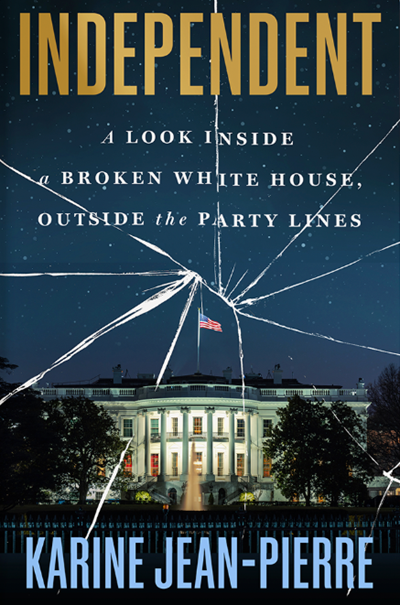
Independent, the new tell-nothing tell-all by former Joe Biden spokesperson Karine Jean-Pierre, is framed in the introduction as the patriotic diatribe of a once-loyal Democrat who’s now “free to speak for myself” and “eager to say what I think”, thanks to a dramatic decision:
After being a party insider for twenty years, I now believe I can fight harder for my country from outside the Democratic Party than from within it. From here on, I am politically an independent.
Just a few pages later, however, Jean-Pierre claims she only noticed something wrong with Biden once, during his infamous debate performance last June 27th. “Whoa … He must be sick,” she deadpans, then reframes Independent as an answer to a book she hasn’t even read:
CNN anchor Jake Tapper kicked off the debate. He later wrote a supposed tell-all about Biden, Original Sin … accusing [Biden] of a cover-up of his mental decline and how his aides quashed concerns. I was technically a part of the president’s inner circle and saw Biden every day and saw no such decline. I never read Tapper’s book and don’t ever plan to because that does not track with what I saw in the White House.
It’s all entertaining stuff (the “technically” is hilarious). Jean-Pierre announces she’s finally free to tell the truth, but begins by declaring that Tapper’s Original Sin — another book marketed as “the full, unsettling truth … told for the first time” — was wrong not because Tapper was lying about how long it took for him to notice Biden’s problems, but because Biden never had any problems to notice.
Jean-Pierre is generating significant negative Internet wattage this week, battered everywhere for insisting she never saw anything concerning in Biden’s private behavior. In a wild exchange with Gayle King of CBS, she doubled down on a book passage claiming she didn’t even see an issue with Biden before the critical debate, even though she traveled to it with him on Air Force One (“Maybe I was too nervous … to notice whether or not he was sniffling?”). Apparently, that trip was a rare instance in which Jean-Pierre not only didn’t talk to Biden on the plane, but didn’t have conversations with anyone who did. “I had no clue Biden had a cold and was off his game”, she wrote, “until he began to speak at the debate”.
Independent reads like an oxygen-deprived sequel to Tapper’s book. The humorous premise of Original Sin involved Tapper’s sources insisting Biden “stole an election” because if he’d stepped aside earlier, the party might have had a “robust primary” — exactly the scenario they spent years fighting to avoid, savaging challengers like Dean Phillips and Marianne Williamson and smearing Robert F. Kennedy, Jr. directly into the arms of Donald Trump. The CNN man insisted “insiders” who had a “much better window into Biden’s condition than the general public” saw things that “shocked them” before last June’s debate, when the awful truth finally became obvious even to news media. But according to Tapper, the problem wasn’t so much that insiders lied, but were lied to. His first chapter was titled “He totally fucked us”, a quote about Biden by Kamala Harris aide David Plouffe.
Never mind that the world could see Biden was in drool-cup mode as far back back as 2019, or that Special Counsel Robert Hur made it legal record that Biden likely couldn’t be convicted because a jury would see him as incompetent, an “elderly man with a poor memory” who couldn’t find his own underpants, let alone classified papers he was accused of mishandling. No, the problem was, “Biden fucked us”.
Jean-Pierre has now one-upped Tapper by insisting nothing was wrong with Biden and that — get this — the real problem was that the press undermined the president, and not after the debate, but all along! “Pretty much since the day he’d stepped into the White House”, Jean-Pierre wrote, “the press had taken every opportunity to imply Biden was too old or mentally unfit for the job”. She is referring to the same press corps that insisted Biden was “sharp as a tack” for four and a half years, while he was serially sternum-poking voters, staring into space, walking off set in the middle of interviews, and turning every public ceremony into a potential Chevy Chase routine
October 19, 2025
Printed Maplewash from Random Penguin “Canada”
In the latest SHuSH newsletter, Ken Whyte discusses one of the most cynical and blatant attempts to “Maplewash” US product as 100% home-grown Canadian: a book of essays by living and dead Canadian authors, titled with the Liberals’ moronic “Elbows Up” slogan … with all the profits going to Random Penguin’s US corporate headquarters:

Ever since the Trump tariffs against Canada were launched last spring, US firms operating in Canada have been engaged in a variety of maple-washing tactics to shield themselves from consumer backlash. Some are as simple as new labelling — “prepared in Canada!” More audacious was McDonald’s effort to make everyone forget it’s the White House’s caterer of choice: a partnership with Canada’s sweetheart, Shania Twain.
You might think the McDonald’s gambit would be hard to top, but Penguin Random House has done it.
Penguin Random House Canada is a division of Penguin Random House LLC, corporate headquarters at 1745 Broadway, 3rd Floor, New York, New York, 10019. Penguin Random House LLC is in turn controlled by Bertelsmann, a media conglomerate in Gütersloh, Germany, but legally and operationally, it is a US company. Its executive leadership, including CEO Nihar Malaviya, works out of the above address. Strategy and publishing priorities are set in New York, and profits in PRH’s many far-flung international divisions flow to New York. You can see why this firm, with its dominant position in the Canadian market, might feel vulnerable and want to camouflage its Americanness when everyone starts shouting “buy Canadian!”
[…]
There are at least four levels of cynicism to Elbows Up!
The first — let’s call it eye-popping — is that Penguin Random House Canada would use so many of its own authors as human shields in a trade war. I mean, that’s cold. You not only have to conceive it, you have to be confident the authors are so oblivious that they won’t notice — or so obliged that they won’t care — that they’re laundering the reputation and protecting the economic interests of a US multinational and that the net proceeds from their rousing defence of Canadian sovereignty are going straight to 1745 Broadway, 3rd Floor, New York, New York, 10019, along with the licensing rights to their contributions.
[…]
The third level of cynicism — gobsmacking — is that Penguin Random House Canada used its McClelland & Stewart imprint for this atrocity.
I’m not sure there’s ever been a more important Canadian cultural institution than M&S. In the second half of the twentieth century, it was synonymous with Canadian literature. It published the core of the modern Canadian canon — Margaret Atwood, Leonard Cohen, Alice Munro, Mordecai Richler, Mavis Gallant, Robertson Davies, Rohinton Mistry, and many others. More than that, M&S was a symbol of our cultural sovereignty. Its catalog is the closest thing we’ll ever have to the Elgin Marbles.
Jack McClelland, who built the company, ran into financial trouble and sold M&S to strip-mall baron Avie Bennett in 1986. In 2000, Bennett cashed out, selling 25 percent of M&S to Penguin Random House and granting 75 percent to the University of Toronto because federal rules required majority Canadian ownership of cultural enterprises. It was an ingenious deal: UofT played the stooge of Canadian control; PRH had its way with the jewel of Canadian publishing; M&S remained eligible for federal grants because of its “Canadian ownership”. Then, in 2011, the U of T quietly transferred its shares to PRH, giving the multinational full ownership, never mind the foreign-ownership rules. UofT explained that playing the stooge of Canadian control was no longer “a core business” of the university. The house that built Canadian literature, along with its full catalogue of Canadian classics was now fully domiciled at 745 Broadway, 3rd Floor, New York, New York, 10019. The feds didn’t lift a finger.
I don’t know what you’d call that but a cultural crime.
And I don’t know what you can say about PRH using M&S for its maple-washing exercise beyond that it’s gloating.
The final level of cynicism — this one’s just sad — is that Elbows Up! is a forgettable book. It has none of the freshness, quirkiness, and genuine intellectual engagement of The New Romans. It takes as its title a partisan Liberal slogan from the last election (an act of toadying that probably qualifies as its own level of cynicism). A few of the essays, particularly those by the younger writers, are interesting, but none of them has much to say about Canada’s current predicament or the nature of the Canada-US relationship. I was struck by how many of the contributors can’t see beyond their narrow professional or personal identities. It’s as though they’ve never before been called upon to consider Canada as a whole. They lack the vocabulary to contribute anything meaningful. Also, the emotional tone is oddly flat from start to finish.
Forever War: Becoming the Enemy
Feral Historian
Published 8 Mar 2024The Forever War is a great piece of post-Vietnam social critique, not least in its depiction of a society that deserves to lose the war that its chosen to fight. Here I talk about the story through that lens, meandering toward a point in the usual Feral Historian manner.
Also I wanted to get this one out because I’m going to make some Forever War comparisons in an upcoming video.
Most of the B-Roll is from the Forever War comic adaptation, both the original black and white version and the later color release. Also threw in some clips from Starship Troopers: Traitor of Mars just to mix up the visuals a bit because there’s already too much of me sitting on a rock.
00:00 Intro
00:53 The Draft
03:25 It’s so Army …
06:54 No Civilization
09:35 War’s Over. My Bad
13:14 Parting Thoughts
QotD: The Indian Civil Service
I think about The Ruling Caste often when I think about the turds in the Apparat. Looked at from the outside, the ICS were apparatchiks, too. Indeed, even more so than actual apparatchiks, since “apparatchik” means something like “expert without portfolio” and while the ICS had two broad “tracks” (if I recall correctly), “civil” and “legal”, in practice most every ICS man was supposed to be able to do pretty much everything, including (again IIRC) assume military command of local forces if necessary.
Given that there were never more than 200K Britons in the Raj at any one time, how could it be otherwise?
And the ICS was as fully ideologized as the Soviet (or AINO) Apparat. The French gave us the lovely phrase mission civilisatrice, but that’s what the ICS was doing, too. Lord Macauley was the big mover behind the English Education Act of 1835, which explicitly designed to
form a class who may be interpreters between us and the millions whom we govern – a class of persons Indian in blood and colour, but English in tastes, in opinions, in morals and in intellect. To that class we may leave it to refine the vernacular dialects of the country, to enrich those dialects with terms of science borrowed from the Western nomenclature, and to render them by degrees fit vehicles for conveying knowledge to the great mass of the population.
There were two huge differences between the ICS and the Apparat, though, that really come out reading Gilmour’s book. First, and actually least important, was the obvious fact that English education was superior. Macauley really gave “native” literature both barrels — nobody condescends like an Englishman — but he wasn’t wrong. In 1835 you could take the “scientific” literature of every other race on the planet combined and get … the Iron Age? Maybe? 200K Britons could dominate 750 million Indians because
whatever happens, we have got
the Maxim gun, and they have not.Or “steam power” or “replaceable parts” or “calculus” or what have you. Season to taste.
The second — and far, far more important — difference between the ICS and the Apparat, though, was that the ICS was in general composed of decent people. In a very real sense, all imperialism is “cultural imperialism”. Rome became an empire by whomping all its enemies, but it stayed an empire by giving its enemies a great deal. Life was simply better — orders of magnitude better — inside the Empire than outside.
And the reason for this is simple, so simple that you need many years of long and hideously expensive training, by highly skilled and fanatically motivated indoctrinators, to miss it. Macauley, Caesar, Confucius, anyone who wrote anything on barbarian management at any point, anywhere in the world, well into the 20th century, said basically the same thing: Our material culture is the result of our cultural culture.
You can learn to operate our stuff. Obviously so — with only 200K Britons throughout the Subcontinent, the Raj was quite obviously run by Indians. And they did a bang-up job, too, such that India at independence had the real potential to become a first world country (note to folks getting ready to break away from a globe-spanning empire: Never elect a lunatic socialist yoga dude as your first prime minister. He’ll go full retard and set you back 50 years … and he’ll be shooting for 500). You might even learn how to maintain our stuff, maybe even build a few cheap knockoff copies of our stuff.
But it’ll never be more than that — shitty knockoff copies, gruesomely expensive, and available only to the elite — unless you embrace as much of the culture that created the stuff as you can stand. The English themselves are a great example: They were blue-assed savages when Caesar found them, but they got with the program, and look how well that worked out. Ditto the Gauls (“Our ancestors, the Gauls!”) and all the rest.
It’s the culture, stupids. The culture of the ICS was English culture — “play up, play up, and play the game!” sounds like baloney to jaded Postmodern ears, but listen:
The sand of the desert is sodden red,—
Red with the wreck of a square that broke; —
The Gatling’s jammed and the Colonel dead,
And the regiment blind with dust and smoke.
The river of death has brimmed his banks,
And England’s far, and Honour a name,
But the voice of a schoolboy rallies the ranks:
“Play up! play up! and play the game!”As poetry it’s shit, but if that doesn’t make you want to get up out of your chair and take a swing at somebody, then you, sir, have no hair on your scrotum, and will never know a woman’s touch (trannies don’t count).
They really believed that, those Eton schoolboys out there East of Suez. Or, at least, they behaved as if they did, and everything else flowed from that behavior. Recall that it was a coin flip, going East of Suez — chances are you wouldn’t be coming back, or if you did, it would be as a malarial ruin. But they went anyway, though England’s far and Honour a name, because that’s just what they did. Even at their worst — and their worst was very bad; Gilmour pulls no punches — you can’t help but admire them a little, the arrogant bastards. Their convictions were sometimes awful, but they had the courage of them … and courage is magnificent.
Severian, “Ruling Caste II”, Founding Questions, 2022-03-10.


