Quotulatiousness

June 29, 2020

QotD: Gandhi’s religious views

Filed under: History, India, Quotations, Religion — Tags: , , — Nicholas @ 01:00

I am sure that almost everyone who sees the movie Gandhi is aware that, from a religious point of view, the Mahatma was something called a “Hindu” — but I do not think one in a thousand has the dimmest notion of the fundamental beliefs of the Hindu religion. The simplest example is Gandhi’s use of the word “God,” which, for members of the great Western religions — Christianity, Judaism, and Islam, all interrelated — means a personal god, a godhead. But when Gandhi said “God” in speaking English, he was merely translating from Gujarati or Hindi, and from the Hindu culture. Gandhi, in fact, simply did not believe in a personal God, and wrote in so many words, “God is not a person … but a force; the undefinable mysterious Power that pervades everything; a living Power that is Love …” And Gandhi’s very favorite definition of God, repeated many thousands of times, was, “God is Truth,” which reduces God to some kind of abstract principle.

Like all Hindus, Gandhi also believed in the “Great Oneness,” according to which everything is part of God, meaning not just you and me and everyone else, but every living creature, every dead creature, every plant, the pitcher of milk, the milk in the pitcher, the tumbler into which the milk is poured … After all of which, he could suddenly pop up with a declaration that God is “the Maker, the Law-Giver, a jealous Lord,” phrases he had probably picked up in the Bible and, with Hindu fluidity, felt he could throw in so as to embrace even more of the Great Oneness. So when Gandhi said, “I am a Hindu and a Muslim and a Christian and a Jew,” it was (from a Western standpoint) Hindu double-talk. Hindu holy men, some of them reformers like Gandhi, have actually even “converted” to Islam, then Christianity, or whatever, to worship different “aspects” of the Great Oneness, before reconverting to Hinduism. Now for Christians, fastidious in matters of doctrine, a man who converts to Islam is an apostate (or vice versa), but a Hindu is a Hindu is a Hindu. The better to experience the Great Oneness, many Hindu holy men feel they should be women as well as men, and one quite famous one even claimed he could menstruate (I will spare the reader the details).

In this ecumenical age, it is extremely hard to shake Westerners loose from the notion that the devout of all religions, after all, worship “the one God.” But Gandhi did not worship the one God. He did not worship the God of mercy. He did not worship the God of forgiveness. And this for the simple reason that the concepts of mercy and forgiveness are absent from Hinduism. In Hinduism, men do not pray to God for forgiveness, and a man’s sins are never forgiven — indeed, there is no one out there to do the forgiving. In your next life you may be born someone higher up the caste scale, but in this life there is no hope. For Gandhi, a true Hindu, did not believe in man’s immortal soul. He believed with every ounce of his being in karma, a series, perhaps a long series, of reincarnations, and at the end, with great good fortune: mukti, liberation from suffering and the necessity of rebirth, nothingness. Gandhi once wrote to Tolstoy (of all people) that reincarnation explained “reasonably the many mysteries of life.” So if Hindus today still treat an Untouchable as barely human, this is thought to be perfectly right and fitting because of his actions in earlier lives. As can be seen, Hinduism, by its very theology, with its sacred triad of karma, reincarnation, and caste (with caste an absolutely indispensable part of the system) offers the most complacent justification of inhumanity of any of the world’s great religious faiths.

Gandhi, needless to say, was a Hindu reformer, one of many. Until well into his fifties, however, he accepted the caste system in toto as the “natural order of society,” promoting control and discipline and sanctioned by his religion. Later, in bursts of zeal, he favored moderating it in a number of ways. But he stuck by the basic varna system (the four main caste groupings plus the Untouchables) until the end of his days, insisting that a man’s position and occupation should be determined essentially by birth. Gandhi favored milder treatment of Untouchables, renaming them Harijans, “children of God,” but a Harijan was still a Harijan. Perhaps because his frenzies of compassion were so extreme (no, no, he would clean the Harijan’s latrine), Hindu reverence for him as a holy man became immense, but his prescriptions were rarely followed. Industrialization and modernization have introduced new occupations and sizable social and political changes in India, but the caste system has dexterously adapted and remains largely intact today. The Sudras still labor. The sweepers still sweep. Max Weber, in his The Religion of India, after quoting the last line of the Communist Manifesto, suggests somewhat sardonically that low-caste Hindus, too, have “nothing to lose but their chains,” that they, too, have “a world to win” — the only problem being that they have to die first and get born again, higher, it is to be hoped, in the immutable system of caste. Hinduism in general, wrote Weber, “is characterized by a dread of the magical evil of innovation.” Its very essence is to guarantee stasis.

In addition to its literally thousands of castes and sub-castes, Hinduism has countless sects, with discordant rites and beliefs. It has no clear ecclesiastical organization and no universal body of doctrine. What I have described above is your standard, no-frills Hindu, of which in many ways Gandhi was an excellent example. With the reader’s permission I will skip over the Upanishads, Vedanta, Yoga, the Puranas, Tantra, Bhakti, the Bhagavad-Gita (which contains theistic elements), Brahma, Vishnu, Shiva, and the terrible Kali or Durga, to concentrate on those central beliefs that most motivated Gandhi’s behavior as a public figure.

Richard Grenier, “The Gandhi Nobody Knows”, Commentary, 1983-03-01.

June 28, 2020

“Viking” was the word for “Incel” in the early Middle Ages

Filed under: Books, China, Europe, Health, History, India, Military — Tags: , , , , , , — Nicholas @ 05:00

At least, that’s one interpretation offered by Mary Harrington at UnHerd:

Europe According to the Vikings (1000) from Atlas of Prejudice 2 by Yanko Tsvetkov.

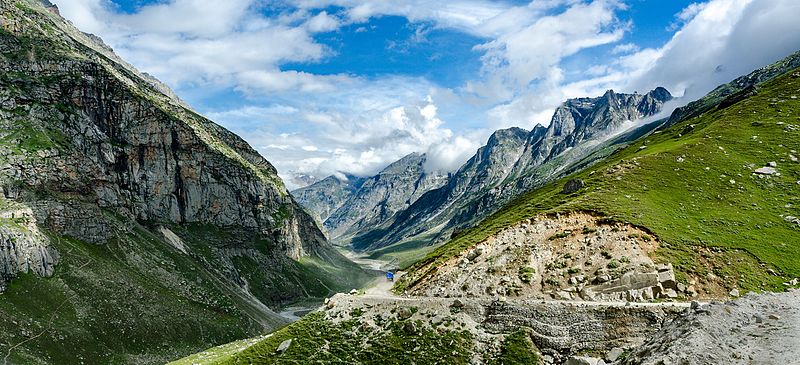
Last week, World War 3 nearly started in Ladakh. A dry, high-altitude region of Indian Kashmir on the Himalayan border with China, it’s been the site of escalating tensions and military buildup for some time. On June 15, the first physical confrontation between the Indian and Chinese militaries for 45 years erupted, killing at least 20 Indian and 45 Chinese soldiers.

There are all sorts of geopolitical reasons cited for the escalating tension between the world’s two most populous countries, but there is one more central and timeless problem that is going to drive both countries towards violence and instability — women. Or a lack of them.

In his History of the Normans, written circa 1015, Dudo of St Quentin argued that the reason the Vikings went raiding was because they couldn’t find wives, an idea echoed by the Tudor antiquarian William Camden in his 1610 book Britannia. “Wikings”, Camden suggested, were what you got when there weren’t enough women to go round, resulting in an excess of young men hanging around full of machismo but without any prospect of finding a nice girl and settling down. (Viking literally means raider.)

So, whenever these spare males “multiply’d themselves to a burdensom community”, Camden reports that an area would draw lots. Those of the young troublemakers chosen in the lottery would be sent off on a ship to make a nuisance of themselves overseas. Which they did.

In evolutionary biology, the “operational sex ratio” is a term used to count the proportion of males and females in a given species that are seeking a reproductive mate. As soon as the ratio tilts away from 50:50, the sex that’s over-represented will have to compete to secure a mate from among the less-plentiful potential partners of the opposite sex.

Though they wouldn’t have used that phrase, both Dudo of St Quentin and William Camden were both describing this phenomenon in human males. Where potential wives are scarce and the “burdensom community” of spare men multiplies, the result is more violence and crime. One 2019 study showed that where polygyny — that is, multiple wives — is a social norm for higher-status men, attacks on neighbouring ethnic groups skyrocket. With a few men monopolising eligible women, the rest are forced to seek status and resources by attacking other tribes.

India and China both have an extremely “burdensom community” of spare males. The normal ratio of newborn boys to girls is around 105:100. But as Mara Hvistendahl documents in Unnatural Selection, thanks to prenatal ultrasound and sex-selective abortion the ratio in China is around 118:100, and 108:100 in India. In some regions of India, the ratio rises as high as 150 males to 100 females. Though sex-selective technology is now banned in India, it’s still widespread, and the country now has some 37 million more men than women. Studies estimate that China has around 30 million excess men.

June 23, 2020

Pushback for Chinese aggression in the Himalayas

Filed under: China, India, Military — Tags: , , , , , , — Nicholas @ 03:00

In Quillette, Cleo Paskal outlines the Chinese military action last week and a few of the reactions in civil society:

The western portion of the Line of Actual Control, separating the Eastern Ladakh and Aksai Chin (map by CIA). In the Demchok sector, only two claim lines are shown. The line was the focus of a brief war in 1962.
Wikimedia Commons.

High in the Himalayan mountains, Chinese soldiers ambushed Indian troops this week, resulting in a brutal battle on the Indian side of their shared border. Twenty Indians were killed, while China won’t disclose its losses. It was the deadliest confrontation on the border in over 40 years. As a result, some Indian strategists are openly discussing recognizing Taiwan and providing more visibility to the Dalai Lama, state-owned telecoms are blocking Chinese equipment from 4G upgrades, and millions of Indians downloaded an app that helps remove Chinese apps from their phones (before Google removed it). All of this comes at a time when much of the world remains angry at China’s leaders for their initial handling of the COVID-19 crisis.

This week’s apparent provocation is part of a larger recent pattern with China. From the South China Sea, to Taiwan, to Hong Kong, Beijing has been seeking to change facts on the ground in a way that benefits its own strategic and economic interests. In a recent Atlantic Council discussion of the India-China border issue (convened before the latest fighting), senior American diplomat Ambassador Alice Wells summed the situation up well: “There’s a method here to Chinese operations. [A]nd it is that constant aggression, the constant attempt to shift the norms, to shift what is the status quo, that has to be resisted.”

For decades China has tried to expand its strategic reach along its de facto south-western border through the invasion of Tibet, land swaps with Pakistan, and war with India. To this end, China treats British Empire-era maps as political props to variously brandish or dismiss, as best suits Beijing’s goals. For example, it effectively accepted the 1914-era McMahon Line delineation in its border agreement with Myanmar, but rejects it with India.

The Line of Actual Control (LAC) separating China and India runs through rugged, high-altitude terrain that has witnessed multiple conflicts going back to the 1962 India-China border war. In recent weeks, there have been Chinese incursions at several points along the LAC, reportedly involving thousands of troops. In some spots, the Chinese military is digging in on the Indian side, while expanding its already considerable support infrastructure on their side of the LAC.

Delhi is particularly concerned about Chinese advances near India’s Daulat Beg Oldie (DBO) high-altitude military airfield, an essential Indian forward base that provides oversight of the strategic Karakoram Highway (KH) linking China’s western Xinjiang Autonomous Region with Pakistan, including the Gwadar Port on the Indian Ocean. It is a key component of the multi-billion-dollar China-Pakistan Economic Corridor.

June 21, 2020

Burma Victory (1945)

PeriscopeFilm
Published 31 May 2016

Support Our Channel: https://www.patreon.com/PeriscopeFilm

Made in 1945, BURMA VICTORY is a British documentary about the Burma Campaign during World War Two. It was directed by Roy Boulting. The introduction to the film outlines the geography and climate of Burma, and the extent of the Japanese conquests. The film then describes the establishment of the South East Asian Command (SEAC) under Mountbatten, “a born innovator and firm believer in the unorthodox”, and gives a comparatively detailed account of subsequent military events, including the Battle of Imphal-Kohima and Slim’s drive on Mandalay, Arakan landings, the northern offensive of the Americans and Chinese under Stilwell, and the roles played by Chindits and Merrill’s Marauders. The film ends with the capture of Rangoon and the Japanese surrender. The film focuses on the difficulties of climate, terrain, the endemic diseases of dysentery, malaria, etc., the vital role of air supplies, the shattering of the myth of Japanese invincibility and the secondary role of the Burma campaign in overall Allied strategy.

This film represents a British look at the campaign and was the pet project of Admiral Lord Louis Mountbatten, Supreme Allied Commander, South-East Asia, and he planned it as a joint Anglo-American production. But this scheme foundered over the inability of the U.S. leadership and British to agree on the main theme of the film. The British wanted it to concentrate on the drive southwards to liberate Burma. The Americans, anxious not to be seen to be participating in the restoration of the British Empire, wanted to emphasize the heroic building of the Ledo Road and the drive northwards to relieve the Chinese. In the end the two sides went their separate ways. The Americans produced the Ronald Reagan narrated film The Stilwell Road and the British made Burma Victory. It was the final production of the Army Film and Photographic Unit (AFPU) and was directed, like Desert Victory (1943), by Roy Boulting. Not released until after the war was over, it was hailed and promoted as “the real Burma film”.

The Burma Campaign in the South-East Asian theatre of World War II was fought primarily between the forces of the British Empire and China, with support from the United States, against the forces of the Empire of Japan, Thailand, and the Indian National Army. British Empire forces peaked at around 1,000,000 land, naval and air forces, and were drawn primarily from British India, with British Army forces (equivalent to 8 regular infantry divisions and 6 tank regiments), 100,000 East and West African colonial troops, and smaller numbers of land and air forces from several other Dominions and Colonies. The Burmese Independence Army was trained by the Japanese and spearheaded the initial attacks against British Empire forces.

The campaign had a number of notable features. The geographical characteristics of the region meant that factors like weather, disease and terrain had a major effect on operations. The lack of transport infrastructure placed an emphasis on military engineering and air transport to move and supply troops, and evacuate wounded. The campaign was also politically complex, with the British, the United States and the Chinese all having different strategic priorities.

South East Asia Command (SEAC) was the body set up to be in overall charge of Allied operations in the South-East Asian Theatre during World War II. Admiral Lord Louis Mountbatten served as Supreme Allied Commander of the South East Asia Command from October 1943 through the disbandment of SEAC in 1946.

This film is part of the Periscope Film LLC archive, one of the largest historic military, transportation, and aviation stock footage collections in the USA. Entirely film backed, this material is available for licensing in 24p HD and 2k. For more information visit http://www.PeriscopeFilm.com

June 19, 2020

QotD: We call it the Corded Ware culture, not the Battle Axe culture to make it less interesting to boys

Filed under: History, India, Quotations, Science — Tags: , , , , — Nicholas @ 01:00

India played a large role in the development of European conceptions of race. In 1786 British judge William Jones delivered a lecture in Calcutta suggesting that Sanskrit, Greek, and Latin were all descended from the same lost language, a ghost tongue now called Proto-Indo-European.

Jones went on to hypothesize that an ancient invasion of Dravidian-speaking India by Proto-Indo-European-speaking Aryans from Iran could help explain the curious distribution of language, skin color, and caste within the Hindu world today.

Jones’ ideas had unfortunate influence. Reich writes:

    To the Nazis and others, the distribution of the Indo-European language family, linking Europe to India … spoke of an ancient conquest moving out of an ancestral homeland, displacing and subjugating the peoples of the conquered territories, an event they wished to emulate.

Hitler thus culturally appropriated the Hindu swastika.

Since 1945, the notion of Aryan invaders has been unsurprisingly unpopular.

In Europe, anthropologists have promoted the “pots not people” theory to argue that trade and changes in fashion must explain why Corded Ware pots suddenly showed up all over Europe about 4,900 years ago. (So did battle axes; indeed, early scientists called this the Battle Axe Culture. But that sounded too awesome. Hence, more recent academics renamed it after its pottery style to make these brutal barbarians sound dweebier and thus less interesting to boys.)

In India, the notion of Hindu culture as a giant conspiracy by Aryan invaders to enshrine their descendants at the top of the social order for the rest of eternity perhaps struck a little too close to home.

Steve Sailer, “Reich’s Laboratory”, Taki’s Magazine, 2018-03-28.

May 15, 2020

QotD: Gandhi and the rise of Hitler

Filed under: Britain, Europe, Germany, History, India, Military, Quotations, WW2 — Tags: , , , , , — Nicholas @ 01:00

Gandhi’s views on the European crisis were not entirely consistent. He vigorously opposed Munich, distrusting Chamberlain. “Europe has sold her soul for the sake of a seven days’ earthly existence,” he declared. “The peace that Europe gained at Munich is a triumph of violence.” But when the Germans moved into the Bohemian heartland, he was back to urging nonviolent resistance, exhorting the Czechs to go forth, unarmed, against the Wehrmacht, perishing gloriously — collective suicide again. He had Madeleine Slade draw up two letters to President Eduard Beneš of Czechoslovakia, instructing him on the proper conduct of Czechoslovak satyagrahi when facing the Nazis.

When Hitler attacked Poland, however, Gandhi suddenly endorsed the Polish army’s military resistance, calling it “almost nonviolent.” (If this sounds like double-talk, I can only urge readers to read Gandhi.) He seemed at this point to have a rather low opinion of Hitler, but when Germany’s panzer divisions turned west, Allied armies collapsed under the ferocious onslaught, and British ships were streaming across the Straits of Dover from Dunkirk, he wrote furiously to the Viceroy of India: “This manslaughter must be stopped. You are losing; if you persist, it will only result in greater bloodshed. Hitler is not a bad man …”

Gandhi also wrote an open letter to the British people, passionately urging them to surrender and accept whatever fate Hitler had prepared for them. “Let them take possession of your beautiful island with your many beautiful buildings. You will give all these, but neither your souls, nor your minds.” Since none of this had the intended effect, Gandhi, the following year, addressed an open letter to the prince of darkness himself, Adolf Hitler.

The scene must be pictured. In late December 1941, Hitler stood at the pinnacle of his might. His armies, undefeated — anywhere — ruled Europe from the English Channel to the Volga. Rommel had entered Egypt. The Japanese had reached Singapore. The U.S. Pacific Fleet lay at the bottom of Pearl Harbor. At this superbly chosen moment, Mahatma Gandhi attempted to convert Adolf Hitler to the ways of nonviolence. “Dear Friend,” the letter begins, and proceeds to a heartfelt appeal to the Führer to embrace all mankind “irrespective of race, color, or creed.” Every admirer of the film Gandhi should be compelled to read this letter. Surprisingly, it is not known to have had any deep impact on Hitler. Gandhi was no doubt disappointed. He moped about, really quite depressed, but still knew he was right. When the Japanese, having cut their way through Burma, threatened India, Gandhi’s strategy was to let them occupy as much of India as they liked and then to “make them feel unwanted.” His way of helping his British “friends” was, at one of the worst points of the war, to launch massive civil-disobedience campaigns against them, paralyzing some of their efforts to defend India from the Japanese.

Here, then, is your leader, O followers of Gandhi: a man who thought Hitler’s heart would be melted by an appeal to forget race, color, and creed, and who was sure the feelings of the Japanese would be hurt if they sensed themselves unwanted. As world-class statesmen go, it is not a very good record. Madeleine Slade was right, I suppose. The world certainly didn’t listen to Gandhi. Nor, for that matter, has the modern government of India listened to Gandhi. Although all Indian politicians of all political parties claim to be Gandhians, India has blithely fought three wars against Pakistan, one against China, and even invaded and seized tiny, helpless Goa, and all without a whisper of a shadow of a thought of ahimsa. And of course India now has atomic weapons, a satyagraha technique if ever there was one.

Richard Grenier, “The Gandhi Nobody Knows”, Commentary, 1983-03-01.

March 20, 2020

Will Stalin invade India? And what about the West Indies? – WW2 – Out of the Foxholes 008

Filed under: Americas, Europe, France, History, India, Military, WW2 — Tags: , , , , — Nicholas @ 06:00

World War Two
Published 19 Mar 2020

In today’s episode of Out of the Foxholes, we answer exciting questions concerning Dutch and French colonies in America, British defence strategies in India and French soldiers stuck in Britain post-armistice.

Ask your own question for Out of the Foxholes here: https://community.timeghost.tv/c/Out-…

Join us on Patreon: https://www.patreon.com/TimeGhostHistory
Or join The TimeGhost Army directly at: https://timeghost.tv

Follow WW2 day by day on Instagram @World_war_two_realtime https://www.instagram.com/world_war_t…
Between 2 Wars: https://www.youtube.com/playlist?list…
Source list: http://bit.ly/WW2sources

Hosted by: Indy Neidell
Written by: Rune Væver Hartvig
Produced and Directed by: Spartacus Olsson and Astrid Deinhard
Executive Producers: Bodo Rittenauer, Astrid Deinhard, Indy Neidell, Spartacus Olsson
Creative Producer: Joram Appel
Post-Production Director: Wieke Kapteijns
Research by: Rune Væver Hartvig
Edited by: Mikołaj Cackowski
Map animations: Eastory (https://www.youtube.com/c/eastory)

Colorizations by:
Norman Stewart – https://oldtimesincolor.blogspot.com/
Dememorabilia – https://www.instagram.com/dememorabilia/

Sources:
IWM H 3508, D 1725
gold by Phạm Thanh Lộc from the Noun Project
Rum by Andrejs Kirma from the Noun Project
sugar by Maria Zamchy from the Noun Project

Soundtracks from the Epidemic Sound:
Hakan Eriksson – “Adventure Theme 3”
Johannes Bornlof – “The Inspector 4”
Reynard Seidel – “Deflection”

Archive by Screenocean/Reuters https://www.screenocean.com.

A TimeGhost chronological documentary produced by OnLion Entertainment GmbH.

March 18, 2020

When You Run Out of Stuff to Hoard – Rationing 1940 – On the Homefront 001

Filed under: Britain, China, Europe, Food, Germany, History, India, Japan, WW2 — Tags: , , — Nicholas @ 04:00

World War Two
Published 17 Mar 2020

In this first episode of On the Homefront, Anna tells you about division of labour, food production and rationing in the early years of the war.

Join us on Patreon: https://www.patreon.com/TimeGhostHistory
Or join The TimeGhost Army directly at: https://timeghost.tv

Follow WW2 day by day on Instagram @World_war_two_realtime https://www.instagram.com/world_war_t…
Between 2 Wars: https://www.youtube.com/playlist?list…
Source list: http://bit.ly/WW2sources

Hosted by: Anna Deinhard
Written by: Spartacus Olsson
Produced and Directed by: Spartacus Olsson and Astrid Deinhard
Executive Producers: Bodo Rittenauer, Astrid Deinhard, Indy Neidell, Spartacus Olsson
Creative Producer: Joram Appel
Post-Production Director: Wieke Kapteijns
Research by: Spartacus Olsson
Edited by: Mikołaj Cackowski
Map animations: Eastory (https://www.youtube.com/c/eastory)

Sources:
IWM A 1699, A 7812, A 19891, D 6773, A 11856, A 11857, D 10565, D 9366, D 15530, D 10465, D 20087, D 20079, D 7958, D 2373, D 14667, D 7966
Taking blood pressure (SC 191775), National Museum of Health and Medicine https://www.flickr.com/photos/medical…
Picture of Elsie Widdowson and Robert McCance with their staff, courtesy of British Nutrition Foundation
Pie Chart by Ates Evren Aydinel from the Noun Project
Pie Diagram Half by Trevor Dsouza from the Noun Project
Farm by Symbolon from the Noun Project
Meat by chiccabubble from the Noun Project
Fish by Vectors Market from the Noun Project
butter by Nick Bluth from the Noun Project
potatoes by Vectors Point from the Noun Project
Vegetable by Eucalyp from the Noun Project
Poop by Jordan Díaz Andrés from the Noun Project
shelf by Zach Bogart from the Noun Project
Tea box by Tomas Knopp from the Noun Project
Jam by Vichanon Chaimsuk from the Noun Project
Biscuits by John Burraco from the Noun Project
Cheese by Erin Agnoli from the Noun Project
eggs by Oleksandr Panasovskyi from the Noun Project
butter by Imogen Oh from the Noun Project
can by Anniken & Andreas from the Noun Project

Soundtracks from the Epidemic Sound:
Gavin Luke – “Seasons of Change”
Johan Hynynen – “Dark Beginning”
Anthony Earls – “The Songs We Sing”
Fabien Tell – “Last Point of Safe Return”
Reynard Seidel – “Deflection”
Farell Wooten – “Blunt Object”
Johannes Bornlof – “The Inspector 4”
Howard Harper-Barnes – “Prescient”
Howard Harper-Barnes – “London”
Philip Ayers – “Under the Dome”

Archive by Screenocean/Reuters https://www.screenocean.com.

A TimeGhost chronological documentary produced by OnLion Entertainment GmbH.

From the comments:

World War Two
57 minutes ago (edited)
This is the first episode of On the Homefront. For those of you who haven’t watched our trailer or have seen the Between Two Wars episode on the Home Revolution, let me introduce you to Anna. She will be telling us all about the homefronts and the people on them in these monthly sub-series. Now, we know that this episode might seem to be playing on the Corona related hoarding that is going on, but this was already produced before any of that made the news. In any case, as many of you are sitting in your own homefronts, I hope this episode offers some relief and perspective. If you like it, do make sure to Join the TimeGhost Army to keep us running! You can do so at https://timeghost.tv or patreon.com/timeghosthistory
Cheers, Joram

January 20, 2020

Gaming India’s colonial and post-colonial history

Filed under: Britain, Gaming, History, India — Tags: , , , , , — Nicholas @ 05:00

In Quillette, Jonathan Kay looks at two wargames that deal with different aspects of Indian history:

… the peoples whom Europeans encountered in the Americas were skilled and inventive combatants who often put white men to flight (or worse) despite their enormous disadvantage in technology and (ultimately) manpower. In many cases, First Nations (as we now call them in Canada) fought fiercely with one another, too, and had well-developed military traditions that Europeans variously feared, admired and adopted. And they would make fitting protagonists for any modern boardgame designer willing to reject the current fashion of presenting indigenous peoples as holy elves of the forest.

What would such a game look like? A good example comes to us in the form of GMT Games’ 2019 release, Gandhi: The Decolonization of British India. This is the latest entry in GMT’s COIN series, which is designed to model guerrilla wars and other unconventional conflicts through the use of cards that represent historical events. As in other games of the genre, such as Fire in the Lake (Vietnam), People Power (Insurgency in the Philippines, 1983-1986) and Colonial Twilight (The French-Algerian War, 1954-62), the game doesn’t present a simple narrative of good versus evil, but a more complex narrative in which all sides have at least some ulterior motives that are at odds with their official propaganda. In Gandhi, there are four players, one each controlling the Raj, the Indian National Congress, the Muslim League and the “Revolutionaries.” The latter three all share the goal of some kind of national independence, but each pursues its own (often mutually antagonistic) methods, with the Revolutionaries using violence to undercut the more pacifistic Congress, and the Muslim League playing off Congress, the Revolutionaries and the Raj in order to protect the interests of the country’s Islamic minority. (Historians of Canada would note that diplomacy and warfare with and among First Nations often was similarly complex.)

The game is unpredictable and complex, since each player will pursue different strategies in the country’s many different zones, making and breaking de facto partnerships depending on the circumstances. Amid all of this gaming chaos, the moral logic of decolonization remains a central theme of the game. But by the end of things, you realize that the ejection of the British from India was a big and messy project, as history typically is. While Spirit Island was created with the goal of mainlining anti-colonialism directly into the boardgame experience, Gandhi gets to the same theme obliquely by way of amoral realism, doing a better job pedagogically in the process.

A key aspect of Gandhi is that the Raj has agency: It is not reduced to the status of automaton-villain, as in Spirit Island. But there are limitations to the imaginative ecosystem that players inhabit: Every one of the four players has to take on their assigned role without questioning their underlying, game-dictated objective — including the Raj player, who must, start to finish, exert himself in defence of a colonial project that now is widely viewed as being on the wrong side of history. The other three factions likewise remain prisoners of their parochial regional, religious and doctrinal differences, which, historically, would contribute to millions of deaths in the chaos that accompanied the British exit.

Which brings me to the fourth and final colonialism-themed game I will discuss: the acclaimed 2017 release John Company, by Indiana-based designer Cole Wehrle. In theory, John Company is also a game about British colonialism in India. But here’s the rub: The players all act as competing factions within the commercial innards of John Company (a nickname for the British East India Company). On one hand, the players have a co-operative goal — to keep the company afloat as it manages the enormous expense of creating and operating a colonial apparatus on the subcontinent. But I can attest that far more of players’ mental energy goes into fighting each other for the spoils of war and trade. Indeed, much of the game consists of exchanging favours and bribes among players, as each attempts to leverage positions of power within the company to extract revenues, plunder and positions of influence.

As the game progresses, you notice, almost as an afterthought, that great things are afoot within India: New trade routes are created, military battles are fought, whole regions go into revolt and are pacified, with many (fictional) lives hanging in the balance. But as a player, you barely notice any of this — except to the narrow extent these events can be exploited as a source of wealth, since the way you win the game is by accumulating enough cash and baubles to retire your functionaries into gilded clubs and country houses back in England.

And what of the actual Indians who lived and died under the Raj? They don’t appear at all in the game, for John Company‘s real play arc exists within the corrupt solipsism of intra-corporate deal-making. Which sounds horrifyingly amoral. But when the game’s over, you realize: That’s the whole point. The colonialists who ran India — like those who came to North America and every other place on the map, from South America to the Belgian Congo to China — typically weren’t motivated by a desire to destroy and subjugate. They were out to make a buck, either as lone freelancers in a canoe, or bureaucrats pulling levers within some gigantic corporate behemoth. The horrifying, often genocidal murder and mayhem was a by-product of greed. Which doesn’t make it better. But it does make the narrative more comprehensible in regard to governing our future behaviour as human societies — since we all are vulnerable to spasms of greed, while true evil for its own sake is a rare thing.

Games teach you about the forces of history not by listing a set of facts for you to memorize, but by creating a rules system that effectively pushes you to act in a certain way — whether as a colonialist, revolutionary or deity. If the game is well-designed, then those actions make a certain kind of internal sense. That dark logic is what stays with you — as an explanation of why people acted a certain way at a certain time. It’s always easy to judge historical figures. It’s harder, but ultimately more interesting and valuable, to understand them.

January 18, 2020

History Summarized: Classical India

Overly Sarcastic Productions
Published 17 Jan 2020

Classical and Medieval Indian History is a tale of constant flux — but in between the dozens and hundreds of states at play across the peninsula, there are clear trends that arise. Let’s take this chapter of history as an opportunity to dig into different types of sources, and try and wrap our heads around a story that doesn’t fit neatly into a single chronology.

FURTHER SOURCES: The Discovery of India by Jawaharlal Nehru, “A History of India” by Michael H. Fisher (lecture courtesy of The Great Courses).

Our content is intended for teenage audiences and up.

PATREON: https://www.Patreon.com/OSP

DISCORD: https://discord.gg/y7uUnzJ

MERCH LINKS: https://www.redbubble.com/people/OSPY…

OUR WEBSITE: https://www.OverlySarcasticProductions.com
Find us on Twitter https://www.Twitter.com/OSPYouTube
Find us on Reddit https://www.Reddit.com/r/OSP/

January 10, 2020

QotD: Deciding what is “newsworthy”

Filed under: History, India, Media, Middle East, Quotations — Tags: , , , , — Nicholas @ 01:00

[…] the ripples of battle in their formal sense are guided by the presence of historians, and that means originally Westerners, and more recently in large part Europeans and Americans. And such distortions do not always play out in bias toward Westerners, especially in the present age. In April 2002 the Israeli Defence Forces entered the West Bank community of Jenin to hunt out suspected suicide-murderers, whose co-members had blown up hundreds of Israeli civilians over the prior year. Although fewer than sixty Palestinians were killed in Jenin — the great majority of them combatants — the world media seized upon the street fighting, dubbing it “Jeningrad” as if they were somehow the moral equivalent of one million Germans and Russians lost at Stalingrad. Yet just days after the Israeli withdrawal from Jenin, Pakistan squared off against India. The stakes were surely far higher: One-fifth of the world’s population was involved. Both sides were nuclear powers and issued threats to use their arsenals. In the prior year alone nearly four times more Indians and Pakistanis were killed than Palestinians and Israelis. By any calculation of numbers, the specter of the dead, the geopolitical consequences, or the long-term environmental health of the planet, the world should know all the major cities in Kashmir rather than a few street names in Jenin. And if the world sought to chronicle destruction and death in an Islamic city, then by any fair measure it should have turned its attention to Grozny, where an entire society of Muslim Chechnyans was quite literally obliterated by the Russian army.

The idiosyncracies of historical remembrance of battle do not hinge alone on the presence of a Socrates or Teddy Roosevelt in the ranks. Sometimes there are wild cards of culture and politics as well. In this case and at this time, the fact that Israelis fit the stereotype of affluent and proud Westerners abroad while the Palestinians were constructed as impoverished and oppressed colonial subjects brought to the equation the sympathies of influential Americans and Europeans in the media, universities, and government — the prominent and sometimes worrisome elites who determined to send their reporters, scholars, and diplomats to Jenin rather than to Islamabad or Grozny.

Victor Davis Hanson, Ripples of Battle, 2004.

January 4, 2020

Blue’s Dumb History Tales #2

Overly Sarcastic Productions
Published 3 Jan 2020

Happy new year, have some memes.

Our content is intended for teenage audiences and up.

DISCORD: https://discord.gg/y7uUnzJ

PATREON: https://www.Patreon.com/OSP

MERCH LINKS: https://www.redbubble.com/people/OSPY…

OUR WEBSITE: https://www.OverlySarcasticProductions.com
Find us on Twitter https://www.Twitter.com/OSPYouTube
Find us on Reddit https://www.Reddit.com/r/OSP/

November 30, 2019

Miscellaneous Myths: Krishna

Filed under: History, India, Religion — Tags: , , — Nicholas @ 06:00

Overly Sarcastic Productions
Published 29 Nov 2019

The man. The myth. The whole entire universe. It’s time to dive into Krishna’s youth and learn the backstory of everyone’s favorite blue dude!

Video requested by patron Antonio Juarez!

Join the official channel discord here! https://discord.gg/btEGDBf

PATREON: https://www.Patreon.com/OSP

MERCH LINKS: https://www.redbubble.com/people/OSPY…

OUR WEBSITE: https://www.OverlySarcasticProductions.com
Find us on Twitter https://www.Twitter.com/OSPYouTube
Find us on Reddit https://www.Reddit.com/r/OSP/

October 31, 2019

The Graveyard of Empires Strikes Back – The British-Afghan War of 1919 I THE GREAT WAR 1919

Filed under: Asia, Britain, History, India, Military — Tags: — Nicholas @ 04:00

The Great War
Published 30 Oct 2019

Get 70% off NordVPN! Only $3.49/mo, plus you get two additional months FREE at https://nordvpn.com/thegreatwar and use code thegreatwar
Thanks to NordVPN for sponsoring this video – sponsorships allow us to make this show better and keep it free.

» SUPPORT THE CHANNEL
Patreon: https://www.patreon.com/thegreatwar
Merchandise: https://shop.spreadshirt.de/thegreatwar/

» BUY OUR SOURCES IN OUR AMAZON STORES
Our Amazon US Store: https://www.amazon.com/shop/influence…
Our Amazon CA Store: https://www.amazon.ca/shop/influencer…
Our Amazon UK Store: https://www.amazon.co.uk/shop/influen…

» SOURCES
Adamec, L.W. Afghanistan, 1900-1923: A Diplomatic History, Berkley, 1967
Barthorp, Michael (2002) [1982]. Afghan Wars and the North-West Frontier 1839–1947. London: Cassell.
Beattie, Hugh: “Afghanistan”, in: 1914-1918-online. International Encyclopedia of the First World War, ed. by Ute Daniel, Peter Gatrell, Oliver Janz, Heather Jones, Jennifer Keene, Alan Kramer, and Bill Nasson, issued by Freie Universität Berlin, Berlin 2016-09-02
Heathcote, TA. The Afghan Wars (Spellmount, 2003).
Jacobsen, M H. The Third Afghan War and the External Position of India, 1919-1924. Defense Technical Information Center Archive report ADA195401, 1988.
Monro, Charles. “Despatch from His Excellency the Commander-in-Chief in India regarding the operations against Afghanistan, to the Secretary to the Government of India, Army Department”. Second Supplement to the London Gazette, 15 March 1920 https://www.thegazette.co.uk/London/i…
Molesworth, George (1962). Afghanistan 1919 — An Account of Operations in the Third Afghan War. New York: Asia Publishing House
Robson, Brian (2007). Crisis on the Frontier: The Third Afghan War and the Campaign in Waziristan 1919–1920. The History Press.
Sykes, Percy. A History of Afghanistan vol II. (London Macmillan 1940)
Wyatt, Christopher M. “Change and Discontinuity: War and Afghanistan 1904-1924,” Asian Affairs, 01 September 2016, Vol.47(3): 366-385.

» SOCIAL MEDIA
Instagram: https://instagram.com/the_great_war
Twitter: https://twitter.com/WW1_Series
Reddit: https://reddit.com/r/TheGreatWarChannel

»CREDITS
Presented by: Jesse Alexander
Written by: Jesse Alexander
Director: Toni Steller & Florian Wittig
Director of Photography: Toni Steller
Sound: Toni Steller
Editing: Toni Steller
Motion Design: Philipp Appelt
Mixing, Mastering & Sound Design: http://above-zero.com
Maps: Daniel Kogosov (https://www.patreon.com/Zalezsky)
Research by: Jesse Alexander
Fact checking: Florian Wittig

Channel Design: Alexander Clark
Original Logo: David van Stephold

A Mediakraft Networks Original Channel

Contains licensed material by getty images
All rights reserved – Real Time History GmbH 2019

I don’t normally comment on sponsors of the various videos I post, but NordVPN has been very recently in the news, should you be interested in their services.

October 12, 2019

History Summarized: Ancient India

Filed under: History, Humour, India, Religion — Tags: , , , , — Nicholas @ 06:00

Overly Sarcastic Productions
Published 11 Oct 2019

Go to http://www.audible.com/overlysarcastic or text overlysarcastic to 500500 to get a free audiobook, 2 free Audible Originals, and 30-day free trial.

In the first of what is sure to be a multi-part series, let’s take a look at the history of Ancient India, from the earliest civilization through the development of Sanskrit literature and all the way to the great Maurya Empire!

FURTHER READING: The Discovery of India, by Jawaharlal Nehru (https://en.wikipedia.org/wiki/The_Discovery_of_India)

PATREON: https://www.Patreon.com/OSP

DISCORD: https://discord.gg/sS5K4R3

MERCH LINKS: https://www.redbubble.com/people/OSPY…

OUR WEBSITE: https://www.OverlySarcasticProductions.com
Find us on Twitter https://www.Twitter.com/OSPYouTube
Find us on Reddit https://www.Reddit.com/r/OSP/

« Newer PostsOlder Posts »

Powered by WordPress