
World War Two
Published 15 May 2021The Soviets pre-empt a German offensive with one of their own in the south of the Eastern Front, but that’s not the only fighting. The skies over Malta and the waters of the Gulf of St. Lawrence are full of action. Meanwhile, two races against time — and the Japanese — come to an end in India.
(more…)
May 16, 2021
Joseph Stalin Jumps the Gun – 142 – May 16, 1942
Comments Off on Joseph Stalin Jumps the Gun – 142 – May 16, 1942
April 18, 2021
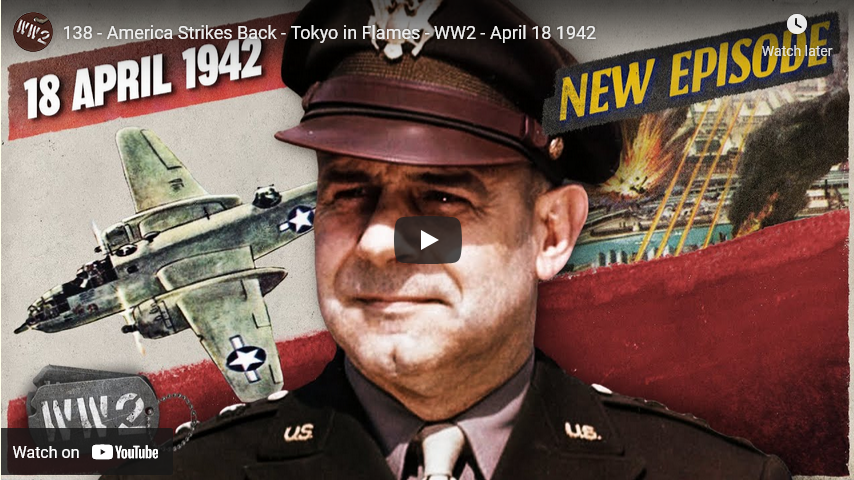
America Strikes Back – Tokyo in Flames – WW2 -138 – April 18 1942
World War Two
Published 17 Apr 2021The Doolittle Raid is just a little bombing raid over Tokyo that doesn’t do that much physical damage. It does, however, have big repercussions — partly in terms of future offensive plans for the Japanese fleet, and partly in terms of the thousands of Chinese lives taken in reprisals for allowing the US bombers to land in China. There is small scattered action on the Eastern Front, more Japanese advances in Burma, and a French VIP escapes captivity in Germany and heads for Switzerland and freedom.
Join us on Patreon: https://www.patreon.com/TimeGhostHistory
Or join The TimeGhost Army directly at: https://timeghost.tvFollow WW2 day by day on Instagram @ww2_day_by_day – https://www.instagram.com/ww2_day_by_day
Between 2 Wars: https://www.youtube.com/playlist?list…
Source list: http://bit.ly/WW2sourcesWritten and Hosted by: Indy Neidell
Director: Astrid Deinhard
Producers: Astrid Deinhard and Spartacus Olsson
Executive Producers: Astrid Deinhard, Indy Neidell, Spartacus Olsson, Bodo Rittenauer
Creative Producer: Maria Kyhle
Post-Production Director: Wieke Kapteijns
Research by: Indy Neidell
Edited by: Iryna Dulka
Sound design: Marek Kamiński
Map animations: Eastory (https://www.youtube.com/c/eastory)Colorizations by:
– Mikołaj Uchman
– Norman Stewart – https://oldtimesincolor.blogspot.com/Sources:
– Stan S. Katz
– IWM: IND 3595
– Image of ‘The Fortress of Königstein from the North-West’ by Bernardo Bellotto, © National Gallery of Art, WashingtonSoundtracks from the Epidemic Sound:
– Rannar Sillard – “Easy Target”
– Howard Harper-Barnes – “London”
– Jo Wandrini – “Dragon King”
– Dream Cave – “The Beast”
– Reynard Seidel – “Rush of Blood”
– Wendel Scherer – “Out the Window”
– Brightarm Orchestra – “On the Edge of Change”
– Gunnar Johnsen – “Not Safe Yet”
– Johan Hynynen – “Dark Beginning”
– Philip Ayers – “Trapped in a Maze”Archive by Screenocean/Reuters https://www.screenocean.com.
A TimeGhost chronological documentary produced by OnLion Entertainment GmbH.
Comments Off on America Strikes Back – Tokyo in Flames – WW2 -138 – April 18 1942
March 7, 2021
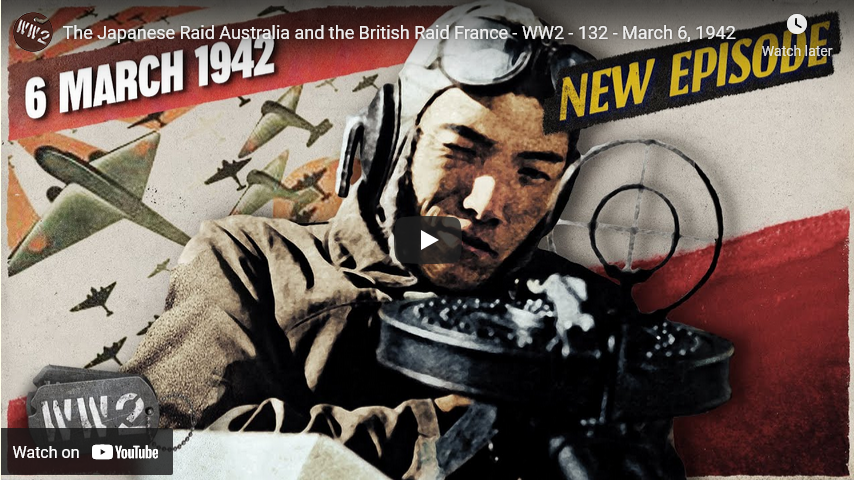
The Japanese Raid Australia and the British Raid France – WW2 – 132 – March 6, 1942
World War Two
Published 6 Mar 2021The Japanese advance in Burma continues, threatening Rangoon, and also make landings on Java and New Guinea. They even go so far as an air raid on Broome, Australia. The British are making raids of their own this week, Operation Biting against Bruneval in German-occupied France. As for the Germans themselves, 100,000 of them are still surrounded by the Red Army at Demyansk, and Hitler is told that the Soviets might have enough reserves to defend against a renewed summer offensive.
Join us on Patreon: https://www.patreon.com/TimeGhostHistory
Or join The TimeGhost Army directly at: https://timeghost.tvFollow WW2 day by day on Instagram @ww2_day_by_day – https://www.instagram.com/ww2_day_by_day
Between 2 Wars: https://www.youtube.com/playlist?list…
Source list: http://bit.ly/WW2sourcesWritten and Hosted by: Indy Neidell
Director: Astrid Deinhard
Producers: Astrid Deinhard and Spartacus Olsson
Executive Producers: Astrid Deinhard, Indy Neidell, Spartacus Olsson, Bodo Rittenauer
Creative Producer: Maria Kyhle
Post-Production Director: Wieke Kapteijns
Research by: Indy Neidell
Edited by: Iryna Dulka
Sound design: Marek Kamiński
Map animations: Eastory (https://www.youtube.com/c/eastory)Colorizations by:
– Mikołaj Uchman
– Olga Shirnina, a.k.a. Klimbim – https://klimbim2014.wordpress.com/
– Cassowary Colorizations – https://www.cassowarycolor.com/
– Norman Stewart – https://oldtimesincolor.blogspot.com/Sources:
– IWM: O1962, CH 16518, IWM A 9580, IWM A 9584
– Arrow by 4B Icons from the Noun ProjectSoundtracks from the Epidemic Sound:
– Rannar Sillard – “Easy Target”
– Jo Wandrini – “Dragon King”
– Howard Harper-Barnes – “Underlying Truth”
– Fabien Tell – “Last Point of Safe Return”
– Phoenix Tail – “At the Front”
– Howard Harper-Barnes – “London”
– Flouw – “A Far Cry”
– Johan Hynynen – “Dark Beginning”
– Wendel Scherer – “Out the Window”Archive by Screenocean/Reuters https://www.screenocean.com.
A TimeGhost chronological documentary produced by OnLion Entertainment GmbH.
From the comments:
World War Two
3 days ago (edited)
CORRECTION: In this episode, Indy says that Franz Halder estimates German losses in the USSR to be up 1.5 million by March 1st. In actuality, Halder estimated them to be 1 million. A simple brain freeze when Indy was writing the script meant that he read out the incorrect statistics on the teleprompter. The vast majority of the time, our fact-checkers ensure this doesn’t happen — unfortunately, this one slipped through the cracks.MAIN COMMENT: The Japanese are still advancing seemingly everywhere, even raiding Australia. In Europe, the German death camp system sees new facilities open this month and kicks into a higher gear.
Comments Off on The Japanese Raid Australia and the British Raid France – WW2 – 132 – March 6, 1942
March 5, 2021
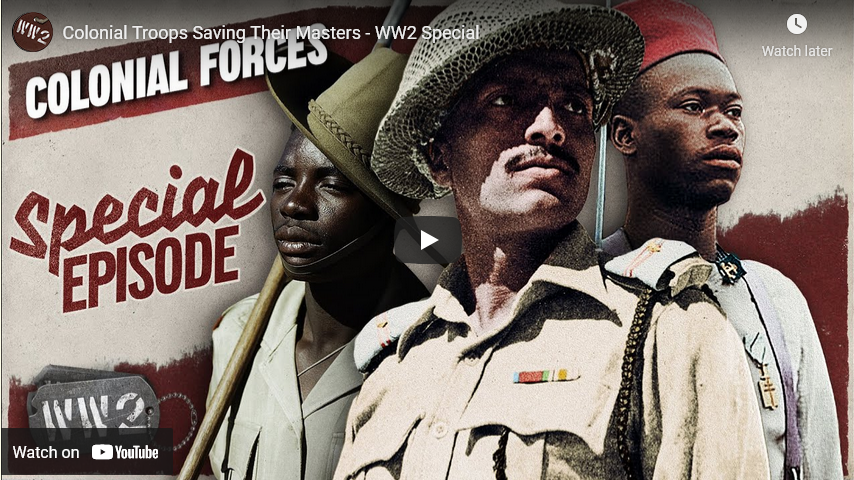
Colonial Troops Saving Their Masters – WW2 Special
World War Two
Published 4 Mar 2021Without the incredible support and sacrifice of troops from British and French colonies, the Allies would be having an even harder time withstanding the Axis onslaught. This episode looks at their formation and their fighting style.
Join us on Patreon: https://www.patreon.com/TimeGhostHistory
Or join The TimeGhost Army directly at: https://timeghost.tvFollow WW2 day by day on Instagram @ww2_day_by_day – https://www.instagram.com/ww2_day_by_day
Between 2 Wars: https://www.youtube.com/playlist?list…
Source list: http://bit.ly/WW2sourcesHosted by: Indy Neidell
Written by: Markus Linke and Indy Neidell
Director: Astrid Deinhard
Producers: Astrid Deinhard and Spartacus Olsson
Executive Producers: Astrid Deinhard, Indy Neidell, Spartacus Olsson, Bodo Rittenauer
Creative Producer: Maria Kyhle
Post-Production Director: Wieke Kapteijns
Research by: Markus Linke
Edited by: Miki Cackowski
Sound design: Marek Kamiński
Map animations: Miki Cackowski, Eastory (https://www.youtube.com/c/eastory)Colorizations by:
Daniel Weiss
Mikołaj UchmanSources:
Photo of French Saharan troops (1932), courtesy of Acln https://commons.wikimedia.org/wiki/Fi…
Archives du département du Rhône et de la métropole de Lyon
The New York Public Library – Digital Collections
USMC Archives
IWM E 11584, CBM 2264, E 6605, IND 2864, IND 2290, K 1385
Picture of Sudanese Defense Force near Kufra Oasis, courtesy of Major PJ HurmanSoundtracks from Epidemic Sound
Johannes Bornlof – “Deviation In Time”
Hakan Eriksson – “Epic Adventure Theme 3”
Phoenix Tail – “At the Front”
Philip Ayers – “The Unexplored”
Johannes Bornlof – “The Inspector 4”
Fabien Tell – “Weapon of Choice”
Reynard Seidel – “Deflection”
Fabien Tell – “Other Sides of Glory”
Philip Ayers – “Please Hear Me Out”Archive by Screenocean/Reuters https://www.screenocean.com.
A TimeGhost chronological documentary produced by OnLion Entertainment GmbH.
From the comments:
World War Two
9 hours ago
As regular viewers will know, we try to give the most complete picture of World War Two possible by diving into the multitude of people that took part and seeing it from their unique perspective.This episode is part of that effort, looking at the colonial troops who fought on the side of their imperial administrators. In a different way, our On the Homefront series is also part of that effort, and we are happy to announce that we have just got started with it again. Check out the latest episode here where Anna looks at the changing role of the Geisha in wartime Japanese society: https://youtu.be/7Y3IYsNC1WM
Comments Off on Colonial Troops Saving Their Masters – WW2 Special
February 28, 2021
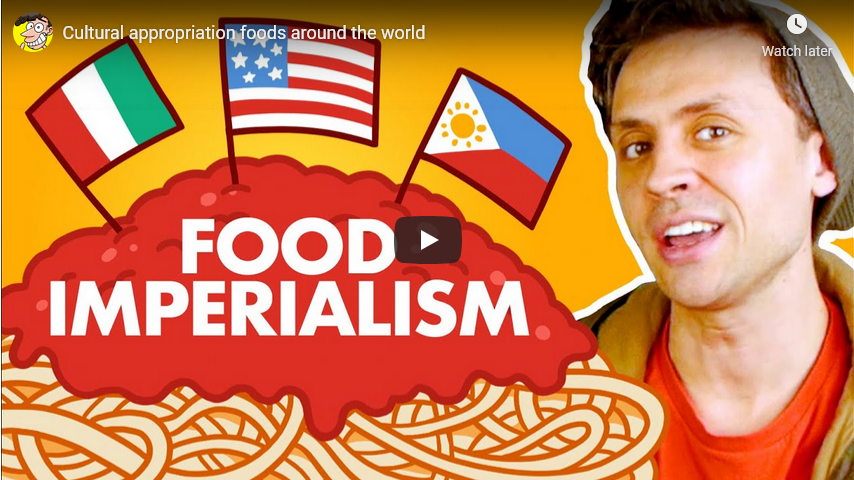
Cultural appropriation foods around the world
J.J. McCullough
Published 14 Dec 2019Baguettes in Vietnam! Curry in Japan! Tea in India! Let’s look at the practice of eating food from other countries, which is more widespread than you might think, thanks to imperialism and immigration.
FOLLOW ME:
🇨🇦Support me on Patreon! https://www.patreon.com/jjmccullough
🤖Join my Discord! https://discord.gg/3X64ww7
🇺🇸Follow me on Instagram! https://www.instagram.com/jjmccullough/
🇨🇦Read my latest Washington Post columns: https://www.washingtonpost.com/people…
🇨🇦Visit my Canada Website http://thecanadaguide.comHASHTAGS:
#food #curry #empire
Comments Off on Cultural appropriation foods around the world
February 21, 2021
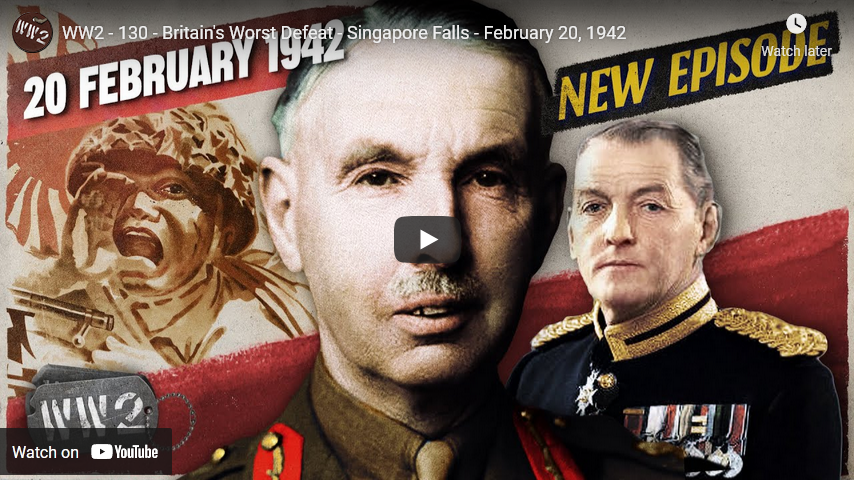
WW2 – 130 – Britain’s Worst Defeat – Singapore Falls – February 20, 1942
World War Two
Published 20 Feb 2021The most humiliating defeat in British history according to Winston Churchill — 80,000 men lost as prisoners of war! Humiliated by an enemy far less numerous than themselves! There are many ways to describe the fall of Singapore; these are but two of them. The Japanese are also bombing Australia and invading Sumatra, Bali, and Timor this week, so they are certainly not resting on their laurels. Meanwhile in the Soviet Union, thousands of Red Army paratroops are dropping behind German lines.
Join us on Patreon: https://www.patreon.com/TimeGhostHistory
Or join The TimeGhost Army directly at: https://timeghost.tvFollow WW2 day by day on Instagram @ww2_day_by_day – https://www.instagram.com/ww2_day_by_day
Between 2 Wars: https://www.youtube.com/playlist?list…
Source list: http://bit.ly/WW2sourcesWritten and Hosted by: Indy Neidell
Director: Astrid Deinhard
Producers: Astrid Deinhard and Spartacus Olsson
Executive Producers: Astrid Deinhard, Indy Neidell, Spartacus Olsson, Bodo Rittenauer
Creative Producer: Maria Kyhle
Post-Production Director: Wieke Kapteijns
Research by: Indy Neidell
Edited by: Iryna Dulka
Sound design: Marek Kamiński
Map animations: Eastory (https://www.youtube.com/c/eastory)Colorizations by:
– Norman Stewart – https://oldtimesincolor.blogspot.com/
– Adrien Fillon – https://www.instagram.com/adrien.colo…Sources:
– IWM ART: LD 6042, 15747 12, 15747 139, 15747 14Soundtracks from the Epidemic Sound:
– Rannar Sillard – “Easy Target”
– Fabien Tell – “Other Sides of Glory”
– Rannar Sillard – “Split Decision”
– Gunnar Johnsen – “Not Safe Yet”
– Farrell Wooten – “Blunt Object”
– Howard Harper-Barnes – “Underlying Truth”
– Jo Wandrini – “Dragon King”
– Fabien Tell – “Break Free”
– Christian Andersen – “Barrel”
– Johan Hynynen – “Dark Beginning”
– David Celeste – “Try and Catch Us Now”
– Farrell Wooten – “Mystery Minutes (STEMS INSTRUMENTS)”Archive by Screenocean/Reuters https://www.screenocean.com.
A TimeGhost chronological documentary produced by OnLion Entertainment GmbH.
Comments Off on WW2 – 130 – Britain’s Worst Defeat – Singapore Falls – February 20, 1942
February 13, 2021
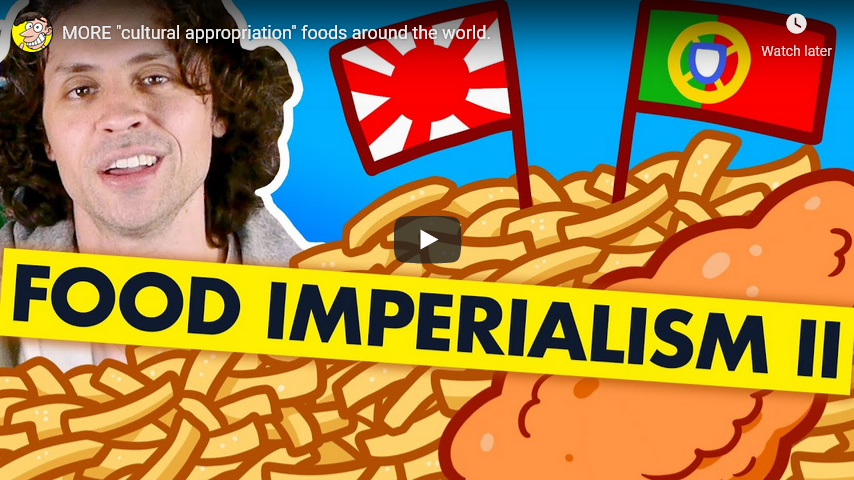
MORE cultural appropriation foods!
J.J. McCullough
Published 14 Nov 2020How much famous food is just copied from some other country? Thanks to Jack Rackham for the shogun animation!
https://www.youtube.com/channel/UCaQz…FOLLOW ME:
🇨🇦Support me on Patreon! https://www.patreon.com/jjmccullough
🤖Join my Discord! https://discord.gg/3X64ww7
🇺🇸Follow me on Instagram! https://www.instagram.com/jjmccullough/
🇨🇦Read my latest Washington Post columns: https://www.washingtonpost.com/people…
🇨🇦Visit my Canada Website http://thecanadaguide.comHASHTAGS: #food #cooking #history
February 1, 2021
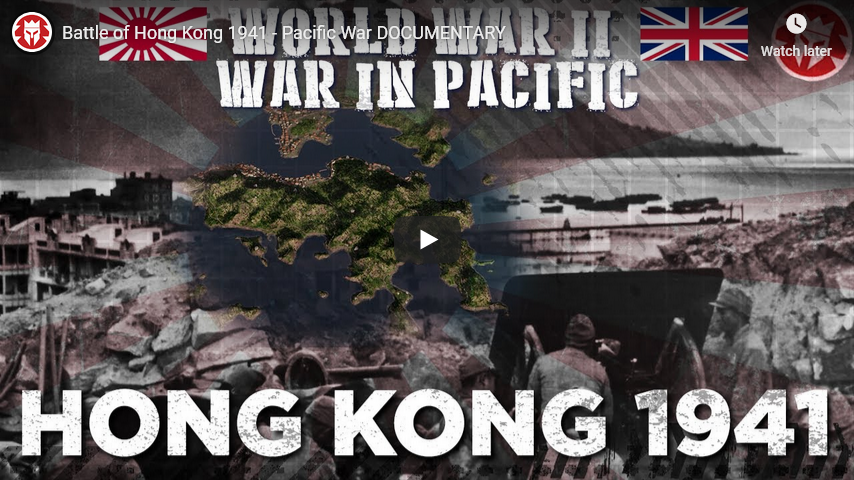
Battle of Hong Kong 1941 – Pacific War
Kings and Generals
Published 31 Jan 2021The first 100 people to go to https://www.blinkist.com/kingsandgenerals are going to get unlimited access for 1 week to try it out. You’ll also get 25% off if you want the full membership
Kings and Generals 3d animated historical documentary series on modern warfare continues with a video on the battle of Hong Kong of 1941. Japanese Empire is waging another Sino-Japanese war against China and decides that it is time to take over Hong Kong, as the British were using it to supply the Chinese. This battle is considered one of the first in the Pacific War within World War II.
Support us on Patreon: http://www.patreon.com/KingsandGenerals or Paypal: http://paypal.me/kingsandgenerals. We are grateful to our patrons and sponsors, who made this video possible: https://docs.google.com/document/d/1o…
The video was made by Leif Sick, while the script was developed by Ivan Moran. The video was narrated by Officially Devin (https://www.youtube.com/user/OfficiallyDevin)
✔ Merch store ► teespring.com/stores/kingsandgenerals
✔ Podcast ► http://www.kingsandgenerals.net/podcast/
✔ Twitter ► https://twitter.com/KingsGenerals
✔ Instagram ► http://www.instagram.com/Kings_GeneralsProduction Music courtesy of Epidemic Sound: http://www.epidemicsound.com
#Documentary #HongKong #PacificWar
Comments Off on Battle of Hong Kong 1941 – Pacific War
January 25, 2021
QotD: Indira Gandhi’s exploitation of the goddess Kali
In colonial India, Kali’s notoriety boomed. For in her both coloniser and colonised found a figurehead. Corrupted by the British, Kali was spun as a sexually depraved, blood-swigging black sorceress. As William Ward phrased it in his encyclopaedia, “She exhibits altogether the appearance of a drunken frantic fury … on whose altar victims annually bleed”. Such descriptions, deemed by Indians to be reductively fixated on her destructive powers to the omission of her maternal reserve, activated a movement for her reclamation and turned her into an icon in the struggle for Indian independence in the late-nineteenth century. Put on calendars, cigarette packets, matchboxes, and subject of hugely popular prints, Kali was embraced as a vision of freedom. The reverence for her was inseparable from politics. And it took just two decades after India gained its freedom for a politician to exploit it.
Indira Gandhi — the daughter of one of the freedom movement’s protagonists Pandit Nehru and India’s first and only female prime minister — chose consciously to co-opt this divinity in service of burnishing her own self-image. Indeed, during her first spell in office, from 1966-1977, Indira’s image was as prolific as the colourful printed pictures of the tantric goddess splashed across India’s towns and bazaars. Her appearance was, understandably, more benign. But in India’s jostling visual marketplace her image — big smile and bobbed black hair shot with a streak of white framed by a demure uttariya (veil) — was as inescapable as any deity’s.
Indira played the demagogue superbly. But just as her popularity among Indians soared, and her political confidence grew, those around her began equating her strong, intolerant, and cold politics with female divinities and their overwhelming powers. According to a hugely contentious apocryphal story, Indira’s young rival Atal Bihari Vajpayee, who would go on to succeed her as prime minister, was so overcome by devotion at the sight of her gallantry during India’s war with Pakistan in 1971 that he called her Ma Durga — Kali’s mother.
Cleo Roberts, “Indira Gandhi: a gift from the gods?”, The Critic, 2020-10-15.
Comments Off on QotD: Indira Gandhi’s exploitation of the goddess Kali
January 8, 2021
QotD: Culinary appropriation
Some of the resulting dishes are deplorable. I could live happily in a world without chop suey, chilli con carne, or coronation chicken. I’m not going to try a recipe described in Eater magazine as “huevos Kathmandu that paired green chutney and spiced chickpeas with fried eggs”.
Tex-mex cuisine is Montezuma’s most effective revenge. Rijstafel conquered the Netherlands more thoroughly than the Dutch ever subjected the East, and now rivals the drearier Hutspot as Holland’s national dish. Yet Dutch food still lags behind grandes cuisines.
Vindaloo is the epitome of culinary appropriation: a Bengali dish with ingredients from the Americas — potatoes and chillies — and a corruption of a Portuguese name: vinho d’alho, or garlic wine. It has become so British that “Vindaloo nah-nah” was the chorus of a chant popular among English football fans at a World Cup tournament (perhaps they confused it with Waterloo). I still dislike it.
Usually, however, culturally exchanged foods produce admirable dishes. Chocolate, tomato and avocado are among the few English words derived from Nahuatl. The Aztecs never used the items they designate in pain au chocolat, or tricolore, or avocado toast. But the responsible cultural appropriators deserve praise, not blame.
Satay would be unthinkable if Malays hadn’t incorporated peanuts that Portuguese pinched from Brazil. The basics of cajun cuisine reached Louisiana with “Acadian” migrants from French Canada — but cultural appropriation made it what it is today. Black chefs in the same region would be at a loss without African-born yams.
Curries would be historical curiosities if Indians hadn’t appropriated chillies from Mexico. Is Sichuanese cuisine imaginable without American peppers or sweet potatoes. Tempura would be unavailable if Japanese chefs hadn’t annexed and improved Portuguese techniques of frying. Culinary historians bicker over whether Jewish or Italian immigrants developed fish and chips. But almost everyone agrees that the British could never have done it on their own.
Felipe Fernández-Armesto, “Bad taste of PC foodies”, The Critic, 2020-09-19.
Comments Off on QotD: Culinary appropriation
December 7, 2020
Churchill and the Bengal Famine of 1943
In The Critic, Zareer Masani debunks a recent book’s claim that British PM Winston Churchill was responsible for the Bengal famine during the Second World War:
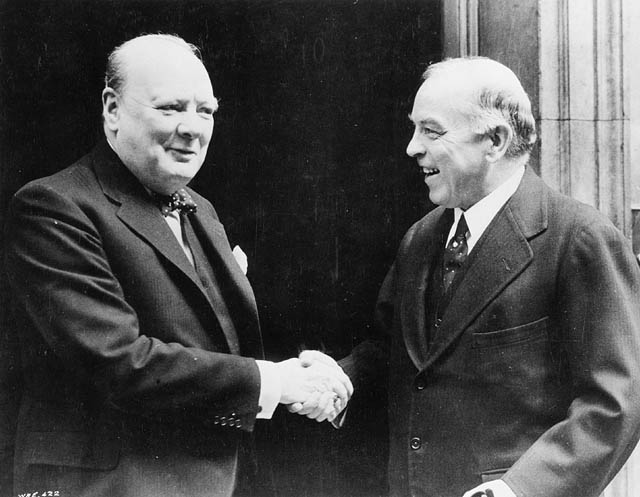
Prime Minister Winston Churchill greets Canadian PM William Lyon Mackenzie King, 1941.
Photo from Library and Archives Canada (reference number C-047565) via Wikimedia Commons.
A favourite trope of the current Black Lives Madness and its left-liberal white apologists has been the alleged infamy of Britain’s most cherished hero, Winston Churchill, charged with everything from mere racism to actual genocide. The worst accusation is that of deliberately starving four million Bengalis to death in the famine of 1943.
The famine took place at the height of World War Two, with the Japanese already occupying Burma and invading the British Indian province of Bengal, bombing its capital, Calcutta, and patrolling its coast with submarines.
The famine raged for about six months, from the summer of 1943 until the end of that year, and estimates of its victims range from half a million upwards, depending on whether one includes its indirect and long-term effects. Most famine experts agree that famines can be caused by both nature and human agency, but never by any single individual. So how has a 67-year-old British prime minister in poor health, 5,000 miles away, fighting near-annihilation in a world war, come to be charged with causing such a cataclysmic disaster?
The attempt to lay this at Churchill’s door stems from a sensationalist book by a Bengali-American journalist called Madhusree Mukerjee. As its title, Churchill’s Secret War, indicates, it was a largely conspiracist attempt to pin responsibility on distant Churchill for undoubted mistakes on the ground in Bengal.
The actual evidence shows that Churchill believed, based on the information he had been getting, that there was no food supply shortage in Bengal, but a demand problem caused by local mismanagement of the distribution system. Ironically, his view found unexpected support in a 2010 exchange between Mukerjee and the Nobel Prize-winning economist Amartya Sen, the world’s foremost expert on famine in India.
Commenting in the New York Times, Sen said of Mukerjee, that “she seems satisfied with little information” and that her data came from only two rice research stations, and those in only two out of 27 districts in Bengal. “The analysis I made,” countered Sen, “using data from all districts … indicated that food availability in 1943 (the famine year) was significantly higher than in 1941 (when there was no famine) … There was indeed a substantial shortfall compared with demand, hugely enhanced in a war economy … but that is quite different from a shortfall of supply compared with supply in previous years … Mukerjee seems to miss this crucial distinction, and in her single-minded … attempt to nail down Churchill, she ends up absolving British imperial policy of confusion and callousness.”
Comments Off on Churchill and the Bengal Famine of 1943
November 24, 2020
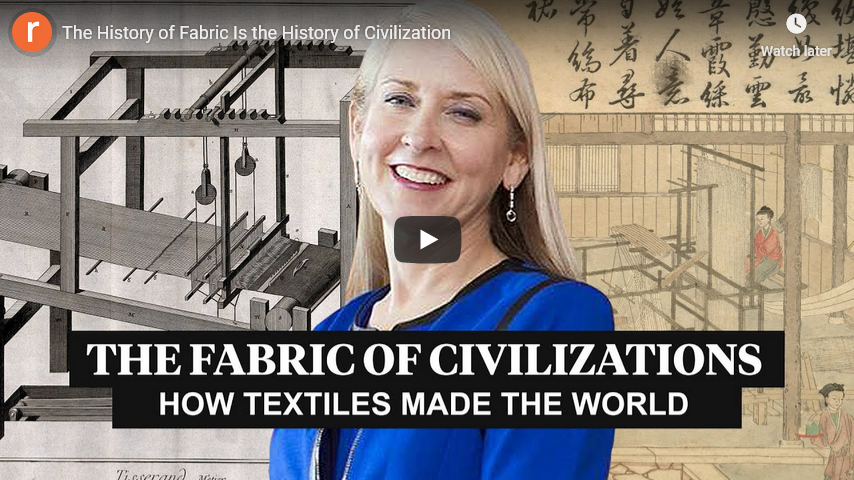
The History of Fabric Is the History of Civilization
ReasonTV
Published 23 Nov 2020Virginia Postrel’s new book explores economics, politics, and technology through textiles.
——————
Full text and links: https://reason.com/video/2020/11/23/t…Follow us on Twitter: https://twitter.com/reason
Reason is the planet’s leading source of news, politics, and culture from a libertarian perspective. Go to reason.com for a point of view you won’t get from legacy media and old left-right opinion magazines.
—————-The Fabric of Civilization: How Textiles Made the World, a new book by former Reason editor in chief Virginia Postrel, is a rich, endlessly fascinating history of the remarkable luck, invention, and innovation that made our fabric-rich world possible.
The book aims to make the mundane miraculous. Consider cotton. Most of the cotton we grow today is descended in part from a plant species that evolved in Africa and somehow got over to what is now Peru, where it mixed with New World strains.
“The fact that we have cotton at all, that it exists anywhere, is amazing,” says Postrel. “It happened long before there were human beings, but much more recently than when the continents were together. So we don’t know. It could have gotten caught up in a hurricane. It could have floated on a piece of pumice. So it’s this random, very unlikely happening that had tremendous world-changing consequences.”
The story of textiles is rife with attempts at protectionism and prohibition. In 17th and 18th century Europe, countries banned the importation of super-soft, super-colorful cotton prints from India known as calicos because they threatened domestic producers of everything from lower-quality cotton fabric to luxury silks. “For 73 years, France treated calico the way the U.S. treats cocaine,” Postrel says. “There was this huge amount of smuggling, and they were constantly ratcheting up the penalties [so] that they got quite grotesque, at least for the major traffic.” Some of “the earliest writings of classical liberalism are in this context, people saying not only is this not working, but … it is unjust to be sentencing people to the galleys in order to protect silk makers’ profits.”
Postrel also documents how the Luddites, the 19th century English textile workers famous for smashing the power looms threatening to put them out of work, owed their jobs to an earlier technological breakthrough: the spinning machines that emerged in the late 1700s.
“If you go back to that earlier period, when spinning machines were introduced, the same thing happened,” she says. “They had their own period of rebelling against the new technologies and saying they’re putting people out of work.”
The book also upends some contemporary myths, such as the claim that commercial production of hemp for clothing was a casualty of the war on drugs. “Hemp historically was a very coarse kind of fabric for poor people who didn’t have an alternative,” says Postrel. “It was replaced by cotton for good reasons. Cotton was also affordable, but it was soft and washable and just a much better fabric.”
“Human beings live in history and we inherit the legacies, positive and negative, of that history,” says Postrel, whose previous books include The Power of Glamour, The Substance of Style, and The Future and Its Enemies. Discussing the large themes of her work she says, “All you can do is start from where you are and try to do better from where you are.”
Narrated by Nick Gillespie. Edited by Isaac Reese.
Music: “Thoughts,” by ANBR
Photos: World History Archive/Newscom; The Print Collector Heritage Images/Newsroom; The “Réale” returning to port, Med/CC BY-SA 3.0; Smithsonian National Museum of African American History and Culture/CC0; Battle of Grand Port, Rama/Wikimedia Commons/CC BY-SA 2.0 FR; Fine Art Images Heritage Images/Newscom; Seton, M., Müller, R., Zahirovic, S., Gaina, C., Torsvik, T., Shephard, G., Talsma, A., Gurnis, M., Turner, M., Maus, S., and Chandler, M., 2012, Global continental and ocean basin reconstructions since 200 Ma: Earth-Science Reviews, v. 113, no. 3-4, p. 212-270
Comments Off on The History of Fabric Is the History of Civilization
November 16, 2020
QotD: India’s civil service
Now, one good thing about the Indian civil service is that it carries on the old British practice of entry being by competitive examination. This at least loosens the possibility of influence and bribery determining who gets hired. But now think of the incompetence with which the process is being carried out. We’ve at least 7 months here just to mark the exam papers!
And that is really what ails India. The snail’s pace of the bureaucracy. It would actually be far better if the place had near no government rather than the one it has. Anarchy is indeed preferable to a system which allows near nothing to happen officially. Because what happens when a bureaucracy is so slow that it strangles the ability to do anything legally is that it is all done in illegal anarchy anyway. Some 85% of the Indian economy is over in the unregistered, untaxed and informal sector. Precisely and exactly because the official sector is run by that bureaucracy that cannot even hire the occasional accountant. A bonfire of the babus would improve the place immeasurably.
Tim Worstall, “What’s Wrong In India – All 8,000 Fail Goa’s Exam To Be Government Accountants”, Continental Telegraph, 2018-08-23.
Comments Off on QotD: India’s civil service
October 28, 2020
QotD: The Gurkhas
Comments Off on QotD: The Gurkhas
October 21, 2020
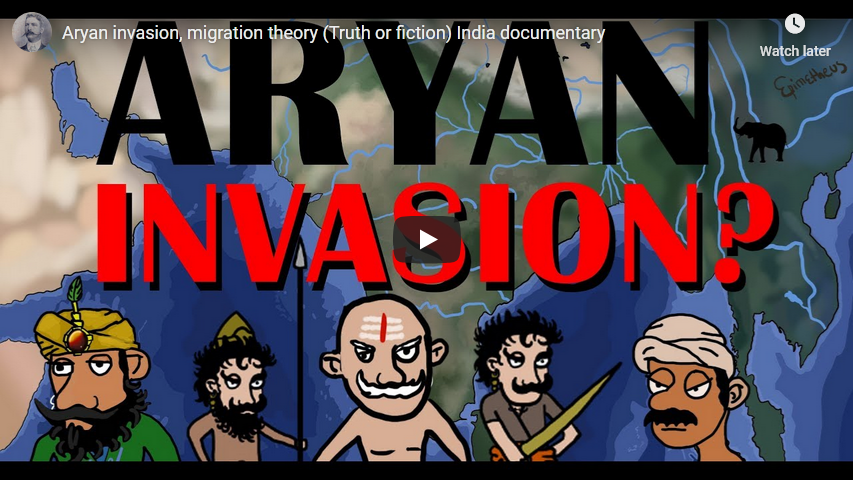
Aryan invasion, migration theory (Truth or fiction) India documentary
Epimetheus
Published 24 Jan 2018Aryan invasion, migration theory (Truth or fiction) India documentary
Epimetheus on Patreon
https://www.patreon.com/Epimetheus1776David Frawley Aryan invasion videos
https://www.youtube.com/watch?v=qych3…
https://www.youtube.com/watch?v=jyz_S…Tags:
Aryan invasion india, india history, indian history, documentary, history of india, india,history, india documentary, hindi, 2018, ancient india, indus valley civilization, 5,000 Years History of India documentary, Aryan migration theory, Aryan invasion theory, indo-aryan, indo Aryan migration
Comments Off on Aryan invasion, migration theory (Truth or fiction) India documentary


