Quotulatiousness

June 25, 2022

Colonial Berthiers: 1902 Indochina and 1907 Senegalese

Filed under: Africa, Asia, France, History, Military, Weapons — Tags: , , , , — Nicholas @ 02:00

Forgotten Weapons
Published 21 Jul 2017

http://www.patreon.com/ForgottenWeapons

The sharpshooters of the French colonial forces in Indochina (the Tirailleurs Indochinois) had never been issued Lebel rifles, and were still using single shot Gras rifles at the turn of the century. The Indochinese soldiers were rather short statured, and the Lebel was simply too long for them to use efficiently. The colonial government requested a special weapon for these men, and the result was the 1902 Berthier.

The Berthier carbine was much more compact than the Lebel, and it was also less expensive to manufacture and simpler to instruct troops with. So after some brief experimentation, a version was produced with a 25 inch (635mm) long barrel, which was a nice balance between the carbines and the Lebel rifle. In my opinion, the 1902 is the ideal size for a Berthier, and I think it handles best of all the different variations made.

An initial production run of 22,500 of these 1902 rifles was made by Chatellerault between 1902 and 1912. A second batch of about 25,000 more would be produced in the 1920s, but we will discuss these in a separate video, as they incorporated the 1916 upgrades.

With the successful implementation of the Berthier in the Indochinese colonial forces, it would stand out as an obvious solution for the need to upgrade the arms of France’s African colonial troops as well. These soldiers were not short, but also had outdated Gras rifles, and Lebel production was no longer active by 1907. As a result, a further lengthened Berthier was suggested for the Senegalese troops, with a barrel 31.5 inches (800mm) long; equal to that of the Lebel. This was accepted into service, and 25,000 were manufactured by Chatellerault between 1907 and the beginning of the Great War in 1914.

With the urgent need for more rifles because of World War One, the 1907 Berthier (renamed to the 1907 Colonial and issued to colonial troops besides just the Senegalese as of 1908) would attract the interest of the military because it was cheaper to manufacture than the Lebel, and still in active production. The result would be the 07/15 Berthier, which would become a dual standard infantry rifle alongside the 1886 Lebel in the war.

If you enjoy Forgotten Weapons, check out its sister channel, InRangeTV! http://www.youtube.com/InRangeTVShow

June 12, 2022

History Re-Summarized: Egypt

Overly Sarcastic Productions
Published 18 Feb 2022

I for one was shocked to learn the Egyptians actually buried their kings in a giant Millennium Puzzle.

We’ve covered Egypt on this channel in previous videos, but this History Re-Summarized is the Definitive Edition, redone from the ground up to present the best possible account — starting at the beginning for a full chronology of Ancient Egypt, from the very first Pharaohs to the Muslim Conquest.

(Observant Egyptologists and D&D players might note the Pyramids are actually D-*Fives*, but technically they’re D-*Nines* since each face is actually two right triangles at a slight angle to each other and not a single flat isosceles triangle, so shhh, we can pretend it’s a D4.)

Sources & Further Reading: The Oxford History of Ancient Egypt & Ancient Egypt: A Very Short Introduction by Ian Shaw, World History Encyclopedia entries on “Ancient Egypt”, “Old Kingdom of Egypt”, “First Intermediate Period of Egypt”, “Middle Kingdom of Egypt”, “Second Intermediate Period of Egypt”, “New Kingdom of Egypt” https://www.worldhistory.org/egypt/, The Great Courses’ lecture series “History of Ancient Egypt” by Bob Brier. Additionally, I have an undergraduate degree in classical studies (re: Persia, Ptolemies and Rome). Extra special thanks to our OSP Discord server moderator & Egyptology connoisseur Billy, for his assistance and guidance for this video!

Our content is intended for teenage audiences and up.

PATREON: https://www.Patreon.com/OSP

PODCAST: https://overlysarcasticpodcast.transi…

DISCORD: https://discord.gg/osp

MERCH LINKS: http://rdbl.co/osp

OUR WEBSITE: https://www.OverlySarcasticProductions.com
Find us on Twitter https://www.Twitter.com/OSPYouTube
Find us on Reddit https://www.Reddit.com/r/OSP/

May 31, 2022

A new history of the evil empire. No, not that one. Not that one either. The other evil empire!

Filed under: Africa, Asia, Books, Britain, History, Military — Tags: , , , , , , — Nicholas @ 03:00

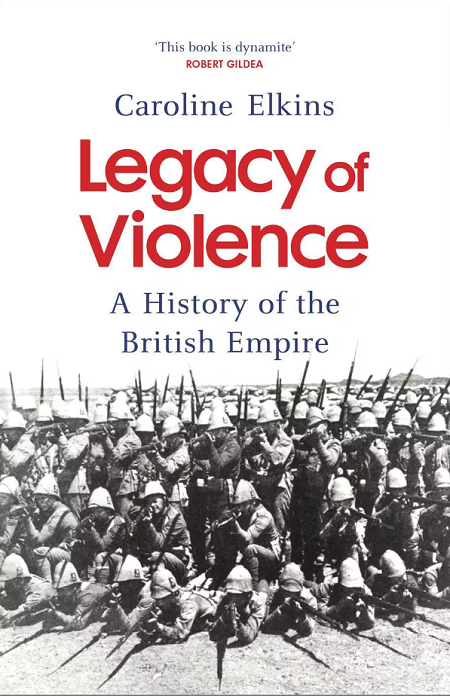
In The Critic, Barnaby Crowcroft reviews Caroline Elkins’ new history of the British empire, Legacy of Violence:

Elkins is correct that British decolonisation after the end of the war — if not “white-washed” — has got off lightly among historians, often via a contrast with the dreadful behaviour of the French. We remain far too influenced by the impression that Britain willingly and amicably handed over power (as Harold Macmillan put it) to Asian and African representatives of “agreeable, educated, Liberal, North Oxford society”.

There is a single map in this book which should definitively dispose of such ideas, showing all the colonial conflicts and states of emergency Britain was engaged in around the world after 1945. There are the well-known counterinsurgencies in Palestine, Malaya, Kenya, Cyprus and Aden. Alongside other, less well-known ones, however — British Guiana, Malaysia, Belize, Oman and the New Hebrides — bring us pretty much into the 1980s without a single year of global colonial peace.

In Kenya and Malaya, the British carried out massive coercive interventions in the 1950s, including the forcible resettlement of over a million people into closely monitored “new villages”, which, if they cannot be likened to concentration camps, certainly resemble the kinds of things the French were doing in Algeria. Difficult though it is to believe today, until very recently the British were a “warlike” and patriotic people, and their agents could be ruthless in the pursuit of imperial interest overseas.

Unfortunately, it is not possible to take seriously the more grandiose claims of Legacy of Violence, including Elkins’ presumption to have uncovered the Key to All Mythologies of British imperial wickedness in the form of Liberalism and Racism. The prose is part of the problem. Her introductory statement of the book’s bombastic aims reads more like something written by a professional satirist, than a professional historian.

“To study the British empire,” she writes, “is to unlock memory’s gate using the key of historical enquiry. But once inside, history’s fortress is bewildering … Unlike mythical fire-breathing monsters, however, the creatures inhabiting the annals of Britain’s imperial past are not illusions [but] monstrosities [which] inflicted untold suffering …”

Much of the book is given over to a plodding chronicle of nineteenth- and twentieth-century British history, in which events are construed — and often misconstrued — to give the meanest possible interpretation. British “arch-imperialists” resemble cartoon villains, who wear “Hitleresque moustaches” and “racist coattails” and are awarded MBEs and OBEs according to how much harm they inflict upon colonial subjects. There is even an imaginative reconstruction of British pilots all but laughing as they machine-gun “defenceless women and children”; readers are invited to listen to their “screams of pain”.

To determine whether Britain’s empire was uniquely violent invites the question: compared to what? Niall Ferguson earned opprobrium for suggesting in 2003 that alongside the rival empires which arose to challenge it in the middle of the twentieth century, Britain’s looked pretty attractive.

To her credit, Elkins does not disagree with this. Her treatment of Malaya’s communist insurgency suggests that she is not particularly exercised by violence when it is committed by ideological confrères. The only thing we get in the way of any broader comparison, however, is the notably wishy-washy one implied between the “East and the West”, which she describes as the contrast between “humanity and inhumanity”.

May 30, 2022

Technocratic meddling in developing countries at the local level

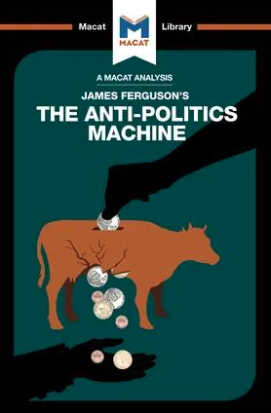
One of the readers of Scott Alexander’s Astral Codex Ten has contributed a review of James Ferguson’s The Anti-Politics Machine. The reviewer looked at a few development economics stories that illustrate some of the more common problems western technocrats encounter when they provide their “expert advice” to people in developing countries. This is one of perhaps a dozen or so anonymous reviews that Scott publishes every year with the readers voting for the best review and the names of the contributors withheld until after the voting is finished:

    But even if the project was in some sense a “failure” as an agricultural development project, it is indisputable that many of its “side effects” had a powerful and far-reaching impact on the Thaba-Tseka region. […] Indeed, it may be that in a place like Mashai, the most visible of all the project’s effects was the indirect one of increased Government military presence in the region

As the program continued to unfold, the development officials became more and more disillusioned — not with their own choices, but with the people of Thaba-Tseka, who they perceived as petty, apathetic, and outright self-destructive. A project meant to provide firewood failed because locals kept breaking into the woodlots and uprooting the saplings. An experiment in pony-breeding fell apart when “unknown parties” drove the entire herd of ponies off of cliffs to their deaths. Why, Ferguson’s official contacts bemoaned, weren’t the people of Thaba-Tseka committed to their own “development”?

Who could possibly be opposed to trees and horses? Perhaps, the practitioners theorized, the people of Thaba-Tseka were just lazy. Perhaps they “didn’t want to be better”. Perhaps they weren’t in their right mind or had made a mistake. Perhaps poverty makes a person do strange things.

Or, as Ferguson points out, perhaps their anger had something to do with the fact that the best plots of land in the village had been forcibly confiscated to make room for wood and pony lots, without any sort of compensation. The central government was all too happy to help find land for the projects, which they took from political enemies and put in the control of party elites, especially when it could use a legitimate anti-poverty program as cover. In Ferguson’s words, the development project was functioning as an “anti-politics machine” the government could use to pretend political power moves were just “objective” solutions to technical problems.

A local student’s term paper captured the general discontent:

    In spite of the superb aim of helping the people to become self-reliant, the first thing the project did was to take their very good arable land. When the people protested about their fields being taken, the project promised them employment. […] It employed them for two months, found them unfit for the work, and dismissed them. Without their fields and without employment they may turn up to be very self-reliant. It is rather hard to know.

Two things stand out to me from this story. First, the “development discourse” lens served to focus the practitioners’ attention on a handful of technical variables (quantity of wood, quality of pony), and kept them from thinking about any repercussions they hadn’t thought to measure.

This is a serious problem, because “negative effects on things that aren’t your primary outcome” are pretty common in the development literature. High-paying medical NGOs can pull talent away from government jobs. Foreign aid can worsen ongoing conflicts. Unconditional cash transfers can hurt neighbors who didn’t receive the cash. And the literature we have is implicitly conditioned on “only examining the variables academics have thought to look at” — surely our tools have rendered other effects completely invisible!

Second, the project organizers somewhat naively ignored the political goals of the government they’d partnered with, and therefore the extent to which these goals were shaping the project.

Lesotho’s recent political history had been tumultuous. The Basotho Nationalist Party (BNP), having gained power upon independence in 1965, refused to give up power after losing the 1970 elections to the Basotho Congress Party (BCP). Blaming the election results on “communists”, BNP Prime Minister Leabua Jonathan declared a state of emergency and began a campaign of terror, raiding the homes of opposition figures and funding paramilitary groups to intimidate, arrest, and potentially kill anyone who spoke up against BNP rule.

This had significant effects in Thaba-Tseka, where “villages […] were sharply divided over politics, but it was not a thing which was discussed openly” due to a fully justified fear of violence. The BNP, correctly sensing the presence of a substantial underground opposition, placed “development committees” in each village, which served primarily as local wings of the national party. These committees spied on potential supporters of the now-outlawed BCP and had deep connections to paramilitary “police” units.

When the Thaba-Tseka Development Project started, its international backers partnered directly with the BNP leadership, reasoning that sustainable development and public goods provision could only happen through a government whose role they primarily viewed as bureaucratic. As a result, nearly every decision had to make its way through the village development committees, who used the project to pursue their own goals: jobs and project funds found their way primarily to BNP supporters, while the “necessary costs of development” always seemed to be paid by opposition figures.

The funding coalition ended up paying for a number of projects that reinforced BNP power, from establishing a new “district capital” (which conveniently also served as a military base) to constructing new and better roads linking Thaba-Tseka to the district and national capitals (primarily helping the central government tax and police an opposition stronghold). Anything that could be remotely linked to “economic development” became part of the project as funders and practitioners failed to ask whether government power might have alternate, more concerning effects.

As we saw earlier, the population being “served” saw this much more clearly than the “servants”, and started to rebel against a project whose “help” seemed to be aimed more at consolidating BNP control than meeting their own needs. When they ultimately resorted to killing ponies and uprooting trees, project officials infatuated with “development” were left with “no idea why people would do such a thing”, completely oblivious to the real and lasting harm their “purely technical decisions” had inflicted.

May 22, 2022

Axis Prisoners Face French Wrath – WW2 – 195 – May 21 1943

Filed under: Africa, Britain, France, Germany, History, Italy, Military, Russia, USA, WW2 — Tags: , , , — Nicholas @ 16:00

World War Two
Published 21 May 2022

The Allies have won the battle for Africa, but now they have nearly 250,000 POWs to care for, and do not have the facilities to do so. The Trident Conference continues in Washington to try and decide the direction of the Allied war effort, but they launch the Dambuster Raids this week in Germany to try and cripple German water power — and thus, industry — with a new type of bomb.
(more…)

May 15, 2022

The End of the War in Africa – WW2 – 194 – May 14, 1943

World War Two
Published 14 May 2022

With the end of the Tunisian Campaign, the Allies have won the war for the African Continent. What next? They meet at the Trident Conference in Washington DC to try and figure that out. Meanwhile, the fight in the field continues — in Burma, the Aleutians, China, and the Kuban.
(more…)

Tank Chat #147 M14/41 | The Tank Museum

Filed under: Africa, History, Italy, Military, Weapons, WW2 — Tags: , , , , — Nicholas @ 02:00

The Tank Museum
Published 4 Feb 2022

► JOIN OUR PATREON: Our Patreons have already enjoyed Early Access and AD free viewing of our weekly YouTube video! Consider becoming a Patreon Supporter today: https://www.patreon.com/tankmuseum

► TIMESTAMP:
00:00 – INTRO
00:22 – FEATURES
(more…)

May 8, 2022

Kilroy was Here! The fall of Tunis – WW2 – 193 – May 7, 1943

World War Two
Published 7 May 2022

Tunis falls to the Allies, but the Axis are still fighting back from their little corner of Tunisia. There is more of the seemingly endless fighting in the Kuban in the Caucasus, and the Chinese Theater comes to life with a new Japanese offensive.
(more…)

May 1, 2022

The race for Tunisia turns into a crawl – WW2 – 192 – April 30, 1943

World War Two
Published 30 Apr 2022

The Allies launch a deception operation to hide their intent of soon attacking Sicily, but first, they’ll actually have to secure Tunisia, and it is slow going. A German offensive in the Caucasus grinds to a halt, and German U-boats are suddenly finding themselves unable to destroy Allied shipping in the Atlantic.
(more…)

April 24, 2022

Ladies and Gentlemen, We Got Him – Yamamoto – WW2 – 191 – April 23, 1943

World War Two
Published 23 Apr 2022

The mastermind of Pearl Harbor meets his fate this week in the Solomons, as do a great many Italian airmen and sailors in the Mediterranean in the Palm Sunday Massacre trying to supply the desperate Axis forces in Tunisia.
(more…)

April 19, 2022

Alexander’s Successors (the Diadochi): Series Introduction and Historical Context

Thersites the Historian
Published 24 Nov 2018

This video introduces my series on Alexander’s Successors by talking about what the series will be like and by going through the historical context that the viewer might need to understand the age of the Successors.

Patreon link: https://www.patreon.com/thersites

PayPal link: paypal.me/thersites

Twitter link: https://twitter.com/ThersitesAthens

Minds.com link: https://www.minds.com/ThersitestheHis…

Steemit/dtube link: https://steemit.com/@thersites/feed

Backup Channel: https://www.youtube.com/channel/UCUrD…

April 17, 2022

Kursk – The Next Great Battle? – WW2 – 190 – April 16, 1943

Filed under: Africa, Germany, History, Japan, Military, Pacific, Russia, USA, WW2 — Tags: , , , , , , , — Nicholas @ 04:00

World War Two
Published 16 Apr 2022

The Allies have one chance left to catch the Axis forces in Tunisia before they can reach the Tunis defences; in the USSR both the Axis and Soviets are making plans for a fight near Kursk; and in the skies, in the South Pacific a Japanese aerial offensive ends and Yamamoto himself flies off to congratulate his pilots.
(more…)

April 10, 2022

Mussolini is Tired of War – WW2 – 189 – April 9th , 1943

World War Two
Published 9 Apr 2022

Adolf Hitler meets with Benito Mussolini to hopefully restore his flagging morale and convince him that the Axis can hold out in North Africa, but the situation there grows more precarious and this week there the Allies advancing from the west and the east link up for the first time. The Axis are also holding out in the Caucasus, as new Soviet attacks to take Krymskaya begin.
(more…)

April 3, 2022

Patton Has a Plan, and it’s Bad – WW2 – 188 – April 2, 1943

World War Two
Published 2 Apr 2022

American attacks in Tunisia meet with local disaster, but in general the Axis forces are withdrawing there. The Allies learn about the German rocketry plans this week, and both sides are making plans for action in the Pacific.
(more…)

April 1, 2022

Why every world map is wrong

Filed under: Africa, History, Humour, Science — Tags: , — Nicholas @ 02:00

Jay Foreman
Published 20 Jun 2019

Want to show this video to your geography class? A clean, school-friendly version of this video is here: https://youtu.be/J94N29NUtW4

BUY MUGS, T-SHIRTS, POSTERS ETC…
http://www.mapmenmerch.com

SEE NEW EPISODES EARLY, AND BEHIND-THE-SCENES EXTRAS…
http://www.patreon.com/jayforeman

How do you show a round earth on a flat map? Is it possible? Jay and Mark find out using an orange and a rolling pin.

Written and presented by
JAY FOREMAN @jayforeman
MARK COOPER-JONES @markcooperjones

Edited by
JAY FOREMAN @jayforeman

Camera
INDIA RAKUSEN @indiarakusen

See new episodes before anyone else, and get exclusive extras like out-takes and deleted scenes by signing up to my Patreon:
http://www.patreon.com/jayforeman

« Newer PostsOlder Posts »

Powered by WordPress