Scotland was terra incognita to the English for far longer than one might think, even though the two kingdoms shared a monarch as early as 1603. On his Substack, Ed West shows how modern day Scotland has long since emerged from the mysterious shadows of the past:
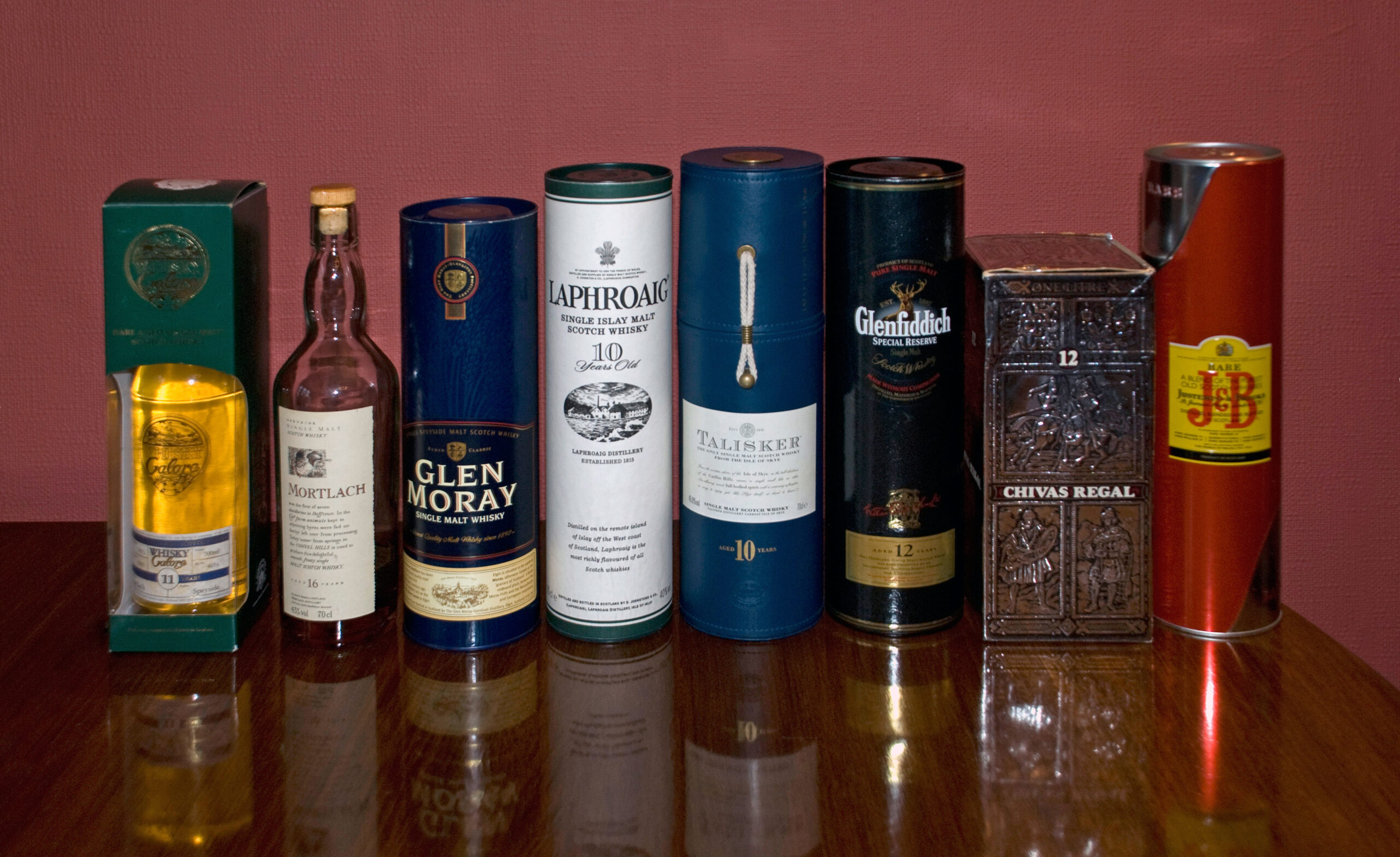
“Scotch whiskies” by Chris huh is licensed under CC BY-SA 4.0 

 .
.
In his highly entertaining history of alcohol and the British, Empire of Booze, Henry Jeffreys observed how one effect of the Napoleonic Wars was to make Scotland a popular destination for English holiday makers. What with the continent being isolated and everything, there weren’t many more exotic places for the richer, more adventurous traveller to visit.
The country was until then largely unknown to many people south of the border, something also true of its trademark drink. “Highland and lowland whisky in the early 19th century would have been a mystery to the majority of Englishmen”, Jeffreys writes: “In the literature of the Georgian and early Victorian period it’s apparent that drinking whisky while in Scotland was the modern-day equivalent of licking hallucinogenic toads while in the Amazon or eating rancid whale in Iceland”.
The conflict with revolutionary France proved to be a great boost to Brand Scotland, and not just because of the limits it placed on rival destinations, but also for the dash that the Scots cut on the field. This culminated with a momentous scene in which “the Highland regiments dazzled the French when the Allied armies marched into Paris”.
Here they wowed both friends and enemies alike, and Sergeant Thomas Campbell of the Grenadier Company recalled how the Tsar even personally “examined my hose, gaiters, legs, and pinched my skin, thinking I wore something under my kilt, and had the curiosity to lift my kilt up to my navel, so that he might not be deceived”. Thanks to the likes of the Black Watch and Gordon Highlanders, the Scots had arrived on the global stage, and no one would ever forget Die Damen aus der Hölle (Ladies from Hell) as German troops would later call Highlanders.
This period of upheaval and war – the birth pangs of true modernity — was marked by a growing craze for Highlandism, “a peculiar phenomenon where lowland Scotland, a predominantly settled mercantile society, took on the trappings of the Highlander as a way of differentiating themselves from Englishmen who they were now yoked to in the Union”.
Previously viewed as menacing, the Highlanders had been tamed by the defeat of the Jacobites and the Clearances that followed, making this once-feared Gaelic culture now safe for English speakers to adopt as their own. Much of this was driven by the romantic imagination of Edinburgh’s Walter Scott, who helped shape both Scottish national identity and the 19th century resurgence of medievalism. Perhaps more than literature, however, Highlandism was boosted by the region’s most famous export — whisky. As Jeffreys writes: “The growth of Scotch coincided with the birth of Highlandism”.
The development of Brand Scotland was also helped by a man widely regarded as Britain’s greatest buffoon and waste of space, the former Prince Regent. Historian John Plumb described a hugely influential visit by the now George IV in 1822, where: “He paraded Edinburgh in the kilt, resplendent in the Royal Stuart tartan and flesh-coloured tights, and yet managed to keep his dignity. The Scots loved it! Quaintly enough, George IV had struck the future note of the monarchy … Be kilted! Be sporans! Be tartans! Riding up Princess Street … To the roaring cheers of loyal Scots, he was showing the way that the monarchy would have to go if it were to survive an industrial and democratic society.”
It was the start of a beautifully symbiotic relationship, with the Royal Family immersing themselves in Highlandism ever since, spending much of their summer holidays there and helping to project an ideal of a region famed for its dramatic countryside, castles, distilleries and golf courses. They’re not alone: Donald Trump, whose mother hailed from the Isle of Lewis, has a noted fondness for the old country, even if this is not always reciprocated, and no doubt many more of his compatriots will be making the pilgrimage in the coming year thanks to the country’s newest brand ambassadors. These are, of course, another occupying force of Scots, the fans of the national football team who followed their country’s brief recent appearance at World Cup.
The Scots in Boston marched as proudly as their ancestors. Their bagpipers serenaded the opposition. Some even turned up at a wedding. They came to watch the Boston Red Sox, which one local described as “the best thing that’s happened in years”. They attracted many neutrals, including a duck. Folk songs were written about them. Everyone loved them, even if some struggled to understand them.
The Boston Globe published a full-page letter thanking them. One local reported how Scotland fans leaving Boston was “almost like a day of mourning for the Americans“. After they left, Massachusetts State Senator Paul Feeney made an emotional farewell, thanking them for visiting children’s hospitals and donating money to local charities: “You’ve been great, courteous guests, you’ve been polite and you’ve been fun and I don’t want that to end”. He invited them to return next year, by which time Glasgow will be twinned with Boston. Indeed, Scottish fans so impressed the Bostonians that the city changed its zoning laws, not an easy task in America. They may even have solved the fertility crisis. Indeed, the Tartan Army charm offensive in Boston has been so overwhelming that I half suspect it’s some sort of devious RICU operation.