
Yeah, I know. I’m just as shocked as you are, but Warren Mirko and Laurisa Dohm have the receipts:
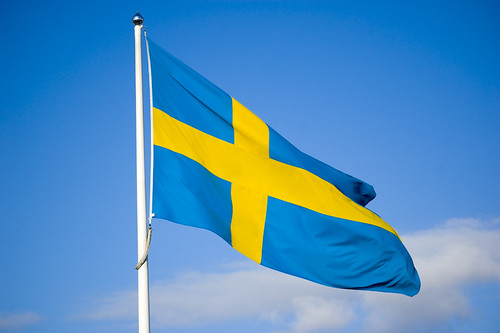


Something happened in Sweden recently that would be nearly unthinkable in Canada.
There was a substantive public discourse about the tension between Indigenous rights, the broader public interest, and the state’s jurisdiction, in prominent newspapers and on television.
Ebba Busch, Deputy Prime Minister of Sweden, stood at a press conference in Luleå and argued that reindeer herding should no longer be classified as a riksintresse, a formal national interest designation that grants legal protection in land-use planning. She proposed that reindeer stocks should be cut and subsidies re-allocated to other cultural programs in order to ease tensions between competing land-use interests in northern Sweden. Her reasoning: reindeer herding affects very large areas of Sweden’s land mass but carries limited economic significance.
The response was immediate. Indigenous Sámi groups called it election propaganda. The chairman of Girjas Sámi village published a rebuttal arguing that Sámi rights to hunt and fish are grounded in ancient tradition, and that her party’s framing mischaracterizes those rights as economic interest rather than constitutionally recognized Indigenous rights. The Swedish public broadcaster’s own reporter called the debate “a hornet’s nest“.
And yet the debate actually took place. On the nightly news, no less.
Deputy Prime Minister Busch made a substantive argument about how she thinks the state should weigh competing interests in its northern regions, with her reasoning stated plainly, and Sámi leaders answered in kind. That is democratic governance.
Canada’s political class has spent decades avoiding exactly this kind of clarity and honest intellectual engagement. It has been sacrificed at the altar of conflict avoidance and by the acceptance of canned platitudes carefully crafted to say precisely nothing at all.
Sweden ranks fourth in the world on the Economist Intelligence Unit’s Democracy Index, with a near perfect score of 9.4/10 for political culture. It also takes Indigenous rights seriously, having established an independent truth commission in 2020 to study historical abuses against the Sámi.
And yet Sweden’s Supreme Administrative Court upheld the government’s decision in June 2024 to grant an iron ore mining concession at Kallak in northern Lapland, despite contentious opposition and legal arguments that insufficient consultation had violated Sámi’s rights to free, prior, and informed consent. Now, its Deputy Prime Minister is arguing publicly that the state must regain clearer authority to make decisions across its entire territory, and that the interests of reindeer herding cannot be allowed to dominate and block decision making processes as they do today.
Sadly, Canada does not seem to take lessons from more mature nations. Or any lessons, really. Our politicians are so afraid of “third rail” issues and controversy that they avoid any hint of actually addressing real problems in favour of performative announcements, repeated endlessly with no attempt to actually perform actions.


