Quotulatiousness

February 5, 2019

Macron’s desperate efforts to keep the “European Project” on life-support

Filed under: Economics, Europe, France, Government, Politics — Tags: , , , , — Nicholas @ 03:00

Justin Raimondo on the plight French President Emmanuel Macron is facing:

The EU was a joint project of Euro-intellectuals who wanted a super-socialist State and were afraid Europeans might turn away from “Europe.” They sought to create an ersatz Euro-nationalism that has still only caught on among deracinated yuppies and oligarchs, if anyone at all. What they wanted and still want is what every true state has – an army. Which Macron has been agitating about for some time now. He doesn’t want to persuade Italy and Poland and Hungary to take more refugees – he wants to force them. Even more, he wants a reliable force to crush domestic protests, one that is unlikely to sympathize with the protesters.

Protests are everywhere: the media loves to cover them provided it’s the right cause – and one of the qualifying requirements of coverage should be drama. One would think therefore that the most recent and most violent would attract the media. Not so! We hear nothing about the twelve-week riots that have shaken the Macronist regime to its foundations.

But as the so-called Yellow Vests run roughshod in France – and all over the self-proclaimed “anti-nationalist” Macron – their origins, their ideology, their story remains untold.

French President Macron, a fanatic environmentalist, decided to revise the fuel tax code so that the small urban cars beloved by his circle had their tax reduced, while fuel for trucks and more industrial uses went up as much as 30%. It was a deliberate insult to the rural working poor who must drive long distances.

Macron went out of his way to convey his contempt for the rural voters who did not vote for him. The original reduction was actually intended for long-distance fuel, but Macron changed it around at the last minute to punish this use.

The French “Deplorables” reacted swiftly and not with the usual threat to strike: they simply started an insurrection. No preliminaries. They call themselves Yellow Vests referencing the safety vests required by French law of all motorists to signal emergency: yes, they declare: there IS an emergency going on!

February 2, 2019

Remy: Better Now?

Filed under: Economics, Humour, Politics — Tags: , , — Nicholas @ 06:00

ReasonTV
Published on 1 Feb 2019

Promised an improved way of life, Remy does everything he can to believe in a new ideology – except the math.

Written and performed by Remy. Video produced by Austin Bragg. Music tracks and mastering by Ben Karlstrom.

Reason is the planet’s leading source of news, politics, and culture from a libertarian perspective. Go to reason.com for a point of view you won’t get from legacy media and old left-right opinion magazines.

—————-

LYRICS
Listened to those leaders so intently
Those Che Guevara shirts all seemed so trendy
Thought that things would be so good and friendly
So why’m I eating my neighbor’s dog Benji?

Twenty million killed, sure, that’s stuff I don’t like
But I could stay on Momma’s plan for the rest of my life
A guaranteed job digging ditches? Well what’s not to like?
It’s failed miserably each time so trying again seemed wise

Now I’m looting, looting, looting, looting
Grabbing wieners like I’m Kevin Spacey
Told a crowd “we need free markets instead”
Now my neck is no longer attached to my head

They promised things would all be better now, better now
If pure equality was finally found, finally found
Now we’re all grocery shopping at the pound, at the pound
Said that we’d have everything
Now we don’t have anything
Whoa…

How much plasma are they gonna take?
Before I finally have enough to trade?
For toilet paper or a rodent steak?
I keep on looking back on better days

They promised things would all be better now, better now
If free expression it was not allowed, not allowed
But I just caught my Roomba texting Mao
Said that we’d have everything
Now we don’t have anything

They promised things would all be better now, better now
If men with guns took farmers’ land and plow, land and plow
Now it’s another night of Rat Kung Pao, Rat Kung Pao
Said that we’d have everything
Now we don’t have anything

They promised things would all be better now, better now
If we just nationalized oil in the ground, in the ground
Now somehow gasoline can not be found, not be found
Said that we’d have everything
Now we don’t have anything

January 18, 2019

Rise of Fascism and Mussolini’s March on Rome I Between 2 Wars I 1922 Part 1 of 2

Filed under: Europe, History, Italy — Tags: , , , , — Nicholas @ 04:00

TimeGhost History
Published on 17 Jan 2019

In 1922, when Italy is in political chaos, reeling from the effects of The Great War and labour unrest, one man makes a violent grab for power. He is the prominent journalist and leader of a new radical, reactionary, oppressive, and murderous movement. He is Benito Amilcare Andrea Mussolini and he calls his movement Fascism.

Join us on Patreon: https://www.patreon.com/TimeGhostHistory

Hosted by: Indy Neidell
Directed by: Spartacus Olsson
Written by: Spartacus Olsson and Rune Væver Hartvig
Produced by: Astrid Deinhard
Executive Producers: Bodo Rittenauer, Astrid Deinhard, Indy Neidell, Spartacus Olsson
Edited by Wieke Kapteijns
Community Manager: Joram Appel

Thumbnail depicts Benito Mussolini in 1919 colorised by Olga Shirnina aka Klimbim.

Colorized Pictures by Olga Shirnina and Norman Stewart

Olga’s pictures: https://klimbim2014.wordpress.com
Norman’s pictures https://oldtimesincolor.blogspot.com/

Video Archive by Screenocean/Reuters http://www.screenocean.com

A TimeGhost chronological documentary produced by OnLion Entertainment GmbH

January 16, 2019

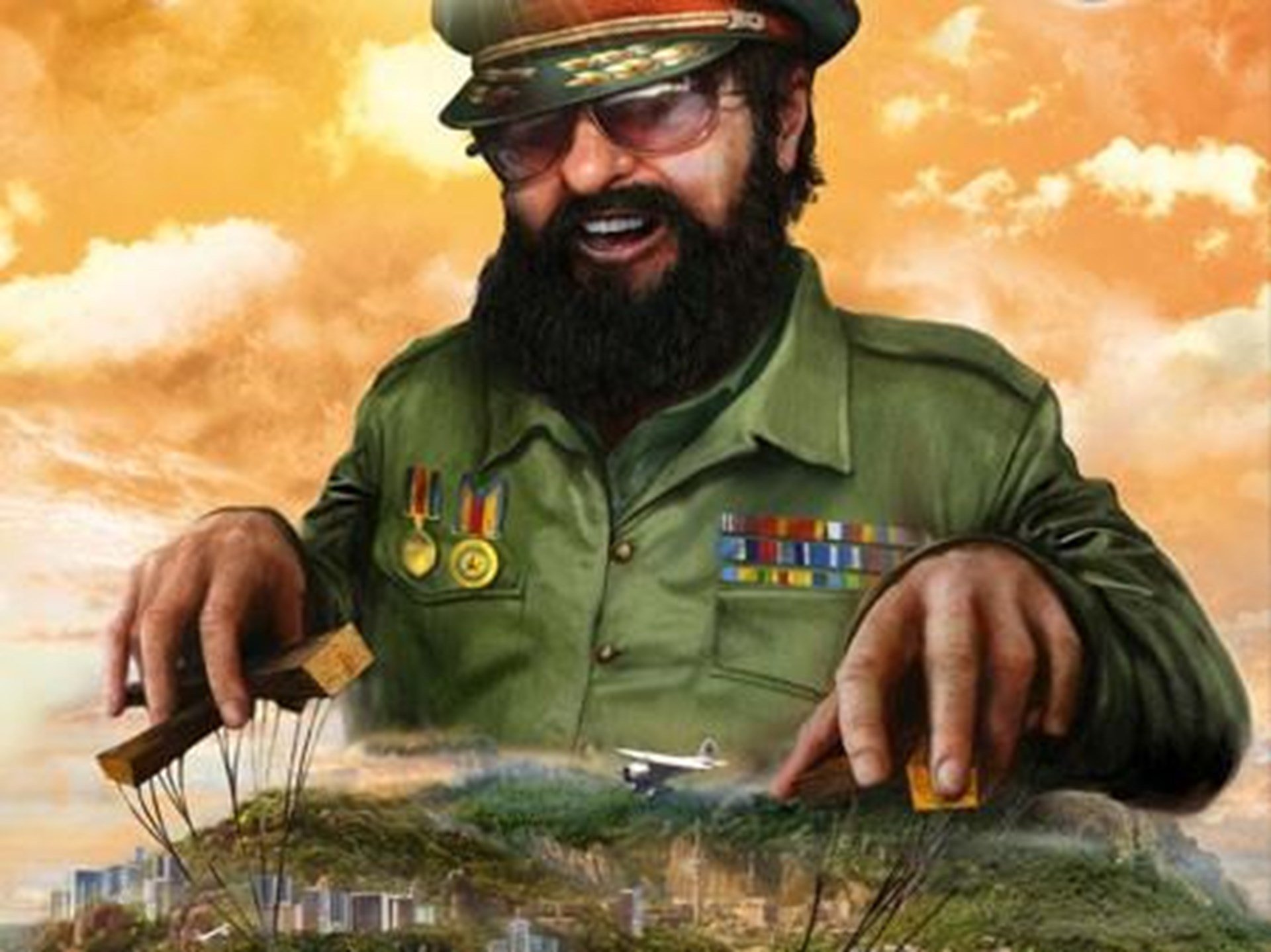
Tropico, the game for budding central planners

Filed under: Economics, Gaming — Tags: , , , — Nicholas @ 05:00

At FEE, Ong Jia Yi Justin looks at the video game Tropico and what it can show about real world economics:

In Tropico 5, you are El Presidente — the leader of a Caribbean island that is a semi-democratic banana republic. Your primary objective is to preserve your rule by micromanaging your country’s economy to appease your citizens, the Tropicans. If they are dissatisfied with your rule, they can vote you out in the next elections or stage a coup d’état, costing you the game.

First released in 2001, the city-building and management game has sold millions of copies worldwide, and the sixth installment is scheduled for release later in 2019. The game was even banned in Thailand due to concerns it would stir social unrest. In a hilarious response, the game developers included a mission in its DLC (downloadable content) to steal away tourists from Thailand.

Tropico 5 presents an engaging platform for players to craft their socialist paradise and examine the mechanics of socialist economies. Apart from sandy beaches and skyscrapers, Tropico 5’s appeal arises from loading players with a swarm of decisions to make, each with certain trade-offs that must be accounted for. Since most of us formulate our ideals from an armchair perspective, Tropico 5 delivers a much-needed dose of reality and numerous lessons on economics for its players to reflect upon.

Pineapples, Cotton, or Death

The first focus when you start up the Tropico 5 game is managing your agricultural sector. Players must choose between constructing two types of farms. Farms producing food crops for local consumption, such as bananas and pineapples, boost your approval rating but don’t add income to your budget. Conversely, farms growing economic crops such as tobacco and cotton bring a healthy income stream but don’t feed your people.

Some players prefer to amass large sums of wealth in the early game through cotton exports and then focus on food production later, hopefully before too many people starve to death. Other players risk bankruptcy in their attempt to bring their popularity to a safe level by spamming pineapple plantations before transitioning to economic crops later. Either way, you’re stuck between a rock and a hard place.

January 13, 2019

QotD: The Long March

Filed under: History, Politics, Quotations, USA — Tags: , , — Nicholas @ 01:00

… halfway through [our] walk, older son said “you know, this is what we evolved to do. We’re not faster than most of our prey, and we don’t have the claws and teeth to bring them down. What we are is relentless. We would follow herds day and and night, not letting them rest, until the weak and the elderly fell behind, and then we had them. Hunting bands survived this way. This is what they did.”

Which brings us to the long march through the institutions. In a way when the left started its long march through the institutions they were just practicing ancient hunting practices, with Western Civilization as its prey.

Now their long march might or might not come to fruition, but you can’t avoid realizing that for people whose ideas are at best silly and at worst downright harmful, they’ve achieved remarkable success by taking over what they could and grooming their kids to take over more.

It is not their fault that the fields they’ve completely taken over, like academia, literature, art and news reporting are escaping their grasp. Yes, sure, the fact that all these fields are in major crisis IS their fault, or at least the fault of their philosophy which, in contact in reality, doesn’t hold up and tends to make people make decisions (and national policy too!) based on the reality inside their heads, implanted there by the cult of Marx. But the thing is, without new technology to allow us to escape their grasp, we’d be stuck with the crisis AND with leftist control.

However, again, for a philosophy whose proudest achievement is the killing of a hundred million human beings (and that’s lowballing it, as Colonel Kratman says) to take over those many institutions and not to be laughed out of polite (or worse, impolite) society is a testimony to the effectiveness of the long march.

And it has been long. They’ve been at it for close on a hundred years.

Sarah Hoyt, “The Long March”, According to Hoyt, 2015-12-20.

December 11, 2018

Criticizing the left, from the left

Filed under: Britain, History, Media, Politics — Tags: , , , — Nicholas @ 03:00

In Quillette, Matt Johnson discusses the phenomenon of devoted leftists being willing to criticize their own “side”, and includes a section on George Orwell’s willingness to critique leftists while still being a fully dedicated leftist himself:

Orwell’s press card portrait, 1943

Bruckner’s remark about “Stalinist blackmail” calls to mind a writer whose commitment to both left-wing politics and anti-totalitarianism never wavered in the face of threats and coercion from the Left.

In the summer of 2003, the BBC aired George Orwell: A Life in Pictures. About halfway through the documentary, Orwell (played by Chris Langham) says, “Every line of serious work that I have written since 1936 has been written, directly or indirectly, against totalitarianism.” This is a line from one of Orwell’s best-known essays, published in 1946, “Why I Write.” But astute viewers may have noticed that something was missing from the reference — eight words that the producers decided to leave out.

Here’s the original sentence: “Every line of serious work that I have written since 1936 has been written, directly or indirectly, against totalitarianism and for democratic socialism, as I understand it.” After the sentence abruptly ends with the word “totalitarianism” in the documentary, Langham takes a long drag on his cigarette before jumping to a different passage of the essay. It was almost as if the producers wanted to accentuate the omission, taunting viewers with their own version of Orwell — one who didn’t have the courage to disclose his true beliefs.

There’s something simultaneously fitting and perverse about the manipulation of Orwell’s words more than half a century after his death (by the BBC, no less). Orwell’s anxiety about the falsification of history is one of the major themes of Nineteen Eighty-Four — as well as much of his other writing and later correspondence — and this is what the producers of the documentary were guilty of doing when they amputated one of his firmest ideological declarations and turned it into a much more palatable and anodyne comment on totalitarianism. No matter how badly some people want Orwell to be a polished and uncontroversial product for mass consumption, he was still the man who wrote these words as he speculated about the possibility of violent revolution in England: “I dare say the London gutters will have to run with blood. All right, let them, if it is necessary.”

Even when Orwell wasn’t in a mood that had him impatiently looking forward to the day “when the red militias are billeted in the Ritz,” he was always honest about his political beliefs. On November 13, 1945, Katharine Stewart-Murray, the Duchess of Atholl, wrote to Orwell asking if he would speak on behalf of an anti-communist organization called the League for European Freedom. This was a month after the publication of Animal Farm — a time when Orwell was worried that the book would be misinterpreted as a broadside against socialism instead of a narrower attack on Stalinism.

Given this context, it isn’t surprising that Orwell declined the duchess’s offer: “Certainly what is said on your platforms is more truthful than the lying propaganda to be found in most of the press, but I cannot associate myself with an essentially Conservative body which claims to defend democracy in Europe but has nothing to say about British imperialism.” Even though Orwell was a staunch anti-communist, his essential political convictions remained immovable: “I belong to the Left and must work inside it, much as I hate Russian totalitarianism and its poisonous influence in this country.”

Orwell was a socialist until the end of his life. For many people, this complicates his legacy and detracts from his pristine image as the twentieth century’s foremost foe of totalitarianism — an image that has been appropriated again and again over the past 70 years.

[…]

But as Orwell was at pains to demonstrate (especially after the publication of Animal Farm), he would have firmly rejected the Right’s attempts to appropriate his legacy. While Orwell is rightly celebrated for his refusal to accept the dogmas of the Left when he was under tremendous pressure to do so, his independence of mind is only one of the reasons why he remains so relevant today. His ability to maintain that independence without sacrificing his most fundamental principles may be even more important.

September 29, 2018

‘We Are Always on the Verge of Chaos:’ The PJ O’Rourke Interview

Filed under: Books, Economics, Liberty, Politics — Tags: , , , — Nicholas @ 04:00

ReasonTV
Published on 28 Sep 2018
The libertarian humorist talks about his new book, how to drink in war zones, and why the Chinese are more American than most U.S. citizens.

Reason is the planet’s leading source of news, politics, and culture from a libertarian perspective. Go to reason.com for a point of view you won’t get from legacy media and old left-right opinion magazines.

—————-

For the last 45 years, no writer has taken a bigger blowtorch to the sacred cows of American life than libertarian humorist P.J. O’Rourke.

As a writer at National Lampoon in the 1970s, he co-authored best-selling parodies of high school yearbooks and Sunday newspapers. For Rolling Stone, The Atlantic, and other publications, O’Rourke traveled to war zones and other disaster areas, chronicling the folly of military and economic intervention. In 1991, he came out with Parliament of Whores, which explained why politicians should be the last people to have any power. Subtitled “A Lone Humorist Attempts to Explain the Entire U.S. Government,” this international bestseller probably minted more libertarians than any book since Free to Choose or Atlas Shrugged. More recently, O’Rourke published a critical history of his own Baby Boomer generation and How The Hell Did This Happen?, a richly reported account of Donald Trump’s unexpected 2016 presidential victory.

O’Rourke’s new book, None of My Business, explains “why he’s not rich and neither are you.” It’s partly the result of hanging out with wealthy money managers and businessmen and what they’ve taught him over the years about creating meaning and value in an ever richer and crazier world. It covers everything from social media to learning how to drink in war zones to why the Chinese may be more American than U.S. citizens. He also explains why even though he doesn’t understand or like a lot of things about modern technology, he doesn’t fear Amazon or Google, especially compared to people who are calling for Socialism 2.0.

I sat down with O’Rourke to talk about all that, the good and bad of Donald Trump, and why being an “old white man” just isn’t what it used to be (and why he’s OK with that).

Edited by Ian Keyser. Cameras by Jim Epstein and Mark McDaniel. Intro by Todd Krainin.

Please Listen Carefully” by Jahzzar used under a Creative Commons license.

August 22, 2018

That’s not a minimum wage increase. This is a minimum wage increase!

Filed under: Americas, Economics, Government — Tags: , , — Nicholas @ 03:00

Fifteen dollars as a minimum wage? Pffffft. Venezuela just hiked their minimum wage to $30*. Your move, capitalist pigs.

We should indeed praise the success of Bolivarian Socialism in Venezuela. For they’ve been able to announce a 60 fold increase in the minimum wage. Isn’t that a massive boost to the fight against inequality, a proof that this state control of the economy raises the living standards of the poor? No, truly, we’re told, repeatedly, that raising the minimum wage is a necessary and important part of that fight against the drear circumstances facing the poor. The US minimum wage of $7.25 an hour, just think how rich we’d all be if that were $435 an hour. We could all work just the one hour a week and live well. The British minimum wage, raise it to £400 or so an hour. Why not? After all, Venezuela’s application of proper socialist principles has shown us what is possible.

* Spoiler: that’s $30 per month, not per hour. But it’s a vast increase over the previous minimum wage, no?

August 5, 2018

Poverty

Filed under: Economics, USA — Tags: , , , — Nicholas @ 03:00

Walter Williams on how most American can and do avoid falling into poverty:

Poverty is no mystery, and it’s easily avoidable. The poverty line that the Census Bureau used in 2016 for a single person was an income of $12,486 that year. For a two-person household, it was $16,072, and for a four-person household, it was $24,755. To beat those poverty thresholds is fairly simple. Here’s the road map: Complete high school; get a job, any kind of a job; get married before having children; and be a law-abiding citizen.

How about some numbers? A single person taking a minimum wage job would earn an annual income of $15,080. A married couple would earn $30,160. By the way, according to the Bureau of Labor Statistics, less than 4 percent of hourly workers in 2016 were paid the minimum wage. That means that over 96 percent of workers earned more than the minimum wage. Not surprising is the fact that among both black and white married couples, the poverty rate is in the single digits. Most poverty is in female-headed households.

Socialist Sen. Bernie Sanders’ presidential campaign garnered considerable appeal from millennials. These young people see socialism as superior to free market capitalism. Capitalism doesn’t do well in popularity polls, despite the fact that it has eliminated many of mankind’s worst problems, such as pestilence and gross hunger and poverty. One of the reasons is that capitalism is always evaluated against the nonexistent, non-realizable utopias of socialism or communism. Any earthly system, when compared with a utopia, will not fare well. Indeed, socialism sounds good but, when practiced, leads to disaster. Those disasters have been experienced in countries such as the USSR, China, most African nations and, most recently, Venezuela. When these disasters are pointed out, the excuse is inadequacies of socialist leaders rather than socialism itself. For the ordinary person, free market capitalism, with all of its warts, is superior to any system yet devised to deal with our everyday needs and desires.

A quirk of the US statistics is that the poverty rate is measured without taking into account any of the various welfare measures that other countries would include (for example, the EITC, Section 8 housing vouchers, Medicaid, or SNAP (food stamps)). So the people whose relative income is raised above the poverty threshhold are still counted as being below it. This results in a much higher number for people living below the poverty line than actually exist. See for example, here or here.

July 28, 2018

“[S]ocialism is the leading man-made cause of death and misery in human existence”

Filed under: Economics, History, Media, Politics, USA — Tags: , , , — Nicholas @ 05:00

David Harsanyi isn’t cool with people trying to make socialism cool again:

On the same day that Venezuela’s “democratically” elected socialist president, Nicolas Maduro, whose once-wealthy nation now has citizens foraging for food, announced he was lopping five zeros off the country’s currency to create a “stable financial and monetary system,” Meghan McCain of The View was the target of internet-wide condemnation for having stated some obvious truths about collectivism.

During the same week we learned that the democratic socialist president of Nicaragua, Daniel Ortega, is accused of massacring hundreds of protesters whose economic futures have been decimated by his economic policies, Soledad O’Brien and writers at outlets ranging from GQ, to BuzzFeed, to the Daily Beast were telling McCain to cool her jets.

In truth, McCain was being far too calm. After all, socialism is the leading man-made cause of death and misery in human existence. Whether implemented by a mob or a single strongman, collectivism is a poverty generator, an attack on human dignity and a destroyer of individual rights.

It’s true that not all socialism ends in the tyranny of Leninism or Stalinism or Maoism or Castroism or Ba’athism or Chavezism or the Khmer Rouge — only most of it does. And no, New York primary winner Alexandria Ocasio-Cortez doesn’t intend to set up gulags in Alaska. Most so-called democratic socialists — the qualifier affixed to denote that they live in a democratic system and have no choice but to ask for votes — aren’t consciously or explicitly endorsing violence or tyranny. But when they adopt the term “socialism” and the ideas associated with it, they deserve to be treated with the kind of contempt and derision that all those adopting authoritarian philosophies deserve.

But look: Norway!

Socialism is perhaps the only ideology that Americans are asked to judge solely based on its piddling “successes.” Don’t you dare mention Albania or Algeria or Angola or Burma or Congo or Cuba or Ethiopia or Laos or Somalia or Vietnam or Yemen or, well, any other of the dozens of other inconvenient places socialism has been tried. Not when there are a handful of Scandinavian countries operating generous welfare-state programs propped up by underlying vibrant capitalism and natural resources.

Of course, socialism exists on a spectrum, and even if we accept that the Nordic social-program experiments are the most benign iteration of collectivism, they are certainly not the only version. Pretending otherwise would be like saying, “The police state of Singapore is more successful than Denmark. Let’s give it a spin.”

June 17, 2018

The German People Oppose the Right Wing Extremists I BETWEEN 2 WARS I 1920 Part 2 of 4

Filed under: Europe, Germany, History, Politics — Tags: , , , , — Nicholas @ 04:00

TimeGhost History
Published on 16 Jun 2018

Germany is usually associated with the rise of right wing extremism in the interwar years, but in 1920 almost the entire German citizenry unites to stop the reactionary forces from destroying their brand new democracy during the Lüttwitz Kapp Putsch. Meanwhile in Munich Adolf Hitler makes his next move to create the Nazi movement, while Lenin prepares the International socialist revolution in Russia.

NSDAP 25 point program: https://en.wikipedia.org/wiki/National_Socialist_Program

Comintern Twenty-one Conditions: https://en.wikipedia.org/wiki/Twenty-one_Conditions

Join us on Patreon: https://www.patreon.com/TimeGhostHistory

Hosted by: Indy Neidell
Written and directed by: Spartacus Olsson
Produced by: Astrid Deinhard
Executive Producers: Bodo Rittenauer, Astrid Deinhard, Indy Neidell, Spartacus Olsson

A TimeGhost chronological documentary produced by OnLion Entertainment GmbH

I’ve also created a group on MeWe for fans of TimeGhost – http://mewe.com/join/fans_of_timeghost.

June 6, 2018

How to become Prime Minister of Spain without the pesky need for voter approval

Filed under: Europe, Government, Politics — Tags: , , , , — Nicholas @ 05:00

Tim Black explains how the new Spanish leader got there without ever winning an election:

There is a big, fat, blindingly obvious problem with Spain’s new prime minister, Pedro Sánchez: no one voted for him, or indeed the Socialist Party (PSOE) of which he is leader.

In fact, 46-year-old Sánchez has never been overly familiar with the electorate. He entered congress in 2009 as an internal Socialist Party replacement because a lawmaker was leaving his seat early. He then promptly lost this seat in the 2011 General Election. Fortunately, in 2013, another Socialist congressional deputy left her seat early, meaning that Sánchez could once more return to the political fray, bypassing the electorate en route. Improbably, he was successfully nominated, thanks to the backing of PSOE grandees, as the Socialists’ general secretary in 2014, leading them to their worst-ever result in the 2015 General Elections. A few months later, the PSOE got rid of him as leader, and Sánchez, in turn, rid himself of congressional responsibilities by quitting his seat. His reason, it seems, was to have time to concentrate on becoming the PSOE leader again. Which is what happened.

His triumph this past week, therefore, was not built on anything resembling popular support. Rather, it was a feat of constitutional chutzpah. It began last week, when the corruption scandal that has long dogged Mariano Rajoy, then prime minister, and leader of the governing Popular Party, came to a momentary head (the so-called ‘Gurtel’ case is ongoing), with the jailing of one of the PP’s former treasurers for 33 years for fraud and money-laundering. The PP was itself also fined for benefitting from the kickbacks for public contracts. Sánchez saw his chance, and proposed a motion of no confidence in Rajoy, a move that under Spanish constitutional law results, if successful, in the replacement of the subject of the motion by the proposer. Congress duly passed the motion and that was that – for the first time in Spanish political history, a sitting prime minister was deposed through a vote of no confidence. Sánchez, with the Socialists in tow, had ascended to power.

But that big, fat fly in the ointment of Sánchez and the Socialists’ success won’t go away. For a start, you can see the absence of any public mandate writ large in the congressional maths. As it stands (following the 2015 General Election), Rajoy’s PP remains the largest single party, with 134 members of the 350-strong Congress of Deputies, while Sánchez and the now ruling socialists have only 84. To be able to govern without going to the electorate, Sánchez will have to strike deals with the seven other parties and regional representatives, including, of course, Catalonia’s independence-demanding cohort. Which means concessions, deals, compromises, all rich in cynicicsm and opportunism.

April 26, 2018

George Orwell and 1984: How Freedom Dies

Filed under: Books, History, Liberty, Politics — Tags: , , , — Nicholas @ 02:00

Academy of Ideas
Published on 30 Dec 2017

In this video we explore why Orwell believed totalitarianism was a great risk in the modern West, contrasting his ideas with those of Aldous Huxley, author of Brave New World.
===
Get the transcript ►
https://academyofideas.com/2017/12/george-orwell-1984-how-freedom-dies/

March 16, 2018

QotD: Achieving socialist nirvana

Filed under: Americas, Economics, Government, Quotations — Tags: , , , , — Nicholas @ 01:00

The evidence is in. Again. Socialism and government statism is the only way to eliminate income inequality.

As reported in Reuters, a 3 university study of conditions in Venezuela has shown that 90% of citizens now live in poverty. But socialism can only achieve so much. The other 10% must suffer in abject affluence so that the 90% can have income equality.

That in Venezuela income equality necessitates poverty is a design feature of the policy and not a fault.

Venezuela has also demonstrated that socialism can not only eliminate income inequality, it can also eliminate obesity. There was no need to deploying a sugar tax, when the income equalization policies achieved the same ends. You see, Venezuelans reported losing an average of 11 kilograms in 2017. This was on top of losing an average of 8 kilograms in 2016.

Viva Venezuela. Viva Chavez. Viva Maduro.

“I Am Spartacus”, “Nirvana – income equality and a truly fair society”, Catallaxy Files, 2018-02-23.

March 14, 2018

The History of Sci Fi – H.G. Wells – Extra Sci Fi – #2

Filed under: Books, Britain, Gaming, History — Tags: , , , — Nicholas @ 04:00

Extra Credits
Published on 13 Mar 2018

H.G. Wells brought his socialist perspective to science fiction, creating great works that really ask us to look at where the human condition will take us hundreds of years from now.

« Newer PostsOlder Posts »

Powered by WordPress