Drachinifel
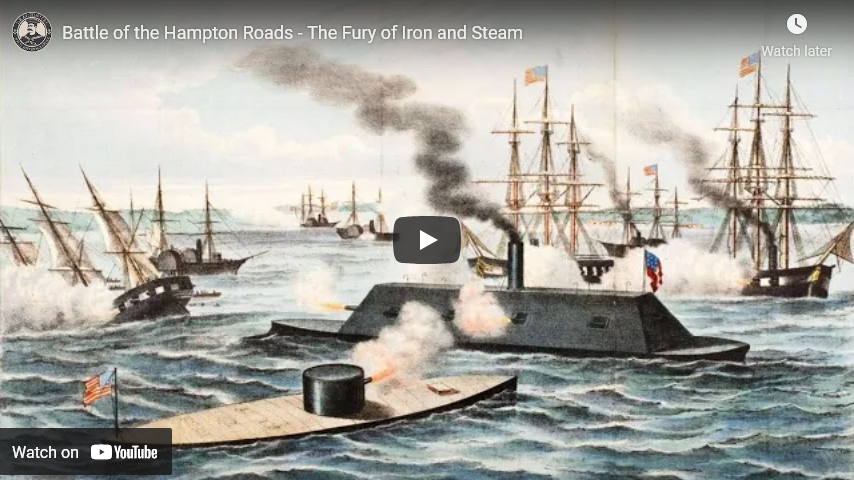
Published 20 Feb 2019The first ironclad vs ironclad battle is reviewed, along with the origins of the ships and some of the myths and legends about this historic battle.
Want to support the channel? – https://www.patreon.com/Drachinifel
Want to talk about ships? https://discord.gg/TYu88mt
September 24, 2021
Battle of the Hampton Roads – The Fury of Iron and Steam
September 17, 2021
The Real-Life Nazi Pirates – WW2 Special
World War Two
Published 16 Sep 2021There is more to war on merchant shipping than U-Boats and the Battle of the Atlantic. Raiders disguised as innocent traders also play the role of privateers; stalking vessels, approaching with a false flag, and then striking before anyone can react. Here’s the story of one: Kormoran.
(more…)
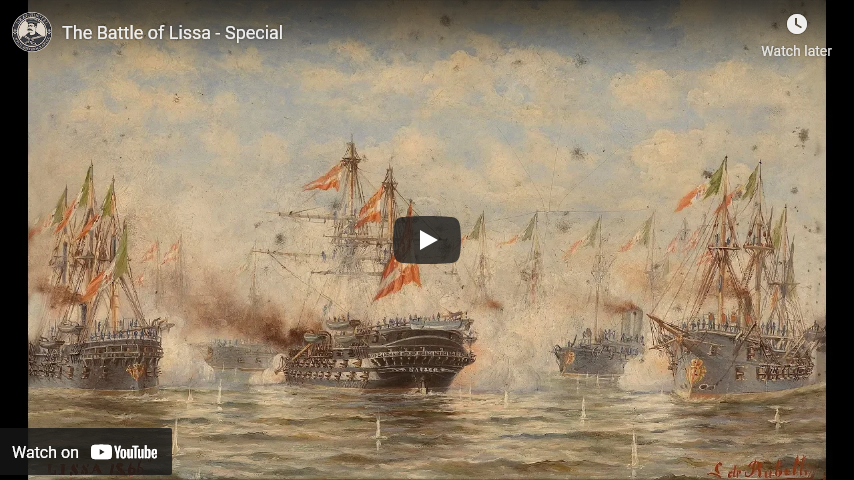
The Battle of Lissa, 1866
Drachinifel
Published 26 Sep 2018One of the most unintentionally hilarious battles of the 19th century is the subject of today’s special video.
“Bezeuge Mich!” – Admiral Tegethoff 1866 (probably)
September 15, 2021
Look at Life – Sea Horses – Tugboats from the 1960s
PauliosVids
Published 24 Nov 2018[The version of this film I originally scheduled has been taken down, but included a much more informative description, which I’m retaining below:]
capspread
Published 11 Oct 2020#LookatLife #Tugboats #MerchantNavy #QueenMary #QueenElizabeth
Look at Life – Sea Horses – Tugboats from the 1960sThe video is the latest Look at Life, Volume One – Transport called Sea Horses – Little Tugs, without which any big port would come to a standstill, are featured made in May 1962.
Several Tugs are featured in the video along with several ships, including Ocean Liners. Those with names that are recognisable are below. There are others which are not shown below because their names are not known.
Tugboats
William Ryan
Built 1908 – Re-engined 1956 – Sold in 2000 for £1 as a “non-commercial worker”. In 2005, spotted at Hoo Marina converted to a houseboat. In 2009 for sale priced £33k In 2010 – Engine Removed.Sun.X
Built in 1920 in Selby in Yorkshire. 196grt. Disposed 1969 and scrapped in 1969.Effleton Hall
Paddlewheel Tugboat built in 1914. In service until 1967 where she was sold to shipbreakers for scrap. She was left sitting on a mudbank in Dunston. As part of the scrapping process her wooden afterdeck and interior were destroyed by fire prior to being broken up. The tug remained there for 2 years, deck frames warped, wood burned or rotted, hull part flooded and engines rusty but intact. But she was bought by an American and rebuilt on the River Tyne during 1969, modified to enable her to cross the Atlantic Ocean under her own steam, requiring fitting of modern navigational aids, radio, an enclosed wheelhouse and conversion from coal to diesel oil firing. She set sail on 18 September 1969 and arrived late March 1970 at San Francisco. She was donated to the National Park Service in 1979 and is now berthed at Hyde Street Pier, San Francisco. She has been restored to resemble her condition post-War 1946. 166grt – Length – 100 feet; Beam 21 feet; Depth of hold 10.8 feet.Gladstone – Registered at Liverpool
Formby – Built 1951 Registered at Liverpool – 237grt Steam Engine
Canada – Registered at Liverpool
Marinia – Ocean going Tugboat
Poolzee – Dutch Smit Tug – Built 1942
Hestor – Could be Dutch
Ocean Liners
Queen Mary – 81,000 grt
In service between 1936 and 1967. She is now permanently moored as a tourist attraction, hotel, museum and event facility in Long Beach California.Queen Elizabeth – Largest Ocean Liner at the time at 83,000 grt. In service between 1939 and 1968. Caught fire in Hong Kong in 1972 and completely destroyed.
Cargo Ships
Northern Clipper – No info
Toula – Built in 1937 as Westralia as a passenger-cargo ship. Renamed Toula in 1959 and in 1970 broken up in Shanghai.
Allegrity – Built 1945 as a coastal tanker. In 1946 renamed Sobat. In 1951 renamed Allegrity and purchased by FT Everard. On 22 December 1961 she capsized after grounding near Falmouth. She was a total loss
798grt Length – 183 feet; Breadth – 28 feet; Depth – 13 feet
Speed – 9 knots.
September 10, 2021
The Channel Dash / Operation Cerberus — How to win through refuge in audacity
Drachinifel
Published 9 Jan 2019Today we look at the Channel Dash, also known as one of the few times Hitler was right, the British were asleep and the Germans succeeded in spite of thinking they were all doomed. An operation made up purely of rolling natural 1’s and 20’s.
August 31, 2021
Isambard Kingdom Brunel: The Genius of the Industrial Revolution
Biographics
Published 23 Mar 2020Check out Brilliant: https://brilliant.org/biographics
Check out Business Blaze: https://www.youtube.com/channel/UCYY5…
This video is #sponsored by Brilliant.
TopTenz Properties
Our companion website for more: http://biographics.org
Our sister channel TopTenz: https://www.youtube.com/channel/UCQ-h…
Our Newest Channel about Interesting Places: https://studio.youtube.com/channel/UC…Credits:
Host – Simon Whistler
Author – Morris M.
Producer – Jennifer Da Silva
Executive Producer – Shell HarrisBusiness inquiries to biographics.email@gmail.com
Source/Further reading:
Oxford National Dictionary of Biography: https://www.oxforddnb.com/view/10.109…
Interesting podcast on his life: https://www.bbc.co.uk/programmes/b04n…
Britannica: https://www.britannica.com/biography/…
History Today: https://www.historytoday.com/archive/…
The Thames Tunnel: https://www.smithsonianmag.com/histor…
The atmospheric railway: https://www.theguardian.com/science/t…
SS Great Britain accident: https://www.ssgreatbritain.org/about-…
August 16, 2021
HMS Glamorgan – Computer Ship Of The Future (1967)
British Pathé
Published 13 Apr 2014English Channel.
Top shots of the guided missile destroyer
battleshipHMS Glamorgan at sea. In the control/computer room a man pulls out old-fashioned computer records [circuit packs, I believe] from a large control cupboard; officers on the bridge look at dials and through binoculars. Various shots in steering, control and engine rooms as the ship moves along. On the flight deck sailors play hockey while others watch and cheer them on. A navigator on deck looks through a sextant while another officer makes notes. A helicopter is moved from a hanger out onto the deck and prepared for takeoff; firemen in asbestos suits and helmets stand by with a hose; the chopper takes off.Three young men play guitars and banjos before a television camera in a tiny studio; we hear that the ship has its own closed circuit TV station; good shots of the filming; tape recording machines going round; picture being adjusted. Men in a mess room watch the performance on the television while they have a pint. Several shots of the sailors getting their rum rations. Various shots in the kitchens show food being prepared and served into the sailors mess tins; good canteen and catering shots (most of the food looks pretty unappetising) [the person writing the description clearly has no idea just how unappetizing British food could be in the 1960s … this looks well above average for the time]. In the sick bay a sailor gets a shot in the arm from the Medical Officer.
Several shots of the radar antennae on the ship and the men looking at the radar scanner screens in the control room. Men in protective gloves and hoods load shells in the gun turret; M/Ss of the main guns on the ship being fired. Several shots show the countdown for Seaslug missiles to be fired; men at control panels look at dials and radar screens; an officer counts down into a microphone (mute). Complicated boards of buttons show the location of the missiles, intercut with shots of the missiles moving into position by electronic instruction. The missiles move into the launchers on deck and are fired; men watch their progress on a radar screen. Another launcher moves into position; L/S of the ship as the missiles are fired.
Note: on file is correspondence and information about HMS Glamorgan. Cuts exist – see separate record. FILM ID:419.04
A VIDEO FROM BRITISH PATHÉ. EXPLORE OUR ONLINE CHANNEL, BRITISH PATHÉ TV. IT’S FULL OF GREAT DOCUMENTARIES, FASCINATING INTERVIEWS, AND CLASSIC MOVIES. http://www.britishpathe.tv/
FOR LICENSING ENQUIRIES VISIT http://www.britishpathe.com/
British Pathé also represents the Reuters historical collection, which includes more than 136,000 items from the news agencies Gaumont Graphic (1910-1932), Empire News Bulletin (1926-1930), British Paramount (1931-1957), and Gaumont British (1934-1959), as well as Visnews content from 1957 to the end of 1984. All footage can be viewed on the British Pathé website. https://www.britishpathe.com/
August 1, 2021
Crown Colony class – Guide 144
Drachinifel
Published 28 Sep 2019The Crown Colony class cruisers of the Royal Navy, and many others, are today’s subject.
Want to support the channel? – https://www.patreon.com/Drachinifel
Want a shirt/mug/hoodie – https://shop.spreadshirt.com/drachini…
Want a medal? – https://www.etsy.com/uk/shop/Drachinifel
Want to talk about ships? https://discord.gg/TYu88mt
Want to get some books? www.amazon.co.uk/shop/drachinifel
Drydock Episodes in podcast format – https://soundcloud.com/user-21912004
July 23, 2021
‘Armoured’ and ‘Unarmoured’ Carriers – Survivability vs Strike Power
Drachinifel
Published 2 Jan 2019In which we try to unpick the somewhat thorny issue of armoured vs unarmoured flight decks in WW2 carrier design.
Want to support the channel? – https://www.patreon.com/Drachinifel
Want to talk about ships? https://discord.gg/TYu88mt
July 17, 2021
Look at Life – The Last Battleship – HMS Vanguard (1962)
capspread
Published 29 Nov 2020#LookatLife #HMSVanguard #RoyalNavy #Shipping #Battleship
The life and death of HMS Vanguard, and the uses to which her steel will be put.
Another Look at Life Documentary from Volume 2 – Military – The Last Battleship – HMS Vanguard made in 1962.
HMS Vanguard was a British fast battleship built during the Second World War & commissioned afterwards. She was the biggest and fastest of the Royal Navy’s battleships, the only ship of her class, and the last battleship to be built. Work on Vanguard was started and stopped several times during the war and her design was revised several times during her construction to reflect war experience. These stoppages and changes prevented her from being completed before the end of the war.
Vanguard‘s first task after completing her sea trial at the end of 1946 was, early the next year, to convey King George VI & his family on the first Royal Tour of South Africa by a reigning monarch. While refitting after her return, she was selected for another Royal Tour of Australia and New Zealand in 1948. This was cancelled due to King George’s declining health & Vanguard briefly became flagship of the Mediterranean Fleet in early 1949. After her return home in mid-1949, she became flagship of the Home Fleet Training Squadron. Throughout her career, the battleship usually served as the flagship of any unit to which she was assigned. During the early 1950s, Vanguard was involved in a number of training exercises with NATO forces. In 1953 she participated in Queen Elizabeth II’s Coronation Review. While she was refitting in 1955, the Admiralty announced that the ship was going to be put into reserve upon completion of the work. Vanguard was sold for scrap and was broken up beginning in 1960.
Vanguard had an overall length of 814 feet 4 inches (248.2 m), a beam of 107 feet 6 inches (32.8 m) & a draught of 36 feet (11 m) at deep load. She displaced 44,500 long tons (45,200 t) at standard load and 51,420 long tons (52,250 t) at deep load. The ship was significantly larger than her predecessors of the class, almost 50 feet (15.2 m) longer & displaced about 6,000 long tons (6,100 t) more than the older ships at deep load. Vanguard was overweight by some 2,200 long tons (2,200 t), which magnified the difference. The ship had a complete double bottom 5 feet (1.5 m) deep & she was divided into 27 main compartments by watertight bulkheads.
The King George V-class ships had been built with almost no sheer to the main deck forwards to allow ‘A’ turret to fire straight forward at zero elevation, resulting in those ships being wet forward. Vanguard was redesigned as a result of this experience, significant sheer & flare being added to the bow. The ship was well regarded as seaworthy, able to keep an even keel in rough seas. At full load, Vanguard had a metacentric height of 8.2 feet (2.5 m).
As a fleet flagship, her complement was 115 officers and 1,860 men in 1947. Air conditioning was provided for many of the ship’s control spaces, & asbestos insulation was provided on exposed areas of the ship’s sides, decks and bulkheads. Steam heating was provided for her armament, instruments, look-out positions & other equipment to make Vanguard suitable for operations in the Arctic. An Action Information Centre was fitted below the main armour deck with facilities to track aircraft & ships around Vanguard.
Vanguard was laid down on 2 October 1941 by John Brown and Company of Clydebank, Scotland. After the Japanese invasion of Malaya in December, the ship was given an A1 priority in the hope of finishing her by the end of 1944, and construction of the light cruiser HMS Bellerophon, as well as some merchant shipping, was halted to expedite the ship’s completion. This was unsuccessful, however, due to a shortage of skilled labour. As a result, it was not until 30 November 1944 that the ship was launched. Princess Elizabeth presided over this ceremony, the first ship she ever launched, and was presented with a diamond rose brooch to commemorate the event.
The end of hostilities following Japan’s surrender reduced the need for new warships, and consequently the ship was not commissioned until 12 May 1946. By this time, a total of £11,530,503, including £3,186,868 for the modernisation of the main armament, had been spent on producing Vanguard.
On 9 October 1959 the Admiralty announced that Vanguard would be scrapped, as she was considered obsolete and too expensive to maintain. She was decommissioned on 7 June 1960 & sold to BISCO for £560,000. On 4 August 1960, the ship was towed from Portsmouth to the breaker’s yard at Faslane, Scotland. As Vanguard was being towed towards the harbour entrance, she slewed across the harbour and ran aground near the Still & West pub. She was pulled off by five tugboats an hour later, and made her final exit from Portsmouth. Five days later she arrived at Faslane, and by mid-1962 the demolition process was complete.
July 3, 2021
HMS Victory – In Her True Colours
Maritime Foundation
Published 25 Oct 2015HMS Victory – In Her True Colours
Painting HMS Victory – Repainted in the true colours Nelson would have known.
Produced by Maritime Films UK (www.maritimefilmsuk.tv) for the National Museum of the Royal Navy.
June 27, 2021
The Tragic End of HMS Barham – 25 November, 1941
The Northern Historian
Published 5 Mar 2021On the 25th of November 1941, the Royal Navy’s 1st Battle Squadron consisting of HMS Queen Elizabeth, HMS Valiant and HMS Barham along with eight destroyers were on a hunt in the central Mediterranean looking for Italian convoys.
Also on the hunt was a German U-Boat and their paths were on a collision course. A collision that would send HMS Barham to the floor of the Mediterranean Sea along with over 800 of her crew.HMS Barham had begun her service with the Royal Navy during World War 1 and played a role during the Battle of Jutland.
Following World War 1, HMS Barham had several refits and operated in the Atlantic Fleet and the Mediterranean Fleet during the inter-war years.
During World War 2, HMS Barham took part in the the Battle of Dakar before taking part in escort convoys in the Mediterranean.
In November of 1941, during an escort mission, HMS Barham was attacked by U Boat U-331 under the command of Hans-Diedrich von Tiesenhausen.
The attack caused a huge explosion in her magazine and rapidly sank, killing over 800 men.
June 12, 2021
Sail to Steam to Iron – Half a Century of Change
Drachinifel
Published 19 Dec 2018Today we look at the development of warships from 1815 to 1860.
Want to support the channel? – https://www.patreon.com/Drachinifel
Want to talk about ships? https://discord.gg/TYu88mt
May 26, 2021
The Great All-Out Battle – Naval Warfare in the Pacific – WW2 Special
World War Two
Published 25 May 2021Before the infamous day that was Pearl Harbor, US and Japanese military planners worked to envision what a future war in the Pacific would look like. With the entire region now a war zone, it is time to put their theories to the test. Watch the video to find out what these are.
(more…)
May 7, 2021
QotD: Battleship gunnery in WW2
Capital ships could also only defeat their opponents’ armour IF they could find them and hit them accurately. Which was hardly a given, as only the British – with the eight WWI 15″ guns on Warspite — and Germans — with the nine modern 11″[!] guns on Scharnhorst — actually hit any moving target at 26,000 yards or more. (Both in relatively clear conditions in daylight, and both well inside the theoretical 35,000-45,000 yard full range of most battleship guns.)
[Three years later, in foul weather at night during the Battle of North Cape, the Germans had their fears that British radar had advanced far beyond theirs in gunfire direction completely confirmed, when Scharnhorst was pounded to scrap by Duke of York and a few cruisers in a battle where even the British cruisers could engage and score hits at ranges that didn’t allow Scharnhorst to reply accurately.]
No other navy came even close to hitting anything actually moving at any speed at 26,000 yards (though West Virginia managed within about 15% of it with 22,800 yards using the latest radar at Surigao Strait in late ’44). Certainly not the radar-deficient Italians and Japanese.
At night, or in bad weather, that meant radar-efficient nations had an unsurpassable advantage, particularly for fast moving targets at sea like those hit by Warspite and Scharnhorst.
[Although one USN 16″ battleship peppered stationary French targets in a port at even longer ranges, some USN engagements — like Guadalcanal — were at Jutland distances, if not closer. (5,000-8,000 yards, even though the US ships had radar … Which would have been fine if the USN had been consciously doing a Matapan-style 3,500 yard ambush, but South Dakota‘s radar and other power went down to “electrical fault”, and she accidentally wandered within 5,000 yards and was battered at close range, “leaving the ship in Lee’s words ‘deaf, dumb, blind, and impotent'”. Fortunately Washington‘s working radar allowed her to sneak up on the Japanese and win the battle.) ]
At Surigao Straits those USN battleships with more modern radar — the late war rebuilds West Virginia, California and Tennessee — spotted the enemy at over 30,000 yards, and opened fire at 22,000 yards, actually getting some hits with the opening salvos! But some ships with less effective radar — Maryland (eight 16″) — had to wait for visual sightings of shell splashes before joining in, and Pennsylvania (twelve 14″) with her older Mark III radar, failed to spot the enemy at all.
How many and how big your guns are, or what their range is, doesn’t matter a damn if you never see your opponent!
[Though please note, in every battle of the war, the navy which has the choice — either through speed in daylight, or radar superiority at night or in heavy weather — always closed the range to their maximum advantage (if not to point-blank where possible) before engaging.]
So instead of endlessly debating the value of ten or twelve 14″ versus eight 15″ or 16″ or even nine 11″ or 16″; or of 20 degree versus 30 degree or 40 degree elevation; or of heavier slower shells versus lighter faster ones: I tend to accept that most heavy guns could penetrate most armour, and just wonder whether they could only hit anything in good light and good weather, or if they were completely blind in the wrong conditions?
Nigel Davies, “Real Battleships for WWII – Part I – defining a battleship”, rethinking history, 2021-01-23.