Quotulatiousness

May 17, 2019

The Three Kingdoms – The Battle of Guandu – Extra History – #2

Filed under: Books, China, History, Military — Tags: , — Nicholas @ 06:00

Extra Credits
Published on 16 May 2019

This series is brought to you by Total War: THREE KINGDOMS, a brand new strategy game set during this time period. https://store.steampowered.com/app/77…

Yuan Shao’s forces cross the Yellow River, assaulting Cao’s fortifications. Yuan has 110,000 soldiers — including the runaway warlord Liu Bei — while Cao Cao has only twenty thousand. But things are about to go in a very unexpected, brutal twist for the next eight years…

Three kings ruled in China. Three kings, each dreaming of ruling all under heaven. Three kings who rallied their armies for battle. The empire, long divided, must unite; long united, must divide.

Thanks to Jordan Martin for the guest art! https://www.jordanwmartin.com/

Join us on Patreon! http://bit.ly/EHPatreon

May 11, 2019

The Three Kingdoms – Yellow Turban Rebellion – Extra History – #1

Filed under: Books, China, History, Military — Tags: , , — Nicholas @ 06:00

Extra Credits
Published on 9 May 2019

This series is brought to you by Total War: THREE KINGDOMS, a brand new strategy game set during this time period. https://store.steampowered.com/app/77…

Fierce duels. Great armies. Love, brotherhood and betrayal. These are the images conjured when we speak of the Three Kingdoms.

Liu Bei, Zhang Fei, Guan Yu — these were the men who would define the Three Kingdoms period. Even though the actual history of this period is often conflated with the events of the historical novel, Romance of the Three Kingdoms, there was still a lot of compelling drama and intrigue we can explore — let’s delve in to the Yellow Turban Rebellion, which really did happen!

Thanks to Jordan Martin for the guest art! https://www.jordanwmartin.com/

Join us on Patreon! http://bit.ly/EHPatreon

April 30, 2019

Japan’s monarchy

Filed under: History, Japan, Religion, WW2 — Tags: , , , , , — Nicholas @ 05:00

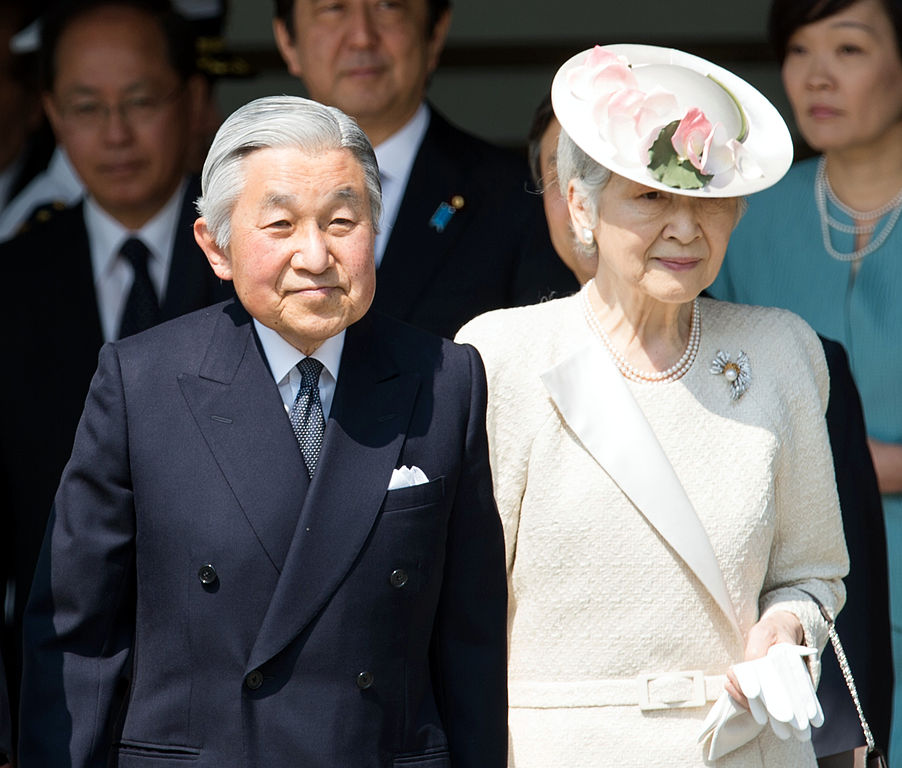
Colby Cosh looks at the astonishingly successful Japanese monarchy over the last few centuries of change:
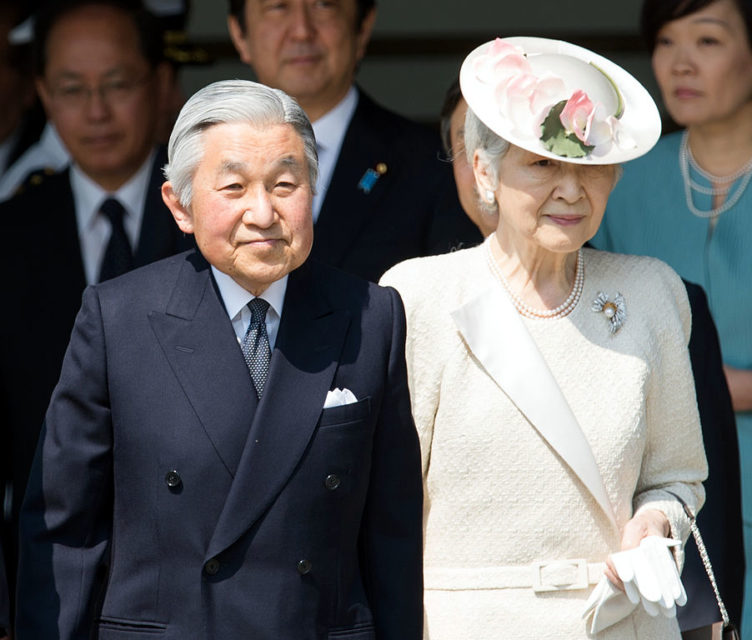
Emperor Akihito and Empress Michiko at the Tokyo Imperial Palace in Chiyoda Ward, Tōkyō Metropolis on April 24, 2014.
US State Department photo by William Ng, via Wikimedia Commons.

Most everybody knows how the office of the Japanese Emperor became “ceremonial” for the better part of 700 years, and how the archipelago was governed in isolation by what we call the shogunate. The first Westerners who established diplomatic relations with Japan in the 19th century did not think of the Emperor as analogous to Queen Victoria at all. For years they thought of the Mikado as primarily a religious functionary, a sort of pope performing funny, tedious rites in seclusion. (As anyone who has been watching Japanese news in the run-up to Golden Week knows, there is some truth to this.)

Even as reality dawned on those foreign barbarians, their presence in Japan led to social breakdown, civil war, and a sharp, sudden revival of the power of their monarchy — the Meiji Restoration. This is still an awe-inspiring event. Japan was confronted by a little-known and hated outer realm, and was able to adapt with inexplicable confidence. It did not descend into psychic and economic malaise, but almost immediately began to compete with obtrusive Western “powers.” After centuries in abeyance, their constitution somehow allowed them to conjure a enlightened despot of enormous ability, the Meiji Emperor, at the precise moment one was required.

This led in time to the war in the Pacific — and to a second miracle of the same kind. If matters had been left up to American public opinion in 1945, or to the allies of the United States, or even to the American executive branch, the Japanese monarchy would have been abolished and the Emperor given a humiliating trial and death. Such a procedure could have easily been justified then, and can be justified in retrospect now. U.S. foreign policy almost always, in practice, seems to follow the country’s republican instincts.

But while Japan was defeated, it had not been invaded. So Gen. Douglas MacArthur and a few foreign-policy brainiacs reached a magnificent, cynical modus vivendi: they would exploit and reshape the Japanese monarchy rather than smashing it. As a soldier, MacArthur, made Supreme Commander of occupied Japan, would have shot the Emperor with his own sidearm and never lost a minute’s sleep. But he and others somehow managed to overcome racial and political prejudices, and perform an act of American “nation-building” that was not a cruel joke.

April 2, 2019

How Trains Changed China | Stuff That I Find Interesting

Filed under: China, Economics, Government, History, Military, Railways — Tags: , — Nicholas @ 02:00

Jabzy
Published on 27 Mar 2016

Thanks to Xios, Alan Haskayne, Lachlan Lindenmayer, William Crabb, Derpvic, Seth Reeves and all my other Patrons. If you want to help out – https://www.patreon.com/Jabzy?ty=h

Music by Derek Fiechter – https://www.youtube.com/channel/UCVRJ…

March 22, 2019

“Shiroyama” – The Satsuma Rebellion – Sabaton History 007

Filed under: History, Japan, Media, Military — Tags: , , , — Nicholas @ 06:00

Sabaton History
Published on 21 Mar 2019

What will you do when your traditional way of life is threatened by a powerful force in your native lands? The samurai didn’t hesitate to answer this question with: our swords. During the Satsuma Rebellion, the samurai and its leader Saigō Takamori fought the Japanese Imperial Government. Their rebellion ended with the Battle of Shiroyama, where in 1877 the samurai prepared for a last stand.

Support Sabaton History on Patreon: https://www.patreon.com/sabatonhistory

Watch the official music video for Shiroyama here: https://www.youtube.com/watch?v=oKW6g…

Listen to Sabaton on Spotify: http://smarturl.it/SabatonSpotify
Official Sabaton Merchandise Shop: http://bit.ly/SabatonOfficialShop

Hosted by: Indy Neidell
Written by: Markus Linke and Indy Neidell
Directed by: Astrid Deinhard and Wieke Kapteijns
Produced by: Pär Sundström, Astrid Deinhard and Spartacus Olsson
Creative Producer: Joram Appel
Executive Producers: Pär Sundström, Joakim Broden, Tomas Sunmo, Indy Neidell, Astrid Deinhard, and Spartacus Olsson
Maps by: Eastory
Edited by: Iryna Dulka
Sound Editing by: Marek Kaminski

Eastory YouTube Channel: https://www.youtube.com/channel/UCEly…
Archive by: Reuters/Screenocean https://www.screenocean.com
Music by Sabaton.

An OnLion Entertainment GmbH and Raging Beaver Publishing AB co-Production.

© Raging Beaver Publishing AB, 2019 – all rights reserved.

From the comments:

Sabaton History
2 days ago (edited)
In the 19th century, Japan transitioned from a feudal society to a modern constitutional monarchy shaped after its western counterparts. A constitution was introduced which made every Japanese man equal under the law. This effectively ended the privileged status of the samurai in Japan. However, many samurai didn’t take this kindly. A group of them rebelled against the Imperial government, which is what the Sabaton song “Shiroyama” is all about.

The fact that we can research, film and produce this with Indy and his team is only thanks to the people who support us on Patreon. If you don’t already, please do consider supporting us – which also gives you some cool rewards as well as early access to all our episodes!

March 20, 2019

History Summarized: Medieval China (Ft Jack Rackam)

Filed under: China, History, Humour — Tags: , , — Nicholas @ 04:00

Overly Sarcastic Productions
Published on 15 Mar 2019

Check out our website at http://www.OverlySarcasticProductions.com

Tale as old as time
Song as old as rhyme…
China broke agaiiinnnnnn — dammit china you only had one job

Jack Rackam’s Channel: https://goo.gl/EgwpGu

PATREON: https://www.patreon.com/OSP

March 18, 2019

6 Worst British Rulers – Anglophenia Ep 8

Filed under: Britain, History, Religion — Tags: , , — Nicholas @ 02:00

Anglophenia
Published on 15 Jul 2014

Britain has had a number of great kings and queens, but also some truly terrible ones. Siobhan Thompson looks at the worst of the worst.

March 8, 2019

Stephen Fry on Political Correctness and Clear Thinking

Filed under: Britain, Education, Liberty, Media, Politics, USA — Tags: , , , , — Nicholas @ 02:00

The Rubin Report
Published on 4 Apr 2016

Stephen Fry (actor and comedian) joins Dave Rubin for a quick discussion about political correctness, clear thinking, V for Vendetta, free speech, and his decision to quit Twitter.

This is a bonus edition of ‘The Sit Down’ on The Rubin Report, filmed on the set of Larry King Now.

What are your thoughts? Comment below or tweet to Dave: https://twitter.com/RubinReport

Watch more on Ora TV: http://www.ora.tv/rubinreport

Find us on Patreon: https://www.patreon.com/rubinreport?ty=h

******
Stephen Fry
Actor, Author, and Comedian
******
Care about free speech? Tired of political correctness? Like discussions about big ideas? Watch Dave Rubin on The Rubin Report. Real conversations, unfiltered rants, and one on one interviews with some of the most interesting names in news and entertainment. Comedians, authors, and influencers join Dave each week to break down the latest in politics and current events. Real people, real issues, real talk.

February 12, 2019

Sun Yat-sen – Lies – Extra History

Filed under: China, History, Military — Tags: , , , — Nicholas @ 04:00

Extra Credits
Published on 9 Feb 2019

Writer Rob Rath talks about all the cool stories and facts we didn’t get to cover in the Sun Yat-sen series.
Join us on Patreon! http://bit.ly/EHPatreon

Recommended reading – The Unfinished Revolution: Sun Yat-Sen and the Struggle for Modern China

3:42 – flag time!

7:59 – what are the Triads anyway?

16:13 – one man’s legacy can be very malleable…

19:05 – movies depicting the Chinese Revolution

20:16 – the Walpole Connection TM

21: 35 – what’s next on Extra History?

February 8, 2019

Smashing China to Pieces, the Background | Between 2 Wars | 1925 Part 1 of 2

Filed under: Britain, China, History, Japan, Military — Tags: , , , , , — Nicholas @ 04:00

TimeGhost History
Published on 7 Feb 2019

The 19th century throws all kinds of terror and misfortune on China, which not long before was the most powerful nation in the world. While many other Western, Asian and even American nations seek to gain influence in China through politics, wars and trade, China itself tries to hold on to its glory days.

Join us on Patreon: https://www.patreon.com/TimeGhostHistory

Hosted by: Indy Neidell
Directed by: Spartacus Olsson
Written by: Spartacus Olsson
Produced by: Astrid Deinhard
Executive Producers: Bodo Rittenauer, Astrid Deinhard, Indy Neidell, Spartacus Olsson
Creative Producer: Joram Appel
Edited by: Wieke Kapteijns
Research by: Spartacus Olsson

Thumbnail depicts Ataturk colorised by Olga Shirnina aka Klimbim.

Colorized Pictures by Olga Shirnina and Norman Stewart

Olga’s pictures: https://klimbim2014.wordpress.com
Norman’s pictures https://oldtimesincolor.blogspot.com/

Video Archive by Screenocean/Reuters http://www.screenocean.com

A TimeGhost chronological documentary produced by OnLion Entertainment GmbH

From the comments:

TimeGhost History
1 day ago (edited)

Hey all!

After we decided to do Between Two Wars episodes on China in the 20’s, we quickly discovered that the historical context is necessary if you want to understand modern China. Therefore, we present to you a pre-war introduction of China. The end of the mighty empires is an exciting part of history that is often overlooked. That’s no longer the case.

Cheers,
Joram

January 29, 2019

history of japan

Filed under: History, Humour, Japan, WW1, WW2 — Tags: , , — Nicholas @ 02:00

bill wurtz
Published on 2 Feb 2016

http://billwurtz.com

patreon: http://patreon.com/billwurtz
spotify: https://play.spotify.com/artist/78cT0…
itunes: http://itunes.apple.com/us/artist/bil…
twitter: http://twitter.com/billwurtz
vine: http://vine.co/billwurtz
donate: http://paypal.com/cgi-bin/webscr?cmd=…

January 22, 2019

QotD: From Athenian democracy to the Magna Carta

Filed under: Britain, Europe, History, Politics, Quotations — Tags: , , , , — Nicholas @ 01:00

It is always tempting to look for our roots in ancient Athens … tempting, but wrong. The ancient Athenian “democracy” in the agora was, to be charitable, just mob rule, and the mob was incited, most often bought and paid for, by a series of loud mouthed bullies and celebrities ~ so, I can hear some of you saying, not much different from Canada and the USA in the 21st century, right? Now and again, Thucydides, for example, the loud mouth bully also had some brains and good ideas, but, more often than not they were just unqualified pretty boys and clowns.

The Romans gave us something a wee, tiny bit better: rule by law. But the Romans are, rightfully, often best remembered as engineers and they “engineered”, rigged, their political system to ensure that while there were, indeed, laws, to protect and serve the interests of the common people, the plebeians, the system ensured that no law could stand if it ever threatened the privileges of the patricians ~ Rome’s equivalent of our Laurentian elites.

The first time we find something that I think we can properly claim as a “root” of our, modern, liberal democracy is in Anglo Saxon England where, somewhat haphazardly to be sure, a council, called the Witan, advised and constrained and sometimes even elected the monarch for about 400 years, until the Norman conquest. The Witan (members of the Witenaġemot ~ the “meeting of wise men”) were the first privy council, the prototype of modern, Australian, British and Canadian cabinet government.

Next, in Norman times, came Magna Carta, echoes of which can still be heard in our great common law. Magna Carta itself was not as important as two men who, in their turn, gave it life. King John had no difficulty in persuading the Pope to disallow Magna Carta but the British barons actually went into open revolt and, first, William Marshal, acting as Earl Marshal of England and regent for the boy King Henry III, traded Magna Carta for an independent exchequer, and then Simon de Montfort, acting for the barons against the grown King Henry III, forced Magna Carta and parliamentary supremacy on to England.

Ted Campbell, “Our Conservative Roots”, Ted Campbell’s Point of View, 2017-03-05.

January 21, 2019

Sun Yat-sen – A Bombing in Wuchang – Extra History – #4

Filed under: China, History, Japan, Military — Tags: , , , , — Nicholas @ 04:00

Extra Credits
Published on 19 Jan 2019

Another group of revolutionaries in China, the Wuchang Uprising, accidentally kicked off their own plans earlier than expected, which lead to Sun starting an international diplomatic mission and then being appointed the head of the new republic. But Yuan Shikai, the current Prime Minister, had plans of his own…

Join us on Patreon! http://bit.ly/EHPatreon

January 14, 2019

Sun Yat-sen – An Army in Exile – Extra History – #3

Filed under: China, History, Japan — Tags: , , , , — Nicholas @ 04:00

Extra Credits
Published on 12 Jan 2019

Sun Yat-sen spends the next ten years following his London adventures trying to organize the rebellion in Tokyo — and ends up not recruiting just Chinese reformers, but radical fighters from Japan and the Philippines too.
Join us on Patreon! http://bit.ly/EHPatreon

December 17, 2018

Sun Yat-sen – A Killing in Hong Kong – Extra History – #1

Filed under: China, History — Tags: , , , , , — Nicholas @ 04:00

Extra Credits
Published on 15 Dec 2018

Growing up in Honolulu, Sun Yat-sen had an expansive, exciting education, which would inspire him when he moved to Hong Kong as a young adult ready to change the world as a doctor — and as the leader of the “Revive China Society” interested in overthrowing the Qing government.

Sun Yat-sen was a dangerous man. The Qing were right to fear him. After all, he’d bring 2,000 years of imperial rule crashing down.

Join us on Patreon! http://bit.ly/EHPatreon

« Newer PostsOlder Posts »

Powered by WordPress