Quotulatiousness

June 12, 2020

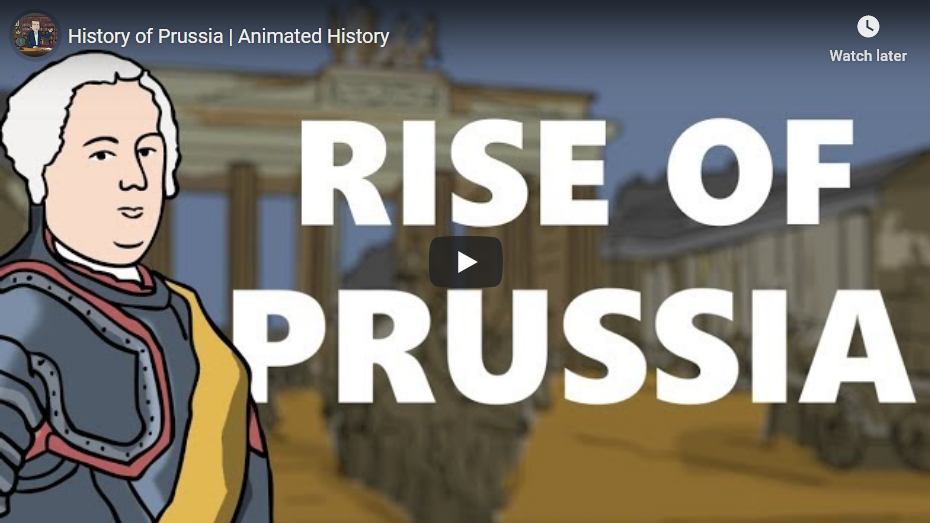
History of Prussia | Animated History

Filed under: Europe, Germany, History, Military — Tags: , , , , , , , — Nicholas @ 02:00

The Armchair Historian
Published 14 Sep 2018

Sign up for The Armchair Historian website today:
https://www.thearmchairhistorian.com/

Our Twitter: https://twitter.com/ArmchairHist

Sources:
The Rise and Fall of Prussia, Sebastian Haffner
Germans and Slavs, Arno Lubos
Frederick the Great, Tim Blanning

Music:
“Hungarian Rhapsody” by Franz Liszt

“Twenty six variations on La Folia de Spagna”, London Mozart Players
Matthias Bamert, conductor

*Correction 1: In 1648, Brandenburg-Prussia also acquired parts of Pomerania, which isn’t shown in the video. Pomerania is a state directly above Brandenburg.

June 5, 2020

Australia’s 1975 constitutional crisis back in the news

Filed under: Australia, Government, History, Law — Tags: , , — Nicholas @ 03:00

Colby Cosh outlines the events of 1975, where the Governer-General of Australia, Sir John Kerr, used his reserve powers to dismiss the government of Gough Whitlam and call for a fresh federal election in which Whitlam’s party was soundly defeated. In taking this action, Sir John corresponded with Queen Elizabeth and after his retirement deposited those documents with the National Archives. The bulk of his papers were made available to researchers after the statutary 30 year delay, but the letters involving Her Majesty were withheld for 60 years. An Australian historian has now successfully challenged the National Archives in Federal Court:

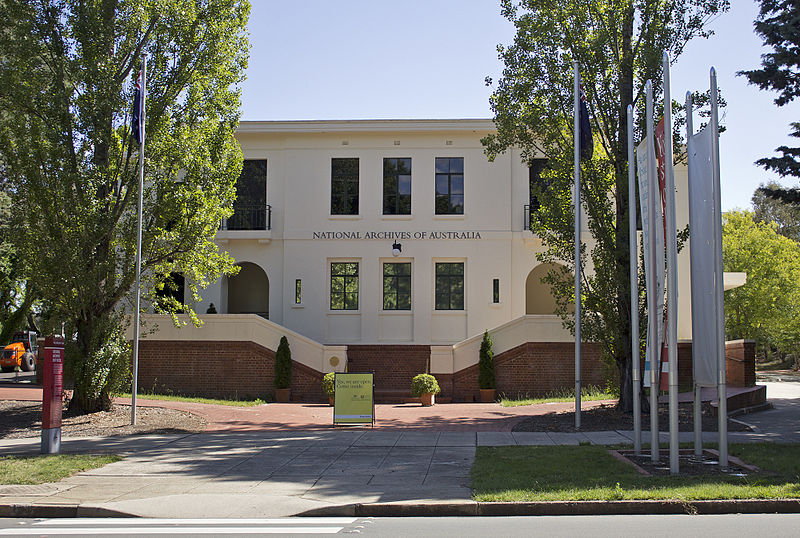
National Archives of Australia in Parkes, Australian Capital Territory.
Photo by Bidgee via Wikimedia Commons.

The confrontation at Yarralumla, and the various narrative twists and turns leading up to it, are a major event in Australian constitutional history. Which brings us to Jenny Hocking, a left-leaning historian who is a top specialist on the 1975 crisis.

Hocking knew that Kerr, after his retirement, had deposited copies of his correspondence with the Queen in Australia’s National Archives. Hocking made good professional use of Kerr’s formal papers, made available to the public in 2005 under the 30-year rule that covers Australian state papers. But Kerr had, with the agreement of the Archives, made separate arrangements for his letters to and from the Queen — the so-called “(Buckingham) Palace letters”.

[…]

The National Archives, trying to stand by its bargain with Kerr as a donor, successfully argued that while papers generated or received by “the official establishment of the Governor-General” would clearly be ordinary public records under Australian law, the letters that Hocking wanted to see didn’t involve “the official establishment,” but merely Kerr himself as … well, just a guy. The Federal Court found that the Palace letters therefore had the legal status of one of Sir John’s grocery bills, or sex diaries, or anything else that he would be perfectly entitled to stick in a locked box for 50 years.

(Or to burn in private. Which was an option he had, but rejected, explaining explicitly that he wanted future historians to have access to the material. But not for them to have it so soon that it might surprise or embarrass the Queen during her own lifetime.)

What happened last week was that the case reached Australia’s top court and Hocking won a smashing victory. Kerr’s correspondence with the Queen is known to have contained discussions of the Australian constitutional situation, and in view of that, the High Court said, the Federal Court’s distinction between Commonwealth records and personal correspondence must be regarded as a bogus artifice. The concepts aren’t mutually exclusive.

The Archives also asserted that queen-viceroy letters attract a higher level of secrecy “by convention” in all the Queen’s realms, but they couldn’t produce evidence that such a convention exists. Hocking’s costs must be covered by the Archives, and as far as the letters go, the ball is in their court legally. They could still use a “national security” exemption to withhold some of the material, and the freedom with which this magic formula is used by archival gatekeepers is notorious. But it may soon be possible for Australians to read the final chapter of the cataclysmic Kerr-Whitlam story.

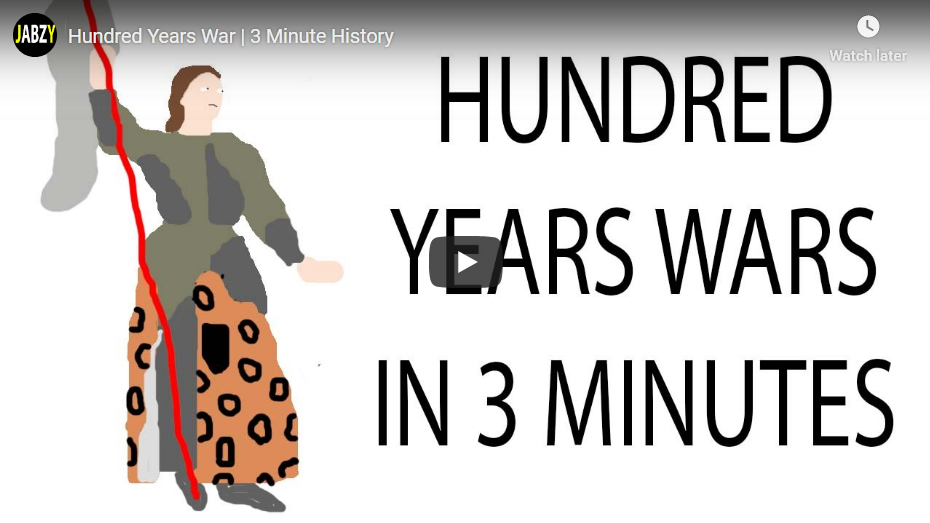
Hundred Years War | 3 Minute History

Filed under: Britain, France, History, Military — Tags: , , , — Nicholas @ 02:00

Jabzy
Published 18 Oct 2015

Thanks to Xios, Alan Haskayne, Lachlan Lindenmayer, William Crabb, Derpvic, Seth Reeves and all my other Patrons. If you want to help out – https://www.patreon.com/Jabzy?ty=h

Apologies, especially to the Patreon supporters for not uploading recently, I’ve changed jobs/moved house etc. I should be back on the usual schedule now.

Plus, thanks for the 12,000 subs.

June 2, 2020

The Fall Of The Roman Empire With Tom Holland | History Hit LIVE on Timeline

Filed under: Europe, History, Middle East — Tags: , , , , — Nicholas @ 04:00

Timeline – World History Documentaries
Published 29 May 2020

The Roman Empire remains one of the most enduring and prolific civilisations of written history. Yet it, like all great civilisations, would eventually come to an end. Join Dan Snow as he speaks to historian Tom Holland about the many contributing factors that would bring this seismic and seemingly invincible empire to its knees.

#StayHome #WithMe #FallOfRome

May 22, 2020

Wehrmacht Wages, Argentina in WW2, and Otto von Habsburg – WW2 – OOTF 012

Filed under: Americas, Europe, Germany, History, Military, WW2 — Tags: , , , — Nicholas @ 06:00

World War Two
Published 21 May 2020

You’re just an average German doing your work when suddenly you’re called up for service and asked to put your life on the line for your country. But how does your country repay you? Find out today as we take a look at the regular German soldier’s salary, the political turmoil in Argentina during the war and the former powerhouse of Europe: the mighty Habsburg dynasty.

Join us on Patreon: https://www.patreon.com/TimeGhostHistory
Or join The TimeGhost Army directly at: https://timeghost.tv

Follow WW2 day by day on Instagram @World_war_two_realtime https://www.instagram.com/world_war_t…
Between 2 Wars: https://www.youtube.com/playlist?list…
Source list: http://bit.ly/WW2sources

Hosted by: Indy Neidell
Written by: Isabel Wilson and Sietse Kenter
Director: Astrid Deinhard
Producers: Astrid Deinhard and Spartacus Olsson
Executive Producers: Astrid Deinhard, Indy Neidell, Spartacus Olsson, Bodo Rittenauer
Creative Producer: Joram Appel
Post-Production Director: Wieke Kapteijns
Research by: Isabel Wilson and Sietse Kenter
Edited by: Mikołaj Cackowski
Sound design: Marek Kamiński
Map animations: Eastory (https://www.youtube.com/c/eastory)

Colorizations by:
Carlos Ortega Pereira, BlauColorizations – https://www.instagram.com/blaucoloriz…
Norman Stewart – https://oldtimesincolor.blogspot.com/
Adrien Fillon – https://www.instagram.com/adrien.colo…

Sources:
Bundesarchiv
IWM CH 11432
Wehrmacht Private, Sergeant and Colonel insignia, courtesy Skjolbro, Wikimedia Commons
Wehrmacht General and Gefreiter insignia, courtesy F l a n k e r, Wikimedia Commons
Otto von Habsburg with his son Georg in European Parliament , courtesy Ferenc Csomafáy
Portrait of Otto von Habsburg, courtesy Oliver Mark

Soundtracks from the Epidemic Sound:
Max Anson – “Ancient Saga”
Johannes Bornlof – “Deviation In Time”
Johannes Bornlof – “The Inspector 4”

Archive by Screenocean/Reuters https://www.screenocean.com.

A TimeGhost chronological documentary produced by OnLion Entertainment GmbH.

First War of Scottish Independence | 3 Minute History

Filed under: Britain, France, History, Military — Tags: , , — Nicholas @ 02:00

Jabzy
Published 22 Jun 2015

The First Scottish War of Independence

May 17, 2020

Cicero’s Finest Hour (44 to 43 B.C.E.)

Filed under: Europe, History, Military — Tags: , , , , , , , — Nicholas @ 04:00

Historia Civilis
Published 16 May 2020

Patreon | http://patreon.com/HistoriaCivilis
Donate | http://www.paypal.com/cgi-bin/webscr?…
Merch | teespring.com/stores/historiacivilis
Twitter | http://twitter.com/HistoriaCivilis
Website | http://historiacivilis.com

Sources:
Cicero, “Letters to Atticus” | https://amzn.to/3b8EQby
Cicero, “The Philippics” | https://amzn.to/35EHcOe
Suetonius, “The Life of Julius Caesar” | https://amzn.to/2xJesHH
Plutarch, “The Life of Julius Caesar” | https://amzn.to/35DG6lZ
Plutarch, “The Life of Cicero” | https://amzn.to/2Laca7w
Plutarch, “The Life of Brutus” | https://amzn.to/2SLaWUC
Nicolaus of Damascus, “The Life of Augustus” | https://amzn.to/3dlQeCg
Appian, “The Civil Wars: Book 3” | https://amzn.to/2WbJXU4
Cassius Dio, “Roman History: Book 44” | https://amzn.to/35HC4ce
Cassius Dio, “Roman History: Book 45” | https://amzn.to/35HC4ce
Cassius Dio, “Roman History: Book 46” | https://amzn.to/2WDNIka

Barry Strauss, “The Death of Caesar: The Story of History’s Most Famous Assassination” | https://amzn.to/2WAUxTD
Tom Holland, “Dynasty: The Rise and Fall of the House of Caesar” | https://amzn.to/2zjG4n4
Adrian Goldsworthy, “Antony and Cleopatra” | https://amzn.to/2L8MQ1F
Anthony Everitt, “Cicero: The Life and Times of Rome’s Greatest Politician” | https://amzn.to/3bbrKKM
Tom Holland, “Rubicon” | https://amzn.to/3dombKn
Adrian Goldsworthy, “Augustus” | https://amzn.to/3fAInmD
Anthony Everitt, “Augustus: The Life of Rome’s First Emperor” | https://amzn.to/2Wf9CLH
Adrian Goldsworthy, “Caesar: Life of a Colossus” | https://amzn.to/3cfFQvU

Music:
“Moving Forward,” by Adi Goldstein
“Blonde,” by Nctrnm
“Heliograph,” by Chris Zabriskie
“The House Glows (With Almost No Help),” by Chris Zabriskie
“Hallon,” by Christian Bjoerklund

We are a participant in the Amazon Services LLC Associates Program, an affiliate advertising program designed to provide a means for us to earn fees by linking to Amazon.com and affiliated sites.

May 9, 2020

History Summarized: The Meiji Restoration

Overly Sarcastic Productions
Published 8 May 2020

Japan may well have the record for World’s Speediest Industrialization, but how did they accomplish so much so fast without falling victim to Europe’s favorite 19th century pastime of “Colonization”? And how did Japan build up a Pan-Asian empire so darn quickly? All that and more in this deep-dive into the Meiji Restoration!

SOURCES & Further Reading:
Modern Japan: A Very Short Introduction by Goto-Jones.
The Japanese Empire: Grand Strategy from the Meiji Restoration to the Pacific War by Paine.
Bushido: The Soul of Japan by Nitobe.

THAT WACKY POLITICAL CARTOON: “Japan Makes Her Debut Under Columbia’s Auspicies” https://tile.loc.gov/storage-services…

This video was edited by Sophia Ricciardi AKA “Indigo”. https://www.sophiakricci.com/

Our content is intended for teenage audiences and up.

PATREON: https://www.Patreon.com/OSP

DISCORD: https://discord.gg/h3AqJPe

MERCH LINKS: https://www.redbubble.com/people/OSPY…

OUR WEBSITE: https://www.OverlySarcasticProductions.com
Find us on Twitter https://www.Twitter.com/OSPYouTube
Find us on Reddit https://www.Reddit.com/r/OSP/

May 3, 2020

Slaying Gladiator

Filed under: Europe, History, Humour, Media — Tags: , , , , — Nicholas @ 05:00

Over at Steyn Online, Kathy Shaidle tag-teamed someone else on staff (it probably rhymes with Dark Time) to put the caligulae to Ridley Scott’s Gladiator with Russell Crowe in the leading role:

Germania, 180 AD. Rome is at war with the, er, Germaniacs, who stand around in the Black Forest grunting like Brits on the piss who’ve nutted themselves in one pub fight too many. You need a cool head to take on the Roman Army, and the only one the barbarians have belongs to Caesar’s emissary, whom they thoughtfully decapitated before sending back. They wave the old noggin around like a treasured footie ball, grunting, “Ug Eugh Blug” or, translated from the original gibberish, “Over ‘ere, mate.” It’s a scene that rings oddly contemporary in the age of Isis, although when I first saw it, a year before 9/11, it gave me the giggles. But then barbarians always seem funny from a distance, don’t they? Here they scratch their pelts and grunt some more, seemingly unconcerned by the fact that the Roman legions are lighting up their blazing arrows and fireballs, the smart bombs of the day. The ensuing battle, whose outcome would seem never to be in doubt, is apparently the final bloody act in a twelve-year war.

Despite having had twelve years to get there, the Emperor’s son nevertheless shows up late. “Did I miss it?” he simpers. “Did I miss the battle?” The son’s name is Commodus. No, not Commodus, but Commodus, which sounds like he dates back to a Mel Brooks sketch circa 1962 but in fact goes all the way back to the real Roman Empire. Commodus is that old stand-by of the dynastic drama, the disappointing son. His father, Marcus Aurelius, is a noble philosopher-king, but Commodus is no chip off the old block. We can tell that from the moment we first glimpse Commodus, sprawled in his commodious caravan, but just in case we miss the point Joaquin Phoenix lays on the mincing like a trowel, and the make-up, too. He’s weak, vain, decadent, and has the hots for his sister Lucilla (Connie Nielsen). Even the Bushes would think twice before running this guy for emperor.

Having spent 25 years waging war for the glory of Rome, Marcus Aurelius (Richard Harris) senses there’s not much point leaving it in the hands of an emperor who’d be queen for a day. So he tells Commodus he will not succeed him. Instead, he is going to make his brave general Maximus a “trustee” until Rome is ready to become a republic again. Maximus (Russell Crowe) is a Colin Powell type of general: a nice fellow everyone respects who supposedly has no public ambitions. Commodus, though, has other ideas, and suffocates his father. As the old showbiz saying has it, dying is easy, Commodus is hard. The effete decadent mincer becomes emperor, and promptly orders the death of Maximus and the crucifixion of the general’s wife and child back in Spain.

But Maximus escapes, and what follows in Gladiator is the story of how he takes his revenge and becomes the eponymous Gladiator lui-même. It’s payback time, and, under Ridley Scott’s lean direction, that means there’s no room for sub-plots. Somewhere in pre-production, the archers lobbed their flaming shafts at the script and laid it as bare as those Germanic forests. Not only are there no sub-plots, there’s barely any plot for any sub-plot to be sub-. Once the wife and kid are dead, there’s nothing very emotional at stake. There’s no romantic interest, unless you count Commodus trying to get it on with sis. There’s a hint of backstory at the Senate, where the massed ranks of British Equity have gathered for a vast toga party (the Toga Party having a majority in the Senate at that time). But there’s no dialogue worth speaking of, except statements of the obvious. When the mob is being fickle, as mobs are wont to be, the Emperor is told: “The mob is fickle, sire.” All the lines have been pre-tested in earlier toga romps, and the only one that seems to have been specially written for this picture is Oliver Reed’s complaint that some crook dealer has sold him a pair of homosexual giraffes.

But none of that matters because Ridley Scott photographs the film so brilliantly and mesmerically that they could all be speaking Germaniac and it wouldn’t impair the storytelling. It helps that almost everyone in the movie is a pre-designated great actor, so you tend to assume there’s a lot of great acting going on, even though most of it’s just thoughtful reaction shots. The mob bays for blood. Cut to Derek Jacobi looking thoughtful. They bay some more. Cut to Connie Nielsen looking pensive from atop her fabulous neck. They stop baying. Cut to Russell Crowe looking thoughtful. What are they thinking so pensively? “Hmm. I wish I’d got the gay giraffe line”?

April 29, 2020

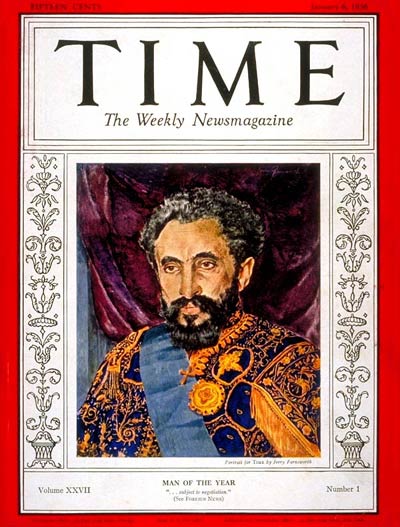
Haile Selassie – The New Messiah – WW2 Biography Special

Filed under: Africa, History, Italy, Military, Religion, WW2 — Tags: , , , , , , — Nicholas @ 06:00

World War Two
Published 28 Apr 2020

Haile Selassie was the Emperor of the Ethiopian Empire. He led the country against the Italians in the Second Italo-Ethiopian War after which he is exiled to Britain.

Join us on Patreon: https://www.patreon.com/TimeGhostHistory
Or join The TimeGhost Army directly at: https://timeghost.tv

Follow WW2 day by day on Instagram @World_war_two_realtime https://www.instagram.com/world_war_t…
Between 2 Wars: https://www.youtube.com/playlist?list…
Source list: http://bit.ly/WW2sources

Hosted by: Indy Neidell
Written by: Isabel Wilson
Director: Astrid Deinhard
Producers: Astrid Deinhard and Spartacus Olsson
Executive Producers: Astrid Deinhard, Indy Neidell, Spartacus Olsson, Bodo Rittenauer
Creative Producer: Joram Appel
Post-Production Director: Wieke Kapteijns
Research by: Isabel Wilson
Edited by: Karolina Dołęga
Sound design: Marek Kamiński

Colorizations by:
Dememorabilia – https://www.instagram.com/dememorabilia/
Adrien Fillon – https://www.instagram.com/adrien.colo…
Klimbim – https://klimbim2014.wordpress.com/

Sources:
National Museum of the U.S. Navy

Music:
“Other Sides of Glory” – Fabien Tell
“The Unexplored” – Philip Ayers
“March Of The Brave 10” – Rannar Sillard
“Deviation In Time” – Johannes Bornlof
“Epic Adventure Theme 3” – Håkan Eriksson
“Heroes On Horses” – Gunnar Johnsén
“Deviation In Time” – Johannes Bornlof

Archive by Screenocean/Reuters https://www.screenocean.com.

A TimeGhost chronological documentary produced by OnLion Entertainment GmbH.

Feudalism: A Brief Explanation

Thersites the Historian
Published 26 Oct 2017

In this video, I try to bring order to the chaos that is feudalism and render it comprehensible.

April 25, 2020

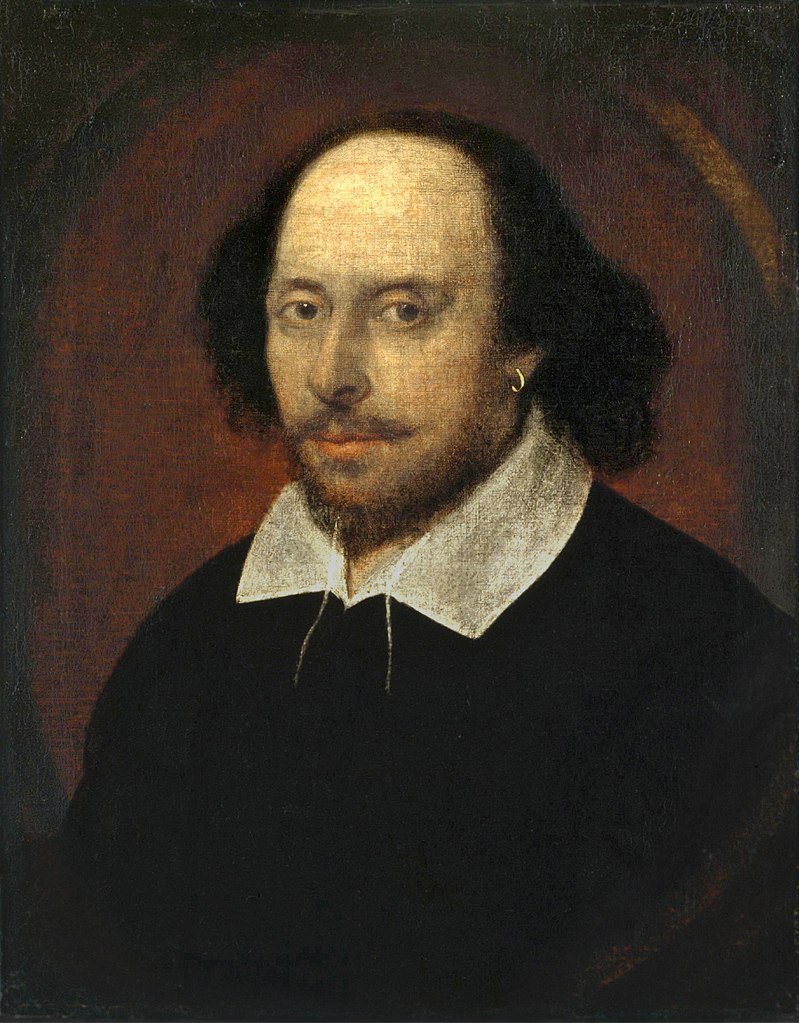
History-Makers: Shakespeare

Overly Sarcastic Productions
Published 24 Apr 2020

“The Bard” is not only an essential class in any D&D party, but a byword for England’s most famous writer. We’ve covered a bit of Shakespeare before on OSP — just a bit, really, nothing major, only a dozen — but today we’ll look at how William got to Bard-ing, and how he accidentally became England’s biggest Historian.

SOURCES and Further Reading: The Introduction and play-texts of the Folger Shakespeare Library (The best way to read Shakespeare), “Shakespeare: A Very Short Introduction” by Wells

This video was edited by Sophia Ricciardi AKA “Indigo”. https://www.sophiakricci.com/
Our content is intended for teenage audiences and up.

PATREON: https://www.Patreon.com/OSP

DISCORD: https://discord.gg/h3AqJPe

MERCH LINKS: https://www.redbubble.com/people/OSPY…

OUR WEBSITE: https://www.OverlySarcasticProductions.com
Find us on Twitter https://www.Twitter.com/OSPYouTube
Find us on Reddit https://www.Reddit.com/r/OSP/

April 23, 2020

Trial by jury

Filed under: Britain, History, Law, Liberty — Tags: , , , , — Nicholas @ 03:00

Peter Hitchens recounts the essential role of the jury system in the evolution of the English (and, by inheritance, the Australian, Canadian, and even American) constitutional rights of the individual, which today seems to be in peril:

A still from the 1957 movie Twelve Angry Men, directed by Sidney Lumet, starring Henry Fonda, Lee J. Cobb, and Martin Balsam.

Am I going to have to fall out of love with juries? For decades I have defended these curious committees, which can ruin a man’s life in an afternoon. It has been a romance as much as it has been a reasoned position. Most people get their best lesson in jury trials from the 1957 movie Twelve Angry Men. In that version, a single determined juror, played by Henry Fonda, gradually wins the rest of the panel round to an acquittal, at great cost in emotion and patience. But what really won my heart was Thomas Macaulay’s account of the Trial of the Seven Bishops, in which a London jury defied the wishes of the would-be autocrat King James II in 1688. It was an astonishing event, a monarch’s authority challenged by — of all unlikely things — a collection of Anglican prelates. Their acquittal, perhaps more than anything else, led to James’s fall a few months later. It was the beginning of true constitutional monarchy in Europe, the genesis of the English Bill of Rights and the forerunner of the very similar American document of the same name. It could not have happened without a jury.

For without a jury, any trial is simply a process by which the state reassures itself that it has got the right man. A group of state employees, none of them especially distinguished, are asked to confirm the views of other state employees. With a jury, the government cannot know the outcome and must prove its case. And so the faint, phantasmal ideal of the presumption of innocence takes on actual flesh and bones and stands in the path of power. Juries grew up in England almost entirely by happy accident, and no government would nowadays willingly create them where they do not already operate. A brief fashion for them in 19th-century Europe was swiftly stamped out by governments that understood all too well how much they limited their power. I believe the last true Continental juries, sitting in the absence of a judge, were abolished in France in 1940 by the German occupation authorities. People in Anglosphere countries, unaware that true independent juries rarely exist outside the English-speaking world, have no idea what a precious possession they are.

I remember actually pounding the arm of my chair with delight as I read Macaulay’s account of the response of the bishops’ attorney, Francis Pemberton, when threatened by the chief Crown prosecutor, the solicitor general: “Record what you will. I am not afraid of you, Mister Solicitor!” So this was England after all, and even the majesty of the Stuart Crown could not overawe the defense. This was wholly thanks to the fact that the trial took place before a jury — which duly acquitted the bishops of “seditious libel,” the ludicrous charge by which James had hoped to crush opposition to his plans to reverse the Reformation. Without a jury, the king would of course have won his case, and England would have gone down the road to absolutism (already followed in France, Prussia, Russia, and the Habsburg dominions) with incalculable consequences for the whole world. Instead we had what came to be called the Glorious (or Bloodless) Revolution.

And my blood still runs faster when I recall this and other moments at which the mere existence of juries has made us all more free. Yet I also have terrible doubts. Is the independence of juries possible in the modern world, in which the English Bill of Rights is all but forgotten and a new dispensation reigns? All too often, I read reports of trials in my own country that fill me with doubt. I did my fair share of court reporting as an apprentice journalist many years ago, and I have a good understanding of how these things used to work and ought to work. Something has changed. There is a worrying number of sex cases now coming before the courts in which clear forensic proof of guilt is often unobtainable.

The alleged crimes themselves are repulsive, and the mere accusation is enough to nurture prejudice. The defendants have often been arrested in the scorching light of total publicity, in spectacular dawn raids totally unjustified by any immediate danger they present. Pre-trial media reporting has further undermined the presumption of innocence. In England there is still officially a strong rule against the media taking sides before the jury delivers its verdict. But this is not enforced as it once was. The prosecutions are frequently as emotional as they are unforensic, the opposite of the proper arrangement. Yet the defendants are often convicted even so (sometimes by majority verdicts, which in my view violate the whole jury principle). The state seems somehow to have turned the jury — often swayed by emotion — into its own weapon. And it is worse than the alternative. A wrongfully-convicted defendant, pronounced culpable by a jury of his peers, must feel a far deeper despair than one cast into prison by a mere panel of judges.

April 14, 2020

History Summarized: England

Overly Sarcastic Productions
Published 10 Apr 2020

English history has a reputation for being nigh incomprehensible — what with all the kings, civil wars, succession crises, and slapfights with France. But with the right perspective (and a little royal-restraint), England can become quite a straightforward story. So let’s take a look at this slice of Britain, and see how it grew into the master of the Isles.

SOURCES & Further Reading: “History of England from the Tudors to the Stuarts”, lecture series for The Great Courses by Robert Bucholz, a great look at Renaissance and Early Imperial England.
“Ten Minute History of England and Britain” Parts 1-18, by History Matters, a lengthy chronicle of English history from the Roman conquest through the Union of the Crowns. Good watch if you have the time.
Foundation by Peter Ackroyd, the first book in a mammoth 6-volume History of England, which covers everything up to the death of Henry VII. If you really want to dig into English history, this is the book for you.

This video was edited by Sophia Ricciardi AKA “Indigo”. https://www.sophiakricci.com/
Our content is intended for teenage audiences and up.

PATREON: https://www.Patreon.com/OSP

DISCORD: https://discord.gg/h3AqJPe

MERCH LINKS: https://www.redbubble.com/people/OSPY…

OUR WEBSITE: https://www.OverlySarcasticProductions.com
Find us on Twitter https://www.Twitter.com/OSPYouTube
Find us on Reddit https://www.Reddit.com/r/OSP/

April 8, 2020

Prince Paul of Yugoslavia – Victim of Circumstance? – WW2 Biography Special

Filed under: Europe, Germany, Greece, History, Italy, Military, WW2 — Tags: , , , , , — Nicholas @ 04:00

World War Two
Published 7 Apr 2020

A Serb royal with an English heart sounds pretty romantic, but the story of Prince Paul of Yugoslavia is far from it. Trapped by circumstance, he is forced to make decisions that go against his own personal beliefs and leave him condemned as a traitor.

Join us on Patreon: https://www.patreon.com/TimeGhostHistory
Or join The TimeGhost Army directly at: https://timeghost.tv

Follow WW2 day by day on Instagram @World_war_two_realtime https://www.instagram.com/world_war_t…
Between 2 Wars: https://www.youtube.com/playlist?list…
Source list: http://bit.ly/WW2sources

Hosted by: Indy Neidell
Written by: Francis van Berkel
Produced and Directed by: Spartacus Olsson and Astrid Deinhard
Executive Producers: Bodo Rittenauer, Astrid Deinhard, Indy Neidell, Spartacus Olsson
Creative Producer: Joram Appel
Post-Production Director: Wieke Kapteijns
Research by: Tom Meaden
Edited by: Mikołaj Cackowski
Map animations: Eastory (https://www.youtube.com/c/eastory)

Colorizations by:
Dememorabilia – https://www.instagram.com/dememorabilia/
Carlos Ortega Pereira, BlauColorizations
Adrien Fillon – https://www.instagram.com/adrien.colo…

Sources:
Narodowe Archiwum Cyfrowe
USHMM
IWM MH 26392

Soundtracks from the Epidemic Sound:
Howard Harper-Barnes – “London”
Farell Wooten – “Blunt Object”
Philip Ayers – “Trapped in a Maze”
Johannes Bornlof – “The Inspector 4”
Gunnar Johnsen – “Not Safe Yet”
Andreas Jamsheree – “Guilty Shadows 4”

Archive by Screenocean/Reuters https://www.screenocean.com.

A TimeGhost chronological documentary produced by OnLion Entertainment GmbH.

« Newer PostsOlder Posts »

Powered by WordPress