Quotulatiousness

November 7, 2020

QotD: “Hate speech”

Filed under: Humour, Law, Liberty, Quotations — Tags: , , — Nicholas @ 01:00

In an attempt to put down “racism”, the concept of “hate terms” was introduced into English law for the first time. This makes many words and expressions unlawful, and punishable by fines and imprisonment. It is the most comprehensive system of censorship since the days of Hitler’s Germany and Stalin’s Russia, and means there are more restrictions on freedom of expression in England than at any other time since Hogarth’s days.

It is, of course, fatal to humour, if enforced and persisted in. For one vital quality of humour is inequality, and striking visual, aural, and physical differences. Differences in sex, age, colour, race, religion, physical ability, and strength lie at the source of the majority of jokes since the beginning of human self-consciousness. And all jokes are likely to provoke discomfort if not positive misery among those laughed at. Hence any joke is liable to fall foul of those laws. The future for humourists thus looks bleak, at the time I write this. The ordinary people like jokes, often crude ones, as George Orwell pointed out in his perceptive essay on rude seaside picture postcards. But are ordinary people, as opposed to minor officials, in charge any more? Democracy doesn’t really seem to work, and people are insufficiently dismayed at its impotence.

Paul Johnson, Humourists: From Hogarth to Noël Coward, 2010.

October 26, 2020

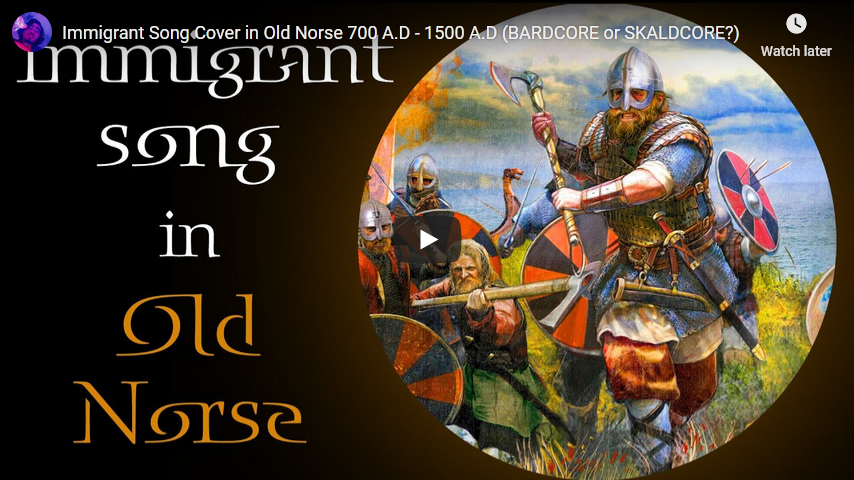
“Immigrant Song” cover in Old Norse 700 A.D – 1500 A.D

Filed under: Europe, History, Media — Tags: , , , , — Nicholas @ 04:00

the_miracle_aligner
Published 13 Oct 2020

“Get in virgin, We’re raiding England”

Original by @Led Zeppelin: https://www.youtube.com/watch?v=RlNhD…

First off, apologies if I screwed this up because this was probably one of the hardest covers I have ever attempted (One does not simply try and emulate Robert Plant). If there were any mistakes in the pronunciations or translation too please do let me know 🙂 Thank you so much for watching guys, leave a like if ya liked it. And if you haven’t subbed yet, please consider doing so. Help me get to 100k Subs 🙂

Consider supporting the channel, I know what I do ain’t much but its honest work ❤: https://www.patreon.com/the_miracle_a…

Wanna follow me?
https://twitter.com/KholeJa
https://www.instagram.com/the_miracle…

Big thanks to @Constantine for the instrumentals, PLEASE for the love of God go support his channel too 🙂 https://www.youtube.com/channel/UCoHA…

Big thanks to Angus Bolton for the translation and training. Twas truly a pleasure.

Source of the BG: https://in.pinterest.com/pin/29885612…

Lyrics, Courtesy of Angus (Its in Icelandic btw, I bet you don’t wanna be reading runes XD)

ís ok snœrs landi frá Komum
Af miðnótts boði,laugar vellar
Æsa hamarr
Vil drifum draka vár til noyer landum
Að vega hjrøða ok að hlakka ok söngr
Valhøl ver komum

Fram sveipum með bitinn øra
vestr strandi einn sœkjum

ís ok snœrs landi frá Komum
Af miðnótts boði, laugar vellar
Hvo mýkr síns grænar bjoðar
blóðs sögur susa megar
Af hvé dolgsstormi þegdum
síns bardgisherrar ver erum

Fram sveipum með bitinn öra
vestr strandi einn sœkjum

Svo nu fallaðyrka létta ok simða síns betra
Þvi at and-fang mega daginn vinna þar allr

#LedZeppelin #Norse #Bardcore #Skaldcore

October 21, 2020

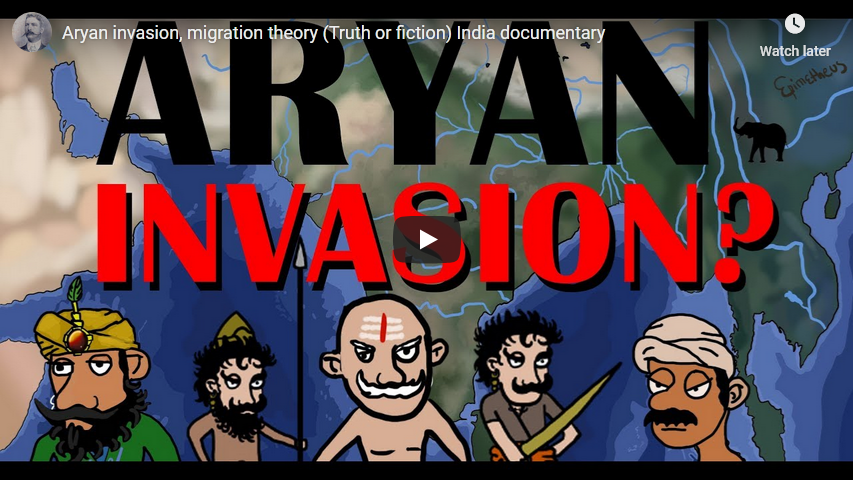
Aryan invasion, migration theory (Truth or fiction) India documentary

Filed under: History, India, Science — Tags: , , , , — Nicholas @ 02:00

Epimetheus
Published 24 Jan 2018

Aryan invasion, migration theory (Truth or fiction) India documentary

Epimetheus on Patreon
https://www.patreon.com/Epimetheus1776

David Frawley Aryan invasion videos
https://www.youtube.com/watch?v=qych3…
https://www.youtube.com/watch?v=jyz_S…

Tags:
Aryan invasion india, india history, indian history, documentary, history of india, india,history, india documentary, hindi, 2018, ancient india, indus valley civilization, 5,000 Years History of India documentary, Aryan migration theory, Aryan invasion theory, indo-aryan, indo Aryan migration

October 10, 2020

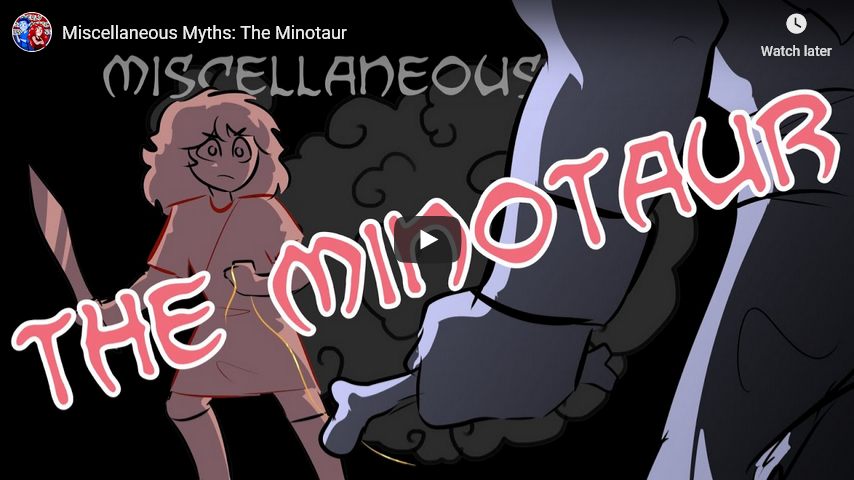
Miscellaneous Myths: The Minotaur

Filed under: Europe, Greece, History, Humour — Tags: , , , , — Nicholas @ 06:00

Overly Sarcastic Productions
Published 9 Oct 2020

Ah, Theseus. Athens’ favorite trash man. Let’s talk about someone a little more interesting — literally anyone involved in this story will do.

Good news, I found the 1080P button! Bad news, the minute differences in image resolution are now threatening my sanity.

Our content is intended for teenage audiences and up.

PATREON: https://www.Patreon.com/OSP

DISCORD: https://discord.gg/kguuvvq

MERCH LINKS: http://rdbl.co/osp

OUR WEBSITE: https://www.OverlySarcasticProductions.com
Find us on Twitter https://www.Twitter.com/OSPYouTube
Find us on Reddit https://www.Reddit.com/r/OSP/

October 9, 2020

Speaking in code and public health

Filed under: Government, Health, Technology, USA — Tags: , , , , , , , — Nicholas @ 03:00

In The Line, Joshua Hind relates the tragedy that forced US emergency services to wean themselves off their many confusing (and sometimes conflicting) spoken codes and use plain language to help reduce tragic misunderstandings among different emergency response organizations:

“First responders on site of the Lac-Megantic train derailment” by TSBCanada is licensed under CC BY-NC-ND 2.0

In the beginning, it was standardized, and the best-known codes, like “10-4,” were consistent from town to town or state to state. But it didn’t take long for newer codes to emerge, which often meant different things depending on where you were. Efforts to reorganize the codes every 20 years or so only compounded the problem. On a local level, in any one town, it wasn’t a problem. But when cops or firefighters from different towns had to work together it could lead to disaster.

In 1970, a particularly severe wildfire season in California killed 16 people in a 13-day period and laid bare the cost of bad interagency communication. The rat’s nest of codes, abbreviations, and jargon prevented firefighters from different towns from communicating with the speed and clarity a major disaster demands. To address the problem, the U.S. Forest Service created FIRESCOPE, the first complete system for organizing and managing major incidents. One of the primary principles of this new system was to “develop standard terminology.”

Despite this effort, which later went national and then international (the province of Ontario has its own version, the “Incident Management System”) coded language continued to proliferate. Nearly 30 years after FIRESCOPE was launched, on September 11th, incompatible technology, lack of protocols, and a refusal to harmonize terminology likely contributed to the deaths of 121 firefighters who were caught in the collapse of the North Tower because they either didn’t hear or couldn’t understand the warnings that the building was about to fail.

Which brings us back to 2006, and FEMA’s notice to first responders. After decades of asking agencies to stop using coded language, the federal government made funding contingent on compliance. “The use of plain language in emergency response is a matter of public safety,” the memo’s introduction read. “There simply is little or no room for misunderstanding in an emergency situation.” From that point forward, all interdepartmental communication would have to be un-coded. A fire would be called “fire.” A shooting would be “a shooting.” And if you needed help, you’d say “HELP!”

Police, fire departments and paramedics slowly but surely got on board and started using some form of the incident management system which included plain language. As use of the system spread, other sectors, like large music festivals and other live events, began adopting the concepts to better synchronize public safety programs with the first responders who support them. Today it’s not unusual for producers, technicians and event security staff to attend training at the police college right next to fire captains and police officers.

Then COVID-19 happened, and we realized that no one had told Public Health.

October 5, 2020

QotD: Language changes to accord with critical studies theory

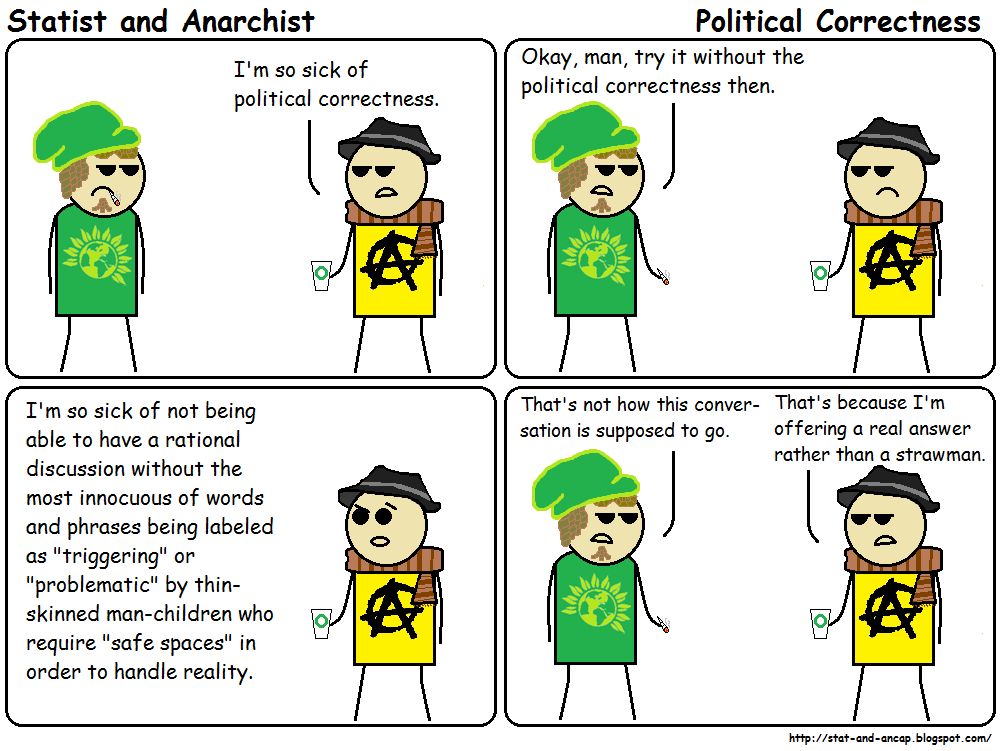
A Canadian Broadcasting [Corporation] program also debuted a new term this past week: “non-straight cisgender people.” This is the newly approved newspeak for gay people, parsed through the language of critical queer studies. The proponents of this new language seem eager to retire familiar terms like “gay men” or “lesbians” — perhaps because they suggest that the homosexual experience is rooted in basic human nature and can exist outside the parameters of structural oppression. So they find ways to define us in terms of queer theory, insisting there are only oppressed LGBTQ+ people. That’s also why, for example, so many on the left insist that gay white men had very little to do with Stonewall, which was led, we’re told, by trans women of color, subsequently betrayed by white men, who stole the movement from them. That this is untrue is irrelevant. It’s a narrative which serves to dismantle structures of oppression. And that’s all that matters.

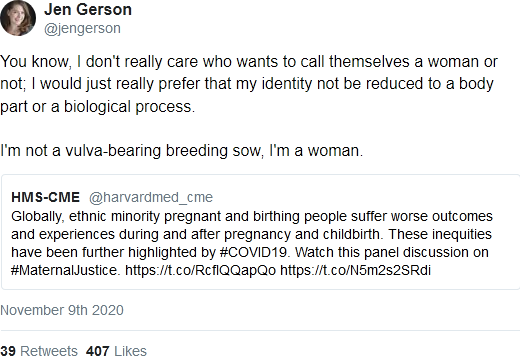
Leading progressive maternity and doula organizations now deploy and encourage a whole array of “gender-neutral language” with respect to sex, birth, labor, and parenting. And so we now have the terms “chest-feeding,” “persons who menstruate,” “persons who produce sperm,” and “birthing person” for breastfeeding, women, men, and mothers, respectively. And instead of a butthole, we have a “back-hole”; instead of a vagina, we have a “front hole.” “Ovaries” and “uterus” are now rendered as “internal organs,” which may strike you as somewhat vague. These may sound completely absurd now, but given the choke hold critical gender theory has on almost all elite organizations, you can be sure you’ll hear them soon enough. They’ll likely be mandatory if you want to prove you’re not a transphobe. It was an objection to one of these terms — “people who menstruate” — that got J.K. Rowling tarred again as a bigot.

Those of us who oppose this abuse of the English language, who try to abide by Orwell’s dictum to use the simplest, clearest Anglo-Saxon words to describe reality, are now instantly suspect. Given the fear of losing your job for resisting this madness, most people will submit to this linguistic distortion. As you can see everywhere, the stigma of being called a bigot sweeps away all objects before it. But the further this goes — and there is no limiting principle in critical theory at all — the less able we are to describe reality. Which is, of course, the point. Narratives, only narratives, exist. And power, only power, matters.

Andrew Sullivan, “China Is a Genocidal Menace”, New York, 2020-07-03.

September 29, 2020

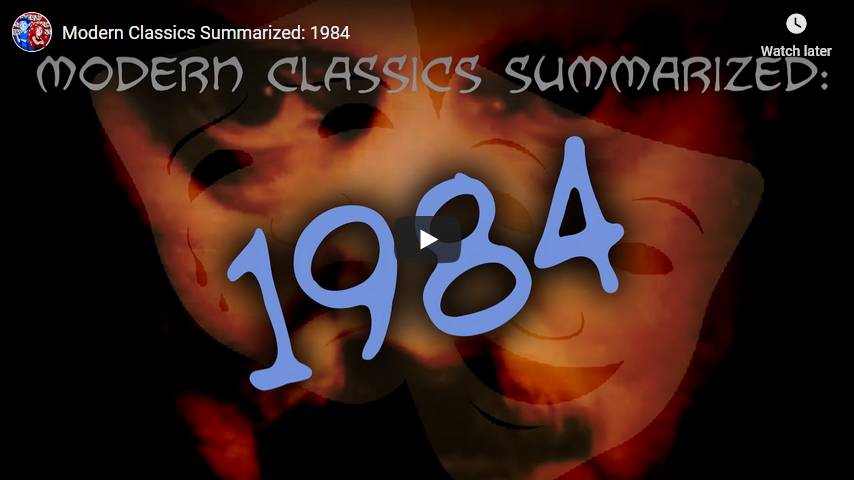
Modern Classics Summarized: 1984

Overly Sarcastic Productions
Published 24 Feb 2017

It’s the mother of all dystopias! Long before YA dystopia rose to power, before the age of Young Attractive Heroes who Rebel Against The State and Also Find Love, there was just Winston Smith — a middle-aged man in poor health who Rebelled Against The State and Also Found Love. It just ended much less prettily for him.

1984 codified most of the modern dystopia tropes — absolute control of the media, black-bagging people who spoke out, and a lot of popular terms like “doublethink”, “big brother”, and “thought police”. Unfortunately, a lot of those terms got stripped of context and thrown around for the sake of Extra Edge, and as a result they get used a little haphazardly. And there’s nothing Red hates more than misused terminology, so here’s the video outlining the ORIGINAL meaning of 1984!

PATREON: www.patreon.com/user?u=4664797

MERCH LINKS:
Shirts – https://overlysarcasticproducts.threa…
All the other stuff – http://www.cafepress.com/OverlySarcas…

Find us on Twitter @OSPYouTube!

September 28, 2020

What Happened After The Bronze Age Collapse?

Filed under: Economics, Greece, History, Middle East — Tags: , , , , — Nicholas @ 04:00

Epimetheus
Published 17 Jun 2020

What Happened After The Bronze Age Collapse?

This video covers the period of time from the Bronze Age collapse through the Near Eastern dark age and to the first Iron Age empire.

This video is sponsored by my Patrons over on Patreon
https://www.patreon.com/Epimetheus1776

From the comments:

Epimetheus
3 months ago
Additional info some might find interesting:

Although the Arameans emerged from arid Southern Syria (in a similar manner to the earlier Amorites, taking advantage of a power vacuum) it is debated whether or not they were originally from there, with some believing they came from the Zagros mountains to Syria, before re-entering Mesopotamia. Others believe they were related to the Amorites, essentially they were the Amorites that stayed behind. There is also some debate if Ahlamu (also from the same region) is a synonym for Aramean or if it was a more broad generic term for the nomads, outlaws and ruffians of the region. (For example the Suteans, Chaldeans and Arameans may have all been considered Ahlamu) It is also interesting that many fugitives from authority in previous centuries found refuge in the frontier Ahlamu regions of the south.

All of that more or less got cut out of the video, and I thought some of you would find interesting.

September 19, 2020

B.C./A.D. or C.E./B.C.E.? A perfect solution!

Filed under: History — Tags: , , — Nicholas @ 02:00

Lindybeige
Published 24 Oct 2014

I recall the first time I encountered the modern awfulness that is the terminology ‘C.E.’ and ‘B.C.E.’ — it was in a museum in Europe. Here I present my solution to the non-problem.

I spent a day making this video, and then didn’t like the result. For one thing, it was too long and rambling at four and a half minutes, so the next day I remade it, and I’ve now managed to cut it down to eight and half minutes.

Lindybeige: a channel of archaeology, ancient and medieval warfare, rants, swing dance, travelogues, evolution, and whatever else occurs to me to make.

▼ Follow me…

Twitter: https://twitter.com/Lindybeige I may have some drivel to contribute to the Twittersphere, plus you get notice of uploads.

website: www.LloydianAspects.co.uk

B.C./A.D. or C.E./B.C.E.? A perfect solution!

September 14, 2020

QotD: Airportland

Filed under: Bureaucracy, Humour, Quotations, Technology — Tags: , , — Nicholas @ 01:00

Most readers have spent time in Airportland. We know its particular wan light; the general flatness that makes the incline of jetways such a shock; its salty, sugary, and alcohol-infused cuisine; its detached social ambiance; its modes of travel (the long slog down the moving walkway, the hum of the people-moving carts, the standing-room-only shuttles, the escalators, the diddly-dup diddly-dup of roller bags, and — oh, yes — the airplanes); its fauna (emotional-support animals) and flora (plastic ficus); its mysterious system of governance; its language. Now and then, in Airportland, you spot a first-time visitor — confused by TSA rules, late for her flight, burdened by too many carry-ons. If you think the French are rude to those who don’t speak their language, you haven’t been paying attention in Airportland. We Airportlanders give these newbies no quarter. We sigh in exasperation as they’re sent back through security check for all the things they neglected to remove from their person. When they’re wandering Concourse E looking for their plane, because they thought they were in seat E68 (you know, like in a theater), when actually their flight leaves from B12 and their ticket class is E, we may take pity. But we hardly remember being that person, because once you’ve inhabited Airportland a handful of times, you’re a native.

And like native speakers, we don’t think much about the strange lingo we speak in Airportland. Take Gate. Some years ago, flying out of Peshawar, Pakistan, I passed through a dark set of catacombs inhabited by ruthless security guards and intelligence personnel with perhaps five checkpoints all lit by flickering overhead bulbs. Finally, like C.S. Lewis’s Lucy passing through the wardrobe into Narnia, I emerged into what I thought at first was a harshly lit bus station. It had the requisite faded plastic chairs and desultory counter offering stale packaged snacks and room-temperature soft drinks. Then I saw the sign over the doorway leading outside: GATE. I breathed a sigh of relief. Unlikely as it seemed, I had found my way to Airportland. But why Gate? Well, apparently there once was an actual gate, which stayed closed until the propellers of the plane were safely tied down and the passengers were free to pass through and board from the tarmac. (There were, of course, no “Jetways” — once a trademark, now generic — back in the day.)

Other terms of art abound in Airportland. Take concourse. It’s from the Latin, meaning “flowing together,” and outside Airportland it generally refers to an open area where passageways meet and people gather. In French, concours means “contest.” At the airport, the concourses are simply wide corridors, usually designated by letter, but if you like you can think of them as flowing, since they’re usually filled with a stream of humanity, and it often feels like a contest simply to reach the gate without incident.

Lucy Ferriss, “The Language of Airportland”, Lingua Franca, 2018-06-10.

September 11, 2020

QotD: “Karen” and other stereotypes

Filed under: Humour, Media, Quotations, USA — Tags: , , — Nicholas @ 01:00

When I first saw the name “Karen,” used in the plural, apparently for a whole class of women, I did not look it up. Context told me that I wouldn’t have to; that a Karen was simply the updated term for what I formerly knew as a Becky. There are related, more focused terms, such as “Trixie” for a Karen from upscale white Chicago, and so forth. It is one of many reasons to celebrate the black urban lexical culture from which it emerged. The image of a passive-aggressive blonde, with a pony tail, disputing her order at Starbucks, comes quickly to mind. She will be married to a “Chad” whom she met in law school.

I love stereotypes. They help us understand what the Greeks called syndromes, carrying them beyond the narrow world of medical jargon. “Karen” began as the stereotype for the woman who “wants to see the manager,” but was soon extended through a gallery of related traits. One thinks affectionately through a shortlist of the Karens one has known. For the Christian, it can impact one’s prayer life. (I found myself once praying for a certain Karen Surname, then spontaneously extending it to “Karens everywhere,” with a memorial for the Beckies. I noticed as I searched my memory that many of these Karens were biologically male.)

And today I wonder, as I have often done, at the genius of colloquial language, and the unerring way with which it uncovers fresh stereotypes, that enhance our perception of reality, in a way like painting and the other fine arts. (In a lost portrait, Leonardo depicted a Karen of the Renaissance.)

David Warren, “Karens & their kind”, Essays in Idleness, 2020-06-10.

August 31, 2020

“The ‘Scots’ that wis uised in this airticle wis written bi a body that’s mither tongue isna Scots. Please impruive this airticle gin ye can.”

Filed under: Britain, Media, Technology — Tags: , , — Nicholas @ 05:00

Natalie Solent has some sympathy for the recently revealed teen who is the main “author” of the Scots version of Wikipedia:

If you are wondering how a nineteen year old managed to be responsible for creating or editing tens of thousands of articles, the answer is simple:

    He wrote: “I was only a 12-year-old kid when I started, and sometimes when you start something young, you can’t see that the habit you’ve developed is unhealthy and unhelpful as you get older.”

Naming no names except my own, that sounds like a few of us here. Ten edits a day, most days, for two and a half thousand days. The work of half his life. The thing that made him special. And now they revile him for it. Believe me, I am not laughing when I call this a sad story.

Believe me, too, when I say I do not want to mock Scots. The Samizdata “Languages” category includes many other posts by me about endangered tongues. I want them to survive and grow. A world where everyone spoke only one language would be a grey place, and one more likely to fall to tyranny. For many a soul living under oppression their knowledge of something other than the majority language has been the one window to freer times or places that the censors could not brick up. Less portentously, I like the vigorous style of Scots. The fact that it is mostly mutually intelligible with English English has been the source of endless arguments about whether it is a dialect of English or a language in its own right. It is a pity that this question has been politicised. My own opinion, for what it is worth, is that although Scots was a separate language in the Middle Ages, enough linguistic convergence has occurred to say that nowadays it is a dialect of English. There is nothing wrong with that. It would be equally valid to say Standard English and Scots are both dialects on the continuum of English (and that the group as a whole is called “English” is just a matter of historically familiar terminology, not an attribution of superiority. Brits should remember that if numbers of speakers were the criterion that decided the name of this language we would be speaking American.)

It is a sad reflection on the state of Scots that nobody stopped “AmaryllisGardner” for five years. Scarcely anyone seems to have questioned him. I cannot help thinking this fiasco would never have happened if linguists and the penumbra of people who are “into” languages had not been so down on prescriptivism. After all, if there truly is no correct or incorrect way to use language, our laddie’s version of Scots has as much claim to be right as the one they speak in Glasgow.

August 27, 2020

Scots wa huh?

Filed under: Britain, Humour, Media, Technology — Tags: , , — Nicholas @ 05:00

An amusing story in The Register from Kieren McCarthy:

In an extraordinary and somewhat devastating discovery, it turns out virtually the entire Scots version of Wikipedia, comprising more than 57,000 articles, was written, edited or overseen by a netizen who clearly had nae the slightest idea about the language.

The user is not only a prolific contributor, they are an administrator of sco.wikipedia.org, having created, modified or guided the vast majority of its pages in more than 200,000 edits. The result is tens of thousands of articles in English with occasional, and often ridiculous, letter changes – such as replacing a “y” with “ee.”

That’s right, someone doing a bad impression of a Scottish accent and then writing it down phonetically is the chief maintainer of the online encyclopedia’s Scots edition. And although this has been carrying on for the best part of a decade, the world was mostly oblivious to it all – until today, when one Redditor finally had enough of reading terrible Scots and decided to look behind the curtain.

“People embroiled in linguistic debates about Scots often use it as evidence that Scots isn’t a language, and if it was an accurate representation, they’d probably be right,” noted the Reddit sleuth, Ultach. “It uses almost no Scots vocabulary, what little it does use is usually incorrect, and the grammar always conforms to standard English, not Scots.”

While very nearly all Scottish people speak English, the Scots language was apparently still spoken, read, or otherwise understood by nearly 30 per cent of Scotland’s population according to those responding to a 2011 census. The language got a memorable boost, too, when Scots-writing novelist Irvine Welsh’s Trainspotting became a silver-screen sensation.

August 25, 2020

The Bronze Age Changes with Archeological Evidence

Filed under: Architecture, History, Middle East, Science, Technology — Tags: , , , , — Nicholas @ 04:00

The Cynical Historian
Published 22 Feb 2019

Check out the full collaboration playlist here: https://www.youtube.com/playlist?list…

Up until the 19th century, the Bronze Age was merely a time of legends, where the Bible and Iliad told fantastic tales of brutality and triumph. But archeology changed that, and that’s what I want to talk about today, how the Bronze Age was rescued from legend.
————————————————————
references:
Stephen L. Dyson, “Archaeology and Ancient History,” in A Companion to Ancient History, edited by Andrew Erskine (Malden, Mass.: Blackwell Publishers, 2002), 59-66. https://amzn.to/2PCf04X

Marie-Henriette Gates, “Archeology and the Ancient Near East: Methods and Limits,” in A Companion to the Ancient Near East, edited by Daniel C. Snell (Malden, Mass.: Blackwell Publishers, 2005), 65-79. https://amzn.to/2BrsBqO

Alan B. Lloyd, “Chronology,” in A Companion to Ancient Egypt, vol. 1, edited by Alan B. Lloyd (Malden, Mass.: Blackwell Publishers, 2010), xxxii-xliii. https://amzn.to/2LqGZnM

John Marincola, “Historiography,” in A Companion to Ancient History, edited by Andrew Erskine (Malden, Mass.: Blackwell Publishers, 2002), 13-22. https://amzn.to/2PCf04X

John Van Seters, “Historiography in Ancient Israel,” in A Companion to Western Historical Thought, edited by Lloyd Kramer and Sarah Maza (Malden, Mass.: Blackwell Publishers, 2002), 15-34. https://amzn.to/2PAC5Vz

Tim Whitmarsh, “Ancient History through Ancient Literature,” in A Companion to Ancient History, edited by Andrew Erskine (Malden, Mass.: Blackwell Publishers, 2002), 77-86. https://amzn.to/2PCf04X
————————————————————
Support the channel through PATREON:
https://www.patreon.com/CynicalHistorian
or pick up some merchandise at SpreadShirt:
https://shop.spreadshirt.com/cynicalh…

LET’S CONNECT:
Discord: https://discord.gg/Ukthk4U
Twitter: https://twitter.com/Cynical_History
————————————————————
Wiki: The Bronze Age is a historical period characterized by the use of bronze, and in some areas proto-writing, and other early features of urban civilization. The Bronze Age is the second principal period of the three-age Stone-Bronze-Iron system, as proposed in modern times by Christian Jürgensen Thomsen, for classifying and studying ancient societies.

An ancient civilization is defined to be in the Bronze Age either by producing bronze by smelting its own copper and alloying with tin, arsenic, or other metals, or by trading for bronze from production areas elsewhere. Bronze itself is harder and more durable than other metals available at the time, allowing Bronze Age civilizations to gain a technological advantage.

Copper-tin ores are rare, as reflected in the fact that there were no tin bronzes in Western Asia before trading in bronze began in the third millennium BC. Worldwide, the Bronze Age generally followed the Neolithic period, with the Chalcolithic serving as a transition. Although the Iron Age generally followed the Bronze Age, in some areas (such as Sub-Saharan Africa), the Iron Age intruded directly on the Neolithic.

Bronze Age cultures differed in their development of the first writing. According to archaeological evidence, cultures in Mesopotamia (cuneiform script) and Egypt (hieroglyphs) developed the earliest viable writing systems
————————————————————
Hashtags: #history #TheBronzeAge #archeology #BronzeBonanza

August 7, 2020

QotD: Celibacy and chastity

Filed under: History, Quotations, Religion — Tags: , , , , — Nicholas @ 01:00

Despite the common misunderstanding of the word, “celibate” does not refer to someone who abstains from sex. “Celibate” refers to someone who forgoes marriage — the part about not having sex is implied, at least in the Christian world, give or take an Alexander VI or two. “Chaste,” at the same time, doesn’t quite mean what people think it does: It refers principally to the abstention from extramarital sex, which in the case of the celibate means abstention from sex categorically. But chastity is part of marriage, too, describing a reverent attitude toward sex. In the Christian view (which is to say, in the view of Western civilization until ten minutes ago), the procreative act is the means by which men and women in union with one another participate in God’s creative work. “Chastity” means a lot more than mere abstinence. Chastity isn’t some kind of genital veganism.

There has been some pretty elevated stuff written on that subject, and if you want to take that particular high road, then Professor Robert George of Princeton is your guy. But consider the low road, too. There’s another conclusion, maybe a little bit cynical, that could be drawn from this: If you are a sexually frustrated young man, the smart play would be to join a church.

Kevin D. Williamson, “Advice for Incels”, National Review, 2018-05-10.

« Newer PostsOlder Posts »

Powered by WordPress