Quotulatiousness

February 14, 2020

The reaction to the Mohawk blockade near Belleville shows that VIA Rail isn’t a serious company

Mohawk protesters began blocking the main CN and VIA line between Toronto and Montreal near Belleville nearly a week ago. The police, having learned so often that the government and the courts won’t back them up, did little to try to get the blockade lifted other than to prevent active confrontations with the First Nations activists. Canadian National announced that they were being forced to park trains all over Eastern Canada as a result of the blockade and that deliveries of goods would be snarled for quite some time even after service is allowed to resume. VIA rail, on the other hand, seems to care not a bit about the thousands of travellers who have been stranded mid-journey and made no apparent efforts to bring in buses or any other arrangements. Chris Selley says this proves that VIA is not an essential service even in their own minds:

“The 6424” by Stephen Downes is licensed under CC BY-NC-SA 2.0

Of all the bad news to befall VIA Rail this week, with the cancellation of all its trains between Toronto and Ottawa and Toronto and Montreal — that’s roughly 50 per cent of its ridership and 60 per cent of its revenues — the worst news might be just how little news it has made. Mostly, the Mohawk blockade of the CN main line near Belleville, Ont., has been treated as a side story to the anti-pipeline protests and arrests in the British Columbia interior.

That’s what it is in the grand scheme of things: The battle between Wet’suwet’en members and chiefs and the federal government speaks to much larger, existential questions about the future of the Canadian economy, about the Liberal government’s reconciliation agenda, about the very nature of the Canadian federation and the rule of law. This blockade, launched in the name of solidarity with the Wet’suwet’en, just means people have to take the bus, or fly, instead of the train.

But that’s no small inconvenience, no small expense. Canadians in general are not quick to anger, but very few of the VIA refugees interviewed by various news outlets sounded even slightly furious, which they had every right to be. When protesters from the same First Nation blockaded the same set of tracks six years ago, VIA properly exhibited some concern with getting their customers to their destinations and put on replacement buses.

This time around, no buses. No suggestions. No response to media inquiries asking why there are no buses. Just a cancellation notice on the website and a fare-thee-well. At a time when VIA is seeking untold billions from the federal government to build a new Toronto-Ottawa-Montreal route and run vastly more trains, this does not bespeak a company that takes itself very seriously.

[…]

And never mind VIA, what sort of country lets a few people close down a key piece of national infrastructure, in violation of a court injunction — not for an hour or a day, but literally indefinitely? For a time it wasn’t even clear whose job it was to enforce the injunction: On Sunday an Ontario Provincial Police spokesperson told Global News it was up to the CN Police Service. On Tuesday, a CN spokesperson told the National Post it was up to the OPP, and indeed, late Tuesday OPP officers warned protesters to leave or they would be forced out. Perhaps the threat of massive economic disruption finally lit a fire under them: earlier in the day, CN had said it was considering shutting down huge parts of its freight network across the country. Had it just been rail passengers, though, the idea of this side-protest dragging on for weeks or even months seems absurdly plausible.

VIA Rail 918, a General Electric model P42DC locomotive, at Belleville, Ontario on 23 December 2008.
Photo by Martin Cathrae via Wikimedia Commons.

While VIA may not be serious, others are extremely serious:

Left-wing blogs have been offering instructions and maps during the #ShutDownCanada protests on how to blockade and destroy train tracks and other pieces of Canada’s infrastructure, according to True North.

Two websites in particular, these being North Shore and Warrior Up, have instructed demonstrators how to damage Canada’s pipelines, roads and railways.

In some of North Shore’s posts, for instance, they told their readers to stand in solidarity with the Wet’suwet’en tribe by destroying train tracks. In this article, the author makes it perfectly clear that he wants to damage Canada’s economy at large.

More absurdly, however, the article then went on to instruct the reader on how to compose a chemical mixture that destroys steel rail tracks — taking particular care to describe how not to leaving fingerprint or DNA evidence.

Thursday evening, VIA Rail announced their whole passenger network would be shut down until further notice: Service cancellation notice.

January 29, 2020

QotD: The Golden Gate Bridge

Filed under: Quotations, USA — Tags: , , — Nicholas @ 01:00

It’s the pride of every Californian that the Golden Gate Bridge’s pedestrian area remains remarkably free of nets, high fences, and other barriers to jumpers. A couple years ago, Tad Friend described this phenomenon, and the strange silence of both officials and local residents about how common Bridge suicides really are. Although officials worry that Steel might inspire copycat jumpers, my concern is that more attention to this topic will eventually drive park officials to put up some sort of unsightly barricades. The suicide-readiness of the Golden Gate Bridge is a luxury I have not (yet) availed myself of, but it’s nice to know it’s there.

Tim Cavanaugh, “Why Kill Yourself…”, Reason Hit and Run, 2005-01-20.

January 19, 2020

“… if the Constitution is a threat to killer whales, why, then, to hell with the Constitution”

Filed under: Cancon, Environment, Government, Law, Politics — Tags: , , , , — Nicholas @ 03:00

Colby Cosh reviews the sad tale of the British Columbian government’s defeat before the Supreme Court of Canada over pipelines:

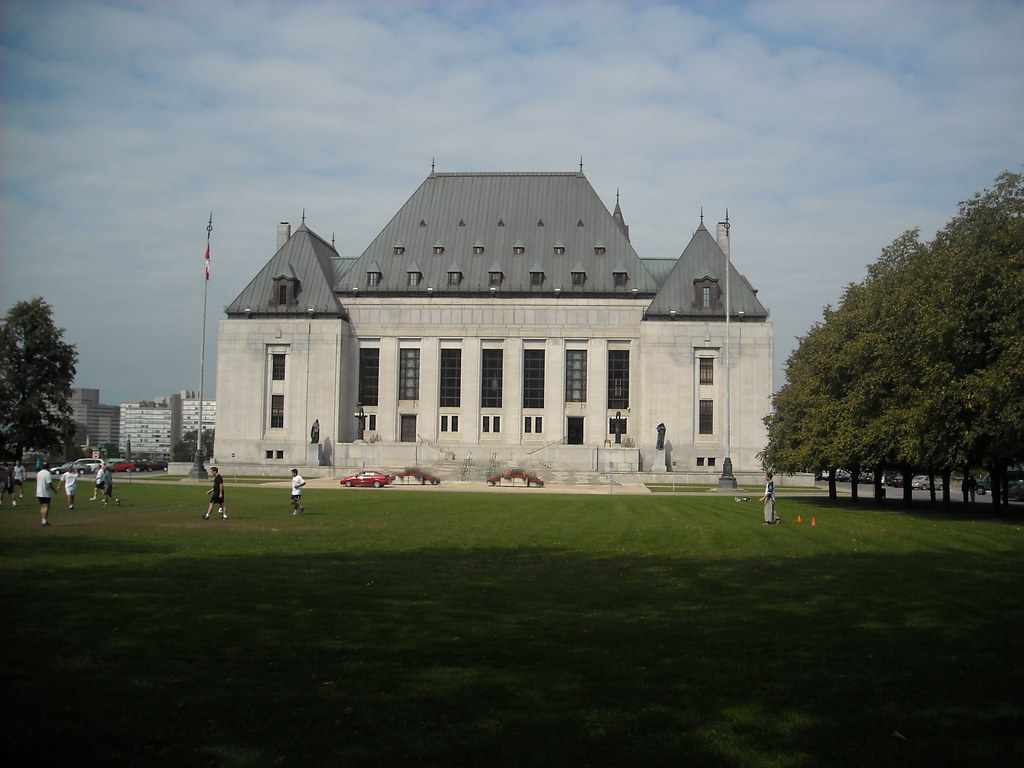
So … yeah, that didn’t go real well. On Thursday the province of British Columbia sent its chosen representative, lawyer Joseph Arvay, to the Supreme Court to plead the oral case for B.C.’s law regulating bitumen in pipelines. John Horgan’s government had attempted to establish its own permit regime for pipeline contents, which are, under accepted constitutional doctrine, a federal responsibility. The B.C. Court of Appeal had wiped out the provincial law unanimously last summer.

Arvay’s task was widely recognized as a Hail Mary pass. But things got even more awkward as the hearing commenced and the justices of the Supreme Court interrogated him on his province’s logical, environmental, and even economic premises. An appellate court’s disposition is sometimes hard to ferret out in its hearings, but this one was so rough that Arvay was reduced to grumbling “If I’m not going to win the appeal, then I don’t want to lose badly.” Alas, the judges did not even see the need to deliberate over their reasons: they at once, and as one, ruled against B.C.

Which is not to suggest that Mr. Arvay didn’t do the best possible job. If we’re sticking with the football metaphor, the problem all along was the game plan. Given the clear federal responsibility for interprovincial pipelines, as “Works and Undertakings connecting … Provinces,” the B.C. government had no choice but to downplay the conflict between the purpose of its proposed environmental permits and the purpose of the ones the federal government hands out. Arvay had to try to convince the ermine gang that a law applying exclusively to the contents of a pipeline wasn’t a regulation of the pipeline.

“The only concern the premier, the attorney general and the members of the government have had is the harm of bitumen,” Arvay protested. “It’s not about pipelines. They’re not anti-pipelines, they’re not anti-Alberta, they’re not anti-oilsands, they’re not anti-oil.”

It’s enough to almost make one sympathetic to the more radical strategy of argument pursued at the hearing by Harry Wruck, a lawyer for Ecojustice Canada who appeared as an intervener supporting B.C. Wruck put before the Supreme Court the same idea he had presented to the BCCA: if the Constitution is a threat to killer whales, why, then, to hell with the Constitution.

Cursus honorum – Aediles

Filed under: Bureaucracy, Government, History — Tags: , , , , — Nicholas @ 02:00

Historia Civilis
Published 6 Feb 2015

Patreon: https://www.patreon.com/HistoriaCivilis
Website: https://www.historiacivilis.com
Twitter: https://twitter.com/HistoriaCivilis

Music is “Clap Your Hands” by Jahzzar (http://betterwithmusic.com)

January 7, 2020

“HS2 will make the country worse off and should be stopped as soon as possible”

Filed under: Britain, Economics, Railways — Tags: , , — Nicholas @ 05:00

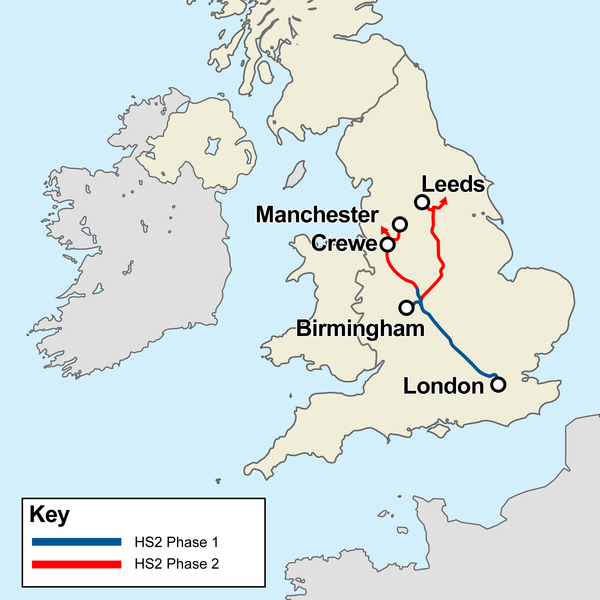
The British government recently reviewed the ever-escalating sums for the proposed HS2 high speed passenger rail connection that began at some £30 billion, then climbed to £50 billion, then £80 billion, and the latest estimate is up to £110 billion. Even by other countries’ high speed rail boondoggles, that is a breathtaking cost escalation. If, as it should, the government cancels the HS2 project, what happens to the money that was budgeted for the fiasco?

The figures used to justify HS2 were “fiddled” and that the project is most unlikely to deliver value for money — that’s the verdict of Lord Berkeley, the deputy chairman of the recent review into the project. He’s right of course and not solely because he’s repeating what I argued more than a year ago.

HS2 will make the country worse off and should be stopped as soon as possible. The government can mourn the money wasted and go off and do something else. Some suggest the HS2 money should be taken and spent on northern railways. Or as Lord Berkeley himself would prefer, on commuter lines in the Midlands.

But those offering these suggestions are making a very fundamental mistake: the real question is not which project most deserves this slab of funding, but whether the state should be spending this money at all.

This is not to say government should not be involved in funding any big infrastructure — everyone except the most hardcore anarchists accepts that state involvement in the economy is sometimes appropriate. But when it does intervene, it ought to be because there is an ironcast case for the betterment of the general population. That’s equally true whether we are talking about taxing to spend money now, or borrowing on the assumption that future benefits will pay back the debt incurred.

So, where does this leave the HS2 money? At some point it was decided that spending £30 billion, £50 billion, £80 billion or now as much as £110 billion on some nice choo-choos was an idea that justified taxing the public. Now it’s clear and obvious that it isn’t. Deciding afterwards that the government must spend all those billions on something else transport-related is missing the point entirely.

January 4, 2020

Looking back at the ’20s … the 1620s

In the latest installment of Anton Howes’ Age of Invention, he takes us back to what he calls the “transformative 20s” of the seventeenth century:

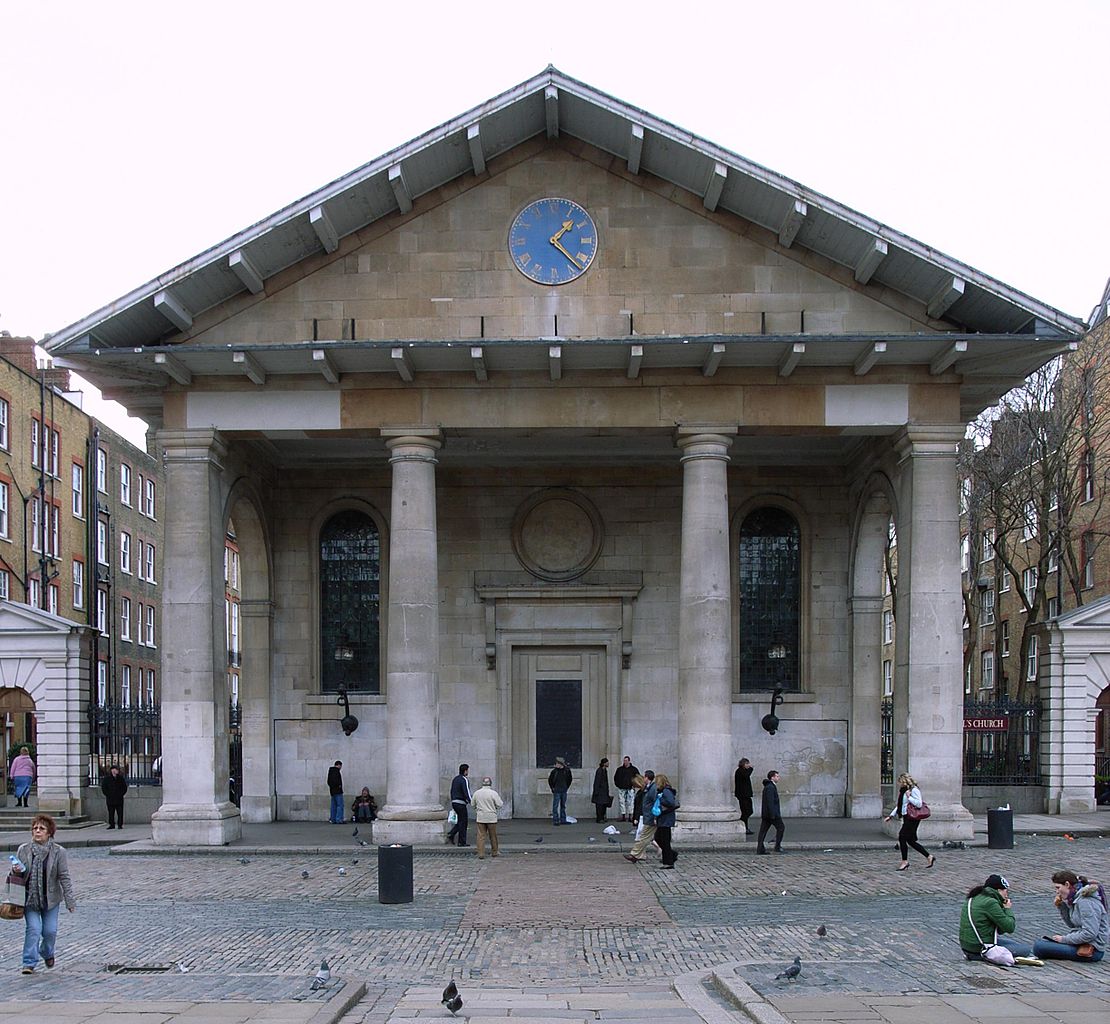
St. Paul’s Church in Covent Garden (built 1631-8) by Inigo Jones.
Photo by Steve Cadman via Wikimedia Commons.

The 1620s saw an upsurge in major projects to transform Britain’s landscape. Engineers from the Dutch Republic like Cornelius Vermuyden came to straighten its rivers, build canals, and even drain its marshes, converting them into pasturage and farmland — in the decades that followed, they would even begin to drain the Great Fens. The cityscapes changed too. The former theatre designer and architect Inigo Jones — by 1615 the Surveyor-General of the King’s Works — introduced classical architecture from the continent, drawing upon the rules of beauty and proportion that had been set down by Vitruvius in the first century BCE and resuscitated in Renaissance Italy by Andrea Palladio. Jones’s influence transformed England’s palaces, churches, cathedrals, and even Covent Garden square, to reflect his ancient Roman ideal.

But the environment, built or natural, would be most transformed by the experiments of a few individuals with fossil fuels. Dud Dudley, an illegitimate child of the 5th Baron Dudley, in the 1620s experimented with smelting iron with peat and coal. Dudley was not the first to do so — the patent on using coal instead of charcoal to work iron had been sold on from person to person since at least 1589 — but his experiments were among the most influential. The famous Abraham Darby, who achieved commercial success in applying coal to smelting metals in the early eighteenth century, was Dud Dudley’s great-great-nephew.

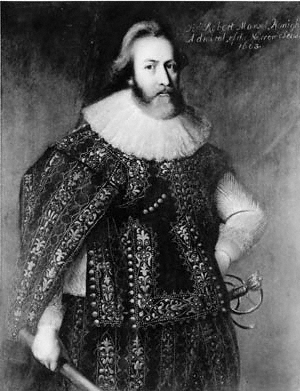
Sir Robert Mansell (1570/71–1652), by an unknown artist.
Image via Wikimedia Commons.

The decade also saw major new attempts to use coal as a fuel in other processes, such as glass-making. Although the patent on using coal to make glass had been around since at least 1610, by the 1620s Sir Robert Mansell had bought out the partners who owned it and was pouring a fortune into setting up glassworks at Newcastle. In this case, the transformation was institutional. Mansell’s political connections allowed him to widen the terms of his patent, such that he even tried to ban all other kinds of glass in England, regardless of whether they were made using other fuels, or even imported. Usually, patents of invention were for things entirely new, and were not supposed to interfere with existing English industries. But over the course of the 1610s, various abuses like Mansell’s came to light. King James I, eager for cash, had sold monopolies on ancient trades, as well as the new — one crony was even awarded a patent for inns and alehouses. Mansell’s patent, along with the others, was attacked in Parliament in the 1620s, and even revoked. The outcry ultimately led to the Statute of Monopolies of 1624 — the earliest patent legislation in England, which sought to regulate the royal practice of granting them. (Ironically, Mansell was so well-connected that he managed to get his controversial glass-making patent renewed and then exempted from the new Act.) The Statute of Monopolies was the only English patent legislation in force during the Industrial Revolution — there was no more patent legislation until 1852.

Finally, the ’20s saw a transformation of science. It was the decade in which Francis Bacon published some of his most significant works, on how to collect, refine, and systematise human knowledge for the good of humankind. He set out a comprehensive programme for the organisation of science and invention, with his utopian work New Atlantis setting out his ideal R&D lab – “Salomon’s House”. (Despite these high-minded aims, Bacon was also Mansell’s brother-in-law, and as attorney-general had helped draft the controversial glass-making patent. In 1621 he was convicted, fined, and even briefly imprisoned in the Tower of London for his role in the corrupt early patent system, though he appears to have been a scapegoat.)

December 28, 2019

American railways are simultaneously world-beating and terrible

Filed under: Business, Economics, Government, Railways, USA — Tags: , , , , — Nicholas @ 03:00

That’s because, as Sean Smith and Peter Earle point out, there are two very different entities running on America’s rails:

Burlington Northern Santa Fe (BNSF) locomotive 5399, Kansas City Southern (KCS) 4807, and 1890 westbound on the BNSF Emporia Sub near Timberland Blvd West of Northgate Street in Olathe, Kansas.
Photo by Tyler Silvest via Wikimedia Commons.

American railways are the envy of the world.

Many might shake a collective head at that statement. In the case of passenger rail that is an appropriate reaction. Since it was pieced together – a government-constructed Franken-rail system built of numerous bankrupt railways which were essentially nationalized – Amtrak has been a reliable money sink, losing tens of billions of dollars since 1970.

Any traveler that has used Amtrak to any significant extent has firsthand experience with the crumbling infrastructure, frequent delays, and general unpleasantness that accompanies U.S. passenger rail service. Even the oft-cited bright spot of Amtrak, the “high speed” Acela system (which shuttles between Boston and Washington D.C) pales in comparison when compared to high-end passenger rail systems in Western Europe, Japan, and China.

Bullet trains routinely travel at least 200 mph, whereas Acela trundles along at a pedestrian 84 mph, and there is no indication (and probably no intention) of that gap closing anytime soon.

U.S. passenger rail services in general are money-losing and antiquated versus their global counterparts, an inarguable (and to public transport proponents, embarrassing) fact. Passenger rail is just one part of the story, and serves as an excellent example of how not to manage a rail system. In fairness, efforts to turn Amtrak around (mainly through aggressive cost cutting) do seem to be having an impact, as current year losses total a shade under $30 million. It’s an admirable effort to be sure, but decades of losses, poor service, and general mismanagement cannot be ignored.

The U.S. freight railway system, conversely, is the envy of the world, and this is not hyperbole or chest thumping; the facts back it up. Since the Staggers Act of 1980, which deregulated freight rail, improvements have been substantial. U.S. freight railways carry 81% more ton-miles of freight, and costs have fallen 46%. (It isn’t common for an industry to increase its capacity by 81% while reducing costs by nearly half.) That level of success has even been noted by the Community of European Railway and Infrastructure Companies, which might be surprising, given the common assumption that Europe has a monopoly on rail excellence.

Compared side by side, it seems a conundrum: Amtrak limps along, still relying upon billions of dollars worth of taxpayer-financed subsidies, while U.S. freight railways evince growing profitability and capacity amid rapidly falling costs. Why are U.S. freight rails so profitable when U.S. passenger rail – sometimes traveling the same routes, on some of the same rails – remains a perennial money pit?

New Amtrak Viewliner diner Atlanta deadheading on the eastbound Capitol Limited at Point of Rocks in November 2017.
Photo by Mark Levisay via Wikimedia Commons.

December 20, 2019

Anton Howes on the “improving mentality” of the British industrial revolution

Filed under: Britain, Education, History, Technology — Tags: , , — Nicholas @ 05:00

In the latest Age of Invention newsletter, Anton Howes looks at some of the “bottom-up” educational initiatives that helped create and shape the industrial revolution:

I stumbled across a speech the other day, delivered by Dr Olinthus Gregory — the mathematics teacher at the Royal Military Academy at Woolwich — to the Deptford Mechanics’ Institution. The mechanics’ institutions, or institutes, were created by working men pooling their savings to pay for lectures, libraries, educational equipment, news-rooms, and book clubs. They spearheaded Britain’s bottom-up approach to adult education, with the classes held in the evenings after work. But they’re a story for another time.

Diagram of a Watt steam engine from Practical physics for secondary schools (1913).
Wikimedia Commons.

What caught my eye was Gregory’s speech. Delivered in 1826, Britain’s industrial prowess was already obvious to many. The Industrial Revolution was already in full swing. Gregory paints the picture perfectly:

    Agriculture, manufactures, commerce, navigation, the arts, and sciences, useful and ornamental, in a copious and inexhaustible variety, enhance the conveniences and embellishments of this otherwise happy spot. Cities thronged with inhabitants, warehouses filled with stores, markets and fairs with busy rustics; fields, villages, roads, seaports, all contributing to the riches and glory of our land.

But there was more to be done. After all, everything can always be improved (an attitude that I call the improving mentality):

    Recollect farther, that every natural and every artificial advantage is susceptible of gradual progression, and trace the yearly elevation to higher perfection. New societies for improvement … new machines to advance our arts and facilitate labour; waste lands enclosed, roads improved, bridges erected, canals cut, tunnels excavated, marshes drained and cultivated, docks formed, ports enlarged: these and a thousand kindred operations which present themselves spontaneously to the mind’s eye, prove that we have not yet attained our zenith, and open an exquisite prospect of future stability and greatness.

Progress had been made, but there was always room for more.

As for the causes, Gregory had some interesting observations. Important, he said, was coal: “more valuable to us than the gold mines ever were to Spain, since without these the various metals could not be worked, and half our manufactories would be at a stand.”

But coal alone was not enough. There would be less output, of course, but he did not say that progress would have been stifled altogether (which is also more or less my own position). Also important was that inventors could persuade the government of the benefits of innovation, which is something I mentioned in my last email. As Gregory put it, Britain had “a government of whom the arts and sciences never crave audience in vain.”

And most important of all was Britain’s community of inventors and scientists, from the Boultons and Watts and Smeatons and Arkwrights and Bramahs, to the Donkins, Hornblowers, Trevithicks, Maudslays and Stephensons (only a few of whom are at all heard of today) …

November 23, 2019

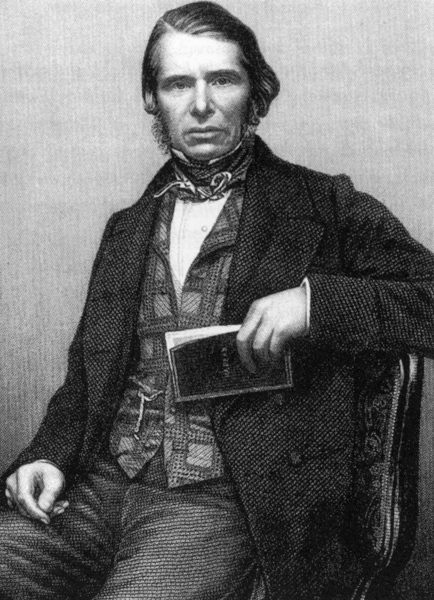
Sir Charles Trevelyan, head of the Irish relief efforts during the potato famine, and creator of the modern civil service

By happenstance, after posting the OSP video on the history of Ireland, a post at Samizdata covered one of the questions I had from OSP’s summary, specifically that the famine was worsened by British “laissez-faire mercantilism”. Mercantilism is rather different from any kind of laissez-faire system, so it was puzzling to hear Blue link them together as though they were the same thing. Of course, I live in a province currently governed by the Progressive Conservative party, so it’s not like I’m unable to process oxymorons as they go by…

Anyway, this post by Paul Marks looks at the man in charge of the relief efforts:

Part of the story of Sir Charles Trevelyan is fairly well known and accurately told. Charles Trevelyan was head of the relief efforts in Ireland under Russell’s government in the late 1840s – on his watch about a million Irish people died and millions more fled the country. But rather than being punished, or even dismissed in disgrace, Trevelyan was granted honours, made a Knight Commander of the Order of the Bath (KCB) and later made a Baronet, not bad for the son of the Cornishman clergyman. He went on to the create the modern British Civil Service – which dominates modern life in in the United Kingdom.

Charles Edward Trevelyan (contemporary lithograph). This appeared in one of the volumes of “The drawing-room portrait gallery of eminent personages principally from photographs by Mayall, many in Her Majesty’s private collection, and from the studios of the most celebrated photographers in the Kingdom / engraved on steel, under the direction of D.J. Pound; with memoirs by the most able authors”. Many libraries own copies.
Public domain, via Wikimedia.

With Sir Edwin Chadwick (the early 19th century follower of Jeremy Bentham who wrote many reports on local and national problems in Britain – with the recommended solution always being more local or central government officials, spending and regulations), Sir Charles Trevelyan could well be described as one of the key creators of modern government. If, for example, one wonders why General Douglas Haig was not dismissed in disgrace after July 1st 1916, the first day of the Battle of the Somme when twenty thousand British soldiers were killed and thirty thousand wounded for no real gain (the only officers being sent home in disgrace being those officers who had saved some of them men by ordering them stop attacking – against the orders of General Haig), then the case of Sir Charles Trevelyan is key – the results of his decisions were awful, but his paperwork was always perfect (as was the paperwork of Haig and his staff). The United Kingdom had ceased to be a society that always judged someone on their success or failure in their task – it had become, at least partly, a bureaucratic society where people were judged on their words and their paperwork. A General, in order to be great, did not need to win battles or capture important cities – what they needed to do was write official reports in the correct administrative manner, and a famine relief administrator did not have to actually save the population he was in charge of saving – what he had to do was follow (and, in the case of Sir Charles, actually invent) the correct administrative procedures.

But here is where the story gets strange – every source I have ever seen in my life, has described Sir Charles Trevelyan as a supporter of “Laissez Faire” (French for, basically, “leave alone”) “non-interventionist” “minimal government” and his policies are described in like manner. […]

Which probably explains why Blue used the term in the previous video. Then these “laissez-faire” policies are summarized, which leads to this:

None of the above is anything to do with “laissez faire” it is, basically, the opposite. Reality is being inverted by the claim that a laissez faire policy was followed in Ireland. A possible counter argument to all this would go as follows – “Sir Charles Trevelyan was a supporter of laissez faire – he did not follow laissez faire in the case of Ireland, but because he was so famous for rolling back the state elsewhere (whilst spawning the modern Civil Service) – it was assumed that he must have done so in the case of Ireland“, but does even that argument stand up? I do not believe it does. Certainly Sir Charles Trevelyan could talk in a pro free market way (just as General Haig could talk about military tactics – and sound every inch the “educated soldier”), but what did he actually do when he was NOT in Ireland?

I cannot think of any aspect of government in the bigger island of the then UK (Britain) that Sir Charles Trevelyan rolled back. And in India (no surprise – the man was part of “the Raj”) he is most associated with government road building (although at least the roads went to actual places in India – they were not “from nowhere to nowhere”) and other government “infrastructure”, and also with the spread of government schools in India. Trevelyan was passionately devoted to the spread of government schools in India – this may be a noble aim, but it is not exactly a roll-back-the-state aim. Still less a “radical”, “fanatical” devotion to “laissez faire“.

November 3, 2019

Building Angkor – A Drowning City – Extra History – #4

Filed under: Architecture, Asia, History, Religion — Tags: , , , , , — Nicholas @ 06:00

Extra Credits
Published 2 Nov 2019

Join us on Patreon! http://bit.ly/EHPatreon

We’ve talked about the magnificence of Angkor at its peak, but how did this sprawling metropolis become a city of ruins? The city of Angkor depended on the reliability of the seasonal monsoon. Several decades of drought left them with little choice than to modify the whole water system. But when the waters returned, they returned in force. As did enemy forces. Thus begins the death spiral of the city of Angkor.

From the comments:

Extra Credits
1 day ago
Always 👏 maintain 👏 your 👏 water 👏 infrastructure !!!

Alberta and the Liberals

Filed under: Cancon, Economics, Government, Politics — Tags: , , , — Nicholas @ 03:00

Andrew Coyne summarizes the deep-seated anger in Alberta toward the federal Liberals … and the rest of Canada:

The point sometimes arrives in politics when a complex of different issues coalesce into one; when people stop listening to the arguments in favour of or against each, and instead allow their emotions to dictate a single response to the lot. We are at such a point in Alberta.

Pipelines, carbon taxes, equalization, the Canada Pension Plan — to which familiar litany we can now add the departure of Encana’s headquarters from Calgary — have become, not so much issues in themselves, but arguments in another, grander meta-controversy. All of the questions raised by each (is there a problem? if so, how is it to be solved? who pays? etc) have been pureed into a single narrative: of a Liberal government that is at best indifferent and at worst hostile to Alberta, whose re-election confirms the rest of Canada is as well.

There is, it should be said, some truth in this. Whether the Liberals have failed to win more than a handful of seats in Alberta in over a half a century because of their historic disdain for the province, or whether the causation runs the other way, the chicken is as malignant as the egg. There’s no doubt some people in some parts of the country would cheerfully shut down the oilsands tomorrow, nor is it impossible to detect a strain of anti-Albertanism in some of the rhetoric on the subject.

Albertans, for their part, are not just in a fight to defend their major industry today, but have been for decades. It is inconceivable, to take the most obvious example, that the National Energy Program, that vast attempt to expropriate Alberta’s oil wealth for the benefit of central-Canadian oil consumers, would have been visited upon either Ontario or Quebec, were the situations reversed.

January 9, 2019

The past is a foreign – and very smelly – place

Filed under: Europe, Food, Health, History — Tags: , , , , — Nicholas @ 05:00

We moderns tend to take ordinary public health issues for granted, yet the development of adequate sanitation and improvements in personal hygiene have probably contributed more to eliminate disease and expand human lifespan than any number of medicinal innovations. Marian L. Tupy reminds us just how … aromatic … the past was, and why:

Most of us take modern restrooms for granted, but proper sanitation is a relatively modern phenomenon and is still far too rare in the poorest regions of the world.

The need to keep human and animal waste away from human contact may seem obvious today, but for millennia that was not the case. Before the emergence of the germ theory of disease, and the subsequent public health campaigns and construction of adequate sanitation infrastructure in most of the world, people and waste commingled – with catastrophic results.

Countless millions of people got sick or died from diseases such as diarrhoea, ascariasis (a type of intestinal worm infection), cholera, hepatitis, trachoma, polio, schistosomiasis and so on.

In due deference to our ancestors, it has to be noted that some cultures, such as ancient Rome, paid due attention to cleanliness. The Romans built numerous public baths, which were accessible even to the very poor for a nominal fee, and a sophisticated system of sewers that enabled Rome to grow and reach a population of over 1 million people around the start of the first millennium. That feat would not be replicated in Europe until London and Paris in the 19th century.

In general, however, standards of hygiene tended to be very poor. A typical urban dwelling had a cesspit underneath the house or next to it. That’s where human and kitchen waste accumulated and fermented. Inadequate drainage, irregular emptying and heavy rains could make the cesspit overflow and seep into the house. While discouraged by the city authorities, people often emptied their chamber pots into the streets below.

As Johan Norbeg of the Cato Institute wrote in his 2016 book Progress: Ten Reasons to Look Forward to the Future, “When pedestrians heard the shout of ‘Gardyloo!’ they ran for cover. This phrase, taken from the French for ‘Look out for the water,’ was your only warning that someone was about to throw their waste out of the window.”

In rural areas, people lived with their animals, including chickens and cows, and used both animal and human waste to fertilise their crops – an extremely dangerous practice compounded by the fact that people could go throughout much of their lives without ever washing their hands. That led to epidemics of disease as well as other unsavoury consequences.

November 30, 2018

“Infrastructure” is a Canadian word meaning “jobs for the boys”

Filed under: Cancon, Government, Politics — Tags: , , , — Nicholas @ 03:00

H/T to Colby Cosh for the link.

September 26, 2018

Reforming Union Pacific

Filed under: Business, Economics, Railways, USA — Tags: , , , — Nicholas @ 03:00

Fred Frailey explains why the vast Union Pacific system is due for some serious economic streamlining:

Union Pacific locomotive 5587, a General Electric AC4400CW-CTE (AC44CWCTE)
Photo by Terry Cantrell via Wikimedia Commons.

Union Pacific is the ideal lab rat for Precision Scheduled Railroading, practiced by the late Hunter Harrison on four Class I railroads, with great rewards for shareholders and mixed results for customers. UP, which will begin recasting itself October 1, is ideal for the role because it has too many employees, too many unproductive route miles, and too many expensive toys. Plus, it is less interested in increasing market share than in maximizing freight rates, which makes right-sizing the railroad easier. Let’s start by running the numbers.

Employees. At the peak of the last railroad cycle in 2006, Union Pacific had already been lapped by its western competitor, BNSF Railway, in both cars originated and revenue ton miles. Since then, through 2017, UP’s originations and revenue ton miles both fell 17 percent, while BNSF RTMs actually set a record in 2017. Yet at 44,146 employees last year, UP’s employee count was still 7 percent higher than that of BNSF. To put this another way, for UP’s productivity per employee (revenue ton miles per worker) to equal its competitor’s, it would need to slice the headcount by 16,000. A place to start might be headquarters in Omaha. UP counted 3,678 executives, officials and staff assistants in 2017 versus BNSF’s 1,511.

Barren route miles. Salina, Kan., to Provo, Utah, is becoming a traffic wasteland. That didn’t stop UP from laying welded rail and concrete ties and from covering the almost 1,000 miles with centralized traffic control. Meanwhile, one train a day (plus Amtrak) operates In Missouri between St. Louis and Poplar Bluff, Ark. And the railroad has effectively ceased freight service between Watsonville Junction and San Luis Obispo, Calif., and is close to doing so over the rest of the Coast Line to Los Angeles. All of these routes and perhaps many others you can identify contribute little revenue but buckets of costs, inflating the operating ratio (which is the percentage of revenues eaten up by operating costs). They would constitute Hunter Harrison’s first target.

Map of the Union Pacific Railroad as of 2008, with trackage rights in purple (the special Chicago-Kansas City intermodal trackage rights are lighter).
Image via Wikimedia Commons.

[…]

Moreover, there are aspects to PSR as practiced by Hunter Harrison that customers won’t like. At the core of Precision Scheduled Railroading is intense use of assets: Run as many trains every day one direction as you do the other, fill them to maximum designed length and operate them at similar speeds. This isn’t how the commercial world works, and the Hunter Harrison way to make customers ship seven days a week was to discount rates on slow days and slap on surcharges on busy days. This keeps your crews and equipment fleet in motion at all times, and those cars and locomotives not continually used can be retired. Goodbye to growth and increased market share, which is a messy process requiring you to accede to the needs of customers rather than the other way around. But it is efficient.

However, if Union Pacific is serious about serving its customers better and delivering individual cars rather than trains to their destinations on schedule, I have an idea that I guarantee will achieve that result: Base salaried bonuses and stock grants on UP’s success in getting cars to customers on the right day and time and on the right train. UP has scheduled individual cars for decades, but there have never been monetary consequences for achieving those plans. People do follow the money. And when Union Pacific does for customers what it says it will do, calling the process Precision Scheduled Railroading or whatever you wish, I will be leading the applause.

September 1, 2018

The legal tangle around the Trans-Mountain pipeline approval process

Filed under: Business, Cancon, Environment, Government, Law — Tags: , — Nicholas @ 03:00

Jay Currie suspects the process has been intentionally complicated to the point that there may not be a way out for this government:

What the Court essentially asked was, “Did the Federal Government consult enough?” and then concluded, “No, not enough.”

How much is “enough”? That is a question which this decision really does not answer. And I suspect it does not answer it because there is actually no answer which is even close to true.

In a normal process a reasonable level of public consultation would be reached when the public has been given an opportunity to comment on the matter at hand. Which is a bit vague but there is case law which fleshes out what such an opportunity might look like.

However, once environmentalists and First Nations are engaged it is not at all obvious that merely having the opportunity to comment is sufficient. Unlike a rezoning application, an application to build a pipeline (or, realistically, virtually any other large undertaking) creates the opportunity for First Nations to talk about everything from ancient hunting rights, to sacred grounds, to former village sites, to disruptions to present First Nation culture and so on. Having the environmentalists involved ensures that the relatively easy solution of simply paying the First Nations’ people for their consent, is off the table. That solution will be denounced by the enviros as cultural genocide and worse.

All of which creates, and might arguably have been intended to create, a Gordian knot when it comes to considering major projects. Consultation becomes an endless task and one which has no defined parameters. The decision today indicates that an extensive consultation process is not enough but it does not indicate what might be enough.

Delightfully, the shareholders of Kinder Morgan – which owns TransMountain – voted today to sell the project to Canada’s feckless Federal Government for several billion dollars.

I suspect the CEO danced a little jig relieved that he no longer had to guess at how far consultations have to go. But Canada is stuck with a completely dysfunctional system which is being exploited by environmentalists and First Nations to prevent infrastructure from being built. That will have to be fixed.

« Newer PostsOlder Posts »

Powered by WordPress