Quotulatiousness

January 25, 2025

“How can an active program of ending censorship; of lauding colour blind appointment on merit; … be Fascism redux?”

Filed under: Government, Liberty, Media, Politics, USA — Tags: , , , — Nicholas @ 04:00

As discussed yesterday, one of the many “hitting the ground running” acts of Donald Trump at the beginning of his second term in office has been to issue executive orders to dismantle a lot of progressives’ favourite policies, and many of them are calling it “fascism”:

Trump-the-Presidency 2.0 has already proved to be rather different from the 1.0 version. It is not merely that this time around he won the US popular vote. It is that he has “hit the ground running” with a whole stack of executive orders.

Watching the reaction to this has become — to put it mildly — a somewhat bifurcated experience. Lots of people, who were relieved at his victory, applaud what they see as a return to common sense; a rejection of censorship; a rejection of a politics intrusive into any and all aspects of life.

Conversely, there are also lots of — typically very online — people who see it as Fascism redux, as the equivalent of the end of Weimar Germany being live-streamed. How can an active program of ending censorship; of lauding colour blind appointment on merit; of removing DEI commissars from the US Federal Government; that includes appointment of women and persons of colour to senior positions; be Fascism redux?

The short answer is: it isn’t. The question then becomes, how can it be seen as such? This is where the long-run consequences of anti-discrimination law kicks in.

Anti-discrimination law creates a legal-bureaucratic structure that operates on the basis that the general citizenry is continually hovering on the edge of wrong think (racism) and wrong act (discrimination). The presumption becomes — without all this active effort — racism and discrimination will be unleashed.

This is nonsense. Anglosphere countries have low levels of racism and anti-discrimination norms have become widely accepted. Where there are discrimination issues, they are mostly problems of cultural distance that have a significant element of practicality from differing expectations between groups.

Nevertheless, it is very much in the interests of the legal-bureaucratic structure that anti-discrimination law sets up that propensities to wrong act and wrong think be seen as real, and endemic. Even better, is if the problem is seen as even larger than originally conceived.

So, we get a double expansion. The first expansion is in the range of protected groups. This provides a broadening of the social ambit of the potential wrong thinking (racism, misogyny, homophobia, Islamophobia, transphobia …) and of the potential wrong acting (who might be discriminated against).

As this moral dimension becomes so elevated—not least because there are so much employment involved, but also as considerable social leverage is created by for those who can set what is, or is not, legitimate action and speech—there is expansion of what constitutes wrong think and wrong act. There is large, indeed expanding, ambit for intellectual and other entrepreneurs to identify new sins of discrimination, new sins of unequal consideration, new ways wrong think propagates, and new ways of signalling one’s rejection of such sins.

It is better still if uttering true things becomes a wrong act, expressing wrong think, for people are prone to do that, to notice things. Of course, if you start trying to shun, shame and punish folk for expressing true things, for noticing things, you are likely to generate quite a lot of resentment. This is useful, for such pushback just further “establishes” the propensity to wrong think and wrong act. Hence Transphobia and Islamophobia becoming such markers of wrong think—there are so many true things to not notice.

There is even a term for someone who notices inconvenient patterns — far right. A term that has become the classic thought-terminating cliché in the service of not noticing.

January 24, 2025

The end of “affirmative action” in US government hiring

Filed under: Bureaucracy, Government, History, USA — Tags: , , , , , — Nicholas @ 04:00

In The Free Press, Coleman Hughes outlines how the US federal government got into the formal habit of hiring and promoting staff based on things other than ability and merit during the Nixon administration:

Trump’s Executive Order 14171 is titled Ending Illegal Discrimination and Restoring Merit-Based Opportunity. It describes how vast swaths of society, including the “Federal Government, major corporations, financial institutions, the medical industry, large commercial airlines, law enforcement agencies, and institutions of higher education have adopted and actively use dangerous, demeaning, and immoral race- and sex-based preferences under the guise of so-called ‘diversity, equity, and inclusion’ (DEI)”.

In response, Trump has ordered the executive branch and its agencies “to terminate all discriminatory and illegal preferences, mandates, policies, programs, activities, guidance, regulations, enforcement actions, consent orders, and requirements”.

That is a lot of preferences and mandates. Trump’s executive order accurately describes the enormousness of the DEI bureaucracy that has arisen in government and private industry to infuse race in hiring, promotion, and training. Take, for example, the virtue-signaling announcements made by big corporations in recent years — such as CBS’s promise that the writers of its television shows would meet a quota of being 40 percent non-white.

And so, we will now see what federal enforcement of a color-blind society looks like. We’ll certainly see how many federal employees were assigned to monitor and enforce DEI — Trump has just demanded they all be laid off.

The most controversial part of this executive order is that it repeals the storied, 60-year-old Executive Order 11246, signed by President Lyndon Johnson in 1965. Johnson’s original order mandated that government contractors take “affirmative action” to ensure that employees are hired “without regard to their race, color, religion, or national origin”.

The phrase affirmative action, however, has come to have a profoundly different meaning for us than it did during the 1960s civil rights era. Back then, it simply meant that companies had to make an active effort to stop discriminating against blacks, since antiblack discrimination was, in many places, the norm. Only later did the phrase come to be associated with the requirement to actively discriminate in favor of blacks and other minorities.

One of the great ironies of affirmative action is that it was not a Democrat but a Republican president, Richard Nixon, who did more than anyone to enshrine reverse racism at the federal level by establishing racial quotas. According to the Richard Nixon Foundation, “The Nixon administration ended discrimination in companies and labor unions that received federal contracts, and set guidelines and goals for affirmative action hiring for African Americans”. It was called the “Philadelphia Plan” — the city of its origin.

For the first time in American history, private companies had to meet strict numerical targets in order to do business with the federal government. Philadelphia iron trades had to be at least 22 percent non-white by 1973; plumbing trades had to be at least 20 percent non-white by the same year; electrical trades had to be 19 percent non-white, and so forth.

In the intervening decades, this racial spoils system has not only caused grief for countless members of the unfavored races — it has also created incentives for business owners to commit racial fraud, or else to legally restructure so as to be technically “minority-owned”. As far back as 1992, The New York Times reported that such fraud was “a problem everywhere” — for instance, with companies falsely claiming to be 51 percent minority-owned in order to secure government contracts. In a more recent case, a Seattle man sued both the state and federal government, claiming to run a minority-owned business on account of being 4 percent African.

January 23, 2025

Do you want an imperial presidency, because this is how you get an imperial presidency

Filed under: Bureaucracy, Government, Law, Liberty, Politics, USA — Tags: , , , — Nicholas @ 03:00

On paper, prime ministers in Westminster parliamentary systems have more power, but the US president has more immediate, practical power to direct government activity using totally non-democratic executive orders. Democrats didn’t mind that when it was Obama wielding the pen, but they’re incandescent now that it’s the Bad Orange Man inking rules into existence. MAGA Republicans hated when Joe Biden’s ventriloquist was writing the orders, but suddenly it’s fine because it’s their president doing it. In neither case is democracy safe:

A quick image search turns up plenty of examples of Presidents proudly showing off freshly signed documents. Usually these will be laws passed by the legislators but sometimes (especially in January 2025) it’s rule-by-decree on steroids.

Well before President Donald Trump returned to office, his supporters boasted that he would start the second term with a flurry of executive actions. The new president exceeded expectations with an avalanche of pardons, orders, and edicts on matters great and small. Some should be welcomed by anybody hoping for more respect for liberty by government employees. Others extend state power in ways that are worrisome or even illegitimate. All continue the troubling trend over the course of decades and administrations from both parties for the president to assume the role of an elected monarch.

From an Interoffice Memo to “Shock and Awe”

“When President Trump takes office next Monday, there is going to be shock and awe with executive orders,” Sen. John Barrasso (R–Wyo.) predicted last week.

The president signed some of those orders as he bantered in the Oval Office with members of the press, engaging in more interaction than we saw from his predecessor over months. Wide-ranging in their scope, Trump’s orders “encompassed sweeping moves to reimagine the country’s relationship with immigration, its economy, global health, the environment and even gender roles,” noted USA Today.

Executive orders, which made up the bulk of Trump’s actions (he also pardoned and commuted the sentences of participants in the January 6 Capitol riot), are basically interoffice memos from the boss to executive branch agencies. “The President of the United States manages the operations of the Executive branch of Government through Executive orders,” according to the Office of the Federal Register of the National Archives and Records Administration.

That doesn’t sound like much — and at first, it wasn’t. Executive orders as we know them evolved into their modern form from notes and directives sent by the president to members of the cabinet and other executive branch officials. Nobody tried to catalog them until 1907.

But because executive branch officials interpret and enforce thickets of laws and administrative rules under which we try to live, guidance from the boss is powerful. Interpreted one way, a rule regulating unfinished gun parts leaves people free to pursue their hobbies; interpreted another, and those owning the parts are suddenly felons. The president can push interpretations either way.

They Can Be Used Correctly, or Abusively

So, some of Trump’s executive orders are very welcome, indeed, for those of us horrified by federal agencies pushing the boundaries of their power.

“The vicious, violent, and unfair weaponization of the Justice Department and our government will end,” Trump said in his inaugural address regarding an order intended to punish politically motivated use of government power. “I also will sign an executive order to immediately stop all government censorship and bring back free speech to America,” he added of another.

January 22, 2025

“If this country MAIDs itself in the next 18 months, we at The Line know what slogan belongs on Canada’s epitaph”

The Line‘s editors gathered up the first day’s worth of Donald Trump II – The Trumpening and sifted out the bits particularly relevant to the dysfunctional Dominion to the north:

Donald Trump successfully trolled Canada’s hypersensitive political class about Canada becoming the 51st state of the union. The anguished butthurt still pains them.

What is happening right now was absolutely foreseeable. No one can claim with a straight face that U.S. tariffs could not have been foreseen on January 21, 2025, a full eight years to the day that Donald Trump was inaugurated for the first time. It’s not 2016, anymore. Nobody was blindsided.

Your Line editors wrote plenty of columns over the past decade noting that even if Donald Trump the man were not re-elected, the protectionist and reactionary currents that pushed him to power were still ascendant in America. The Biden admin was a reprieve, an opportunity for Canada to make necessary internal changes to withstand those currents.

And what did this country do with that time?

Jack all.

We at The Line have been scratching our noggins trying to think of single meaningful Canadian reform or improvement to come out of Trump 1. We did nothing to strengthen ourselves internally by an iota. Not a single lesson was learned.

It’s entirely possible that we were inevitably going to be dinged by some U.S. administration and, perhaps, this was not avoidable. No one can fully mitigate all risks. Granted.

But we can certainly do literally anything to address risks that are highly probable. Instead, we have absolutely degraded both our moral and financial capacity to be resilient in the face of economic threats; and that degradation is the direct result of almost ten years of Liberal party priorities, inactions, or choices ranging on files from crime, to market diversification, to being truly useful to our international allies, to failures on interprovincial trade.

This wasn’t unforeseen. We were willfully blind. That’s different.

We ignored the looming threat in part because our government was distracted by COVID. But also also because Canada’s political culture is too immature to make hard decisions, or to have real debates about trade offs or priorities.

Justin Trudeau is the kind of prime minister who would rather run the kind of country that lets him spout off on Jake Tapper about compassion and $10-day-day daycare and dental programs than NATO spending.

What about the scads of taxpayer cash we’ve squandered on things like “superclusters”? What if we had prioritized strategically crucial projects like Northern Gateway or Energy East, instead of letting them die under the mantra of: “no business case”.

Remember when Germany and Japan came asking after our natural gas supplies in the wake of the Russian invasion of Ukraine? What if we had spent oh, say, $13 billion, on fast tracking some kind of natural gas facility to supply our international allies because doing so served a strategic national interest rather than a pure economic one.

We didn’t pull that number from the air, by the way: that’s what Canada subsequently committed to subsidies for EV plants in southern Ontario — something for which there was a scant “business case” before, and virtually none now that Trump has decided to scrap EV subsidies. It’s looking not-great, Bob. Not great at all.

See, that’s the problem with running a low-productivity, highly centralized griftocracy that is more invested in expanding entitlements, symbolic action and emotional gratification than actually doing anything. We are now severely limited in our capacity to respond in the face of serious economic threats. We can talk a good game. We can bluster. We can invest in more symbolic retaliatory action; but we have utterly squandered the internal resilience required to mount a real fight in even a trade war, much less a kinetic one.

And we at The Line can’t help but note the deafening silence from our international allies as well. They think we’ve got it coming, too. Perhaps there’s “no business case” for sticking their necks out on our behalf.

The first time a big new battery plant was subsidized, I thought it was a bad idea. Then it happened again and again. This is exactly why you don’t want your government at any level “picking winners”! Ross McKitrick had a series of tweets discussing this and other noteworthy executive orders issued (thread on Threadreader, but that may not be available for long):

(more…)

January 17, 2025

Trump’s demands include some things that would be quite beneficial to Canada

In the National Post, Bryan Schwartz suggests that some of the things Trump has raised as issues in Canada/US trade would be economically sensible for Canada to address because they’d reduce costs of doing business in Canada which would be good for all Canadians (except the crony capitalists in the blatantly protectionist “supply management” cartels):

US President-elect Donald Trump trolling about Canada becoming the 51st state of the union does seem to have directed attention to our bilateral trade situation wonderfully.

The threatened Trump tariffs would hurt both the United States and Canada in many ways. But the U.S., with a larger and more productive economy (on a per capita basis), is better able to sustain the immediate pain. The economic pressure on Canada is, therefore, serious and credible.

Canada should first address issues that are of particular importance to the Trump administration. The incoming president tends to emphasize national security, even over economic nationalism. The authority of the president, under the inherent powers of the office and congressional statutes, is greater if the issue relates to national security.

The same holds under international trade agreements. The president can raise issues that Canada can address in a prompt and reasonable manner. These include border security and increasing Canada’s commitment to contributing its fair share to international alliances, which would include increasing military expenditures.

Second, Canada should recognize that external pressures can provide opportunities to do things that are in this country’s own interests, but are otherwise politically difficult. Outside pressures have in the past encouraged Canada to adopt several measures that are good for the country, such as reducing pork-barreling and regional favouritism in government contracting.

Canada’s dairy protectionism provides a good example of a trade concession that would benefit Canada, as it is unfair to lower-income Canadians and, in the long run, hurts the industry itself. An industry more exposed to competitive pressures would be incentivized to be more productive and seek to expand into international markets.

Australia has shown how such marketing boards can be abolished in a manner that gives some time to the industry to adjust and ultimately benefits all concerned. Canada could similarly rid itself of its outdated and counterproductive Freshwater Fish Marketing Corporation, as well. To the extent that the United States pressures us to eliminate such supply management systems, it is actually doing us a favour.

Likewise, given that the U.S. is moving away from suppressing free expression in cyberspace, Canada would benefit from joining such initiatives rather than continuing down the path of having government or big companies effectively engage in censorship under the guise of fighting “disinformation”. The best remedy for any wrongheaded speech is rightheaded speech, not censorship.

At Dominion Review, Brian Graff steals a line from George C. Scott’s portrayal of Patton who said (in the film, not in real life) – “Rommel, you magnificent bastard. I read your book!” after reading the book of Trump’s Trade Representative, Robert Lighthizer:

Lighthizer wrote a book (released in June 2023) about his trade views and experience entitled No Trade Is Free: Changing Course, Taking on China, and Helping America’s Workers, which I just read. I only became aware of Lighthizer in November, in part because of a review of his book in The Guardian.

I don’t think Lighthizer is a bastard (literally or figuratively). He is hardly magnificent, but his book should be required reading for Canadians interested in our upcoming negotiations with the US. Our government would learn how best to counter the US by preparing a strong strategy and going on offence even before negotiations begin.

In short, we should not give away anything for free. This is Lighthizer’s position in matters of trade. For example, Canada should not volunteer to meet the two percent defense spending target ahead of negotiations. If anything, Canada should be accusing the US of whatever complaints we can muster. Trump might complain about the Canadian border being porous when it comes to people and drugs, but we can make the same claims, and add on the fact that the US should do more to stop the flow of illegal guns into Canada across our southern border.

Lighthizer provides a history of the US based around the idea that the US revolution and the constitution were a reaction to the mercantilist policies of Britain, which wanted to export manufactured goods and import only raw materials, while also limiting US trade with the rest of the world. Here is Lighthizer’s essential view:

    Today, the tide has turned against the argument for unfettered free trade, in no small part because of the changes we made in the Trump administration. More broadly, evidence and experience have shown us that free trade is a unicorn – a figment of the Anglo-American imagination. No one really believes in it outside of countries in the Anglo-American world, and no one practices it. After the lessons of the past couple decades or so, few believe in it even within that world, save for some hard-core ideologues. It is a theory that never worked anywhere.

This is his critique of the neoliberal free trade approach:

    According to the definitions preferred by these efficiency-minded free traders, the downside of trade for American producers is not evidence against their approach but rather is an unfortunate but necessary side effect. That’s because free trade is always taken as a given, not as an approach to be questioned. Rather than envisioning the type of society desired and then, in light of that conception of the common good, fashioning a trade policy to fit that vision, economists tend to do the opposite: they start from the proposition that free trade should reign and then argue that society should adapt. Most acknowledge that lowering trade barriers causes economic disruption, but very few suggest that the rules of trade should be calibrated to help society better manage those effects. On the right, libertarians deny that these bad effects are a problem, because the benefits of cheap consumer goods for the masses supposedly outweigh the costs, and factory workers, in their view, can be retrained to write computer programs. On the left, progressives promote trade adjustment assistance and other wealth-transfer schemes as a means of smoothing globalization’s rough edges.

This section is also key:

    … mercantilism and a free market are dramatically different systems, with distinctions that are important to note. Mercantilism is a school of nationalistic political economy that emphasizes the role of government intervention, trade barriers, and export promotion in building a wealthy, powerful state. The term was popularized by Adam Smith, who described the policies of western European colonial powers as a “mercantile system.” Then and now, there are a vast array of tools available for countries seeking to go down this path. Mercantilist governments, for instance, frequently employ import substitution policies that support exports and discourage imports in order to accumulate wealth. They employ tariffs, too, of course, and they limit market access, employ licensing schemes, and use government procurement, subsidies, SOEs, and manipulation of regulation to favor domestic industries over foreign ones.

The focus of the book, and the main villain, is China, followed closely by the World Trade Organization (WTO). Canada gets less than 77 mentions, Mexico gets 99 mentions in the first 352 pages of 576 (the e-book stops counting at 99), and Japan gets 99 mentions in the first 400 pages. Compare this to China, which gets 99 mentions within the first 101 pages alone.

January 13, 2025

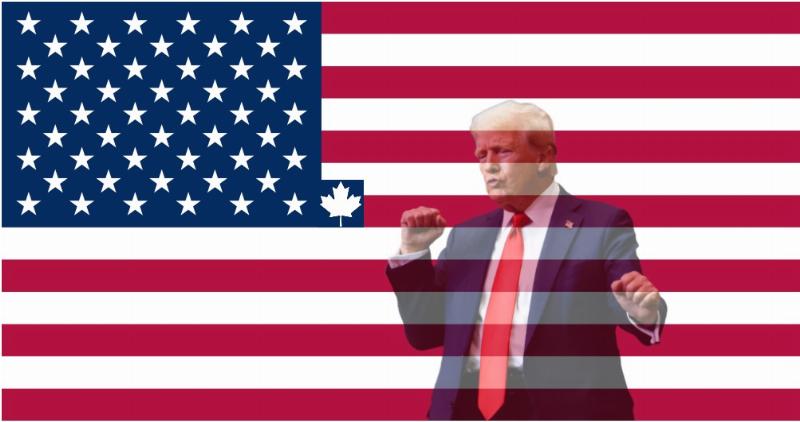
Muttering something about “manifest destiny” while glancing north

Filed under: Cancon, Media, Politics, USA — Tags: , , , , , — Nicholas @ 05:00

The Line‘s weekly dispatch is, as usual, mostly behind the paywall but the portion visible to cheapskates contains much of interest:

Manifest Destiny, 2025? Big Serge’s updated map for the old US War Plan Red for a military invasion of Canada.

It’s no coincidence that as Canada’s leadership devolved into its own navel, the very-soon-to-be-inaugurated Donald Trump escalated his provocations. This week, Trump threatened to use “economic force” to push Canada to bend the knee. Meanwhile, we cannot help but notice that the idea of a Canadian state is starting to gain significant traction in even moderate and mainstream American conservative circles. Meanwhile, we’ve got Alberta Premier Danielle Smith supping with Kevin O’Leary and Jordan Peterson down in Mar-a-Lago.

Tap tap. May we suggest that you peruse the safety cards tucked into the back of your seat, buckle up, and take note of your nearest emergency exits?

Whether we are talking about some kind of economic union, or a full-blown annexation, the fact that at least some in America are reviving the term “Manifest Destiny” is a possibility that we can no longer afford to dismiss as mere trolling. While we hope that the Trump administration is going to be so bogged down with other policy priorities that “Canada 51” is soon overshadowed, your Line editors have been game theorying out a host of possible scenarios and … none of them look great. If Trump et al get serious about this idea — and, again, we have no way to know if they will get serious about this idea — then we at The Line fear that Canada is in for some serious turmoil in the coming few months.

As I said in an email to Severian the other week, “… Canada will have very little ability to react to whatever Hitler, er, I mean “Trump” will do as soon as he’s inaugurated. It was clear before this that Trudeau cared very little about ordinary Canadians’ lives, but this really is dereliction of duty on a cosmic scale. If Trump does follow through with that huge tariff, the Canadian economy is likely to collapse, as we’re so deeply intertwined with the US on so many levels. Sadly, this might make it even more attractive to Trump, as it would absolutely encourager les autres on a global scale. If the BOM is willing to destroy the economy of his closest trading partner, what might he do to France? Or Germany? Or South Korea?” Back to the dispatch:

To explain our alarm, let’s first look at another news item to cross the desk. This week, Justin Trudeau travelled south to attend the funeral of Jimmy Carter, and stopped at the CNN studios for a quick interview with Jake Tapper on the way through.

On the whole, we think his interview was fine. Look, Trudeau’s been through a lot in the last few days, and considering the circumstances, it’s not reasonable to expect a breakthrough performance. So we’re being a bit unkind to nitpick, but something he said during that interview deserves scrutiny.

Justin Trudeau got far too comfortable with being treated as a progressive superstar, not only among the sycophants with CBC nametags but even on the international stage … perhaps especially on the international stage. Trudeau was always inclined to the performative in everything he did, and he might well only feel fully alive when cameras are rolling. The evidence certainly seems to point in that direction.

The “most prolific Canadian actor” meme was mildly amusing during Trudeau’s first term in office, as he went out of his way to put on elaborate costumes and to perform for the audience. This sort of thing was understandable if not particularly welcome to those who wanted Canada to be taken seriously by our allies and trading partners. It was clichéd to joke about what novelty socks Trudeau was wearing at any given international event … because it was his trademark. As was the clearly diminished respect he got as his time in office went on.

When asked about Trump’s provocations, Trudeau affirmed Canadians’ pride in their own sovereignty by noting — half jokingly, we presume — that we fundamentally define ourselves as “not American”.

Firstly, this is not a particularly diplomatic jibe to be launched at actual ordinary Americans; it made us wince to consider how it must have landed to CNN’s ordinary watching audience.

Secondly, if the only way in which Canadians can define themselves nowadays is “not-American”, Jeez, that’s an extraordinarily thin peg upon which to hang a hat.

This stuff matters.

It is to wince. However, even that pathetic response was better than launching into yet another diatribe about Trudeau’s firm conviction that Canadians are all genocidal white supremacist morons, I guess.

The ability of a population to withstand neighbourly aggression — “economic force”, if you will — depends on two things. The first is internal social cohesion and identity. The second is what the aggressor is willing to do or offer in order to secure capitulation.

In this case, the second part of that equation is outside our control. So we look to the first: does Canada have a strong sense of self right now? Do its leaders command the moral authority necessary to create the social cohesion required to withstand a period of sustained material sacrifice?

If we are “not Americans”, it rather asks the question why aren’t we Americans? And, more crucially, what are we actually willing to give up in order to preserve that independence?

A people can be rallied to make extraordinary sacrifices for a greater ideal, including the ideal of independent nationhood. Look at the sacrifices of blood and treasure made every day in Ukraine, for example.

If necessary, Canadians can band together and survive on lentils and supply managed dairy and eggs for many months or years. We can pull together through a period of inconceivable material hardship — but only if we’re doing it for something. Canadians, as per usual, can talk a big game, but how many of us are willing to suffer a real collapse of our quality of life to preserve a quasi-ironic, tautological, or negative self-identity?

Before Trudeau’s time in office, I wouldn’t have thought to question Canadians’ pride in their country and willingness to defend it. Nearly ten years later, Trudeau and his minions have done a fantastic job of undermining any kind of patriotic enthusiasms in our “post-national state”, haven’t they?

We at The Line don’t believe there is even a vanishingly small chance of the Americans using martial force to secure Canada — and if they choose to amass a brigade at the border on Monday morning, we’re all taking the Pledge of Allegiance by noon, so let’s not grace this fantasy with a lot of real consideration.

I’d love to refute that, but it’s probably true, at least in the more densely populated areas of southern Canada … the US could send a brigade north to Vancouver, another to Calgary, another to Winnipeg, and one to Montreal. Thanks to the lower lakes, it’d take a bit more to secure Toronto and Ottawa but not a lot more. We literally couldn’t stop them, both because our very limited troops are not positioned to stop an invasion from the south and because they’re not even close to being in a ready-to-move condition. Even our local reserves would have to be notified, travel to their local armouries, be issued weapons and the very limited amount of ammunition kept in local storage and by the time they were ready, there’s a foreign flag waving over Queen’s Park and Parliament hill.

Big Serge’s map at the top of this post vastly overstates the number of US troops necessary to secure the major population areas.

However, it is worthwhile to imagine it as a pure thought experiment: what would you really be willing to give up in order to continue to be “not-American”.

Your investment savings? Your property? Your house? Would you sacrifice the life of your child, or your grandchild, to preserve the legal independence of Canada?

We ask this question not because we think it’s going to come to that, but rather because these questions test the integrity of our national concept. They allow us to examine our resilience, and our willingness to withstand an assault of an economic or moral nature. And, folks, we’re just not convinced that our national resilience is very high at the moment.

Well, I’m sure a lot of new Canadians would want the rest of us to defend the place while they take advantage of all the government and corporate positions that need to be “diversified” … surely us evil white supremacists are willing to lay it all on the line for a more diverse society, right?

It was interesting to us to note, this week, that the most powerful moral appeal for the concept of nationhood was proposed in a Globe and Mail oped by Jean Chrétien. While we salute the old patriot, we can’t help but point out that he’s, well, very old — 91, to be precise.

We at The Line have a sneaking suspicion that Canadian patriotism and, more importantly, a willingness to make serious sacrifices to preserve that patriotism, is going to decline precipitously by age cohort in any well-constructed survey of the topic.

Would the young fight to preserve Canada against the Russians or the Chinese? Yes, we think our fellow Canadians could absolutely be called upon to make serious sacrifices to circumvent the rule of autocrats and dictators. But to prevent being subsumed by the — checks notes — wealthiest and most powerful democratic nation on earth (presuming America stays that way)? A nation that shares almost all of our essential values; one that looks and sounds just like us, and would probably provide a better set of opportunities to our kids? The place an increasing number of us are going to do start business and receive timely medical care?

Why?

Why would we do that? Can someone — anyone — please articulate a vision, here? Is anyone in our leadership class even trying?

It’s been noted many times that people are willing to charge even bare-handed into machine guns and cannons for things like “Liberté, égalité, fraternité“, but nobody is going to man the ramparts for “peace and good government”.

We put a lot of the blame for this on Justin Trudeau, and on the identitarian politics that consciously sought to undermine national legitimacy in the pursuit of progressive ends. But, if we’re being honest, we think this complacency of identity predates these social movements by many decades.

The Liberal Party as an institution owns a lot of it for the ways in which the “Natural Governing Party” has tied national identity to its preferred partisan policy options, at the direct expense of more transcendental and bi-partisan national self concepts. The Liberals have usurped “Canada” into a party brand

The national flag is effectively the Liberal Party flag … thanks Mr. Pearson!

and marshalled the very concept of “patriotism” to build consensus for picayune material entitlements. Trudeau couldn’t even help but do this in his CNN interview with Jake Tapper this week: “We delivered $10-a-day childcare. We’re delivering a dental care program that provides free dental care for people who don’t have coverage. We’re moving forward on a price on pollution that puts more money in the pockets of eight out 10 Canadians.”

We suppose Trudeau found that argument very compelling argument to Americans marvelling at Canada’s inability to meet its basic NATO commitments.

The weird thing is that Trudeau could have deflected a lot of these criticisms by our NATO allies almost painlessly without spending any more money directly on the Canadian Armed Forces“It’s well known that Justin Trudeau has no time for military issues, but it’s surprising that he hasn’t done a few things that wouldn’t increase the actual spending on the CAF, but would be “bookkeeping” changes that would shift some existing government spending into the military category, like militarizing the Canadian Coast Guard. (That is, moving the CCG from the Fisheries and Oceans portfolio into the National Defence portfolio, not actually putting armaments on CCG vessels. Something similar could be done with the RCMP, switching it from Public Safety to National Defence with no other funding or operational changes.) That Trudeau hasn’t chosen to make even these symbolic changes shows that he actively opposes fulfilling the commitment his government has made twice in the last ten years for reasons of his own.”

This tactic has been very electorally effective for the Liberals, no doubt, but it’s also reduced the idea of “Canada” to a smug transactional exchange. “Canada” as nothing more than what provinces and citizens can wheedle out of the commonweal in transfer payments, equalization cheques, and grandiose but poorly executed national program spending. At least we’re better than America, though, right? We’re “not American!” — we’re so much more thoughtful and compassionate, as evidenced by the entitlements we’ve voted for ourselves, secure in the knowledge that the troglodytes to the south will spend and bleed and die for our coddled asses if Russia lobs a missile from the North.

Canada has become a question of what we, citizens, are able to get, rather than one of what we’re willing to give. And we’re smarmy, preachy assholes about it, to boot. (There’s a very famous political quote we could drop in here about what citizens can do for their countries and vice versa, but you’ll know why we aren’t, if you can guess the quote! It would be a little on the nose.)

A nation that is unwilling to make serious sacrifices of blood and treasure to protect its own sovereignty is a nation that is going to cease to be a nation sooner or later — and if we judge Canada by its commitment to its military, ours is a nation that has regarded itself as a quasi-ironic post-modern punchline for many generations now.

January 12, 2025

Big Serge updates War Plan Red for a 2025 invasion of Justin Trudeau’s “post-national” “genocide” state

Filed under: Cancon, Military, USA — Tags: , , , , , — Nicholas @ 05:00

After the farcical attempt by outgoing PM Justin Trudeau to pretend that he somehow has changed his mind and now likes and wants to defend the country he’s described variously as a “post-national state” with no core beliefs, steeped in white supremacy and misogyny, and still engaged in “genocide”, Big Serge suggests the US invasion plan should change like this:

When Trump invades Canada, the key will be rapid advances in the opening 48 hours to take advantage of Canada’s odd force disposition.

The country’s political and economic center of gravity is the urban corridor from Toronto to Montreal, but a significant share of the Canadian Army is dispersed, with large garrisons in Quebec, Halifax, and the western provinces. Only handful of brigades are garrisoned in the critical theater.

The war will be won quickly and decisively, without massive destruction of Canadian cities, if American forces can establish blocking positions to isolate the urban corridor from peripheral Canadian garrisons. In this maneuver scheme, we utilize highly mobile elements including 1st Cavalry Division and airborne forces to block the highways into Toronto, while an eastern screening group isolates the urban centers from reinforcements scrambling in from Quebec.

We envision inserting HIMARS at operational depths via Chinook slings, saturating Canadian road traffic with rocketry. A mobile firebase (“Firebase Maple”) will be established north of Toronto near Lake Simcoe that will have a dominant position over the city’s northern approach.

With reinforcements unable to scramble into the critical theater and Toronto severed from the cities in the eastern corridor, the Canadian 31st and 32nd Brigade Groups will be isolated and destroyed. Unconditional surrender is anticipated within 14 days.

If there is a Canadian insurgency, we’re calling it the Maplejideen.

As an addendum, artillery airlifted onto Isle Royale in Lake Superior will support an advance out of Minnesota towards Thunder Bay, which will add an additional level of interdiction on Canadian reinforcements moving eastward by rail.

People are so mad about this!

And after much kerfuffle among the easily trolled, he suggests:

There’s no community note on this post which means it has been fact checked as true by real patriots.

As to why Trump would want to invade a frozen failed state on the brink of bankruptcy, even Big Serge doesn’t have an answer.

January 9, 2025

Trump plays fast and loose with numbers over US/Canadian trade

Filed under: Cancon, Economics, Media, Politics, USA — Tags: , , , , — Nicholas @ 03:00

On her Substack, Tasha Kheiriddin refutes some of the big numbers US President-elect Donald Trump has been using in his “make Canada the 51st state” campaign:

US President-elect Donald Trump successfully trolled Justin Trudeau about Canada becoming the 51st state of the union.

“We don’t need their cars. … We don’t need their lumber”, Trump said. “We have massive fields of lumber … We don’t need their dairy products. We have more than they have.”

This is, of course, a giant lie. Canada has plenty of things America needs, including raw materials like oil and food that it refines and transforms. That transformation generates millions of well-paying US industrial and manufacturing jobs. The US also imports nearly $5 billion in fertilizer to boost agricultural production.

And if we don’t have anything America needs, why would Trump want to annex us? Because, he claims, the US trade deficit with Canada is a “subsidy.” Trump asks, “Why are we losing $200 billion dollars a year and more to protect Canada?”

This is a second lie. First of all, trade deficits are not subsidies. A trade deficit represents the difference in the value of imports and exports. Second, the US trade deficit with Canada isn’t $200 billion, or even the $100 billion figure Trump has previously used. In 2023, according to the US Bureau of Economic Analysis, it was $USD 41 billion. And if you remove energy exports, the US actually runs a surplus with us, not a deficit. Energy exports accounted for over $177 billion of Canada’s exports south of the border. Twenty-eight per cent of what we export is energy, namely, over four million barrels per day of oil, the largest amount from any country in the world.

Trump is correct that Canada has benefitted from the American military’s umbrella. We benefit by proximity, because we happen to be next to the US – just like Americans benefit from buying our discounted crude oil, because they happen to be next to us. The US would maintain their military whether we were neighbours or not. They wouldn’t have a smaller military if they annexed Canada; if anything, they’d spend more, because they would be actively engaged across our entire landmass, directly defending our borders. We have also been a steadfast ally in times of war, a fact Trump handily omits.

So Trump’s argument is a lie, but a clever lie. It’s something that will resonate with his voters, with the average American struggling to pay their bills. It’s purportedly about fairness, doing what’s right. Not taking over a sovereign nation, but returning to Americans what’s rightfully theirs.

It’s like Putin saying that the Donbas is full of Russians, so it really should be part of Russia. Or Xi Jinping saying that Taiwan is really part of China, so the two countries should be “reunified”.

It’s also cover for the real reason Trump would like to take over Canada: because we do have a lot of what the US needs, namely oil, water, and critical minerals. He would love to take control of the Arctic, ostensibly for security reasons, but really for the resources that lie beneath. Drill, baby, drill. But Trump can’t say that part out loud, because then he sounds like a communist dictator, not the leader of the free world.

Trump wants to use tariffs to break Canada. Our GDP could drop by two to four per cent and put us in an official recession. Two and half million jobs would be at risk. People would get poorer at a time when two million of us are already using food banks. Throw in a simultaneous diet of pro-annexation propaganda pumped out by Trump’s friends on social media, and the blathering of front groups funded by vested interests, and the 13% of Canadians who favour joining the US could swell to the point where they put political pressure on Ottawa to cave to Trump’s demands.

And then, all bets are off. Trump figures Canadians will beg to join the US, and he may not be wrong. Manifest destiny, achieved — and a YUGE legacy for him.

In the National Post, Carson Jerema wishes the Canadian media would calm the hell down and recognize that Trump is still trolling the heck out of them:

So it turns out Donald Trump doesn’t really want to annex Canada. Seriously. Anyone who watched his news conference Tuesday, and not just the short clip shared on social media, should come away assured, as much as one can be with Trump anyway, that his comments about this country becoming the 51st state really are little more than trolling. Certainly, the U.S. president-elect repeatedly musing about absorbing Canada has never been funny, and the words themselves undermine Canadian sovereignty, but nothing Trump said Tuesday was much different than what he’s been saying for weeks.

Yes, I’m aware that we are supposed to be in crisis mode at Trump’s latest musings, which the Toronto Star called “explosive”, and the Globe and Mail referred to as an “escalation”. Even the National Post’s Wednesday front page played up the president-elect’s comments. A similar response came from Prime Minister Justin Trudeau, who posted on social media that “There isn’t a snowball’s chance in hell” that Canada would merge with the U.S., and Conservative Leader Pierre Poilievre, who posted that “Canada will never be the 51st state. Period”.

As is so often the case, what Trump actually said is less exciting than the reaction it generated.

When asked by a reporter if he was “considering military force to annex and acquire Canada?” Trump responded, “No. Economic force because Canada and the United States, that would really be something. You get rid of that artificially drawn line and you take a look at what that looks like and it would also be much better for national security.”

That response is the sum total of the so-called “escalation”.

It is, at a brief glance, easy to see why so many felt compelled to react the way they did to the president-elect’s comments, but it was the reporter, not Trump, who used the word “force” first, and getting “rid” of the border could mean any number of arrangements, short of a merger. Beyond that, however, there isn’t much in the way of a new development in the supposed annexation crisis of 2025.

January 1, 2025

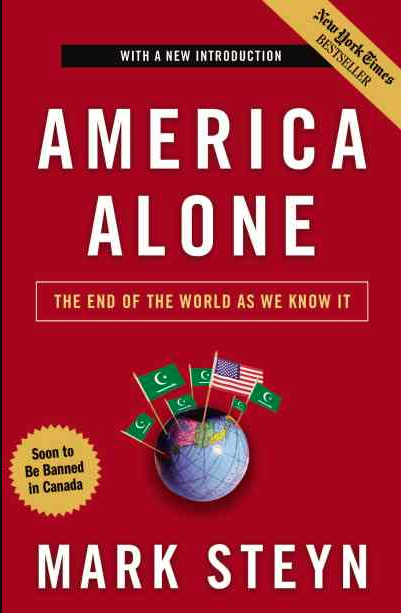
Mark Steyn – “This is not a healthy development in world affairs”

Mark comments on the ongoing political punch-up over the US government’s H1B visa program for foreign workers:

Elon Musk and Vivek Ramaswamy as the figureheads of D.O.G.E.

As you’ll have noticed, the world’s most uniquely unique peaceful transition of power turned suddenly violent over Christmas with various of America’s super-brainy Indians beating up on each other: Nikki Haley, the Boeing board’s token Sikh, lit up Hindu monotheist Vivek Ramaswamy’s tweet like Air Canada overhead baggage in objection to Vivek’s remarks on US “mediocrity”. The offending Ramaswamy tweet was in response to MAGA objections to Trump’s appointment of Madras techie and open-borders fanatic Sriram Krishnan as his AI advisor. This was a very 2025 brouhaha: while you knuckle-draggers down in flyover country were arguing about sub-minimum-wage Hispanics turning down the sheets at Motel Six, the Hindu billionaires have been busy taking over the country.

Is everyone in this all-American punch-up an Indian? Well, no, eventually a South African weighed in. The Boers don’t like the Hindus, do they? I think I got that from Gandhi. Ah, but in this case Elon agrees with Sriram and Vivek.

A couple of very general observations:

1) The MAGA base intuits that H1B visas are a racket. Why wouldn’t they be? Everything else the federal government touches is — from presidential pardons to West Point to Jan 6 justice. America is the third largest nation on earth — a third-of-a-billion people, officially (rather more in actual reality). Why does it need to hire entry-level workers from the first and second largest nations? Yes, yes, too many Americans graduate in non-binary studies rather than any serious academic discipline but simply because you’ve bollocksed up your entire education system is no reason to (as my former National Review colleague John Derbyshire puts it) “import an overclass“.

The MAGA objections to mass immigration (ie, not just illegal immigration) are primarily cultural. They didn’t like it eight years ago when Trump would add to his wall-building promises the line about “and that wall will have a big beautiful door”, and he should have got that by now. Besides, to address the counter-argument more seriously than it merits, a nation of a third-of-a-billion that “needs” to import entry-level accountants is so structurally dysfunctional that no amount of immigration can save it. How about entry-level lawyers? Do we need more of those?

As an aside to that, for all you Constitution fetishists, I’m increasingly sceptical that a Constitution designed for an homogeneous population of two-and-a-half million people can be applied to a third-of-a-billion with a cratering fertility rate of 1.6. The only two more populous nations — China and India — are both more or less conventional ethnostates. Which is a great advantage. America is the only large-scale polity founded on a proposition — that, simply by setting foot on US soil, one becomes American. Immigration on the present transformative scale will nullify the Constitution. So the Dance of the Constitution Fetishists will get even sadder.

The Constitution is increasingly for judges rather than citizens. May be time to import more Supreme Court justices.

2) Besides, H1B is what the government calls, correctly, a “nonimmigrant” visa. One of Rupert Murdoch’s minions offered me an H1B thirty years ago. I looked up the terms and declined to sign on to indentured servitude. You’re not importing “the best and brightest”. You’re assisting well-connected corporations in advantaging themselves at the cost of the citizenry among whom they nominally live. [NR: Emphasis mine.]

3) Have you noticed that almost everyone involved in this spat is a billionaire? Today’s rich are not just rich in the old Scott Fitzgerald they-are-different sense. They approximate more to the condition articulated by Lord Palmerston in his observation that England had no eternal friends or enemies, only eternal interests. For a billionaire, friends and enemies come and go, but, like any medium-sized nation-state, he has his interests.

To most Americans, Elon was largely unknown until he started weighing in on and then buying social media; Vivek was entirely unknown until he ran for president; Sriram is still unknown. But they are far above not just the schlubs who lost their jobs to cheaper H1B types but also to the more famous political class whose poll numbers in Iowa so obsess the hamster-wheel media but which are increasingly irrelevant to anything that matters. Among Sriram Krishnan’s minor claims to “fame” is that he’s the guy who introduced Boris Johnson (remember him?) to Elon Musk — and you can bet that was after desperate wheedling and pleading from the Shagger, not because Elon had any desire for dating tips.

This is not a healthy development in world affairs.

4) Vivek Ramaswamy’s sweeping paean to American “mediocrity” as manifested by everything from prom queens to sitcoms was probably ill-advised but it was certainly entirely sincere — and would be widely shared by his fellow members of the Hindu overclass. The Indian tycoon (and David Cameron advisor) Ratan Tata, who died in October, is best remembered in the UK for his 2011 Vivek-like attack on the natives’ “work ethic“. As Sir Ratan marvelled after buying Jaguar-Land Rover:

    I feel if you have come from Bombay to have a meeting and the meeting goes till 6pm, I would expect that you won’t, at 5 o’clock, say, ‘Sorry, I have my train to catch. I have to go home.’

    Friday, from 3.30pm, you can’t find anybody in the office.

That may well be true, as Vivek’s musings re Urkel and football jocks may be true. On the other hand, as a rather precocious lad, I observed to my mum that, five years after the Gambia’s independence, nothing seemed to work as well as it did under colonial rule. True, conceded my mother, then added: “But in the end people want to be themselves, as themselves. At least it’s their chaos.”

December 23, 2024

Trump’s second term – “The counterrevolution begins now”

A few weeks back in City Journal, Christopher Rufo provided a blueprint for President-elect Donald Trump’s second term with emphasis on “dewokification” of the executive branch:

The second election of Donald Trump, along with Republican victories in both houses of Congress, sets the stage in the United States for a confrontation between democracy, which depends on representative institutions to form a government, and the rule of unelected elites, which relies on claims of expertise to control the state.

Already, internal opposition to Trump is organizing within the federal agencies. CNN reports that Pentagon officials are discussing disobeying official policy. Federal Reserve Chairman Jerome Powell has declared that he would refuse if Trump asked for his resignation. Some would like to see a reprise of the orchestrated counteractions against Trump, from the Russia collusion hoax to the Hunter Biden laptop censorship to the political prosecutions that led to his arrest and felony convictions.

The coming political confrontation is unusual because the specific antagonist is hard to identify. Trump is not contending against Joe Biden or Kamala Harris, or even the Democratic minority in Congress. Instead, the president-elect’s post-electoral opposition comes from inside the executive branch itself, in defiance of Article II of the Constitution, which opens with the unqualified statement: “The executive Power shall be vested in a President of the United States of America”.

In recent years, phrases like “the deep state” have arisen in American political discourse to describe this phenomenon, in which administrators, bureaucrats, and unelected officials seem to wield a kind of power that we still lack appropriate language to describe. Part of the motivation is self-interest — bureaucrats want to protect their positions — but another is ideological: the federal government is steeped in left-wing race and gender ideology, and its adherents see Trump as an existential threat.

By rights, he should be. The incoming president has, under the Constitution, every right to bend the administration to his vision, which is contrary to the tenets of left-wing racialism. But those ideologies, which the Biden administration has entrenched through its “whole-of-government” diversity agenda, have long ruled the agencies that control the details of federal policymaking. Hence, the conflict: the president, who has formal authority, versus the ideological bureaucracy, which has real power.

At the end of his first term, Trump attempted to correct this problem through actions such as an executive order banning critical race theory in the federal government. The second Trump administration must go further and dedicate itself to a process that Vice President–elect J. D. Vance has described as “dewokeification”. This is the most urgent policy problem facing the administration, because without representative institutions and a restoration of constitutional authority, it is not possible to govern America.

The Trump administration has a unique opportunity to take decisive action on Day One, through executive orders that can serve as the opening salvo in a counterrevolution. The basic premise: the U.S. should strip left-wing racialism from the federal government and recommit the country to the principle of color-blind equality. Through an aggressive campaign, Trump and his cabinet can put an end to forms of discrimination disguised under the name of “diversity, equity, and inclusion” (DEI) and make government work again.

The process of ideological capture has taken decades. But the counterrevolution can, and must, quickly retake those institutions in the name of the people and reorient them toward the enduring principles of liberty and equality. Bureaucrats abusing the public trust to advance their own ideologies should be put on notice: they will be shut down, their departments abolished, and their employment terminated. The administration will work to rid America of this ideological corruption before it further rots our institutions, demoralizes our citizens, and renders the government totally incompetent.

The counterrevolution begins now.

December 21, 2024

German democracy tottering on the brink (again) after latest attack by Elon Musk!

Germany is, yet again, convulsed with political unrest as politicians react strongly to foreign interference in German affairs by … dun-dun-duuuuuun … Elon Musk:

“German flag” by fdecomite is licensed under CC BY 2.0 .

German democracy, which has existed undeterred since 1949 but is somehow always shaken to its foundations whenever anybody sings the wrong song or holds a televised debate with the wrong person, is once again on life support.

Christian Lindner, head of the market-liberal Free Democrats, did much to trigger the present catastrophe on 1 December, when said that the Free Republic should “dare more Milei and more Musk“. Because there is little distinction between praising Milei and Musk and demanding the return of National Socialism, there ensued a brief period of establishment hyperventilation.

Less than a week later, CDU chief and probable future German chancellor Friedrich Merz, did his part to denounce Lindner’s political wrongthink in a statement to Deutschlandfunk:

    So neither the Argentinian president nor, how shall I put it, the American entrepreneur Elon Musk – let’s put it plainly – are role models for German politics in my view. I don’t see where we can find similarities in German politics. What Christian Lindner meant will probably remain his secret.

The next day, Merz repeated the same denunciations, only more harshly, explaining to one of our extremely adult and far-sighted pantsuit talkshow hosts that “To be honest, I was completely appalled that Christian Lindner made that comparison“. Milei, Merz said, is “really trampling on the people there”.

Yesterday, all of this came to the notice of the (honestly rather tiresome) influencer Naomi Seibt, who posted a video statement to X rehearsing all of this old news to her largely American audience:

Elon Musk then brought down the hammer on the German democratic order, retweeting Seibt’s video and remarking that “Only the AfD can save Germany“.

Today a lot of very important and influential people got out of bed and took to their keyboards to denounce Musk’s election interference. His statement might be illegal, at any rate it is very likely fascist and certainly it is beyond the pale for an American to voice an opinion about German politics. Germans absolutely never, ever, utter the slightest word about American politics and certainly would never advance negative opinions about the American president in the middle of an election campaign. Our Foreign Office would never try to fact-check an American presidential debate! Our journalists would never depict President Donald Trump dressed as a Ku Klux Klan member or offering the Hitler salute or decapitating the Statue of Liberty! That’s just not done!

Like a great stream of green diarrhoea, the outrage is pouring fourth. Matthias Gebauer, who writes for Der Spiegel, observes that “Elon Musk … is openly promoting the AfD” and concludes that “Putin is not the only one who loves this party”. Erik Marquardt, head of the Green faction in the European Parliament, says that “The EU Commission and EU member states should no longer stand by and watch as billionaires misuse media and algorithms to influence elections and strengthen and normalise right-wing extremists”. This “is an attack on democracy”, and “has nothing to do with freedom of expression”. Dennis Radtke, CDU representative in the European Parliament, concludes that “Musk … is declaring war on democracy” and that “the man is a menace”. We are also under siege via “interference from Putin”; “the erosion of our democracy is being fuelled from both within and without”. Julian Röpcke, who writes for BILD, believes that “This is interference in the German election campaign by a tech billionaire who uses algorithms to decide what gets heard”. If Germany does not “respond with penalties, there will be no help for our eroding democracy”.

December 18, 2024

Justin Trudeau at bay

However much you may dislike the man — and there’s just so much to dislike — it’s impossible to write him off no matter how bad the situation may look. In The Free Press, Rupa Subramanya explains to non-Canadian audiences what has been going on in the Deranged Dominion lately:

Justin Trudeau’s government could be at the point of collapse. And a social media post from Donald Trump about tariffs may have set off the latest in a chain of dominoes for Canada’s prime minister.

On November 25, Trump posted on his platform Truth Social that, as one of his first executive orders, he would “sign all necessary documents to charge Mexico and Canada a 25% Tariff on ALL products coming into the United States, and its ridiculous Open Borders”. Four days later, Trudeau flew to Mar-a-Lago to meet Trump for dinner. Although the content of their discussion has not been made public, Trump’s tariff threat may have landed a death blow to Trudeau’s cabinet.

On Monday morning, Trudeau’s most important ally — his number two, finance minister Chrystia Freeland — resigned in a fiery letter directed at her boss, which she posted on X.

“Our country today faces a grave challenge,” she wrote. “The incoming administration in the United States is pursuing a policy of aggressive economic nationalism, including a threat of 25 percent tariffs. We need to take that threat extremely seriously.” She continued: “That means pushing back against ‘America First’ economic nationalism with a determined effort to fight for capital and investment and the jobs they bring”.

The same morning, Trudeau’s housing minister Sean Fraser also announced his departure, saying he wanted to spend more time with his family. This brings the total number of cabinet members who’ve resigned under Trudeau in 2024 to nine. But a walkout from Freeland, his most trusted lieutenant, who was expected to release her fall economic statement Monday, is by far the biggest. That such a loyal servant who has worked for Trudeau since 2015 would resign so publicly shows just how deep the rot is these days. Freeland stood by the prime minister as his popularity began to tank in February 2022 when Canadian truckers protested his harsh Covid vaccine mandates. She even authorized the debanking of those protesters, freezing their bank accounts as a means of punishment [NR: with no legal authority, it must be noted].

Now, her resignation is feeding feverish speculation that the longtime progressive darling could finally be on his way out, amid his sinking popularity and the country’s economic slump. By Monday night, a prominent member of Trudeau’s Liberal Party, Anthony Housefather, went on TV to say the prime minister is “past his shelf life“.

The modern Furies

Filed under: Britain, History, Media, Politics, USA, WW1 — Tags: , , , , , — Nicholas @ 03:00

In Greek mythology, the Erinyes (the Furies) — euphemized as the Eumenides (the “Gracious ones”) were the goddesses of vengeance. You may dismiss the ancient Greeks and their beliefs, yet they often encapsulate hidden wisdom for those who know how to interpret their stories. Today, as Janice Fiamengo points out, we have no need for mythological Furies, as they’re frequently embodied in otherwise ordinary women:

The Remorse of Orestes or Orestes Pursued by the Furies
Oil painting by William-Adolphe Bouguereau, 1862, in the Chrysler Museum of Art via Wikimedia Commons.

Feminist uproar over Trump’s election was easy to predict, and not long in coming. Within ten days of the election, Clara Jeffery wrote in Mother Jones that “Women are furious — in a Greek mythology sort of way“. Taking examples from TikTok, Jeffery chronicled abundant “sorrow, disbelief and terror, but also incandescent rage”, which many women vowed to exorcise on men: “‘If his ballot was red, his balls stay blue‘”, she quoted one.

In The New York Times, a 16-year-old girl, Naomi Beinart, charted her tumultuous emotions, which included a sense of betrayal because her male classmates had carried on with their lives on the day after the election, seemingly immune to the girls’ all-pervasive gloom and outrage. “Many of them didn’t seem to share our rage, our fear, our despair. We don’t even share the same future,” Beinart opined melodramatically.

No one with even a minimal acquaintance with social media can have missed the many similar, raging reactions: the heads being shaved, the death threats, the promised sex strikes, the fantasies of revenge against Trump-voting husbands. We are to understand that the re-election of a man rumored to lack sufficient pro-abortion commitment justifies thousands of self-recorded screams, imprecations, and poisoning plots.

At least one group of women gathered physically in Wisconsin to shout their angst and anger at Lake Michigan, and there have already been tentative (though apparently less enthusiastic than formerly) plans for a revival of the anti-Trump Women’s March protests, in which women with vulgar placards and pink hats exhibited their “collective rage“.

Women’s rage is all the rage.

It is not enough, it seems, for these women to say that they are disappointed by Trump’s win, and certainly inadequate for them to state strong disagreement with his policies or style. Expressing evidence-based positions is the sort of thing a rational person would do, and significant groups of women appear increasingly uninterested in rational talk or behavior. Instead, they reach for the most extreme language, tone of voice, postures and actions to express what feminist journalist Rhiannon Lucy Cosslett called the “visceral” “body horror” produced by the Trump victory, including the “profound physical revulsion” Cosslett and many of her sisters allegedly feel simply as a result of seeing one of Trump’s tweets (talk about fragility!).

Like so many feminist pundits telling us of women’s “horror” and “fury“, the emphasis is squarely on feeling and the female body, as if to bypass the intellect and the will altogether. The idea some feminists once scorned — that women are less reasonable and self-controlled than men — seems to have become a feminist axiom.

[NR: Edited to fix the broken URL.]

December 14, 2024

Tulsi Gabbard as the Director of National Intelligence

To the left, Gabbard is widely criticized as some sort of Russian pawn, while to many on the right she’s unacceptable as a former Democrat and “girlboss”. Despite this, J.D. Tuccille says President-elect Donald Trump seems quite confident that she’s the right person for the job:

Tulsi Gabbard speaks at the “People’s Rally” in Washington DC on 17 November, 2016.
Photo by Lorie Shaull via Wikimedia Commons.

United States President-elect Donald Trump is standing behind Tulsi Gabbard, his pick to be director of national intelligence. Like several of Trump’s nominees, former Democratic congresswoman Gabbard is controversial in D.C.-insider circles, and understandably so; she’s skeptical of the political establishment, often criticizes foreign policy and was apparently subject to surveillance and put on a terrorist watch list because of her dissident ways. In other words, she’s a rather promising nominee for an incoming administration that wants to completely revamp government institutions that desperately need reform.

Asked this week by NBC’s Kristen Welker if he has confidence in Gabbard despite objections raised in certain circles to her past actions and positions, Trump responded, “I do. I mean, she’s a very respected person.”

Trump was specifically asked about two meetings Gabbard had in 2017 with then-Syrian dictator Bashar al-Assad. Now in exile, al-Assad and his relationships with American politicians shouldn’t be much of a worry anymore, but he plays a part in the official panic over Gabbard’s views on foreign policy.

In 2019, former Democratic presidential candidate Hillary Clinton famously called Gabbard a “Russian asset“. Gabbard, a veteran of the Iraq war, aroused Clinton’s ire with her anti-interventionism in foreign policy matters and criticism of the political establishment and its hawkishness during the course of a short-lived campaign for her party’s presidential nomination.

“There are brutal dictators in the world. Assad of Syria is one of them. That does not mean the U.S. should be waging regime-change wars around the world,” Gabbard told CNN in early 2019. Her long-standing fears of Islamist extremism led her to consider al-Assad a less-bad alternative to a potential fundamentalist regime.

Gabbard returned Clinton’s slight by calling her “the queen of warmongers” and the “embodiment of corruption”. It’s unsurprising that the two no longer share a political party.

Gabbard’s dissent from establishment orthodoxy doesn’t stop at military matters. In 2020, she joined with libertarian-leaning Republican Thomas Massie, from Kentucky, to call on the U.S. government to cease its persecution of Wikileaks founder Julian Assange. Assange ran afoul of the U.S. government when he published leaked documents revealing embarrassing details about official misconduct in Iraq and elsewhere.

December 8, 2024

The potential for retribution in a second Trump presidency

Francis Christian meditates on whether or how President-elect Donald Trump will indulge in eye-for-an-eye revenge against the individuals most clearly involved in the lawfare and other attempts to derail his re-election:

It was the English poet Alexander Pope who admonished us in the manner of the New Testament that “to err is human; to forgive, divine” — Errare humanum est, ignoscere divino.

The Old Testament in contrast, has the equally familiar and perhaps far more popular, “eye for an eye“, and in one of the most revolutionary statements ever uttered, Jesus in the Sermon on the Mount talked about us “having heard that it was said, ‘an eye for an eye’ — but I say unto you, love your enemies“.

To wish to take revenge upon one’s enemies is therefore human, but Jesus is asking mankind to rise above this basic instinct and instead, to forgive and love one’s enemies. This was all of course part of His Mission on earth — to change by His Life, His Cross and the Resurrection, the destiny of human beings from being bound to basic instincts and death — to being bound for eternal life, a different destiny and a new creation.

The mavens of Hollywood of course march to a different and more ancient tune (which has been handed down unchanged to them) and generations of movie goers and consumers of media have been brought up on the idea that revenge of the most explosively visceral kind is a good thing, even a noble thing.

My readers will undoubtedly have their own sincerely held beliefs about Jesus’ command to love our enemies and to do good to those who hate us and once again, I do not wish this essay to turn out to be a sermon! What I wish to address instead, is to ask the question: what is the place for retribution, vengeance and revenge in the conduct of statecraft?

In other words, when President elect Trump said in a recently widely publicized interview that he was, “not looking for retribution, grandstanding or to destroy people who treated me very unfairly“, was he declaring a principle of statecraft that makes for a fulfilling and productive Presidency? And is this also a principle of statecraft that will “make American great again?

In typical, inimitable and endearing Trumpian fashion, the President-elect also added the tongue in cheek comment: “I am always looking to give a second and even third chance, but never willing to give a fourth chance — that is where I hold the line!

It could be argued from the life of no less a colossal figure than Julius Caesar that decisive and devastating revenge upon one’s enemies makes for a strong and respected ruler and nation. Whilst still a private citizen, Julius Caesar was captured by pirates on the way to the Greek island of Rhodes (to which he was travelling in order to learn oratory from the famous professor Molon). Caesar raised his own ransom — then raised a naval force, captured his pirate captors and had them all crucified.

The later assassination of Caesar and the subsequent civil wars that rocked and roiled Rome is the subject of Shakespeare’s magnificent, Tragedy of Julius Caesar. The subsequent rule of Augustus Caesar was marked by stability, expansion of the empire, the building of roads and bridges (via which the Gospel was to travel), the making of sea and land routes safe for travellers (again, to the advantage of the early Christians taking the Gospel to Asia and Europe) the consolidation of Roman power — and the rule of (Roman) law. It was also during the reign of this austere, learned emperor that Jesus was born in a manger, in the Roman province of Palestine.

H/T to Brian Peckford for the link.

« Newer PostsOlder Posts »

Powered by WordPress