
… as we dissidents have been pointing out for decades now, practically no government action since the late 1950s has had The People’s approval. Had The People been consulted at any point between 1960 and now, America would still be a White Christian nation. Lots more White boys would still be alive, having never been sent to some irrelevant, unpronounceable place to die. Lots more Black folks would be alive, too, since abortion disproportionately affects Blacks and abortion was always a fringe lunacy — even a half-century of nonstop propaganda has barely pushed it into majority support. Gays would still be in the closet, since even after a propaganda barrage that makes the abortion thing look like a mere suggestion public tolerance of homosexuality polls even lower. The borders, of course, would be closed — they don’t allow those polls to be taken anymore, because “immigration restriction” polled at something like 75% just a few years ago and the lunacy of the political class in a “democracy” going hard against three-quarters of the entire population is too glaring even for this tv-and-iCrap-addled country to stomach.
The People keep giving the wrong answer, in other words, so The People will not be asked anything of importance. Same as it ever was.
The problem with democracy, though, isn’t that people are fools. People are fools, of course, but since that’s as universal as gravity, any human institution will be staffed entirely with fools. But … just as the general characteristic “great leader” doesn’t necessarily translate into any specific competence, so the general truth “people are fools” doesn’t mean everyone is a fool about everything. Since we all know at least one other human being, we all know a blithering idiot who’s remarkably shrewd about one little slice of life. Junkies, for example, are idiots — taking hard drugs is a remarkably stupid idea, as every addict I’ve ever met readily confessed. And yet, when it comes to getting their drug of choice these morons are endlessly inventive. Billy Bob up the holler has six teeth and a fourth grade education, but he can MacGyver up methamphetamine out of household products like a Chemistry PhD.
The problem with democracy is twofold. The first — that it’s the best technique ever devised for organizing self-righteousness — deserves a book in itself. The second, though, is covered by a single word: ultracrepidarianism. It means “the habit of giving opinions and advice on matters outside of one’s knowledge.” Peter Strzok, for example, was probably a perfectly competent FBI agent, when it came to doing the things the FBI actually hired him to do. But he decided that he was also some kind of political science expert, as well as a human love machine, and here we are. See also: our “elected” “representatives” What else would you call sending someone like Alexandria Ocasio-Cortez, whose areas of expertise are “mixing drinks” and “having big tits,” to Congress, where she’s expected to make decisions of war and peace? Ultracrepidarianism is a feature, not a bug, of democratic systems, which is why even the very best “representatives” fuck up everything they touch.
Combine required ultracrepidarianism with real shrewdness and you get Stephen A. Douglas.
Take those, add in religious fervor, and you get the suicide cult that is the Democratic Party.
And here we are.
Severian, “Impeachment Thoughts”, Rotten Chestnuts, 2019-12-19.
March 21, 2020
QotD: The reason people don’t get a say in how the rulers carry on
March 14, 2020
The still-secret “settlement” between the federal government and five hereditary chiefs of the Wet’suwet’en
Chris Selley points out some of the disturbing features of the as-yet-unrevealed agreement between Her Majesty’s Canadian government and five unelected First Nation chiefs that eventually got the railways running again:

“DSC02285” by Bengt 1955 is licensed under CC BY-NC 2.0


For starters, we still don’t know the details of the arrangement, struck earlier this month between Wet’suwet’en hereditary chiefs and federal and provincial government officials, that allowed for pipeline work to resume. Those details could well represent positive progress on establishing just what the Wet’suwet’en’s legal claim on their lands — affirmed by the Supreme Court in 1997 — really means. But did the government have any business negotiating with the chiefs in question in the first place?
Tait-Day doesn’t think so. The Office of the Hereditary Chiefs of the Wet’suwet’en, she told the committee, is “not accountable to the (Wet’suwet’en) nation.”
“By refusing to hear from elected councils, these governments have without merit prevented the most credible current governing voices from being heard,” she told the committee. “The Indian Act system must be reformed, but that does not invalidate the role of the elected councils. While imperfect, they continue to speak for the people until a better model is implemented.”
Even setting aside the exclusion of elected councils, the negotiations were of dubious legitimacy. They weren’t with the hereditary chiefs per se; rather, they were with the hereditary chiefs who oppose the pipeline. Not all do, and some support it — including Tait-Day, Gloria George and Darlene Glaim, founders of the Wet’suwet’en Matrilineal Coalition. For their apostasy, male chiefs simply stripped them of their titles. This is not in dispute: “We’ve stripped the names from three female hereditary chiefs for supporting the pipeline,” John Ridsdale, whose hereditary title is Chief Na’Moks, told APTN News in 2018. “A name is more important than money.”
Using the title of Chief Woos, Frank Alec has become the leading public face of the anti-pipeline hereditary chiefs. On his behalf, Canadians both Indigenous and non-Indigenous have shut down rail lines and blocked access to the B.C. legislature and marched in the streets. Until 2018, the title of Chief Woos belonged to Glaim. He took it from her precisely because she dared support the pipeline and the benefits that will flow from it to her people.
“By negotiating directly with (the Office of the Hereditary Chiefs of the Wet’suwet’en), Canada and British Columbia give legitimacy to a group of bullies and abusers of women,” Tait-Day told the committee. “We cannot be dictated to by a group of five guys.”
February 19, 2020
Christopher Hitchens – Why Orwell Matters
TheHitchensArchive
Published 24 Apr 2013October 21, 2002. Christopher Hitchens giving a speech based on his book about George Orwell at The Commonwealth Club.
February 2, 2020
“The European Union is a 1970s solution to a 1940s problem”
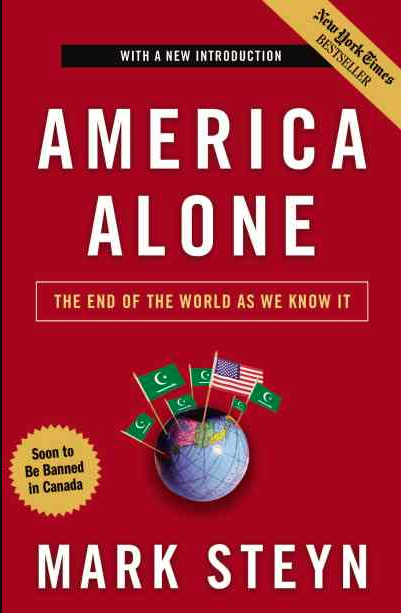
Mark Steyn shares some thoughts on the now-diminished European Union from his 2006 book America Alone as the United Kingdom exits the European Union:

The construction of a pan-continental Eutopia was meant to ensure that Europe would never again succumb to militant nationalism of one form or another. Instead, the European Union’s governing class has become as obnoxiously post-nationalist as it was once nationalist: its post-nationalism has become merely the latest and most militant form of militant nationalism — which, aside from anything else, makes America, as the leading “nation state” in the traditional sense, the prime target of European ire.
It’s true that there are many European populations reluctant to go happily into the long Eurabian night. But, alas for them, modern Europe is constructed so as to insulate almost entirely the political class from populist pressures. As the computer types say, that’s not a bug, it’s a feature: the European Union is a 1970s solution to a 1940s problem, and one of the problems it was designed to solve is that fellows like Hitler and Mussolini were way too popular with the masses. Just as the House of Saud, Mubarak, and the other Arab autocracies sell themselves to the West as necessary brakes on the baser urges of their peoples, so the European leadership deludes itself on the same basis: why, without the EU, we’d be back to Auschwitz. Thus, on the eve of the 2005 referendum on the European “constitution,” the Dutch prime minister, Jan Peter Balkenende, warned his people where things would be headed if they were reactionary enough to vote no. “I’ve been in Auschwitz and Yad Vashem,” he said. “The images haunt me every day. It is supremely important for us to avoid such things in Europe.”
Golly. So the choice for voters on the Euro-ballot was apparently: yes to the European Constitution or yes to a new Holocaust. If there was a neither-of-the-above box, the EU’s rulers were keeping quiet about it. The notion that the Continent’s peoples are basically a bunch of genocidal wackos champing at the bit for a new bloodbath is one I’m not unsympathetic to. But it’s a curious rationale to pitch to one’s electorate: vote for us; we’re the straitjacket on your own worst instincts. In the end, the French and Dutch electorates voted no to the new constitution. One recalls the T-shirt slogan popular among American feminists: “What part of ‘No’ don’t you understand?” In the chancelleries of Europe, pretty much every part. At the time of the constitution referenda, the rotating European “presidency” was held by Luxembourg, a country slightly larger than your rec room. Jean-Claude Juncker, its rhetorically deranged prime minister and European “president,” staggered around like a collegiate date-rape defendant, insisting that all reasonable persons understand that “Non” really means “Oui.” As he put it before the big vote: “If it’s a yes, we will say ‘on we go,’ and if it’s a no we will say ‘we continue.'”
And if it’s a neither of the above, he will say “we move forward.” You get the idea. Confronted by the voice of the people, “President” Juncker covers his ears and says, “Nya, nya, nya, can’t hear you!”
Only in totalitarian dictatorships does the ballot come with a pre-ordained correct answer. Yet President Juncker distilled the great flaw at the heart of the EU constitution into one disarmingly straightforward expression of contempt for the will of the people. For his part, the architect of the constitution — the former French president Valery Giscard d’Estaing — was happy to pile on: why, even if the French and the Dutch had been boorish enough to want to vote no to the constitution, they would have been incapable of so doing, as the whole thing was designed to be way above their pretty little heads. “It is not possible for anyone to understand the full text,” declared M. Giscard. During his labors on the constitution, he’d told me he saw himself as “Europe’s Jefferson.” By referendum night he’d apparently become Europe’s Jefferson Airplane, boasting about the impenetrability of his hallucinogenic lyrics. The point is that his ingrate subjects had no need to read beyond the opening sentence: “We the people agree to leave it to you the people who know better than the people.”
After that, the rest doesn’t matter: you can’t do trickle-down nation-building. The British, who’ve written more constitutions for more real nations than anybody in history and therefore can’t plead the same ignorance as President Juncker, should be especially ashamed of going along with this farrago of a travesty of a charade.
QotD: The role of government, as seen by fans of government
Don Boudreaux, “Bonus Quotation of the Day…”, Café Hayek, 2017-11-25.
February 1, 2020
Brexit Day
Late Friday night, the United Kingdom left the European Union. Within minutes, the power failed all across the nation, people began to starve due to the lack of food, and the shattered remnants of civilization were hurled on the rubbish heap. London is now nothing but a smoking hole in the ground along the banks of the Thames occupied by filthy machete-wielding twitchy-eyed savages. Now that nobody in the UK can read or write, nobody knows how the machines used to work, and all the disgusting medieval diseases are back in full strength, the sun will literally never rise again over those once green and pleasant lands.
Yet, despite the ongoing disasters, a few brave souls still cling to their dim and pathetic hopes of a better world outside the European Union. Here, for example, someone claiming to be Brendan O’Neill smuggled out a story on the last helicopter to take off from the roof of the embassy building (at least, that’s how I assume it got posted to the web…):

Remainers, for their part, are furious about all the talk of parties. We’re rubbing their noses in it, they say. Everything from the Brexit Day gathering in Parliament Square this evening to Sajid Javid’s issuing of a commemorative 50p coin is being cited by the establishment’s bruised, Remoaning anti-democrats as proof of the vile populist streak in the Brexit movement. London mayor Sadiq Khan is even fretting that tonight’s Brexit bashes could give rise to xenophobic hate crimes.
Of course he is. That’s how they see us: as a pogrom-in-waiting. As a racist blob. As an unthinking mass driven almost entirely by hatred of the Other. They’ve been hurling these insults at us, at the millions of men and women who voted for Brexit, for three-and-a-half years now.
But all sides in the Brexit Day discussion are wrong. Baker and other timid Brexiteers are wrong to suggest we should play down the significance of this day lest we offend Remainers, and the Brexitphobic wing of the elite is wrong to say these celebrations are a screech of populist arrogance against the defeated side in the referendum. No, the reason this day must be marked — loudly, firmly and colourfully — is because it represents a glorious victory for democracy. What is being celebrated today is the defence of democracy against one of the greatest threats it has faced in modern times.
One of the peculiarities of the Brexit era, and of the contemporary era more broadly, is that very small and very unrepresentative sections of society are in control of the political and moral narrative. So even as 17.4million people, the largest electoral bloc in our history, voted for Brexit, and stood by their vote for Brexit in the face of the most extraordinary campaign of demonisation that I can remember, still the Remainer elites got to write the story of Brexit.
The powers-that-be — from the business elites to more than 70 per cent of MPs to virtually the entire academy and cultural sphere — were pro-Remain. And they used their influence in the worlds of commentary, letters and culture to paint a picture of Brexit as disastrous. As toxic. As fascistic. Or, at best, as very, very difficult to enact. The disjoint between public enthusiasm for Brexit and elite disgust with it was, at times, staggering.
As a consequence, it became incredibly difficult to draw out the historic significance, the magnificence, of Brexit. Even those in public life who supported Brexit, no doubt feeling the pressure of the often deranged establishment narrative around Brexit, became defensive. Brexit was manageable, they insisted. It would be okay. “Get Brexit Done”, as the Boris Johnson campaign said in December — a tellingly apologetic slogan which, thankfully, was enough to win the support of vast numbers of Leave voters, but which implicitly played into the denigration of Brexit, the reduction of it to a difficult, pesky task. Hardly anywhere was there an assertion of the historic, epoch-defining nature of Brexit.
January 7, 2020
History Summarized: Alcibiades
Overly Sarcastic Productions
Published 11 Jan 2016The oracle at delphi simply tells him, “congratulations”. The standard of nudity was his idea. Narcissus gets shy around him. Patroclus was his boyfriend first. He is … the most interesting man in Ancient Greece.
Extra special thanks to Blue’s professor, Mr. Samons, who taught him about Greek history and the comedic potential of marshmallows and triremes.

December 29, 2019
Changing western views about China
John Gray charts the image of China that has held steady for years among western countries but which has been severely shaken with the unrest in Hong Kong and the Chinese government’s reactions:
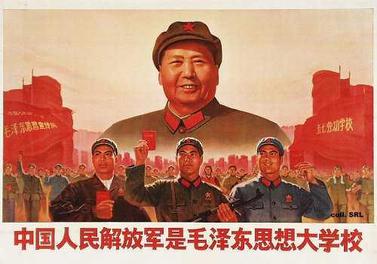
“The Chinese People’s Liberation Army is the great school of Mao Zedong Thought”, 1969.
A poster from the Cultural Revolution, featuring an image of Chairman Mao, published by the government of the People’s Republic of China.
Image via Wikimedia Commons.
The most important year of the decade is the one that is just ending. The struggle that will most deeply shape the global scene in years to come is not occurring in Britain, the US, Europe or any Western country. It is underway in Hong Kong, where a popular demand for democracy is confronting the immovable power of the world’s most highly developed authoritarian state.
It is a struggle no government wants to see escalate. More realistic than its Western counterparts, the Chinese leadership shows few signs of believing the conflict can be definitively resolved any time soon. Incremental concessions and large-scale repression both carry high levels of risk for Xi Jinping’s regime. The ideal end-state for Beijing is probably long-term containment. But the situation in the former colony is not stable, and it is difficult to exaggerate the impact that suppressing the protestors by force would have on China’s position in the world.
It is often pointed out that Hong Kong’s economic importance has dwindled with the rise of mainland cities such as Shanghai. But this leaves out how much two-system governance shapes global perceptions of China and its future. Xi’s progress towards a neo-totalitarian surveillance state has deflated the Western elites’ confidence that China is on a path of slow evolution towards liberal democracy. Yet the fantasy still lingers. The likelihood that China will be an authoritarian great power in any realistically imaginable future is too disturbing to contemplate.
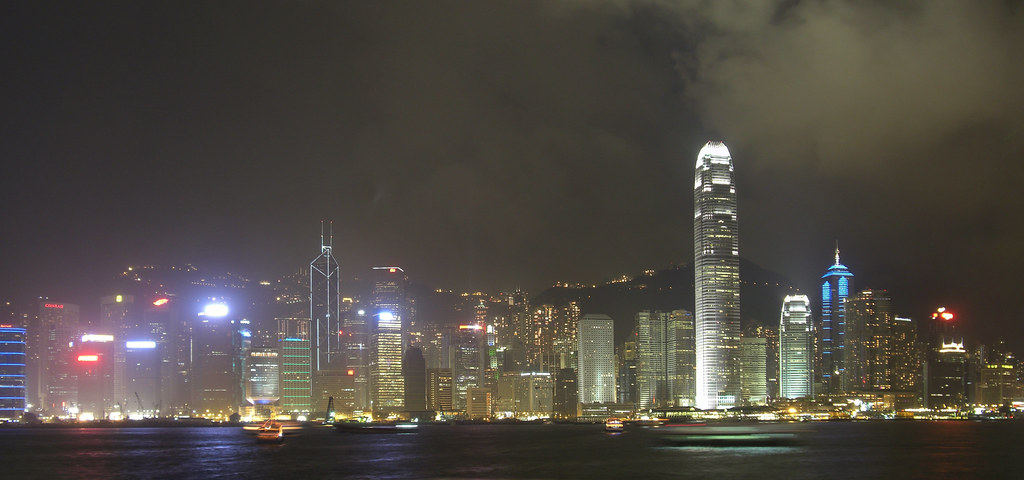
“Hong Kong night Panorama” by Andos_pics is licensed under CC BY-NC-SA 2.0
It is worth recalling the comforting tale on which Western governments have modelled China’s development. The country was getting rapidly richer, and while average incomes remained low by international standards, the middle class was steadily growing. This process of embourgeoisement would lead to stronger demands for democratic freedoms, and China would become ever more like the West. Embedded in practically every Western government and regularly invoked by the Western businesses that operate in China, this is a story with almost no basis in reality.
It is true that the rise of the middle classes in early 19th-century Europe coincided with an expansion of liberal freedoms in some countries. This was the main thrust of Marx’s analysis of bourgeois democracy. (A little-noted aspect of recent liberal thinking is that it relies heavily on a crude version of Marxian class analysis.) But there is nothing in the historical record that says the middle classes are inherently a force promoting liberalism. In the late 19th century, they backed the restoration of monarchy and empire in France and militarism In Prussia. In the early 20th century, large sections of the European middle classes embraced ethnic nationalism and then fascism. There was not much sign of the freedom-loving bourgeoisie in interwar Europe.
Protests continue in Hong Kong, 25 November 2019.
Photo by Studio Incendo via Wikimedia CommonsWhile it is so far less developed, a similar pattern of bourgeois support for illiberal politics has emerged in many European countries since the collapse of the Soviet Union. Across the continent, far-Right parties enjoy the support of significant sections of the middle classes. In America, Trump’s constituency includes many from precarious middle income groups.
So, the linkage between the middle classes and liberal values is tenuous throughout Western countries. In the UK and other English-speaking countries, it is middle class students, professors and administrators that have shut down freedom of inquiry and expression in higher education. Woke capitalism and much of the mainstream media are continuing this trend. Threatened by what they call populism, bourgeois liberals have ditched the values that once defined them. Far from being a universal law, middle class support for liberalism looks like a brief historical accident.

2010-2019 was “The People’s Decade” in Britain
In Spiked, Brendan O’Neill says the departing decade was really “The People’s Decade”:
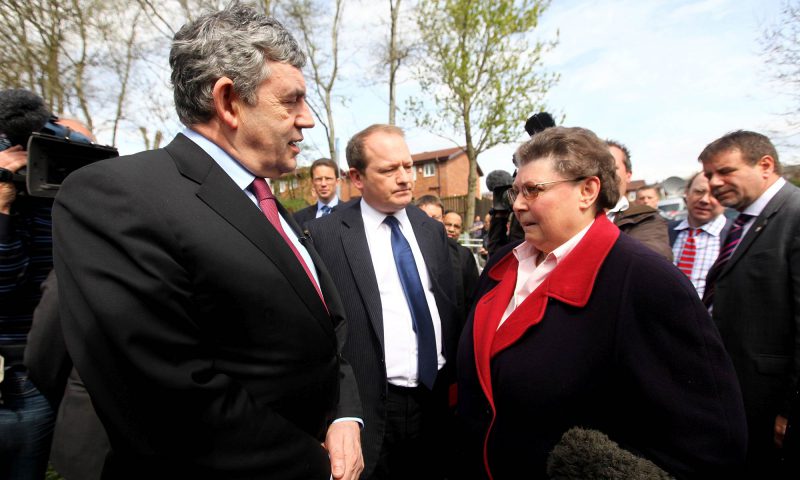
Prime minister Gordon Brown talks with resident Gillian Duffy on 28 April 2010, in Rochdale, England.
Photo from Spiked.
So the 2010s have come to an end. And what a curious and enlivening decade it has been. Decades are rarely neat political categories. The Sixties, as a phenomenon, didn’t really start until 1963. The Eighties are misremembered as an era of free-market triumphalism, overlooking that PC, cultural relativism, post-colonial guilt and the end of the Cold War that had provided the West with a sliver of moral purpose all took place in that tumultuous decade, giving rise to years of Western self-doubt, even self-hatred, rather than the Thatcherite cockiness that historical illiterates see as the Eighties’ ongoing political ripple.
But the 2010s — this decade does feel neat. It feels like it has a story, an arc, in the British context at least. For this is the decade that begins with Gordon Brown insulting a northern working-class Labour voter as a “bigot” and ends with the northern working classes revolting against Labour in their hundreds of thousands. It begins with the Gillian Duffy crisis, when Brown unwittingly exposed his increasingly middle-class party’s contempt for the lower orders by being overheard referring to this 65-year-old lady from Rochdale as a “bigoted woman”, and it ends with the mass switching of traditional “red wall” Labour voters to Boris Johnson’s Conservative Party — and, by extension, to Labour’s worst drubbing at the polls since 1935.
From Gillian Duffy to the Brexit / Boris votes: if the 2010s tell a story, it is one of a peaceful, understated working-class revolt. Of ordinary people pushing back against elites that had come to view them as bigots. Of the long sneered-at and interfered-with and re-educated sections of the public rising up against their so-called betters and restating the case for national sovereignty and community values. Of the people reprimanding the powers-that-be and forcing them, via the ballot box, to respect the people’s will and the people themselves.
This has been a thoroughly democratic decade. The People’s Decade, in fact, in which democracy has done what democracy is meant to do: marshalled the wisdom of the crowd to correct the jaundiced, elitist, anti-democratic drift of the governing classes.
The People’s Decade really begins in April 2010. It was 28 April and Gordon Brown, gearing up for the General Election, was on a walkabout in Rochdale. This was Brown’s first General Election as prime minister, his having received the crown of PM from Tony Blair in 2007, in a stitched-up, court-like manner befitting of the New Labour machine. Gillian Duffy, a lifelong Labour voter and former council worker, was also out in Rochdale that day. She was buying a loaf of bread. Her path crossed with Brown’s, in front of TV-news cameras, and in that very moment Brown’s fate, his destiny as a shortlived and unpopular PM, was sealed.
Duffy asked Brown about various things. She asked him about the public debt and how he proposed to fix it. She asked about the decline of university grants and how her grandkids were expected to be able to go to Uni. She asked him about health and welfare. And she asked him about immigration. “You can’t say anything about the immigrants”, she said, wisely sensing that even raising this issue could see you branded a bigot. “These Eastern Europeans”, she said, “where are they flocking from?”. Brown smiled and said something jovial and even patted Mrs Duffy on the back, but really he was horrified by what she had said. As the nation would discover just moments later.
Unbeknownst to Brown, a Sky News mic attached to his lapel was still on. When he got back to his car he berated one of his aides. He demanded to know why they had put him on air with “that woman”, as he referred to Mrs Duffy. Asked by the aide what the woman had said, Brown replied: “Oh everything. She was just a sort of bigoted woman. She said she used to be Labour. I mean it’s just ridiculous.” That woman. That bigoted woman. Words heard by everyone. Words replayed endlessly in the run-up to the election. The fallout was enormous.
December 7, 2019
QotD: A “democratic” army
Orwell’s press card portrait, 1943
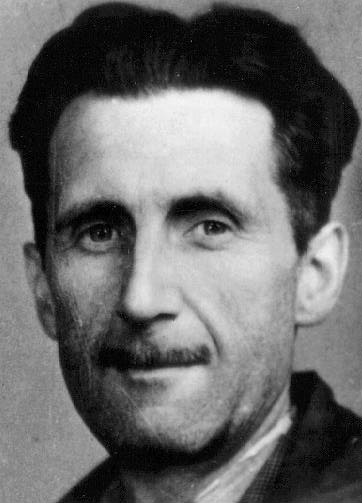
It is probable that the nature of modern war has made “democratic army” a contradiction in terms. The French army, for instance, based on universal service, is hardly more democratic than the British. It is just as much dominated by the professional officer and the long-service N.C.O., and the French officer is probably rather more “Prussian” in outlook than his British equivalent. The Spanish Government militias during the first six months of war — the first year, in Catalonia — were a genuinely democratic army, but they were also a very primitive type of army, capable only of defensive actions. In that particular case a defensive strategy, coupled with propaganda, would probably have had a better chance of victory than the methods casually adopted. But if you want military efficiency in the ordinary sense, there is no escaping from the professional soldier, and so long as the professional soldier is in control he will see to it that the army is not democratised. And what is true within the armed forces is true of the nation as a whole; every increase in the strength of the military machine means more power for the forces of reaction. It is possible that some of our more Left-wing jingoes are acting with their eyes open. If they are, they must be aware that the News-Chronicle version of “defence of democracy” leads directly away from democracy, even in the narrow nineteenth-century sense of political liberty, independence of the trade unions and freedom of speech and the press.
George Orwell, “Democracy in the British Army”, Left, 1939-09.
December 6, 2019
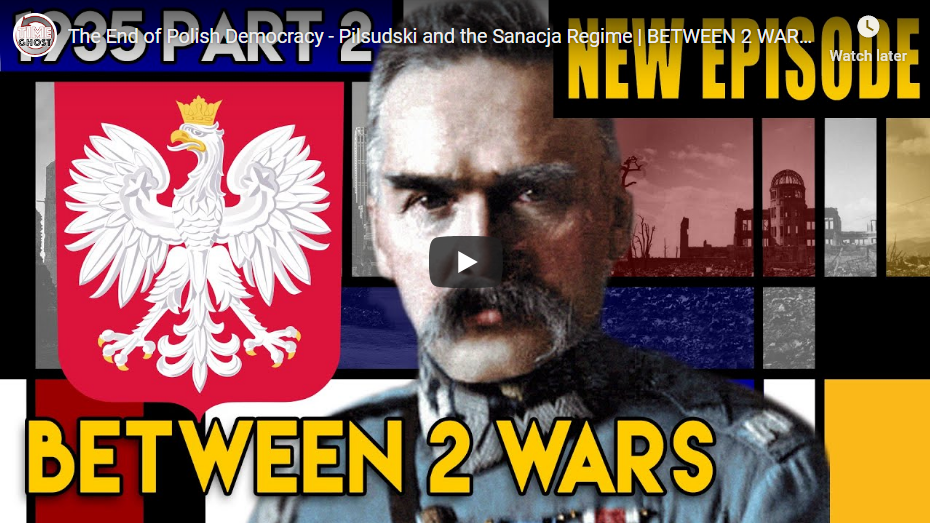
The End of Polish Democracy – Pilsudski and the Sanacja Regime | BETWEEN 2 WARS | 1935 Part 2 of 4
TimeGhost History
Published 5 Dec 2019The Second Polish Republic emerged victorious from the Polish-Soviet War in 1921. But the shine of independence is quickly rubbing off as the new state finds itself burdened with sever economic, political, and social problems. There is one man who sees it as his destiny to save his ailing nation. That man is Józef Piłsudski. But will his undemocratic Sanacja regime be able to solve Poland’s problems?
Join us on Patreon: https://www.patreon.com/TimeGhostHistory
Hosted by: Indy Neidell
Written by: Francis van Berkel
Directed by: Spartacus Olsson and Astrid Deinhard
Executive Producers: Bodo Rittenauer, Astrid Deinhard, Indy Neidell, Spartacus Olsson
Creative Producer: Joram Appel
Post-Production Director: Wieke Kapteijns
Research by: Francis van Berkel
Edited by: Daniel Weiss
Sound design: Marek KaminskiColorization:
– Julius Jääskeläinen – https://www.facebook.com/JJcolorization/Sources:
A TimeGhost chronological documentary produced by OnLion Entertainment GmbH.
From the comments:
TimeGhost History
2 hours ago (edited)
YouTube has age-restricted our Blitz Spirit WW2 video and has REMOVED our Between Two Wars episode on the Holodomor (1932-02). We received a warning, which means that next time this happens we will be banned from publishing content for one week. They state that our “content was removed due to a violation of our Community Guidelines,” on account of publishing “violent of graphic content”, explaining that “Violent or gory content intended to shock or disgust viewers, or content encouraging others to commit violent acts, is not allowed on YouTube.”Needless to say, we are shocked and disgusted by this action and legitimisation and are currently exploring our options. Meanwhile, this shows how much our independence depends on our Patreon supporters. Without them, we would have been long gone. So please consider supporting our effort and help us spread vital knowledge about our world’s history, albeit hard to swallow or confronting. Don’t let YouTube decide what will be a part of our public memory! You can support us on https://patreon.com/timeghosthistory or https://timeghost.tv.
Cheers,
Joram
December 3, 2019
Canada and China
Ted Campbell discusses Canadian foreign policies — or perhaps more accurately Canada’s lack of policies — on China:
“The Chinese People’s Liberation Army is the great school of Mao Zedong Thought”, 1969.
A poster from the Cultural Revolution, featuring an image of Chairman Mao, published by the government of the People’s Republic of China.
Image via Wikimedia Commons.
There were many things that history might find regrettable about the Mulroney years but I doubt that it will fault him for having a principled and coherent foreign policy.
That all changed with Jean Chrétien, who was almost a neo-mercantilist, and for whom principle could never stand in the way of profit.
In the modern (Chrétien-Martin-Harper-Trudeau) era, Conservatives have been, broadly, anti-China, sometimes for reasons that are less than coherent or principled, and Liberals have been too prepared to “go along to get along” with China. This is because both parties reflect the incoherent views of the whole country. But political leaders shouldn’t (mustn’t) just reflect the views of their voters ~ that sort of populism is nonsensical ~ they must, as Edmund Burke said, bring his or her “unbiased opinion … mature judgment … [and] … enlightened conscience” to bear on each issue. But I’m afraid that too many (most?) modern Canadian political tacticians hold all those things in scant regard.
In the 2020s Canadians must listen to a few clear voices who will tell them that China is a competitor in many “markets” including in the marketplace of ideas, ideals, institutions and values. The current Chinese leadership is overtly hostile to Weterm liberal-democratic values and is not unwilling to punish any country with which it disagrees. It is protectionist, relatively rich and growing in military, political and economic power, but, still, somewhat cautious, and Xi Jinping’s China seems to be able to separate its own short-term political interests from its firm, long term, strategic goals. China, as Kevin Rudd reminded us just a few days ago “is contemptuous of weakness and prevarication,” which explains why it is so obviously contemptuous of Justin Trudeau’s Canadian government.
It is a fact that the Sino-Canadian relationship is “unbalanced:” China is a great power, Canada is not; China is an autocracy, Canada is a democracy; and so on but, as Kevin Rudd said (link just above) “China too has net strengths and weaknesses of which … [our] … strategists should be aware in framing our own strategy … [and we] … should be equally aware of our own strengths, weaknesses and vulnerabilities.” Canadian strategists need to educate Canadians about China so that a solid, informed majority will want a coherent and principled policy ~ one that puts our national vital interests first […]
Our policy towards China needs to be just one part of a coherent, principled foreign policy which Canadians understand and, broadly, support, and that, in turn, needs to be part of a Canadian grand strategy that aims to secure a place, as Paul Martin suggested, “of pride and influence in the world” ~ that, of course, was a place we enjoyed under St Laurent, Diefenbaker and Pearson, all of whom were acutely aware of the many and varied (and very divergent) views about Canada in the world that existed then and persist today in Canada’s many and varied communities.
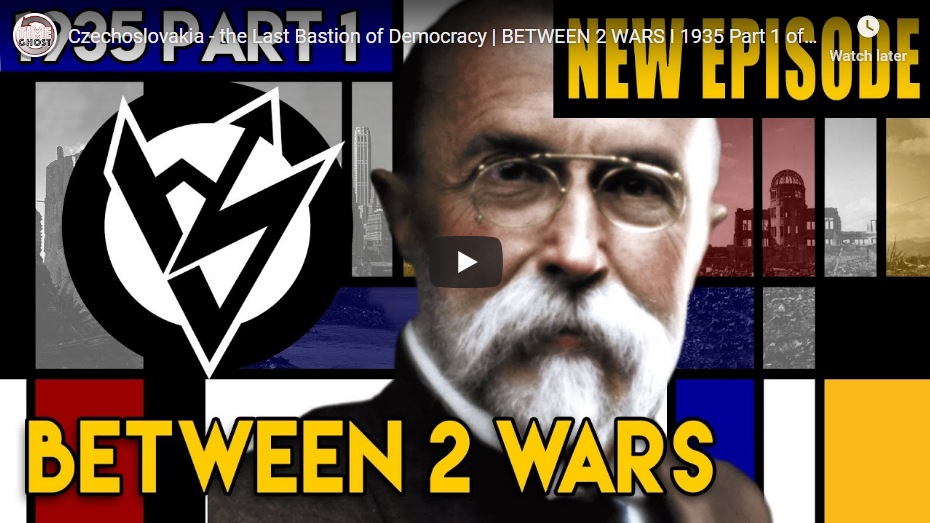
Czechoslovakia – the Last Bastion of Democracy | BETWEEN 2 WARS I 1935 Part 1 of 4
TimeGhost History
Published 2 Dec 2019Czechoslovakia is holding on to democracy by a thread. It even looks like they might be able to integrate the German Czechoslovakians, but Hitler’s rise to power changes everything.
Join us on Patreon: https://www.patreon.com/TimeGhostHistory
Hosted by: Indy Neidell
Written by: Francis van Berkel
Directed by: Spartacus Olsson and Astrid Deinhard
Executive Producers: Bodo Rittenauer, Astrid Deinhard, Indy Neidell, Spartacus Olsson
Creative Producer: Joram Appel
Post-Production Director: Wieke Kapteijns
Research by: Francis van Berkel and Rune Væver Hartvig
Edited by: Daniel Weiss and Wieke Kapteijns
Sound design: Marek KamińskiA TimeGhost chronological documentary produced by OnLion Entertainment GmbH.
From the comments:
TimeGhost History
2 days ago
The year is 1935 CE. Central Europe is entirely dominated by Authoritarians and Fascists. Well not entirely! One small country of indomitable Czechs and Slovaks still holds out for democracy. And life is not easy for the German Nazis who garrison the towns and villages in Bohemia and Moravia…One thing in this episode might go unnoticed. It is how important it is to note that the term Sudeten German has only become widespread after WWI. It shows us how the delicate balance of ethnic groups had been upset after the Great War.
Before 1918, these same people felt comfortable called themselves Bohemian or Moravian. On the other side of the border that now divides Czechoslovakia from Germany, Austria, Poland and Hungary Czech and Slovak speakers felt comfortable calling themselves for instance Carpathian, Silesian, or Bavarian. In only 17 years this regional sense of unity has now been eradicated. It’s really easy to fall into the trap of the identity rhetoric of the time. To say that “Well, what did you expect? You forced people to be part of a country that wasn’t theirs” it’s an easy explanation for all of this conflict.
Well as we have often pointed out it wasn’t that simple. Fanned by identity politics on all sides, the borders have become fevering soars that are spreading infection into all of Europe. It is a disease that now threatens to develop into sepsis for the whole European continent. And think of this; borders are nothing but lines on maps, things invented arbitrarily in people’s minds… isn’t it remarkable how we as a species can invent our own demise?
November 30, 2019
Hong Kong and China
At Samizdata, Brian Micklethwait considers the state of play in Hong Kong’s defiance of the Chinese Communist Party:
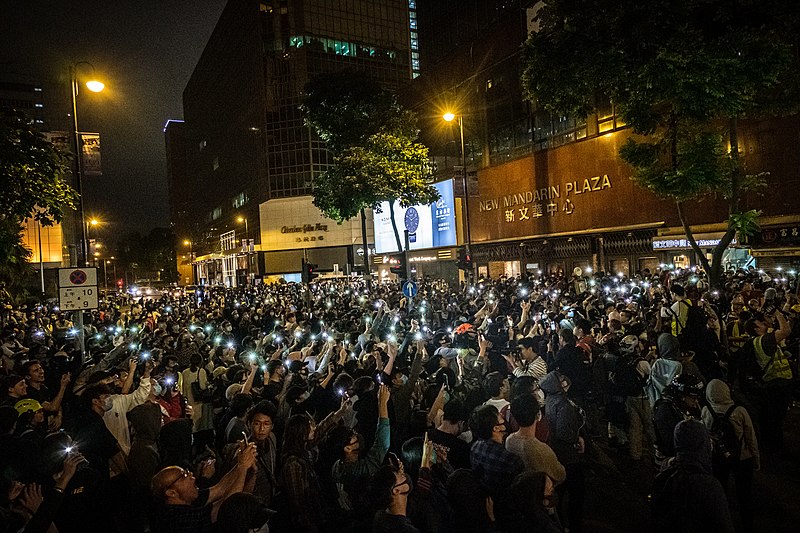
Protests continue in Hong Kong, 25 November 2019.
Photo by Studio Incendo via Wikimedia Commons
How can the HongKongers defeat the Chinese Communists (hereinafter termed ChiComs), and preserve their HongKonger way of life approximately as it now is? In the short run, they probably can’t. During the next few months, the ChiCom repression in Hong Kong will surely get ever nastier, and the bigger plan, to just gobble it up and digest it into ChiCom China will surely bash onwards.
But then again, I thought that these Hong kong demonstrations would all be snuffed out months ago. So what the hell do I know? I thought they’d just send in the tanks, and to hell with “world opinion”. But the ChiComs, it turned out, didn’t want to just kill everyone who dared to disobey, plus anyone else who happened to be standing about nearby. That would not be a good look for them. What are they? Russians? Far too unsophisticated. Instead the plan has been to divide and conquer, and it presumably still is. By putting violent agent provovateurs in among the demonstrators, and by ramping up the violence simultaneously perpetrated by the police, the plan was, and is, to turn the peaceful and hugely well attended demonstrations into far smaller, far more violent street battles of the sort that would disgust regular people. Who would then turn around and support law and order, increased spending on public housing, blah blah. So far, this has not worked.
And for as long as any ChiCom plan for Hong Kong continues not to work, “world opinion” has that much more time to shake itself free from the sneer quotes and get itself organised, to try to help Hong Kong to stay semi-free.
Those district rat-catcher (or whatever) elections last Sunday came at just the wrong time for the ChiComs, because they gave peaceful HongKongers the chance to make their opinions known, about creatures of a far more significant sort than rats, and at just the time when the ChiCom plan should have started seriously shutting the HongKongers up. These elections were a landslide.
The ChiComs are very keen to exude indifference to world opinion, but they clearly do care about it, because if they truly didn’t care about it, those tanks would have gone in months ago, just as I had assumed they would. So, since world opinion clearly has some effect, the first thing the rest of us can do to help the HongKongers is to keep our eyeballs on Hong Kong.
As I say, I continue to be pessimistic about the medium-term future in Hong Kong. But in the longer run, if the HongKongers can’t have a local victory, they can set about getting their revenge. And all of the rest of us who care can join in and help them.
November 23, 2019
QotD: Populism and democracy
I was not so precocious: it took me twenty more years to sort out what I might mean by the word “Tory.” But the view itself began in Hobbesian fear, that day, with my discovery that “the people” stink. They are mindless animals, and put some wrath in them, they will lose their bashfulness. And of course, not only in West Pakistan; for gradually one makes the further discovery that “the people are the people are the people” everywhere. They need to be tamed, cautioned, repressed, sometimes caged. My response to misty-eyed rhetoric for “democracy” is unfavourable. “Populism” is, in my sight, unambiguously evil — even when its cause be, for the moment, just. Given more time, and the inevitable failure to achieve immediate goals, the cause itself will turn rancid.
David Warren, “Crowds & powers”, Essays in Idleness, 2016-11-08.


