
As the activist delight in vandalism and traffic obstruction has cropped up in the comments, along with their bizarre rationalisations, I thought it might be worth revisiting some earlier rumblings on the subject.
For instance,
It’s interesting just how often “social justice” posturing entails something that looks an awful lot like spite or petty malice, or an attempt to harass and dominate, or some other obnoxious behaviour. Behaviour that, without a “social justice” pretext, might get you called a wanker or a bitch. A coincidence, I’m sure.
It is, I think, worth pondering why it is that these supposed displays of righteousness routinely take the form of obnoxious or bullying or sociopathic behaviour, whereby random people are screwed over and dominated, and often reduced to pleading. Pleading just to get home, to children, or to work, or to get to the doctor’s surgery. Even ambulances and fire engines can be obstructed, indefinitely, with moral indifference. Among our self-imagined betters, it seems to be the go-to approach for practically any purported cause. Which seems terribly convenient. Almost as if the supposed activism were more of a pretext, an excuse, a license to indulge pre-existing urges.
And what kind of person would have urges like that?
David Thompson, “Make Way For The Activist-Wanker Caste”, DavidThompson, 2022-10-16.
January 17, 2023
December 15, 2022
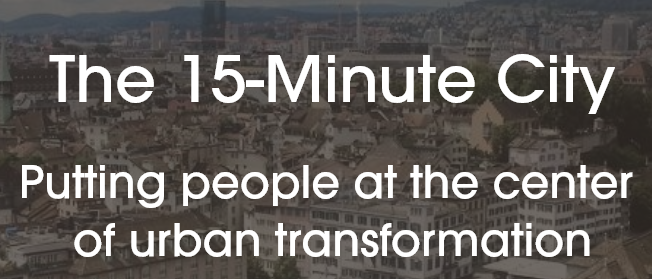
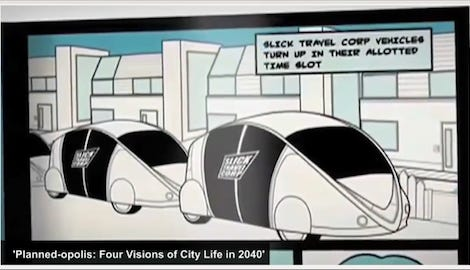
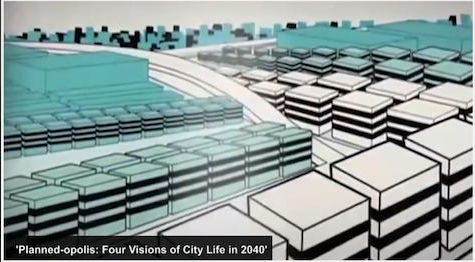
The hot new thing for municipal politicians is the “15-minute city”
Elizabeth Nickson on how some of the building blocks of a global police state are being laid at the local level in pretty much every municipality in the western world:
Every single ministry or government department has been writing police-power regulation into their revised policy statements for the last 20 years. It is incremental and surreptitious. I mean come on, if you were going to abrogate democracy, cheat in every election, remove property rights from every citizen, bank that property in multinational/UN hands, you would need a police state, amIright?
That said, the province where I live, which is so crazy, it’s where California gets most of its bonkers ideas, has turned, locally-speaking. The socialists and greens were so confident of sweeping their elections that they didn’t bother to cheat, and as a result most every town and city was taken back by people saying, nope, you’re done. We are going back to basics. Like no more outdoor drug bazaars, silly wasteful green projects, and here’s an idea: let’s respond to our voters and not try to steal everything they have.
This would happen in every single state and county if we managed to stop them cheating. Because trust me, in every election in every jurisdiction, they are cheating.
The catastrophe even reached Davos. When one of their extra-special places is under threat time to roll out the big guns.
Hence 15-minute cities. Get this damn thing done before the slow learners, i.e. city people, wake up.
Therefore Oxford City Council this past week instituted their trial of 15 Minute Cities. This is a UN/WEF project meant to continue the lockdowns by scaring us to death using the nonexistent climate crisis. And if you think this is local to the UK, it’s not. This is being trialed in Brisbane, Portland, Barcelona, Paris and Buenos Aires.
Here are the basic rules. You are allowed out of your neighborhood for fifteen minutes a day and out of your region, 100 days a year. Fifteen minutes is enough to shop, take your kids to school and pick them up. Trespass that and you’re fined. Oxford has approved the installation of electronic traffic filters, placed strategically, which will be able to track your car, wherever it goes. That will cost citizens around $15,000,000. We get to build our own prisons!
The trial lockdown goes into effect January 1, 2024
People voted for this. Or rather they didn’t, but did.
Seems preposterous doesn’t it? Yet those who still read and watch legacy media know about it. They have been selling it hard. When I mean “they”, I mean the massive PR firms paid by WEF and the UN, strategized no doubt by McKinsey.
To refresh, this is what they want: drive people out of rural areas, and place them in 15 minute cities. Take all the resources, and divide them up among multi-nationals who will then tax our use of water, air, minerals, etc. Creating a world of renters, of serfs. You will have a lovely category: Amazon serf, Tesla serf. Bill Gates’ serf.
Pretty much every city council in every city in the world has had 15 Minute Cities pitched to them. Without doubt, every single city council in the world, has some committee and elected officer assigned to the 15 Minute city project. They are “researching” it with your money, which means they are trying to find a way to convince people to sign onto it.
They only got here because we stopped paying attention. No one went to meetings, no one followed what they were doing in committee. We trusted them. As someone pointed out, WEF and the UN during COP26 hold meetings and lectures that show precisely what they are planning to do, that are videotaped and available to anyone who wants to know what they are planning. Views of each? 26 people. 50 tops.
I’d like to advise you to get involved with your local government, because they have undoubtedly gone rogue and are amassing power and attaching funding requirements to each project. Many of them, if green-based, and locally everything is green-based, will be ill-founded, the science can be exploded. At our last virtual meeting here, a man from the real world, with real skills made a presentation showing that our local government was selling a fraudulent idea, and had put itself at risk legally. They had used a flawed study checked by no adult, sloppily researched and written by a university student to create the climate policy. Instead of being an ideal carbon sink, as was claimed, it turned out the islands were much less effective in that regard than other parts of the province.
Our local government had used this study for the past year, to harangue citizens and senior governments to push for more restrictive regulation on islanders.
The New World Order is built on sand, it is feather-weight, it can be blown over by a single honest consultant who can read legislation and do math. Become one. It is super satisfying. And the friends you will make will last beyond the grave.

December 11, 2022
Apparently building a new coal mine ranks as a “crime against humanity”
Brendan O’Neill in Spiked on the latest peak in climate hysteria (although it’s tough to bet against hysterics finding an even higher peak to climb):
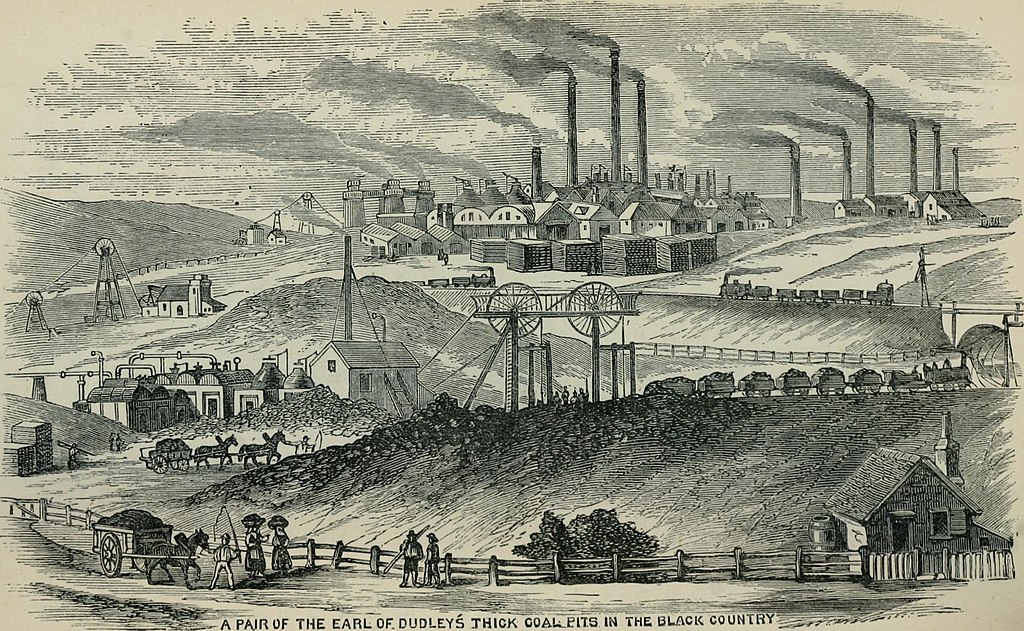
An image of coal pits in the Black Country from Griffiths’ Guide to the iron trade of Great Britain, 1873.
Image digitized by the Robarts Library of the University of Toronto via Wikimedia Commons.
The madness of the greens is peaking. This week a leading eco-politician in the UK, Caroline Lucas of the Green Party, referred to the building of a new coalmine as a “crime against humanity”. Take that in. Once upon a time it was mass murder, extermination, enslavement and the forced deportation of a people that were considered crimes against humanity. Now the building of a mine in Cumbria in north-west England that will create 500 new jobs and produce 2.8million tonnes of coal a year is referred to in such terms. Perhaps the coalmine bosses should be packed off to The Hague. Maybe the men who’ll dig the coal should be forced alongside the likes of ISIS to account for their genocidal behaviour.
We cannot let Ms Lucas’s crazed comments just slide by. We need to reflect on how we arrived at a situation where a mainstream politician, one feted by the media establishment, can liken digging for coal to crimes of extermination. It was in the Guardian – where else? – that Ms Lucas made her feverish claims. On Wednesday, when the government gave the go-ahead to the Cumbria mine, the first new coalmine in Britain for 30 years, Lucas wrote that the whole thing is “truly terrible”. This “climate-busting, backward-looking coalmine” is nothing short of a “climate crime against humanity”, she said.
It isn’t though, is it? Sorry to be pedantic but it is not a crime to extract coal from the earth. If it were, the leaders of China – where they produce 13million tonnes of coal a day, rather putting into perspective the Cumbria mine’s 2.8million tonnes a year – would be languishing in the clink. I look forward to Ms Lucas performing a citizen’s arrest on Xi Jinping. It certainly is not a crime against humanity. That term entered popular usage during the Nuremberg trials of the Nazis. It refers to an act of evil of such enormity that it can be seen as an assault on all of humankind. Earth to Ms Lucas: extracting coal to make steel – what the Cumbria coal will mostly be used for – is not an affront to humankind. I’ll tell you what is an affront, though: speaking about the burning of coal in the same language that is used to refer to the burning of human beings. That, Caroline, is despicable.
The overwrought apocalypticism of the likes of Ms Lucas does two bad things. First, it demonises in the most hysterical fashion perfectly normal and in fact good endeavours. The Cumbria coalmine will create hundreds of well-paid jobs. It will increase the independence and dignity of working-class families in Cumbria. It will help to reduce the UK’s reliance on coal imports. These are positives. They should be celebrated. Of course to Ms Lucas and other middle-class greens, that local communities in Cumbria have welcomed the coalmine only shows that they’re “nostalgic” for the past and that they’ve been “seduced” by a plan that will actually make them “suffer”. Patronising much? The Cumbrian working classes who can’t wait to start mining are a paragon of reason in comparison with the Guardianistas madly sobbing about coal being a crime against humanity.
November 28, 2022
It’s not a “conspiracy theory” if you’re just repeating the words they say themselves
Dr. Rainer Zitelmann on the clear declarations of climate activists that abolishing capitalism is part of their overall goal:
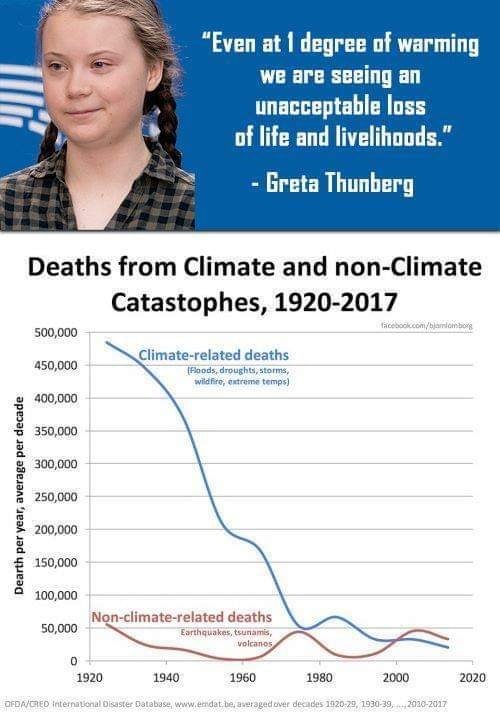
For the last three years, Greta Thunberg has said that her life’s purpose was to save the world from climate change. Now she told an audience in London that climate activists must overthrow “the whole capitalist system”, which she says is responsible for “imperialism, oppression, genocide … racist, oppressive extractionism”. The “activists” of the doomsday cult “Last Generation” say quite openly that their goal is the abolition of capitalism.
Examine the standard work of anti-capitalist climate change activists, and you will quickly see what I mean. Naomi Klein, the popular critic of capitalism and globalization, admits she initially had no particular interest in the issues surrounding and related to climate change. Then, in 2014, she wrote a hefty 500-page tome called This Changes Everything: Capitalism vs. The Climate.
Why did she suddenly become so interested in climate change? Well, prior to writing this 2014 book, Klein’s main interest was the fight against free trade and globalization.
She admits in her writing: “I was propelled into a deeper engagement with [the topic of climate change] partly because I realized it could be a catalyst for forms of social and economic justice in which I already believed.” And she hopes for “a new kind of climate movement to take up the fight against so-called free trade”. She strictly rejects highly efficient solutions, such as climate-friendly nuclear energy, because she is not at all interested in solutions within the framework of capitalism.
Klein writes that she recognizes that climate change presents a chance to “collectively use the crisis to leap somewhere that seems, frankly, better than where we are right now” and “that climate change could become a catalyzing force for positive change … it could be the best argument progressives have ever had … to reclaim our democracies from corrosive corporate influence; to block harmful new free trade deals … to open borders to migrants.” The climate crisis could “form the basis of a powerful mass movement”, and this movement should set itself the following objectives:
- to “radically expand the commons” (i.e., state-owned property and resources)
- to introduce a “carefully planned economy”
- to “change pretty much everything about our economy”
- to introduce “new taxes, new public works programs”
- “reversals of privatizations”
- “extinction for the richest and most powerful industry the world has ever known — the oil and gas industry”
- government guidelines on “how often we drive, how often we fly, whether our food has to be flown to get to us, whether the goods we buy are built to last … how large our homes are”
- “a fundamental reordering of the component parts of Gross Domestic Product”
- “less private investment in producing for excessive consumption”
- “increased government spending”
- “a great deal more redistribution”
Klein embraces a suggestion that the well-off 20 percent in a population take the largest cuts in order to create a fairer society. She argues that “our economic system and our planetary system are now at war”, and the only suitable response is “revolutionary change to the political and economic hegemony”.
November 12, 2022
Climate imperialism
Michael Shellenberger on the breathtaking hypocrisy of first world nations’ rhetoric toward developing countries’ attempts to improve their domestic energy production:
What’s worse, global elites are demanding that poor nations in the global south forgo fossil fuels, including natural gas, the cleanest fossil fuel, at a time of the worst energy crisis in modern history. None of this has stopped European nations from seeking natural gas to import from Africa for their own use.
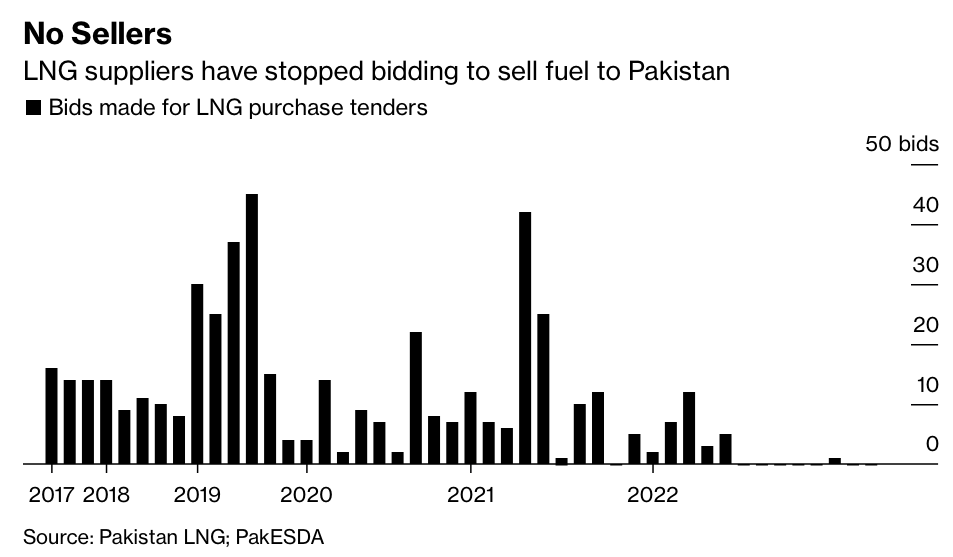
Rich nations have for years demanded that India and Pakistan not burn coal. But now, Europe is bidding up the global price of liquified natural gas (LNG), leaving Pakistan forced to ration limited natural gas supplies this winter because Europeans — the same ones demanding Pakistan not burn coal — have bid up the price of natural gas, making it unaffordable.
At last year’s climate talks, 20 nations promised to stop all funding for fossil fuel projects abroad. Germany paid South Africa $800 million to promise not to burn coal. Since then, Germany’s imports of coal have increased eight-fold. As for India, it will need to build 10 to 20 full-sized (28 gigawatts) coal-fired power plants over the next eight years to meet a doubling of electricity demand.
This is climate imperialism. Rich nations are only agreeing to help poor nations so long as they use energy sources that cannot lift themselves out of poverty.
Consider the case of Norway, Europe’s second-largest gas supplier after Russia. Last year it agreed to increase natural gas exports by 2 billion cubic meters, in order to alleviate energy shortages. At the same time, Norway is working to prevent the world’s poorest nations from producing their own natural gas by lobbying the World Bank to end its financing of natural gas projects in Africa.
The IMF wants to hold hostage $50 billion as part of a “Resilience and Sustainability Trust” that will demand nations give up fossil fuels and thus their chance at developing. Such efforts are working. On Thursday, South Africa received $600 million in “climate loans” from French and German development banks that can only be used for renewables. The Europeans hope to shift the $7.6 billion currently being invested by South Africa in electricity infrastructure away from coal and into renewables.
Celebrities and global leaders say they care about the poor. In 2019, the Duchess of Sussex, Meghan Markle, Prince Harry’s wife, told a group of African women, “I am here with you, and I am here FOR you … as a woman of color.” Why, then, are they demanding climate action on their backs?
November 8, 2022
“Just Stop Oil” and other nihilistic doomsday cults
In Spiked, Tom Slater says we have to accurately label groups like the Extinction Rebellion spin-off “Just Stop Oil” rather than giving them the rather anodyne label of “protest groups”:

We need to stop calling Just Stop Oil a protest group. Protesters is far too positive a word to describe this strange assemblage of middle-class agitators, with their cut-glass accents and self-parodying bohemian names (shouts out to Indigo Rumbelow), who have been gluing themselves to roads and throwing soup at great works of art in an attempt to end oil and gas production. This thing is a doomsday cult, masquerading as a political campaign. There’s really no denying it any longer.
Take the case of that 24-year-old woman who climbed up one of the gantries over the M25 this morning, in order to bring all the ignorant, carbon-spewing plebs to a standstill. She posted an unnerving video online. In it, she is fighting back tears. She gives vent to a seemingly sincere apocalyptic terror. “I’m here because I don’t have a future!”, she says, in between sobs. She accuses the government of murder, of fuelling a “climate crisis” she seems to be convinced is killing millions, for having the temerity to exploit oil and gas to keep the UK’s lights on.
That what she’s saying is alarmist nonsense should be obvious to anyone. The truth is almost the inverse of what she is saying. Thanks to economic development, fuelled by cheap and reliable energy, annual deaths worldwide from climate-related disasters have plunged by more than 95 per cent over the past century. She also implies that the floods in Pakistan are the fault of fossil fuels, even though those feted IPCC reports say there is insufficient evidence to show that climate change is making floods more frequent, lengthy or intense. What would be considerably more murderous would be for our government to shun reliable oil and gas supplies as the nation’s pensioners head into a harsh winter, amid sky-high energy prices and talk of blackouts.
Such blithe disregard for the details reminds us that these people don’t really care about climate change. They’re hysterical about climate change. They’re apocalyptic about climate change. They aren’t taking to the streets, motorways and art galleries because they are convinced of a particular scientific view with regards to the environment and think something really ought to be done about it. They are in the grip of a fact-lite and doom-laden narrative that insists literally billions will die in short order, that the twentysomethings of today might not live to see their dotage, because of our damnable desire to live comfortable and free lives.
All of this is why environmental protest – with Just Stop Oil and the various other Extinction Rebellion offshoots to the fore – has become so much weirder in recent years. And that’s saying something. Beyond all the crying and talk of having no future, there’s also the setting of arms on fire, the pouring of human shit over memorials to Captain Sir Tom Moore, the throwing of soup over great works of art … it’s all become rather visceral, iconoclastic, scatological. In a word, it’s all become rather creepy. These are the acts not of future-oriented protesters keen to shape and change the world, but of cultists convinced that doomsday is almost upon us.
As someone else pointed out recently, there’s more than a bit of a resemblance between the kind of actions taken by protest groups like “Just Stop Oil” and the tantrums of very small children.
October 19, 2022
Luxury beliefs in action
In The Critic, Sebastian Milbank looks at the young vandals, er “activists” who decided that throwing soup on a famous painting was a totally sensible and reasonable thing to do in order to direct our attention to their luxury beliefs:
On Friday Phoebe Plummer, a 21-year-old graduate student and activist, threw a tin of soup over a Van Gogh painting in the National Gallery, before proceeding to glue herself to the wall. “What is worth more, art or life?” she shouted in a manner reminiscent of an especially tiresome student at the Oxford Union. Whilst Phoebe didn’t exactly make it to Oxford, she was the beneficiary of a £15,000 a year boarding school education. Having rich parents probably helps if your lifestyle involves dying your hair pink, covering yourself in glitter and getting glued to a succession of defaced public monuments. The legal fees alone must be a headache.
That said, perhaps the organisation she cheerfully acts in the name of — Just Stop Oil — can foot the bills. After all, it’s a registered charity funded by the US-based organisation The Climate Emergency Fund. The Fund boasts on its website that “We provide a safe and legal means for donors to support disruptive protest that wakes up the public and puts intense pressure on lawmakers”, not to mention “Our robust legal team”. The charity comes with endorsements by high profile organisations such as fashion magazine Marie Claire and the backing of donors like the group’s co-founder, oil heiress Aileen Getty who is quoted as saying, “Don’t we have responsibility to take every means to protect the Earth”.
I can think of other organisations that provide “A safe harbour for donors” and put “intense pressure on lawmakers”, not to mention having “robust legal teams” — though they generally feature rather more Italian accents and bodies dumped in the river, and rather fewer celebrity endorsements (Frank Sinatra could not be reached for comment).
The Just Stop Oil organisation itself is even more explicit about its willingness to countenance potentially illegal means. In its FAQ section it calls for people to “use tactics such as strikes, boycotts, mass protests and disruption to withdraw their cooperation from the state”, and announces that they “are willing to take part in Nonviolent direct action targeting the UK’s oil and gas infrastructure should the Government fail to meet our demand by 14 March 2022”. Well the date has past. “Will there be arrests?” the next section asks. The answer? “Probably”.
Quite why organisations that openly fund illegal — sorry “disruptive” — protest, and hire teams of lawyers to avoid the legal consequences, are allowed to enjoy charitable status, let alone avoid investigation by the authorities, is beyond me. Nor is it clear to me how attacks on works of art, or stopping traffic in the road, can attract support for environmental causes, or challenge those who profit from ecological destruction.
The answer lies with the nature of the radical environmental movement, which is often starkly at odds with many of the finest traditions of ecological and anti-industrial thought. Early critics of industrial capitalism like Ruskin and Morris were as concerned with the protection of traditional culture as they were with the destruction of the natural world. Their humanist challenge to industrialism was to call for the return of craft, the embrace of localism, a built environment on a human scale, and an economy that fed the spiritual as well as material needs of mankind.
Theodore Dalrymple on the mindset of the perps:
Youth is often said to be an age of idealism, but if my recollection of my own youth is accurate, it could also be characterized as an age of self-righteousness liberally dosed with hypocrisy, at least when it has known no real hardship that isn’t of its own making.
The two girls who threw a tin of soup at a Van Gogh in the National Gallery in London and then glued themselves to the wall certainly evinced a humorless self-righteousness and self-importance: indeed, they seemed almost to secrete it as a physiological product. They were part of a movement of dogmatic and indoctrinated young people called Just Stop Oil that’s currently making a public nuisance of itself in this fashion in Britain, holding up traffic and causing misery to thousands, in what it believes to be the best of all good causes, saving the planet.
[…]
Youth suffers from both fevered over-imagination and a complete absence of imagination. This is the natural consequence of a lack of experience of life, in which limited experience is taken as the total of all possible human experience. Youth accepts uncritically its own wildest projections and doesn’t know the limitations of its own knowledge. It believes itself endowed with moral purity and allows for no ambiguity, let alone tragic choice. It’s sure of itself.
The young women who threw soup at the Van Gogh probably didn’t know that, even if the man-made climate change hypothesis were wholly correct, they lived in a country that produced about 1 to 2 percent of the alleged greenhouse gases in the world, so that even if their action put a complete end to that contribution (a most unlikely outcome) it would make absolutely no difference whatever to the fate of the planet. Their action certainly caused the public irritation and expense, and its most likely long-term outcome is a costly increase in surveillance and security at the gallery because the two of them were able to do what they did with such ease.
However, they were probably dimly aware, or had the good sense to know, that it would have been inadvisable for them to make their gesture in some country responsible for a far greater proportion of the alleged causation of climate change than their own—China, for example. Cowardice, after all, is the better part of self-righteousness.
September 24, 2022
The end of crisis culture – “[Y]ou can’t go on having a culture of crisis if people stop showing up for it”
Chris Bray on the inevitable endgame of “all crisis, all the time” culture:
The journalist John Tierney has described the Crisis Crisis, “the incessant state of alarm fomented by journalists and politicians”. What we’re experiencing now is the Crisis Crisis crisis, the emerging crisis caused by the Crisis Crisis. Over and over again, interventions in some invented or overhyped form of the crisis, undertaken in the hysterical spirit of the Crisis Crisis, cause a form of the Crisis Crisis crisis, which eventually results in a course correction that may or may not be fully apparent for a while. Skip right over the next paragraph if you don’t need to see examples again.
The Sri Lankan government intervenes in climate change by instantly ending the use of commercial fertilizers in agriculture, which causes a dangerous decline in the production of food. The German government intervenes in climate change by declaring a commitment to 100% clean energy, which causes dangerous instability in the availability of actual energy (“committing national suicide“), with some help from the Nord Stream shut-off valve, which nobody ever could have seen coming. The Dutch government intervenes in climate change by declaring an intention to limit agricultural production, which doesn’t cause anything yet, because Dutch farmers won’t stand for it, but final outcome TBD.
All over the world, things that work stop working because of excessive and unwarranted interventions led by people who cry crisis and throw sand in functioning gears. Dutch agriculture was just fine; then the government decided to help end the crisis. The interventions — the interveners, the people who get in the way — are harming us, when their harm could be prevented by literal nothing, by the simple choice to not perform the interventions. What we need is for the interveners to go play Risk in their basement or something, and forget their important duty to help.
The entertainment industry has had its own intervention, famously described on Substack, in woke-facing talent purges and narrative shifts and insulting “It’s Ghostbusters … but with WOMEN!” reboots. And now some hint about the endgame of the one big cycle of fraud comes from woke Hollywood — which has pounded audiences with The Message for years, resulting in a catastrophic loss of audience. The result is starting to look like this:
The social justice intervention in Hollywood storytelling is harming Hollywood; the intervention in that industry is causing the decline of the industry. At some point, people stop eating shit.

September 20, 2022
The Byzantine Empire: Part 4 – Justinian, The Hand of God
seangabb
Published 1 Jan 2022Between 330 AD and 1453, Constantinople (modern Istanbul) was the capital of the Roman Empire, otherwise known as the Later Roman Empire, the Eastern Roman Empire, the Mediaeval Roman Empire, or The Byzantine Empire. For most of this time, it was the largest and richest city in Christendom. The territories of which it was the central capital enjoyed better protections of life, liberty and property, and a higher standard of living, than any other Christian territory, and usually compared favourably with the neighbouring and rival Islamic empires.
The purpose of this course is to give an overview of Byzantine history, from the refoundation of the City by Constantine the Great to its final capture by the Turks.
Here is a series of lectures given by Sean Gabb in late 2021, in which he discusses and tries to explain the history of Byzantium. For reasons of politeness and data protection, all student contributions have been removed.
(more…)
September 11, 2022
Are we looking at a modern equivalent to the Bronze Age Collapse?
If you’re feeling happy and optimistic, Theophilus Chilton has a bucket of cold water to douse you with:
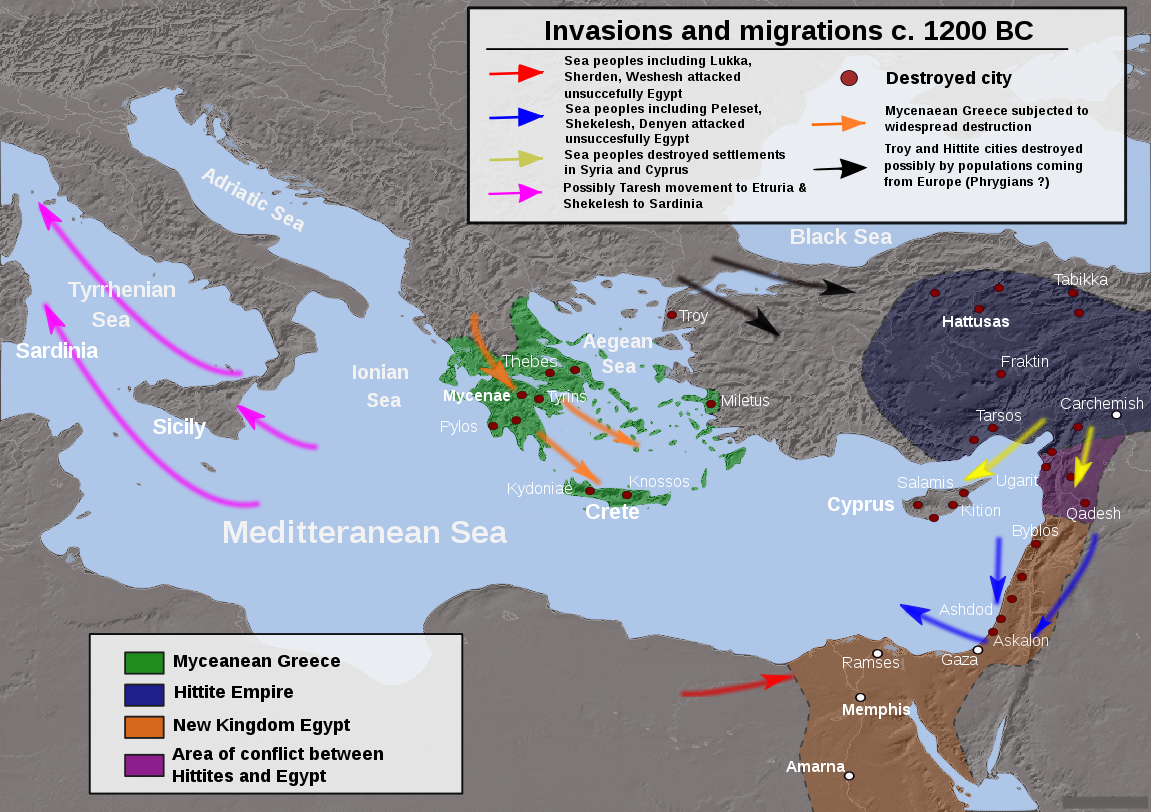
Migrations, invasions and destructions during the end of the Bronze Age (c. 1200 BC), based on public domain information from DEMIS Mapserver.
Map by Alexikoua via Wikimedia Commons.
Regular readers know that I’ve talked about collapse (as well as the implied regeneration that follows it) on here a lot. In nearly all cases, though, I’ve discussed it within a specifically American context – the collapse of the present American system and the potential for one or more post-American successor states arising in place of the present globohomo order. However, we should recognise that collapse is a general phenomenon that affects any and all large nations eventually. Just as America is not a special snowflake who is exempt from the laws of demographic-structural theory, so also is she not the only one subject to them.
Further in this vein, we should recognise that no major nation is isolated from its neighbours. No matter how self-sufficient, sooner or later everybody gets hooked up into trade networks. As trade networks expand, you develop world systems that display increased international interconnectedness and interdependency. From a demographic-structural perspective, the interconnectedness of these global systems acts to “synch up” the secular cycles of the nations involved as “information flows” increase. The upside to this is that when one part of the system prospers, everyone does. The downside, of course, is that when one part collapses, everyone does as well.
There are several historical examples of this kind of interconnected system synching up and then collapsing. Probably one of the most well-known examples would be the Bronze Age collapse which occurred in the Mediterranean world system roughly between 1225-1150 BC. Likely due to several shocks to the system working in tandem (drought, volcanic eruptions, migrations into the Balkans from the north, etc.), a series of invasions of the Sea Peoples spread out across the entire eastern end of the Mediterranean, toppling Mycenaean Greece and the Hittite Empire, and nearly did the same to Egypt. From there, the shocks moved outward throughout the rest of Anatolia and Syro-Palestine and eastward into Mesopotamia, disrupting the entire interconnected trade network. The system was apparently already primed to be toppled by these jolts, however, due to the top-heavy political structures (elite overproduction) and overspecialisation in these empires that contributed to their fragility in the face of system shocks. When the first one fell, the effects spread out like dominoes falling in a row.
There is evidence that this collapse extended beyond the Mediterranean basin and disrupted the civilisation existing in the Nordic Bronze Age around the Baltic Sea. Right around the same time that Bronze Age Mediterranean society was collapsing, serious changes to society in the Baltic basin were also taking place, primarily due to the disruption of trade routes that connected the two regions, with amber flowing south and metals and prestige goods returning north. During this period, the population in the area transitioned from a society organised primarily around scattered villages and farms into one that became more heavily militarised and centred around fortified towns, indicating that there was a change in the region’s elite organisation, or at least a strong modification of it (remember that collapse phases are characterised by struggles between competing elite groups). A large battle that dates to this era has been archaeologically uncovered in the Tollense Valley of northeastern Germany which is thought to have involved over 5000 combatants — a huge number for this area at this time, indicating more centralised state-like organisational capacities than were previously thought to have existed in the region. All in all, the evidence seems to suggest that this culture underwent some type of collapse phase at this time, likely in tandem with that occurring further south.
Other times and places have also seen such world system collapses take place. for instance, when the western Roman Empire was falling in the 3rd-5th centuries AD, the entire Mediterranean basis (again) underwent a systemwide socioeconomic collapse and decentralisation. More recently, the entire Eurasian trade system, from England to China, underwent a synchronised collapse phase in the early 17th century AD that saw revolutions, elite conflict, decentralisation, and social simplification take place across the length of the continent.
The great irony of interconnectedness is that too much of it actually works to reduce resilience within a system. Because an intensively globalised world system entails a lot of specialisation as different parts begin to focus on the production of different commodities needed within the network, this makes each part of the system more dependent upon the others. This works to reduce the resiliency of each of these individual parts, and the greater interconnectedness allows failure in one part to be communicated more widely and rapidly to other parts than might otherwise be the case in less interconnected systems.
September 8, 2022
Surprise! Liz Truss can successfully locate Canada on a map!
In UnHerd, Marshall Auerback details some of the Canadian connections of Britain’s new PM:

British Prime Minister Liz Truss, 1 May 2022.
Official portrait via Wikimedia Commons.
Faced with soaring costs of living, increased collateral damage from the war in Ukraine, and widening national inequality, Liz Truss seemed curiously optimistic in her first speech as Prime Minister. What could possibly be driving such bullishness? Absent any sign of a coherent plan of action, we might find her motivation in an Instagram post from 2018, where Truss cited the time she spent in Canada as a teenager as “the year that changed my outlook on life … #pioneercounty #optimism #maplespirit”.
As profound an impact as that year might have had on Truss’s optimistic psyche, she would do well to look more closely at Canada’s faltering “success story” in recent years. Today, the country is no longer the land of milk and honey (even if it does still produce a fair amount of maple syrup), but suffers many of the same problems as the UK, and a number that are significantly worse: rising inflation, profound income inequality, the challenges posed by climate change, and an increasing host of social problems — not least the mass stabbing spree last weekend in Saskatchewan that left 10 people dead.
However, to the extent that the Trudeau Administration has attempted to remedy some of these problems, there are clear lessons for Truss. Unlike in the UK, many of Canada’s energy problems are largely self-inflicted, a result of a progressive government ignoring its comparatively resource-rich environment, even as its European allies (including the UK) suffer severe consequences of being cut off from Russian gas supplies and the corresponding rise in energy prices.
A few weeks ago, German Chancellor Olaf Scholz visited Canada to secure more gas for his country. This being Canada, the German Chancellor was treated politely, but the underlying plea for Ottawa to increase liquefied natural gas (LNG) production to offset the loss of Russian gas was given short shrift. The Canadian government, one of the biggest producers of natural gas in the world, has misgivings about whether becoming an even bigger producer and exporter would actually be profitable.
Leaving aside the broader debate as to whether the dangers of man-made climate change have been confounded with natural weather and climate variability, natural gas, although a fossil fuel, emits roughly half the amount of carbon dioxide when combusted in a new, efficient natural gas power plant. This would suggest that Canada’s absolutist stance is not only a major geopolitical mistake, but also an economic own goal. The country is foregoing a major growth opportunity, which would both alleviate global inflationary pressures by increasing the supply of natural gas to the global markets, while simultaneously enhancing the prospect for a plethora of new high-paying jobs that would buttress Canada’s declining middle class.
Canada is also home to substantial supplies of copper, nickel, lithium, and cobalt — all of which will be essential to producing the infrastructure required to transition from fossil fuels to greener sources of energy, such as wind and solar. But mining itself remains a “brown” industry, one that creates substantial carbon emissions and environmental degradation. It seems conceivable, then, that the Trudeau government’s green energy purity could soon discourage the increased mining activity needed to facilitate this energy transition.
[…]
Yet in many respects, Canada’s problems are more easily resolved, given that so many are self-inflicted. And not only are there ample natural resources to offset the current energy crisis, but also broad institutional mechanisms to alleviate regional inequalities. Canada, then, cannot provide all the solutions that Truss needs. For all her boosterism, Britain remains a country fatigued by her party’s ongoing political churn and the non-stop travails still emanating from Brexit. If she is to succeed, Truss must begin by removing her rose-tinted view of Canada. The Great White North can certainly serve as an inspiration — but that is all. Canada may have changed Truss’s “outlook on life”. But if Britain is to “ride out the storm”, as she suggested yesterday, an entirely new approach is needed.
August 30, 2022
Barbarian Europe: Part 10 – The Vikings and the End of the Invasions
seangabb
Published 5 Sep 2021In 400 AD, the Roman Empire covered roughly the same area as it had in 100 AD. By 500 AD, all the western provinces of the Empire had been overrun by barbarians. Between April and July 2021, Sean Gabb explored this transformation with his students. Here is one of his lectures. All student contributions have been removed.
(more…)
August 28, 2022
Why do millions of people try to get into the US from Central and South America?
Elizabeth Nickson on what is driving so many people to leave their homes and trek north to the US (and, to a much lesser extent, Canada):
Mostly they are coming because Black Rock, the UN, the WEF are grabbing their lands, the more fertile the better, driving them from those lands and sticking them into tenement cities where they have to scratch like chickens for a living. Agenda 2030 is ravening under the radar in the US and Canada, where “civil society” in the pay of the government and environmental NGOs funded by oligarchs, is taking as much land and as many resources as possible out of the productive economy and shoving it into the land banks of BlackRock.
In the south, it’s not surreptitious. It is state policy to destroy their lives, to take their ancestral lands, whether it’s 40 acres or a half acre and leave them begging by the side of the road.
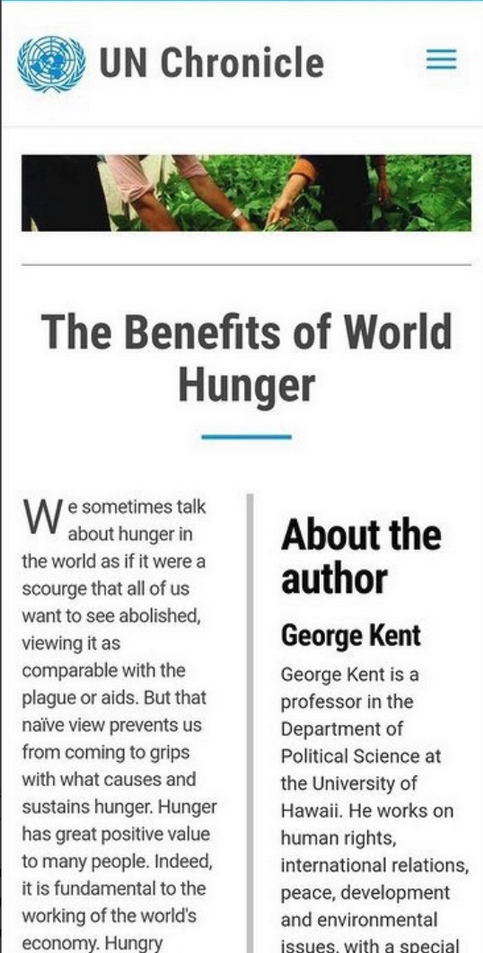
This piece was removed from the UN website within a day
Climate Change is a complex financial mechanism which under the guise of “saving the planet”, is meant to save the predator class.
Which is not only morally bankrupt, but is dealing with a level of government and corporate debt that they know they cannot sustain. In the healthiest economy in the world, the US, all profits now are coming from either some mechanism of government subsidy – the $6 Trillion of the Covid catastrophe – or Collateralized Default Obligations. For instance right now Penguin is in court attempting to buy Random House. Why? Because they can borrow money to do that, buy back some of their stock and pay their shareholders. It will mean middle managers will lose their jobs, and marginal books will not be published, but the ravening maw of Jamie Diamond and Larry Fink will be satiated. For the moment. There is no other reason. Growth, real growth has stalled in every single enterprise.
This is how it works at the top of the class pyramid:
Last week on my island we were treated to the spectacle of well-heeled, highly educated, well-spoken older men and women arguing that the impoverished elderly, the young, and families starting out should not have housing because of climate change. Our island is 74 square miles with 10,000 residents. That means we have one resident per five acres.
Our government, the trust, had proposed the use of accessory buildings, brought up to code, for long-term rentals.
The extreme form of land conservation we practice has meant that housing prices have skyrocketed, so only the rich and the well-pensioned can afford to live here. A thousand or so working age people manage to make a living, generally via remote work. We have no staff for the schools, hospitals, businesses, restaurants. They cannot afford to live here.
About 200 people on our islands, mostly in their 70s and 80s, tightly aligned with the hysterical wing of the environmental movement work the process to stop any growth. Every new resident who pulls a permit is visited and threatened by a by-law officer. The woman who instigated this specific weapon, a former enviro bureaucrat from LA, demanded full time by-law officers for years until she won, after which she fought for aggressive enforcement.
With this one act, she set islanders against each other, creating conflict where there was none. This too is deliberate. A community divided is easily controlled.
Ring any bells?
August 20, 2022
QotD: The improbable survival of the Byzantine empire
The reason for this is that the Mediaeval Roman State was directed by creative pragmatists. Look for one moment beneath its glittering surface, and the Ancient Roman Empire was a ghastly place for most of the people who lived in it. The Emperors at the top were often vicious incompetents. They ruled through an immense and parasitic bureaucracy. They were supreme governors of an army too large to be controlled. They protected a landed aristocracy that was a repository of culture, but that was ruthless in its exaction of rent. Most ordinary people were disarmed tax-slaves, where not chattel slaves or serfs.
The contemporary historians themselves are disappointingly vague about the seventh and eighth centuries. Our only evidence for what happened comes from the description of established facts in the tenth century. As early as the seventh century, though, the Mediaeval Roman State pulled off the miracle of reforming itself internally while fighting a war of survival on every frontier. Much of the bureaucracy was shut down. Taxes were cut. The silver coinage was stabilised. Above all, the senatorial estates were broken up and given to those who worked on them, in return for service in local militias. Though never abolished, chattel slavery became far less pervasive. The civil law was simplified, and the criminal law humanised – after the seventh century, as said, the death penalty was rarely used.
The Mediaeval Roman Empire survived because of a revolutionary transformation in which ordinary people became armed stakeholders. The inhabitants of Roman Gaul and Italy and Spain barely looked up from their ploughs as the Barbarians swirled round them. The citizens of Mediaeval Rome fought like tigers in defence of their country and their Orthodox faith. Time and again, the armies of the Caliph smashed against a wall of armed freeholders. This was a transformation pushed through in a century and a half of recurrent crises during which Constantinople itself was repeatedly under siege. Alone among the ancient empires in its path, Mediaeval Rome faced down the Arabs, and kept Islam at bay for nearly five centuries. Would it be superfluous to say that no one does this by accident?
Sean Gabb, “The Mediaeval Roman Empire: An Unlikely Emergence and Survival”, SeanGabb.co.uk, 2018-09-14.
August 18, 2022
The acute lack of numbers in every climate debate
The Grumpy Economist notes that every discussion of laws and regulations “to tackle climate change” only ever seem to cover one side of the issue — how much your taxes will go up and how much more your life “needs” to be regulated to “save the planet”. The almost universally lacking numbers are the expected benefits of the law or regulation in climate terms:
Most legislation or regulation that spends hundreds of billions of dollars aimed at a purpose is extensively analyzed or scored to that purpose. OK, the numbers are often, er, a bit unreliable, but at least proponents go through the motions and lay out assumptions one can examine and calculate differently. Tax and spending laws come with extensive analysis of just how much the government will make or spend. This is especially true when environment is concerned. Building anything requires detailed environmental assessments. An environmental review typically takes 4.5 years before the lawsuits begin.
In this context, I’m amazed that climate policy typically comes with no numbers, or at least none that I can find readily available in major media. We’re going to spend an additional $250 billion or so on climate policies in the humorously titled “inflation reduction act”. OK, how much carbon will that remove, on net, all things included, how much will that lower the temperature and when, how much and when will it quiet the rise of the oceans?
Finally, I have seen one number, advertised in the Wall Street Journal,
Our contributor Bjorn Lomborg looked at the Rhodium Group estimate for CO2 emissions reductions from Schumer-Manchin policies. He then plugged them into the United Nations climate model to measure the impact on global temperature by 2100. He finds the bill will reduce the estimated global temperature rise at the end of this century by all of 0.028 degrees Fahrenheit in the optimistic case. In the pessimistic case, the temperature difference will be 0.0009 degrees Fahrenheit.
Bjorn’s twitter stream on the calculation.
Maybe you don’t like Bjorn’s numbers and the IPCC model. (Not exactly a right-wing operation). Maybe you don’t like the Rhodium group’s analysis. A quick reading left me the impression its thumb might be on the wildly over-optimistic side of what this rathole of pork can produce, and of experience with what the similar past ratholes have produced:
Our preliminary estimate is that the IRA can cut US net greenhouse gas emissions down to 31% to 44% below 2005 levels in 2030—with a central estimate of 40% below 2005 levels — compared to 24% to 35% under current policy. The range reflects uncertainty around future fossil fuel prices, economic growth, and technology costs. It will also meaningfully reduce consumer energy costs and bolster US energy security over the medium-term,
10% of 2005 levels is a lot. Subsidies reduce consumer costs, but not the cost to society overall. Clever. How one can claim that clamping down on fossil fuels and subsidizing windmills and solar panels helps energy security with the German example before us is a good question. Bjorn’s point is that even with this immense thumb on the scale, the actual climate benefit is tiny. If you disagree, fine, produce some alternates.
(BTW, politicians who tell you we need to do something about climate to turn off heat waves and stop forest fires are either lying or profoundly ignorant. Nothing even Greta Thunberg proposes will actually lower temperatures in our great grandchildren’s lifetimes. Read carefully, “reduce the temperature rise“. Not “reduce temperatures”.)


