
The first modern revolution was neither French nor American, but English. Long before Louis XVI went to the guillotine, or Washington crossed the Delaware, the country which later became renowned for stiff upper lips and proper tea went to war with itself, killed its king, replaced its monarchy with a republican government and unleashed a religious revolution which sought to scorch away the old world in God’s purifying fire.
One of the dark little secrets of my past is my teenage membership of the English Civil War Society. I spent weekends dressed in 17th-century costumes and oversized helmets, lined up in fields or on medieval streets, re-enacting battles from the 1640s. I still have my old breeches in the loft, and the pewter tankard I would drink beer from afterwards with a load of large, bearded men who, just for a day or two, had allowed themselves to be transported back in time.
I was a pikeman in John Bright’s Regiment of Foote, a genuine regiment in the parliamentary army. We were a Leveller regiment, which is to say that this part of the army was politically radical. For the Levellers, the end of the monarchy was to be just the beginning. They aimed to “sett all things straight, and rayse a parity and community in the kingdom”. Among their varied demands were universal suffrage, religious freedom and something approaching modern parliamentary democracy.
The Levellers were far from alone in their ambitions to remake the former Kingdom. Ranters, Seekers, Diggers, Fifth Monarchists, Quakers, Muggletonians: suddenly the country was blooming with radical sects offering idealistic visions of utopian Christian brotherhood. In his classic study of the English Revolution, The World Turned Upside Down, historian Christopher Hill quotes Lawrence Clarkson, leader of the Ranters, who offered a radical interpretation of the Christian Gospel. There was no afterlife, said Clarkson; only the present mattered, and in the present all people should be equal, as they were in the eyes of God:
“Swearing i’th light, gloriously”, and “wanton kisses”, may help to liberate us from the repressive ethic which our masters are trying to impose on us — a regime in which property is more important than life, marriage than love, faith in a wicked God than the charity which the Christ in us teaches.
Modernise Clarkson’s language and he could have been speaking in the Sixties rather than the 1640s. Needless to say, his vision of free love and free religion, like the Leveller vision of universal equality, was neither shared nor enacted by those at the apex of the social pyramid. But though Cromwell’s Protectorate, and later the restored monarchy, attempted to maintain the social order, forces had been unleashed which would change England and the wider world entirely. Some celebrated this fact, others feared it, but in their hearts everyone could sense the truth that Gerard Winstanley, leader of the Diggers, was prepared to openly declare: “The old world … is running up like parchment in the fire”.
Paul Kingsnorth, “The West needs to grow up”, UnHerd, 2022-07-29.
November 14, 2022
QotD: The first modern revolution
November 5, 2022
The Byzantine Empire: Part 8 – The Breakdown, 1025-1204
seangabb
Published 20 May 2022In this, the eighth video in the series, Sean Gabb explains how, having acquired the wrong sort of ruling class, the Byzantine Empire passed in just under half a century from the hegemonic power of the Near East to a declining hulk, fought over by Turks and Crusaders.
Subjects covered include:
The damage caused by a landed nobility
The deadweight cost of uncontrolled bureaucracy
The first rise of an insatiable and all-conquering West
The failure of the Andronicus Reaction
The sack of Constantinople in 1204Between 330 AD and 1453, Constantinople (modern Istanbul) was the capital of the Roman Empire, otherwise known as the Later Roman Empire, the Eastern Roman Empire, the Mediaeval Roman Empire, or The Byzantine Empire. For most of this time, it was the largest and richest city in Christendom. The territories of which it was the central capital enjoyed better protections of life, liberty and property, and a higher standard of living, than any other Christian territory, and usually compared favourably with the neighbouring and rival Islamic empires.
The purpose of this course is to give an overview of Byzantine history, from the refoundation of the City by Constantine the Great to its final capture by the Turks.
Here is a series of lectures given by Sean Gabb in late 2021, in which he discusses and tries to explain the history of Byzantium. For reasons of politeness and data protection, all student contributions have been removed.
(more…)
Repost: Remember, Remember the Fifth of November
Today is the anniversary of the Gunpowder Plot:
Everyone knows what the Gunpowder Plotters looked like. Thanks to one of the best-known etchings of the seventeenth century we see them “plotting”, broad brims of their hats over their noses, cloaks on their shoulders, mustachios and beards bristling — the archetypical band of desperados. Almost as well known are the broad outlines of the discovery of the “plot”: the mysterious warning sent to Lord Monteagle on October 26th, 1605, the investigation of the cellars under the Palace of Westminster on November 4th, the discovery of the gunpowder and Guy Fawkes, the flight of the other conspirators, the shoot-out at Holbeach in Staffordshire on November 8th in which four (Robert Catesby, Thomas Percy and the brothers Christopher and John Wright) were killed, and then the trial and execution of Fawkes and seven others in January 1606.
However, there was a more obscure sequel. Also implicated were the 9th Earl of Northumberland, three other peers (Viscount Montague and Lords Stourton and Mordaunt) and three members of the Society of Jesus. Two of the Jesuits, Fr Oswald Tesimond and Fr John Gerard, were able to escape abroad, but the third, the superior of the order in England, Fr Henry Garnet, was arrested just before the main trial. Garnet was tried separately on March 28th, 1606 and executed in May. The peers were tried in the court of Star Chamber: three were merely fined, but Northumberland was imprisoned in the Tower at pleasure and not released until 1621.
[. . .]
Thanks to the fact that nothing actually happened, it is not surprising that the plot has been the subject of running dispute since November 5th, 1605. James I’s privy council appears to have been genuinely unable to make any sense of it. The Attorney-General, Sir Edward Coke, observed at the trial that succeeding generations would wonder whether it was fact or fiction. There were claims from the start that the plot was a put-up job — if not a complete fabrication, then at least exaggerated for his own devious ends by Robert Cecil, Earl of Salisbury, James’s secretary of state. The government’s presentation of the case against the plotters had its awkward aspects, caused in part by the desire to shield Monteagle, now a national hero, from the exposure of his earlier association with them. The two official accounts published in 1606 were patently spins. One, The Discourse of the Manner, was intended to give James a more commanding role in the uncovering of the plot than he deserved. The other, A True and Perfect Relation, was intended to lay the blame on Garnet.
But Catesby had form. He and several of the plotters as well as Lord Monteagle had been implicated in the Earl of Essex’s rebellion in 1601. Subsequently he and the others (including Monteagle) had approached Philip III of Spain to support a rebellion to prevent James I’s accession. This raises the central question of what the plot was about. Was it the product of Catholic discontent with James I or was it the last episode in what the late Hugh Trevor-Roper and Professor John Bossy have termed “Elizabethan extremism”?
October 29, 2022
Witches, beware! It’s the Malleus Maleficarum!
It’s the season for ghosts, goblins, and — of course — witches, so Scott Alexander decided to review that famous book for witch-hunters, the Malleus Maleficarum:
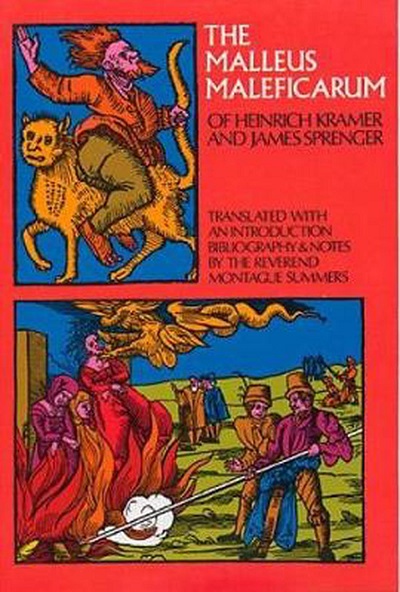
Did you know you can just buy the Malleus Maleficarum? You can go into a bookstore and say “I would like the legendary manual of witch-hunters everywhere, the one that’s a plot device in dozens of tired fantasy novels”. They will sell it to you and you can read it.
I recommend the Montague Summers translation. Not because it’s good (it isn’t), but because it’s by an slightly crazy 1920s deacon every bit as paranoid as his subject matter. He argues in his Translator’s Introduction that witches are real, and that a return to the wisdom of the Malleus is our only hope of standing against them:
Although it may not be generally recognized, upon a close investigation it seems plain that the witches were a vast political movement, an organized society which was anti-social and anarchical, a world-wide plot against civilization. Naturally, although the Masters were often individuals of high rank and deep learning, that rank and file of the society, that is to say, those who for the most part fell into the hands of justice, were recruited from the least educated classes, the ignorant and the poor. As one might suppose, many of the branches or covens in remoter districts knew nothing and perhaps could have understood nothing of the enormous system. Nevertheless, as small cogs in a very small [sic] wheel, it might be, they were carrying on the work and actively helping to spread the infection.
And is this “world-wide plot against civilization” in the room with us right now? In the most 1920s argument ever, Summers concludes that this conspiracy against civilization has survived to the modern day and rebranded as Bolshevism.
Paging Arthur Miller…You can just buy the Malleus Maleficarum. So, why haven’t you? Might the witches’ spiritual successors be desperate to delegitimize the only thing they’re truly afraid of — the vibrant, time-tested witch hunting expertise of the Catholic Church? Summers writes:
It is safe to say that the book is to-day scarcely known save by name. It has become a legend. Writer after writer, who had never turned the pages, felt himself at liberty to heap ridicule and abuse upon this venerable volume … He did not know very clearly what he meant, and the humbug trusted that nobody would stop to inquire. For the most part his confidence was respected; his word was taken.
We must approach this great work — admirable in spite of its trifling blemishes — with open minds and grave intent; if we duly consider the world of confusion, of Bolshevism, of anarchy and licentiousness all around to-day, it should be an easy task for us to picture the difficulties, the hideous dangers with which Henry Kramer and James Sprenger were called to combat and to cope … As for myself, I do not hesitate to record my judgement … the Malleus Maleficarum is one of the most pregnant and most interesting books I know in the library of its kind.
Big if true.
I myself read the Malleus in search of a different type of wisdom. We think of witch hunts as a byword for irrationality, joking about strategies like “if she floats, she’s a witch; if she drowns, we’ll exonerate the corpse”. But this sort of snide superiority to the past has led us wrong before. We used to make fun of phlogiston, of “dormitive potencies”, of geocentric theory. All these are indeed false, but more sober historians have explained why each made sense at the time, replacing our caricatures of absurd irrationality with a picture of smart people genuinely trying their best in epistemically treacherous situations. Were the witch-hunters as bad as everyone says? Or are they in line for a similar exoneration?
The Malleus is traditionally attributed to 15th century theologians/witch-hunters Henry Kramer and James Sprenger, but most modern scholars think Kramer wrote it alone, then added the more famous Sprenger as a co-author for a sales boost. The book has three parts. Part 1 is basically Summa Theologica, except all the questions are about witches. Part 2 is basically the DSM 5, except every condition is witchcraft. Part 3 is a manual for judges presiding over witch trials. We’ll go over each, then return to this question: why did a whole civilization spend three centuries killing thousands of people over a threat that didn’t exist?
October 28, 2022
The Byzantine Empire: Part 7 – Recovery and Return to Hegemony, 717-1025 AD
seangabb
Published 2 May 2022In this, the seventh video in the series, Sean Gabb explains how, following the disaster of the seventh century, the Byzantine Empire not only survived, but even recovered its old position as hegemonic power in the Eastern Mediterranean. It also supervised a missionary outreach that spread Orthodox Christianity and civilisation to within reach of the Arctic Circle.
Subjects covered:
The legitimacy of the words “Byzantine” and “Byzantium”
The reign of the Empress Irene and its central importance to recovery
The recovery of the West and the Rise of the Franks
Charlemagne and the Holy Roman Empire
The Conversion of the Russians – St Vladimir or Vladimir the Damned?
The reign of Basil IIBetween 330 AD and 1453, Constantinople (modern Istanbul) was the capital of the Roman Empire, otherwise known as the Later Roman Empire, the Eastern Roman Empire, the Mediaeval Roman Empire, or The Byzantine Empire. For most of this time, it was the largest and richest city in Christendom. The territories of which it was the central capital enjoyed better protections of life, liberty and property, and a higher standard of living, than any other Christian territory, and usually compared favourably with the neighbouring and rival Islamic empires.
(more…)
October 25, 2022
The Byzantine Empire: Part 6 – Weathering the Storm, 628-717 AD
seangabb
Published 16 Feb 2022In this, the sixth video in the series, Sean Gabb discusses the impact on the Byzantine Empire of the Islamic expansion of the seventh century. It begins with an overview of the Empire at the end of the great war with Persia, passes through the first use of Greek Fire, and ends with a consideration of the radically different Byzantine Empire of the Middle Ages.
Between 330 AD and 1453, Constantinople (modern Istanbul) was the capital of the Roman Empire, otherwise known as the Later Roman Empire, the Eastern Roman Empire, the Mediaeval Roman Empire, or the Byzantine Empire. For most of this time, it was the largest and richest city in Christendom. The territories of which it was the central capital enjoyed better protections of life, liberty and property, and a higher standard of living, than any other Christian territory, and usually compared favourably with the neighbouring and rival Islamic empires.
The purpose of this course is to give an overview of Byzantine history, from the refoundation of the City by Constantine the Great to its final capture by the Turks.
Here is a series of lectures given by Sean Gabb in late 2021, in which he discusses and tries to explain the history of Byzantium. For reasons of politeness and data protection, all student contributions have been removed.
(more…)
October 18, 2022
The War That Ended the Ancient World
toldinstone
Published 10 Jun 2022In the early seventh century, a generation-long war exhausted and virtually destroyed the Roman Empire. This video explores that conflict through the lens of an Armenian cathedral built to celebrate the Roman victory.
(more…)
October 16, 2022
The concept of “childhood” changes over time
Chris Bray on the steady changes in how adult societies have viewed their children from the “better whipped than damned” views of the Puritans to the “childhood is sexy” views of today’s avante-garde opinion pushers:
Childhood is mercury.
Puritans thought that children were born in a state of profound corruption, marked by Original Sin. Infants cry and toddlers mope and disobey because they’re fallen, and haven’t had the time and the training to grow into any higher character. The devil is in them, literally. And so the first task of the Puritan parent was “will-breaking”, the act of crushing the natural depravity of the selfish and amoral infant. A child was “better whipped than damned”, in need of the firm and steady repression of his natural depravity. Proper parenting was cold and distant; parents were to instruct.
By the back half of the 19th century, children were sweet creatures, born in a state of natural innocence, until the depravity of society destroyed their gentle character. (“Man is born free, and everywhere he is in chains.”) Meanwhile, the decline of family-centered industry changed the household. The historical father, present all day on the family farm and guiding his children with patriarchal modeling and moral instruction, left for work at the factory or the office, and mom occupied “the women’s sphere“, the nurturing home.
Depraved infants, stern and firm parents; innocent children, nurturing mothers. Those two conceptions of childhood and the family can be found less than a hundred years apart at their edges. There are some other pieces to layer into that story, and see also the last thing I wrote here about the history of childhood. But the briefest version of an explanation is that the changing idea of what it meant to be a child was a reflection of growing affluence and security: Calvinist religious dissenters living hard and unstable lives viewed childhood darkly, while the apotheosis of Romantic childhood appeared in the homes of the emerging Victorian management class.
So childhood is mercury: It moves and morphs with societal changes, becoming a different thing in different cultures and economies. It tells you what the temperature is.
In the febrile cultural implosion of 2022, childhood is sexy, and legislators work hard to make sure 12 year-olds can manage their STDs without the interference of their stupid clingy parents.
Or click on this link to see a fun story about a teacher in Alabama who has a sideline as a drag queen, reading a story to young children about a dog who digs up a bone and then cleverly telling the children, “Everybody loves a big bone.” Wink wink! I mean, really, what could be sexier or more fun than talking to very young children about thick adult erections, amirite?

Update: Corrected link.
October 11, 2022
QotD: The debt we owe to the Carolingian Renaissance
Bret Devereaux, “Collections: A Trip Through Dhuoda of Uzès (Carolingian Values)”, A Collection of Unmitigated Pedantry, 2020-03-27.
October 2, 2022
“We are governed by a transnational criminal enterprise”
Elizabeth Nickson on the deliberately created web of disasters the entire western world faces thanks to our governments’ allegiance to philosophies promulgated by organizations like the WEF:
We are governed by a transnational criminal enterprise.
What are you doing about it?
One sentence caught my attention in Giorgia Meloni’s speeches this week. She said that most insulting thing for her and other Italians, was the EU’s order to erase all references to Christianity, Christmas and Christ from all government documents by Christmas (ironic) of 2022.
This is another of those blows from the One Worlders that feels like someone is stepping on your heart and pressing down. I may not be a church-going Christian, but it defines me like almost nothing else. It is my history, my literature, my culture, my ethical standards, my everything. Christianity defines the western world, it is an activist faith, it orders a congregant to spread goodness wherever he or she goes. Erasing it is a crime similar in effect as the death camps of which our leaders dream. It destroys the ground of our being.
And then I think of my father. Look at this photograph. As a teen, he was very much like the kids of today, self-involved, vain, a girl magnet like his great grandson, Bryson, who never sees a girl who doesn’t interest him. But he was one of the few fully adult men I have known. I want to say only, but I’ve met thousands of men and know few of them as well as I knew him.
It wasn’t until long after my father’s death that I discovered that he was at the tip of the spear of the British Army as they landed at D-Day, pressed forward into France and then into Germany. The Canadian Army, the fourth largest standing army in the world in 1945, had a reputation of brutalism like no other army, famous for it in WW1. This was in part because it was built – as was Canada – by some of the fiercest medieval clans in Europe. Just before James 1 murdered the British border clan heads, Elizabeth I said that with 10,000 such men, James could topple any throne in Europe. Canada attracted those clans, the climate, the terrain was the roughest in the world, and only they could conquer it. And in 1943, they formed an army like none other.
Being his child, I can grope myself into what he was feeling during those two years under remorseless fire, on the ground, buried into caves on the Rhine that last winter, responsible for hundreds of men. He woke up every day for two years, with death certain. I have his Book of Common Prayer. It is swollen with use, especially the prayers for the dead he read over the bodies of his friends. After the war he was put in charge of a Nazi camp and told to “sort those people out”. Kind of like a desert in hell, I would think.
His faith carried him through those years. He was welded to it by the time it was over, although he never proselytized, it was just part of him. Christianity acts, with good men, as spur and comfort. It informed every ethical decision he made. After the war, he came home and worked, fighting unions that destroyed the textile industry in Quebec, trying to keep his factory going in the face of actual bags of burning shit thrown at our house. He retired at 55 with a non-compete clause and spent the rest of his life in charity, working for free. He ran in succession one enterprise after another. His entire life, all of it, he used his spare time to work in the community. Three meetings a week, no matter what. He knew where every sparrow fell in the country village I grew up in, and in the city to which he retired. And if he missed one, his uncles, aunts or cousins picked them up and set them right. It was how they lived.
That used to be a requirement for adulthood. He learned it from his family who came to the New World in 1630, and who all, to a man or woman, worked for free in whatever village or county they found themselves in, making sure everyone was all right. In the towns and cities they settled, across the US and Canada from 1600 to 1945, you were only considered an adult if you rolled up your sleeves and worked for other people in the place that you lived, without being paid, and without expecting praise.
If you didn’t do that work, you were considered a baby that everyone else had to carry. You were made to feel that.
It was that above every single other thing, that made the US and Canada the magnet it is for every other race and country in the world. Self-government by adults. And by the way, for the race-hustlers, they were officers on the Underground Railroad, when it wasn’t popular to be on the side of people of color. They married into Indian bands when it was absolutely beyond the pale.
The boomer generation abandoned that task, and the devolution of the culture was swift. The left creates jobs by creating bureaucrats and the responsibilities that used to be held in common, solved in common, done for goodness alone, are now done for money and benefits by people who generally do not live in the regions they supervise. They have screwed up everything because they can’t make decisions because they have no courage. And they have no courage because they have no ethical standards. Their only standard is whether it increases their own comfort. And that of maybe two other people. To whom they are related.
The only thing they create is debt and obstacles to growth. Aside from technical/engineering standards, (which are being broken) everything they do, can be done by citizens acting in concert.
Our disengagement led to our current economic catastrophe, like nothing else. It is the reason the globalist criminals were able to take over. It is why we now sit in danger of nuclear war.

September 30, 2022
History Re-Summarized: The Roman Empire
Overly Sarcastic Productions
Published 16 Sept 2022
The plot twist of Rome is that it was always a mess, now sit back and enjoy the marble-covered mayhem.This video is a Remastered, Definitive Edition of three previous videos from this channel — “History Summarized: The Roman Empire”, “History Hijinks: Rome’s Crisis of the Third Century”, and “History Summarized: The Fall of Rome”. This video combines them all into one narrative, fully upgrading all of the visuals and audio, with a substantially re-written script in parts 1 and 3.
(more…)
September 29, 2022
The Byzantine Empire: Part 5 – The Death of Roman Byzantium, 568-628 AD
seangabb
Published 21 Jan 2022In this, the fifth lecture in the series, Sean Gabb discusses the progressive collapse of Byzantium between the middle years of Justinian and the unexpected but sterile victory over the Persian Empire.
Between 330 AD and 1453, Constantinople (modern Istanbul) was the capital of the Roman Empire, otherwise known as the Later Roman Empire, the Eastern Roman Empire, the Mediaeval Roman Empire, or the Byzantine Empire. For most of this time, it was the largest and richest city in Christendom. The territories of which it was the central capital enjoyed better protections of life, liberty and property, and a higher standard of living, than any other Christian territory, and usually compared favourably with the neighbouring and rival Islamic empires.
The purpose of this course is to give an overview of Byzantine history, from the refoundation of the City by Constantine the Great to its final capture by the Turks.
Here is a series of lectures given by Sean Gabb in late 2021, in which he discusses and tries to explain the history of Byzantium. For reasons of politeness and data protection, all student contributions have been removed.
(more…)
September 27, 2022
QotD: The Poor Law Reform Act of 1834
One of the law’s architects, Edwin Chadwick — a man who made Mr Gradgrind [Wiki] look like one of the Cheeryble brothers [Wiki] — infamously commented that it was vital that the inmates of workhouses should be given the coarsest food possible. William Cobbett, a leading opponent of the bill, gleefully seized on this, nicknaming the Whigs, who pushed the legislation hardest, the “Coarser Food Party”. The idea of all this — rooted in the principles of utilitarianism, political economy and Malthusianism — was, as future Archbishop of Canterbury John Bird Sumner put it, to encourage the labouring poor to do everything they could to avoid the “intemperance and want of prudent foresight” that creates poverty, the “punishment which the moral government of God inflicts in this world upon thoughtlessness and guilty extravagance”.
In the 1830s, these ideas were at the very vanguard of progressive thinking. They were promoted by the metropolitan liberal elite of the age, men such as James Mill, Jeremy Bentham and David Ricardo, the forward-thinking “Philosophic Radicals” who spewed out reforming and “improving” ideas through their famous organ The Westminster Review. Other contributors included happy-go-lucky eugenicist pioneer and social Darwinist Herbert Spencer, as well as Harriet Martineau, the sort of woman who would cheerfully have put her “enlightened benevolence” into practice by personally taste-testing workhouse food to ensure it was sufficiently coarse.
These ideas were gleefully leapt upon by a large swathe of the Church leadership, who endorsed the grim dogmas of political economy with an alacrity that would only surprise anyone unfamiliar with the long history of our episcopacy’s lamb-like submission to secular liberal orthodoxies. As E.R. Norman pointed out many decades ago, the Church of England’s leaders have, again and again since at least the eighteenth century, “readily adopted the progressive idealism common to liberal opinion within the intelligentsia, of which they were a part”. They have “always managed to reinterpret their sources in ways which have somehow made their version of Christianity correspond to the values of their class and generation”, a process intimately connected to the fact that bishops are nearly always tied (by personal links, economic interests and a desire to conform) to their secular peers who set the broader cultural and political agenda.
Capel Lofft, “The closing of the Episcopal mind”, The Critic, 2022-06-21.
September 21, 2022
The Medieval Saint Diet
Tasting History with Max Miller
Published 20 Sep 2022
(more…)
September 20, 2022
The Byzantine Empire: Part 4 – Justinian, The Hand of God
seangabb
Published 1 Jan 2022Between 330 AD and 1453, Constantinople (modern Istanbul) was the capital of the Roman Empire, otherwise known as the Later Roman Empire, the Eastern Roman Empire, the Mediaeval Roman Empire, or The Byzantine Empire. For most of this time, it was the largest and richest city in Christendom. The territories of which it was the central capital enjoyed better protections of life, liberty and property, and a higher standard of living, than any other Christian territory, and usually compared favourably with the neighbouring and rival Islamic empires.
The purpose of this course is to give an overview of Byzantine history, from the refoundation of the City by Constantine the Great to its final capture by the Turks.
Here is a series of lectures given by Sean Gabb in late 2021, in which he discusses and tries to explain the history of Byzantium. For reasons of politeness and data protection, all student contributions have been removed.
(more…)


