Man I remember back in 1982, we all thought we’d be driving nothing but 3-cylinder diesels by the turn of the millennium. If you went back and told some gearhead in my high school class that in 2017 Dodge would be selling a “street legal” 10-second Hemi Challenger, he’d think you were talking about the 0-60 time of a 4-cyl car.
The computer changed everything. Not only in engine tuning and performance, but in design and modeling.
I had an example of a classic late Dark Ages car, an ’84 Trans Am with the LG4 305c.i. Rochester Quadrabog motor. A hunnert and fifty horsepower and nearly every engine function powered by enough dry-rotting vacuum tubing to reach to the moon and back…
Only a few years later and exotic computer-designed and controlled long-runner port fuel injection systems were common on domestic performance cars and HP numbers were on the right side of 200 for the first time in a decade.
It was coming out of an awful time. Like a friend wrote: When he went into seminary you could buy a Mustang with a nearly 400bhp engine option. When he left seminary, the Mustang was a Pinto.
Being a car enthusiast in America in the latter half of the 70s/first half of the ’80s was like being a dirt farmer in Fifth Century Britain, marveling at the weed-grown roads and disused aqueducts left by a race of giants and building your pig shed with stones looted from a burned library.
Tamara Keel, “Cars of the future from the past…”, View From The Porch, 2017-12-26.
January 25, 2020
QotD: The post-oil-crisis evolution of modern cars
November 25, 2019
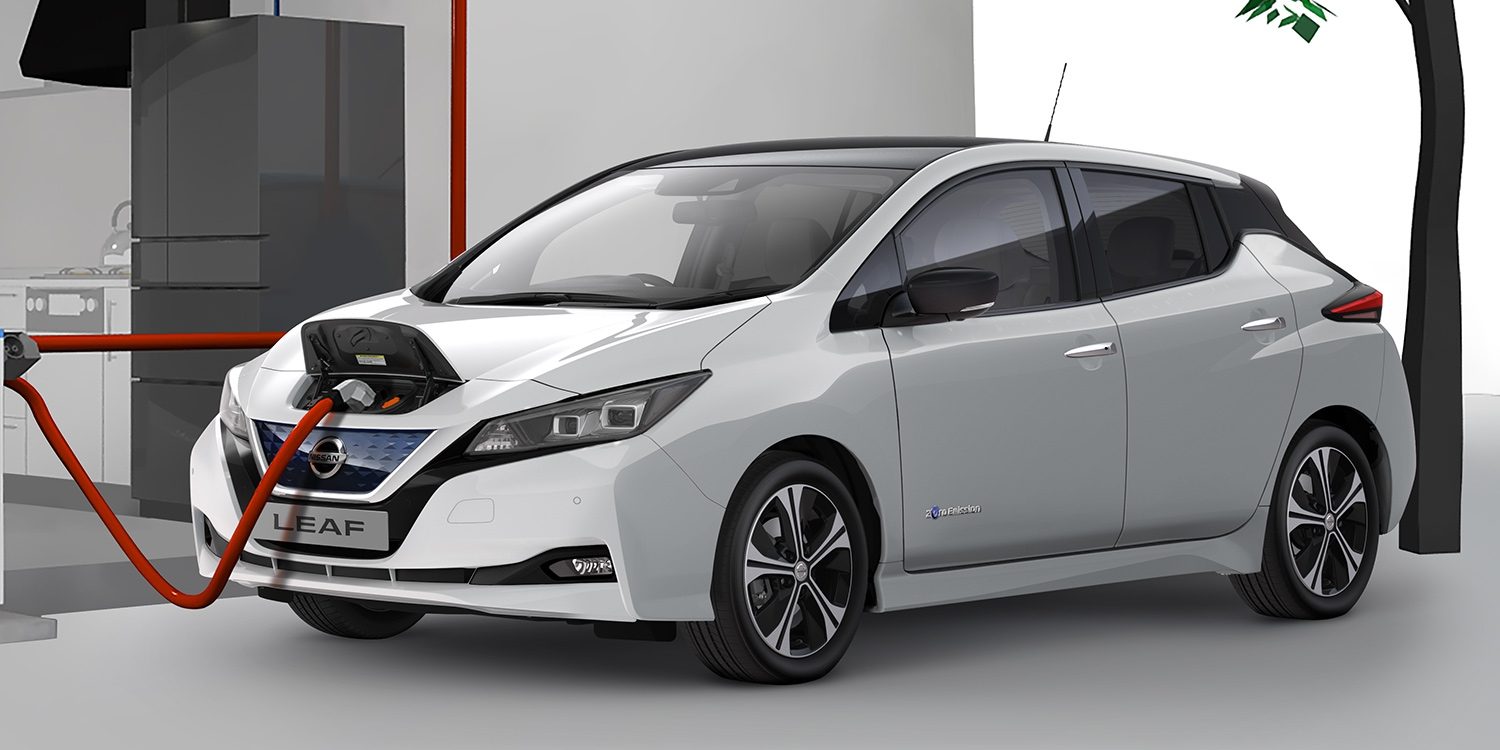
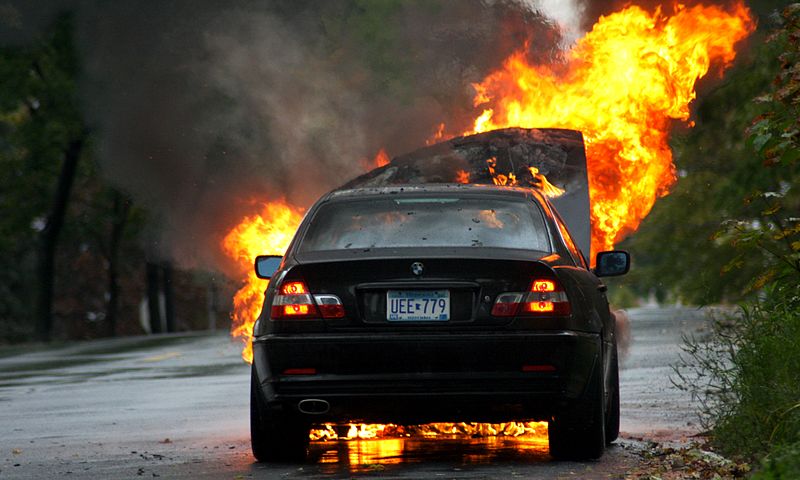
More frequent car fires, an unintended consequence of wider adoption of electric vehicles
In Quadrant, Tim Blair recounts the story of a friend crossing the Sydney Harbour Bridge only to find his vehicle was on fire:
Most of us manage to scrape through life with no such flame-related driving incidents. Future motorists, however, may find themselves more frequently enjoying the occasional car-b-que. That’s because electric cars — the things Labor ruinously attempted to force upon us as part of their spectacular 2019 election campaign disaster — seem to be impressively prone to burning.
Now, an ordinary car fire is not really that big a deal. Catch it early enough and it can be quickly dealt with. But a fire involving an electric car is a whole different matter. Those things are like four-wheeled infinity candles.
In the manner of all the money given to its manufacturer by various governments, an electric Tesla recently torched itself in Austria. The Tesla’s fifty-seven-year-old driver had slid off the road and struck a tree, prompting a fire emergency.
In ordinary car blaze cases, a single fire engine or even a personal fire extinguisher is sufficient to deal with the problem. Electric cars, or EVs, demand slightly more attention when combustion occurs. Here’s an online news account:
In order to put out the fire, the street had to be closed and fire authorities had to bring in a container user to cool the vehicle.
Some 11,000 litres of water are needed to finally extinguish a burning Tesla but an average fire engine only carries around 2,000 litres of water.
The container used is said to be suitable for all common electric vehicles. It measures 6.8 metres long, 2.4 metres wide and 1.5 metres high, it is (obviously) waterproof and weighs three tons.
Moreover, “fire brigade spokesman Peter Hölzl warned that the car could still catch fire for up to three days after the initial fire”.
I’ve owned one or two cars that were sensibly equipped with fire extinguishers. Future motorists may wish to tow around a lake, just in case their earth-friendly electric cars decide to go the full kaboom.
October 16, 2019
M3 Halftrack: Strength & Weaknesses (featuring Chieftain)
Military History not Visualized
Published on 4 Sep 2019Sponsored by World of Tanks! Register here ► https://tanks.ly/2zrfzsF to receive a T-127 Premium Tank, 500 Gold and 7 days Premium access with the code
TANKTASTIC. Applicable to new users only.In this video Nicholas “The Chieftain” Moran and I talk about strength & weaknesses of the M3 Halftrack, we also compare it to the German Sdkfz 251 Halftrack.
Special thanks to WW2 Armor for helping with the interview and providing an excellent backdrop, be sure to check out their sites here:
WW2 Armor Channel: https://www.youtube.com/channel/UChM-…
WW2 Armor Homepage: http://ww2armor.org/Chieftain’s Channel: https://www.youtube.com/channel/UCp4j…
D-Day Ohio: https://www.ddayohio.us/
https://www.oorlogsmuseum.nl/en/home/
Thank you to vonKickass for helping with the thumbnail.
»» SUPPORT MHV ««
» paypal donation – https://paypal.me/mhvis
» patreon – https://www.patreon.com/mhv
» subscribe star – https://www.subscribestar.com/mhv» SOURCES «
von Senger und Etterlin, F. M.: Die Panzergrenadiere. Geschichte und Gestalt der mechanisierten Infanterie 1930-1960. J. F. Lehmans Verlag: 1961, München.
amazon.de (affiliate): https://amzn.to/2KNTB9JChamberlain, Peter; Doyle, Hilary: Encyclopedia of German Tanks of World War Two. Revised Edition. Arms & Armour: London, UK, 1999.
amazon.com (affiliate link): https://amzn.to/2Zz2ZlD
amazon.de (affiliate link): https://amzn.to/343naf5Spielberger, Walter; Doyle, Hilary Lous, Jentz, Thomas L.: Halbkettenfahrzeuge des deutschen Heeres
amazon.de (affiliate): https://amzn.to/2KDFrpP
Spielberger: Halftracked Vehicles of the German Army 1909-1945 (Spielberger German Armor and Military Vehicle)
amazon.com (affiliate): https://amzn.to/2IeHwdrDoyle, David: The Complete Guide to German Armored Vehicles. Skyhorse Publishing: New York, USA, 2019.
amazon.com (affiliate link): https://amzn.to/34dIEWS
amazon.de (affiliate link): https://amzn.to/2HvrytC» DISCLAIMER «
As an Amazon Associate I earn from qualifying purchases.Als Amazon-Partner verdiene ich an qualifizierten Käufen.
Come for the interesting profile of the M3, stay for the amusing asides on modelling trains and AFVs.
September 17, 2019
The Curator’s Dingo | The Tank Museum
The Tank Museum
Published on 16 Sep 2019Most Curators don’t own armoured cars… David Willey, Tank Museum Curator, has owned his Daimler Dingo Scout Car for over 20 years. Find out how he came to own it and what he uses it for.
As part of the 75th Anniversary of Operation Market Garden, David will be driving his Dingo in a 200 vehicle convoy retracing the route.
Support the work of The Tank Museum on Patreon: ► https://www.patreon.com/tankmuseum
Visit The Tank Museum SHOP: ► https://tankmuseumshop.org/
Twitter: ► https://twitter.com/TankMuseum
Instagram: ► https://www.instagram.com/tankmuseum/
Tiger Tank Blog: ► http://blog.tiger-tank.com/
Tank 100 First World War Centenary Blog: ► http://tank100.com/
“Clean” alternative energy sources are not free … in fact, they’re quite expensive
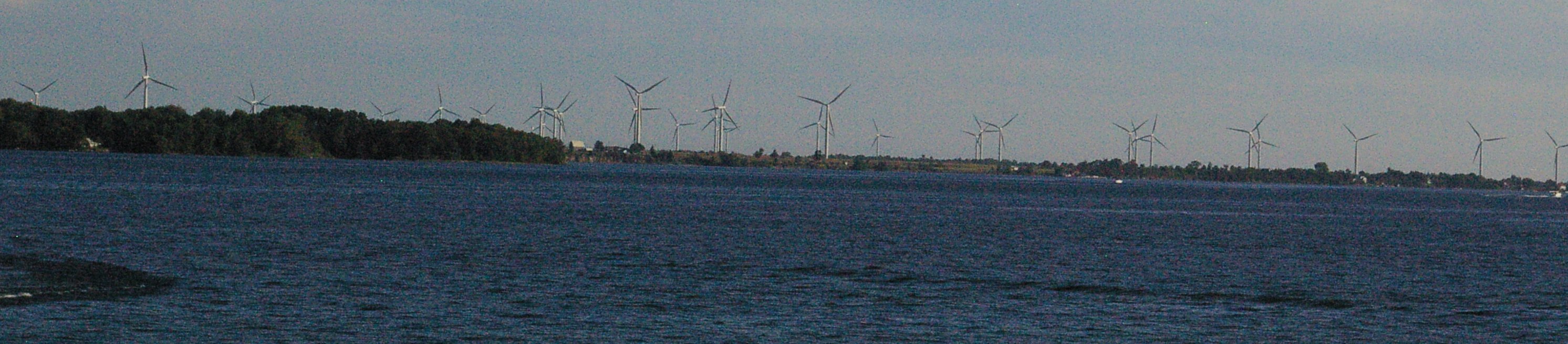
Earlier this month in Foreign Policy, Jason Hickel wrote about the requirements for expanding current renewable energy generation (wind and solar):
The phrase “clean energy” normally conjures up happy, innocent images of warm sunshine and fresh wind. But while sunshine and wind is obviously clean, the infrastructure we need to capture it is not. Far from it. The transition to renewables is going to require a dramatic increase in the extraction of metals and rare-earth minerals, with real ecological and social costs.
We need a rapid transition to renewables, yes — but scientists warn that we can’t keep growing energy use at existing rates. No energy is innocent. The only truly clean energy is less energy.
In 2017, the World Bank released a little-noticed report that offered the first comprehensive look at this question. It models the increase in material extraction that would be required to build enough solar and wind utilities to produce an annual output of about 7 terawatts of electricity by 2050. That’s enough to power roughly half of the global economy. By doubling the World Bank figures, we can estimate what it will take to get all the way to zero emissions — and the results are staggering: 34 million metric tons of copper, 40 million tons of lead, 50 million tons of zinc, 162 million tons of aluminum, and no less than 4.8 billion tons of iron.
In some cases, the transition to renewables will require a massive increase over existing levels of extraction. For neodymium — an essential element in wind turbines — extraction will need to rise by nearly 35 percent over current levels. Higher-end estimates reported by the World Bank suggest it could double.
The same is true of silver, which is critical to solar panels. Silver extraction will go up 38 percent and perhaps as much as 105 percent. Demand for indium, also essential to solar technology, will more than triple and could end up skyrocketing by 920 percent.
And then there are all the batteries we’re going to need for power storage. To keep energy flowing when the sun isn’t shining and the wind isn’t blowing will require enormous batteries at the grid level. This means 40 million tons of lithium — an eye-watering 2,700 percent increase over current levels of extraction.
That’s just for electricity. We also need to think about vehicles. This year, a group of leading British scientists submitted a letter to the U.K. Committee on Climate Change outlining their concerns about the ecological impact of electric cars. They agree, of course, that we need to end the sale and use of combustion engines. But they pointed out that unless consumption habits change, replacing the world’s projected fleet of 2 billion vehicles is going to require an explosive increase in mining: Global annual extraction of neodymium and dysprosium will go up by another 70 percent, annual extraction of copper will need to more than double, and cobalt will need to increase by a factor of almost four — all for the entire period from now to 2050.
Wind turbines require a lot of concrete to stabilize them on site (hundreds of tons of it), and that concrete is very carbon-intensive to create in the first place (nearly 930 Kg of CO2 per 1,000 Kg of cement), but even those huge turbine blades have a limited working lifespan and can’t be easily recycled into anything economically, so they generally end up in landfills.
August 30, 2019
EFF sues Homeland Security over illegal GPS vehicle trackers
Kieren McCarthy on a recent lawsuit by the Electronic Frontiers Foundation:
The Electronic Frontier Foundation (EFF) has sued the US Department of Homeland Security to find out more about a program where, it is claimed, officers secretly stick GPS trackers on vehicles they are suspicious of as they come through the border.
The EFF has made repeated freedom of information act (FoIA) requests about the program’s policies but has been stonewalled, with Homeland Security’s responses claiming any information would contain “sensitive information” that could lead to “circumvention of the law.”
The foundation’s main concern is that Homeland Security is carrying out its secret tracking without a warrant, or even anything beyond a single officer’s suspicion. And it points to a recent US Supreme Court decision where it ruled that warrantless GPS tracking was unconstitutional under the Fourth Amendment.
Details of the program came to light last year when customs officers revealed in court filings that they had used GPS trackers without a warrant at the border. Since then the EFF has tried to find out what the policies and procedures are for deciding when a vehicle can be tagged. The relevant authorities have not been keen to go into any detail.
There’s another legal precedent too: a California court ruled that government officials’ use of GPS devices to track two suspected drug dealers without getting a warrant violated the Supreme Court decision, made in 2012, and was government misconduct.
August 14, 2019
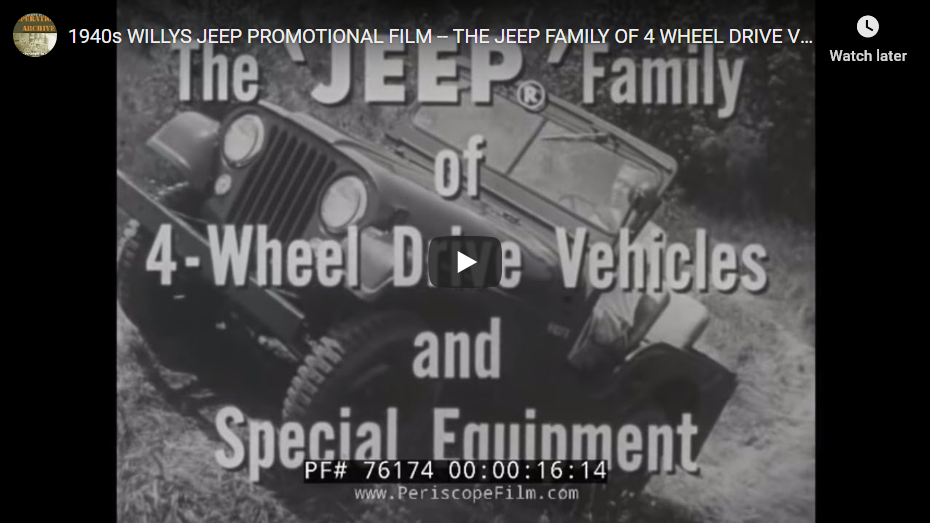
1950s Willys Jeep Promotional Film – The Jeep Family Of 4 Wheel Drive Vehicles
PeriscopeFilm II
Published on 3 Sep 2015Willys, the “World’s Largest Manufacturer of Utility Vehicles,” presents the Jeep Family of 4-Wheel Drive Vehicles and Special Equipment, a circa 1954 black-and-white film promoting Jeeps produced for civilian use. Following the success of Jeeps during World War II, the film opens with an explanation of how the vehicles soon their way to civilian use. Some of the vehicles seen in this film are used by construction companies, farmers, firefighters, and even at airports to tow aircraft and move cargo trailers and plow snow. At mark 02:49 the film introduces other types of Jeep equipment, such as a generator that turns the vehicle “into a mobile source of electric power to operate saws, communication equipment, motion picture equipment, flood and spotlights. And indeed any electrical equipment that must be moved around over bad terrain or in bad weather.” Scenes also capture telephone company repair crews, oil field crews, plus local and state road crews and construction companies. A Jeep is shown at a cemetery at mark 04:03 moving sand, shrubs, and burial equipment around the grounds in addition to lifting memorial markers. The viewer learns about variable engine speeds beginning at mark 05:55 with an up-close look at an engine and a discussion of its power, as well as various ways that power can be tapped for various operations. As it continues the film touts the Jeep rotary cutter (mark 07:45) as high brush is cut down, a hammer mill (mark 08:15), and a trencher (mark 08:30). There are forklift attachments, front and rear winches, as a front winch is shown pulling a dead tree from the ground (mark 10:10). The sales pitch rolls on at mark 11:42 showing some Jeep steel tops including the half-cab, master, and standard top — “each one designed for a special purpose but all three designed to stand up in rough hard service year after year.” Mark 12:00 begins an explanation of the vehicle’s 4-wheel drive capabilities, meaning that the vehicle “can go anywhere to do its job” including remote camping and hunting spots, while by mark 13:48 there’s a look at a Willys sedan delivery vehicle as grocery store employees are shown loading items into the back, and the Willys pick-up trick at mark 14:52. Other models are shown hauling grain and livestock, as well as an ambulance (mark 17:00).
Jeep is a brand of American automobiles that is a division of FCA US LLC (formerly Chrysler Group, LLC), a wholly owned subsidiary of Fiat Chrysler Automobiles. The original Jeep was the prototype Bantam BRC. Willys MB Jeeps went into production in 1941 specifically for the military, arguably making them the oldest four-wheel drive mass-production vehicles now known as SUVs. The Jeep became the primary light 4-wheel-drive vehicle of the United States Army and the Allies during World War II, as well as the postwar period. The term became common worldwide in the wake of the war. The first civilian models were produced in 1945. It inspired a number of other light utility vehicles, such as the Land Rover. Many Jeep variants serving similar military and civilian roles have since been designed in other nations. Willys-Overland and Ford, under the direction of Charles E. Sorensen (Vice-President of Ford during World War II), produced about 640,000 Jeeps towards the war effort, which accounted for approximately 18% of all the wheeled military vehicles built in the U.S. during the war.
From 1945 onwards, Willys took its four-wheel drive vehicle to the public with its CJ (Civilian Jeep) versions, making these the first mass-produced 4×4 civilian vehicles. In 1948, the U.S. Federal Trade Commission agreed with American Bantam that the idea of creating the Jeep was originated and developed by American Bantam in collaboration with some U.S. Army officers. The commission forbade Willys from claiming, directly or by implication, that it had created or designed the Jeep, and allowed it only to claim that it contributed to the development of the vehicle. However, American Bantam went bankrupt by 1950, and Willys was granted the “Jeep” trademark in 1950.
This film is part of the Periscope Film LLC archive, one of the largest historic military, transportation, and aviation stock footage collections in the USA. Entirely film backed, this material is available for licensing in 24p HD and 2k. For more information visit http://www.PeriscopeFilm.com
July 31, 2019
The Jaguar E-Type / XK-E Story
Big Car
Published on 10 May 2019To help me continue producing great content, please consider supporting me: https://www.patreon.com/bigcar
The Jaguar XK-E or E-Type may be the most beautiful car in history. It’s certainly one of the most sought after, with cars fetching crazy prices at auction. It’s a car born out of a Le Mans-winning heritage, delivering looks with speed and handling to match, all at an affordable price. Yet somehow it had a top speed over 150mph, while also not having a top speed over 150mph!
#JaguarEType #JaguarXKE #EType
July 9, 2019
My secret for buying woodworking tools DIRT CHEAP
Rex Krueger
Published on 16 Oct 2017More videos and exclusive content: http://www.patreon.com/rexkrueger
My trick for buying good tools at super-low prices is really simple: go to antique car and antique tractor flea markets. These places are mostly filled with car parts, but when a vendor does have woodworking tools, he’s usually looking to unload them as fast as possible. Often, car guys don’t even know what they have, so woodworkers can score loads of useful or collectible tools for pocket-change. These flea markets are also a great source of consumables like glue, thinners, brushes, and sand-paper. You can stock up on the most expensive stuff for cheap.
July 8, 2019
July 3, 2019
QotD: Elon Musk as a modern-day Ferdinand DeLesseps
I used to love Elon like everyone else. I still think that having four or five billionaires in a space race against each other is finally the world I thought I was going to get growing up reading Heinlein. The Tesla Model S was probably one of the most revolutionary cars of the last 50 years. But he lost me when he committed outright fraud in the Solar City – Tesla deal and since then have only become more skeptical about he and Tesla.
I sort of laugh when folks tell me that really smart successful rich people believe in Tesla. You mean like James Murdoch, on the board of Tesla and who also was lost his entire investment in Theranos? Or like Larry Ellison, an adviser and fan of Elizabeth Holmes who invested $1 billion in Tesla just 6 months ago and has already lost 40% of it? The window on this is probably closing, but over the last 10 years if you wanted to get Silicon Valley investors to throw a lot of money at you, find a traditional bricks and mortar business and devise a story in which you take that industry and convert its economics to that of the networked software world (see: Uber, WeWork, Tesla, and even Theranos in some of its strategic pivots).
Or how about true millennials and Elon Musk? Name a wealthy millennial supporter of Elon Musk and Tesla and I can bet you any amount of money they have not looked at Tesla’s balance sheet or cash flow or the details of its global demand trends. They have not thought about its dealership strategy or manufacturing strategy and the cash flow implications of these. They just like what Elon says. It sounds big and visionary. They buy into Elon’s formulation that he is saving the environment and everyone opposed to him is in a cabal with big oil (ignoring the fact that Elon routinely uses his Gulfstream VI to commute distances less than 60 miles). So saying that rich millenials adore Elon is effectively saying that they want to be associated with the same things Elon says he is for — the environment and space travel et al.
Elon Musk is Ferdinand DeLesseps. He is PT Barnum. He is Elizabeth Holmes. He is the pied piper. He is fabulous at spinning visions and making them sound science-y. But he is not Tony Stark. There is a phenomenon with Elon Musk that everyone thinks he is brilliant until they hear him speak about something about which they have domain knowledge, and then they realize he is full of sh*t. For example, no one who knows anything about transportation or physics or basic engineering has thought his Boring Company and Hyperloop make any sense at all. His ideas would have been great cover stories for Popular Mechanics in the 1970’s, wowing 13-year-old boys like me with pictures of mile-long cargo blimps and flying RV’s. He is like a Marvel movie that spouts science that is just believable-enough sounding that it moves the plot along but does not stand up to any scrutiny.
All of this would be harmless if he was not running a public company. I don’t really care about the rich folks who were duped by Elizabeth Holmes, but hundreds of thousands of small millenial investors who have totally bought into the Elon hype are literally putting their last dollar into Tesla, and sometimes borrowing more. Tesla shorts often laugh at these folks on Twitter, calling them “bagholders,” but it is a tragedy. Unless Tesla finds a sugar daddy sucker, and the odds of that are getting longer, I think it is going to end badly for many of these investors.
As a disclosure, I have been short Tesla via puts for a while now. It you really want to understand Elon, the best book I can recommend is The Path Between The Seas about the building of the Panama Canal. First, it is a great book you should read no matter what. And second, Ferdinand DeLesseps is the best analog I can find for Musk.
Warren Meyer, “People Who Express Opinions Outside of their Domain Seldom Have Really Looked into it Much”, Coyote Blog, 2019-05-28.
June 21, 2019
Jeremy Clarkson’s Motorworld UK Special
Matthew Lowry
Published on 19 Nov 2016This is the last episode of Motorworld (BBC WORLDWIDE), the extremely rare UK Special. All copyrights go to their respective owners.
May 11, 2019
Inside the Chieftain’s Hatch. M151 Series
The_Chieftain
Published on 6 Apr 2019A fun, and rather dangerous, little softskin which will easily fit in your garage.
May 5, 2019
The MG Midget Story
Big Car
Published on 18 Mar 2019The MG Midget is all about fun! It’s a simple, cheap little car that promises open-top thrills which it delivers in spades. It’s a story that spans seven decades from humble roots in Oxfordshire to a world-beating car that conquered America. It was loved by weekend tinkerers, American G.I.’s coming home from the war and F1 racers. This is the MG Midget Story!
February 10, 2019
QotD: Hell is other drivers
There are many reasons to become a more competent and more conscious user of the American road, but allow me to acquaint you with one reason that you’ll regret having done so: once you get to the point where every action you take behind the wheel has a defined and precise purpose, you will find the unconscious and purposeless actions of everybody on the road around you to be utterly maddening. I’m talking about the people who wander from lane to lane for no reason. The drivers who speed up to match you as you pass them on the freeway, not out of anger or machismo but simply because their subconscious herd-animal instincts tell them that it’s completely safe and comforting to be driving at 75mph next to another 4,000-pound unguided missile. Tailgaters. People who can’t merge at speed. I could go on, but I think you get the idea.
I’m not saying that road rage and aggressive driving isn’t a problem in the United States — it obviously is — but much of the bizarre behavior you see out there on the road is simply due to the fact that the average driver puts no more thought into his choices behind the wheel than I do into selecting toilet paper at the supermarket. They aren’t trying to offend you or “beat” you. They’re just kind of stroking along on instinct and the dimly remembered lessons of high-school driver’s ed. That’s why you will have somebody blow by you in a 55 zone only to hold you up in the 75 zone that follows: they aren’t even looking at the speed limit signs. Instead, they’re simply doing a speed that feels comfortable to them. It’s completely unconscious.
Jack Baruth, “How To Mentally Manipulate Your Fellow Drivers: This is not the lane you’re looking for…”, Road and Track, 2017-03-07.