Quotulatiousness

April 3, 2011

“Freedom of speech does not mean freedom from offending culture, religion, traditions”

Filed under: Asia, Liberty, Religion — Tags: , , , — Nicholas @ 12:00

Pardon the crudity, but . . . Fuck That.

The BBC reports on the ongoing violence in Afghanistan after President Karzai made a big deal about some idiot in Florida burning a Koran:

The UN’s chief envoy to Afghanistan, Staffan de Mistura, blamed Friday’s violence in the northern city of Mazar-e Sharif on the Florida pastor who burnt the Koran on 20 March.

“I don’t think we should be blaming any Afghan,” Mr de Mistura said. “We should be blaming the person who produced the news — the one who burned the Koran. Freedom of speech does not mean freedom from offending culture, religion, traditions.”

Okay, so murder is okay as long as you’ve been told that someone on the other side of the world burned your holy book?

The United Nations — our moral superiors.

April 1, 2011

XM-25 man-packable cannon moves into production

Filed under: Asia, Military, Technology, USA, Weapons — Tags: , , — Nicholas @ 09:55

I’ve updated the earlier report.

February 13, 2011

US Army orders more HIMARS

Filed under: Asia, Military, USA, Weapons — Tags: , , — Nicholas @ 11:32

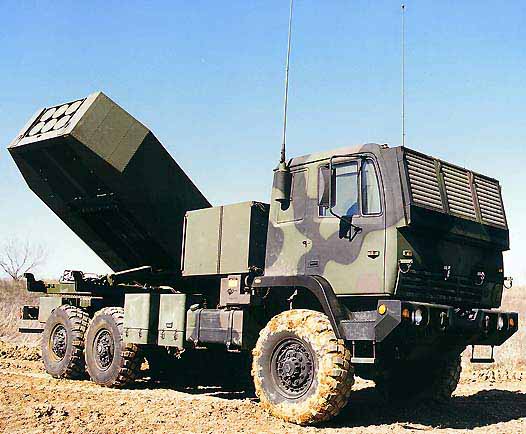
The pint-sized MLRS vehicle has been (if you’ll pardon the expression) a big hit with US troops in Afghanistan:

The U.S. Army has ordered another 44 HIMARS rocket launchers, for $3.2 million each. These will be delivered over the next two years, and give the army a total of 375 HIMARs vehicles. It was because of the success of the GPS version of the U.S. MLRS rocket, that the smaller, truck mounted MLRS (HIMARS) rocket launcher system became the most popular vehicle for launching the rocket. HIMARS carries only one, six MLRS rocket, container (instead of two in the original MLRS vehicle), but the 12 ton truck can fit into a C-130 transport (unlike the 22 ton tracked MLRS) and is much cheaper to operate. The first HIMARS entered service in 2005, about a year after GPS guided rockets did.

[. . .]

The U.S. Army is getting most of the 900 HIMARS vehicles planned, with the marines getting the rest. There are also several export customers. The U.S. Army is buying 100,000 GMLRS rockets, most of them fitted with a 89 kg (196 pound) high explosive warhead. These have been used with great success in Iraq and Afghanistan, where over a thousand have been fired so far. The guided rocket is much more effective than the older, unguided, version, and is replacing it in most cases. No more of the unguided rockets are being purchased by the U.S. The accuracy of GMLRS means that one or two rockets does the job that previously required a dozen or more of the unguided ones. That’s why HIMARS is so popular. While it only carries six rockets, that’s often enough to last for days, even when there’s a lot of combat. HIMARS can be reloaded, with another container of six GPS guided rockets, in less than ten minutes.


HIMARS: High Mobility Artillery Rocket System

February 10, 2011

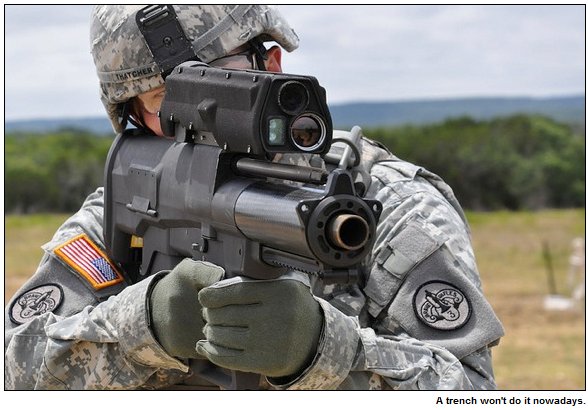
XM-25 man-packable artillery piece takes the field

Filed under: Asia, Military, Technology, USA, Weapons — Tags: , , — Nicholas @ 09:17

Lewis Page has some information on the first field use of the XM-25:

First reports are emerging on the performance of the futuristic, Judge Dredd style XM-25 computer smartgun, which went into combat with frontline US troops in Afghanistan in December. The hi-tech rifle — almost a portable artillery piece — is said to have been dubbed “the Punisher” by soldiers who have used it.

The US Army news service reports that the existing five custom-made prototype XM-25 weapons, which have long been trialled and tested in the States, arrived in Afghanistan in November and were first used in combat on 3 December. Since then, as of the army report, some 55 explosive smartshells have been fired in combat and hundreds more in practice.

“We silenced two machine-gun positions — two PKM positions,” said Major Christopher Conley, describing some of the firefights in which the XM-25 has been used. “We destroyed four ambush locations, where the survivors fled.”

Earlier post on the XM-25 here.

Update, 1 April: The XM-25 program is now under contract:

The US Army’s futuristic Judge Dredd style computer smart-rifle project, the XM-25, is moving ahead. Developer ATK, which has so far made just five prototype weapons, inked a $65.8m deal this week to move the weapon into manufacturing.

[. . .]

US troops in Afghanistan, who are trying out the initial five prototype weapons, apparently don’t favour Judge Dredd references. They have reportedly chosen to dub the new smartgun “the Punisher” instead.

Feedback from these users has apparently been positive, with the AM-25’s ability to strike out accurately and speedily at Taliban snipers or machine-gun teams lurking in cover at long range highly prized. The soldiers don’t much care for the gun’s battery system, however, which reportedly has the same flaws as an iPhone’s: it can’t be swapped for a new one and must be plugged in to charge up. ATK are apparently to sort this out as the design develops.

The new engineering and manufacturing development deal is to run for 30 months.

I’m not sure what the change from XM-25 to AM-25 in that report means . . . that is, if the weapon’s designation has changed with the switch to production, or if it’s just a typo in the write-up.

February 5, 2011

In praise of the venerable Lee-Enfield rifle

Filed under: Asia, Australia, History, Military, Weapons — Tags: , , , — Nicholas @ 10:19

Strategy Page talks about the weapons being found in Afghanistan:

Back before the Russians showed up, in the 1980s, the best an Afghan could hope to have was a World War II, or World War I, era bolt action rifle. These weapons were eclipsed in the 1980s by full automatic AK-47s and the RPG rocket launcher. The young guys took to the AK, and the thrill of emptying a 30 round magazine on full automatic. Not bad for a brief firefight, and suddenly hardly anyone, except a few old timers, wanted to use the old bolt action rifle.

What was not noticed much outside of Afghanistan, was that this shift in weaponry brought to an end a long Afghan tradition of precision, long range shooting.

[. . .]

The Lee-Enfield is one of the oldest, and still widely used, rifles on the planet. Over 17 million were manufactured between 1895 and the 1980s. While there are more AK-47s out there (over 20 million in private hands), these are looked down on by those who use their rifles for hunting, or killing with a minimum expenditure of ammunition. The 4 kg (8.8 pound) Lee-Enfield is a bolt-action rifle (with a ten round magazine) noted for its accuracy and sturdiness. The inaccurate AK-47 has a hard time hitting anything (with a single shot) more than a hundred meters away, while the Lee-Enfield can drop an animal, or a man, at over 400 meters.

[. . .]

One place where the Lee-Enfield found lots of fans was Afghanistan. There, the Afghans had been introduced to rifles in the 19th century, and they treasured these weapons. This was particularly true with the introduction of smokeless powder rifles in the late 19th century. Many Afghans were still using black powder rifles well into the 20th century. But once Lee-Enfields began show up in large numbers after World War I (1914-18), no one wanted the larger, heavier and less accurate black powder rifles (which always gave off your position, with all that smoke, after you fired a round.) Now, wealthy drug lords are buying expensive hunting and sniper rifles for their militias, but so far, many Taliban snipers appear to prefer using grandpa’s old Lee-Enfield.

Lee-Enfield ammunition is still manufactured, with the high quality stuff going for a dollar a round, and lesser quality for 25 cents a round. The rifles sell in the West for $500-1,000, but the hand-made copies, made new, go for more than twice that. The Lee-Enfield, both originals and copies, will carry on well into the 21st century.

Update, 9 February: Speaking of the 21st century, Australian International Arms is still producing new Lee-Enfield rifles:

Australian International Arms have manufactured the 5th generation of Lee-Enfield, for target shooting, military match and sporting markets. However, unlike the 4th generation, this is not a ‘converted’ Lee-Enfield. The AIA rifles are redesigned with modern techniques, but referencing more than a century of Lee-Enfield improvements and development… from Britain, North America and Australia.

[. . .]

Our production is limited in quantity as we
build
the rifles, they are not mass-produced items. We only construct about 1,000-1,200 units each year because of all the hand-work required for metal, wood, fitting & tuning of each rifle.

H/T to Small Dead Animals for the link.

February 2, 2011

UK government trying to further economize on helicopters for Afghan service

Filed under: Asia, Britain, Military — Tags: , , — Nicholas @ 08:25

Lewis Page is concerned that, on top of the wrong-headed approach to cutting military costs, the coalition government may further reduce the Chinook helicopter plans:

In its last months in office, the previous Labour government announced plans to order 22 new Chinook helicopters (in addition to two which would replace recent combat losses in Afghanistan). The money was to be found by cutting squadrons of fast jets — in particular, Tornado low-level deep strike bombers. The first 10 helicopters were to come into service in 2012-13.

On arrival in office the Coalition carried out a Strategic Defence Review, personally supervised by Prime Minister Cameron, in which it was decided that the Tornado bomber fleet would be preserved intact, the Chinook order would be cut to just 12 — and, controversially, that the Harrier jumpjet fleet would be scrapped entirely.

Even the much reduced Chinook order has so far failed to actually be signed, and there have since been suggestions that the Ministry of Defence financial assumptions which underlay the Review were too optimistic – thus, that more cuts might be required.

January 31, 2011

US Army to keep MRAP, speed up development of JLTV

Filed under: Military, Technology, USA — Tags: , , , — Nicholas @ 08:48

For your morning dose of military acronyms, here’s a report from Strategy Page on a recent change in US Army planning caused by field experience in Iraq and Afghanistan:

The U.S. Army has decided that the MRAP (Mine Resistant Ambush Protected) should be a permanent part of their vehicle fleet. It wasn’t supposed to be this way. Four years ago, the U.S. Army and Marine Corps were in the midst of spending $20 billion to buy over 20,000 MRAP (Mine Resistant Ambush Protected) vehicles. Shortly thereafter, the terrorist resistance in Iraq collapsed, and so did the need for MRAPs. This resulted in about a quarter of the MRAP orders being cancelled, and others changed to designs more suitable for use in Afghanistan, which had far fewer roads to use them on.

While the troops appreciated the MRAPs, some of the generals saw serious problems in the future. In Iraq and Afghanistan, people in these bomb resistant vehicles were much less likely to be killed or injured if they encountered a roadside bomb. But MRAPs are basically armored trucks (weighing 8-23 tons) that are hardened to survive bombs and mines, and cost about five to ten times more than an armored hummer.

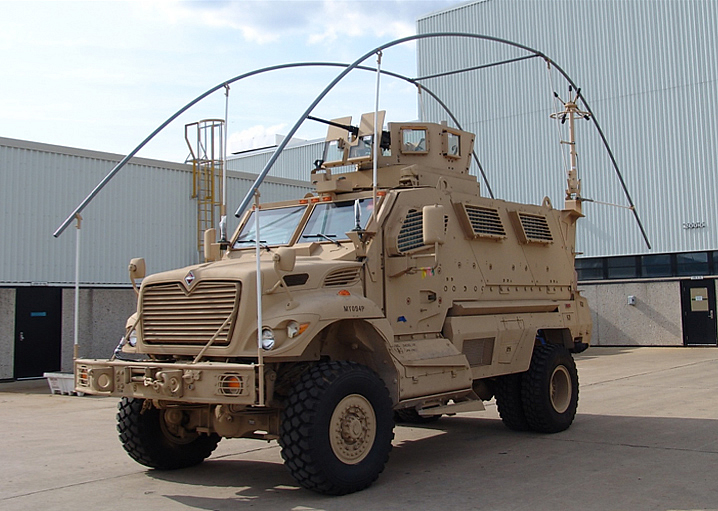
As you can see, the MRAP isn’t a dainty sort of vehicle (this one has the recent overhead wire kit attached):

But now, thousands of those MRAPs will stay in service after the war in Afghanistan has ended. They will be considered armored combat vehicles, not transport, like the hummer and army trucks, and not used on a daily basis. This will keep down the operating expenses, as MRAPs consume a lot of fuel.

In addition to keeping thousands of the MRAPS, the army is developing a heavier replacement for the hummer, using a design with lots of MRAP features. This is the JLTV(Joint Light Tactical Vehicle), which is arriving a little ahead of schedule, as part of a program to massively upgrade army vehicles every few decades.

The JLTV competition is still underway, with three vehicles being tested:


Image from Wikipedia.

In addition to being built to better survive mines and roadside bombs, the JLTV will be able to generate 30 KW of electricity (for operating all the new electronic gear, and recharging batteries), have an automatic fire extinguishing system and jam-resistant doors. Like the hummer, JLTV will be easy to reconfigure, for everything from a four seat, armed scout vehicle, to an ambulance, command vehicle or cargo or troop transport. The hummer will continue to be used outside of the combat zone, where most troops spend most of their time. But the JLTV will be built to better handle the beating vehicles take in the combat zone, including a design that enables troops to quickly slide in armor and Kevlar panels to make the vehicles bullet and blast proof.

January 27, 2011

Grounding the Nimrod

Filed under: Britain, Military — Tags: , , — Nicholas @ 07:22

It’s as predictable as night following day: for every defence cut, you can find retired senior officers getting up on their hind legs and protesting:

Scrapping the RAF’s Nimrod surveillance aircraft will leave a “massive gap” in British security, former defence chiefs warned today.

The controversial decision to get rid of the £4bn fleet was taken on cost grounds as part of the government’s strategic defence and security review last year.

With the process of breaking up the equipment set to begin, a number of service chiefs signed an open letter to the Daily Telegraph warning of the dangers of the move.

“Machine tools have been destroyed; several millions of pounds have been saved but a massive gap in British security has opened,” the letter said.

“Vulnerability of sea lanes, unpredictable overseas crises and traditional surface and submarine opposition will continue to demand versatile responsive aircraft.

There was a number in there that helps to explain the cuts: £4bn. That’s a lot of money. What did the RAF get for their money? In a column from 2009, here’s Lewis Page on the manifold wonders of the Nimrod:

Quite apart from all that, the Nimrod MR2 — being a flying antique — is horribly expensive to run, both in money and in lives. The MR2’s extensive use above Afghanistan in recent times as a flying spyeye and to relay radio messages between ground units in no way justified its continued, very expensive existence; far less could such unimportant work possibly have justified the known risks of refuelling these aged birds in mid-air.

So getting rid of the MR2s loses us nothing important, and will make our service people noticeably safer — the Nimrod has actually killed one of our people for every 15 killed by the Taliban. Better still, this will permit another pricey airbase here in the UK to largely close, saving money to be spent at the front line. As a fringe benefit, the base in question — RAF Kinloss — is in a Scottish National Party constituency, giving people there a taste of the independence from the UK that they have voted for. (Strangely the local SNP member of parliament still isn’t happy.)

So the Nimrod was expensive to buy, eye-wateringly expensive to upgrade, but it must be cheap to operate, right? No:

[. . .] our new fleet of refurbished De Havilland Comet subhunters (sorry, “Nimrod MRA4s”) will cost at least £700m a year to operate. If we put the whole Nimrod force on the scrapheap for which they are so long overdue right now, by the year 2019 we will have saved [. . .] £7bn

That’s from an earlier column in 2009.

Update: Lewis Page says that scrapping the four Nimrods is great news:

The UK press is bursting with indignation today as the process of scrapping the Nimrod MRA4 submarine-hunting aircraft begins. But in fact the four planes now being broken up were a financial and engineering disaster. Had they gone into service they would have become a terrible, cripplingly expensive millstone around the neck of the Ministry of Defence. We are much, much better off without them.

[. . .]

What the ex-brasshats are bemoaning is the UK’s loss of long-range maritime patrol aircraft in general, not the Nimrod MRA4 in particular. They’re wise to draw this distinction, as the MRA4 project has now achieved the unwelcome distinction of producing the most expensive aircraft ever made: with a reported £4.1bn spent, just one is airworthy.

By comparison, a new Space Shuttle would cost about £1.75bn at current rates if it were built today. Even the staggeringly expensive B-2 nuclear Stealth bombers only cost £1.3bn apiece.

Our sole flying Nimrod MRA4 (pictured above) has wound up costing us no less than £4.1bn — and it is not even a new aircraft. All the MRA4s are refurbished and re-equipped Nimrod MR2s, which had already been purchased by the RAF long ago at inflated prices.

But wait . . . it gets even worse:

And make no mistake, scrapping the Nimrods will save money — a lot of money. Support and maintenance of a normal military aircraft can be expected to cost two to three times the acquisition price over its service life — and the Nimrod was far from normal.

In fact, the MRA4s would have been the last nine De Havilland Comet airliner airframes left flying in the world. The Comet, designed in the 1940s, failed commercially and went out of airline service many decades ago — and since then large aircraft have no longer been made in the UK.

The Nimrod/Comet is so old that it belongs to a lost era of manufacturing: this is the main reason why the MRA4 project was so horrifically late and over budget. The planes supplied for upgrading by the RAF had significant differences in size and shape — they had been essentially coach-built, bodged together with the blueprints used more as a guide than followed with any accuracy in the modern sense. Trying to rebuild, re-equip and re-engine them, with no real idea what the physical dimensions and internal layout of any given plane actually were, was a technical nightmare.

January 18, 2011

Simple solution to aggravating problem

Filed under: Middle East, Military, Technology — Tags: , , , — Nicholas @ 09:06

Here’s an example of a US Army MRAP with a useful modification installed:

Two years ago, the U.S. Army began using the MRAP Overhead Wire Mitigation Kit (OWMK) system that uses two curved lengths of metal to safely get tall armored vehicles past low hanging power or telephone wires. For several years, troops had improvised similar systems to prevent vehicles from coming into contact with power cables, causing injury to the troops and their equipment. A more common problem was turret gunners getting snagged by low hanging wires, often electrical ones. The improvised solution usually involved just putting plastic pipe, at an angle, in front, to deal with the wire. Finally, the army took notice and developed a simple kit that could be fitted to an MRAP. The OWMK also prevents making the locals angry, because passing military vehicles tore down their power wires. The MWMK can handle wires as low as 2.6 meters (8 feet) from the ground. MRAPS are tall vehicles, and the top of the turret (if installed) is usually over three meters.

January 14, 2011

Last year’s biggest military developments

Filed under: Military, Technology, USA — Tags: , , , — Nicholas @ 09:37

Strategy Page lists some of the most significant military developments of 2010:

* Infantry. Here we saw more evolution, not revolution, in infantry gear. But at least the trends continued to move in the right direction. The biggest change is the equipment that must be carried. Until the 1980s, you could strip down (for actual fighting) to your helmet, weapon (assault rifle and knife), ammo (hanging from webbing on your chest, along with grenades), canteen and first aid kit (on your belt) and your combat uniform. Total load was 13-14 kg (about 30 pounds). You could move freely, and quickly, like this, and you quickly found that speed and agility was a lifesaver in combat. But now the minimum load carried is twice as much (27 kg), and, worse yet, more restrictive. Over the last seven years, this has translated into some dramatic changes in training. In Iraq, troops found they were not in the best condition to run around with all that weight. This was worse in Afghanistan, with all those hills. Plus, the vest constricted movement, and that took time to adjust to. Commanders complained about troops not being properly trained, and that led to a series of changes in basic and unit training. The big change in basic was to condition troops to handle the heavy weights they would be carrying, for extended periods of time. This was particularly critical for non-combat troops (especially those operating convoys) outside of camps (where you usually didn’t have to wear armor and combat gear.) New exercises were developed. Infantry troops got several months of additional training after basic, and had plenty of opportunity to adjust to moving around wearing 14 kg or more of gear. The heavier weight included better armor and equipment (night vision, personal radio, weapon sights), which reduced combat deaths, and made the troops more lethal. But now the troops accept the fact that a lot of essential training takes place in the gym, particularly the weight room. The army and marines have been developing lighter and more comfortable versions of essential gear, but there’s still a need for muscle. This decade of infantry innovation has been noted by other armies around the world, and they are all hustling to emulate this American revolution. Not just to get the gadgets, but to implement the new training methods as well.

* Support. Few pay attention to support functions, especially no one in the media. But here is where big things happen. One of things has been how video games joined the army. Over the last eight years, billions of dollars has been spent on creating several generations of increasingly accurate combat simulators for training troops to deal with roadside bombs, hostile civilians, flying UAVs and new enemy tactics. These sims are taken for granted inside the army and marines, but still seem out of place to ill informed outsiders.

[. . .]

* Naval Power. The U.S. Navy has accepted the fact that is has gotten smaller, and that this process will continue. The navy shrunk by 20 percent in the last decade, to a force of 280 ships. The main reason is the high cost of new ships, to replace those that are wearing out and being retired. In the next decade, the fleet is expected to shrink another 20 percent, again because Congress refuses to provide enough money to replace older ships (only about $14 billion a year, at most, is provided for new ships, and this is expected to shrink.) New ships cost, on average, $2.5 billion each. This is made possible because of six billion dollar destroyers, seven billion dollar subs and eleven billion dollar carriers. This is offset somewhat by $1.7 billion amphibious ships and half billion dollar LCS (a compact, controversial, ship design). The big news is that the admirals are actively brainstorming how to live with a high cost/low income future, not try to magically make it go away.

December 21, 2010

This goes far beyond accepting the end of “DADT”

Filed under: Asia, Health, Military — Tags: , , , , , — Nicholas @ 13:40

As I posted back in January, one of the problems western troops have in dealing with Pashtuns in Afghanistan is the radically different sexual culture, including barely concealed pedophilia:

The vast gulf between U.S. and Afghan attitudes about homosexuality and pedophilia has generated concern among U.S. advisers in Afghanistan since the American presence there began to expand.

In late 2009, U.S. and British forces ordered a study of Pashtun male sexuality. They were worried that homosexuality and pedophilia among Afghan security forces and tribes could create cultural misunderstanding with allied troops, according to a copy of the report obtained by The Washington Examiner.

[. . .]

“I know Marines and soldiers who have refused to work with Afghan military or police,” said one U.S. military official, who spoke on condition of anonymity. “It’s not about homosexuality as much as it is about the young boys. Some of them like to show pictures on their cell phone — that should be illegal. Some of the Afghans have their own young boys they use for sexual purposes and we can’t do anything about it.”

[. . .]

“Homosexuality is strictly prohibited in Islam, but cultural interpretations of Islamic teaching prevalent in Pashtun areas of southern Afghanistan tacitly condone it in comparison to heterosexual relationships,” the study states.

For a male to have sex with a boy is considered a “foible,” the report said. By contrast, having sex with an “ineligible woman” would set up “issues of revenge and honor killings.”

Years of living under that cultural construct have greatly altered sexual attitudes, the study said. “One of the country’s favorite sayings is ‘women are for children, boys are for pleasure,” the report noted.

December 18, 2010

Man bites dog story, military style

Filed under: Military, Technology, USA — Tags: , , , , — Nicholas @ 11:42

In Afghanistan and Iraq, they are finding uses for manned aircraft to supplement Predator UAV patrols:

The U.S. Air Force MC-12 “manned UAV replacement” has been in Afghanistan for a year, and has proved successful. This despite the fact that it can only stay in action for seven hours per sortie, versus more than twice the hours for a UAV. But the military needs more UAV capabilities (vidcams overhead for hours at a time), and doesn’t care if the pilots are in the air or on the ground.

[. . .]

The MC-12 is basically a militarized version of the Beech King Air. The army began using the Beech aircraft as the RC-12 in the 1970s, and has been seeking a replacement for the last few years. But then it was realized that the RC-12 was suitable for use as a Predator substitute.

The King Air 350 is a 5.6 ton, twin engine aircraft. The MC-12 can stay in the air for up to eight hours per sortie. Not quite what the Predator can do (over 20 hours per sortie), but good enough to help meet the demand. The MC-12 has advantages over UAVs. It can carry over a ton of sensors, several times what a Predator can haul. The MC-12 can fly higher (11 kilometers/35,000 feet) and is faster (over 500 kilometers an hour, versus 215 for the Predator.) The MC-12s cost about $20 million each, more than twice what a Predator goes for. The MC-12’s crew consists of two pilots and two equipment operators. Some of the sensors are operated from the ground.

December 16, 2010

Former UK defence secretary calls for drug legalization

Filed under: Britain, Law, Liberty — Tags: , , , — Nicholas @ 08:51

Why is it that they always seem to come to a sensible conclusion only after they’re in a position to do anything about it?

A former Labour minister was rebuked by Ed Miliband’s office today after calling for a “grown-up debate” to consider legalising drugs on the grounds that prohibition has failed to protect the public.

Bob Ainsworth, the MP for Coventry North East, who previously served as a drugs minister in the Home Office and as defence secretary, has claimed that the war on drugs has been “nothing short of a disaster” and that it was time to study other options, including decriminalising possession of drugs and legally regulating their production and supply.

His comments were met with dismay by the party leadership, while fellow backbencher John Mann claimed that Ainsworth “doesn’t know what he’s talking about”.

The problem is likely that while you’re in power, if you step too far out of line with the orthodox view, you risk being pushed out of power. Even so, it’s nice to see that sometimes politicians can see the forest for the trees:

Ainsworth, who claimed that his departure from the frontbenches now allowed him to express his “long-held view” on drugs policy, is due to lay out his case later today at a debate in Westminster Hall.

He said his ministerial stint in the Home Office made him see that prohibition failed to reduce the harm that drugs cause in the UK, while his time as defence secretary with specific responsibilities in Afghanistan, “showed to me that the war on drugs creates the very conditions that perpetuate the illegal trade, while undermining international development and security”.

December 10, 2010

US Army to equip troops with XM-25 manpack artillery by 2014

Filed under: Military, Technology, USA, Weapons — Tags: , , — Nicholas @ 08:50

The XM-25, which The Register refers to as a Judge Dredd smartgun will be provided to front-line troops by 2014:

The US Army has confirmed plans to equip every infantry squad and special-forces team by 2014 with an XM-25 Judge Dredd style computer smartgun able to hit enemies hiding around corners or behind rocks etc.

The XM-25 has been widely covered in the media recently, despite the fact that the last piece of actual news regarding the futuristic weapon — that it would at long last be put in the hands of US combat troops, in Afghanistan — came back in October, as we here on the Reg crazy-guns desk reported at the time (getting the tip from the Soldier Systems blog). However we also mentioned it about six weeks later in our widely-read Thanksgiving crazy-guns-o-the-future feature — and shortly thereafter the XM-25’s Afghan deployment decision was in all the mainstream outlets as “news”.

December 3, 2010

Sniper detection systems continue to improve

Filed under: Military, Technology — Tags: , , — Nicholas @ 09:30

Strategy Page looks at the continuing evolution of sniper detection devices:

The U.S. Army has ordered another 13,500 SWATS (Soldier Worn Acoustic Targeting Systems) sniper detectors. These 183 g (6.4 ounce) devices come in two pieces. One is the sensor, that is worn on the shoulder, while the controller, with small LCD display, is worn in front, where it can be quickly glanced at. SWATS calculates (from the of the sound weapon fired) direction of fire in a tenth of a second. SWATS has been very popular with troops, and costs about $5,000 each. SWATS can also be mounted on vehicles, and work when the vehicle is moving at speeds of 80 kilometers an hour or more.

Acoustic gunfire (sniper) detectors, which have been in the field for a decade, have had increasing success. Over 50,000 sniper detectors have been shipped to Iraq and Afghanistan, where they have been increasingly useful. Sniper detection systems provide directional information about where the snipers are. Several generations of these systems have showed up over the last decade. The usefulness of these anti-sniper systems has increased as the manufacturers have decreased the number of false alarms, and improved the user interface. There are other reasons for all this progress, including major advances in computing power, sensor quality and software development. One of the latest, and most useful, improvements is providing nearly instant, and easy to comprehend, location info on the sniper.

« Newer PostsOlder Posts »

Powered by WordPress