
By the way, speaking of the counter culture, have you seen that iPod ad where everyone is walking around in the street in their own exclusionary poddy bubbles but singing the same Christmas carol. Oddly, none of them seem to get hit by cars and, laughingly, they all carry the tune. Has no one broken the news to these people that people singing with headphones in their ears sound like scalded but urgently amorous cats?
Alan McLeod, “1 + 0 = 2”, Gen X at 40, 2005-11-15.
December 23, 2021
QotD: Stupid Commercials
Comments Off on QotD: Stupid Commercials
December 22, 2021
The Nazi-Islam Alliance? – Amin al-Husseini – WW2 Biography Special
World War Two
Published 21 Dec 2021Amin al-Husseini is one of the leading figures in global Islam. He’s an Arab nationalist, an anti-Semite, and anti-Zionist. But he’s also willing to work with imperialist powers if it suits him. He’s been loyal to the Ottomans and the British. In 1941, he throws his lot in with Hitler and the Nazis.
(more…)
Comments Off on The Nazi-Islam Alliance? – Amin al-Husseini – WW2 Biography Special
Repost – “Merry Christmas” versus “Happy Holidays” versus “Happy Midwinter Break”
L. Neil Smith on the joy-sucking use of terms like “Happy Midwinter Break” to avoid antagonizing the non-religious among us at this time of year:

Original infographic from Treetopia – https://www.treetopia.com/Merry-Christmas-vs-Happy-Holidays-a/304.htm
Conservatives have long whimpered about corporate and government policies forbidding employees who make contact with the public to wish said members “Merry Christmas!” at the appropriate time of the year, out of a moronic and purely irrational fear of offending members of the public who don’t happen to be Christian, but are Jewish, Muslim, Hindu, Buddhist, Sikh, Jain, Rastafarian, Ba’hai, Cthuluites, Wiccans, worshippers of the Flying Spaghetti Monster, or None of the Above. The politically correct benediction, these employees are instructed, is “Happy Holidays”.
Feh.
As a lifelong atheist, I never take “Merry Christmas” as anything but a cheerful and sincere desire to share the spirit of the happiest time of the year. I enjoy Christmas as the ultimate capitalist celebration. It’s a multiple-usage occasion and has been so since the dawn of history. I wish them “Merry Christmas” right back, and I mean it.
Unless I wish them a “Happy Zagmuk”, sharing the oldest midwinter festival in our culture I can find any trace of. It’s Babylonian, and celebrates the victory of the god-king Marduk over the forces of Chaos.
But as anybody with the merest understanding of history and human nature could have predicted, if you give the Political Correctness Zombies (Good King Marduk needs to get back to work again) an Angstrom unit, they’ll demand a parsec. It now appears that for the past couple of years, as soon as the Merry Christmases and Happy Holidayses start getting slung around, a certain professor (not of Liberal Arts, so he should know better) at a nearby university (to remain unnamed) sends out what he hopes are intimidating e-mails, scolding careless well-wishers, and asserting that these are not holidays (“holy days”) to everyone, and that the only politically acceptable greeting is “Happy Midwinter Break”. He signs this exercise in stupidity “A Jewish Faculty Member”.
Double feh.
Two responses come immediately to mind, both of them derived from good, basic Anglo-Saxon, which is not originally a Christian language. As soon as the almost overwhelming temptation to use them has been successfully resisted, there are some other matters for profound consideration…
Comments Off on Repost – “Merry Christmas” versus “Happy Holidays” versus “Happy Midwinter Break”
Rum Balls Recipe – Christmas Cookie Special! Chocolate Rum Balls
Food Wishes
Published 7 Dec 2011Learn how to make a Chocolate Rum Balls Recipe! Visit http://foodwishes.blogspot.com/2011/1… for the ingredients, more recipe information, and over 650 additional original video recipes! I hope you enjoy this Christmas Cookie Special – Chocolate Rum Balls Recipe!

Comments Off on Rum Balls Recipe – Christmas Cookie Special! Chocolate Rum Balls
QotD: Sibling rivalry
Mealtime was competitive too. The winner was the one who moved the greatest percentage of my father’s income through his or her digestive system. I was in my thirties before someone told me that eating is not a speed sport.
Scott Adams, Dilbert Newsletter 61.0, 2005-10-25.
Comments Off on QotD: Sibling rivalry
December 21, 2021
“Modernizing” Notre-Dame
The restoration plans for Notre-Dame Cathedral in Paris included some wild and whacky ideas for the exterior. Fortunately, the citizens of Paris persuaded the authorities to restore the outside of the building to as close as possible to the beautiful original. The fate of the interior — including the undamaged portions — is not yet settled:

All great art was contemporary once, but it would be a mistake to conclude from this that therefore some contemporary art must be great. The fact is that there are fallow periods in the history of art — the Golden Age of Dutch painting evaporated with astonishing swiftness — and we are going through just such a fallow period now.
Hence the idea that the refurbishment of the interior of Notre-Dame Cathedral in Paris after its terrible fire two and a half years ago should include contemporary art is, to say the least, contestable. It is difficult to think of ancient churches in which art of the last century has been a great adornment, and in general it is a relief to find that, when present, such art is not actually a terrible blot or assault on the interior of the church.
In fact, the plan to modernize the interior of Notre-Dame applies to that part of it that was undamaged by fire, so that the plan appears to be the seizing of a longed-for opportunity rather than a desire to restore the church to its former glory.
Given the state of French taste in such matters, at least among those with the power to decide anything, one trembles for the future of the church. All contemporary French public buildings are monstrosities, from the Opéra Bastille and the Ministry of Finance in Paris to the Musée de la Romanité in Nîmes. The more that is spent on them, they worse they get. They almost always desecrate their surroundings, as if their architects wanted to take their revenge on previous ages, as mediocrity revenges itself on genius.
Some of the plans that emerged for restoring the roof of Notre-Dame after the fire would have defied belief were it not that we are now so inured to architectural madness that such folly was more to be expected than it was surprising. The proposed plans included everything from a swimming pool to a greenhouse, probably with the intention for growing cannabis.
The public outcry was sufficient that the government decided that the roof should be restored as near as possible to its former state, thwarting those who said that every age should leave its mark on great monuments.
But the idea that every age should bring something of its own to the great monuments of the past is not French alone: the Soviets, for example, thought the same way about the Kremlin in Moscow, and built the Palace of Congresses, a standard monstrosity completely out of keeping with the rest of the buildings that composed it, in its very heart. How could the Soviets have claimed superiority to the pre-revolutionary regime, they thought, if they added nothing distinctly their own to the Kremlin?
Update: At First Things, Samuel Gregg is also viewing the prospect with some (justified) alarm:
Apart from the post-Vatican II liturgy wars, few topics are more likely to set off fierce disputes within Catholic dioceses than architecture — or, more precisely, proposals for renovating church structures and interiors.
One doesn’t have to be an enthusiast of Counter-Reformation baroque to recognize that, from the late 1950s onward, a contemporary stripping of the altars was carried out in many Western countries in the name of renewal. In The Spirit of the Liturgy, Joseph Ratzinger called it a “new iconoclasm” that “eliminated a lot of kitsch and unworthy art, but ultimately … left behind a void.” For decades, it seems, beauty was out, and a mixture of infantilism and neo-Stalinist brutalism was in.
[…]
Some of these tensions burst into public view recently, when plans for reconstructing the interior of Paris’s Notre-Dame Cathedral were leaked to the British press. The proposed redesign includes a “discovery trail” that will take visitors through fourteen themed chapels, each with a text projected upon the wall and a contemporary work of art, to “create a fecund dialogue between contemporary creation and the church” — whatever that means. The plan also proposes shunting aside many classical sculptures and most of the confessionals, using sound-and-light shows to create “emotional spaces” and explain basic Christian teachings in multiple languages, installing luminous “mobile benches” (which can be moved aside to make more room for tourists after Mass), and adding a stained-glass window and chapel wall overlain by a contemporary abstract painting of clouds.
The proposed changes were submitted to France’s Commission nationale du patrimoine et de l’architecture last week, as per an agreement between the archdiocese of Paris and the French government about who gets to decide what about the cathedral restoration. The commission approved the redesign with two exceptions: The statues must not be removed from the redesigned chapels, and the plan for mobile benches must be reviewed. The commission also offered verbal assurance that no object or painting that was inside Notre-Dame before the fire will be removed from the cathedral.
Catholic and non-Catholic designers and art critics alike have expressed dismay at the plans, denouncing them as, among other things, the equivalent of a “politically correct Disneyland” and a “woke theme park”. The man behind the plans, Fr. Gilles Drouin, has defended the redesign by arguing that we can’t assume the 12 million tourists who will wander through the cathedral each year will know much about Christianity in general or Catholicism in particular. The new interior, he asserts, will make Christian teaching more accessible to contemporary visitors.
Fr. Drouin is right that profound religious ignorance is the rule rather than the exception for contemporary Western Europeans. Furthermore, Catholic churches are not supposed to be forever frozen circa 1756. Every generation of Catholics can contribute to the ways that their churches give glory to God. But church architects and liturgists must realize that no matter how hard they try, they’ll never be able to “out-contemporary” their secular peers in attempts to make the faith speak to the so-called moment. And anyone seriously interested in evangelization through church design should consider that using electronic sound and light shows to disrupt the current architectural harmony of Notre-Dame, which has inspired both Mass-goers and visitors for centuries, is likely not the best way to communicate the transcendent beauty of the faith to tourists.
Comments Off on “Modernizing” Notre-Dame
Figgy Pudding | A Victorian Christmas Tradition
Tasting History with Max Miller
Published 1 Dec 2020Help Support the Channel with Patreon: https://www.patreon.com/tastinghistory
Tasting History Merchandise: https://bit.ly/3oLyAhWFollow Tasting History here:
Instagram: https://www.instagram.com/tastinghist…
Twitter: https://twitter.com/TastingHistory1
Reddit: r/TastingHistory
Discord: https://discord.gg/d7nbEpyLINKS TO INGREDIENTS & EQUIPMENT**
Canon EOS M50 Camera: https://amzn.to/3amjvwu
Canon EF 50mm Lens: https://amzn.to/3iCrkB8
Pudding Cloth: https://amzn.to/3nFIvnX
Beef Suet: https://amzn.to/3pN4Xx9
Currants: https://amzn.to/36Rh5ojLINKS TO SOURCES**
Modern Cookery by Eliza Acton: https://amzn.to/2HlVCLA
A Christmas Carol: https://amzn.to/3kNguJp
The Battle for Christmas by Stephen Nissenbaum: https://amzn.to/3kQZ7aq
Household Words: A Weekly Journal, Vol 2 – https://bit.ly/2IuJ2Ke
Good Housekeeping, Volumes 5-6: https://bit.ly/32F2SJS**Amazon offers a small commission on products sold through their affiliate links, so each purchase made from this link, whether this product or another, will help to support this channel with no additional cost to you.
Subtitles: Jose Mendoza
DISH NAME
ORIGINAL 1845 RECIPE (From Modern Cookery for Private Families)
The Author’s Christmas Pudding.
To three ounces of flour, and the same weight of fine, lightly-grated bread-crumbs, add six of beef kidney-suet, chopped small, six of raisins weighed after they are stoned, six of well-cleaned currants, four ounces of minced apples, five of sugar, two of candied orange-rind, half a teaspoonful of nutmeg mixed with pounded mace, a very little salt, a small glass of brandy, and three whole eggs. Mix and beat these ingredients well together, tie them tightly in a thickly floured cloth, and boil them for three hours and a half. We can recommend this as a remarkably light small rich pudding: it may be served with German wine, or punch sauce.MODERN RECIPE
INGREDIENTS
– 3 oz (85g) Flour
– 3 oz (85g) Bread Crumbs
– 6 oz (170g) Beef Suet (Lard or Crisco will work as well)
– 6 oz (170g) stoned Raisins
– 6 oz (170g) Currants
– 4 oz (113g) Minced Apples
– 5 oz (142g) Brown Sugar
– 2 oz (57g) Candied Peel
– ½ teaspoon Nutmeg and mace
– A few grains of Salt
– 3 oz (88ml) Brandy
– 3 EggsMETHOD
1. Boil the pudding cloth for 20 minutes. Then carefully remove it from the pot and lay it out flat. Spread suet, lard or butter across it and rub in a liberal amount of flour.
2. Combine all ingredients in a large bowl and mix. Then form into a ball and place in the middle of the pudding cloth. Gathering the cloth tightly around it, twist the cloth at the “neck” then wrap it with a string several times and tie tightly around it.
3. Boil a large pot of water with an upside down plate on the bottom of the pot. Set the pudding in the boiling water and let boil for 3 1/2 hours. Check often and add more boiling water when necessary.
4. Remove pudding from the water and allow to dry before unwrapping. This can be served right away or aged for several weeks/months.Punch sauce for Sweet Puddings
This may be served with custard, plain bread, and plum-puddings. With two ounces of sugar and a quarter of a pint of water, boil very gently the rind of half a small lemon, and somewhat less of orange-peel, from fifteen to twenty minutes; strain out the rinds, thicken the sauce with an ounce and a half of butter and nearly a teaspoonful of flour, add a half-glass of brandy, the same of white wine, two thirds of a glass of rum, with the juice of half an orange, and rather less of lemon-juice: serve the sauce very hot, but do not allow it to boil after the spirit is stirred in.
– 2oz Sugar
– ¼ pint Water
– Lemon & Orange Rind
– 1 ½ oz Butter
– 1 Teaspoon Flour
– ½ Wineglassful Brandy
– ½ Wineglassful White Wine
– ⅔ Wineglassful Rum
– Orange & Lemon JuiceMUSIC CREDITS
“We Wish You a Merry Christmas” by Twin Musicom is licensed under a Creative Commons Attribution 4.0 license. https://creativecommons.org/licenses/…
Artist: http://www.twinmusicom.org/“Angels We Have Heard – Christmas” by Kevin MacLeod is licensed under a Creative Commons Attribution 4.0 license. https://creativecommons.org/licenses/…
Source: http://incompetech.com/music/royalty-…
Artist: http://incompetech.com/“Rondo for harp” – Mike Harper
#tastinghistory #christmaspudding #figgypudding

Comments Off on Figgy Pudding | A Victorian Christmas Tradition
Repost – ‘Tis the season to hate the senders of boastful holiday letters
Gregg Easterbrook receives the perfect, perfect holiday letter:
Don’t you hate boastful holidays letters about other people’s fascinating lives and perfect children? Below is one Nan and I received last week.
Dear Friends,
What a lucky break the CEO sent his personal jet to pick me up from Istanbul; there’s plenty of room, since I have the entire aircraft to myself, to take out the laptop and write our annual holiday letter. Just let me ask the attendant for a better vintage of champagne, and I’ll begin.
It’s been another utterly hectic year for Chad and I and our remarkable children, yet nurturing and horizon-expanding. It’s hard to know where the time goes. Well, a lot of it is spent in the car.
Rachel is in her senior year at Pinnacle-Upon-Hilltop Academy, and it seems just yesterday she was being pushed around in the stroller by our British nanny. Rachel placed first this fall in the state operatic arias competition. Chad was skeptical when I proposed hiring a live-in voice tutor on leave from the Lyric Opera, but it sure paid off! Rachel’s girls’ volleyball team lost in the semifinals owing to totally unfair officiating, but as I have told her, she must learn to overcome incredible hardship in life.
Now the Big Decision looms — whether to take the early admission offer from Harvard or spend a year at Julliard. Plus the whole back of her Mercedes is full of dance-company brochures as she tries to decide about the summer.
Nicholas is his same old self, juggling the karate lessons plus basketball, soccer, French horn, debate club, archeology field trips, poetry-writing classes and his volunteer work. He just got the Yondan belt, which usually requires nine years of training after the Shodan belt, but prodigies can do it faster, especially if (not that I really believe this!) they are reincarnated deities.
Modeling for Gap cuts into Nick’s schoolwork, but how could I deprive others of the chance to see him? His summer with Outward Bound in the Andes was a big thrill, especially when all the expert guides became disoriented and he had to lead the party out. But you probably read about that in the newspapers.
What can I say regarding our Emily? She’s just been reclassified as EVVSUG&T — “Extremely Very Very Super Ultra Gifted and Talented.” The preschool retained a full-time teacher solely for her, to keep her challenged. Educational institutions are not allowed to discriminate against the gifted anymore, not like when I was young.
Yesterday Rachel sold her first still-life. It was shown at one of the leading galleries without the age of the artist disclosed. The buyers were thrilled when they learned!
Then there was the arrival of our purebred owczarek nizinny puppy. He’s the little furry guy in the enclosed family holiday portrait by Annie Leibovitz. Because our family mission statement lists cultural diversity as a core value, we named him Mandela.
Chad continues to prosper and blossom. He works a few hours a day and spends the rest of the time supervising restoration of the house — National Trust for Historic Preservation rules are quite strict. Corporate denial consulting is a perfect career niche for Chad. Fortune 500 companies call him all the time. There’s a lot to deny, and Chad is good at it.
Me? Oh, I do this and that. I feel myself growing and flowering as a change agent. I yearn to empower the stakeholders. This year I was promoted to COO and invited to the White House twice, but honestly, beading in the evening means just as much to me. I was sorry I had to let Carmen go on the same day I brought home my $14.6 million bonus, but she had broken a Flora Danica platter and I caught her making a personal call.
Chad and I got away for a week for a celebration of my promotion. We rented this quaint five-star villa on the Corsican coast. Just to ourselves — we bought out all 40 rooms so it would be quiet and contemplative and we could ponder rising above materialism.
Our family looks to the New Year for rejuvenation and enrichment. Chad and I will be taking the children to Steamboat Springs over spring break, then in June I take the girls to Paris, Rome and Seville while Chad and Nicholas accompany Richard Gere to Tibet.
Then the kids are off to camps in Maine, and before we know it, we will be packing two cars to drive Rachel’s things to college. And of course I don’t count Davos or Sundance or all the routine excursions.
I hope your year has been as interesting as ours.
Love,
Jennifer, Chad, Rachel, Nicholas & Emily(The above is inspired by a satirical Christmas letter I did for The New Republic a decade ago. I figure it’s OK to recycle a joke once every 10 years.)

Comments Off on Repost – ‘Tis the season to hate the senders of boastful holiday letters
Tank Chat #136 | Schützenpanzer | The Tank Museum
The Tank Museum
Published 3 Sep 2021David Willey is back with another Tank Chat! This week’s episode is all about the Schützenpanzer. A West German infantry fighting vehicle developed from 1956 to 1958.
(more…)
QotD: The Royal Victimhood Olympics
It’s certainly been a bumpy old ride of a year, making Her Majesty’s annus horribilis look like a teddy bears’ picnic. But though I’m not a royalist, I’m counting on this most stiff-upper-lipped of ladies not to mention those two little words which were inescapable this year: “mental health”, or the Mental Elf, as I’ve come to think of him.
Remember our old friends Elf and Safety? They’ve been replaced by Mental Elf, and he’s even more annoying, a nasty little imp intent on making every single member of this once-stoic island race confess to hidden sorrows.
The Royal Victimhood Olympics are now an open-season event, like tennis. The Prince of Wails had a head start, moaning about being sent to boarding school by his “distant” mother who – shame on her! – was a young woman doing her very best in a role she had neither wanted nor expected. Meghan Markle famously fled Frogmore Cottage with the Mental Elf in hot pursuit. Prince William, who appeared to be the sensible one, revealed this week he felt as if “the whole world was dying” after he helped save the life of a child while working as a helicopter pilot for the air-ambulance service.
And of course Sarah Ferguson has referred to herself as “the most persecuted woman in the history of the royal family”. All we need now is for Duchess Kate to weigh in with a detailed account of, say, her PMS problems and we’ve collected the full set of Unhappy Royal Families!
Yes, I know Princess Diana started it. But neurosis was just a part of her emotional repertoire. She realised that one of the best guarantees of good mental health is helping others rather than contemplating one’s navel. Or in the case of the wretched Fergie, one’s novel. The writing of Her Heart for a Compass was reportedly “therapeutic” and boosted her “self-esteem”. Is the world big enough for a more self-loving Fergie?
Julie Burchill, “The Queen is the last sane royal standing”, Spiked, 2021-12-09.
Comments Off on QotD: The Royal Victimhood Olympics
December 20, 2021
Foreshadowing WW1 – Italo-Turkish War 1911-1912 I THE GREAT WAR
The Great War
Published 17 Dec 2021Sign up for Audible and get 60% off your first three months: https://audible.com/greatwar or text
greatwarto 500-500The Italo-Turkish War 1911 was one of the last classic imperial wars over colonial processions between two great powers. But it was in many ways also a first glimpse into what would come during the First World War: trenches, artillery, combat aircraft, motorboat attacks. This war in Ottoman Libya was fought between the Italian Army and Ottoman-led local Senussi forces.
» SUPPORT THE CHANNEL
Patreon: https://www.patreon.com/thegreatwar» THANKS TO OUR CO-PRODUCERS
John Ozment, James Darcangelo, Jacob Carter Landt, Thomas Brendan, Kurt Gillies, Scott Deederly, John Belland, Adam Smith, Taylor Allen, Rustem Sharipov, Christoph Wolf, Simen Røste, Marcus Bondura, Ramon Rijkhoek, Theodore Patrick Shannon, Philip Schoffman, Avi Woolf,» SOURCES
Askew, William C., Europe and Italy’s Acquisition of Libya, 1911-1912, (Durham, NC: Duke University Press, 1942)Caccamo, Francesco, “Italy, Libya and the Balkans” in Geppert, Dominik; Mulligan, William & Rose, Andreas (eds.), The Wars before the Great War: Conflict and International Politics Before the Outbreak of the First World War, (Cambridge: Cambridge University Press, 2016)
Childs, Timothy W, Italo-Turkish Diplomacy and the War Over Libya, 1911–1912, (Leiden: Brill, 1990)
Griffin, Ernest H., Adventures in Tripoli: A Doctor in the Desert (London: Philip Allen & Co., 1924)
Hindmarsh. Albert E. & Wilson, George Grafton, “War Declared and the Use of Force”, Proceedings of the American Society of International Law at Its Annual Meeting (1921-1969) Vol. 32 (1938)
McCollum Jonathan, “Reimagining Mediterranean Spaces: Libya and the Italo-Turkish War, 1911-1912”, in Mediterraneo cosmopolita, 23 (3) 2015.
McMeekin, Sean, The Ottoman Endgame (Penguin, 2013).
Paris, Michael, “The First Air Wars – North Africa and the Balkans, 1911-13”, Journal of Contemporary History, Vol. 26, No. 1 (1991)
Stephenson, Charles, A Box of Sand: the Italo-Ottoman War 1911-1912: the First Land, Sea and Air War, (Ticehurst: Tattered Flag Press, 2014)
Tittoni, Renato, The Italo-Turkish War (1911-12). Translated and Compiled from the Reports of the Italian General Staff, (Kansas City, MO: Frank Hudson Publishing Company, 1914)
Uyar, Mesut, The Ottoman Army and the First World War, (Abingdon: Routledge, 2021)
Vandervort, Bruce, Wars of Imperial Conquest in Africa 1830-1914, (Bloomington, IN: Indiana University Press, 1998)
Wilcox, Vanda, Italy in the Era of the Great War, (Leiden: Brill, 2018)
Wilcox, Vanda, “The Italian Soldiers’ experience in Libya, 1911-12” in Geppert, Dominik; Mulligan, William & Rose, Andreas (eds.), The Wars before the Great War: Conflict and International Politics Before the Outbreak of the First World War, (Cambridge: Cambridge University Press, 2016)
»CREDITS
Presented by: Jesse Alexander
Written by: Mark Newton, Jesse Alexander
Director: Toni Steller & Florian Wittig
Director of Photography: Toni Steller
Sound: Toni Steller
Editing: Jose Gamez
Motion Design: Philipp Appelt
Mixing, Mastering & Sound Design: http://above-zero.com
Research by: Mark Newton
Fact checking: Florian WittigChannel Design: Yves Thimian
Contains licensed material by getty images
All rights reserved – Real Time History GmbH 2021

Comments Off on Foreshadowing WW1 – Italo-Turkish War 1911-1912 I THE GREAT WAR
Even libertarians can fall victim to progressive hysteria
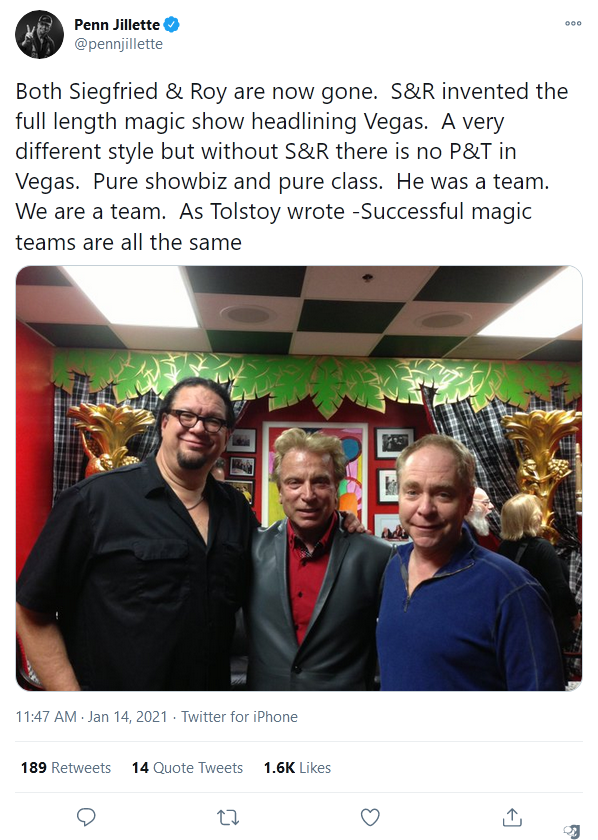
In the latest Libertarian Enterprise, Sean Gangol mourns the discovery that Penn Jillette has abandoned his libertarian beliefs due at least in part to a bout of Trump Derangement Syndrome:
In the last three years I have found myself becoming increasingly disappointed with certain organizations and people who have called themselves libertarian. My first disappointment was Christopher Cantwell, a libertarian who joined the Free State movement in New Hampshire. I used to be a regular listener of his podcast up until he got involved in the so-called Alt-Right movement, where he found himself mixed up in the fiasco that took place in Charlottesville. To this day I still can’t comprehend how a no-nonsense Anarcho-Capitalist like Cantwell could trade the principles of individual freedom for the principles peddled by a neo-fascist group. Then there was Reason magazine, who blamed Trump for the death of a young protestor in Charlottesville, which led to me cancelling my subscription. I also got tired of libertarians constantly belly-aching about how Trump is far from their ideal president, which is why I stopped watching Kennedy. Though I would say that my biggest disappointment was Judge Andrew Napolitano who had an obvious vendetta against Trump since he seemed to support any charge that was made against the former president no matter how bogus it seemed. At least Napolitano was my biggest disappointment, up until I heard about Penn Jillette’s recent abandonment of his libertarian principles.
When I first discovered Penn & Teller’s Bullshit on Showtime back in 2005, I not only fell in love with the show but with the witty duo. They were never afraid to pull any punches when it came to the subjects that they went out of their way to debunk. It didn’t matter if the subject was gun control, The War on Drugs or just about every form of pseudoscience that Western Civilization had to offer. The most controversial episodes involved slave reparations, climate change hysteria and AA meetings. The episode on the AA meetings was so controversial that their own film crew threatened to go on strike over it. I had the pleasure of getting my picture taken with the duo back in 2008, when I went to see one of their magic shows in Las Vegas.
I can definitely say that I take no pleasure in criticizing Penn Jillette, but I couldn’t believe that he actually said these words on an episode of Big Think : “[A] lot of the illusions that I held dear, rugged individualism, individual freedoms, are coming back to bite us in the ass. It seems like getting rid of the gatekeepers gave us Trump as president, and in the same breath, in the same wind, gave us not wearing masks, and maybe gave us a huge unpleasant amount of overt racism.” When I heard those words, I wanted to ask Penn, “who the hell he was and what did he do with the real Penn Jillette?” This statement sounded like it came from somebody like Edwin Lyngar from Salon, who claims to be a former libertarian, but seems to know very little about the ideology that he now trashes. If I didn’t know anything about Penn Jillete, I would have thought of him as big of a phony as Lyngar. It’s hard to believe that this is the same man that went to a TSA checkpoint at the airport with his pants around his ankles to protest the invasive security measures that that they put the passengers through on a daily basis. What happened to that man?
I find it disappointing and perplexing that Penn Jillette would associate any damage caused by the CORONA virus to individualism, when it was a totalitarian government that caused the whole mess in the first place. I don’t know if anyone every explained this to him, but China isn’t renowned for their individualism. I also find it perplexing that a hard-nosed skeptic like Penn can have such a fixation with masks. I remember a time when Penn Jillete would criticize people who put their faith in certain ideas without evidence. It didn’t matter if it was a belief in a deity or a misguided faith in alternative medicine. Yet, he seems to believe in the same quackery that he and Teller used to routinely debunk on Bullshit. Yes, I do believe that masks are a form of pseudoscience and for that matter I believe that most of the measures that have been shoved down our throats for the past year and half are complete bunk. I assume these things are complete bunk because the officials pushing those measures have yet to show a single shred of evidence that they have been effective in reducing infection rates.
I’ve had the same disillusionments with former libertarians, and Penn’s conversion to progressive nostrums was certainly one of the most disappointing. I’m not renewing my more-than-30-year subscription to Reason magazine — in fact, I haven’t read many issues in the last several years, as I keep finding arguments that might appear in The Atlantic or other consciously progressive organs rather than the libertarian reporting they used to be so good at delivering.
Comments Off on Even libertarians can fall victim to progressive hysteria
Ross WWI Sniper Rifle w/ Winchester A5 Scope
Forgotten Weapons
Published 23 Aug 2021http://www.patreon.com/ForgottenWeapons
https://www.floatplane.com/channel/Fo…
Cool Forgotten Weapons merch! http://shop.forgottenweapons.com
The standard Canadian sniper’s rifle of World War One was the MkIII Ross fitted with a Warner & Swasey “musket sight” purchased from the United States. However, armorers in the field did create sniping rifles using other scopes — in particular the Winchester A5. The A5 was a popular commercial rifle scope at the time, and it found its way onto military rifles for many nations — I have seen examples on Lebel and SMLE rifles as well as of course American Springfields and this Ross.
The A5 was a 5x magnification scope with external adjustments. We don’t know when this example was built into sniper configuration, but it’s provenance is solid (this sort of thing would be relatively easy to counterfeit). Personally, I would much prefer a Winchester A5 over the Warner & Swasey pattern…
Contact:
Forgotten Weapons
6281 N. Oracle 36270
Tucson, AZ 85740
From the comments:
Cole Harris
1 hour ago
The famed Francis Pegahmagabow used a Ross during his service with the Canadian Expeditionary Force during WWI. While the Ross was considered a pretty terrible service rifle because of reliability/durability concerns, on the range it was a superb rifle that he used to great effect. I don’t know if he used irons or not, but he built quite a reputation for marksmanship with the Ross.
If you’d like more information about Francis Pegahmagabow, The Great War channel did a bio special about him and more recently Sabaton wrote a song called “A Ghost in the Trenches” about his military service.

Comments Off on Ross WWI Sniper Rifle w/ Winchester A5 Scope
QotD: Turkeys
It did not go well.
As it turns out, turkeys are dumb. And not just a little dumb, no. Turkeys are catastrophically dumb. As in keeping them alive is a monumental challenge, kind of dumb. Turkeys are an abomination of creation: they will make you doubt the plausibility of natural selection. Nothing so dumb should be permitted to survive, except to sustain something more useful.
My husband recalls his peak moment as an amateur turkey farmer; he watched as one of his birds drowned itself in its own water dish. He swears that this is true. He watched the bird stretch down to take a drink, get stuck under the water, and die.
All in all, my husband lost nine of his 20 turkeys.
You should never feel guilty about an animal that is too dumb to pull its own head out of a shallow water dish. Poultry is God’s tofu.
Jen Gerson, “Done with the political turkeys after the holidays”, CBC News, 2021-01-04.
Comments Off on QotD: Turkeys
December 19, 2021
Remember the megabucks Andrew Cuomo received for his (ghostwritten) book? It’s going to New York State instead
Back in November, Kenneth Whyte reported on the unlikely pay-off for Andrew Cuomo and his American Crisis. In this week’s SHuSH newsletter he’s delighted to report that the state government — which effectively funded the research and writing of the book — will be the eventual recipient of the whole advance:

Sorry to keep harkening back to previous SHuSHs but I can’t overlook the latest on the Andrew Cuomo shambles.
You’ll remember that now-disgraced former governor of New York, Andrew Cuomo, played dirty with his publisher and the public while landing a lucrative book contract. More specifically, he suppressed bad news about pandemic deaths in his state while coaxing a $5.1 million advance out of Penguin Random House for a book about his heroic activities as a COVID-19 fighter.
I mentioned that it was astonishing that the governor of America’s hardest-hit pandemic state could produce a fat manuscript in just three months, and that media reports suggested his staff and a ghostwriter authored the book for him. The same reports said he was in danger of violating state ethics prohibitions against the use of state resources or personnel in producing his book.
I also noted that weeks after the grandly titled American Crisis: Leadership Lessons from the COVID-19 Pandemic was released in October 2020, Cuomo was hit with the first in a long series of sexual harassment allegations. He was forced to resign his office in August 2021. By then, it had also emerged that Cuomo’s office had covered up roughly half of the fatalities among state nursing home residents during the pandemic.
Penguin Random House took a bath on the project. American Crisis has sold only about 50,000 copies, about a tenth of what the publisher needed to cover the advance it paid the author.
This week it was Cuomo’s turn in the tub. An ethics panel ruled that he had broken his promises not to use state resources or government staff to write his self-congratulatory book, and gave him thirty days to hand over to the State of New York the $5.1 million he earned with the book.
‘Tis the season to be jolly
Fa-la-la-la-la, la-la-la-la
Comments Off on Remember the megabucks Andrew Cuomo received for his (ghostwritten) book? It’s going to New York State instead


