
Forgotten Weapons
Published 18 Sep 2016The M1C was an M1 Garand with a telescopic sight, using a mounting system developed by the Griffin & Howe company of New York. It utilized a rail pinned and screwed to the left side of the receiver, coupled with a quick-release scope on top. The rails had to be installed prior to heat treating the receivers, which had the unfortunately consequence of preventing rifles form being chosen for sniper conversion based on their mechanical accuracy. Instead, accuracy would be tested only after rifles were complete, leading to a 60% rejection rate.
The scope was offset to the left of the receiver so as not to interfere with the Garand’s clip loading, and issued with a leather cheek pad to give the shooter’s cheek weld a matching offset to the left. The scope used with the M1C was the M73B1, later replaced with the M81 and M82 scopes — all military versions of the 2.5x Lyman Alaskan hunting scope (which was a very good piece of equipment despite its low magnification)
The M1C was adopted in 1944, but production and quality control delays would prevent it from seeing any action in WWII. It was in use during the Korean War, however, before being replaced by the M1D.
(more…)
September 30, 2022
M1C Sniper Garand
September 26, 2022
Did D-Day win WW2? – a WW2 expert discussion
World War Two
Published 25 Sep 2022WW2 historians Indy Neidell, Spartacus Olsson, and Paul Woodadge moderated by Ryan Socash discuss the meaning and significance of D-Day from historical, current, and future perspectives. Recorded on the road while shooting in Normandy for TimeGhost’s 24-hour documentary on the events of June 6, 1944.
(more…)
September 25, 2022
Red Army Reaches the Dnieper – WW2 – 213 – September 24, 1943
World War Two
Published 24 Sep 2022Benito Mussolini proclaims a new fascist republic in Italy, but this time it is a full puppet state to Germany. There is scattered fighting around Italy and the Dodecanese — including a massacre of Italian POWs, but the big Allied advances this week are the Australians in New Guinea and the Soviets retaking their own territory. They take ground, in fact, from near Smolensk all the way south to the Sea of Azov.
(more…)
September 24, 2022
Life Inside a Panzer – Tank Life Part 1 – WW2 Special
World War Two
Published 23 Sep 2022The German Panzers are high on the list of the most feared and respected weapon systems of the Second World War. Much of their effectiveness however did not simply stem from technical or tactical superiority, but was achieved through rigorous training and the tight camaraderie of their crews. Days, weeks, or even months on end, the men operating a Panzer would stay together, maintaining the tank, and training for the battle to come. Through summer and winter, heat and snow, mud and rain, the tank would become their home.
(more…)
September 23, 2022
A Short History of Ships Cats – Floating Felines, Maritime Moggies and Kleptomaniac Kittens
Drachinifel
Published 26 Feb 2020A quick look at the origins of a vital part of the ship’s maintenance crew, and some notable examples.
(more…)
September 22, 2022
RAF Coastal Command vs U-Boats
The History Guy: History Deserves to Be Remembered
Published 5 Oct 2020The contest between aircraft and U-Boats during the Second World War was one of competing technological innovations, culminating with a decisive struggle in the summer of 1943. The History Guy tells the forgotten story of the development of anti-submarine warfare and the contest between the aircraft of RAF Coastal Command and U-Boats of the Kriegsmarine in the Bay of Biscay.
(more…)
September 21, 2022
Radom’s Vis 35: Poland’s Excellent Automatic Pistol
Forgotten Weapons
Published 9 Feb 2016In the 1920s Poland began looking for a new standard military pistol, and tested a variety of compact .380s. The representative from FN brought along an early iteration of the High Power (along with their other entry) even though it was much too large and heavy to meet the Polish requirements. After a couple iterations of testing, it became clear to the Polish Ordnance officers that the High Power was a much more effective service pistol than the compact guns they had been instructed to look for.
Lo and behold, the ultimate choice was a domestic design based largely on the High Power (a direct deal with FN was not an option after Poland’s relationship with FN had suffered through problems with the wz.28 version of the BAR). Toss in a delay to redesign the early decocking mechanism to satisfy the Cavalry (who didn’t realize that the decocker wasn’t actually meant to be used, but rather to just add another claim to the patent), and by 1935 the pistol was finished and formally adopted.
The Vis 35 is one of the best automatic pistols of WWII in terms of both handling and quality. In total 46,000 were made pre-war for Poland’s military, and German occupation forces built another 300,000+ during the war.
(more…)
September 20, 2022
Hannah Arendt in postwar Germany
In Quillette, Roger Berkowitz discusses what Hannah Arendt found when talking to Germans after the Second World War, which she characterized as their collective “escape from reality”:
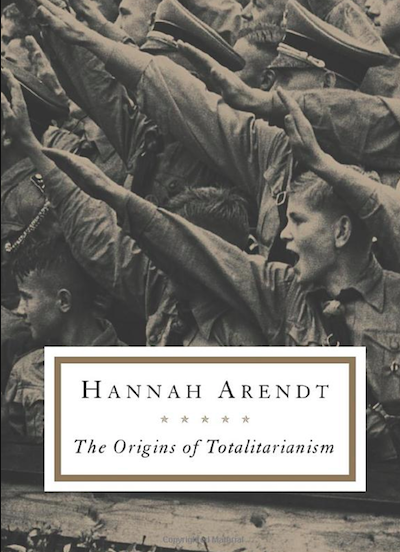
In 1949, when Hannah Arendt (1906–1975) went to Germany as part of the New York-based Jewish Cultural Reconstruction Commission, she was struck by the way the Germans showed an “at times vicious refusal to face and come to terms with what really happened”. This “escape from reality”, as Arendt named it, meant that the reality of the Holocaust and the death factories was spoken of as a hypothetical. And when the truth of the Holocaust was admitted, it was diminished: “The Germans did only what others are capable of doing”.
The Germans, at times, simply denied the facts of what had happened. One woman told Arendt that the “Russians had begun the war with an attack on Danzig”. What Arendt encountered was a “kind of gentleman’s agreement by which everyone has a right to his ignorance under the pretext that everyone has a right to his opinion”. The underlying assumption for such a right is the “tacit assumption that opinions really do not matter”. Opinions are just that, mere opinions. And facts, once they are reduced to opinions, also don’t matter. Taken together, this led to a “flight from reality”.
The focus of Arendt’s lifelong engagement with the human flight from reality was her encounter with ideologies, specifically Nazism and Bolshevism. In The Origins of Totalitarianism and other texts (especially her essay, “On the Nature of Totalitarianism“), Arendt defines an ideology as a system that seeks to explain “all the mysteries of life and the world” according to one idea. Nazism is an ideology that blames economic disaster, political loss, and the evils of modernity on the Jews — inhuman flotsam who must be exterminated to allow a master race to flourish. Bolshevism, on the other hand, “pretends that all history is a struggle of classes, that the proletariat is bound by eternal laws to win this struggle, that a classless society will then come about, and that the state, finally, will wither away”. The bourgeoisie are not simply class traitors, they are a dying class, and killing them only supports a law of history. As ideologies, both Nazism and Bolshevism insist on explaining the events of the world according to theories “without further concurrence with actual experience”. The result, Arendt argues, is that such ideologies bring about an “arrogant emancipation from reality”.
Because an ideology “looks upon all factuality as fabricated”, it “no longer knows any reliable criterion for distinguishing truth from falsehood”. As reality recedes, ideologies organize society to transform their ideas into living reality. If antisemitism as an ideology says that all Jews are beggars without passports, the fact of wealthy and established Jews must be eliminated. If Bolshevism says that the bourgeoisie are corrupt, they must admit their corruption or be killed. The realization of such ideological realities can be accomplished, of course, through terror.
But even before a totalitarian movement takes power and mobilizes the secret police in the machinery of terror, ideological movements can employ propaganda to deny and nullify facts, or change them. The Nazis, she writes, “did not so much believe in the truth of racism as desire to change the world into a race reality”. Similarly, the Bolshevist ideology that classes were dying was not something real, but something that had to be made real. The purges and terror that Stalin unleashed were supposed to “establish a classless society” by exterminating all social groups that might develop into classes. In both instances, the purpose of the ideology was to transform a mere opinion — race consciousness or class consciousness — into the “the lived content of reality”.
The point, as Arendt concludes, is that “ideological consistency reducing everything to one all-dominating factor is always in conflict with the inconsistency of the world, on the one hand, and the unpredictability of human actions, on the other”. What ideology demands is that man — an unpredictable and spontaneous being — cease to exist as such, that all humans be subjected to laws of development that follow ideological truth. That is why the turn from an unreliable reality to coherent fantasy requires an absolute elimination of human spontaneity and freedom.
The Evolution of the Rifleman’s Uniform 1860-1990’s
Queen’s Own Rifles of Canada Regimental Museum
Published 30 Nov 2020See the evolution of the rifleman’s uniform throughout most of our history.
You can also read more about this evolution on our Museum website:
https://qormuseum.org/history/timelin…
(more…)
September 19, 2022
Albania – Hitler’s Latest Ally? – WAH 078 – September 18, 1943
World War Two
Published 18 Sep 2022The German Nazi Genocide of the Jews surpasses four million deaths, while the Soviet Union and US step up oppression against some their own citizens.
(more…)
September 18, 2022
Jailbreak! Mussolini on the Loose Again! – WW2 – 212 – September 17, 1943
World War Two
Published 17 Sep 2022
(more…)
September 16, 2022
QotD: Counting coup
… the moment we get into how courage (and showing courage) was understood in these cultures, both the idea of a universal battle experience and also a universal notion of “warrior courage” break down. To take just a few examples …
Among Great Plains Native Americans, the sign of great courage was the individual act (on this, see A.R. McGinnis, Counting Coup and Cutting Horses (2010), which is replete with examples), particularly touching an enemy combatant (“counting coup“) or stealing enemy horses from their camp, typically by night and by stealth. It is sometimes asserted that counting coup means touching an enemy without killing them, but McGinnis fairly handily debunks this – not only could the enemy be killed, he could be already dead, killed by someone else and in some cases up to four warriors might count coup on the same fallen foe, none of whom need be the person who did the killing (McGinnis, 44, 63). These acts were fundamentally individual and the honor that resulted from them was entirely from the daring, rather than, necessarily, their direct efficacy. As McGinnis notes at multiple points, it was not the killing of an enemy, but the actual act of rushing forward to touch the body that was rewarded with honor.
Of course in many cases, counting coup in this way was followed by swift retreat, since the body in question was likely to be amongst the still living and dangerous enemy, which was the point since the purpose of the act was to show supreme daring and skill to rush forward among the enemy and get back out after touching one. The same of course was true of “cutting horses”, a task which could generally only be done by sneaking into an enemy camp, literally surrounded by (hopefully unaware) enemy warriors, before grabbing their horses and riding off (there is a first person account of such a raid in Black Elk Speaks (1932) which has always stuck with me, but McGinnis provides several other examples).
(I should note that the last Great Plains Native American to achieve the complete set of military honors and be made a war chief was Joe Medicine Crow who quite famously managed to lead a war party, take an enemy’s weapon, count coup (on a live opponent!) and steal some fifty horses from the Nazi SS during the Second World War)
Bret Devereaux, “Collections: The Universal Warrior, Part IIa: The Many Faces of Battle”, A Collection of Unmitigated Pedantry, 2021-02-05.
September 15, 2022
Italy Switches Sides in World War Two – WAH 077 – September 11, 1943
World War Two
Published 14 Sep 2022When Italy leaves WW2, The Nazi German Reich immediately begins occupying the country, and the occupied nations it has held until now.
(more…)
Lahti L-35: Finland’s First Domestic Service Automatic Pistol
Forgotten Weapons
Published 23 Apr 2018When Finland decided to replace the Luger as its service handgun, they turned to Finland’s most famous arms designer, Aimo Lahti. After a few iterations, Lahti devised a short recoil semiautomatic pistol with a vertically traveling locking block, not too different from a Bergmann 1910 or Type 94 Nambu. It was adopted in 1935, but production did not really begin in earnest until 1939 at the VKT rifle factory. Several variations were made as elements of the gun were simplified to speed up production, and the design was also licensed to the Swedish Husqvarna company, which manufactured nearly 10 times as many of the pistols as VKT eventually did.
In today’s video we will look at each of the variations, including one with an original shoulder stock and the early and late military guns as well as the post-war commercial guns marked Valmet instead of VKT.
(more…)
September 13, 2022
The Greatest Escapes of World War Two – WW2 Special
World War Two
Published 12 Sep 2022This is an intimate story inspired by real events (notably inspired by the story of a member of the Danish resistance and grandmother of Hans von Knut Skovfoged, Head of Development at PortaPlay. A story told not on the front line, but in the intimate setting of a small Danish village.
(more…)


