
The underlying principles of Game are sound, because they come from the world of advertising. Heartiste was very good about referring to the marketing background — sociobiology may have provided the theory, but marketing, particularly Robert Cialdini’s seminal Persuasion, provided the practice. Social proof, consistency and commitment, all that jazz, it’s just marketing, and marketing certainly works … as far as it goes. I’m not privy to the numbers (not being a senior exec at a major corporation), but I’m pretty sure that an ad campaign that verifiably produced a 5% increase in sales would be a smashing success. An ad campaign that got 10% would make you Don Draper, a legend in the field who is also complete fiction.
Which forces us to consider a second question: How much of Game’s “success” is just practice? I’d wager very long money that no one, in the history of seduction, has ever said “I hit on fifteen girls a day, but I never seem to get anywhere”. And that of course is the very first thing the Game gurus have you do — just approach girls, dozens of them every day. Practice any skill for an hour a day and you’re bound to get a lot better pretty quickly. If you stink at golf, for instance, go hit a bucket of balls every day after work; in a month you’ll be dramatically better than you were, even if — make that especially if — you were terrible to start with.
Then throw in the marketing-style success rate. A 5% sales increase might not seem that big, but it’s millions of dollars. So, too, “scoring with 5% of your approaches” is a stunning success rate compared to 0%, especially since, you know, it’s sex, which our culture has taught us is the only meaningful standard.
Finally, though I will cheerfully admit to never having been a PUA, or anything close to it, I’ve read a fair amount of their stuff, and it seems to me that what they’re teaching is “how to fake self-confidence”, which is to say, they’re teaching Method acting. The theory is that you “fake it ’til you make it” — that is, by acting self-confident at all times, eventually you’ll really be self-confident. That virtue is as virtue does, and vice versa, goes back at least to Aristotle, so I’m certainly not going to argue with it. I’m simply going to point out that self-confidence, though of course very real, is more than just a set of behaviors, though our culture makes it very difficult to distinguish the two … and, worse, makes both of them very difficult to distinguish from “just being an asshole”.
Severian, “Mental Middlemen II: Sex and the City and Self-Confidence”, Rotten Chestnuts, 2021-05-06.
May 30, 2024
QotD: Is a “Pickup Artist” just an amateur method actor performing “fake it until you make it” drills?
May 29, 2024
A visit to failure pier
CDR Salamander has some advice for any US congresscritter with a spine (unfortunately, that probably means none of them):

This old operational planner has one bit of advice to Congress in their role of having oversight of the Executive Branch; subpoena the Decision Brief for the Gaza pier operation.
This was on the lowest of low scale of military operations, Humanitarian Assistance/Disaster Response. There is little to nothing classified about any of this rump of a capability. Call in member of the Joint Staff who were involved in this planning — and I would prefer if you could find a few terminal O5/6 to testify as well. You might actually enjoy some candor.
The Commander’s Intent, the Higher Direction and Guidance, the Planning Assumptions, the Constraints and Restraints, the Critical Vulnerability analysis, etc. It is all there. If not, the Chairman of the Joint Chiefs of Staff and the Secretary of Defense should tell the American people to their face.
This is a larger issue than anything happening in that impossible corner of the globe. Over the weekend, we saw yet more indications of an empire in decline deteriorating from bad to pathetic.
From the time the first load came off the pier, the aid barely made it past 300 meters until it disappeared into Hamasistan.
I’ll go ahead and tap the sign;
[…]
Generally this latest act in this other-end-of-the-Med-from-the-Greeks tragedy that has unfolded in front of everyone. As we saw at the top at Ashkelon Beach, first some ancillary bits floated over to Israel as the Eastern Mediterranean reminded everyone it is at the eastern end of a big sea with weather and waves and stuff.
We then found out that three soldiers were injured in a forklift accident. Just to add insult to injury, as the locals laughed, it appears more of the business end decided to try to make it to Haifa on its own.
[…]
I’m not sure how you scatter Army property all over the Eastern Med without a boot getting dry, but maybe I’m wrong. Gaza is lava, and all.
Empires don’t often die in a blaze of glory, no. More often than not they end in simpering apologies and excuses from poor leaders putting the wrong people in positions they have no place being, and when they fail — there is no accountability.

Why Germany Lost the Battle of the Atlantic
Real Time History
Published Feb 2, 2024In March 1943, German U-boats are on the attack – they sink 108 Allied vessels that month alone. Some Allied officials fear a German victory in the Atlantic is imminent. If the Allies lose the Atlantic, Britain loses its lifeline – and maybe even the war. But by May 1943, it will be the U-boats limping home in defeat. So how, in just two months, did the U-boats go from hunters to hunted?
(more…)
May 26, 2024
The Last Battles in Europe – WW2 – Week 300 – May 25, 1945
World War Two
Published 25 May 2024This week, the fighting in Europe finally comes to an end and the Allies round up more leading Nazis including Heinrich Himmler and Karl Dönitz. In Asia, the fighting continues on Okinawa even as the Japanese start pulling back. The Australians continue fighting on Tarakan, and the Chinese are victorious in western Hunan.
00:00 Intro
01:45 Fighting In Europe Ends
04:30 Notes From Europe
06:57 Japanese Begin To Withdraw On Okinawa
12:41 The Battle Of Tarakan Island
14:35 Chinese Victory In Western Hunan
18:51 Conclusion
(more…)
QotD: Ever-expanding government
Janice Rogers Brown, “Hyphenasia: the Mercy Killing of the American Dream,” Speech at Claremont-McKenna College (Sept. 16, 1999).
May 25, 2024
“Education” versus “learning”
At Astral Codex Ten, Scott Alexander discusses some of the ideas from Bryan Caplan’s book The Case Against Education:
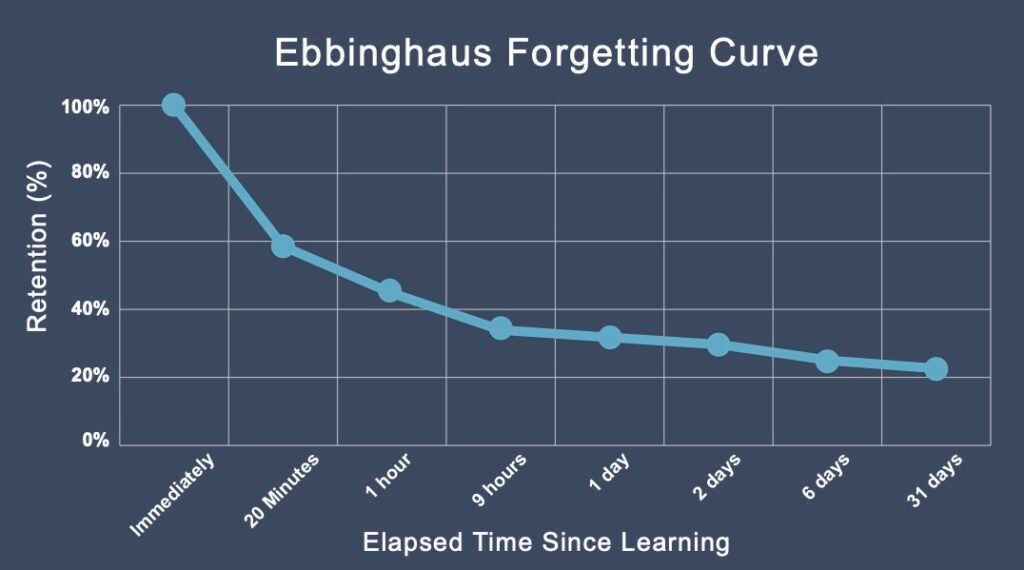
Source here. Note deranged horizontal axis.
Education isn’t just about facts. But it’s partly about facts. Facts are easy to measure, and they’re a useful signpost for deeper understanding. If someone has never heard of Chaucer, Dickens, Melville, Twain, or Joyce, they probably haven’t learned to appreciate great literature. If someone can’t identify Washington, Lincoln, or either Roosevelt, they probably don’t understand the ebb and flow of American history. So what facts does the average American know?
In a 1999 poll, only 66% of Americans age 18-29 knew that the US won independence from Britain (as opposed to some other country). About 47% of Americans can name all three branches of government (executive, legislative, and judicial). 37% know the closest planet to the sun (Mercury). 58% know which gas causes most global warming (carbon dioxide). 44% know Auschwitz was the site of a concentration camp. Fewer than 50% (ie worse than chance) can correctly answer a true-false question about whether electrons are bigger than atoms.
These results are scattered across many polls, which makes them vulnerable to publication bias; I can’t find a good unified general knowledge survey of the whole population. But there’s a great survey of university students. Keeping in mind that this is a highly selected, extra-smart population, here are some data points:
- 85% know who wrote Romeo and Juliet (Shakespeare)
- 56% know the biggest planet (Jupiter)
- 44% know who rode on horseback in 1775 to warn that the British were coming (Paul Revere)
- 33% know what organ produces insulin (pancreas)
- 31% know the capital of Russia (Moscow)
- 30% know who discovered the Theory of Relativity (Einstein)
- 19% know what mountain range contains Mt. Everest (Himalayas)
- 19% know who wrote 1984 (George Orwell)
- 16% know what word the raven says in Poe’s “The Raven” (“Nevermore!”)
- 10% know the captain’s name in Moby Dick (Ahab)
- 7% know who discovered, in 1543, that the Earth orbits the sun (Copernicus)
- 4% know what Chinese religion was founded by Lao Tse (Taoism)
- <1% know what city the general Hannibal was from (Carthage)
Remember, these are university students, so the average person’s performance is worse.
Most of these are the kinds of facts that I would expect school to teach people. Some of them (eg the branches of government) are the foundations of whole subjects, facts that I would expect to get reviewed and built upon many times during a student’s career. If most people don’t remember them, there seems to be little hope that they remember basically anything from school. So what’s school even doing?
Maybe school is why at least a majority of people know the very basics – like that the US won independence from Britain, or that Shakespeare wrote Romeo and Juliet? I’m not sure this is true. Here are some other questions that got approximately the same level of correct answers as “Shakespeare wrote Romeo and Juliet“:
- What is the name of the rubber object hit by hockey players? (Puck, 89%)
- What is the name of the comic strip character who eats spinach to increase his strength? (Popeye, 82% correct)
- What is the name of Dorothy’s dog in The Wizard of Oz? (Toto, 80% correct)
I don’t think any of these are taught in school. They’re absorbed by cultural osmosis. It seems equally likely that Romeo and Juliet could be absorbed the same way. Wasn’t there an Academy-Award-winning movie about Shakespeare writing Romeo and Juliet just a decade or so before this study came out? Sure, 19% of people know that Orwell wrote 1984 – but how many people know the 1984 Calendar Meme, or the “1984 was not an instruction manual!” joke, or have heard of the reality show Big Brother? Nobody learned those in school, so maybe they learned Orwell’s name the same place they learned about the other 1984-related stuff.
Okay, so school probably doesn’t do a great job teaching facts. But maybe it could still teach skills, right?
According to tests, fewer than 10% of Americans are “proficient” at PIIAC-defined numeracy skills, even though in theory you need to know algebra to graduate from most public schools.
I took a year of Spanish in middle school, and I cannot speak Spanish today to save my life; that year was completely wasted. Sure, I know things like “Hola!” and “Adios!”, but I also know things like “gringo” and “Yo quiero Taco Bell” – this is just cultural osmosis again.
So it seems most people forget almost all of what they learn in school, whether we’re talking about facts or skills. The remaining pro-school argument would be that even if they forget every specific thing, they retain some kind of scaffolding that makes it easier for them to learn and understand new things in the future; ie they keep some sort of overall concept of learning. This is a pretty god-of-the-gaps-ish hypothesis, and counterbalanced by all the kids who said school made them hate learning, or made them unable to learn in a non-fake/rote way, or that they can’t read books now because they’re too traumatized from years of being forced to read books that they hate.
It’s common-but-trite to encounter people who say things like “I love learning, but I hated school” — I’ve undoubtedly said that myself many times. A weird experience was having to study a book in school that I’d already read on my own: it was like an early form of aversion therapy … here’s something you loved once, let’s make you hate it now.
Fathers of Light and Darkness – Rockets and Explosives – Sabaton History 126 [Official]
Sabaton History
Published Feb 7, 2024There are many inventors whose creations have been turned into weapons of war. A couple that really stand out are Alfred Nobel and Wernher von Braun. Today we’ll take a deep dive into their stories and the paradox of using destructive weapons for good, or creative weapons for destruction.
(more…)
QotD: “Dirt Theory”
Robert Stacey McCain, “New Form of Racism Has Been Discovered”, The Other McCain, 2024-02-04.
May 24, 2024
Bernie Sanders finally finds a group of rich people who he thinks shouldn’t have to pay
As Tim Worstall points out, Bernie Sanders’ latest campaign is starkly at odds with his usual “make the rich pay” schtick:

“Bernie Sanders” by Gage Skidmore is licensed under CC BY-SA 2.0 

 .
.
It’s possible to think that Bernie Sanders, Senator that he is, is more than a little confused. Well, he’d not be the first elderly politician to suffer that fate. Nor the first socialist. It is necessary for me to be fair here though — one of his honeymoons he took in the Soviet Union. Which makes perfect sense to me — after all, there was bugger all else to do there other than your own wife.
However, here we’ve got him complaining about the cost of the new miracle drugs:
Bernie Sanders has urged Denmark to rein in its most valuable company, Novo Nordisk, and force it to slash prices on popular weight loss and diabetes treatments Ozempic and Wegovy, taking his fight to lower “outrageously high” drug prices in the United States to the company’s doorstep as its profits soar amid ongoing struggles to meet booming appetite for the revolutionary drugs.
Hmm, dunno how well that’s going to work with the Danes really. Yes, to some extent they’re milder than when they tried to rape and pillage the entirety of Europe but not wholly. My brother worked out in Afghanistan (feeding the troops) and he had a Danish unit rotate through. So he tells me their senior sergeant type carried a double bladed axe on his backpack — it didn’t come back clean from every patrol either. They’re not all equality and gender rights these days, you know?
So, we can imagine a certain portion at least of the Danish population celebrating this rapine of Medicare’s pockets by the simple expedient of selling a weight loss drug that actually works — which is, when we come to think of it, something of an innovation. Fen-Fen didn’t work after all. Hey, you know, Vinland failed but we’ll get ’em this time? We’re charging high prices because we can?
A second pass at the argument would be that the drugs are in fact incredibly cheap. When it was shown that the same drug — semaglutide — works in stopping (that’s “stopping” as in ceased, stopped, dead, like Bernie’s career would if it were ever proven he had taken part in an act of voluntary capitalism) chronic kidney disease. So much so that the very day they announced the trials on the drug were being stopped a year early, so obvious was the success, the share prices of all the dialysis provision companies dropped 20 and 30%. That is, at near whatever price, this drug is a money saver. Which is, you know, good. J Foreigner turns up with this thing that saves America, Americans, lives and money and yet Bernie whines — so like a socialist, eh? Capitalism with markets makes us the humans who are living highest on the hog, ever, but they really never do stop whining about it, do they?
But Bernie’s real complaint is that Americans are paying more to burn off the cheeseburgers than everyone else has to. But from everything else Bernie says about anything at all this is at it should be — the rich should pay.
Back to our basics. The basic drug development problem is that the development of a drug is a public goods problem. It costs $2 billion to get a drug through the FDA and gain approval to actually sell it. Yes, of course we should slaughter much of the regulation that makes it cost that much (personally, against character type, I only recommend capture and humane release for the actual bureaucrats) but that’s another matter. It does. But if everyone can just copy the drug at that point then no one will spend $2 billion. So, OK, patents, so the developers have a decade (the patent is two decades, it takes a decade to gain approval) to make their $2 billion back then anyone can copy it. The price falls to manufacturing cost plus normal profit level and we’re about as good as we can get. This is not a perfect system but for mass market drugs it’s about as good as we’re going to get.
“[I]t is offensive to say that women should help men reach their potential; but … men must help women reach theirs“
There has been a lot of online outrage after Kansas City Chiefs placekicker Harrison Butker spoke at the graduation ceremonies at his alma mater:

“Stop giving men microphones,” wrote one of the signers of the petition to have NFL kicker Harrison Butker fired.
“As a woman living in post-Roe America,” declared another, “I’m exhausted from men telling women what to do with their lives.”
“How offensive to imply women are put here on this planet to help a man reach his full potential,” fumed a third. “We should be empowering women to achieve greatness however that looks for them. Having children or being a mother isn’t the currency we must pay to be treated as equal members of this society.”
And on and on they go in predictable, and predictably incoherent, statements. Apparently, it is offensive to say that women should help men reach their potential; but, in the next breath, men must help women reach theirs.
At a time when women encourage one another in “rage rituals” and feminists like Mona Eltahawy call for perpetual anger as the route to liberation, few can be surprised by the hysteria that followed National Football League kicker Harrison Butker’s speech to the graduating students of Benedictine College in Kansas. It is a rage that has led well over 200,000 of the furious, mostly women, to sign a petition demanding he be fired by the Kansas City Chiefs.
Manufacturing outrage is what feminist journalism does best, and its audience is eager for cosplay rebellion and narcissistic posturing even when, as in the case of the speech, the hyperventilating is far in excess of the fact. That even Benedictine nuns have joined the chorus shows how many women in all walks of life find such posturing near-irresistible.
Of course, if Butker had addressed the Benedictine College graduates to say that Catholicism was riddled with misogyny and homophobia, no popular petitions would have been launched. If he had said that abortion was a gift to humanity and that female priests would lead the church to glory, his words would have sparked dissent only in the most marginal of venues.
Let a man praise his wife for her devotion to family, and we witness a stampede of foul-mouthed nasties to their bullhorns.
Grant Hammond .32 ACP Prototype
Forgotten Weapons
Published Apr 6, 2015Grant Hammond is best known (to the extent he is known at all) for a .45 caliber pistol submitted to US military trials in 1917 and 1918. This pistol is a proof of concept prototype embodying some of the concepts that would go into the later .45 caliber pistol, and also showing some concepts that would not see further use. This .32 ACP prototype features a hybrid blow forward / blow back mechanism in which the slide uses a gas trapping system to move forward and the bolt moves backward. It also has a unique system for automatically ejecting the magazine when empty. Truly one of the most mechanically unusual pistols I have ever seen.
QotD: Our modern Puritans
The Puritans were something new. Translate their elaborate, Latinate prose into the parlance of our times, and they sound exactly like SJWs — at once unbearably self-righteous and cripplingly insecure. They were almost certain that they, personally, were among the Elect … but since the only infallible sign of being Saved was “an irresistible attraction to Puritanism”, they were caught in exactly the same vicious purity spiral as our modern SJWs. Who, truly, can say xzhey are #woke, when there’s always the possibility of someone, somewhere, being #woker? If you want a slightly easier passport to their heads, try Perry Miller’s The New England Mind. It was written in the 1930s, so be prepared — surprisingly little untranslated Latin, since the Puritans wrote mostly for themselves, but still fairly ornate prose.
Put it this way: The Wiki summary of Miller’s life quotes a colleague: “Perry Miller was a great historian of Puritanism but the dark conflicts of the Puritan mind eroded his own mental stability”. He died of alcoholism.
The Puritans’ saving grace, if they had one, is that they were men of the world. They had to be. Guys like Max Weber would say that those two things had a dialectical relationship — Puritanism IS “the Protestant work ethic” IS “capitalism” — but that’s not necessary for present purposes. My point is simply that the Early Modern world could only support a tiny number of professional intellectuals, and the “managerial class” was all but nonexistent. Through Cromwell and his mini-me’s in Salem gave it the old college try, it’s simply impossible to run an Early Modern government Puritan-style.
That’s obviously not the case now. We have a huge (and ever-growing) managerial class, all of whom are the most fervent Puritans. Unlike Cromwell and the boys, though, they can — and, of course, DO — live in perfect isolation from the affairs of the world they’re supposedly managing. Put simply, but not really unfairly, they live on Twitter — their carefully curated list of social media “friends” is, in a very real way, their entire world. Imagine Oliver Cromwell, Zeal-of-the-Land Busy, and Cotton Mather tweeting at each other, all day every day.
Severian, “Friday Mailbag: Civilization, the Video Game”, Rotten Chestnuts, 2021-05-21.
1. Severian may be referring to Michael Walzer’s first book The Revolution of the Saints: A Study in the Origins of Radical Politics (1965) or perhaps Regicide and Revolution (1974). Unfortunately when I saved this, I didn’t note which of Walzer’s works had been referenced earlier in the post and the original is no longer available online. Quotulatiousness regrets the omission.
May 23, 2024
QotD: The “creepy male feminist”
It is a distinctly 2010s phenomenon: the sort of chap who likes to present himself as a great spokesperson for, and defender of women and overdoes it so much that you just know that something else is going on.
He will invariably go beyond the usual courtesies and head some way past the point of merely regarding women as his equal. Instead, the creepy male feminist pulls a number of simultaneous moves. These include (though are not limited to):
- Presenting the plight of women in our society as distinctly worse than it is.
- Suggesting that everybody knows this but that some people (especially men) are deliberately covering for that fact.
- Making the suggestion — sometimes insinuated, often explicit — that nothing and nobody is more willing to stand between women as a whole and such rampaging patriarchs than the male in question. Anyone still unfamiliar with the type might recognise it under another entry in the lexicon of modern ignominy: “White knight” (n).
And a trend can now be observed, which is that with unnerving regularity the type of man who presents himself as the foremost protector of the entire female sex is precisely the person who shortly thereafter is exposed as having tried to help himself in distinctly un-gentlemanly ways.
Douglas Murray in “Beware the creepy male feminist: ‘White knights’ like Robert De Niro often turn out to be less than chivalrous”, Unherd, 2019-11-15.
May 22, 2024
If you re-define it carefully, you can make any statistical measure look hopeful
In his Substack, Tim Worstall jokingly called this piece “Larry Summers Explains Why Americans Hate Joe Biden”:
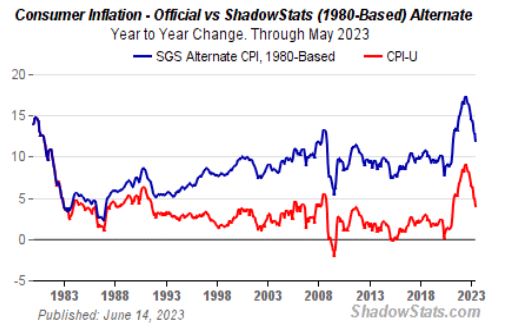
As a good Democrat of course Larry Summers would never put things in quite that headline way. But the implication of this latest paper with others is to explain why Americans really aren’t as happy as they should be given the economic numbers. The answer being that the economic numbers we all look at to explain how happy folk are aren’t the right economic numbers to explain how happy people are.
We can also make — possibly rightly, possibly wrongly, this might be me projecting more than is merited — a further claim. That Americans simply aren’t as rich as those standard economic numbers suggest either. Which would also neatly explain the general down in the dumps attitude toward the economy.
So, the new paper:
Unemployment is low and inflation is falling, but consumer sentiment remains depressed. This has confounded economists, who historically rely on these two variables to gauge how consumers feel about the economy. We propose that borrowing costs, which have grown at rates they had not reached in decades, do much to explain this gap. The cost of money is not currently included in traditional price indexes, indicating a disconnect between the measures favored by economists and the effective costs borne by consumers. We show that the lows in US consumer sentiment that cannot be explained by unemployment and official inflation are strongly correlated with borrowing costs and consumer credit supply. Concerns over borrowing costs, which have historically tracked the cost of money, are at their highest levels since the Volcker-era. We then develop alternative measures of inflation that include borrowing costs and can account for almost three quarters of the gap in US consumer sentiment in 2023. Global evidence shows that consumer sentiment gaps across countries are also strongly correlated with changes in interest rates. Proposed U.S.-specific factors do not find much supportive evidence abroad.
OK, or as explained by the Telegraph:
In it, the authors made a shocking claim: if inflation was measured in the same way that it was measured during the last bout of price rises in the 1970s, data showed that it peaked at 18pc in November 2022. This is far higher than the 9.1pc peak inflation shown by the official data.
The reason for this discrepancy is that, since the 1970s, economists have removed the cost of borrowing from the Consumer Price Index (CPI). The motivations here were not nefarious. The reasoning of the statisticians had something to it.
And, OK, if inflation peaked at 18%, not 9%, then that would explain why folk are pissed. Sure it would.
[…]
OK. But that means that if inflation was higher than we’ve been using then the deflation of nominal to real GDP is also wrong. Just that one year of 9% recorded but 18% by this new measure is damn near a 10% difference. That’s how much we’re over-estimating real GDP by right now. Add in a couple of years of lower levels of that and being 20% out wouldn’t surprise.
Which would mean that — if this were true and I might be overegging it — Americans are in fact 20% poorer than the Biden Admin keeps saying they are. And yes, that would piss the voters off, wouldn’t it?
Gaslighting has been a staple of the legacy media for quite some time now, going into high gear during the 2016 US Presidential elections and then into overdrive during the pandemic. They probably don’t even realize they’re doing it any more, because it feels “normal” to them. Yet they wonder why their popularity and public trust in their pronouncements continues to drop.
The new queen of the AWFLs
Elizabeth Nickson on the rise of new NPR CEO, Katherine Maher:

Banner for Christopher Rufo’s article on Katherine Maher at City Journal.
https://christopherrufo.com/p/katherine-mahers-color-revolution
The polite world was fascinated last month when long-time NPR editor Uri Berliner confessed to the Stalinist suicide pact the public broadcaster, like all public broadcasters, seems to be on. Formerly it was a place of differing views, he claimed, but now it has sold as truth some genuine falsehoods like, for instance, the Russia hoax, after which it covered up the Hunter Biden laptop. And let’s not forget our censor-like behaviour regarding Covid and the vaccine. NPR bleated that they were still diverse in political opinion, but researchers found that all 87 reporters at NPR were Democrats. Berliner was immediately put on leave and a few days later resigned, no doubt under pressure.
Even more interesting was the reveal of the genesis of NPR’s new CEO, Katherine Maher, a 41-year-old with a distinctly odd CV. Maher had put in stints at a CIA cutout, the National Democratic Institute, and trotted onto the World Bank, UNICEF, the Council on Foreign Relations, the Center for Technology and Democracy, the Digital Public Library of America, and finally the famous disinfo site Wikipedia. That same week, Tunisia accused her of working for the CIA during the so-called Arab Spring. And, of course, she is a WEF young global leader.
She was marched out for a talk at the Carnegie Endowment where she was prayerfully interviewed and spouted mediatized language so anodyne, so meaningless, yet so filled with nods to her base the AWFULS (affluent white female urban liberals) one was amazed that she was able to get away with it. There was no acknowledgement that the criticism by this award-winning reporter/editor/producer, who had spent his life at NPR had any merit whatsoever, and in fact that he was wrong on every count. That this was a flagrant lie didn’t even ruffle her artfully disarranged short blonde hair.
Christopher Rufo did an intensive investigation of her career in City Journal. It is an instructive read and illustrative of a lot of peculiar yet stellar careers of American women. Working for Big Daddy is apparently something these ghastly creatures value. I strongly suggest reading Rufo’s piece linked here. It’s a riot of spooky confluences.
Intelligence has been embedded in media forever and a day. During my time at Time Magazine in London, the bureau chief, deputy bureau chief and no doubt the “war and diplomacy” correspondent all filed to Langley and each of them cruised social London ceaselessly for information. Tucker Carlson asserted on his interview with Aaron Rogers this week that intelligence operatives were laced through DC media and in fact, Mr. Watergate, Bob Woodward himself, had been naval intelligence a scant year before he cropped up at the Washington Post as “an intrepid fighter for the truth and freedom no matter where it led”. Watergate, of course, was yet another operation to bring down another inconvenient President; at this juncture, unless you are being puppeted by the CIA, you don’t get to stay in power. Refuse and bang bang or end up in court on insultingly stupid charges. As Carlson pointed out, all congressmen and senators are terrified by the security state, even and especially the ones on the intelligence committee who are supposed to be controlling them. They can install child porn on your laptop and you don’t even know it’s there until you are raided, said Carlson. The security state is that unethical, that power mad.
Now, it’s global. And feminine. Where is Norman Mailer when you need him?


