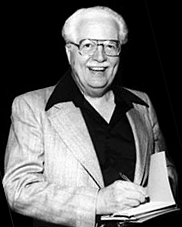
JOHN DICKERSON, HOST: Before we leave, let me ask you about your book The Vanishing American Adult. You see a very serious problem here for America. Explain what you mean. It’s a nonpolitical problem.
SENATOR BEN SASSE: Yes, so this book is 100 percent not about politics, and it’s 99 percent not about policy. It’s about this new category of perpetual adolescence. And, first, let’s just say that, over the last two millennia or so, the emergence of a category called adolescence is a pretty special gift. We believe that, when our kids become biological adults, when they hit puberty, they don’t have to be fully formed, morally, emotionally, economically, educationally, in terms of household structure. They don’t have to go out and be fully adult immediately. They don’t have to go off to war, and they don’t have to become economically self-sufficient. That’s glorious, to have that protected space between childhood and adulthood. But it’s only glorious if you understand that it’s a transitional state, it’s a means to an end. Peter Pan’s Neverland is a hell. It’s a dystopia. And we don’t want to be — have our kids caught at a place where they’re not learning how to be adults. And, right now, we’re not tending to the habit formation aspects of a republic.
“Face the Nation transcript, May 14, 2017: Schiff, Sasse, Gates”, CBS News, 2017-05-14.
June 25, 2019
QotD: Perpetual adolescence
June 23, 2019
The state of play in the Strait of Hormuz
Arthur Chrenkoff wonders what would happen if Iran gave a war, but nobody came:

A satellite view of the Strait of Hormuz, 30 December 2001.
Jacques Descloitres, MODIS Land Rapid Response Team, NASA/GSFC via Wikimedia Commons.
Nearly twenty per cent of world crude oil shipments (from the Arab Gulf producers) go out to the rest of the world through the Strait of Hormuz, which Iran is threatening to close (hence its recent attacks on oil tankers).
However, through a combination of fracking, increased mainline well production and greater efficiencies, the United States is now finally energy self-sufficient. For all that America cares, Iran could cut off all the traffic through the Strait and it would have a minimal impact on the domestic economy, some minor logistical adjustments aside.
Nearly two thirds of the oil that travels through the Strait ships to Asia instead, and specifically to China, India, Japan and Korea, which are significantly more dependent on that oil to power their energy-hungry, export-oriented economies than other regions of the world.
China, notably, has been Iran’s tacit international ally. If Iran wants to interfere with the free navigation in its backyard and in so doing antagonise one of its few remaining backers, it should be left alone to do so.
These circumstances – the US doesn’t need the Gulf oil, China does – should convince the United States to stand back and not involve itself yet another time as the world sheriff to enforce the rules of international law and maintain the open international trading system. The rest of the world all too often free-rides on America’s good graces (not to mention its blood and treasure), while at the same time reserving the right to castigate the superpower for its interventionism. Why not let the world experience what it’s like without having the US solve all their problems (while getting all their blame)? Maybe the European Union or the United Nations can do something [canned laughter]. Or maybe the most affected Asian nations can try to solve their own oil supply problems. Good luck, lads.
QotD: The American way of war
Back in 2015 and again in April 2016, I commented on what I consider to be a fairly consistent litany of failures in American strategic leadership since, about 1960. Just this month I saw a new article (almost a synopsis of his recent book) in Foreign Affairs by George Packer about noted (notorious to some) American diplomat “Richard Holbrooke and the Decline of American Power.”
One paragraph caught my eye:
We prefer our wars quick and decisive, concluding with a surrender ceremony, and we like firepower more than we want to admit, while counterinsurgency requires supreme restraint. Its apostles in Vietnam used to say, “The best weapon for killing is a knife. If you can’t use a knife, then a gun. The worst weapon is airpower.” Counterinsurgency is, according to the experts, 80 percent political. We spend our time on American charts and plans and tasks, as if the solution to another country’s internal conflict is to get our own bureaucracy right. And maybe we don’t take the politics of other people seriously. It comes down to the power of our belief in ourselves. If we are good — and are we not good? — then we won’t need to force other people to do what we want. They will know us by our deeds, and they will want for themselves what we want for them.
There is, I fear, a lot of truth in that little paragraph and I am also worried that the American fascination (mainly the Pentagon’s fascination) with process and organization has spread to Canberra, London, Ottawa, Wellington and even Berlin. The notion is that if we can just get our organizations and procedures right then everything will fall into line. We have forgotten that while good, sound organizations and sensible, simple, robust procedure do matter, they need to be in service to a sound strategic aim (a vision, if you like) and, sometimes, ad hoc organizations and “off-the-wall” procedures work best in new situations, whether counter-insurgency or all-out war against a peer.
Ted Campbell, “Following the blind leader (3)”, Ted Campbell’s Point of View, 2019-05-21.
June 22, 2019
The African Continental Free Trade Area (AfCFTA)
Alexander Hammond explains why a free trade deal among many African nations is good news for the United States and other non-African nations:

2018 map showing the African countries involved in the African Continental Free Trade Agreement.
Dark green indicates ratification, medium green are countries that signed in March 2018, and light green are countries that signed in July 2018 but did not ratify the agreement immediately.
Map by Themightyquill at Wikimedia Commons.
The poorest continent in the world is about to lend a hand to the United States. Last week, Africa implemented the world’s largest free-trade area, and that’s great news for American foreign policy. Back in December, U.S. National Security Advisor John Bolton unveiled a plan for the Trump administration’s titled the “Africa Strategy.”
The plan is simple — the United States will give less aid to Africa, instead prioritizing enhancing America’s “economic ties with the region.” Now that many African nations have unified under a single market, trading with the continent will become far easier — and a trade deal between the United States and Africa would help out everyone involved.
Streamlining Trade
The African Continental Free Trade Area (AfCFTA) trade deal officially came into force on May 30, a month after it reached the twenty-two-nation threshold needed to do so. Now, tariffs on 90 percent of the goods traded among AfCFTA member states will be removed — a move that, according to the UN, will boost intra-African trade by 52 percent in only a few years.
Given the United States’ new plans for the continent, the AfCFTA’s member states aren’t the only economies that will reap the benefits of an African single market.
A key component of the Trump administration’s Africa Strategy is to advance “U.S. trade and commercial ties” with Africa by creating “modern comprehensive trade agreements.” A single African market will be a far simpler trade partner for America. Now, only one set of trade deals will need to be negotiated with the AfCFTA — as opposed to fifty-five intricately-crafted trade deals with each small African economy. The U.S. Trade Representative has even released a report noting how time-consuming and costly it is to negotiate trade deals with each African nation. Because trade deals are long and expensive processes, creating a solitary trade deal with the AfCFTA will keep more money in the U.S. government’s purse.
Gyrojet Rocket Pistol
Forgotten Weapons
Published on 8 Sep 2014http://www.forgottenweapons.com
The Gyrojet was the closest thing to a commercially successful rocket pistol, although not many were sold before the company went out of business. This is the 13mm pistol version (the most common type of Gyrojet), and fires a 180 grain rocket projectile. It was for sale – with 15 rounds of live ammunition – at the Rock Island Premier Auction in September. Hammer price on it was $5500.
Theme music by Dylan Benson – http://dbproductioncompany.webs.com
June 21, 2019
Making America Great Again | Between 2 Wars | 1927 Part 1 of 2
TimeGhost History
Published on 20 Jun 2019In 1927 the US is finally back to its pre-WWI economic greatness, at least measured by the stock market. But all is not well with the finances in the land of the free and home of the brave.
Join us on Patreon: https://www.patreon.com/TimeGhostHistory
Hosted by: Indy Neidell
Written by: Francis van Berkel and Spartacus Olsson
Research by: Francis van Berkel
Directed and Produced by: Spartacus Olsson and Astrid Deinhard
Executive Producers: Bodo Rittenauer, Astrid Deinhard, Indy Neidell, Spartacus Olsson
Creative Producer: Joram Appel
Post Production Director: Wieke Kapteijns
Edited by: Wieke KapteijnsArchive by Reuters/Screenocean http://www.screenocean.com
A TimeGhost chronological documentary produced by OnLion Entertainment GmbH
From the comments:
TimeGhost History
1 day ago (edited)
So… before you all go and get your panties in a bunch about the title. 1. This video is literally abut the effort to make America great again in the 1920s. 2. Although Donald Trump appropriated that expression in 2016, it has been used by two Presidents before him; Ronald Reagan and Bill Clinton. 3. It has even been used in other political contexts both liberal and conservative as early as in the 1940s. So, as a historical reference to US history, not a political value comment, it is highly relevant to this episode. On that note, our heartfelt thanks to our TimeGhost Army that keeps the wheels attached to the TimeGhost vehicle and keeps us rolling forward into the past. If you’re not already a member, you can join here: https://www.patreon.com/TimeGhostHistory or here: https://timeghost.tv
June 20, 2019
QotD: Elizabeth Warren
Elizabeth Warren, a smug Harvard professor, is no populist. She doesn’t have an iota of Bernie Sanders’ authentic empathic populism — but Sanders will be too old to run next time around. I tried to take Warren seriously during the run-up to the primaries, but her outrageous silence about Sanders’ candidacy when he was battling the corrupt Hillary machine made me see Warren as the facile opportunist that she is. She craftily hid from sight throughout the primaries — until Hillary won the nomination. Then all of a sudden, there was bouncy, grinning Warren, popping in and out of Hillary’s Washington mansion as vice-presidential possibilities were being vetted. What an arrant hypocrite! Warren stands for nothing but Warren. My eye is on the new senator from California, Kamala Harris, who seems to have far more character and substance than Warren. I hope to vote for Harris in the next presidential primary.
Camille Paglia, “Prominent Democratic Feminist Camille Paglia Says Hillary Clinton ‘Exploits Feminism'”, Washington Free Beacon, 2017-05-15.
June 19, 2019
Avoiding a hot war with Iran
Jay Currie responds to a recent article at ZeroHedge, on the US-Iran situation:

The game map for Gulf Strike, an early 1980s board wargame by Victory Games.
Image from https://pbem.brainiac.com/vg.htm
The article outlines all the ways that this approach to war with Iran would be folly and while I don’t necessarily agree with all the points made, the general point that massive force however strategically deployed will almost certainly produce results that the US and the rest of the world will not like one little bit. While you can bomb the Hell out of Iran, Iran has a number of retaliatory options ranging from the possibility of an EMP hit (they may have a rudimentary nuke) to closing the Strait of Hormuz to using Hezbollah sleeper cells in the US to hit critical infrastructure. While I have no doubt the US could beat Iran in a straight war, it would be long, bloody, politically suicidal for Trump and nasty for ordinary Americans.
Worse, it would be a strategic error. If the US leaves its current sanctions in place the Iranian economy will grind to something of a halt. Support for the current Iranian regime, already shakey, will decline. Yes, the current regime will continue with its provocations – I have no doubt it was Iranians who put holes in the sides of two tankers. But, so what?
Exciting as a hot war with Iran would be for assorted policy wonks, it would be an expensive exercise in futility compared to a longer term cold war with some clever extras.
First off, the Americans should make it very clear to the Iranians and the world that while they are committed to freedom of navigation, they are not interested in massive responses to minor incidents. If there is to be any response at all to the tanker mines (if that is what they were) it should be very local indeed. Find the boat in the video and sink it (or one very much like it – no need to be too picky).
Second, using US cyber assets – such as they are – it is time to see just how effectively infrastructure can be disrupted rather than destroyed. A sense of humour would be a huge asset here. Being able to cut into TV broadcasts is one thing, telling jokes at the Ayatollah’s expense is another.
Third, the Israelis did a very good business in the selective assasination of Iran’s nuclear scientists. A similar tactic against Iranian civil and military officials engaged in terrorism or attacks on shipping would be throughly demoralizing for the Iranian regime.
On point two, I’m reminded of a key scene in Robert Heinlein’s “If This Goes On—” (later published in expanded form in Revolt in 2100), where the United States has fallen under the control of religious fanatics (vaguely Christian, but carefully not identified with any then-current sect) so that “The Prophet” occupies the role of head of state and unquestioned all-powerful religious leader. The current Prophet performs a televised annual “miracle” where he is seen on-camera to transform into Nehemiah Scudder, the First Prophet, and give blessings and advice to the current Prophet and to the American people. The conspirators manage to take over the central TV feed and replace the “genuine” Prophet’s message with a skilled actor’s portrayal of Scudder calling America to arms to overthrow the false Prophet. This is the start of the armed rebellion against the Prophet. In the technology of the story, this required a strike team to attack and occupy the physical studio where the broadcast originated — literally a suicide mission. In our digital world, the “strike team” might never need to leave Fort Meade (or wherever the data centre might be)…
Summer Stupidity: NEW YORK (City Review!)
Overly Sarcastic Productions
Published on 18 Jun 2019Welcome to summer break! We’re beta-testing a new kind of video to punctuate our REAL weekly Friday content on lazy summer Tuesdays. Let us know if this brand of fast-talking stupidity is something you’d potentially like to see more of! As always, regular content returns Friday.
PATREON: http://www.Patreon.com/OSP

37mm Antitank Gun on a Dodge Weapons Carrier – M6
Forgotten Weapons
Published on 1 Jun 2014http://www.forgottenweapons.com
Theme music by Dylan Benson – http://dbproductioncompany.webs.com
The M6 Gun Motor Carriage was the first American tank destroyer of WWII – a 37mm antitank gun (basically identical to the M3 gun) mounted on the back of a Dodge 3/4 ton weapons carrier. A large armor shield protected the gun crew from small arms fire, but the vehicle was otherwise highly exposed. The truck was powered by a flathead 6-cylinder engine producing 99 horsepower, and had a top speed of 55 mph. The gun was effective and modern in the late 1930s when its design process began, but was underpowered and insufficient by the time the M6 first saw action in 1942/3 in Tunisia.
Not many complete M6 carriages remain in existence today, as they were replaced quickly after their poor showing in North Africa. Most had the guns removed and were converted back into utility trucks, while some were used by the Free French forces and some saw use in the Pacific theater (where the underpowered gun was less of a concern).
June 16, 2019
QotD: Critical gender studies
The first thing you must understand is that gender is a social construct. “Woman” and “man” are concepts arbitrarily invented by society. They have nothing to do with reality. A child is assigned one of these labels randomly at birth by primitive, backward-thinking doctors who, for no good or objective reason, have decided that a human child with a penis must be a boy and a human child with a vagina must be a girl. These words are all interchangeable, as are the body parts. None of it means anything, really.
But remember that the generic people we meaninglessly call “women” are beautiful and powerful and their arbitrary womanhood should be constantly celebrated. Women must band together and lift each other up. Women must be represented equally in all of our institutions. Women are truly wonderful, splendid, special creatures.
But there is nothing special about women. Literally anyone can be a woman. A woman is not anything in particular. A person with a penis can be a woman. A person with a vagina can be a woman. If a bucket of sand came to life and wanted to be a woman, it could be a woman. There is no aspect of womanhood that is ingrained or biological or inaccessible to males. And womanhood certainly has nothing at all to do with your body parts.
But if you don’t have a uterus then you shouldn’t be giving your opinion on women’s rights. No uterus, no opinion. That’s the motto. We’re tired of men making decisions about women’s bodies.
But there is no such thing as a woman’s body. Transwomen are women, too. A transwoman is just a much a woman as any other woman. There is absolutely no difference between the two and to suggest otherwise is the height of bigotry.
Matt Walsh, “Explaining Progressive Gender Theory To Right Wing Bigots”, The Daily Wire, 2019-05-14.
June 15, 2019
13-0
The US Women’s national soccer team eviscerated Thailand by an unheard-of 13-0 score in the group stage of the FIFA Women’s World Cup. It was not a great day for sportsmanship, as the American women celebrated every goal as if they’d just broken a 0-0 tie in injury time of the final:

A screen capture from the highlight video at YouTube. Amusingly, if you try to watch this clip on the official FIFA Women’s World Cup site, you get an error saying “This video contains content from FIFA, who has blocked it from display on this website”
At American Thinker, Jonathan Keiler recounts the reaction to the game and the counter-reaction that followed:
On Tuesday the U.S. Women’s National (soccer) Team (WNT) obliterated a hapless Thailand squad in a 13-0 rout. That’s about 91-0 in football terms, but in a sense even worse, given soccer’s relative dearth of scoring. It would not be worth noting, except that many present and former WNT players recently sued the U.S. Soccer Federation claiming disparate treatment and pay, and to the general championing of all things female in a supposed age of “toxic masculinity.”
The game and the result might cause a reasonable observer to question popular progressive views on these issues, not because the U.S. women won, but how they did it.
[…]
This lack of competitive edge to the women’s game affects it at all levels, from youth leagues to international soccer. It’s not the individual players’ fault, but it’s a fact. I coached soccer for years (boys and girls.) On the women/girls side, routs like what happened on Tuesday are relatively commonplace in many leagues, up to and including high school — and obviously even after. And while this happens on the boys/men’s side too, it is less common and exaggerated.
So even leaving aside the issue of whether the men’s game is better in terms of speed/skill/aggression, the fact is generally the men’s game is more interesting and competitive more often. That puts additional fannies in seats, people watching on TV, and generates greater income, which is reflected in pay. Non-soccer aficionados may pooh-pooh the game’s rhythms and low scoring generally, but the fact is, first round games in the Men’s World Cup are far more interesting and exciting than the female version. So the WNT did themselves no favor in their legal case by making a major shortcoming of the women’s game painfully obvious.
They also did themselves no favors winning over international fans (and a lot of on-the-fence Americans) by their graceless destruction of the Thailand ladies. It’s not just that the WNT ran up the score, it’s that as they did so they acted as if they were heroes doing the impossible, rather than seasoned pros essentially carving up an amateur squad. They screamed, danced, ran around crazily, slid on the ground and the like, after every one of those thirteen goals. They didn’t act like children — they acted worse than children.
Just Peace Or Day of Dishonor? – The Treaty of Versailles I THE GREAT WAR June 1919
The Great War
Published on 14 Jun 2019Support us on Patreon and get an actual WW1 postcard signed by the team: http://patreon.com/thegreatwar
The Treaty of Versailles was the first of the big peace treaties after the armistice of 1918. In just six months the allied powers had – without talking to the defeated powers – negotiated a new world order while trying to make sure Germany would pay reparations to rebuild. The German delegation was only informed about the peace terms a few weeks before signing the Treaty and they were shocked about the terms. In May 1919 they even considered not signing the contract at all.
» SUPPORT THE CHANNEL
Patreon: https://www.patreon.com/thegreatwar
Merchandise: https://shop.spreadshirt.de/thegreatwar/» SOURCES
Gerwarth, Robert. The Vanquished. Why the First World War Failed to End, 1917-1923 (Penguin, 2017).Leonhard, Jörn. Der überforderte Frieden. Versailles und die Welt 1918-1923 (CH Beck, 2018)
Macmillan, Margaret. The Peacemakers: Six Months that Changed the World (London: John Murray, 2001).
Sharp, Alan. The Versailles Settlement. Peacemaking after the First World War, 1919-1923 (Basingstoke: Palgrave MacMillan, 2008).
Stevenson, David. 1914-1918 (London: Penguin, 2012).
Winter, Jay and Antoine Prost. The Great War in History (Cambridge: Cambridge University Press, 2008).Hobsbawm, Eric. Age of Extremes. The Short Twentieth Century 1914-1991 (Abacus, 1994).
http://www.ataa.org/reference/iacom.pdfhttp://germanhistorydocs.ghi-dc.org/p… quoting:
Philipp Scheidemann, “Gegen die Annahme des Versailler Vertrages 12. Mai 1919”, Politische Reden III, herausgegeben von Peter Wende. Deutscher Klassiker Verlag:Frankfurt am Main, 1994, S.254-62»CREDITS
Presented by: Jesse Alexander
Written by: Jesse Alexander
Director: Toni Steller & Florian Wittig
Director of Photography: Toni Steller
Sound: Toni Steller Editing: Toni Steller
Mixing, Mastering & Sound Design: http://above-zero.com
Motion Design: Christian Graef – GRAEFX
Maps: Daniel Kogosov (https://www.patreon.com/Zalezsky)
Research by: Jesse Alexander
Fact checking: Florian WittigChannel Design: Alexander Clark
Original Logo: David van StepholdA Mediakraft Networks Original Channel
Contains licensed material by getty images
All rights reserved – Real Time History GmbH 2019