JOHN DICKERSON, HOST: Before we leave, let me ask you about your book The Vanishing American Adult. You see a very serious problem here for America. Explain what you mean. It’s a nonpolitical problem.
SENATOR BEN SASSE: Yes, so this book is 100 percent not about politics, and it’s 99 percent not about policy. It’s about this new category of perpetual adolescence. And, first, let’s just say that, over the last two millennia or so, the emergence of a category called adolescence is a pretty special gift. We believe that, when our kids become biological adults, when they hit puberty, they don’t have to be fully formed, morally, emotionally, economically, educationally, in terms of household structure. They don’t have to go out and be fully adult immediately. They don’t have to go off to war, and they don’t have to become economically self-sufficient. That’s glorious, to have that protected space between childhood and adulthood. But it’s only glorious if you understand that it’s a transitional state, it’s a means to an end. Peter Pan’s Neverland is a hell. It’s a dystopia. And we don’t want to be — have our kids caught at a place where they’re not learning how to be adults. And, right now, we’re not tending to the habit formation aspects of a republic.
“Face the Nation transcript, May 14, 2017: Schiff, Sasse, Gates”, CBS News, 2017-05-14.
June 25, 2019
QotD: Perpetual adolescence
June 24, 2019
QotD: Political dishonesty
George Orwell, “As I Please”, Tribune, 1944-12-08.
June 23, 2019
QotD: The American way of war
One paragraph caught my eye:
We prefer our wars quick and decisive, concluding with a surrender ceremony, and we like firepower more than we want to admit, while counterinsurgency requires supreme restraint. Its apostles in Vietnam used to say, “The best weapon for killing is a knife. If you can’t use a knife, then a gun. The worst weapon is airpower.” Counterinsurgency is, according to the experts, 80 percent political. We spend our time on American charts and plans and tasks, as if the solution to another country’s internal conflict is to get our own bureaucracy right. And maybe we don’t take the politics of other people seriously. It comes down to the power of our belief in ourselves. If we are good — and are we not good? — then we won’t need to force other people to do what we want. They will know us by our deeds, and they will want for themselves what we want for them.
There is, I fear, a lot of truth in that little paragraph and I am also worried that the American fascination (mainly the Pentagon’s fascination) with process and organization has spread to Canberra, London, Ottawa, Wellington and even Berlin. The notion is that if we can just get our organizations and procedures right then everything will fall into line. We have forgotten that while good, sound organizations and sensible, simple, robust procedure do matter, they need to be in service to a sound strategic aim (a vision, if you like) and, sometimes, ad hoc organizations and “off-the-wall” procedures work best in new situations, whether counter-insurgency or all-out war against a peer.
Ted Campbell, “Following the blind leader (3)”, Ted Campbell’s Point of View, 2019-05-21.
June 22, 2019
QotD: Militant Islam and the arts
Mark Steyn, interviewed by John Bloom, “Mark Steyn, Cole Porter and Free Speech”, Quadrant, 2017-05-11.
June 21, 2019
QotD: Caloric intake and weight gain
By this measure, even people who gain five or ten pounds a year are doing remarkably well, falling short of perfection by only a few percent. It’s not quite true that someone who gains five pounds is ((5*3,500)/800,000) = 98% accurate, because each pound you gain increases caloric requirements in a negative feedback loop, but it’s somewhere along those lines.
Take a second to think about that. Can you, armed with your FitBit and nutritional labeling information, accurately calculate how many calories you burn in a given day, and decide what amount of food you need to eat to compensate for it, within 10%? I think even the most obsessive personal trainer would consider that a tall order. But even the worst overeaters are subconsciously managing that all the time. However many double bacon cheeseburgers they appear to be eating in a single sitting, over the long term their body is going to do some kind of magic to get them to within a few percent of the calorie intake they need.
It’s not surprising that people overeat, it’s surprising that people don’t overeat much more. Consider someone who just has bad impulse control and so eats whatever they see – wouldn’t we expect them to deviate from ideal calorie input by more than a few percent, given that this person probably has no idea what their ideal input even is and maybe has never heard of calories?
Scott Alexander, “Book Review: The Hungry Brain”, Slate Star Codex, 2017-04-27.
June 20, 2019
QotD: Elizabeth Warren
Camille Paglia, “Prominent Democratic Feminist Camille Paglia Says Hillary Clinton ‘Exploits Feminism'”, Washington Free Beacon, 2017-05-15.
June 19, 2019
QotD: Working class “materialism”
When one thinks of all the people who support or have supported Fascism, one stands amazed at their diversity. What a crew! Think of a programme which at any rate for a while could bring Hitler, Petain, Montagu Norman, Pavelitch, William Randolph Hearst, Streicher, Buchman, Ezra Pound, Juan March, Cocteau, Thyssen, Father Coughlin, the Mufti of Jerusalem, Arnold Lunn, Antonescu, Spengler, Beverley Nichols, Lady Houston, and Marinetti all into the same boat! But the clue is really very simple. They are all people with something to lose, or people who long for a hierarchical society and dread the prospect of a world of free and equal human beings.
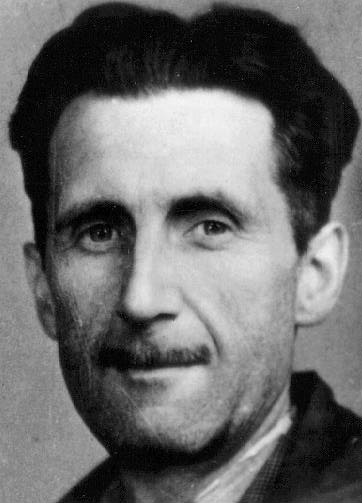
Orwell’s press card portrait, 1943
Behind all the ballyhoo that is talked about “godless” Russia and the “materialism” of the working class lies the simple intention of those with money or privileges to cling to them. Ditto, though it contains a partial truth, with all the talk about the worthlessness of social reconstruction not accompanied by a “change of heart”. The pious ones, from the Pope to the yogis of California, are great on the “change of heart”, much more reassuring from their point of view than a change in the economic system. Petain attributes the fall of France to the common people’s “love of pleasure”. One sees this in its right perspective if one stops to wonder how much pleasure the ordinary French peasant’s or working-man’s life would contain compared with Petain’s own.
The damned impertinence of these politicians, priests, literary men, and what-not who lecture the working-class socialist for his “materialism”! All that the working man demands is what these others would consider the indispensable minimum without which human life cannot be lived at all. Enough to eat, freedom from the haunting terror of unemployment, the knowledge that your children will get a fair chance, a bath once a day, clean linen reasonably often, a roof that doesn’t leak, and short enough working hours to leave you with a little energy when the day is done. Not one of those who preach against “materialism” would consider life livable without these things. And how easily that minimum could be attained if we chose to set our minds to it for only twenty years! To raise the standard of living of the whole world to that of Britain would not be a greater undertaking than the war we have just fought. I don’t claim, and I don’t know who does, that that wouldn’t solve anything in itself. It is merely that privation and brute labour have to be abolished before the real problems of humanity can be tackled.
The major problem of our time is the decay of the belief in personal immortality, and it cannot be dealt with while the average human being is either drudging like an ox or shivering in fear of the secret police. How right the working classes are in their “materialism”! How right they are to realize that the belly comes before the soul, not in the scale of values but in point of time! Understand that, and the long horror that we are enduring becomes at least intelligible. All the considerations are likely to make one falter — the siren voices of a Petain or of a Gandhi, the inescapable fact that in order to fight one has to degrade oneself, the equivocal moral position of Britain, with its democratic phrases and its coolie empire, the sinister development of Soviet Russia, the squalid farce of left-wing politics — all this fades away and one sees only the struggle of the gradually awakening common people against the lords of property and their hired liars and bumsuckers.
The question is very simple. Shall people […] be allowed to live the decent, fully human life which is now technically achievable, or shan’t they? Shall the common man be pushed back into the mud, or shall he not? I myself believe, perhaps on insufficient grounds, that the common man will win his fight sooner or later, but I want it to be sooner and not later — some time within the next hundred years, say, and not some time within the next ten thousand years. That was the real issue of the Spanish war, and of the last war, and perhaps of other wars yet to come.
George Orwell, “Looking back on the Spanish War”, New Road, 1943 (republished in England, Your England and Other Essays, 1953).
June 18, 2019
QotD: The birth of Jesus and the open concept house
Peasant homes in first century Bethlehem were designed with what we would today call an “open concept.” They typically had one large room with the nicer living space in an open loft or on the roof, while the main floor area was where the family’s animals would be brought for safekeeping at night. The guestroom that was unavailable to Jesus, Mary, and Joseph was that loft or roof space, and the big room where they stayed instead served as the kitchen, living room, dining room, and farmyard all at once. The defining feature of Jesus’ birthplace was not isolation, as we often tend to think, but an utter lack of privacy: Mary delivered in a crowded farmhouse with few, if any, interior walls.
And that was perfectly normal, if not exactly desirable, for our modern fixation on the open floor plan is a historical anomaly. It flies in the face of literally millennia of consensus that more rooms is better, and it is a dreadful mistake. The last 70 years of open concept construction and remodeling has left us with dysfunctional houses, homes that are less conducive to hospitality, less energy efficient, and more given to mess.
Bonnie Kristian, “Open concept homes are for peasants”, The Week, 2019-05-12.
June 17, 2019
QotD: Betteridge’s Law of Headlines
Ian Betteridge, “TechCrunch: Irresponsible journalism”, Techechnovia.co.uk, 2009-02-23. (Link goes to archived page at the Wayback Machine.)
June 16, 2019
QotD: Critical gender studies
But remember that the generic people we meaninglessly call “women” are beautiful and powerful and their arbitrary womanhood should be constantly celebrated. Women must band together and lift each other up. Women must be represented equally in all of our institutions. Women are truly wonderful, splendid, special creatures.
But there is nothing special about women. Literally anyone can be a woman. A woman is not anything in particular. A person with a penis can be a woman. A person with a vagina can be a woman. If a bucket of sand came to life and wanted to be a woman, it could be a woman. There is no aspect of womanhood that is ingrained or biological or inaccessible to males. And womanhood certainly has nothing at all to do with your body parts.
But if you don’t have a uterus then you shouldn’t be giving your opinion on women’s rights. No uterus, no opinion. That’s the motto. We’re tired of men making decisions about women’s bodies.
But there is no such thing as a woman’s body. Transwomen are women, too. A transwoman is just a much a woman as any other woman. There is absolutely no difference between the two and to suggest otherwise is the height of bigotry.
Matt Walsh, “Explaining Progressive Gender Theory To Right Wing Bigots”, The Daily Wire, 2019-05-14.
June 15, 2019
QotD: The early Bauhaus
The ideas of the modernists were generally expressed in the imperative mood and were frequently of a pseudo-mystical nature. Professor Curl’s description of some of the practices prevalent in the early Bauhaus make for hilarity; cranks are always a source of fun. In the early days, the modernists of the Bauhaus tended to a form of health mysticism involving vegetarianism, garlic paste, and regular enemas. Far more important, however, was their early and inherent attraction to totalitarianism. As the author points out, Gropius and Miës van der Rohe had no objection to Nazism other than that the Nazis failed to commission work from them. Gropius was an opportunistic anti-Semitic snob who espoused communism until it was no longer convenient for his career. Miës sucked up to the Nazis as much as he was able. The fact that both of them emigrated from Germany has done much to obscure their accommodation with the Nazis and even allowed the modernists to pose as anti-Nazi — though the most important proponent of modernism in America, Philip Johnson, had for some years been a rank Nazi in more than merely nominal terms. Moreover, as Professor Curl points out, the Nazi aesthetic, like the communist, had much in common with modernism.
Theodore Dalrymple, “Crimes in Concrete”, First Things, 2019-06.
June 14, 2019
QotD: Kink-shaming
And now sexual perverts (among whom, on occasion, I happily count myself) are the latest group to demand “inclusion”. Please! When I was young, we thought nothing more desirable than being An Outsider – why are the young of today so obsessed with getting a tick on the register, rather than playing hooky? There is a happy place between believing that no one should be excluded on the basis of race, sex or social class, and believing that official validation of every life choice any person freely makes are the same. Someone who likes dressing up in a gimp mask is not Rosa Parks, and I find the increasing lack of ability to differentiate between the two in some quarters highly risible at best and downright insulting at worst.
The latest snowflake flutter is “Don’t kink-shame me!”. At a Vancouver university last year, a man insisting he was an “adult baby” pestered a university nurse to change his dirty nappy and perved over his repulsed female classmates. A whistle-blowing workplace-safety director was sacked for standing up for the women. In Wolverhampton a few months back, a tattooist calling himself “Dr Evil” was charged with grievous bodily harm after slicing ears and nipples from paying customers. He was reported as having support from “the body-modification community” who set up a petition in his favour.
Perhaps the most gobsmacking illustration of how mainstream perversion has become is a photograph of a Pride march showing a gaggle of kiddies (whose parents obviously got the memo that Pride is family-friendly) staring in what looks like confused repulsion at a man in front of them who leads a group of men, crawling on all fours and dressed as dogs, on leashes. Personally, I don’t think Pride needs to be family-friendly – it’s about the very adult desire to connect your genitalia to the genitalia of the same sex, which is pretty specific. But neither is it about kinks. Considering its origins, lesbians have far more right to be there than men who pretend to be dogs at weekends. Lesbians are now routinely removed from Pride marches by police due to their insistence that lesbians don’t have penises and the hurty feelz this causes in people who believe they can and do.
I’m a broad-minded broad, so I’m not offended by these people – but I do despise them for being so wimpy that they need their kink validated by straight society. When did perverts start being ashamed to be perverts and need to be a community? “Community” used to be such a jolly word, redolent of cheery singing or a nice place to land on the Monopoly board. Now it just means a bunch of whiners whining about stuff.
Julie Burchill, “The pervert community? Oh please”, Spiked!, 2019-05-08
June 13, 2019
QotD: Justice and Social Justice
Sam Duncan, in a comment posted to “Elsewhere (234)”, DavidThompson, 2017-06-01.
June 12, 2019
QotD: Militant Islam and the Western media
“I’m always willing to stand with the guys in Denmark,” says Steyn. “But the reason all these left-wing Europeans end up on a stage with an eccentric right-wing Canadian like me is that no real A-list stars will agree to be there. At the tenth anniversary both the American State Department and the British Foreign Office even issued official warnings to their citizens to stay away from the Danish Parliament, where we were holding the ceremony. What kind of signal does that send? Why don’t the artists show up for these things? Why aren’t the movie stars there? When Theo Van Gogh was assassinated, no one at the Oscars had a word to say about it. They didn’t even put him in the obituary montage. And yet they congratulate themselves on their moral courage. George Clooney wears a Je suis Charlie Hebdo pin. Helen Mirren wears a brooch. But they were not with Charlie. Those guys died alone. This is gesture politics. No one would stand with them. I honour the genuine courage of Ayaan Hirsi Ali. Ayaan’s point is absolutely right — in the end you have to share the risk. Charlie Hebdo supported the Danish cartoonists, but the rest of the world didn’t. If every newspaper had published those cartoons, there would have been no point in killing anyone because there would have been too many people to kill. Instead, nobody stands with them, and so the small publication that does ends up massacred. The writer of the comic strip Doonesbury in America [Garry Trudeau] attacked the decision of PEN to honour Charlie Hebdo. Well, they were lying on the floor, bleeding and dying. I don’t think they noticed.”
The Danish cartoon controversy was actually the first moment the American press had been challenged by Islam and could do something in response — and their reaction was a spectacular failure of will and principle. In several countries around the world, it was actually against the law to publish the Danish cartoons, but many editors stepped up, published them anyway, and suffered the civil and criminal consequences. In the United States — where there was no such law — no major publication would print them.
Mark Steyn, interviewed by John Bloom, “Mark Steyn, Cole Porter and Free Speech”, Quadrant, 2017-05-11.
June 11, 2019
QotD: Advice to young men
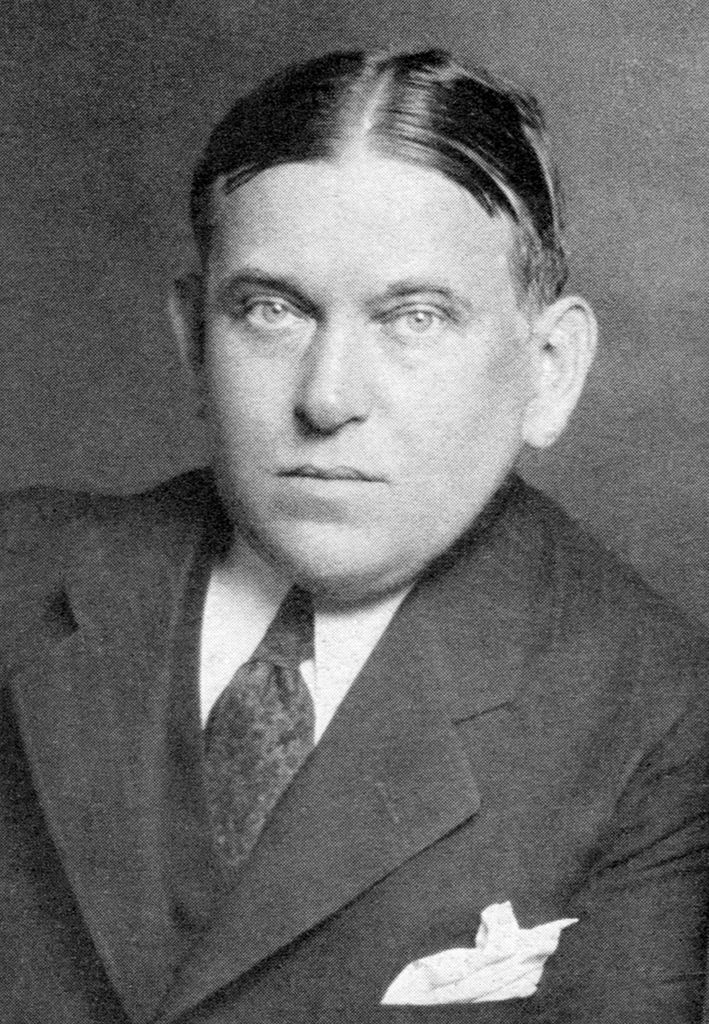
H.L. Mencken in 1928.
Photo by Ben Pinchot for Theatre Magazine, August 1928.
Since Philip Dormer Stanhope, Earl of Chesterfield, published his celebrated letters to his morganatic son, in 1744, there has been no adequate book, in English, of advice to young men. I say adequate, and the adjective tells the whole story. There is not, of course, a college president or a boss Y.M.C.A. secretary, or an uplifting preacher in the United States who has not written such a book, but all of them are alike filled with bilge. They depict and advocate a life that no normal young man wants to live, or could live without ruin if he wanted to. They are full of Sunday-school platitudes and Boy Scout snuffling. If they were swallowed by the youth of today the Republic of tomorrow would be a nation of idiots.H.L. Mencken, “Another Long-Awaited Book”, Chicago Tribune, 1926-09-12.