
Price controls – both price ceilings and price floors – reduce the quantities of price-controlled goods and services that consumers actually get. Forcing the money price of a good or service down with a government-imposed price ceiling reduces the amount of this good or service that consumers actually get by reducing the quantity supplied (from what that quantity would be were the money price not forced downward). Forcing the money price of a good or service up with a government-imposed price floor reduces the amount of this good or service that consumers actually get by reducing the quantity demanded (from what that quantity would be were the money price not forced upward). In both cases, the government intervention reduces economic output.
Minimum wages, statutory prohibitions on so-called “price gouging,” and other price controls reflect irrational mysticism. These controls are all premised on the notion that by forcibly changing the nominal reported value of a good or service – that is, by forcibly changing the name of the value – the real value of the good or service will change to correspond to the dictated name. It’s a notion no less batty than is the belief, say, that the New York Times can actually change the number of people killed in a terrorist attack by changing the name of the number. Yet who believes that if, say, 18 people are killed in a terrorist attack that the number of dead people will miraculously be reduced by three if the New York Times reports that “15 people were killed in a terrorist attack”? The answer, of course, is no one. Indeed, anyone who would suppose that reality is changed simply when newspaper reports of it are changed is recognized as being too far detached from reality to take seriously.
Those who support price controls are just as detached from reality. The market-determined price of a good or service is as accurate a report as is possible of the value of each unit of a good or service. This value will not move up or down simply if the government orders it to move up or down.
[…]
None of this matters to proponents of price controls. Such proponents are satisfied with the fact that the names of the values of good or services are changed in ways that please the eye and ear of the economically illiterate. If it is now possible to say that the highest name of the value of a gallon of gasoline is $1.00, then these proponents are content to believe that the real value is indeed $1.00. If it is now possible to say that the lowest name of the value of an hour of low-skilled labor is $7.25, then these proponents are content to believe that the real value is indeed $7.25.
It’s a foolish superstition. It is, however, a superstition that is very widespread, especially among those who today fancy themselves to be immune to superstitions.
Don Boudreaux, “Quotation of the Day…”, Café Hayek, 2017-06-19.
July 10, 2019
QotD: Price controls
July 9, 2019
QotD: Tariffs
Over and above the general point that we don’t want to limit trade nor imports there’s another worry with tariffs and trade wars. Which is what the International Monetary Fund is complaining about. The imposition of more tariffs is a disruption to that global economy. One that is going to reduce growth, the very thing we all desire.
Tim Worstall, “IMF Says The U.S. And China Trade Tariffs Are A Major Risk To World Growth”, Seeking Alpha, 2019-06-07.
July 8, 2019
QotD: Orwell on capitalism versus socialism
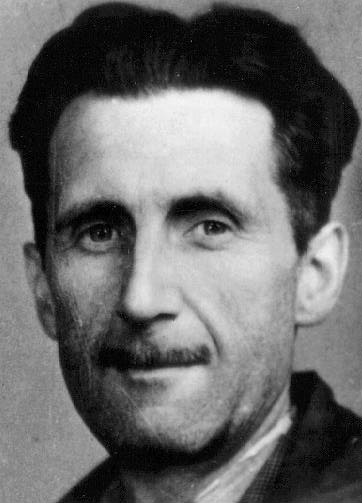
Orwell’s press card portrait, 1943
No one can question the dirtiness of international politics from 1870 onwards: it does not follow that it would have been a good thing to allow the German army to rule Europe. It is just possible that some rather sordid transactions are going on behind the scenes now, and that current propaganda “against Nazism” (cf. “against Prussian militarism”) will look pretty thin in 1970, but Europe will certainly be a better place if Hitler and his followers are removed from it. Between them these two books sum up our present predicament. Capitalism leads to dole queues, the scramble for markets, and war. Collectivism leads to concentration camps, leader worship, and war. There is no way out of this unless a planned economy can somehow be combined with the freedom of the intellect, which can only happen if the concept of right and wrong is restored to politics.
Both of these writers are aware of this, more or less; but since they can show no practicable way of bringing it about the combined effect of their books is a depressing one.
George Orwell, “The Road to Serfdom by F.A. Hayek / The Mirror of the Past by K. Zilliacus”, Observer, 1944-04-09.
July 7, 2019
QotD: Speaking for the dead
Ask the men and women who stood on top of the Trade Center. Ask them and they will tell you: pass this amendment.
Unlike Congressman Cunningham, I wouldn’t presume to speak for those who died atop the World Trade Center. For one thing, citizens of more than 50 foreign countries, from Argentina to Zimbabwe, were killed on 9/11. Of the remainder, maybe some would be in favor of a flag-burning amendment; and maybe some would think that criminalizing disrespect for national symbols is unworthy of a free society. And maybe others would roll their eyes and say that, granted it’s been clear since about October 2001 that the Federal legislature has nothing useful to contribute to the war on terror and its hacks and poseurs prefer to busy themselves with a lot of irrelevant grandstanding with a side order of fries, they could at least quit dragging us into it.
And maybe a few would feel as many of my correspondents did last week about the ridiculous complaints of “desecration” of the Koran by US guards at Guantanamo – that, in the words of one reader, “it’s not possible to ‘torture’ an inanimate object”.
That alone is a perfectly good reason to object to a law forbidding the “desecration” of the flag. For my own part, I believe that, if someone wishes to burn a flag, he should be free to do so. In the same way, if Democrat Senators want to make speeches comparing the US military to Nazis and the Khmer Rouge, they should be free to do so. It’s always useful to know what people really believe.
Mark Steyn, “The Advantage of Knowing What People Really Think”, SteynOnline, 2017-06-14 (originally published in The Chicago Sun-Times, 2005-06-26).
July 6, 2019
QotD: How to learn
That fits the pattern of most modern schooling at all levels. Someone else decides what you should learn, tells you what you must do to learn it, and makes some attempt to make sure you follow his instructions. It is not a model I think highly of. A much superior model in my view, if you can pull it off, is to get someone to learn something primarily because he finds it interesting. The best way of doing that is to provide students with things to read that are worth reading on their own, not things they read only because they are ordered to. Not even things they read only because they think the labor of reading them will pay off in future benefit.
That view of education is why both children of my present marriage were unschooled. It is also why all of my nonfiction books, with the partial exception of Price Theory, were targeted at the proverbial intelligent layman. They can be, and sometimes are, used as textbooks, but they were written with the assumption that if the reader did not find a chapter worth finishing he was likely not to finish it.
David Friedman, “Thoughts on Literature, Economics and Education”, Ideas, 2017-05-01.
July 5, 2019
QotD: The paradox of tolerance
This is now referred to as “the paradox of tolerance.”
Popper argues that unlimited tolerance is self-defeating. If a tolerant society is tolerant of the intolerant, the intolerant will defeat the tolerant. Therefore, tolerance is all well and good, but to defend itself, it must maintain a certain degree of intolerance towards the intolerant.
It it this defense of intolerance that radicals use to justify violence against their political opponents.
If one dares to question the legitimacy of “direct action” from communist groups against their political opponents, these groups will quickly cite this paradox of tolerance. When fascists are shooting up mosques and synagogues, it’s difficult to defend them against mere milkshakes.
Which is why the paradox of tolerance is constantly brought up to defend violence: It’s hard to argue against. Only the most strict pacifist will argue against violence in (the name of) self-defense. Karl Popper was right to point out that a tolerant society that is tolerant toward its enemies will be destroyed.
Nathan Kreider, “Misconceptions of the Paradox of Tolerance”, Being Libertarian, 2019-05-31.
July 4, 2019
QotD: Updating traditional curses
Modern Gypsy curse: may you one day trend on TwitterDavid “Iowahawk” Burge, Twitter, 2016-08-16.
July 3, 2019
QotD: Elon Musk as a modern-day Ferdinand DeLesseps
I used to love Elon like everyone else. I still think that having four or five billionaires in a space race against each other is finally the world I thought I was going to get growing up reading Heinlein. The Tesla Model S was probably one of the most revolutionary cars of the last 50 years. But he lost me when he committed outright fraud in the Solar City – Tesla deal and since then have only become more skeptical about he and Tesla.
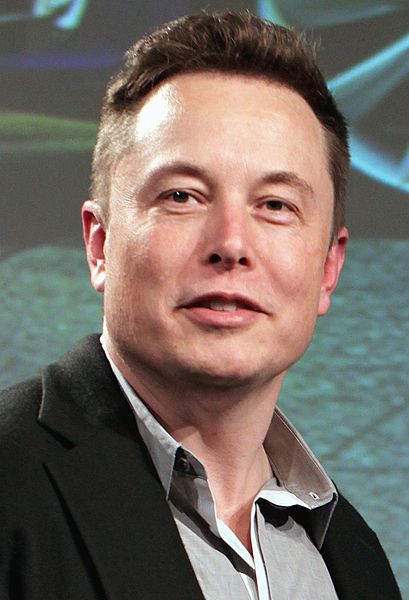
Elon Musk at the 2015 Tesla Motors annual meeting.
Photo by Steve Jurvetson via Wikimedia Commons.I sort of laugh when folks tell me that really smart successful rich people believe in Tesla. You mean like James Murdoch, on the board of Tesla and who also was lost his entire investment in Theranos? Or like Larry Ellison, an adviser and fan of Elizabeth Holmes who invested $1 billion in Tesla just 6 months ago and has already lost 40% of it? The window on this is probably closing, but over the last 10 years if you wanted to get Silicon Valley investors to throw a lot of money at you, find a traditional bricks and mortar business and devise a story in which you take that industry and convert its economics to that of the networked software world (see: Uber, WeWork, Tesla, and even Theranos in some of its strategic pivots).
Or how about true millennials and Elon Musk? Name a wealthy millennial supporter of Elon Musk and Tesla and I can bet you any amount of money they have not looked at Tesla’s balance sheet or cash flow or the details of its global demand trends. They have not thought about its dealership strategy or manufacturing strategy and the cash flow implications of these. They just like what Elon says. It sounds big and visionary. They buy into Elon’s formulation that he is saving the environment and everyone opposed to him is in a cabal with big oil (ignoring the fact that Elon routinely uses his Gulfstream VI to commute distances less than 60 miles). So saying that rich millenials adore Elon is effectively saying that they want to be associated with the same things Elon says he is for — the environment and space travel et al.
Elon Musk is Ferdinand DeLesseps. He is PT Barnum. He is Elizabeth Holmes. He is the pied piper. He is fabulous at spinning visions and making them sound science-y. But he is not Tony Stark. There is a phenomenon with Elon Musk that everyone thinks he is brilliant until they hear him speak about something about which they have domain knowledge, and then they realize he is full of sh*t. For example, no one who knows anything about transportation or physics or basic engineering has thought his Boring Company and Hyperloop make any sense at all. His ideas would have been great cover stories for Popular Mechanics in the 1970’s, wowing 13-year-old boys like me with pictures of mile-long cargo blimps and flying RV’s. He is like a Marvel movie that spouts science that is just believable-enough sounding that it moves the plot along but does not stand up to any scrutiny.
All of this would be harmless if he was not running a public company. I don’t really care about the rich folks who were duped by Elizabeth Holmes, but hundreds of thousands of small millenial investors who have totally bought into the Elon hype are literally putting their last dollar into Tesla, and sometimes borrowing more. Tesla shorts often laugh at these folks on Twitter, calling them “bagholders,” but it is a tragedy. Unless Tesla finds a sugar daddy sucker, and the odds of that are getting longer, I think it is going to end badly for many of these investors.
As a disclosure, I have been short Tesla via puts for a while now. It you really want to understand Elon, the best book I can recommend is The Path Between The Seas about the building of the Panama Canal. First, it is a great book you should read no matter what. And second, Ferdinand DeLesseps is the best analog I can find for Musk.
Warren Meyer, “People Who Express Opinions Outside of their Domain Seldom Have Really Looked into it Much”, Coyote Blog, 2019-05-28.
July 2, 2019
QotD: Italy and the Nazi Final Solution
Surprisingly given the bad associations I have with the word “fascist”, Mussolini’s Italy may win third prize in the Righteous Among The Nations stakes. [Hannah] Arendt describes it [in Eichmann in Jerusalem] as “sabotaging” the Final Solution within its borders despite nominal alliance with Germany:
Colorized portrait of Italian Fascist leader Benito Mussolini in 1940.
Colorization by Roger Viollet via Wikimedia Commons.
The gentlemen of the Foreign Office could not do much about it, because they always met the same subtly veiled resistance, the same promises and the same failures to fulfill them. The sabotage was all the more infuriating as it was carried out openly, in an almost mocking manner. The promises were given by Mussolini himself or other high-ranking officials, and if the generals simply failed to fulfill them, Mussolini would make excuses for them on the ground of their “different intellectual formation”. Only occasionally would the Nazis be met with a flat refusal, as when General Roatta declared that it was “incompatible with the honor of the Italian Army” to deliver the Jews from Italian-occupied territory in Yugoslavia to the appropriate German authorities.
An element of farce had never been lacking even in Italy’s most serious efforts to adjust to its powerful friend and ally. When Mussolini, under German pressure, introduced anti-Jewish legislation in the late thirties he stipulated the usual exemptions – war veterans, Jews with high decorations, and the like – but he added one more category, namely, former members of the Fascist Party, together with their parents and grandparents, their wives and children and grandchildren. I know of no statistics relating to this matter, but the result must have been that the great majority of Italian Jews were exempted. There can hardly have been a Jewish family without at least one member in the Fascist Party, for this happened at a time when Jews, like other Italians, had been flocking for almost twenty years into the Fascist movement, since positions in the Civil Service were open only to members. And the few Jews who had objected to Fascism on principle, Socialists and Communists chiefly, were no longer in the country. Even convinced Italian anti-Semites seemed unable to take the thing seriously, and Roberto Farinacci, head of the Italian anti-Semitic movement, had a Jewish secretary in his employ…
What in Denmark was the result of an authentically political sense, an inbred comprehension of the requirements and responsibilities of citizenship and independence – “for the Danes … the Jewish question was a political and not a humanitarian question” (Leni Yahil) – was in Italy the outcome of the almost automatic general humanity of an old and civilized people.
Scott Alexander, “Book review: Eichmann in Jerusalem”, Slate Star Codex, 2017-01-30.

July 1, 2019
QotD: Canada Day, if we have to…
The reasons for this bouncy nihilism vary: either because nationalism is icky, or because Canada’s lack of nationalism is in fact a kind of inverted nationalism, a way of distinguishing ourselves from other nations. Anomie is part of our unique cultural identity. Yadda yadda yadda never had a civil war blah blah blah we’re a shy, diffident country yadda yadda something about the wilderness, and we’re done.
It’s interesting that this anti-nationalism, mostly on the left, should coincide with the rise of nationalism — mostly imported, in one of the many ironies of this debate — on the right. The ur-text among the latter is that interview Justin Trudeau gave the New York Times Magazine, in which he referred to Canada as the world’s “first post-national state,” inasmuch as it has no “core identity, no mainstream,” thus confirming populist suspicions of him as a treasonous stooge of globalist elites.
Andrew Coyne, “On Canada Day let us remind ourselves we have done well, even as we strive to do better”, National Post, 2017-07-01.
June 30, 2019
QotD: The humble dishwasher
Dishwasher technology is already pretty good. Yes, we haggle over which things should be loaded where. And then we close the door, and some time later, open it again to find our dishes clean. It’s a miracle. Miracles are not ordinarily subject to major technical advances.
But there’s another sense in which dishwashers are too good to be made sexy, a more important one: Dishwashers do the whole job of, you know, washing dishes. There is no scope for the chef’s skill. Your refrigerator holds your culinary creations as they await unveiling; your range midwifes the moment of transformation under your careful control and with your vigilance. Even those who don’t spent a lot of time putting fabulous meals together often entertain extensive fantasies about being the sort of person who does. And express those fantasies through a $10,000 steel box.
No one fantasizes about being the sort of person who puts plates away. And because even basic dishwashers are so efficient, they kill any fantasies we might develop about buying a lavish model so that we can be known for our sparkling-clean tableware. The dishwasher offers us many hours of extra leisure, but no scope for imagination. And so after the argument is over, and the dishes are put away, it retreats to the back of our mind. It can stay there.
Megan McArdle, “A $2,000 Dishwasher Will Never Impress Me”, Bloomberg View, 2017-05-25.
June 29, 2019
QotD: Blogging versus social media
Glenn “Instapundit” Reynolds, The Social Media Upheaval, 2019. (link goes to Althouse, who posted this quote based on the Kindle edition)
June 28, 2019
QotD: “Intelligence” is just a noun
We have said that we will be drawing most heavily on data from the classical tradition. That implies that we also accept certain conclusions undergirding that tradition. To draw the strands of our perspective together and to set the stage for the rest of the book, let us set them down explicitly. Here are six conclusions regarding tests of cognitive ability, drawn from the classical tradition, that are by now beyond significant technical dispute:
- There is such a thing as a general factor of cognitive ability on which human beings differ.
- All standardized tests of academic aptitude or achievement measure this general factor to some degree, but IQ tests expressly designed for that purpose measure it most accurately.
- IQ scores match, to a first degree, whatever it is that people mean when they use the word intelligent or smart in ordinary language.
- IQ scores are stable, although not perfectly so, over much of a person’s life.
- Properly administered IQ tests are not demonstrably biased against social, economic, ethnic, or racial groups.
- Cognitive ability is substantially heritable, apparently no less than 40 percent and no more than 80 percent.
Charles Murray, “The Bell Curve Explained”, American Enterprise Institute, 2017-05-20.
June 27, 2019
QotD: “Misandropologies”
Even though black women live longer than white men in the USA … and even though women control more disposable wealth than men do … and even though women are snagging most of the college degrees these days … and even though the law and public sympathy heavily lean toward women in any dispute between the sexes … and even though the media portray men as either bumbling incompetents or bloodthirsty rape-monsters … and even though men are far more likely to commit suicide, die on the job, or be homeless than women … we’re still lectured by these bitter fat blobs and their testosterone-free male enablers that misandry isn’t real because men still benefit from certain mysterious “systemic” and “institutional” advantages that none of these assholes seem able to enumerate even when calmly asked to do so.
It’s a funny sort of “patriarchy” we inhabit.
To allege that women are capable of malice and violence and deception is only to allege that they’re human. To expect anything less of them would be dehumanizing and patronizing — which, ironically, shares a root word with “patriarchy.” When feminism ditched the “equity” rhetoric in favor of a menses-splattered pagan goddess religion that depicts men as irredeemable worker drones and women as innocent angels, men who weren’t entirely asleep or pussy-whipped realized that the rules had changed and that they were under attack. But even to notice that a lot of women openly exult in hating men gets you labeled a “woman-hater.”
Misandry is real, and those who seek to deny or justify it deserve a stern paddling. And even if you acknowledge that it’s real, don’t try to make excuses for it using some postmodern gobbledygook, because then you become a misandry apologist — a misandropologist. Just admit that women can be every bit as mean, nasty, horrid, foul, vile, shitty, and hateful as men. It’s part of the human condition.
Naïve as it may be, I envision an enlightened future where there is no longer any misogyny or misandry — only a beautiful, sweet, shared sense of misanthropy.
Jim Goad, “Confronting the Misandropologists”, Taki’s Magazine, 2017-05-08.
June 26, 2019
QotD: “Right-wing central planning is as foolish as left-wing central planning”
The real world is populated by politicians and lobbyists rather than philosopher-kings, but a government of philosopher-kings that tried to micromanage the economy in the way Beattie suggests would fail, just as all similar attempts at putting the economy under political discipline have failed. Right-wing central planning is as foolish as left-wing central planning.
Kevin D. Williamson, “Right-wing central planning is as foolish as left-wing central planning”, National Review, 2017-06-12.


