
A book excerpt in Foreign Policy caught my eye. It is by Thomas E Ricks, a long time critic of the US military’s leadership, and it is about the US Army’s failed command and control (C²) system which has been adopted, holus bolus, by Canada. I’m guessing that the article was written for American military officers because it is full of the bafflegab and jargon that is characteristic of their system ~ never use a short, simple, English word when a long, fancy one, with French or, preferably, German roots will do.
The crux of the author’s complaint is that military commanders have been relegated to the status of administrators and managers because the US Army is all about process and seems to care too little about results. The author complains, with reason, that headquarters, from battalion to the highest levels, have gotten larger and larger and more and more complex but appear to actually accomplish less and less. I think the same complaints can be, validly, made about Canada.
It is not surprising that Canada, like Australia, Britain, Chile and Denmark, has adapted at least some of the US military’s system ~ the USA has, after all, the most powerful military in the world. They must be doing something right, right?
Actually, since about 1950s, the US military has been distinguished by blunders and defeats at least as often as we have seen periodic displays of operational prowess: Viet Nam, Bay of Pigs, the failed hostage rescue in Iran, the invasion of Grenada, the second Iraq War all come to mind. The American military legacy has even spawned American satirical films about (constantly failing) American military command. That’s something I though only the Brits could do.
Ted Campbell, “Military command and control”, Ted Campbell’s Point of View, 2017-09-16.
October 25, 2019
QotD: Command and control in the US military
October 24, 2019
QotD: “Binders full of women”
I had the chance to pull together a cabinet, and all the applicants seemed to be men … I went to a number of women’s groups and said, “Can you help us find folks?” and they brought us whole binders full of women.
Now, I’ll happily grant that the phrase “binders full of women” is an awkward one. It sounds like the menus they bring out on Jeffrey Epstein’s plane when Bill Clinton and Harvey Weinstein settle in for a weekend getaway.
But here’s the thing: What Romney did was exactly what feminist groups insist elected politicians should do. He saw that there were “too many” men in the applicant pool, so he reached out to some feminist groups and asked for help. Some feminist groups reached out to him — and he listened to them, too. And then he hired more women.
The monster!
Here’s Jon Stewart mocking him for it. Here’s Ronan Farrow. And here’s Bill Maher, a man who must be sweating like a hooker in church over Hollywood’s post-Weinstein zero-tolerance for piggishness toward women.
Jonah Goldberg, “Binders Full of Asininity”, National Review, 2017-10-13.
October 23, 2019
QotD: Climbing Maslow’s Pyramid again
If people want little orchards of native (well, you know) apples then people should have little orchards of native apples. As long as, of course, they’re creating and maintaining those little orchards of native apples at their own expense. This is, after all, what liberalism means, that the peeps get to do what the peeps want. And if we’re to add some Burkean conservatism so that it’s the little platoons sorting it out for themselves then all the better.
As long as no one is being forced to pay for this through taxation then what could possibly be the problem?
At another level this is climbing Maslow’s Pyramid again. At one level of income we’ll take fruit in the only way we can, seasonally and in a limited manner. We get richer, technology advances, we can have apples year round – but that does mean trade, commercially sized operations and the inevitable limited selection. We get richer again and now we’ve more than sufficiency, let’s have that variety back again.
After all, it’s not as if we’re not seeing this right across the food chain, is it?
That roast beef of Olde Englande was most certainly better than the bully beef from Argentina or the Fray Bentos pie. As is the best grass fed British beef of today. But we moved through the cycle to get from most not being able to eat any beef, to all being able to have bad beef, to now again thinking more about the quality – we have a more than sufficiency of beef and can be picky about it.
Tim Worstall, “I fully approve of this”, Tim Worstall, 2017-10-22.
October 22, 2019
QotD: The Soviet contribution to defeating Hitler
Between 1941 and 1945 so much praise had been heaped upon Uncle Joe, the defenders of Stalingrad, heroic factory workers of the Volga and suchlike, that thereafter it proved a hard task to disabuse many people of their illusions about Mother Russia. They were not wrong in believing that hundreds of thousands of young British and American men were alive in 1945 because Red soldiers had done more than their rightful share of dying.
Any examination of the Bolshevik revolution and its legacy must linger on the Great Patriotic War, because that victory remains the only indisputable and durable achievement the rulers of Russia can boast since 1917, save the invention of some remarkable weapons systems and spacecraft.
Max Hastings, “The centenary of the Russian revolution should be mourned, not celebrated”, The Spectator, 2016-12-10.
October 21, 2019
QotD: Poverty versus relative poverty
However, viewers took to Twitter to insist that Andy and Kim Leamon and their two children from Southampton who have £170 a week to spend on food, clothes and socialising after paying their mortgage and bills are certainly not struggling.
It’s not, by local standards, exactly great riches, to be sure. But that is £2,210 of disposable income per person per year. That’s on the fringes of the top 30% of all global incomes. 70% or so are poorer.
Note again, this is their disposable income, after housing, bills and taxes, the global income number is before all of that. Or, as we might also put it, this is unimaginable riches by global or historical standards.
Tim Worstall, “Well, yes, there’s a point here”, Tim Worstall, 2017-10-20.
October 20, 2019
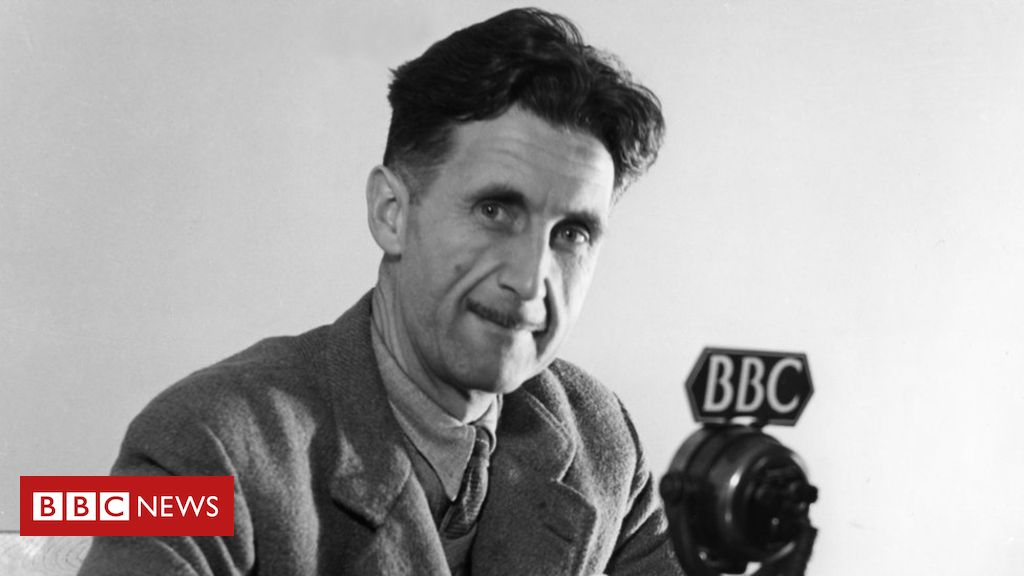
QotD: Why Orwell wrote Nineteen Eighty-Four
Many thanks for your letter. You ask whether totalitarianism, leader-worship etc. are really on the up-grade and instance the fact that they are not apparently growing in this country and the USA.I must say I believe, or fear, that taking the world as a whole these things are on the increase. Hitler, no doubt, will soon disappear, but only at the expense of strengthening (a) Stalin, (b) the Anglo-American millionaires and (c) all sorts of petty führers of the type of de Gaulle. All the national movements everywhere, even those that originate in resistance to German domination, seem to take non-democratic forms, to group themselves round some superhuman führer (Hitler, Stalin, Salazar, Franco, Gandhi, De Valera are all varying examples) and to adopt the theory that the end justifies the means. Everywhere the world movement seems to be in the direction of centralised economies which can be made to “work” in an economic sense but which are not democratically organised and which tend to establish a caste system. With this go the horrors of emotional nationalism and a tendency to disbelieve in the existence of objective truth because all the facts have to fit in with the words and prophecies of some infallible führer. Already history has in a sense ceased to exist, ie. there is no such thing as a history of our own times which could be universally accepted, and the exact sciences are endangered as soon as military necessity ceases to keep people up to the mark. Hitler can say that the Jews started the war, and if he survives that will become official history. He can’t say that two and two are five, because for the purposes of, say, ballistics they have to make four. But if the sort of world that I am afraid of arrives, a world of two or three great superstates which are unable to conquer one another, two and two could become five if the führer wished it. That, so far as I can see, is the direction in which we are actually moving, though, of course, the process is reversible.
As to the comparative immunity of Britain and the USA. Whatever the pacifists etc. may say, we have not gone totalitarian yet and this is a very hopeful symptom. I believe very deeply, as I explained in my book The Lion and the Unicorn, in the English people and in their capacity to centralise their economy without destroying freedom in doing so. But one must remember that Britain and the USA haven’t been really tried, they haven’t known defeat or severe suffering, and there are some bad symptoms to balance the good ones. To begin with there is the general indifference to the decay of democracy. Do you realise, for instance, that no one in England under 26 now has a vote and that so far as one can see the great mass of people of that age don’t give a damn for this? Secondly there is the fact that the intellectuals are more totalitarian in outlook than the common people. On the whole the English intelligentsia have opposed Hitler, but only at the price of accepting Stalin. Most of them are perfectly ready for dictatorial methods, secret police, systematic falsification of history etc. so long as they feel that it is on “our” side. Indeed the statement that we haven’t a Fascist movement in England largely means that the young, at this moment, look for their führer elsewhere. One can’t be sure that that won’t change, nor can one be sure that the common people won’t think ten years hence as the intellectuals do now. I hope they won’t, I even trust they won’t, but if so it will be at the cost of a struggle. If one simply proclaims that all is for the best and doesn’t point to the sinister symptoms, one is merely helping to bring totalitarianism nearer.
You also ask, if I think the world tendency is towards Fascism, why do I support the war. It is a choice of evils — I fancy nearly every war is that. I know enough of British imperialism not to like it, but I would support it against Nazism or Japanese imperialism, as the lesser evil. Similarly I would support the USSR against Germany because I think the USSR cannot altogether escape its past and retains enough of the original ideas of the Revolution to make it a more hopeful phenomenon than Nazi Germany. I think, and have thought ever since the war began, in 1936 or thereabouts, that our cause is the better, but we have to keep on making it the better, which involves constant criticism.
George Orwell, responding to a letter from Noel Willmett, 1944-05-18.
October 19, 2019
QotD: Writing to length
So why do inexperienced authors write long? I suspect it’s because they assume that they’ll get only one chance to impress the editor, which causes them to empty their bag of tricks every time they write a piece. (This reminds me of another of my critical commandments: Don’t tell everything you know.) Flashiness is a sin of youth. The older and more self-assured a writer is, the more likely he is to appreciate the virtues of simplicity and economy.
I don’t know whether it’s possible to teach this lesson to young writers. The older I get, the more I wonder whether anything can be taught to anyone. Still, I did my best to get it across to my students, and I like to think that at least some of them were paying attention.
Terry Teachout, “To the point”, About Last Night, 2007-06-01.
October 18, 2019
QotD: England has become the Mother Hive
Now, something like this has happened in England. In the past few generations, the whole of national life has been taken over by the cultural Marxists. They run government and the administration, and the law, and education and the media, and business too. They have imposed on us a nasty hegemonic discourse. Cultural Marxism is ultimately to be traced to European thinkers like Antonio Gramsci and Louis Althusser and the Frankfurt School. But this has come to England in American clothing. It has prestige because it was taken up by the American universities.
In America, however, the progress of cultural Marxism has been resisted, or slowed, by a strong religious right and by a written constitution that it is taking a long time to subvert. Here, we have no religious right, nor an entrenched constitutional law. In the past, freedom and common sense were safeguarded by an hereditary land-owing aristocracy and gentry. These ran the country, and did much to determine its moral tone. During the twentieth century, they were marginalised and then eliminated from government. They remain as a class — still very rich — but the tacit deal since at least the 1940s has been that they will be left alone, so long as they keep out of politics. Government has been left to middle class lefties. The effect followed the cause only after several generations. But here it is.
It may be interesting for you, as foreigners, to learn an answer to the implied question in the title of this speech. But it is essential for the English to think about the question and its answers. You see, like both the Germans and the Russians, we have had a revolution. Unlike them, we have had no obviously revolutionary event. The Russians had the storming of the Winter Palace and the murder of their Royal Family. The Germans were utterly defeated in 1945. Their cities were bombed flat. Their country was occupied and divided. Every German knows either that German history came to an end in 1945, or at least that a new chapter in German history had begun.
We do not have that awareness, and it would be useful for us to understand, even so, that we are living in a state of revolution. England has become the Mother Hive.
Sean Gabb, “A Nation of Sheep: Understanding England and the English”, Libertarian Enterprise, 2017-09-23.
October 17, 2019
QotD: IKEA humans
Samuel Biagetti, “The IKEA Humans: The Social Base of Contemporary Liberalism”, Jacobite, 2017-09-13.
October 16, 2019
QotD: Childhood fears of nuclear armageddon
It was 1968. On the night before the last day of camp, a counselor named Charlie Brown interrupted our sunset meeting by the shores of White Bear Lake to tell us the news: Russia had launched their missiles and they would destroy America before the night was out. It was time to get right with God.
Silence; crickets; small sobs. I’m sure no one thought much about Jesus right then. We thought about Mom and Dad and Spot and our room, where we really, really wanted to be right now, with the familiar smell of the goldfish bowl, and —
Charlie Brown guided us through some prayers. We all said Amen, and I’m sure for some it was the least heartfelt Amen we’d ever said. Then Charlie Brown said he had made up the story. Russia hadn’t launched the missiles. But what if they had? Were we right with Jesus?
Back at the barracks we were quiet and unnerved. No one wanted to go to sleep. No one wanted to talk, either. Finally John Larson, the bunkhouse bully, broke the silence. He was the mean kid. He was the one who tormented me at home, and had bothered me at camp. Nelson Muntz without the charm. John Larson expressed his simple wish to stab Charlie Brown in the stomach.
A dozen little Lutheran campers nodded in the dark: ya sure, you betcha.
James Lileks, The Bleat, 2003-09-11.
October 15, 2019
QotD: Over-protected children become insecure adults
Jonathan Haidt, quoted by Naomi Firsht, “The Fragile Generation”, Spiked, 2017-08-31.
October 14, 2019
QotD: Parliament and the Palace of Westminster
It is a real issue. For many years the experts have known that the Palace of Westminster, which looks so good in the background of TV news reports, is close to falling down. It was not very well built in the first place. It was quite severely bombed by Herr Hitler in 1941, and rebuilt on the cheap in the lean years after the war. A very expensive attempt to restore it in the 1980s has not held off the ravages of the years. A subway line which runs beneath it is suspected of making things worse. And now they are having to silence the great bell of Big Ben to allow unavoidable repairs to be done. Experts would like to shut the whole building down for several years and send both Houses of Parliament somewhere else. The members themselves don’t want to go. Who knows where they might end up? Worse, seen against a more ordinary background, would they look as dull and undistinguished as they truly are?
Peter Hitchens, “An Empty Parliament”, First Things, 2017-10-03.
October 13, 2019
QotD: The modern British army is custom-tailored to resist reform of any meaningful type
Talking to friends in the army, there is a real sense of anger and frustration among many mid-level officers. The veterans of [Operation] HERRICK feel that the army hasn’t learned lessons and remains bound by tradition and an inability to really learn. Candidly, many feel that the UK “lost” in Afghanistan and hasn’t yet accepted this fact. They feel the army is overly top heavy and rigid and unable to really adapt to 21st century warfare. Suggestions that much of the army exists as a structure to support rapid expansion in the future is met with a hollow snort of derision – we could never do a WW1-style rapid expansion again for the legacy reserve stocks of weapons and equipment have long since been disposed of as part of the move to RAB accounting in the early 2000s.
The operations that the army is likely to be involved in are either low level defence engagement, or as part of NATO reassurance in Eastern Europe. The chances of needing BAOR established again are slim – if we get to the stage where the UK is trading shots with the Russians, then things will be quickly escalating beyond the point where conventional weapons are of value. Home defence remains an issue, although the days of Exercise “Brave Defender” will never be repeated — the threat is completely different. There is simply no credible home threat that needs the army to deploy against invasion or insurrection. It is telling that there has been a move to get back into the Aid to the Civil Power role again, if only because having troops able to do flood relief helps generate positive headlines.
Whenever brave efforts are made to try and look again at how things can be done differently to free up funding (such as closing RHQs or making sense of the archaic HQ and regimental structure) leaks to the press ensure a media and Parliamentary furore that prevents real change being put into play. This stops the army from being able to genuinely restructure itself because the moment it tries to do so, some tired old headline such as “we don’t have an army anymore, only a militia” (an utter fallacy) appears and men of a certain generation with angry moustaches and blazers with badges and purchased medals write to their MPs. In a Parliament without a majority, it only takes a minor backbench rebellion to threaten chaos, meaning no minister will risk reform if it angers the backbenches.
The army today faces a structural and existential crisis. Too large to be properly funded, and politically barred from restructuring itself (although the recent 2017 manifesto pledge is merely to preserve the headline strength of the forces, not the individual services, so there is still hope). Denied a credible enemy that it can prepare to fight against, it has no clear rationale for why it needs to operate at a large scale when the political decision makers are increasingly set against boots on the ground for long term commitment.
Sir Humphrey, “How Do You Solve a Problem Like a Deployable Division?”, Thin Pinstriped Line, 2017-08-06.
October 12, 2019
QotD: Giving the vote to children
Apparently, this constitutes “planning for the future.”
David Thompson, commenting on “”, David Thompson, 2018-12-08.
October 11, 2019
QotD: Religious hysteria
It is with us now; there has been a sharp rise in strongly evangelical sects in this country in recent years, some of which hold beliefs theocratic in the extreme, anti-intellectual, anti-scientific, and anti-libertarian.
It is a truism that almost any sect, cult, or religion will legislate its creed into law if it acquires the political power to do so, and will follow it by suppressing opposition, subverting all education to seize early the minds of the young, and by killing, locking up, or driving underground all heretics. This is equally true whether the faith is Communism or Holy-Rollerism; indeed it is the bounden duty of the faithful to do so. The custodians of the True Faith cannot logically admit tolerance of heresy to be a virtue.
Nevertheless this business of legislating religious beliefs into law has never been more than sporadically successful in this country — Sunday closing laws here and there, birth control legislation in spots, the Prohibition experiment, temporary enclaves of theocracy such as Voliva’s Zion, Smith’s Nauvoo, and a few others. The country is split up into such a variety of faiths and sects that a degree of uneasy tolerance now exists from expedient compromise; the minorities constitute a majority of opposition against each other.
Could it be otherwise here? Could any one sect obtain a working majority at the polls and take over the country? Perhaps not — but a combination of a dynamic evangelist, television, enough money, and modern techniques of advertising and propaganda might make Billy Sunday’s efforts look like a corner store compared to Sears Roebuck.
Throw in a Depression for good measure, promise a material heaven here on earth, add a dash of anti-Semitism, anti-Catholicism, anti-Negrosim, and a good large dose of anti-“furriners” in general and anti-intellectuals here at home, and the result might be something quite frightening — particularly when one recalls that our voting system is such that a minority distributed as pluralities in enough states can constitute a working majority in Washington.
Robert A. Heinlein, “Concerning Stories Never Written”, Revolt in 2100, 1953.


