
Forgotten Weapons
Published 13 Oct 2023In the 1970s, South Africa began looking for a domestic-production GMPG to replace its inventory of FN MAG machine guns. The MAG was an excellent weapon, but the ones in South Africa were getting old and worn out, and with the country under international embargo over Apartheid, new guns and parts were not available from FN.
The SS-77 (named for its two designers, Richard Joseph Smith and Lazlo Soregi) began development in 1977, with initially prototypes built by Lyttleton Engineering Works in 1978. The design took elements from several other excellent machine guns — the side-locking action form the SG43 Goryunov, the barrel release and feed mechanism from the MAG, and the gas system from the PK. After an extensive series of testing and tweaking, the gun was formally adopted by the South African Defence Forces in 1986, and went into serial production. Despite the development cycle, the guns still proved to have significant problems in the field. The gas piston was liable to break, along with problems of broken extractors, loose pins, and other issues. The guns were actually recalled from military service and rebuilt in the early 1990s. Following that redesign program, the gun has proven very reliable and successful in service.
A Mini-SS design was also adopted, essentially the same gun scaled down to 5.56mm. Initial plans were to produce a conversion kit to allow the regular SS-77 to use either caliber, but these were never actually produced.
(more…)
January 15, 2024
SS77: South Africa Builds a GPMG on the Shoulders of Giants
January 14, 2024
Soviet and American Massive Attacks – Week 281 – January 13, 1945
World War Two
Published 13 Jan 2024In the East, the Soviets launch a massive series of new offensives. In the West, Monty holds an ill-judged press conference about the Battle of the Bulge. Operation Nordwind, the German offensive in Alsace, continues. In Hungary, there’s house to house fighting as the Red Army besieges Budapest. In Asia, the Allies wrestle with the Kamikazes, begin their landings on Luzon, and advance in Burma.
00:54 Intro
01:12 Recap
01:22 Montgomery’s Press Conference
05:53 Operation Nordwind
07:07 The battle for Hungary
09:38 The huge Soviet offensive begins!
12:22 American landings on Luzon
15:29 Anti-Kamikaze tactics
18:11 Slim’s advance in Burma
21:11 Conclusion
(more…)
Inside Pz II Luchs | A WW2 Time Capsule
The Tank Museum
Published 13 Oct 2023A remarkably rare vehicle, with just 100 built and just two still in existence, the Panzer II Ausf.L “Luchs” is a reconnaissance variant of the Panzer II and this is one of the most intact and original vehicles we have in our collection. Join Chris Copson as he looks inside this Second World War rarity.
(more…)
January 12, 2024
Eastern Front Deployments, January 11, 1945 – a WW2 Special
World War Two
Published 11 Jan 2024The Soviets are just about to kick off a series of enormous offensives all along the Eastern Front. Here’s a look at the forces who are to attack, and those who will be defending.
(more…)
QotD: Rome’s Italic “allies”
The Roman Republic spent its first two and a half centuries (or so) expanding fitfully through peninsular Italy (that is, Italy south of the Po River Valley, not including Sicily). This isn’t the place for a full discussion of the slow process of expanding Roman control (which wouldn’t be entirely completed until 272 with the surrender of Tarentum). The consensus position on the process is that it was one in which Rome exploited local rivalries to champion one side or the other making an ally of the one by intervening and the other by defeating and subjecting them (this view underlies the excellent M.P. Fronda, Between Rome and Carthage: Southern Italy During the Second Punic War (2010); E.T. Salmon, The Making of Roman Italy (1982) remains a valuable introduction to the topic). More recently, N. Terranato, The Early Roman Expansion into Italy (2019) has argued for something more based on horizontal elite networks and diplomacy, though this remains decidedly a minority opinion (I myself am rather closer to the consensus position, though Terranato has a point about the role of elite negotiation in the process).
The simple (and perhaps now increasingly dated) way I explain this to my students is that Rome follows the Goku Model of Imperialism: I beat you, therefore we are now friends. Defeated communities in Italy (the system is different outside of Italy) are made to join Rome’s alliance network as socii (“allies”), do not have tribute imposed on them, but must supply their soldiers to fight with Rome when Rome is at war, which is always.
It actually doesn’t matter for us how this expansion was accomplished; rather we’re interested in the sort of order the Romans set up when they did expand. The basic blueprint for how Rome interacted with the Italians may have emerged as early as 493 with the Foedus Cassianum, a peace treaty which ended a war between Rome and [the] Latin League (an alliance of ethnically Latin cities in Latium). To simplify quite a lot, the Roman “deal” with the communities of Italy which one by one came under Roman power went as follows:
- All subject communities in Italy became socii (“allies”). This was true if Rome actually intervened to help you as your ally, or if Rome intervened against you and conquered your community.
- The socii retained substantial internal autonomy (they kept their own laws, religions, language and customs), but could have no foreign policy except their alliance with Rome.
- Whenever Rome went to war, the socii were required to send soldiers to assist Rome’s armies; the number of socii in Rome’s armies ranged from around half to perhaps as much as two thirds at some points (though the socii outnumbered the Romans in Italy about 3-to-1 in 225, so the Romans made more strenuous manpower demands on themselves than their allies).
- Rome didn’t impose tribute on the socii, though the socii bore the cost of raising and paying their detachments of troops in war (except for food, which the Romans paid for, Plb. 6.39.14).
- Rome goes to war every year.
- No, seriously. Every. Year. From 509 to 31BC, the only exception was 241-235. That’s it. Six years of peace in 478 years of republic. The socii do not seem to have minded very much; they seem to have generally been as bellicose as the Romans and anyway …
- The spoils of Roman victory were split between Rome and the socii. Consequently, as one scholar memorably put it, the Roman alliance was akin to, “a criminal operation which compensates its victims by enrolling them in the gang and inviting them to share to proceeds of future robberies” (T. Cornell, The Beginnings of Rome (1995)).
- The alliance system included a ladder of potential relationships with Rome which the Romans might offer to loyal allies.
Now this isn’t a place for a long discussion of the Roman alliance system in Italy (that place is in the book I am writing), so I want us to focus more narrowly on the bolded points here and how they add up to significant changes in who counted as “Roman” over time. But I should note here that while I am calling this a Roman “alliance system” (because the Romans call these fellows socii, allies) this was by no means an equal arrangement: Rome declared the wars, commanded the armies and set the quotas for military service. The “allies” were thus allies in name only, but in practice subjects; nevertheless the Roman insistence on calling them allies and retaining the polite fiction that they were junior partners rather than subject communities, by doing things like sharing the loot and glory of victory, was a major contributor to Roman success (as we’ll see).
First, the Roman alliance system was split into what were essentially tiers of status. At the top were Roman citizens optimo iure (“full rights”, literally “with the best right”) often referred to on a community basis as civitas cum suffragio (“citizenship with the vote”). These were folks with the full benefits of Roman citizenship and the innermost core of the Roman polity, who could vote and (in theory, though for people of modest means, only in theory) run for office. Next were citizens non optimo iure, often referred to as having civitas sine suffragio (“citizenship without the vote”); they had all of the rights of Roman citizens except for political participation in Rome. This was almost always because they lived in communities well outside the city of Rome with their own local government (where they could vote); we’ll talk about how you get those communities in a second. That said, citizens without the vote still had the right to hold property in Roman territory and conduct business with the full protection of a Roman citizen (ius commercii) and the right to contract legal marriages with Roman citizens (ius conubii). They could do everything except for vote or run for offices in Rome itself.
Next down on the list were socii (allies) of Latin status (note this is a legal status and is entirely disconnected from Latin ethnicity; by the end of this post, Rome is going to be block-granting Latin status to Gauls in Cisalpine Gaul, for instance). Allies of Latin status got the benefits of the ius commercii, as well as the ability to move from one community with Latin status to another without losing their status. Unlike the citizens without the vote, they didn’t automatically get the right to contract legal marriages with Roman citizens, but in some cases the Romans granted that right to either individuals or entire communities (scholars differ on exactly how frequently those with Latin status would have conubium with Roman citizens; the traditional view is that this was a standard perk of Latin status, but see Roselaar, op. cit.). That said, the advantages of this status were considerable – particularly the ability to conduct business under Roman law rather than what the Romans called the “ius gentium” (“law of peoples”) which governed relations with foreigners (peregrini in Roman legal terms) and were less favorable (although free foreigners in Rome had somewhat better protections, on the whole, than free foreigners – like metics – in a Greek polis).
Finally, you had the socii who lacked these bells and whistles. That said, because their communities were allies of Rome in Italy (this system is not exported overseas), they were immune to tribute, Roman magistrates couldn’t make war on them and Roman armies would protect them in war – so they were still better off than a community that was purely of peregrini (or a community within one of Rome’s provinces; Italy was not a province, to be clear).
The key to this system is that socii who stayed loyal to Rome and dutifully supplied troops could be “upgraded” for their service, though in at least some cases, we know that socii opted not to accept Roman citizenship but instead chose to keep their status as their own community (the famous example of this were the allied soldiers of Praenesti, who refused Roman citizenship in 211, Liv. 23.20.2). Consequently, whole communities might inch closer to becoming Romans as a consequence of long service as Rome’s “allies” (most of whom, we must stress, were at one point or another, Rome’s Italian enemies who had been defeated and incorporated into Rome’s Italian alliance system).
But I mentioned spoils and everyone loves loot. When Rome beat you, in the moment after you lost, but before the Goku Model of Imperialism kicked in and you became friends, the Romans took your stuff. This might mean they very literally sacked your town and carried off objects of value, but it also – and for us more importantly – meant that the Romans seized land. That land would be added to the ager Romanus (the body of land in Italy held by Rome directly rather than belonging to one of Rome’s allies). But of course that land might be very far away from Rome which posed a problem – Rome was, after all, effectively a city-state; the whole point of having the socii-system is that Rome lacked both the means and the desire to directly govern far away communities. But the Romans didn’t want this land to stay vacant – they need the land to be full of farmers liable for conscription into Rome’s armies (there was a minimum property requirement for military service because you needed to be able to buy your own weapons so they had to be freeholding farmers, not enslaved workers). By the by, you can actually understand most of Rome’s decisions inside Italy if you just assume that the main objective of Roman aristocrats is to get bigger armies so they can win bigger battles and so burnish their political credentials back in Rome – that, and not general altruism (of which the Romans had fairly little), was the reason for Rome’s relatively generous alliance system.
The solution was for Rome to essentially plant little Mini-Me versions of itself on that newly taken land. This had some major advantages: first, it put farmers on that land who would be liable for conscription (typically placing them in carefully measured farming plots through a process known as centuriation), either as socii or as Roman citizens (typically without the vote). Second, it planted a loyal community in recently conquered territory which could act as a position of Roman control; notably, no Latin colony of this sort rebelled against Rome during the Second Punic War when Hannibal tried to get as many of the socii to cast off the Romans as he could.
What is important for what we are doing here is to note that the socii seem to have been permitted to contribute to the initial groups settling in these colonies and that these colonies were much more tightly tied to Rome, often having conubium – that right of intermarriage again – with Roman citizens. The consequence of this is that, by the late third century (when Rome is going to fight Carthage) the ager Romanus – the territory of Rome itself – comprises a big chunk of central Italy […] but the people who lived there as Roman citizens (with and without the vote) were not simply descendants of that initial Roman citizen body, but also a mix of people descended from communities of socii throughout Italy.
Bret Devereaux, “Collections: The Queen’s Latin or Who Were the Romans, Part II: Citizens and Allies”, A Collection of Unmitigated Pedantry, 2021-06-25.
January 11, 2024
The Canadian Armed Forces believe “that they – and the country they serve – are irredeemably racist and oppressive”
The official journal of the Canadian Armed Forces has a … woke … view of themselves and the nation:
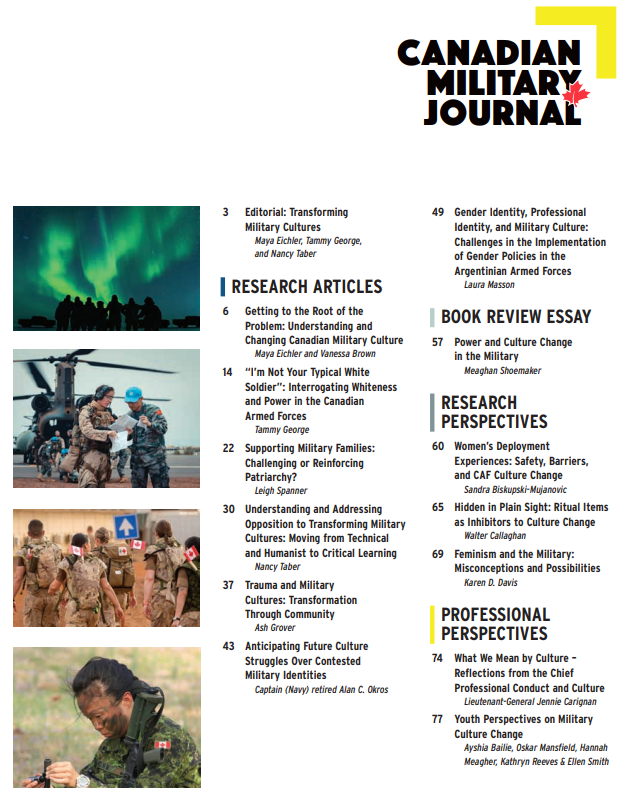
… the latest edition — which was just posted online — contains little to no mention of strategy, geopolitics or the avalanche of contemporary problems facing the Canadian Armed Forces. There’s not a single reference to the recruiting crisis, which has left vacancies of up to 40 per cent in some departments. No mention of the plummeting maintenance standards that recently prompted the commander of the Royal Canadian Navy to declare that his fleet was in a “storm” with no end in sight. No discussion of why Canada is slashing its military budget even as its peer countries do the exact opposite.
Instead — in a signal of just how far the Canadian Armed Forces has embraced far-left “anti-racist” ideology — the entire issue is devoted to how the Canadian military is a racist, patriarchal den of colonialist oppression that needs to be torn down and remade from scratch.
After devoting extended paragraphs to each cultural infraction, Eichler concludes that the Canadian Armed Forces must be remade via an “anti-oppression framework” of “feminist, decolonial, critical race, queer, critical disability, and critical political economy theories”.
Eichler notes this is “not an easy task, but a necessary one if DND/CAF wants to move the yardstick on culture change.”
Another feature, by York University psychotherapist Tammy George, frames the Canadian Armed Forces as being poisoned by “institutional whiteness”.
“In order for meaningful, sustained culture change to occur, there must be a recognition by the white majority of the way in which whiteness organizes lives,” she writes.
Leigh Spanner, a feminist postdoctoral research fellow, wrote that the CAF’s system of supporting military families was anti-feminist and patriarchal.
Ash Grover, a researcher in “feminist anti-militarism”, argues that the military might have fewer instances of post-traumatic stress disorder if they paid closer attention to “anti-oppressive theory” and how “acts of ‘othering’ can result in responses typically associated with post-traumatic stress disorder”.
January 9, 2024
AMX-13 | Tank Chats #174
The Tank Museum
Published 6 Oct 2023With over 7,700 units built and still in service today, this French light tank stands as a testament to its enduring legacy and historical significance. David Willey gives us an in-depth analysis of the development and history of the AMX-13.
(more…)
January 8, 2024
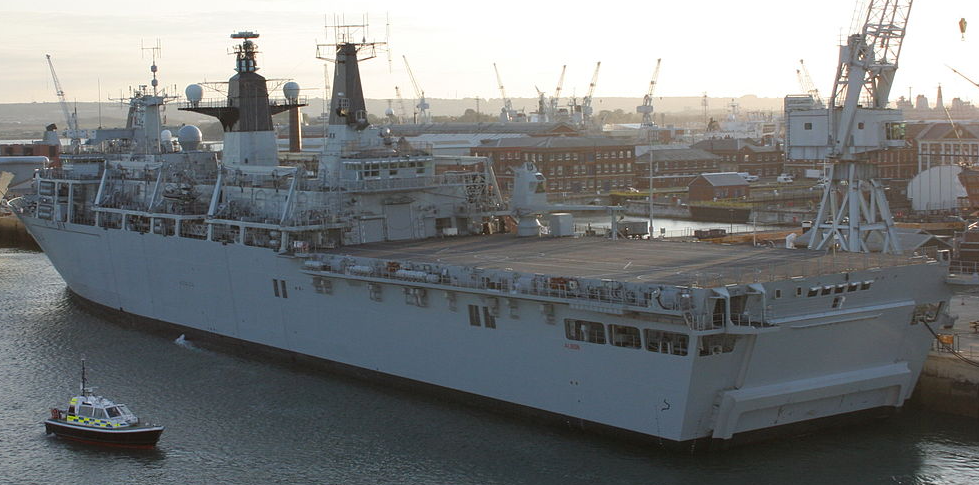
Royal Navy to retire their only two LPDs?
Sir Humphrey comments on the recently reported “leak” about several Royal Navy ships:
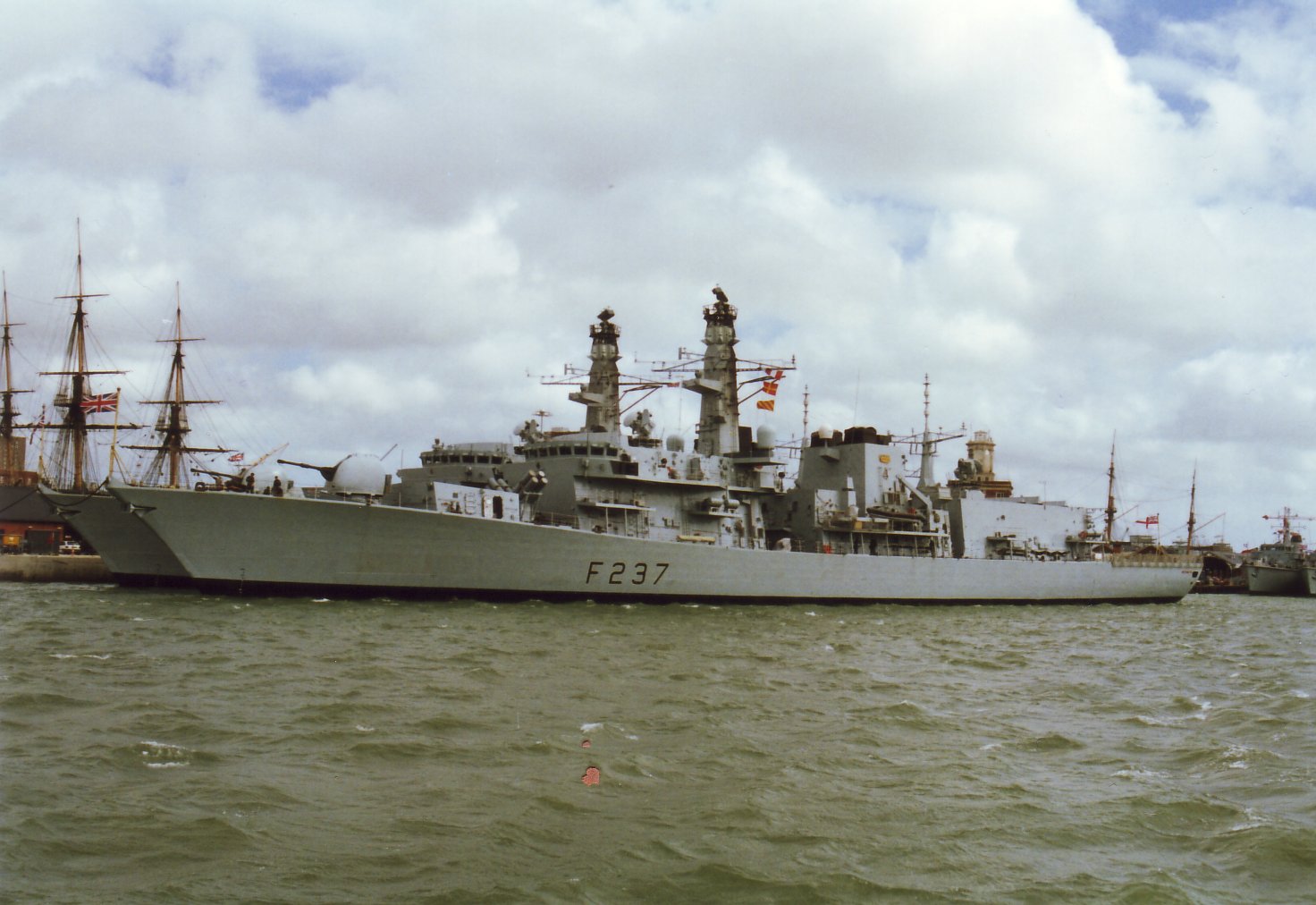
In an “inspired” leak that seems to fit the Yes Minister definition of a “Confidential Security Briefing”, the Daily Telegraph is reporting that the Royal Navy is to pay off two Type 23 frigates, HMS Argyll and Westminster early in order to find crew for the Type 26 frigates. Assuming this is true, this means that since 2010 the Royal Navy escort fleet will have been cut by 40%. Meanwhile the Times is reporting that the Royal Navy will mothball both LPD’s and no longer have an active amphibious assault ship command platform. This represents a 100% cut to the active assault ship force. The reasons given in both cases seem to boil down to the line that this is about providing sailors to crew the Type 26 frigate. It doesn’t seem to be linked to the rumoured huge budgetary challenges facing the MOD this financial year, which could equally be responsible for this decision.
There are different ways that this information can be interpreted depending on how you look at it. For starters we need to ask the question, why these two ships? The Type 23 force is elderly, with the ships intended for an original 18-year life span, worked hard in the North Atlantic and replaced quickly. They have all been extended in service for up to twice their original design life, while repeated delays to order the Type 26 has meant they are working far harder, and far longer than ever anticipated.
HMS Albion docked at Portsmouth, 26 July 2029.
Detail of a photo by David Crochet via Wikimedia Commons.These are ships designed 40 years ago, with the original Type 23 design dating back to the early 1980s. It is no exaggeration to say that there is almost certainly no one left in active regular service who was serving when the Type 23 design was first conceived. This means the design reflects the 1980s equipment and capabilities and standards – be it in the structure of the messes (large mess decks for junior sailors) or the internal wiring and machinery. While still capable, be in no doubt that these are elderly ships with all the many challenges that this brings. To make up for the many and varied delays to the Type 26, the RN has funded life extension work to the force for some years, fitting new missiles, guns and sonar equipment over time. The modern Type 23 is a far cry from its original design in equipment and capability, but it is still at its heart a 1980s warship.
Westminster had gone into refit in 2022 to begin the process of extending her life out to the late 2020s. The refit for Westminster would have cost around £100m to provide a further 4-5 years of service. while HMS Argyll had undergone the life extension process which would have seen a planned decommissioning in the late 2020s (the precise dates are not clear anymore due to the “odd” MOD decision to currently no longer provide this information on the grounds of operational security).
The LPD force by contrast is in a different position. The two ships Albion and Bulwark were built to replace the venerable Fearless class in the mid 2000s. For most of their career one has been in reserve while the other has been active, the same pattern as occurred with Fearless and Intrepid, where the latter spent years in increasingly poor state in reserve. The timing for this decision makes sense operationally as Albion has come to the end of her commission and was due to pay off into reserve, while Bulwark is still being regenerated in refit and hasn’t yet gone to sea. It would be possible to put both ships in reserve and free up a reasonable amount of sailors in the process.
The question is what is the impact on the fleet itself? Currently the RN probably has a requirement for 19 escort ships – “probably” is used as the MOD has refused to provide a statement on target force numbers in the two most recent Defence Reviews, so this is an assessment based on the 2015 Defence Review. That we have to rely on a near decade old defence review to guess how many escorts the RN plans to have speaks volumes for the manner in which the MOD engages with the taxpayer.
HMS Westminster (foreground) and HMS Iron Duke, Type 23 frigates of the Royal Navy, in the naval base of Portsmouth, August, 2000.
Image via Wikimedia Commons.
January 7, 2024
1945 Begins! – WW2 – Week 280 – January 6, 1945
World War Two
Published 6 Jan 2024The Germans launch a new offensive, Operation Nordwind, in Alsace, even as their offensive in the Ardennes is stalled. The Allies in the west don’t just have to fight these, they are also having serious issues amongst themselves in High Command that threaten their unity. The siege of Budapest is in full swing and is a hard, fought, bloody battle, and the Soviets and the Americans have big plans for new offensives soon to kick off in Eastern Europe and the Philippines (respectively).
00:00 INTRO
01:20 The Siege of Budapest
04:51 German defense plans in the East
06:38 Montgomery versus Eisenhower
08:32 Eisenhower versus the French
10:35 New German Offensive in Alsace
13:49 Monty’s plans for the press
15:04 The Battle of the Bulge
17:45 Preparations for the Luzon Landings
20:56 Notes to end the week
21:51 Summary and conclusion
(more…)
“Of course, you know that you Eeenglish invented modern people smuggling?”
In The Critic, Peter Caddick-Adams talks about the huge problems faced by European nations in combatting people smuggling:
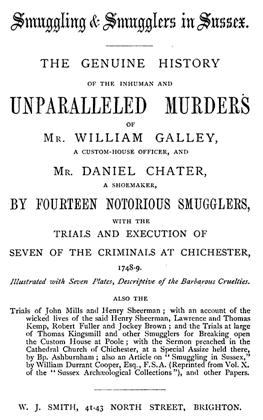
Title page of a book covering the trial of seven smugglers for the murder of two revenue officers. In the preface the author says “I do assure the Public that I took down the facts in writing from the mouths of the witnesses, that I frequently conversed with the prisoners, both before and after condemnation; by which I had an opportunity of procuring those letters which are herein after inserted, and other intelligence of some secret transactions among them, which were never communicated to any other person.”
W.J. Smith, Smuggling and Smugglers in Sussex, 1749, via Wikimedia Commons.
The Prime Minister has nailed his colours to his mast and decided we should “stop the boats”. The slogan is everywhere. What Mr Sunak means is the vessels crossing the Channel laden with bedraggled folk seeking succour on the shores of Albion. I attended a conference recently to see how this was to be done. As the perpetrators are highly organised transnational criminals, the response must be a multi-national one. Delegates were given some historical context. Ours is not a unique era. Since pre-recorded history, mankind has been inclined to see the grass as always greener on the other side of the fence. Hollow out a log to cross a river, invade an island, a coastline, Troy, the Euphrates, the Tigris, the Nile. Anywhere, for trade, for adventure, for sanctuary. Leap the Channel by longship to escape overcrowding, poor crops, for plunder, to claim a crown.
However, we were reminded — for the conference was hosted by several coastal nations studying security and crime — that most of Europe’s maritime problems with criminality and smuggling, be it booze, tobacco, narcotics, fake branded goods, or people, involve rivers, not the open sea. An old friend from the Gendarmerie Maritime observed that the great rivers of the world are not only frontiers, but also highways; earlier versions of today’s motorways, as logistically familiar to the Romans as to our own times. Those long gaggles of barges which still shuffle along the Rhine or Danube are a happenstance of trade we Brits tend to overlook, as our canals and rivers have long been consigned to pleasure-boating.
Based in Messina, the gendarme’s opposite number from the Servizio navale of the Italian Carabinieri, wearing the most resplendent braid-laden uniform of anyone at our gathering, then fixed me with his gimlet eye. “Of course, you know that you Eeenglish invented modern people smuggling?” By this he went on to explain that many of the tricks of shifting people covertly through the Mediterranean, along the Dalmatian coast, by patrol boat about the Baltic, trawler braving the North Sea, MTB across the Channel, caïque over the Aegean, among the Ionian islands, and along the Adriatic, were devised by Britain’s Special Operation’s Executive (SOE) during the Second World War.
My Belgian and French friends observed that such smuggling had honourable roots. From 1789 and post-1917, many nations had aided middle class and aristocratic refugees to flee Revolutionary France and Russia. Subsequently, their descendants helped Jewish families quit the Third Reich. Others aided the British to move vast numbers of manpower by small boat in 1940 from Dunkirk, which emboldened fishermen to repeat the manoeuvre on a smaller scale to confound their German foes. Female Greek, Turkish and Croatian officers chipped in with their knowledge of various rat-lines established during World War Two to support partisans with personnel and weapons, and extract downed airmen, spies and important scientists. Post-war, as a Spanish policeman I knew from my days in Gibraltar observed, the same systems exported Nazi war criminals, and imported drugs and guns.
The modus operandi created in those heady days of derring-do were continued for spies during the Cold War, often by the same families, using the same craft. This applied as much to jaunts and japes up and down the Danube, Rhine, Meuse and Elbe waterways as it did to the open seas. Our Danish representative observed that “boat people” were a distraction. Their numbers were vastly overshadowed by far greater numbers of religious refugees and assorted shady characters, then and now, who used stolen genuine, or expertly forged papers; another legacy from the even more distant times that preceded World War Two. The man from Interpol revealed that today’s Italian and Albanian crime families have such advanced facilities for reproducing many of the world’s passports, ID cards, work permits and driving licences, that they will pass muster even at most European electronic frontier posts and airport controls. Our Albanian colonel shifted uncomfortably.
With the fall of the Iron Curtain, espionage went out of business and, casting about for new business, these latter-day privateers and licenced black marketeers started smuggling industrial quantities of things and people, to replace the nocturnal movement of atomic secrets by night over water. A dinghy full of people in mid-Ocean is merely the tip of a giant iceberg of organisation and logistics that started on 22 July 1940 by direct order of Winston Churchill, but has continued in various legal, semi-legal and illegal forms ever since.
QotD: The US Army between 1945 and 1950
The trouble is, different men live by different myths.
There are men who would have a society pointed wholly to fighting and resistance to Communism, and this would be a very different society from the one Americans now enjoy. It might succeed on the battlefield, but its other failures can be predicted.
But the infantry battlefield also cannot be remade to the order of the prevailing midcentury opinion of American sociologists.
The recommendations of the so-called Doolittle Board of 1945-1946, which destroyed so much of the will — if not the actual power — of the military traditionalists, and left them bitter, and confused as to how to act, was based on experience in World War II. In that war, as in all others, millions of civilians were fitted arbitrarily into a military pattern already centuries old. It had once fitted Western society; it now coincided with American customs and thinking no longer.
What the Doolittle Board tried to do, in small measure, was to bring the professional Army back into the new society. What it could not do, in 1946, was to gauge the future.
By 1947 the United States Army had returned, in large measure, to the pattern it had known prior to 1939. The new teen-agers who now joined it were much the same stripe of men who had joined in the old days. They were not intellectuals, they were not completely fired with patriotism, or motivated by the draft; nor was an aroused public, eager to win a war, breathing down their necks.
A great many of them signed up for three squares and a sack.
Over several thousand years of history, man has found a way to make soldiers out of this kind of man, as he comes, basically unformed, to the colors. It is a way with great stresses and great strains. It cannot be said it is wholly good. Regimentation is not good, completely, for any man.
But no successful army has been able to avoid it. It is an unpleasant necessity, seemingly likely to go on forever, as long as men fight in fields and mud.
One thing should be made clear.
The Army could have fought World War III, just as it could have fought World War II, under the new rules. During 1941-1945 the average age of the United States soldier was in the late twenties, and the ranks were seasoned with maturity from every rank of life, as well as intelligence.
In World War III, or any war with national emotional support, this would have again been true. Soldiers would have brought their motivation with them, firmed by understanding and maturity.
The Army could have fought World War III in 1950, but it could not fight Korea.
T.R. Fehrenbach, This Kind of War: A Study in Unpreparedness, 1963.
January 6, 2024
Inside Mark I: The First Fighting Tank
The Tank Museum
Published 15 Sept 2023The first ever use of the tank in battle happened during the Battle of the Somme in 1916. In this video we look inside a unique survivor – the last British Mark I Heavy Tank in existence and examine the first tank action at Flers, an event that changed the face of warfare.
(more…)
January 5, 2024
Pacific Theater USMC-Modified Johnson M1941 Rifle
Forgotten Weapons
Published 25 Aug 2023Johnson M1941 rifles were used in limited numbers by the US Marine Corps in the Pacific theater of World War Two, but they were used — and generally well liked. Interestingly, there was a fairly common field modification done by the Marines, and that was to cut off the front sight wings, and sometimes cut the rear aperture into a deep V-notch or a flat U-notch style. This particular ex-Marine rifle shows both of these modifications.
(more…)
January 4, 2024
The Halifax Naval Museum – A Hidden Treasure
Drachinifel
Published 15 Sept 2023Today we look take a quick tour through Canada’s naval history as exemplified by the RCN Naval Museum in Halifax, Canada.
(more…)
January 1, 2024
Michael Palin’s Great-Uncle Harry
In The Critic, Peter Caddick-Adams reviews Michael Palin’s Great-Uncle Harry:
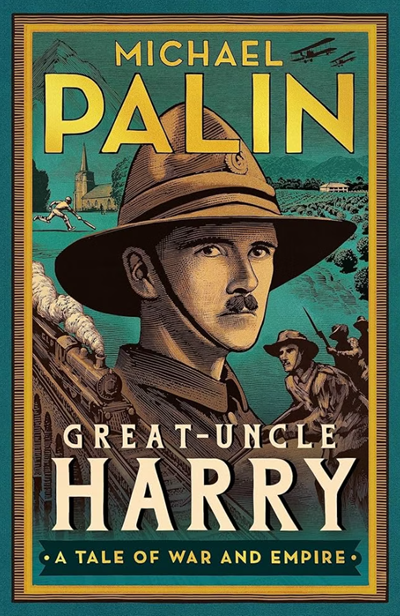
The first of last week’s volumes nestling on my desk, with its immediately identifiable Ripping Yarns cover illustration, was Sir Michael Palin’s story of his forebear, Great Uncle Harry, who travelled the world but disappeared on the Somme. Here, I felt an immediate connection, not least because Michael, I and his Great Uncle Harry Palin had hauled ourselves through the same academy of learning, Shrewsbury School, though at different times. There are plenty of 1914-18 memoirs and tributes around, but this is one of the best. The further the Great War (as it used to be called) recedes, the more we seem to need to torture ourselves with the staggering sacrifices it involved. I read my copy over Remembrance weekend, which made it doubly poignant.
In Great Uncle Harry, Palin’s gift is to give us the hinterland of his ancestor. Many First World War authors, here I could mention the great Lyn Macdonald, Richard Holmes and Martin Middlebrook, all of whom I place on pedestals, provide us with erudite studies, laced with gripping eyewitness accounts. I find myself doing the same with 1939-45, but of necessity there is no room to give the brave and the damned a back story. They are parachuted into the text. They fight and live or die and exit stage left. It is refreshing, therefore, to hold the hand of a first war warrior from birth unto death. Palin was lucky his Great Uncle Harry kept a series of notebooks and diaries of his time in khaki, and was able to research his globe-trotting years before battle. Our man was brought up in Herefordshire, and after school drifted out to British India. He had two stints, first working as a railway manager and latterly as overseer on tea plantations. The reader is fortunate that Palin the documentary-maker filmed in both environments and is able to look over his forebear’s shoulder and summon up the Edwardian social standards of the day, with its solar topees and chota pegs (sunset whiskeys), its heat and its dust. Palin the younger’s many diaries and written travelogues, of which I find New Europe (2007) the best, are equally good.
But Great Uncle Harry Palin was restless. The youngest and most headstrong of seven, he flounced out of each of his two jobs serving the Raj, and ended up trying his hand at farming in New Zealand. There he seemed more settled, but not quite. The Palin under the microscope, notes his great nephew, was one of the first to volunteer for war service with the 12th (Nelson) Regiment, a South Island infantry outfit, in August 1914 and sailed with them overseas, initially to Egypt. There they were absorbed into the Canterbury Battalion, and deployed to Gallipoli, from which Great Uncle Harry emerged without a scratch.
Gallipoli is a conjurer’s name. Now known by the Turks as their Gelibolu Peninsula, overlooking the ancient Hellespont (today’s Dardanelles Strait), its southern tip lies 200 miles from what was then Turkey’s capital, Constantinople, officially Istanbul after 1930. Only since the 1990s has this strategically significant sliver of land, across the Dardanelles from ancient Troy, and guarding entry to the Bosphorus and Black Sea, been opened up for tourists. The 1915 operation was dreamt up by Winston Churchill to break the stalemate of the Western Front. He advocated a naval advance on Constantinople, as a way of knocking the Austro-German alliance out of the war. Such a stratagem would then have offered Paris and London the ability to supply the troops of Tsar Nicholas the Last with modern arms and munitions to prevail against the Central Powers.
Instead of breaking the Western Front, Gallipoli broke Churchill. It was a campaign endlessly refought in the inter-war years, which generally concluded that amphibious warfare had no future, though Lieutenant Colonel George S. Patton in his 1936 General Staff study, The Defense of Gallipoli, found it fascinating. It was one reason why the allies had no maritime landing capability in 1939-40, to Britain’s detriment at Dunkirk, and later Germany’s disadvantage when planning a seaborne assault against southern England. Valuable lessons of what to do, and not to do, had to be relearned before D-Day in 1944 could be a success. My own assessment is right idea, wrong commanders. Gallipoli might have offered the success Churchill desired, but was executed poorly.
The original plan had been to overwhelm Constantinople with battleships, and there is evidence that the Turks were preparing to surrender. However, the Franco-British war fleet encountered German-supplied Krupp cannon along both shores of the Dardanelles and a minefield in the middle, and suffered catastrophic losses. A land campaign was then initiated to clear the Turkish land-based defences. This should have been foreseen and a simultaneous, rather than sequential, maritime-land attack might well have delivered the goods.
Instead, the few Turkish defenders on Gallipoli could see a landing was imminent, called in reinforcements and dug trenches ferociously. On the peninsula, amidst scrub, trench and memorials lie scattered British, Commonwealth, Ottoman and French (yes, they were there too) cemeteries, hinting at stirring tales of derring-do. Last time I was there, I encountered not only rifle cartridges, pieces of pottery rum jars, and shell cases, but human bones. My guide observed, “Probably wild pigs dislodging the topsoil. It happens all the time.” An indication of the 300,000 Allied and 255,000 Turkish killed, wounded and missing in a campaign where illness often took as many as combat wounds. Along the western coast, amidst shards of amphorae from pre-history, lie many wrecks associated with the 1915 campaign in crystal-clear water. It remains high on my recommended battlefields to visit.


