Quotulatiousness

July 17, 2023

QotD: Cavalry combat in Rings of Power versus history

Filed under: History, Media, Military, Quotations — Tags: , , , , — Nicholas @ 01:00

… the scene [in Rings of Power] as a whole seems poorly executed. We’ve gotten some good views of the topography of this village and it is very small. The village is at a three-way road intersection, with the inn at the meeting point on what I am going to call the East side (we see the sun rising over it once and it faces Orodruin); the inn has a small fenced-in area behind it. Beyond that there are four small houses on the road and one further up the hill and the land slopes from high in the north and east to low in the south and west. Finally on the west side there is our small bridge over the stream; a forest directly abuts the village on the south side.

The first thing we see is the cavalry in a great mass riding down into the village with Orodruin clearly behind them; they must be approaching then along the East road. Then we see a 2-horse wide column of cavalry crossing the narrow bridge from the West (at 39:14), then a bunch of orcs gather up into a mass to engage that cavalry force as it gallops up the main road into the village (from 39:16 to 39:26) before getting hit by the vanguard of that column in a really dumb moment we’re going to come back to at 39:30. And now look up at the village above there again and note that it takes one cavalry column at full gallop 16 seconds to go from that bridge to the inn, but the massive wave of cavalry coming over the hill from the other direction has still not managed by this point to actually enter the village proper. They have, apparently, frozen completely solid the moment they were off screen.

So it seems like, while galloping wildly to the rescue of a village they didn’t know was under attack, the Númenóreans also took the time to carefully work their way around the village in order to strike it from two sides at once (somehow filtering through the forest without being noticed, rather than working around the more open terrain to the north side; I cannot communicate clearly enough that cavalry generally avoids moving through forests for a reason), then galloped in at full speed. But the one direction they do not attack from is the North road, which is the only area that is clear and unobstructed (good cavalry ground) and where the slope of the ground is favorable (they’d be charging down hill) with enough space to form up into a proper charge. Instead when we see Galadriel next, she is charging up that hill.

So on the one hand this battle plan doesn’t make any sense, but at the same time I feel I must note just how inferior this is as film-making to the battle scenes in The Lord of the Rings (or even, dare I say it, Game of Thrones). I had to rewatch these scenes, slowly and carefully multiple times to get any sense of where anyone was. By contrast, good battle scenes are careful to make sure the audience understands the geography of the space. Hell, the “battle” scenes in Home Alone are careful to establish the geography of the place (I found the video at that link, by the way, a very approachable introduction to some elements of film study). In The Lord of the Rings we get a lot of big wide shots at high altitude showing us where the armies are in relation to each other […]

Moreover, Peter Jackson’s cavalry doesn’t simply show up. In both of his Big Cavalry Rescues at Helm’s Deep and Minas Tirith he follows the same highly effective pattern of first revealing the presence of the cavalry, then pausing a moment for the cavalry to form up and to give the characters there time for some dialogue and character beats. At Helm’s Deep this is a short exchange between Éomer and Gandalf, while at Minas Tirith it is Théoden’s big defining character moment and speech. From a realism standpoint, it gives the audience time to understand where the cavalry is and how they’ve set up (and a sense that this is organized, planned and prepared).

But this brief delay before “the good stuff” also serves an obviously important emotional narrative aspect that Rings also loses here: it builds anticipation. By the time Théoden is giving his speech outside Minas Tirith, the audience has been waiting for about an hour since the beacons were lit for this very moment of emotional release, waiting for the score to be evened, waiting for the emotional satisfaction of the bad guys getting their come-uppance and so Jackson draws that out just a little bit longer, which builds the anticipation that creates that intense emotional response when the charge at last surges forward. You can even hear the emotions he wants you feel in the music, which starts low and subdued but builds and builds as Théoden sets up his army and gives his speech, booms across the charge itself but then cuts hard to silence in the moment of impact – the moment of greatest suspense (will the charge work?) – before surging back as the charge succeeds, culminating in a big overhead shot showing the good guys winning. It is not historically perfect, but the emotional beats land flawlessly and Rings just fumbles shockingly on both counts.

The resulting melee is also confusing. This village is tiny and while we don’t have a good idea of Adar’s remaining force, it isn’t huge because it seems to all fit in this village which looks to be a fair bit smaller than a regulation soccer pitch. A cavalry charge should be able to run from one side of this road to the other in under 10 seconds (moving at c. 12m/s, a rough horse’s gallop speed); the two leading edges of this charge should be slowing down to meet in the middle in well under five seconds. Consequently the decisive phase of this battle, the one in which orcs are trying to hold the open ground between the buildings (these wide mud streets) should last only seconds, but instead it draws out into a minutes-long melee because, as far as I can tell, the Númenóreans have next to no idea how to fight on horseback.

The thing is, fighting from horseback is quite hard but it is also quite simple. If using stirrups, one’s feet remain in the stirrups pretty much the whole time because the goal here is to retain a firm seat on the horse. Horse archers will sometimes stand up just a little in the stirrups to create a stable firing platform, but only a little bit and at speed an observer may not even notice they are standing at all. But showrunners, it seems, just love putting in all sorts of equestrian tricks; Game of Thrones had to make the Dothraki shoot while standing on the saddle (not a great idea), and so Rings of Power has to do some trick riding. In this case they have Galadriel flip over the side of her horse upside down to slash at an orc while dodging an arrow […]

A close look and you can see that this trick requires a special handhold on her saddle just for the purpose (just like the Game of Thrones standing horse-archers required special trick saddles for that stunt too). And she then cuts an orc’s head off while flipping herself back on to the horse, a sword-stroke that is traveling in the opposite direction of her horse’s movement (it is moving forward, she is swinging backwards), which she cannot brace properly and thus, if it had hit anything but CGI would have been a fairly weak strike; fortunately for Galadriel, CGI orcs are very flimsy so their heads come straight off. The whole thing is a too-clever-by-half effort to look cool, which I also find a bit confusing because Elves don’t seem to me to fight on horseback very often in the Tolkien legendarium; they do it from time to time, but the great elf heroes tend to fight on foot, so it’s not clear to me why Galadriel has to also be the best rider. But that routine is then topped by the baffling idiocy of Valandil here who, despite having a perfectly good sword (though he seems to have lost his spear in the fighting) decides his best plan of attack is to jump off of his horse and tackle two orcs […]

Needless to say a high speed falling dismount is a good way to injure yourself in an actual battle but also that jumping off of your horse is not a good use of you or the horse. Meanwhile the rest of the Númenórean cavalry seem to have mostly come to a stop and are now having stationary fights with orc infantry; some of them get pulled down off of their horses which, yes, is the predictable result of being stupid enough to bring your cavalry to a full stop without of any kind of mutually supporting formation or infantry support. I think many of the problems in this sequence stem from the apparent need to have this seem like a fight that could go either way, when in practice this should have been a short and decisive engagement the moment the cavalry arrived, given that the cavalry is more heavily armored, faster, has the advantage of surprise and presumably outnumbers the orcs given how small the village is. I suppose it might take a bit longer because Adar’s first wave of orcs are hitting their respawn timer so there were adds. Once again the utter inability of the show to keep track of just how many orcs there are ruins any sense of tension but also any hope of the battle making sense; it sure seemed like there were just a few dozen orcs left, which ought to make a battle against 300 armored riders a remarkably short and one-sided affair.

But the moment in this whole fight that broke me completely actually came quite early right after the Númenóreans crossed the bridge. […] I will admit that I burst out laughing when this happened: the horseman ride up in a pair holding on to opposite ends of a chain, which they then use to clothesline about two dozen orcs while steadily fanning out. Once again this is one of those too-clever-by-half Hollywood tactics moments, which defy both physics and logic. The first problem is that I’m not clear on how long this chain is: they need to be holding it tightly or it is just going to snag on the first impact, but they also fan out meaning they need to keep letting out more chain to cover the increasing distance between the two horses. In practice looking at the stills it seems like the chain isn’t under much of any tension at all, which would make it fairly useless as a weapon here – sure a metal chain will have some momentum to it, but not enough to knock multiple ranks of armored troops down.

But of course the broader problem is that if the plan is to merely smash into the orcs with a lot of kinetic force you should just trample them. Putting all of that impact energy in the chain is just going to pull the rider off of their horse since the sole point of contact for that energy is their arms. By contrast, medieval knightly cavalry eventually adopted high-backed saddles, couched lances and lance-rests on their armor all to help keep the knight in his seat through the force of a heavy impact at full speed (cavalry with or without these various devices might need to let their point trail at impact that it wasn’t pulled from their hand but rather the movement of their horse pulled it from their target, a motion pattern easily observed in the modern sport of tent-pegging). But just carrying a chain gives none of these advantages or options: if there’s enough force to knock down a half-dozen orcs, there’s enough force to knock a rider out of his saddle.

Of course in an actual battle this wouldn’t even get this far because the other disadvantage of this chain is that it sacrifice’s the reach of a spear. Now, credit where credit is due, the Númenóreans do seem to have standard issue spears (good!), except for these two guys with the chain (a tactic that only works when advancing two-by-two, which is a terrible way to fight, through a narrow space where cavalry should not be, but nevertheless apparently one the Númenóreans come ready for as standard). No one seems to use their spears on horseback (they shift to swords immediately), but at least they have them. The advantage of a spear or lance of course is that it is a weapon which can project beyond the head of the horse, thus reducing some of the reach advantage an infantryman might have, while concentrating all of the energy of impact at a single point.

But the riders here have to hold this silly chain on their laps, which puts it several feet behind the head of their horse and because it isn’t perfectly taut it lags their motion meaning that it impacts the orcs several feet behind that, which means – as you can see above – the entire horse has to gallop past the target orc before he is hit by the chain. Any any time during that operation that orc could strike at the horse or the rider, spilling them both to the ground and to make the whole thing worse because the riders can’t have a sword or a shield in their hands, they can’t even defend themselves if an orc decides to do this.

Much like the ships, much like the falling tower trap, much like the nonsensical ring forging, it is another instance of the creators attempting to be novel and clever without really understanding the historical practices they are working from. Cavalry tactics, like battle tactics, like ship design, like metalworking, were fields of human endeavor that absorbed the sharpest minds humankind has to offer and persistent experimentation and adaptation for centuries, resulting in highly tested, highly refined patterns of behavior. I will not say that improvement on those practices is impossible, but it would certainly be very hard, the sort of thing which would itself require extensive dedicated study and experimentation. It is not the sort of thing likely to be accomplished in a writer’s room brainstorming session, which is why efforts to “outsmart” the past tend to end up looking silly, rather than clever.

Bret Devereaux, “Collections: The Nitpicks of Power, Part III: That Númenórean Charge”, A Collection of Unmitigated Pedantry, 2023-02-03.

July 16, 2023

Mass Suicide on Saipan – WW2 – Week 255 – July 15, 1944

Filed under: Britain, Cancon, France, Germany, History, Japan, Military, Pacific, Russia, USA, WW2 — Tags: , , , , , , — Nicholas @ 04:00

World War Two
Published 15 Jul 2023

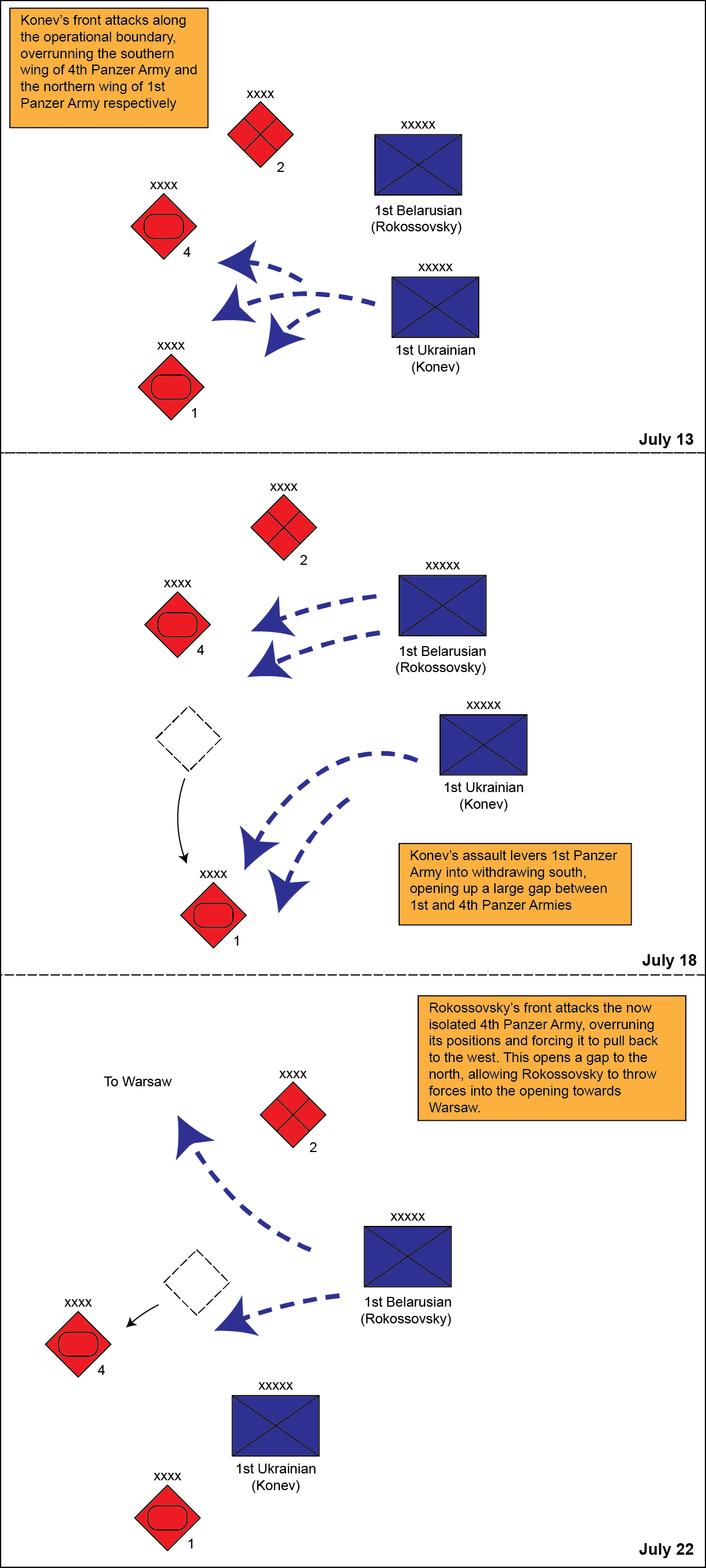
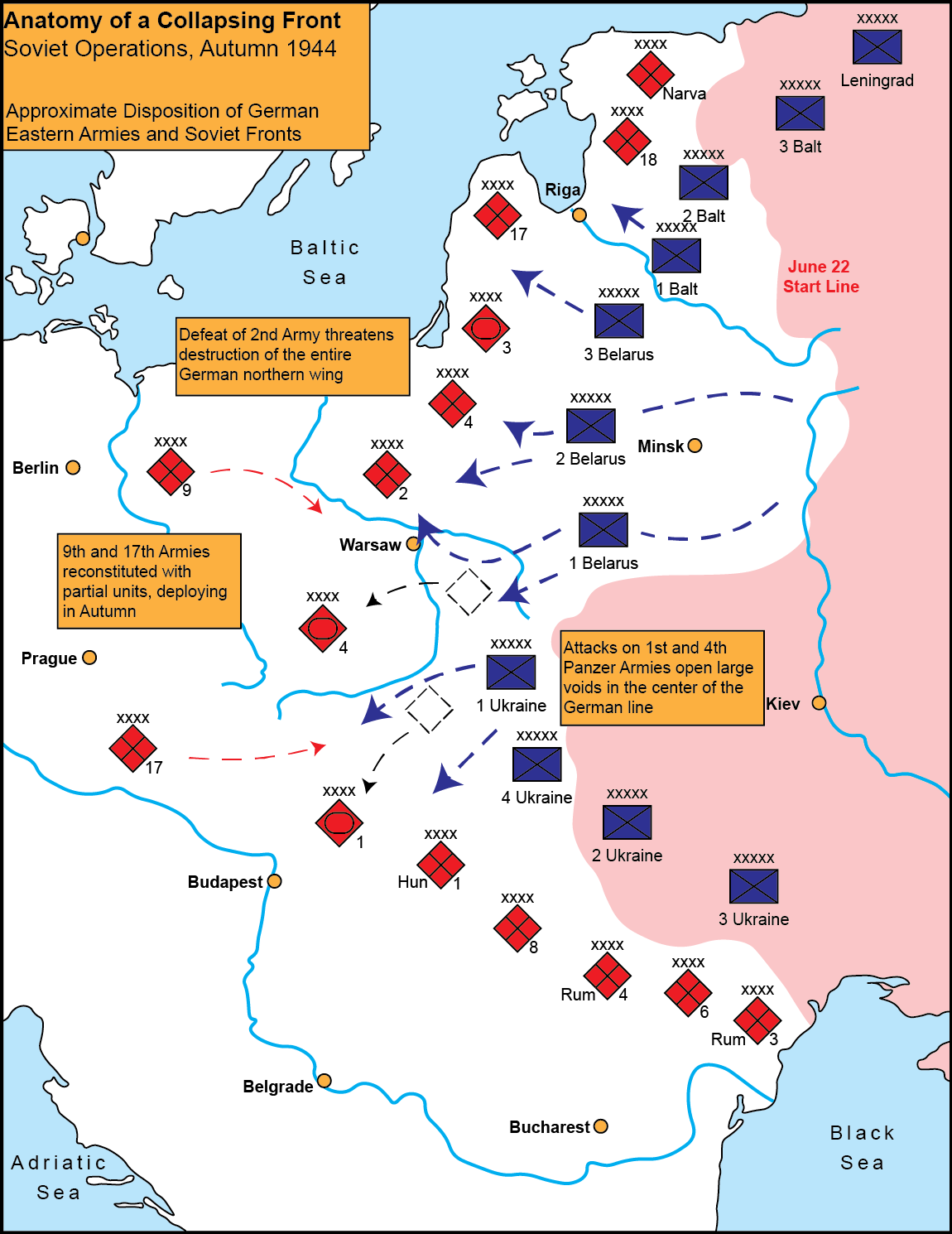
Japanese troops and civilians commit mass suicide rather than surrender to the Americans in the Marianas; in Normandy, Caen has finally fallen to the Allies though the fight for St. Lo is not over; the Soviet offensives in the north take Vilnius and the fighting continues up in Finland, but the big eastern front news is the mighty new Soviet offensive in Western Ukraine. (more…)

Cheap, Effective, Everywhere: The RPG-7

Filed under: History, Military, Russia, Weapons — Tags: , , , , — Nicholas @ 02:00

The Tank Museum
Published 7 Apr 2023

Join Chris Copson as he presents our latest in Anti-Tank Chats. In this episode, we will delve into the fascinating history and practical applications of the RPG-7, a powerful anti-tank weapon.
(more…)

July 15, 2023

Sherman Firefly – What were those wavy lines for?

Filed under: Britain, History, Military, Weapons, WW2 — Tags: , — Nicholas @ 02:00

Armoured Archives
Published 8 Mar 2023

This video is going to take a quick look at those wavy lines you might see on some tank barrels, what did they do, and why? And was this ever an officially sanctioned project?
(more…)

July 14, 2023

How Hitler Approved His Own Assassination – WW2 Documentary Special

Filed under: Germany, History, Military, WW2 — Tags: , , — Nicholas @ 04:00

World War Two
Published 13 Jul 2023

So far, the German resistance haven’t had much luck with their attempts to kill the Führer, Adolf Hitler. But now, the German war hero Claus von Stauffenberg, together with Friedrich Olbricht and Henning von Tresckow, drives the resistance forward. It’s time to kill Hitler. It’s time for Operation Valkyrie.
(more…)

MG-3: Germany Modernizes the Classic MG-42

Filed under: Germany, History, Military, Weapons, WW2 — Tags: , , , , , — Nicholas @ 02:00

Forgotten Weapons
Published 7 Apr 2023

When the Bundeswehr was formed, it chose to simply continue using the MG42 as its standard GPMG. This was initially done by converting older MG42s to 7.62x51mm NATO as the MG1 (adopted in 1958), but progressed to production of a brand new version of the gun by Rheinmetall (adopted in 1968). The MG3 included improvements to the belt feed system, added integral antiaircraft sights, and allowed a rate of fire between 700 and 1300 rpm depending on the choice in bolt, buffer and booster. It was the standard German MG until finally being replaced by the MG5 in 2012 — and it is/was in use by nearly 4 dozen other countries as well. Today we are going to compare this transferrable, C&R MG3 to an original MG42 to see the improvements that were made.
(more…)

July 13, 2023

Bill Slim’s plan for the Battle of Meiktila in March 1945

Filed under: Asia, Books, Britain, History, India, Japan, Military, WW2 — Tags: , — Nicholas @ 05:00

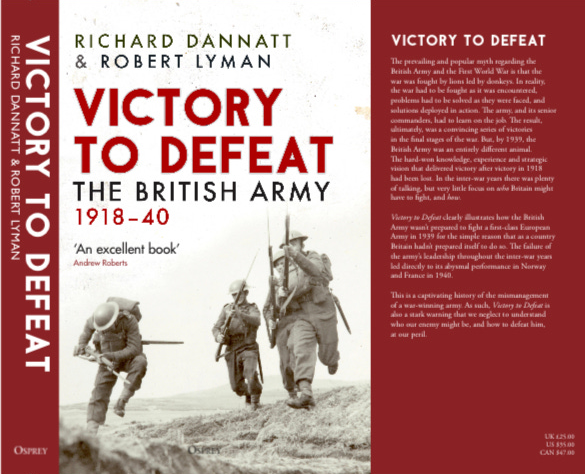
Dr. Robert Lyman on the subject of his most recent book, The Reconquest of Burma 1944-45: From Operation Capital to the Sittang Bend:

When I was writing my latest book with General Lord Dannatt he said to me, “Rob, if I’ve got one criticism of A War of Empires it’s that you don’t emphasise enough the role of Bill Slim in coming up with the plan for victory in 1945, and executing it perfectly.” Fair. As Slim’s military biographer, I told Richard that I didn’t want to be accused of rewriting that book again. I was conscious of this problem as I was writing A War of Empires.

But it is fair criticism. It may be that I underplayed Slim’s role when I was considering all the other critical features in this great campaign. The idea behind the dramatic victory by 14th Army in Burma in 1945 was Slim’s and Slim’s alone. He pursued his own plan through to its remarkable conclusion.

[…]

Slim’s original plan was to fight the main strength of the Japanese army on the Shwebo Plain, a dry, flat plain between the loops of the Chindwin and Irrawaddy. Not only would the terrain be well suited to the deployment of armour, for which the Japanese had little effective reply, but the Japanese would be trapped with the river-line at their back. Slim had assumed that the Japanese would be unprepared to make a voluntary withdrawal. The scene was set for Slim to be able to deploy his superior mobility and firepower to destroy the main Japanese army in Burma.

By the end of the year, however, it became apparent that the Japanese were not going to conform to Slim’s plan for the battle, and General Kimura had seen the trap which his forces would be caught in if they attempted to stand and fight in the Shwebo Plain. Showing unusual flexibility and moral courage Kimura promptly withdrew his reconstituted 15th Army behind the Irrawaddy. Kimura hoped, not without reason, to be able to smash Slim’s army as it attempted to cross the river, which in itself presented an immense obstacle to the British. He would then counter-attack and destroy Slim as the British withdrew during the monsoon to the Chindwin.

Kimura’s move behind the Irrawaddy destroyed at a stroke Slim’s plan. Undaunted, and recognising the supreme importance of destroying Kimura’s army rather than taking ground for its own sake, Slim came up with another plan. In basic outline, his new plan (Operation Extended Capital) entailed crossing the Irrawaddy and fighting the decisive battle in February in the plain around Mandalay and the low hills around Meiktila, the key enemy air and supply base in Central Burma. Both the road and rail links between Mandalay and Rangoon ran through Meiktila. If Meiktila fell, the whole structure of the Japanese defence of Central Burma would collapse.

“… if Ukraine were to join NATO in the middle of a war, then congrats – most of Europe and North America are at war”

Filed under: Government, Military, Russia — Tags: , , , , , — Nicholas @ 03:00

As I’ve said several times, I have great sympathy for ordinary Ukrainians caught up in a war not of their making, but I’m not a fan of the awesomely corrupt Ukrainian government. NATO nations providing weapons, ammunition, and training is fine, but in no way is Ukraine ready to become a member of the alliance and will not be until after this war is over and they conduct a very significant set of anti-corruption reforms in their national government. CDR Salamander points out the insanity of western pundits demanding that NATO add Ukraine to the alliance in the middle of a major war:

I understand the desire for Ukraine — and others for that matter — to be part of NATO. I also understand why the frontline states in Central Europe such as the Baltics republics and Visegrad Group would like Ukraine in as well. Defense in depth and long fronts are a thing.

As much as I can sympathize with the above, I also understand the reasons that Ukraine and other nations may never be right for NATO membership, or at best be a decade or two out. Single points of failure triggers to another world war — where every new member state increases the aggregate risk to all members — is not a minor thing to consider.

There is also the very real fact that Ukraine is in a war right now, for her an existential war with Russia. This CNN article is a perfect example of some of the absolutely foolish questions people are even considering right now. I’m not even going to quote from it as there are dozens like it out as the NATO summit is going on. It is a waste of your time.

You don’t need to be an international lawyer to understand that if Ukraine were to join NATO in the middle of a war, then congrats — most of Europe and North America are at war. As history tells us, when Europe and North America goes to war, eventually the world joins in.

For today’s post, I’d like to pull some quotes from a superb Financial Times article, NATO’s dilemma: what to do about Ukraine’s bid to join?

    Membership represents the long-term security that Kyiv wants and was promised 15 years ago. But Russia’s war has complicated things

    When Ukrainian President Volodymyr Zelenskyy strides into Nato’s annual summit in Vilnius on Wednesday, his country will have been fighting a full-scale war of survival against Russia for 503 days.

2008, in the last year of the Bush-43 administration. The year it looked like we had Iraq stabilized yet were already planning to take the keys in Afghanistan back from NATO after the alliance culminated in the summer of 2007.

The year of imperial overreach in denial;

    It was over breakfast in Bucharest in 2008 that the seeds of Nato’s current dilemma were sown.

    At an early morning meeting on the second day of the alliance’s summit that year, then secretary-general Jaap de Hoop Scheffer met with US president George W Bush and his French and German counterparts Nicolas Sarkozy and Angela Merkel.

    The outcome of that breakfast, and a result of Merkel softening her opposition to Bush’s proposal to offer membership to Ukraine and Georgia, was a statement by the entire Nato alliance.

    Both countries “will become members of Nato”, it said, without providing a timeline. That declaration, at the same time both unequivocal and non-committal, was hailed as a major achievement. It has since sunk into infamy.

Amazing how people forget that other nations get a vote. Your actions will cause reactions by those who either think they will benefit from or be endangered by them. Roll that simple context in to the 1,000 year record of people west of the Vistula misreading Russia and you have this;

    Four months later Putin’s tanks rolled into northern Georgia. In 2014 his special forces annexed Ukraine’s Crimean peninsula. Nato, as Putin knew well, refuses to accept new members with “frozen conflict” on their territory. Aside from condemnatory rhetoric, Nato did little to punish Moscow. Putin, who had been present at the Bucharest summit as a guest, had called Nato’s bluff.

Putin was right. No one will join NATO who has border disputes or are best known for their globe-spanning corruption.

NATO and the USA’s natsec “blob” was, again, wrong. Being wrong isn’t the problem. It is an imperfect business where mistakes are going to be made. The important thing is to learn from them and if the same people and institutions are perpetually wrong, you get new people and institutions to help you make decisions. That is the danger. It isn’t that we “remember everything but learn nothing” it is more that we “remember only what confirms our priors and only learn to try harder next time.”

July 12, 2023

Nazi drone war begins – War Against Humanity 103

Filed under: Britain, Europe, Germany, History, Military, Weapons, WW2 — Tags: , , , , , — Nicholas @ 04:00

World War Two
Published 11 Jul 2023

Bombing enemy civilians does nothing to advance a nation’s war effort. But now, Adolf Hitler believes that the V-1 flying bomb, the first of the Vengeance Weapons, will bring London to its knees and unite the German population behind the war effort as never before. The missiles are ready for launch and thousands more civilians will die to satisfy the Führer’s
delusions.
(more…)

QotD: Media gullibility on military issues

Filed under: Media, Military, Quotations, Russia, USA, Weapons — Tags: , , , , , — Nicholas @ 01:00

One reason I don’t say much about the Ukraine war, for instance, is that I’m out of my depth, and simply don’t want to put in the necessary work to get up to speed. I don’t know a thing about contemporary Russian equipment (or NATO equipment for that matter). My grasp of strategy begins and ends with “playing Risk! against drunk frat boys”. If I went out there, I’d be a babe in the woods. “What was that bang?” “Oh, that’s the Q-35 matter modulator.” “What was that bang?” “That’s the Lepage glue gun. It glues a whole formation of bombers together in midair.”

The Media, of course, does not do this. They’d be happy to write up a whole big feature story about how the Russians’ Q-35 matter modulator wasn’t nearly what Vlad Putin, that lying bastard, bragged it up to be. And with the new Lepage gun gluing all those Russian planes together, the brave Ukrainians will be in Moscow for Easter!

Are they lying? Not really. Some very serious-looking persyn in a snazzy uniform with a lot of very colorful ribbons told them that the Q-35 matter modulator isn’t all that, and why would some brave freedom fighter lie to them? And besides — this is crucial — “fact checking” the stats on the Q-35 matter modulator would entail that you’ve never heard of it before …

… which is anathema to our intrepid reporterette’s sense of xzhyrself as a hard-hitting newshound who is very very Smart. After all, she scored a 35,000 on her SATs and graduated from the Assjammer School of Journalism with a 9.98 GPA. She’s got fellowships and awards and whatnot out the yingyang, plus 1.2 million Twitter followers. And it says “war correspondent” right there on her Facebook page. If the Q-35 matter modulator weren’t actually a thing, surely she would know.

Severian, “The Becky Cycle”, Founding Questions, 2023-02-27.

July 10, 2023

Echoes of War: Accounts of Operation Husky and the Allied Landings in Sicily

Filed under: Britain, Cancon, History, Italy, Military, USA, WW2 — Tags: , , , , — Nicholas @ 04:00

OTD Military History
Published 9 Jul 2023

On July 9/10 Allied forces launched Operation Husky, the invasion of Sicily. This video presents accounts from various Allied military personnel who were there that day.
(more…)

Remington-Lee Model 1885

Filed under: History, Military, USA, Weapons — Tags: , , , , , — Nicholas @ 02:00

Forgotten Weapons
Published 5 Sept 2015

The model of 1885 (a modern collector designation; Remington called these the “Remington Magazine Rifle” and did not differentiate between the different versions) was the final iteration of James Paris Lee’s bolt action rifle made by Remington. It incorporated a number of improvements from the earlier versions, including a relocated bolt handle, improved bolt head, and a magazine that could now hold cartridges securely without the use of a sliding catch at the nose.

These rifles were made in .45-70 caliber for US use and in .43 Spanish for export sales. The US Navy purchased most of the .45-70 guns that were made, and this particular rifle is one of those Navy guns. By the time these rifles were actually in production, Great Britain had also decided to adopt the Lee system in 1888, which would go through several iterations and ultimately become the iconic SMLE that would be the mainstay of British infantry during the First World War.
(more…)

July 9, 2023

The Destruction of Army Group Center – Week 254 – July 8, 1944

World War Two
Published 8 Jul 2023

Operation Bagration continues, smashing the armies of German Army Group Center and taking ever more territory including the prize of Minsk; on Saipan the Americans have taken most of the island when the Japanese resort to a huge suicidal banzai charge to try and turn the tide; and in Normandy new attacks begin try to finally take Caen and St. Lo.
(more…)

QotD: Military history informs modern concepts of conflict

Filed under: Education, History, Military, Quotations — Tags: , — Nicholas @ 01:00

the body of knowledge military history creates serves as the foundation for political and military (two separate but related things!) thinking about war and conflict. This is not new, of course; as I noted above, the field of military history emerged out of a desire to train military leaders. What has changed is that this is no longer an exercise for training (often hereditary) aristocrats for battlefield command in societies where political and military decision-making was generally restricted to men born to the job. Instead, all citizens in a democracy have a role in shaping decisions about war and peace.

At the same time, something has not changed, which is the human propensity for conflict. And so the most obvious reason to study the history of human conflict remains: to prepare for the conflicts of our day which, despite our best efforts, are sure to occur. And since political decision-making is no longer confined to a small elite, it makes sense that both the target and scope of military history has changed. This is part of why the focus on the broader “war and society” lens is important: if average citizens need to (through elections) make choices on the security posture of their country, they are going to want to know “what is conflict going to be like for me and my family?” Thus the greater focus on the experience of the common soldier (what is sometimes called the “Face of Battle” school of military history, after J. Keegan, The Face of Battle (1976)) and on the experience of the “homefront” as well as on the victims of conflict. I know that last focus sometimes frustrates the “cult of the badass” adherents, but frankly, no matter how many reps you can do, you were always more likely to be one of Alexander the Great’s victims than one of Alexander’s soldiers (much less Alexander himself).

Bret Devereaux, “Collections: Why Military History?”, A Collection of Unmitigated Pedantry, 2020-11-13.

July 8, 2023

The Perfect D-Day That History Forgot

Real Time History
Published 7 Jul 2023

The summer of 1944 saw the Allies land in France not once but twice. Two months after Operation Overlord, the Allies also landed in Southern France during Operation Dragoon. It was “the perfect landing” and opened up the important ports of Marseille and Toulon for Allied logistics.
(more…)

« Newer PostsOlder Posts »

Powered by WordPress