
Published on 25 Jun 2015
Just a few weeks ago Austria-Hungary’s military laid in shambles. But with German support from August von Mackensen and other German generals, the tide is turning on the Eastern Front. Even Lemberg can be conquered again and the Russians are still on their Big Retreat.
June 26, 2015
The Austro-Hungarian Empire Strikes Back I THE GREAT WAR Week 48
Comments Off on The Austro-Hungarian Empire Strikes Back I THE GREAT WAR Week 48
June 25, 2015
Building A WW2 Tank: A Defense Report On Film – 1941 Educational Documentary
Published on 20 Jun 2015
Activities at the Chrysler Tank Arsenal in Detroit. Wheel suspension units are milled, wheels ground, gun mount gears cut, armor plate put through a punch press and drill, sprocket gears cut by an arc torch, gears heat treated and immersed in oil baths, armor plate hydraulically riveted, the tanks assembled, armament installed, and the tanks lifted from the assembly line by cranes. The tanks are tested at Fort Knox, Kentucky.
Comments Off on Building A WW2 Tank: A Defense Report On Film – 1941 Educational Documentary
June 24, 2015
Ceremonial Guard 2015 Season
Published on 22 Jun 2015
The Ceremonial Guard is one of Canada’s most recognizable military units. For over 50 years, the Changing of the Guard has been a top Ottawa attraction, having thrilled thousands of visitors on Parliament Hill, at Rideau Hall and at the National War Memorial. The Changing the Guard Ceremony will take place daily at 10 a.m. on Parliament Hill from June 28 to August 22, 2015.
Comments Off on Ceremonial Guard 2015 Season
June 23, 2015
A Genius and A Madman – Fritz Haber I WHO DID WHAT IN WW1?
Published on 22 Jun 2015
Fritz Haber is one of the most famous German scientists. His inventions made it possible to feed an ever growing human population and influence us till this day. But Fritz Haber had a dark side too: His research made the weaponization of gas and the increased production of explosives possible. Find out more about the life of Fritz Haber in our biography.
Comments Off on A Genius and A Madman – Fritz Haber I WHO DID WHAT IN WW1?
June 20, 2015
If World War III had broken out in 1955
Mark Stout looks at what a global nuclear war might have looked like merely ten years after the first nuclear weapons were used to end the Second World War:
Those of us who came of age in the late Cold War imagined that if a nuclear war came it would be The End of Everything. By contrast, those who came of age after the Cold War never thought there’d be a nuclear war at all. With Putin’s military forces on the loose in Ukraine and all around Europe, the chance of war by miscalculation, even a nuclear war is rising. What would such a war look like? With the world situation vastly different from the late Cold War and with nuclear arsenals much smaller, it would probably not be a brief nuclear exchange but something more limited, albeit still horrific.
Perhaps such a war would be like one that the U.S. government imagined in 1955. In June of that year, the government conducted a massive relocation exercise called Operation Alert in cities across the country. A British Pathé newsreel tells the story in breathless shorthand. As part of the exercise, the State Department moved key personnel to an above-ground location at the foot of the Shenandoah Mountains in Front Royal, Virginia that now belongs to the Smithsonian Institution. There, according to records held at the National Archives, they practiced how they would continue to conduct the business of the department in case of World War III.
Among other documents, the Archives holds “Situation Report #1,” issued by the State Department’s intelligence arm on D+1 of the war game. It is an interesting artifact of the time. In 1955 nuclear arsenals on both sides of the Iron Curtain were much smaller than they became later and intercontinental ballistic missiles did not exist. Thus, the Soviet ability to strike the U.S. homeland was also much more limited and the “war” unfolded much more slowly than it would have even ten years later. As a result, the imaginary war of June 1955 combined attributes of World War II as well as the World War III that haunted us in the 1980s.
Comments Off on If World War III had broken out in 1955
June 19, 2015
Cavalry, Spies and Cossacks I THE GREAT WAR Week 47
Published on 18 Jun 2015
The war seems like a romantic novel this week: In the East the Russians are saved by Cossack Cavalry while August von Mackensen’s artillery is plowing through Galicia. In the meantime, the British discover a German spy ring in London and the French gain a few miles in the west.
Comments Off on Cavalry, Spies and Cossacks I THE GREAT WAR Week 47
Camouflage – the changing of the spots
At Strategy Page, a quick look at the US Army’s latest change in camouflage clothing and equipment:
The U.S. Army has begun issuing its new combat uniforms featuring a new and improved camouflage pattern. This is yet another effort to deal with troop complaints about the shortcomings of earlier camouflage patterns. Back in 2012 the army has decided to scrap its current digital pattern camouflage combat uniforms and replace them with the more effective (according to the troops), but more expensive, MultiCam. Actually, MultiCam itself was not used but a pattern selected for the new uniforms, but one based on MultiCam. This variant is called Scorpion W2 and the army gave it another, official, name; Operational Camouflage Pattern (OCP). So if you hear someone talking about the new uniform being Scorpion W2 or MultiCam they are not entirely wrong. But the final, official term is OCP.
Since 2001 both the army and marines adopted new, digital camouflage pattern field uniforms. But in Afghanistan U.S. soldiers noted that the marine digital uniforms (called MARPAT, for Marine Pattern) were superior to the army UCP (Universal Camouflage Pattern). Both UCP and MARPAT were introduced at the same time (2002). From the beginning there was growing dissatisfaction with UCP, and it became a major issue because all the infantry have access to the Internet, where the constant clamor for something better than UCP eventually forced the army to do something.
This is ironic because UCP itself was another variant of MARPAT but a poor one, at least according to soldiers in UCP who encountered marines wearing MARPAT. Even more ironic is that MARPAT is based on research originally done by the army. Thus some of the resistance to copying MARPAT is admitting the marines took the same research on digital camouflage and produced a superior pattern for combat uniforms.
Comments Off on Camouflage – the changing of the spots
June 18, 2015
Six Days in June
Published on 23 Feb 2014
Six Day War – Israeli victory – Documentary
The shooting lasted on six tense days in June 1967, but the Six Day War has never really ended. Every crisis that has ripped through this region in the ensuing decades stems from those six fateful days. On its 40th anniversary, the region remains trapped in conflict and is every bit as explosive as it was in 1967. “Six Day War” chronicles the events of forty years ago with a fresh historical perspective. Beginning with the buildup for the war, and the political and military maneuvering of Israeli Prime Minister Levi Eshkol and Egyptian President Jame Adel Nasser, the film takes us through the six days of fighting, the war with Jordan, the occupation of the West Bank and the annexation of Jerusalem. Featuring stunning archival footage and first-hand accounts of the war from both the Israeli and Arab soldiers who fought it, “Six Day War” explores how these events became the flash point in history that reshaped the regional political landscape, destroyed old systems and brought new forces to the fore.
Comments Off on Six Days in June
June 17, 2015
Bernard Cornwell talks about his recent book on Waterloo
Novelist Bernard Cornwell wrote a history of the battle of Waterloo and talks to John J. Miller about the book and the battle it describes here.
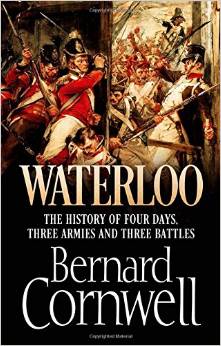
Comments Off on Bernard Cornwell talks about his recent book on Waterloo
Africa: Zulu Empire IV – Last Stands and Changing Fortunes – Extra History
Published on 6 Jun 2015
BONUS! Learn about the Boer Wars and what happened in South Africa during World War I thanks to our friends at the Great War Channel!
THE GREAT WAR Special: http://bit.ly/1HQxP9xLord Chelmsford, the British officer who commanded during the Anglo-Zulu War, vastly underestimated the power and aggression of the Zulu people. He split his army into three separate columns and left one of them stationed at Isandlwana while he searched for Zulu armies on the field. Meanwhile 20,000 Zulus were already flanking his force, but because Lord Chelmsford had not even ordered them to fortify the camp, the Zulu force swept through the ranks and destroyed the British army at Isandlwana. A small group of survivors fled to the hospital at Rorke’s Drift where officer James Dalton organized a desperate defense. Cetshwayo’s half-brother, ignoring orders to halt his pursuit, stormed the hospital with his small force and lost disastrously. Despite this, the main Zulu army continued to hand defeats to the British army until finally the British government stepped in to reinforce them with artillery and extra soldiers. Finally, Great Britain succeeded in capturing both the Zulu capitol at Ulundi and King Cetshwayo himself. They divided Zulu territory into 12 small kingdoms that quickly fell into civil war. Out of desperation, they returned Cetshwayo to the throne, but too late: a rival attacked and killed him. His son Dinuzulu allied with the Boers in an attempt to regain power and independence, but the British seized this excuse to finally annex Zulu land for good in 1887.
Comments Off on Africa: Zulu Empire IV – Last Stands and Changing Fortunes – Extra History
June 16, 2015
The Author of All Quiet on The Western Front – Erich Maria Remarque I WHO DID WHAT IN WW1?
Published on 15 Jun 2015
All Quiet On The Western Front is surely the most prominent anti-war book and book about World War 1 of all time. The German author Erich Maria Remarque fought on the Western Front until he got wounded. During his recovery he collected stories from his comrades and started writing the book. Just one year after publication, a movie was made in the US where Remarque later emigrated to.
Comments Off on The Author of All Quiet on The Western Front – Erich Maria Remarque I WHO DID WHAT IN WW1?
Africa: Zulu Empire III – Diamonds in South Africa – Extra History
Published on 30 May 2015
Europe had a presence in South Africa dating back to 1652, but the colonies and the native tribes really began to clash in the 1800s. The conquest of the Netherlands by Napoleon had left the Dutch colonists in a state of limbo, with the British claiming authority over them despite their homeland being ruled by the French. Many of these settlers, known as the Boers, moved inland to escape British oversight and pushed into land owned by the Zulus. Mpande, the new Zulu leader, attempted to keep the peace between the British and the Boers, but the treaties he negotiated on both sides only led to further conflict. Eventually, his son Cetshwayo peacefully took power over the Zulus around the same time that the Europeans discovered diamonds in South Africa. The government of Great Britain took an even greater interest in South Africa, stepping in to try to bribe or force the reluctant natives to work the diamond mines established by European mining firms. Secretary of State Lord Carnarvon, who was responsible for the unification of colonies in Canada, made it his mission to unify the South African colonies and appointed Henry Bartle Frere as his governor and representative. Bartle Frere removed the local Capetown government, who had been largely sympathetic to the native peoples and opposed his harsh unification policies, then issued harsh and intentionally impossible demands against the Zulu. Cetshwayo refused to accept these demands, and thus began the Anglo-Zulu War of 1879.
Comments Off on Africa: Zulu Empire III – Diamonds in South Africa – Extra History
June 15, 2015
The Key To Success Is Artillery I THE GREAT WAR Week 45
Apologies for presenting this one out of order, but last week was a bit disordered. The next Great War video will be week 47, probably on Friday.
Published on 4 Jun 2015
When Przemysl falls for the 2nd time and when the British and ANZAC troops fail at Gallipoli again, one thing becomes clear: Artillery is the key for future battles. August von Mackensen had used it with great success at the Gorlice-Tarnow-Offensive and the French even diverted one million men to shell factories. Meanwhile German Zeppelins bombed London and the US sent submarines for aid.
Comments Off on The Key To Success Is Artillery I THE GREAT WAR Week 45
Africa – Zulu Empire II – The Wrath of Shaka Zulu – Extra History
Published on 23 May 2015
Shaka sought vengeance for Dingiswayo on Zwide and the Ndwandwe. He expanded his control over the Mtethwa and other tribes, then launched his assault on the Ndwandwe. Shaka scored two crushing victories over the course of an eighteen month war, although Zwide escaped both times. Shaka invaded the main Ndwandwe village, capturing Zwide’s mother and burning her to death in place of her son. Shaka had won the war, but the people he pushed out created a ripple of instability across Africa: the Mfecane or the Crushing. Shaka himself became dangerously disturbed when his mother died and he began to take his grief out on his people. His brothers assassinated him to take the throne, leading to a new king: Dingane. Dingane began to treat with the Dutch colonists in South Africa, but what began as a friendly relationship became a betrayal when he turned on them. Dingane attacked their wagon train at the Battle of Bloody River, but the Dutch with their guns held him off. The Dutch then threw their support behind Dingane’s last surviving brother, Mpande, who successfully overthrew him and became the new Zulu king.
Comments Off on Africa – Zulu Empire II – The Wrath of Shaka Zulu – Extra History
June 14, 2015
Africa: Zulu Empire I – Shaka Zulu Becomes King – Extra History
Published on 16 May 2015
With no written records from the Zulus themselves, historians and anthropologists have pieced together their history from a smattering of sources. We first learn of the Zulu as a minor tribe of the Bantu people, living in South Africa. Shaka Zulu, the man who would organize them into an empire, was born the illegitimate son of a Zulu king. He was sent away with his mother Nandi to grow up in her tribe, the Langeni, but he eventually caught the attention of Dingiswayo, the leader of another powerful tribe called the Mtethwa. Appointed as the leader of a squadron called an ibutho, Shaka developed new tactics including a short “iklwa” fighting spear and a simple but effective military maneuever called “the Bull Horn.” When his father died, Shaka – now a successful military leader – returned with Dingiswayo’s backing to assassinate the rightful heir and assume control of his native tribe. Just a year later, though, the neighboring Ndwandwe tribe murdered Dingiswayo and Shaka vowed revenge on their leader, Zwide. He then launched a bloody war that, combined with the strains created by European colonization, led to the Mefacane, or the Crushing.
Comments Off on Africa: Zulu Empire I – Shaka Zulu Becomes King – Extra History


