A few months back, Sir Humphrey took a look at the British Royal Marines and suggested that they need to “re-marinize” to avoid just being light infantry that wear a different cap badge:
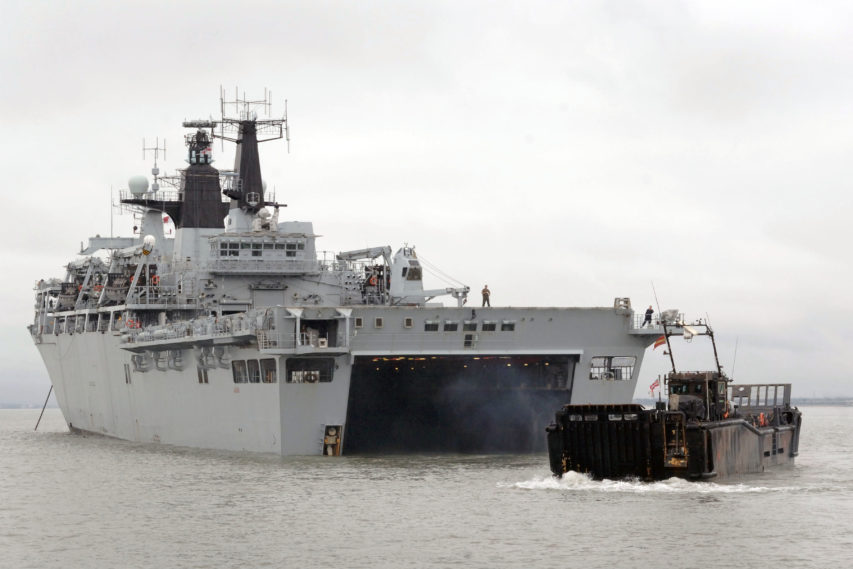
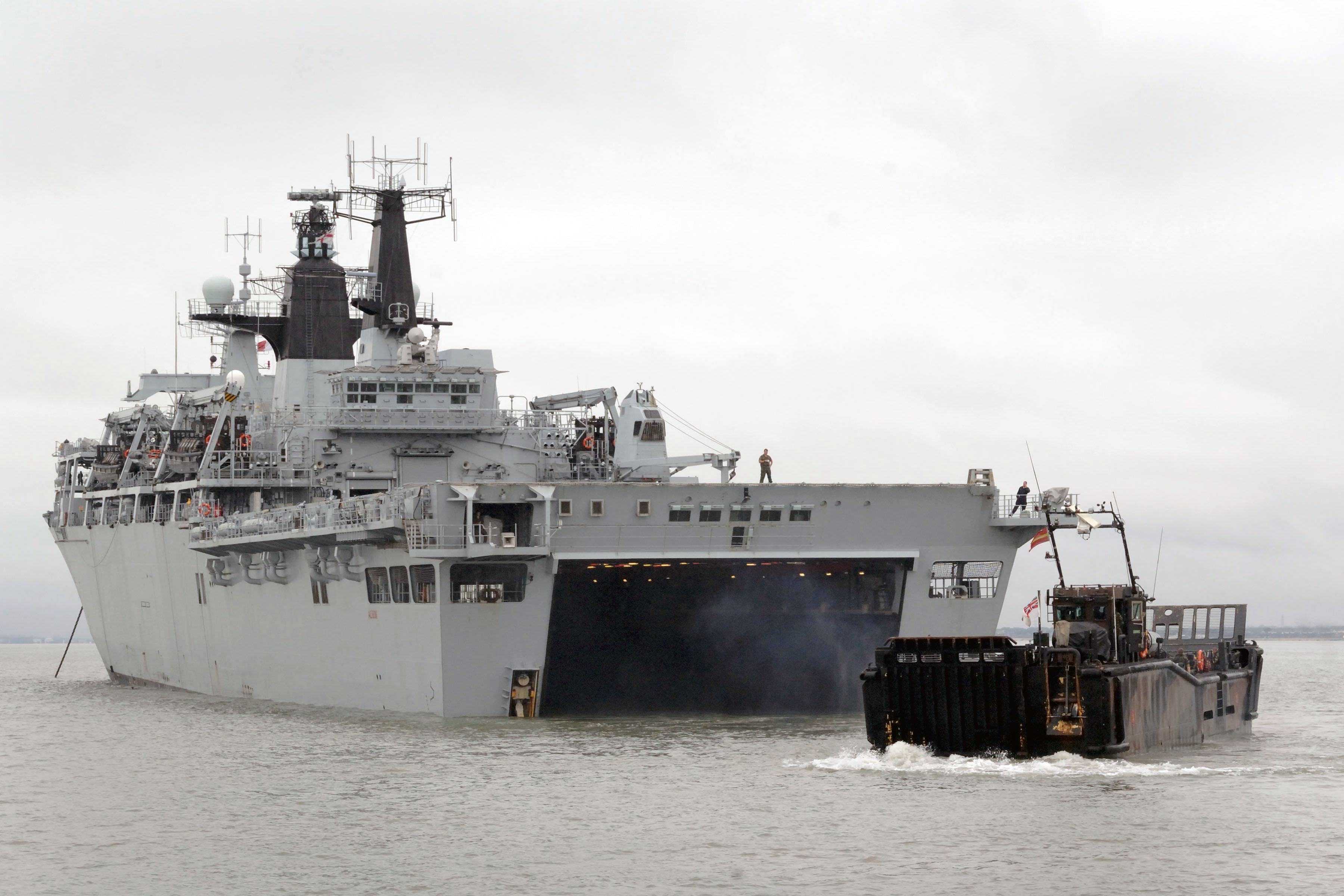
HMS Albion conducts amphibious operations with Landing Craft Utility (LCU) during Exercise Grey Heron off the coast of Portsmouth in 2007.
The Albion Class, Landing Platform Dock ships (LPD) primary function is to embark, transport, and deploy and recover (by air and sea) troops and their equipment, vehicles and miscellaneous cargo, forming part of an Amphibious Assault Force.
(Photo via Wikimedia)
The challenge for the Royal Marines [RM] right now is that they look particularly vulnerable targets, with a highly specialised core role that is increasingly unlikely to be used in anger. The RM and the RN [Royal Navy] have long had a slightly odd, and at times, uneasy relationship. It is often forgotten these days that the role of amphibious warfare isn’t something that really took off until WW2, and that the RM have only been leading on it for about 70 years. Until that point they were arguably merely light infantry embarked on ships and the odd landing party.
[…]
The key point where things began to change was arguably OP HERRICK. At this point the Corps transitioned from being an organisation which fought from the sea onto the land, to one that spent many years focusing on being a land based warfighting force. The depth of commitment to HERRICK meant that the Corps lost a lot of its links to the wider RN; speaking to friends who served in the RM, many remark that during the HERRICK years the RM did very little with the RN at sea. This would have been fine for a short operation, but for a multi-year commitment it meant that an entire generation of Officers and NCOs were growing up who excelled at conventional land warfare, but who had lost touch with their maritime roots.
At the same time, there was a growing sense in some parts of the RN that the RM was arguably a money pit that cost the RN a significant amount of time, money and platforms, but which delivered very little for the RN itself. Tellingly, during the worst years of the piracy issues in Somalia, the RN had to rely heavily on RNR ratings to form ships protection teams, not RM in part reportedly because the RM was so focused on Afghanistan. At a time when the RN was taking heavy cuts to ships and other platforms as part of budget reductions to help deliver success in Afghanistan, there was perhaps some resentment that the Corps delivered little, yet absorbed a huge amount of the Naval Service budget. What is the point of having an amphibious fleet, and maritime amphibious helicopter capability, if your amphibious troops are stuck in a cycle of deploying only to a landlocked country?
[…]
In the current security environment that the UK faces, it is hard to see a need for a major amphibious lift capability to conduct opposed operations. This may sound like heresy to say, but if you consider that any major beach landing would be fraught with risk, and require major military support and logistical access to a port and airhead quickly to succeed, it is hard to see the circumstances where the UK and US would want to conduct such an operation. The political circumstances are such, that it is difficult to see the UK willingly wishing to indulge in a full scale amphibious assault against a hostile nation with a brigade sized force anytime in the future.
There are plenty of situations where the ability to transport equipment and people is vital – for instance conducting a NEO [Noncombatant Evacuation Operation], or moving troops and supplies into a friendly country ahead of a wider land conflict. There are also circumstances where an ‘amphibious raid’ capability is equally important – the ability to quickly send a small number of troops ashore via helicopter or fast landing craft to conduct a specific mission, or diversionary raid is extremely useful.
[…]
For the RM, the chance to re-embark at sea and focus on maritime counter piracy and security could be an opportunity to rebrand and reinvent the organisation, giving it a new lease of life. There is a real and pressing need to marinize the RM again, getting them used to being at sea, not permanently working ashore. At the same time it would free up a lot of highly trained infantry soldiers who could train to deliver boarding teams, and maritime counter piracy duties. This is a deeply complex role that requires a lot of training and support to get right, and is only going to grow in importance over the next few years.
Investing in niche roles such as this, or protection of nuclear weapons, and coupling this with a smaller ability to land raiding parties not brigades has the benefit of making the Corps far more valuable to keep in the long term. Right now it is arguably a light infantry brigade which has some other secondary duties tagged on the side. This is fine, but there are plenty of light infantry brigades out there, and probably too many soldiers in the Army as it is. If the RM were to refocus onto being sea going soldiers again, and deliver a small range of capabilities very well, then this makes them far harder to scrap entirely.



 Private William Penman, Scots Guards, died 16 May, 1915 at