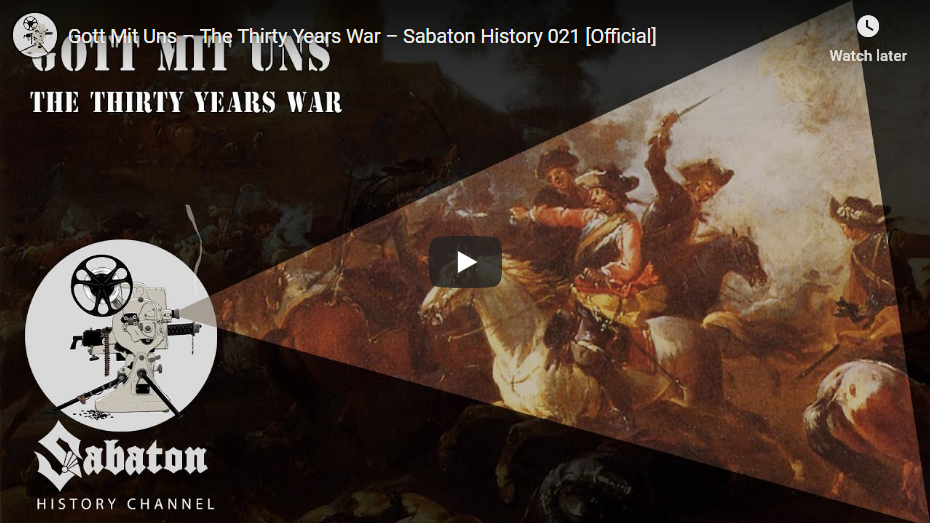
Orwell’s press card portrait, 1943
Our memories are short nowadays, but look back a bit, dig out the files of New Masses or the Daily Worker, and just have a look at the romantic warmongering muck that our left-wingers were spilling at that time. All the stale old phrases! And the unimaginative callousness of it! The sang-froid with which London faced the bombing of Madrid! Here I am not bothering about the counter-propagandists of the Right […]; they go without saying. But here were the very people who for twenty years had hooted and jeered at the “glory” of war, at atrocity stories, at patriotism, even at physical courage, coming out with stuff that with the alteration of a few names would have fitted into the Daily Mail of 1918. If there was one thing that the British intelligentsia were committed to, it was the debunking version of war, the theory that war is all corpses and latrines and never leads to any good result. Well, the same people who in 1933 sniggered pityingly if you said that in certain circumstances you would fight for your country, in 1937 were denouncing you as a Trotsky-Fascist if you suggested that the stories in New Masses about freshly wounded men clamouring to get back into the fighting might be exaggerated. And the Left intelligentsia made their swing-over from “War is hell” to “War is glorious” not only with no sense of incongruity but almost without any intervening stage. Later the bulk of them were to make other transitions equally violent. There must be a quite large number of people, a sort of central core of the intelligentsia, who approved the “King and Country” declaration in 1935, shouted for a “firm line against Germany” in 1937, supported the People’s Convention in 1940, and are demanding a Second Front now.
As far as the mass of the people go, the extraordinary swings of opinion which occur nowadays, the emotions which can be turned on and off like a tap, are the result of newspaper and radio hypnosis. In the intelligentsia I should say they result rather from money and mere physical safety. At a given moment they may be “pro-war” or “anti-war”, but in either case they have no realistic picture of war in their minds. When they enthused over the Spanish war they knew, of course, that people were being killed and that to be killed is unpleasant, but they did feel that for a soldier in the Spanish Republican army the experience of war was somehow not degrading. Somehow the latrines stank less, discipline was less irksome. You have only to glance at the New Statesman to see that they believed that; exactly similar blah is being written about the Red Army at this moment. We have become too civilized to grasp the obvious. For the truth is very simple. To survive you often have to fight, and to fight you have to dirty yourself. War is evil, and it is often the lesser evil. Those who take the sword perish by the sword, and those who don’t take the sword perish by smelly diseases. The fact that such a platitude is worth writing down shows what the years of rentier capitalism have done to us.
George Orwell, “Looking back on the Spanish War”, New Road, 1943 (republished in England, Your England and Other Essays, 1953).
July 12, 2019
July 11, 2019
To lose one VCDS may be regarded as misfortune; to lose five looks like horrific leadership failure
(Apologies to Oscar for my misappropriation of his phrasing for the title of this post.) The current Vice-Chief of the Defence Staff has announced his resignation. Lieutenant General Paul Wynnyk will resign from his current role after rumours circulated that he was to be replaced with former VCDS Vice-Admiral Mark Norman. Ted Campbell has more:
I see, from a story on Global News, broken by Mercedes Stephenson, of Global and David Pugliese (Post Media), two journalists with very good sources inside DND and the Canadian Armed Forces, that “The second in command of Canada’s military Lt.-Gen. Paul Wynnyk is resigning after he said Chief of the Defence Staff General Jonathan Vance planned to replace him as the vice chief of the defence staff with Vice-Admiral Mark Norman … [but] … Vance then reversed that plan weeks later, according to Wynnyk, when Norman settled with the government and retired from the military.”
Lieutenant General “Wynnyk was the fifth vice chief to serve under Vance, and questions are now being raised about his leadership, senior military sources told Global News … [and, the report says] … There are now questions about who will fill the job next. No one appears to be ready, the sources said.” With the utmost respect to Mercedes Stephenson’s sources, who are, I suspect three and two-star admirals and generals, almost any general officer is “ready” to be Vice Chief of the Defence Staff or to fill almost any other “flag” appointment (jobs like surgeon general and the judge advocate general being obvious exceptions). I lived through times when the head of the Army’s equipment engineering branch was not an engineer ~ but was picked specifically because he could lead and manage people and could leave the “engineering” to subordinates, and when a logistics officer ran the Army, to the horror or a few combat branch dinosaurs, and when a Signals officer was Chief of the Defence Staff, too, because, at the time, the top leaders still understood that generals are generalists. I will assert, some will disagree but they are wrong, that almost every rear admiral and major general, from almost every corner of the military, is “ready” right now, to be Chief of the Defence Staff and almost every commodore and brigadier general is equally “ready” to be the Vice Chief. If that is not the case then the Canadian Forces’ leadership system is in a crisis right now, which only a wholesale slaughter of admirals and generals will rectify … or else there will be a slaughter of young Canadian men and women when our armed forces muct face a near-peer enemy.
At the risk of repeating myself:
- The current military command and control (C²) superstructure is beyond bloated, it is morbidly obese;
- The military C² system has things back-asswards ~ staff officers outrank combat commanders. We have commodores and brigadier generals sitting behind big desks in Ottawa when they ought to be commanding flotillas, brigades and air groups. The desks in HQs should be occupied by Navy captains and commanders and Army and RCAF colonels and lieutenant colonels, all of whom are, already, proven executives;
- The CDS should be a three-star officer, a vice admiral or a lieutenant general ~ Canada, with only about 110,000 men and women, regular and reserve, in uniform, doesn’t need a four-star CDS. Reducing her or his rank would be an act “pour encourager les autres;”
- The military’s command culture must start with getting the foundation right. The recruiting, selection, training and development of junior leaders, corporals and 2nd lieutenants (using the Army as my example), must be the highest priority for every single senior officer. If the foundation is solid then developing admirals and generals will not be a problem. If, as I suspect, the foundation is weak, if there is rank inflation, as I assert there is, at the tank/rifle section and troop/platoon command levels, then problems are going to persist and be magnified at the unit (ship, regiment or squadron), formation (group, brigade, wing and higher) and command levels and in National Defence HQ, too. Eventually, if the foundation is weak then we, Canadians will pay the price in blood … the blood of our sons and daughters and grandsons and granddaughters.
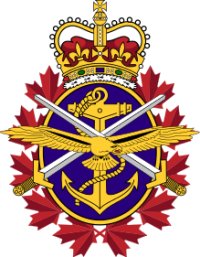
Unofficial High Speed Tour of Borden Base Military Museum
The_Chieftain
Published on 8 Jun 2019Canadian Forces Base Borden is located about an hour’s drive North of Toronto. The base is open access, so anyone can go to the museum.
In addition to the vehicles at the museum, there are others scattered as monuments around the base. I encountered a T-72 and T-55 on my way out the gate.
July 9, 2019
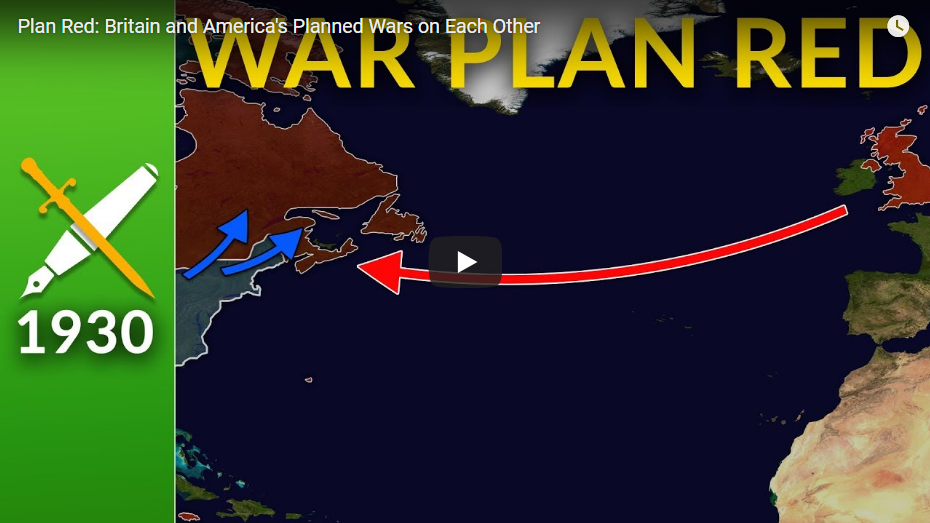
Plan Red: Britain and America’s Planned Wars on Each Other
Historigraph
Published on 27 Jan 2019If you enjoyed this video and want to see more made, consider supporting my efforts on Patreon: https://www.patreon.com/historigraph
Check out my other videos here: https://www.youtube.com/playlist?list…
#WarPlanRed #Historigraph
► Twitter: https://twitter.com/historigraph
►Patreon: https://www.patreon.com/historigraph
►Discord: https://discord.gg/f8JZw93
►My Gaming Channel: https://www.youtube.com/c/Addaway
►My Twitch: https://www.twitch.tv/addawaySources:
Christopher M. Bell, “Thinking the Unthinkable: British and American Naval Strategies for an Anglo-American War, 1918-1931”, The International History Review, Vol. 19, No. 4 (Nov. 1997).
Kevin Lippert, War Plan Red: The United States’ Plan to Invade Canada and Canada’s Secret Plan to Invade The United States (New York: Princeton Architectural Press, 2015)
Stephen Roskill, Churchill and the Admirals
Ben Wilson, Empire of the Deep: The Rise and Fall of the British Navy
July 7, 2019
Joan of Arc – The Mad King – Extra History – #1
Extra Credits
Published on 6 Jul 2019Before we can really get into Joan of Arc’s life, we have to get a bit into the civil war between the Burgundians and the Armagnacs. Time for some royal family drama with King Charles VI’s madness and Queen Isabeau’s friend Louis.
Follow us on Instagram: http://bit.ly/ECisonInstagram
Join us on Patreon! http://bit.ly/EHPatreon
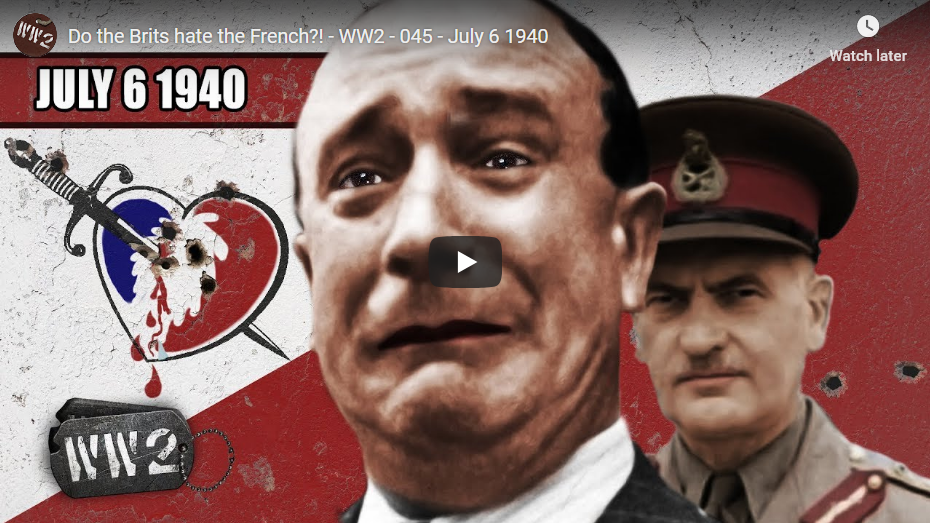
Do the Brits hate the French?! – WW2 – 045 – July 6 1940
World War Two
Published on 6 Jul 2019The repercussions of the fall of France are not yet seen in full. But this week Britain makes it clear it isn’t about to give up, even if it will mean some really hard decisions.
Join us on Patreon: https://www.patreon.com/TimeGhostHistory
Or join The TimeGhost Army directly at: https://timeghost.tvFollow WW2 day by day on Instagram @World_war_two_realtime https://www.instagram.com/world_war_t…
Join our Discord Server: https://discord.gg/D6D2aYN.
Between 2 Wars: https://www.youtube.com/playlist?list…
Source list: http://bit.ly/WW2sourcesWritten and Hosted by: Indy Neidell
Produced and Directed by: Spartacus Olsson and Astrid Deinhard
Executive Producers: Bodo Rittenauer, Astrid Deinhard, Indy Neidell, Spartacus Olsson
Creative Producer: Joram Appel
Research by: Indy Neidell
Post production director: Wieke Kapteijns
Edited by: Iryna Dulka
Map animations: EastoryColorisations by Daniel Weiss, Norman Stewart and Julius Jääskeläinen https://www.facebook.com/JJcolorization/
Eastory’s channel: https://www.youtube.com/channel/UCEly…
Archive by Screenocean/Reuters https://www.screenocean.com.Sources:
WM: H 4610, A 3589
Narodowe Archiwum Cyfrowe
Jacques Mulard
Colorization of Göring by Klimbim
Romanian National ArchivesA TimeGhost chronological documentary produced by OnLion Entertainment GmbH.
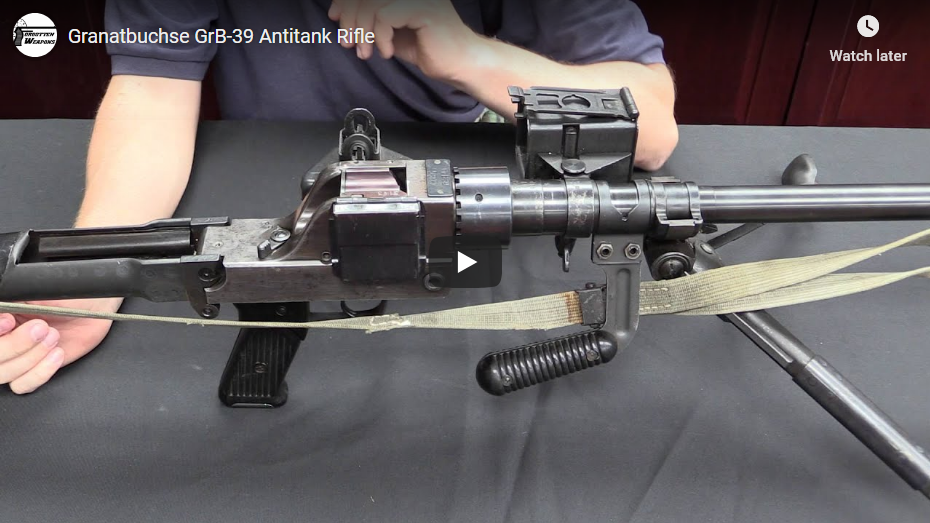
Granatbuchse GrB-39 Antitank Rifle
Forgotten Weapons
Published on 29 Aug 2015http://www.patreon.com/ForgottenWeapons
Hammer price: $13,000
Like most countries, Germany had a standard-issue antitank rifle when World War II began — the Panzerbuchse 39. It fired an 8 x 94mm cartridge with a small very high velocity armor-piercing bullet. And like the other AT rifles from the 1930s, the PzB-39 became obsolete quickly as tank armor improved during the war. However, while most countries simply scrapped their antitank rifles, the Germans opted instead to convert the guns into dedicated grenade launchers.
Because the PzB-39 was already designed for a very high pressure cartridge, it was ideally suited to handle the stresses of firing large anti-tank grenades. Rather than relying on simple kinetic energy to penetrate, the grenades could use shaped charge technology to be vastly more effective than AP bullets.
In converting the PzB-39 into the GrB-39, the barrels were cut down, grenade launching cups attached to the muzzles, new sights designed for grenade use, bipods lengthened, and the folding stocks were fixed in place. Most of the PzB-39 rifles in service were subject to these modifications, and the resulting GrB-39 guns were able to be reasonably effective through the end of the war.
July 5, 2019
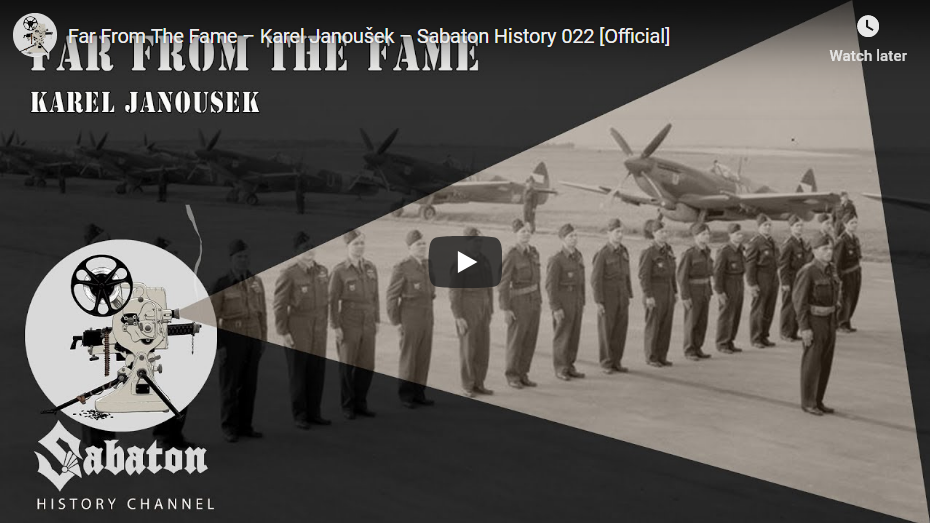
“Far From The Fame” – Karel Janoušek – Sabaton History 022 [Official]
Sabaton History
Published on 4 Jul 2019The life of Karel Janoušek is anything but ordinary. Throughout his live, he served in the militaries and air forces of multiple countries, but time and again he ends up fighting for his native Czechoslovakia. The Sabaton song “Far from the Fame” on the Heroes album describes his life, his adventures and his experiences.
Support Sabaton History on Patreon: https://www.patreon.com/sabatonhistory
Check out the trailer for Sabaton’s new album The Great War right here: https://www.youtube.com/watch?v=HCZP1…
Listen to Sabaton on Spotify: http://smarturl.it/SabatonSpotify
Official Sabaton Merchandise Shop: http://bit.ly/SabatonOfficialShopHosted by: Indy Neidell
Written by: Markus Linke and Indy Neidell
Directed by: Astrid Deinhard and Wieke Kapteijns
Produced by: Pär Sundström, Astrid Deinhard and Spartacus Olsson
Creative Producer: Joram Appel
Executive Producers: Pär Sundström, Joakim Broden, Tomas Sunmo, Indy Neidell, Astrid Deinhard, and Spartacus Olsson
Maps by: Eastory
Edited by: Iryna Dulka
Sound Editing by: Marek KaminskiEastory YouTube Channel: https://www.youtube.com/channel/UCEly…
Archive by: Reuters/Screenocean https://www.screenocean.com
Music by Sabaton.Source:
Icon by Stephen Hutchings from iconfinder.com
IWM: 1034-4, Q 97835, Q 112704, Q 112720, D 1730, CH 15869, H 26244, CL 3333), D 10206An OnLion Entertainment GmbH and Raging Beaver Publishing AB co-Production.
© Raging Beaver Publishing AB, 2019 – all rights reserved.
July 4, 2019
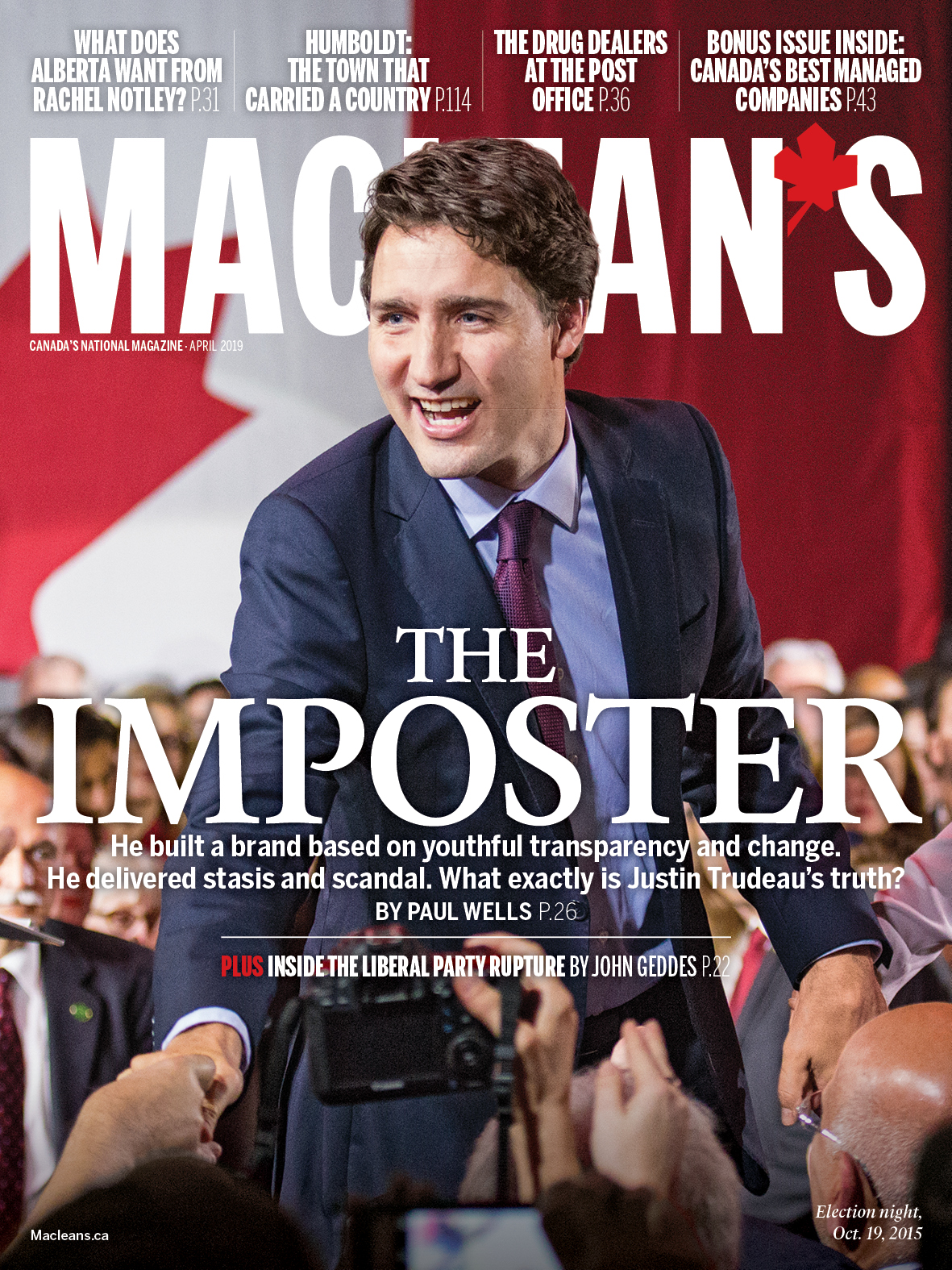
Is there a country with which Justin Trudeau hasn’t messed up Canada’s relationship?
Ted Campbell responds at some length to a Globe and Mail article by Doug Saunders, outlining the degradation of diplomatic relations with almost all our allies and trading partners since Justin Trudeau became PM.
The Globe and Mail‘s award-winning international affairs correspondent Doug Saunders, someone with whom I (almost equally) often disagree and agree, has penned an insightful piece in the Good Grey Globe in which he says that “Suddenly, Canada finds itself almost alone in the world, with a Liberal government realizing that its optimistic foreign policy no longer entirely makes sense … [but, he concludes] … Even if the current crisis in liberal democracy proves temporary and short-lived, we know that it can recur – and likely will. If the institutions of 1945 no longer work and the doctrines of 2015 have failed to have an effect, we should develop new ones that will keep Canada connected to the better parts of the world for the rest of the century.”
[…]“After the Second World War,” Mr Saunders writes, “Canada gained a few more foreign-policy outlets. Canada played a large role in creating the institutions that governed the postwar peace: the United Nations and its various organizations; NATO; the global trade body that became the World Trade Organization; the Bretton Woods institutions, including the International Monetary Fund and the World Bank. Canada was decisive in the international agreement that authorized the future creation of the twin states of Israel and Palestine, giving it a role in the Middle East that expanded with its creation of the institution of peacekeeping after the Suez Crisis in 1956 … [but this really is a silly statement, albeit one that too many Canadians believe to be true. Canada didn’t create the “institution of peacekeeping” in 1956. It was already there, in the United Nation’s case since Ralph Bunch (USA) and Sir Brian Urquhart (UK) created it in 1948 and it had been around since, at least, Woodrow Wilson’s 14 Points speech in 1918, but it is now part of the Laurentian Elite‘s quite dishonest revisions of Mike Pearson’s sterling legacy as a diplomat and politician] … And, starting in the 1950s, Canada became a player and a spender in the new field of foreign aid and development. Under both Liberal and Progressive Conservative governments, Canada used those tools to play a small but well-regarded place in the liberal-democratic order – and to slowly but profitably build its trade and economic relations.”
[…]
I agree with Doug Saunders about the sources of Canada’s current weakness. He neglected to mention the root cause: Pierre Trudeau explicitly rejected, in the late 1960s, the “St Laurent Doctrine” and replaced it with a social “culture of entitlement” which meant that our place in the world had to be sacrificed on the altar of a reinforced social safety net. I agree that Donald J Trump is the key to our and the West’s current angst and confusion, not Vladimir Putin, Xi Jinping or Arab terrorists, all of whom are easier to understand, but I would argue that we would be much better placed to cope with president trump and the 21st century had we not abandoned our role as a leading middle power circa 1970. I have reservations about all three of Mr Saunder’s prescriptions:
- I’m not sure another G-N, not even a “committee to save the world” is a really good idea;
- I am nervous about interfering in the internal affairs of other countries ~ think about “do unto others” and all that; and
- I really doubt that Canadians are ready to spend what’s needed on our defence and, I suspect, they will not be until it is (almost) too late.
Like Mr Saunders, Mr Lang and Professor Paris, I, too, want to save the liberal world order and Canada’s place in it; I’m just not sure that any of the proposed solutions offered by Doug Saunders, by Eugene Lang or even by Professor Roland Paris are going to be enough. I think we need less formality and fewer organizations in international actions and a lot more ad hocery. I hope that we will have new, adult leadership here in Canada in the fall of 2019 and I hope that a new, grownup prime minister will begin, quickly, to mend relations with Australia, India, Japan and the Philippines and other Asian nations, to shore up our relations with Europe and, especially, with Iceland, the Netherlands, Norway, Switzerland and UK. I also hope Canada will open new, more productive dialogues with Africa, the Caribbean and Latin America and with Iran, Russia and China, also. I am convinced that Professor Stein is correct and we must have an “interests-based,” even a selfish suite of foreign, defence, immigration and trade policies. We should not go about looking for enemies, but we must understand that we have precious few friends and, for now, we cannot count on America to be one of them. America, Australia and Britain, China, Denmark and India, Japan, Mexico and the Philippines, and Singapore and Senegal, too, will all act in pursuit of their own interests; Canada needs to be willing and able to do the same and to work with them, even with Donald Trump’s America and Xi Jinping’s China and Vladimir Putin’s Russia when our interests converge and, politely, stand aside when they diverge. The G7 and G20 and a proposed new G9 are all harmless, but also, largely useless, talking shops. Both diplomacy and foreign affairs must be conducted on a case-by-case, country-by-country, issue-by-issue and interest-by-interest basis and diplomacy and foreign affairs can only be conducted with positive effect when Canada is respected for both its examples and values (soft power) and for its hard, economic and military power, too.
Thus, the first step in doing our part to “save the world” is probably the one that most Canadians will have near the bottom of their priority list: rebuilding Canada’s military ~ which must start, after a lot of the fat has been trimmed from a morbidly obese military command and control (C²) superstructure, with steadily growing the defence budget … and that cannot happen until the economy is firing on all cylinders, including energy exports to the world.
July 3, 2019
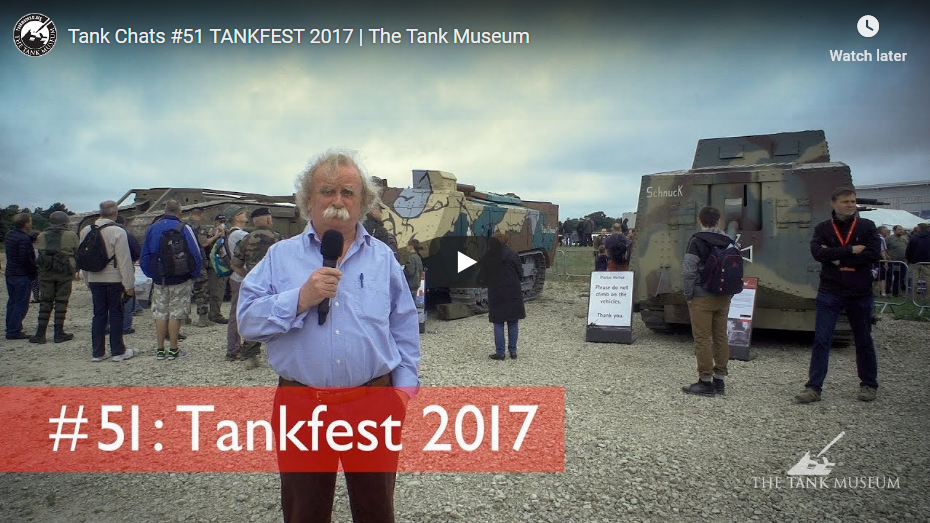
Tank Chats #51 TANKFEST 2017 | The Tank Museum
The Tank Museum
Published on 25 May 2018At TANKFEST 2017, the Musée des Blindés brought their unique Saint Chamond tank, which sat alongside the Museum’s replica Mark IV and A7V. David Fletcher took the opportunity to talk about the three First World War vehicles as they stood side-by-side.
Support the work of The Tank Museum on Patreon: ► https://www.patreon.com/tankmuseum
Or donate http://tankmuseum.org/support-us/donateVisit The Tank Museum SHOP: ►https://tankmuseumshop.org/
Twitter: ► https://twitter.com/TankMuseum
Tiger Tank Blog: ► http://blog.tiger-tank.com/
Tank 100 First World War Centenary Blog: ► http://tank100.com/ #tankmuseum #tanks
July 2, 2019
Rebecca Jensen on strategy, tactics and the need for a Canadian approach to “operational art”
Rebecca Jensen’s submission was selected as one of five winners of the 2018 Defence and Security Essay Competition:
Over 12 years, the Canadian military involvement in Afghanistan cost 162 lives, more than 10 times as many wounded, and $18 billion in direct costs. While the tactical capabilities of the Canadian Armed Forces were widely praised, it is unclear what benefit Canada or Afghanistan realized for this steep investment of blood and treasure.
“Operational art” is the term used in defence circles to describe the alignment of tactical accomplishments with strategic ends, since tactical victories alone, as coalition forces have learned in Afghanistan, do not ensure success. The development of a more rigorous approach to operational art in the CAF would help to shrink the gap between tactical accomplishments and strategic stagnation in future conflicts, particularly in coalition missions involving stabilization and development elements.
Operational art connects tactical activities to strategic objectives. Principle elements include the coordination of tactical efforts in space and time to achieve national goals, as well as the balancing of resources and risk. Fighting as part of a coalition, and in complex contingency operations that include elements of stability operations and conventional warfighting, makes the practice of operational art more difficult, as it increases the factors shaping inputs, the environment, and desired outcomes. In particular, it requires coalition members to account for, if not balance, coalition and national objectives, which may differ or even be at odds with each other.
The Canadian army adopted much US thinking about operational art in the 1980s. Confronted by a conflict in Afghanistan very different from that for which it had trained, the CAF reacted similarly, grafting American doctrine and perspectives onto the army’s existing thought and practices. Given the need for rapid adaptation in Afghanistan within an US-dominated coalition effort, this graft made had a pragmatic logic to it, but in the longer term, it is no substitute for the development of organic Canadian thought on the planning and conduct of war.
The publication of Land Operations [PDF] by Canada’s director of army doctrine in 2008 represented an important step in that direction. Crucially, it recognized the complexity of wars like Afghanistan, and the centrality of relationships with other services, nations, and agencies. However, the emphasis on particular end states, and the dualism implicit in the siloing of fires and influence operations, which take place on the physical and psychological planes respectively per the manual, is reductive and linear. When termination criteria include objectives as subjective and complex as a “stable and legitimate host government,” the military can more helpfully plan [PDF] for progress toward that state than be charged with achieving a particular result. While some military activities will be more concerned with influence than maneuver and vice versa, it is similarly unproductive to prompt the military to be aware of the physical and psychological planes. Not only are the moral and the material affected by any action, they are frequently irreducibly interconnected.
July 1, 2019
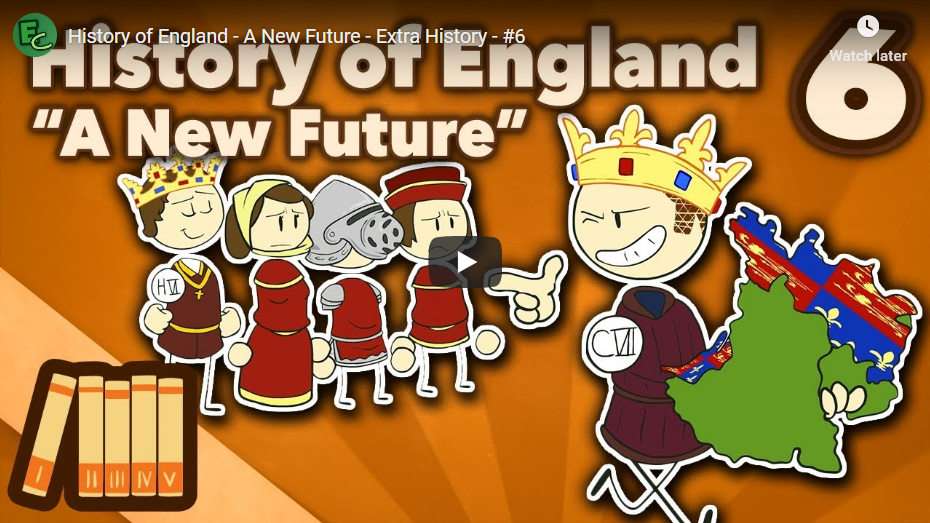
History of England – A New Future – Extra History – #6
Extra Credits
Published on 29 Jun 2019The 116-year struggle helped define and unite the English. In France, the wars forced the kings to tackle the separatist forces, and France would become the undisputed arbiter of Europe.
Thanks again to David Crowther for writing AND narrating this series! https://thehistoryofengland.co.uk/pod…
Join us on Patreon! http://bit.ly/EHPatreon
June 30, 2019
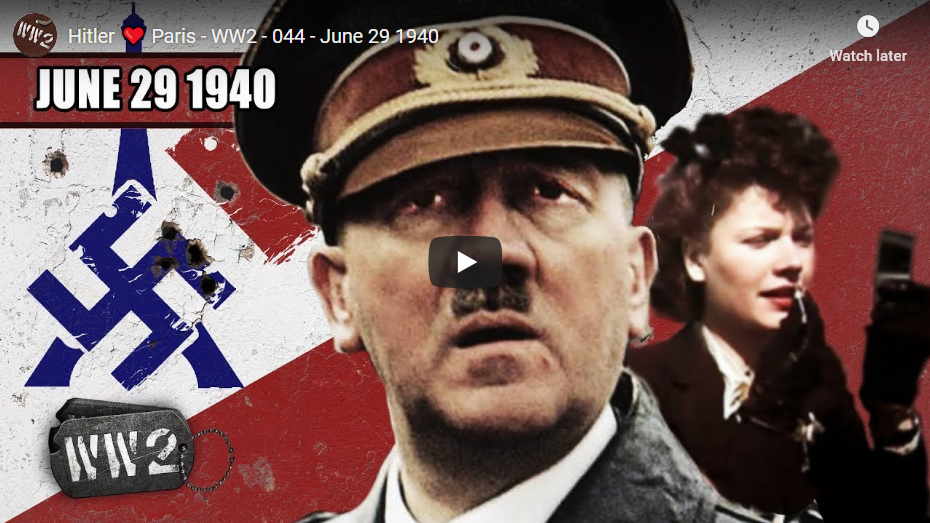
Hitler ❤️ Paris – WW2 – 044 – June 29 1940
World War Two
Published on 29 Jun 2019Hitler goes to Paris, while Stalin occupies more territory… but something is on Stalin’s mind. News of the sudden success of the Wehrmacht in the West is not what he had hoped for. Churchill also looks to the West for help while a German invasion of the British Isles seems imminent. Far East the Japanese are on the advance.
Join us on Patreon: https://www.patreon.com/TimeGhostHistory
Or join The TimeGhost Army directly at: https://timeghost.tvFollow WW2 day by day on Instagram @World_war_two_realtime https://www.instagram.com/world_war_t…
Join our Discord Server: https://discord.gg/D6D2aYN.
Between 2 Wars: https://www.youtube.com/playlist?list…
Source list: http://bit.ly/WW2sourcesWritten and Hosted by: Indy Neidell
Produced and Directed by: Spartacus Olsson and Astrid Deinhard
Executive Producers: Bodo Rittenauer, Astrid Deinhard, Indy Neidell, Spartacus Olsson
Creative Producer: Joram Appel
Post Production Director: Wieke Kapteijns
Research by: Indy Neidell
Edited by: Iryna Dulka
Map animations: EastoryColorisations by Norman Stewart and Julius Jääskeläinen https://www.facebook.com/JJcolorization/
Eastory’s channel: https://www.youtube.com/channel/UCEly…
Archive by Screenocean/Reuters https://www.screenocean.com.A TimeGhost chronological documentary produced by OnLion Entertainment GmbH.
From the comments:
World War Two
2 days ago
We have been experimenting with some “catchier” titles in the last couple of weeks. At the moment, YouTube mainly looks at two things when deciding how often to recommend our videos. The first is average watch time. We’re doing great there. The second is called “click through rate”, which means the percentage of recommended videos getting clicked. That puts a huge emphasis on titles and thumbnails. So, we’ve been doing this and it has been quite successful in terms of viewer and subscriber growth. This has caused a great rise of comments as well, and as we still want to read everything and answer most of you, we have asked some community members to help us out. We are using software allowing to review, assign and share comments. This does mean that not all comments are made by someone you know (although Spartacus and Joram are still commenting a lot). We might later decide to have everyone commenting use their own name or a pseudonym, so you know who did the commenting. Just wanted to share that.Cheers,
Joram
June 29, 2019
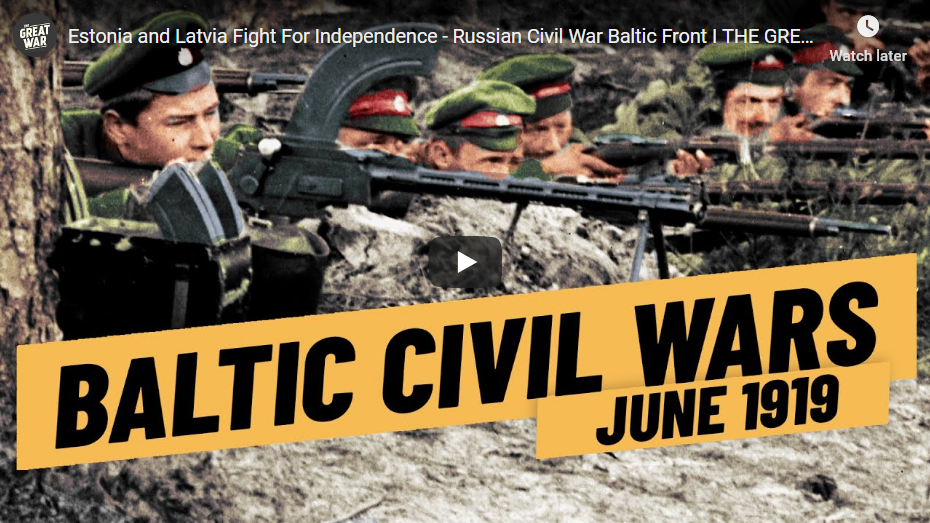
Estonia and Latvia Fight For Independence – Russian Civil War Baltic Front I THE GREAT WAR June 1919
The Great War
Published on 28 Jun 2019GAME OF TRENCHES: The first 20 players to register at: http://bit.ly/GameOfTrenches will receive in-game rewards worth a total of 10 600 Gold
Estonia and Latvia had declared their independence from Russia in the late 1918 chaos. Over the spring of 1919 both countries’ new governments needed to defend that independence not only against the Russian Bolsheviks: there was also a violent internal struggle about the future of these countries. The Baltic Germans didn’t want to give up their social status and the even the anti-Bolshevik Russians considered the Baltics as part of the Russian Empire.
» SUPPORT THE CHANNEL
Patreon: https://www.patreon.com/thegreatwar
Merchandise: https://shop.spreadshirt.de/thegreatwar/» SOURCES
Bennett, Geoffrey Martin. Cowan’s War. The Story of British Naval Operations in the Baltic, 1918-1920 (London: Collins, 1964)Chester, Geoff. “When the Capital of Latvia was a Ship Called Saratov” (Deep Baltic, 2016). https://deepbaltic.com/2016/06/13/whe…
Fletcher, William A. “The British Navy In the Baltic, 1918-1920. Its Contribution to the Independence of the Baltic Nations”. Journal of Baltic Studies, Vol. 7, No. 2, Summer 1976, p. 134-144.
Gerwarth, Robert. The Vanquished. Why the First World War Failed to End, 1917-1923 (Penguin, 2017).
Hatlie, Mark R. Riga at War 1914-1919. War and Wartime Experience in a Multi-ethnic Metropolis (Marburg: Herder-Institut, 2014). https://digital.herder-institut.de/pu…
Jēkabsons, Ēriks: “Cēsis, Battle of”, in: 1914-1918-online. International Encyclopedia of the First World War, ed. by Ute Daniel, Peter Gatrell, Oliver Janz, Heather Jones, Jennifer Keene, Alan Kramer, and Bill Nasson, issued by Freie Universität Berlin, Berlin 2014-10-08. https://encyclopedia.1914-1918-online…
Ibid. “The Latvian War of Independence 1918-1920 and the United States”. In: Fleishman L., Weiner A. (ed). War, Revolution, and Governance: The Baltic Countries in the Twentieth Century (Boston, 2018).
Kirby, David. The Baltic World 1772–1993. Europe’s Northern Periphery in an Age of Change. (London: Longman, 1995).
Raun, Toivo U. Estonia and the Estonians, 2nd ed. (Stanford: Hoover, 2002).
Sammartino, Annemarie H. The Impossible Border: Germany and the East, 1914–1922 (Cornell, 2014).
Sullivan, Charles L. “The 1919 German Campaign in the Baltic. The Final Phase.” In The Baltic States in Peace and War, 1917–1945, ed. V. Stanley Vardys and Romuald J. Misiunas, 31-42. (University Park: Penn State, 1978).
Tammela, Mari-Leen. Saaremaa Uprising. Estonica (Estonian Institute, 2012). http://www.estonica.org/en/Saaremaa_U…
Uustalu, Evald. The History of Estonian People (London: Boreas, 1952).
Von Rauch, Georg. The Baltic States. The Years of Independence 1917-1940 (London: Hurst, 1995).
Smele, Jonathan. The ‘Russian’ Civil Wars, 1916-1926: Ten Years That Shook the World (Oxford University Press: 2016)
Palmer, Alan. Northern Shores: A History of the Baltic Sea and Its Peoples (John Murray, 2005)
»CREDITS
Presented by: Jesse Alexander
Written by: Jesse Alexander
Director: Toni Steller & Florian Wittig
Director of Photography: Toni Steller
Sound: Toni Steller
Editing: Toni Steller
Mixing, Mastering & Sound Design: http://above-zero.com
Motion Design: Christian Graef – GRAEFX
Maps: Daniel Kogosov (https://www.patreon.com/Zalezsky)
Research by: Jesse Alexander
Fact checking: Florian WittigChannel Design: Alexander Clark
Original Logo: David van StepholdA Mediakraft Networks Original Channel
Contains licensed material by getty images
All rights reserved – Real Time History GmbH 2019
June 28, 2019
“Gott Mit Uns” – The Thirty Years War – Sabaton History 021 [Official]
Sabaton History
Published on 27 Jun 2019The Sabaton Song “Gott Mit Uns” is about the Battle of Breitenfeld, fought between the Swedish under command of King Gustavus Adolphus and the Holy Roman Empire under Count Tilly. This battle was hugely influential in the Thirty Years War and the religious wars that were plaguing Europe in the 17th century.
Support Sabaton History on Patreon: https://www.patreon.com/sabatonhistory
Listen to Carolus Rex (where “Gott Mit Uns” is featured):
CD: http://bit.ly/CarolusRexStore
Spotify: http://bit.ly/CarolusRexSpotify
Apple Music: http://bit.ly/CarolusRexAppleMusic
iTunes: http://bit.ly/CarolusRexiTunes
Amazon: http://bit.ly/CarolusRexAmz
Google Play: http://bit.ly/CarolusRexGooglePlayCheck out the trailer for Sabaton’s new album The Great War right here: https://www.youtube.com/watch?v=HCZP1…
Hosted by: Indy Neidell
Written by: Markus Linke and Indy Neidell
Directed by: Astrid Deinhard and Wieke Kapteijns
Produced by: Pär Sundström, Astrid Deinhard and Spartacus Olsson
Creative Producer: Joram Appel
Executive Producers: Pär Sundström, Joakim Broden, Tomas Sunmo, Indy Neidell, Astrid Deinhard, and Spartacus Olsson
Maps by: Eastory
Edited by: Iryna Dulka
Sound Editing by: Marek KaminskiEastory YouTube Channel: https://www.youtube.com/channel/UCEly…
Archive by: Reuters/Screenocean https://www.screenocean.com
Music by Sabaton.Sources:
– National museum
– National Portrait GalleryAn OnLion Entertainment GmbH and Raging Beaver Publishing AB co-Production.
© Raging Beaver Publishing AB, 2019 – all rights reserved.