Quotulatiousness

July 31, 2020

“Coat Of Arms” – The Greco-Italian War – Sabaton History 078 [Official]

Filed under: Europe, Greece, History, Italy, Media, Military, WW2 — Tags: , , , — Nicholas @ 04:00

Sabaton History
Published 30 Jul 2020

Morning of October 28th, 1940.

The Italian ambassador to Greece had entered the house of Greek Prime Minister Ioannis Metaxas. An unacceptable ultimatum in hand, he demanded subjugation under Italian rule. Refusal would mean war. An ardent Ochi! was the answer. No, the Greek would not bow to fascist demands, but instead fight for the defense of their country and their honor. What followed were months of bitter fighting in the harsh environment of Epirus and the Macedonian mountains.

The Greco-Italian War.

Support Sabaton History on Patreon: https://www.patreon.com/sabatonhistory

Listen to “Coat Of Arms” on the album Coat Of Arms:
CD: http://bit.ly/CoatOfArmsStore
Spotify: http://bit.ly/CoatOfArmsSpotify
Apple Music: http://bit.ly/CoatOfArmsAppleMusic
iTunes: http://bit.ly/CoatOfArmsiTunes
Amazon: http://bit.ly/CoatOfArmsAmzn
Google Play: http://bit.ly/CoatOfArmsGooglePlay

Watch the Official Music Video of “Coat Of Arms” here:
https://youtu.be/wtax3Fl-UZo

The episode of WW2 in Real-Time Indy was talking about: https://www.youtube.com/watch?v=GYznP…

Listen to Sabaton on Spotify: http://smarturl.it/SabatonSpotify
Official Sabaton Merchandise Shop: http://bit.ly/SabatonOfficialShop

Hosted by: Indy Neidell
Written by: Markus Linke and Indy Neidell
Directed by: Astrid Deinhard and Wieke Kapteijns
Produced by: Pär Sundström, Astrid Deinhard and Spartacus Olsson
Creative Producer: Joram Appel
Community Manager: Maria Kyhle
Executive Producers: Pär Sundström, Joakim Broden, Tomas Sunmo, Indy Neidell, Astrid Deinhard, and Spartacus Olsson
Post-Production Director: Wieke Kapteijns
Edited by: Karolina Dołęga
Sound Editing by: Marek Kaminski
Maps by: Eastory – https://www.youtube.com/c/eastory
Archive by: Reuters/Screenocean https://www.screenocean.com
Music by Sabaton

Sources:
Bundesarchiv
Narodowe Archiwum Cyfrowe
Imperia War Museums: 205197881
Diplomatic and Historical Archive Department
Italian map by F l a n k e r from Wikimedia
The icons from Noun Project: Oksana Latysheva, Wichai Wi, baken studio, ProSymbols

An OnLion Entertainment GmbH and Raging Beaver Publishing AB co-Production.

© Raging Beaver Publishing AB, 2019 – all rights reserved.

July 29, 2020

What was TEKOI?

Filed under: History, Military, Russia, USA, Weapons — Tags: , , , , — Nicholas @ 04:00

CGP Grey
Published 28 Jul 2020

## Related Videos

Exploring Tekoi: https://www.youtube.com/watch?v=ABMV4…

Defeated by Tumbleweeds: https://www.youtube.com/watch?v=7FeXP…

## Special Thanks

Gregory Waltz

## Crowdfunders

Steven Snow, Bob Kunz, John Buchan, Nevin Spoljaric, Donal Botkin, BN-12 , Chris Chapin, Richard Jenkins, Phil Gardner, Martin, Steven Grimm, سليمان العقل, Elliot Lepley, Colin Millions, David F Watson, Saki Comandao, Ben Schwab, Jason Lewandowski, Bobby, rictic, Marco Arment, Shallon Brown, Shantanu Raj, emptymachine, George Lin, Jeffrey Podis, Ben Delo, Henry Ng, Thunda Plum, Awoo, David Tyler, Fuesu, iulus, Jordan Earls, Joshua Jamison, Nick Fish, Nick Gibson, Tyler Bryant, Zach Whittle, Oliver Steele, Kermit Norlund, Derek Bonner, Derek Jackson, Mikko, Orbit_Junkie, Ron Bowes, Tómas Árni Jónasson, Andrew Bereza, Rebecca Wortham, Bryan McLemore, Bear, chrysilis, David Palomares, Emil, Erik Parasiuk, Esteban Santana Santana, Freddi Hørlyck, John Rogers, ken mcfarlane, Leon, Maarten van der Blij, Peter Lomax, Rhys Parry, ShiroiYami, Tristan Watts-Willis, Veronica Peshterianu, Dag Viggo Lokøen, Essa omar, Ryan Richards, Alex Simonides, Felix Weis, John Lee, Maxime Zielony, Melvin Sowah, Elizabeth Keathley, Christopher Mutchler, Giulio Bontadini, Paul Alom, Ryan Tripicchio, Scot Melville, Kyle Wayman, Julien Dubois

## Music

David Rees: http://www.davidreesmusic.com

Update: CGP Grey posted a corrected version of this video here – https://www.youtube.com/watch?v=PCeMCwxayp0
He also posted the Director’s Commentary video (originally intended only for his Patrons) here – https://www.youtube.com/watch?v=ufsYK3Eecw4
There is also a video explaining how the whole process worked and how the error was missed, if you’re interested.

America’s First Assault Rifle: Burton 1917 LMR

Filed under: History, Military, USA, Weapons, WW1 — Tags: , , , , , — Nicholas @ 02:00

Forgotten Weapons
Published 4 Jul 2016

http://www.patreon.com/ForgottenWeapons
https://centerofthewest.org/explore/f…

America’s first assault rifle? Well, it does meet all the requirements — select-fire, intermediate cartridge, and shoulder-fired. It was never actually fielded, though.

The Burton Light Machine Rifle was developed during World War One, with the firing model completed in 1917. It was intended as an aircraft observer’s weapon for attacking balloons — a role which required incendiary ammunition. With this in mind, Winchester’s Frank Burton adapted the .351 WSL cartridge from his 1905 and 1907 self-loading rifles into the .345 WSL, with a spitzer bullet. He designed an open-bolt, select-fire shoulder rifle to fire it, which became known as the Light Machine Rifle.

Burton’s rifle was to be usable both in an aircraft where it could be fixed to a Scarff mount for a wide field of fire or used by an individual on the ground, fired from the shoulder. It weighed in at just about 10 pounds (4.5kg) and had a pistol grip and straight-line design to bring the recoil impulse directly into the shooter’s shoulder and minimize rise during automatic fire. The barrel was finned for better cooling, and infantry barrels were equipped with bayonet lugs.

The most distinctive elements of the design, of course, are the dual top-mounted magazines. Each one holds 20 rounds, and each has a pair of locking catches. One position locks the magazine into a feeding position, and the other holds it up above the cycling of the bolt. The idea here was to keep a second loaded magazine easily accessible for an aerial observer, so they could reload without having to find another magazine somewhere in the aircraft. Contrary to some speculation, there is no automatic transition between magazines. When one is empty, the shooter must pull it back to the second locking position (or out of the gun entirely) and then push the second magazine down into feeding position.

Despite Burton’s work — which was well ahead of its time — the LMR had been rendered obsolete for its primary role by the time it was ready. Synchronized, forward-mounted Vickers machine guns firing 11mm incendiary ammunition were being mounted on aircraft, and were more effective on balloons and airplanes than Burton’s weapon would have been. Only this single example was ever made, and it was not presented for infantry consideration as far as I can tell. It was lost for many years before being discovered in a Winchester building, and eventually ending up in the Cody Firearms Museum with the rest of the Winchester factory collection.

QotD: Grog in the Royal Navy

Filed under: Britain, Health, History, Military, Quotations — Tags: , , , , — Nicholas @ 01:00

More generally, though, do we have any historical evidence of groups whose alcohol consumption was documented with any confidence, to see how they fared?

Actually, we do, at least as a floor: we know the quantity of the Royal Navy’s spirit ration, which until 1823 was based on half a pint of rum (284 millilitres in foreign) per man per day. We also know its minimum strength, since it was tested by trying to ignite gunpowder soaked in it: it had to be over 57% alcohol by volume (“proof strength”) to pass. That’s sixteen units of alcohol – not per week, but per day – or north of a hundred units a week, just for the issued ration before sailors bought any extra from the purser. (No wonder Jack Tar was jolly back in those days!)

But clearly, we would expect a body of men consuming such suicidally destructive quantities of booze to be physical wrecks, raddled by cirrhosis and disease? As Dr James Lind (he of the discovery that citrus fruits were a sovereign remedy for scurvy) put it,

    It is an observation, I think, worthy of record that fourteen thousand persons, pent up in ships, should continue, for six or seven months, to enjoy a better state of health upon the watery element, than it can well be imagined so great a number of people would enjoy, on the most healthful spot of ground in the world.

(For context, around this point the Navy won the battle of Quiberon Bay, with twenty ships – who had less than one man sick per ship).

The ration was halved in 1823, and again in 1850, but for a hundred and twenty years until Black Tot Day in 1970, the Navy still issued nearly thirty units of alcohol a week to everyone on the lower deck (junior rates got theirs diluted, seniors got neat rum). Either folk were hardier back then, or Britannia managed to rule the waves and keep her sailors reasonably healthy despite being a pack of hopelessly addicted alcoholics.

Jason Lynch, “How Much Is ‘Too Much’?”, Continental Telegraph, 2018-05-08.

July 28, 2020

Roman kit: featuring armour, swords, spears, artillery, rations, deckchairs, and of course shoes

Lindybeige
Published 27 Jul 2020

Go to https://expressvpn.com/lindybeige and find out how you can get three months free.

A video of re-enactors and their Roman kit. Sorry about the wind noise.

Support me on Patreon: https://www.patreon.com/Lindybeige

Here’s a link to the Ermine Street Guard – Britain’s foremost imperial Roman re-enactment group: http://www.erminestreetguard.co.uk

Was your re-enactment group featured? Ask for a link here!

Buy the music – the music played at the end of my videos is now available here: https://lindybeige.bandcamp.com/track…

Buy tat (merch):
https://outloudmerch.com/collections/…

Lindybeige: a channel of archaeology, ancient and medieval warfare, rants, swing dance, travelogues, evolution, and whatever else occurs to me to make.

▼ Follow me…

Twitter: https://twitter.com/Lindybeige I may have some drivel to contribute to the Twittersphere, plus you get notice of uploads.

My website:
http://www.LloydianAspects.co.uk

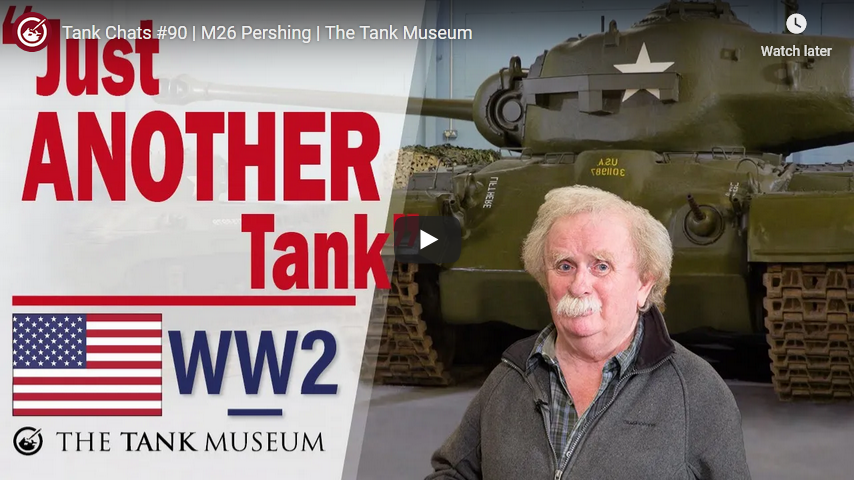
Tank Chats #76 Tetrarch Tank | The Tank Museum

Filed under: Britain, History, Military, Weapons, WW2 — Tags: , , , — Nicholas @ 02:00

The Tank Museum
Published 31 May 2019

Tetrarch tanks were flown over on D-Day, 6th June, 1944, for the invasion of France during WW2. Find out more with David Fletcher.

Originally adopted by the British Army as a light tank it became the first British airborne tank.
Many thanks to Vitaly Kuzmin for providing the image of the Tetrarch at Kubinka https://www.vitalykuzmin.net

Support the work of The Tank Museum on Patreon: ► https://www.patreon.com/tankmuseum

Visit The Tank Museum SHOP: ► https://tankmuseumshop.org/

Twitter: ► https://twitter.com/TankMuseum
Tiger Tank Blog: ► http://blog.tiger-tank.com/
Tank 100 First World War Centenary Blog: ► http://tank100.com/ #tankmuseum #tanks #DDay75 #tankchats

July 26, 2020

French War In Syria – British War Against The Iraqi Revolution I THE GREAT WAR 1920

Filed under: Britain, France, History, Middle East, Military — Tags: , , , , , — Nicholas @ 06:00

The Great War
Published 25 Jul 2020

Sign up for Curiosity Stream and get Nebula bundled in: https://curiositystream.com/thegreatwar

The French and British colonial powers had their own plans on how to rule the Middle East after the costly campaigns of World War 1. National self-determination for the different groups in Syria, Iraq, Palestine and Arabia were not part of these plans. And so in the summer of 1920 the situation in Iraq and Syria escalated and the French-Syrian War and the Iraqi Revolt broke out.

» SUPPORT THE CHANNEL
Patreon: https://www.patreon.com/thegreatwar

» OUR PODCAST
https://realtimehistory.net/podcast – interviews with World War 1 historians and background info for the show.

» BUY OUR SOURCES IN OUR AMAZON STORES
https://realtimehistory.net/amazon *
*Buying via this link supports The Great War (Affiliate-Link)

» SOURCES
Kadhim, Abbas. Reclaiming Iraq: the 1920 revolution and the founding of the modern state (U of Texas Press, 2012).
Allawi, Ali. Faisal I of Iraq (Yale University Press, 2014).
Fromkin, David. A Peace to End All Peace (Macmillan, 2009 [1989]).
Naaman, Abdullah. Le Liban: histoire d’une nation inachevée.
Karsh, Efraim & Karsh, Inari. Empires of the Sand: The Struggle for Mastery in the Middle East 1789-1923, (Cambridge, MA : Harvard University Press, 1999)

» MORE THE GREAT WAR
Website: https://realtimehistory.net
Instagram: https://instagram.com/the_great_war
Twitter: https://twitter.com/WW1_Series
Reddit: https://reddit.com/r/TheGreatWarChannel

»CREDITS
Presented by: Jesse Alexander
Written by: Jesse Alexander
Director: Toni Steller & Florian Wittig
Director of Photography: Toni Steller
Sound: Toni Steller
Editing: Toni Steller
Motion Design: Philipp Appelt
Mixing, Mastering & Sound Design: http://above-zero.com
Maps: Daniel Kogosov (https://www.patreon.com/Zalezsky)
Research by: Jesse Alexander
Fact checking: Florian Wittig

Channel Design: Alexander Clark
Original Logo: David van Stephold

Contains licensed material by getty images
All rights reserved – Real Time History GmbH 2020

The Wehrmacht – an Army on Horseback – WW2 – 100 – July 25 1941

Filed under: China, Germany, History, Japan, Military, Russia, WW2 — Tags: , , , , — Nicholas @ 04:00

World War Two
Published 25 Jul 2020

Although we may picture panzers when we think of the German Army in WW2, it was very much an army that relied on horses — especially in the east — for a large part of its supplies and logistics, and the horse situation on the Eastern Front has grown dire. Japan’s economic situation has also grown dire and they are now looking south for new sources of raw materials.

Join us on Patreon: https://www.patreon.com/TimeGhostHistory
Or join The TimeGhost Army directly at: https://timeghost.tv

Follow WW2 day by day on Instagram @World_war_two_realtime https://www.instagram.com/world_war_two_realtime
Between 2 Wars: https://www.youtube.com/playlist?list…
Source list: http://bit.ly/WW2sources

Written and Hosted by: Indy Neidell
Director: Astrid Deinhard
Producers: Astrid Deinhard and Spartacus Olsson
Executive Producers: Astrid Deinhard, Indy Neidell, Spartacus Olsson, Bodo Rittenauer
Creative Producer: Joram Appel
Post-Production Director: Wieke Kapteijns
Research by: Indy Neidell
Edited by: Iryna Dulka
Sound design: Marek Kamiński
Map animations: Eastory (https://www.youtube.com/c/eastory)

Colorizations by:
– Julius Jääskeläinen – https://www.facebook.com/JJcolorization/
– Carlos Ortega Pereira, BlauColorizations – https://www.instagram.com/blaucoloriz…
– Cassowary Colorizations – https://www.cassowarycolor.com/
– Olga Shirnina, a.k.a. Klimbim – https://klimbim2014.wordpress.com/

Sources:
– Narodowe Archiwum Cyfrowe
– Bundesarchiv, CC-BY-SA 3.0: Bild_183-L24469, B_145_Bild-F016202-15A, Bild_101I-695-0424-07A, Bild_183-L19885
– Imperial War Museum: Art.IWM PST 16102, C 2228
– Archives municipales de Brest

Archive by Screenocean/Reuters https://www.screenocean.com.

A TimeGhost chronological documentary produced by OnLion Entertainment GmbH.

Gewehr 98: The German WWI Standard Rifle

Filed under: Germany, History, Military, Weapons, WW1 — Tags: , , — Nicholas @ 02:00

Forgotten Weapons
Published 11 Jun 2016

Sold at auction for $1,840 (w/ 5 other rifles).

The Gewehr 1898 was the product of a decade of bolt action repeating rifle improvements by the Mauser company, and would be the standard German infantry rifle through both World Wars. Today we are looking at a pre-WWI example (1905 production) that shows all the features of what a German soldier would have taken to war in 1914.

July 25, 2020

“The Ballad of Bull” Pt.2 – Combat Medics – Sabaton History 077 [Official]

Sabaton History
Published 24 Jul 2020

Sometimes war is killing, sometimes war is saving lives.

In the first episode we have seen Leslie “Bull” Allen become a hero, not through the death of his enemies, but by saving his comrades’ lives. And there were others like him. Soldiers and medics, whose first duty it was to preserve lives during war, even when it meant endangering their own safety. Here are three short stories of men and women, who served as medics at the front line of the Second World War, and became heroes to their country.

Support Sabaton History on Patreon: https://www.patreon.com/sabatonhistory

Listen to “The Ballad of Bull” on the album Heroes:
CD: http://bit.ly/HeroesStore
Spotify: http://bit.ly/HeroesSpotify
Apple Music: http://bit.ly/HeroesAppleMusic
iTunes: http://bit.ly/HeroesiTunes
Amazon: http://bit.ly/HeroesAmz
Google Play: http://bit.ly/HeroesGoogleP

Listen to Sabaton on Spotify: http://smarturl.it/SabatonSpotify
Official Sabaton Merchandise Shop: http://bit.ly/SabatonOfficialShop

Hosted by: Indy Neidell
Written by: Markus Linke and Indy Neidell
Directed by: Astrid Deinhard and Wieke Kapteijns
Produced by: Pär Sundström, Astrid Deinhard and Spartacus Olsson
Creative Producer: Joram Appel
Community Manager: Maria Kyhle
Executive Producers: Pär Sundström, Joakim Broden, Tomas Sunmo, Indy Neidell, Astrid Deinhard, and Spartacus Olsson
Post-Production Director: Wieke Kapteijns
Edited by: Iryna Dulka
Sound Editing by: Marek Kaminski
Maps by: Eastory – https://www.youtube.com/c/eastory

Archive by: Reuters/Screenocean https://www.screenocean.com
Music by Sabaton

Colorizations:
– Olga Shirnina, a.k.a. Klimbim – https://klimbim2014.wordpress.com/

Sources:
– Photos of Desmond Doss Courtesy of the Desmond Doss Council
– Frame vector created by milano83 – www.freepik.com
– Arkiv i Nordland
– P.Fisxo from Wikimedia

An OnLion Entertainment GmbH and Raging Beaver Publishing AB co-Production.

© Raging Beaver Publishing AB, 2019 – all rights reserved.

From the comments:

Sabaton History
2 days ago
The medical staff in war — combat medics, field surgeons and nurses, ambulance drivers and medevac crews — are often the unsung heroes of war, literally and figuratively.

That doesn’t mean that they don’t deserve to be remembered and their sacrifices honored. There are undoubtedly many instances of exceptional bravery among the medical staff of wars throughout history — for which they rightly should be praised. But they should also be remembered for their everyday work in trenches or field hospitals, in jungles and deserts, at sea or in mid-air. Treating a seemingly endless stream of incoming wounded, trying to give relief to those in pain, comfort to those in agony, and hope to to those who have lost theirs — day in and day out, for as long as the war will last.

If you missed part one of “The Ballad of Bull” you can see it right here.

July 24, 2020

War Diplomats, Japanese/Soviet Neutrality, and why not Sweden? – WW2 – OOTF 015

Filed under: Britain, Europe, Germany, History, Japan, Military, Russia, WW2 — Tags: , , , , — Nicholas @ 04:00

World War Two
Published 23 Jul 2020

What happened to Allied ambassadors? And how did Hitler react to the Soviet-Japanese Neutrality Pact? And why didn’t he invade Sweden? Once again, Indy is in the Chair of Infinite Knowledge answering all your exciting questions about World War Two!

Join us on Patreon: https://www.patreon.com/TimeGhostHistory
Or join The TimeGhost Army directly at: https://timeghost.tv

Follow WW2 day by day on Instagram @World_war_two_realtime https://www.instagram.com/world_war_two_realtime
Between 2 Wars: https://www.youtube.com/playlist?list…
Source list: http://bit.ly/WW2sources

Hosted by: Indy Neidell
Written by: Rune Væver Hartvig
Director: Astrid Deinhard
Producers: Astrid Deinhard and Spartacus Olsson
Executive Producers: Astrid Deinhard, Indy Neidell, Spartacus Olsson, Bodo Rittenauer
Creative Producer: Joram Appel
Post-Production Director: Wieke Kapteijns
Research by: Rune Væver Hartvig
Edited by: Mikołaj Cackowski
Sound design: Marek Kamiński
Map animations: Eastory (https://www.youtube.com/c/eastory)

Colorizations by:
Jaris Almazani (Artistic Man), https://instagram.com/artistic.man?ig…
Norman Stewart – https://oldtimesincolor.blogspot.com/
Daniel Weiss

Sources:
Bundesarchiv
Narodowe Archiwum Cyfrowe
Portrait of Charles Howard Smith, courtesy National Portrait Gallery

Soundtracks from the Epidemic Sound:
Howard Harper-Barnes – “London”
Fabien Tell – “Other Sides of Glory”
Johannes Bornlof – “The Inspector 4”

Archive by Screenocean/Reuters https://www.screenocean.com.

A TimeGhost chronological documentary produced by OnLion Entertainment GmbH.

July 23, 2020

Pattern 1913 Enfield Trials Rifle

Filed under: Britain, History, Military, Weapons, WW1 — Tags: , , , — Nicholas @ 02:00

Forgotten Weapons
Published 28 Apr 2016

http://www.patreon.com/ForgottenWeapons

Sold at auction for $6,325.

One of the lessons learned by the British military in the aftermath of the Boer War was that modern Mauser rifles were superior to their Lee-action rifles and carbines. In response, British ordnance began experimenting with a Mauser-pattern rifle, ultimately finalized as the Pattern 1913. This rifle would also leave behind the obsolescent .303 rimmed cartridge, in favor of a new rimless .276 Enfield round.

The Pattern 13 rifle itself was excellent — it balanced and handled well, it had very good sights, and a smooth and fast bolt throw. However, the .276 Enfield cartridge was really more potent than it needed to be, and caused problems. The cartridge threw a 165 grain bullet at just under 2800fps, pretty close to the ballistics of today’s 7mm Remington Magnum. Loaded with Cordite propellent, this led to excessive barrel wear and unpleasant recoil, along with some parts breakage. However, as final testing was being done in the first half of 1914, the Great War broke out.

At this point, plans for using a new cartridge were abandoned. The rifle itself was redesigned in the .303 cartridge, to be manufactured in large numbers by American firms under contract. It would also be refitted for the .30-06 cartridge and used in large numbers by the American armed forces as the M1917 Enfield rifle. According to General Julian Hatcher (who ought to know), it was the best rifle of the First World War.

July 22, 2020

Operation Barbarossa – The German Plans to Lose the War – WW2 Special

Filed under: Germany, History, Military, Russia, WW2 — Tags: , , , , — Nicholas @ 04:00

World War Two
Published 21 Jul 2020

The planning for Barbarossa, the German invasion of the Soviet Union, took nearly a year and went through a variety of scenarios. The basic plan was finalized in December 1940, and that month General Friedrich Paulus ran a series of war games to test its feasibility. Today we’ll look at his conclusions.

Join us on Patreon: https://www.patreon.com/TimeGhostHistory
Or join The TimeGhost Army directly at: https://timeghost.tv

Follow WW2 day by day on Instagram @World_war_two_realtime https://www.instagram.com/world_war_two_realtime
Between 2 Wars: https://www.youtube.com/playlist?list…
Source list: http://bit.ly/WW2sources

Written and Hosted by: Indy Neidell
Director: Astrid Deinhard
Producers: Astrid Deinhard and Spartacus Olsson
Executive Producers: Astrid Deinhard, Indy Neidell, Spartacus Olsson, Bodo Rittenauer
Creative Producer: Joram Appel
Post-Production Director: Wieke Kapteijns
Research by: Indy Neidell
Edited by: Mikołaj Cackowski
Sound design: Marek Kamiński
Map animations: Mikołaj Cackowski, Eastory (https://www.youtube.com/c/eastory)

Colorizations by:
Dememorabilia – https://www.instagram.com/dememorabilia/
Carlos Ortega Pereira, BlauColorizations – https://www.instagram.com/blaucoloriz…
Jaris Almazani (Artistic Man) – https://instagram.com/artistic.man?ig…
Cassowary Colorizations – https://www.flickr.com/photos/cassowa…
Norman Stewart – https://oldtimesincolor.blogspot.com/
Teppeny – https://www.instagram.com/teppeny.color/

Sources:
Bundesarchiv
Narodowe Archiwum Cyfrowe
SA Kuva
from the Noun Project: Target by RITASYA, soldier by Wonmo Kang

Soundtracks from the Epidemic Sound:
Reynard Seidel – “Deflection”
Johannes Bornlof – “The Inspector 4”
Phoenix Tail – “At the Front”
Johannes Bornlof – “Deviation In Time”
Fabien Tell – “Last Point of Safe Return”
Johan Hynynen -” Dark Beginning”
Johannes Bornlof – “Death and Glory 3”
Rannar Sillard – “March Of The Brave 4”

Archive by Screenocean/Reuters https://www.screenocean.com.

A TimeGhost chronological documentary produced by OnLion Entertainment GmbH.

Glorious Revolution | 3 Minute History

Filed under: Britain, France, History, Military, Religion — Tags: , , , , , — Nicholas @ 02:00

Jabzy
Published 21 Jul 2015

Sorry about the delay I’ve been without internet while I’ve moved apartment. And thanks for the 9,000 subs

Thanks to Xios, Alan Haskayne, Lachlan Lindenmayer, William Crabb, Derpvic, Seth Reeves and all my other Patrons. If you want to help out – https://www.patreon.com/Jabzy?ty=h

Please let me know if I’ve forgot to mention you, I’m a little disorganized without internet.

July 21, 2020

The Destruction of Convoy PQ17: Merchant Ships Left Defenceless

Filed under: Britain, Germany, History, Military, Russia, USA, WW2 — Tags: , , , , , — Nicholas @ 06:00

Historigraph
Published 18 Jul 2020

For unlimited access to the world’s top documentaries and non­fiction series go to http://go.thoughtleaders.io/166892020… and use the promo code ‘historigraph‘ to get 30 days free access.

Buy Historigraph Posters here! teespring.com/stores/historigraph
Support the channel on Patreon: https://www.patreon.com/historigraph

#ConvoyPQ17 #Historigraph #CuriosityStream

► Twitch: https://www.twitch.tv/addaway
► Twitter: https://twitter.com/historigraph
► Instagram: https://www.instagram.com/historigraph

Music:

“Rynos Theme” Kevin MacLeod (incompetech.com)
Licensed under Creative Commons: By Attribution 4.0 License
http://creativecommons.org/licenses/b…

The Descent by Kevin MacLeod
Link: https://incompetech.filmmusic.io/song…
License: http://creativecommons.org/licenses/b…

Crypto by Kevin MacLeod
Link: https://incompetech.filmmusic.io/song…
License: http://creativecommons.org/licenses/b…

« Newer PostsOlder Posts »

Powered by WordPress