
The Tank Museum
Published 3 Sep 2021David Willey is back with another Tank Chat! This week’s episode is all about the Schützenpanzer. A West German infantry fighting vehicle developed from 1956 to 1958.
(more…)
December 21, 2021
Tank Chat #136 | Schützenpanzer | The Tank Museum
December 20, 2021
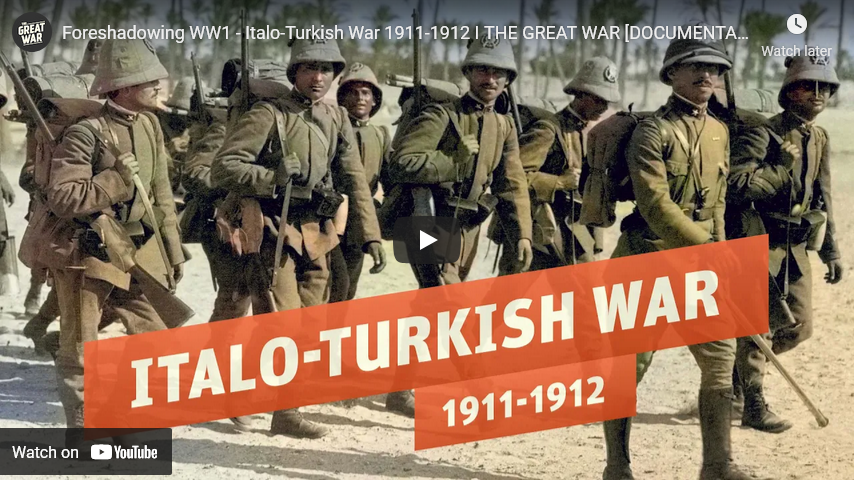
Foreshadowing WW1 – Italo-Turkish War 1911-1912 I THE GREAT WAR
The Great War
Published 17 Dec 2021Sign up for Audible and get 60% off your first three months: https://audible.com/greatwar or text
greatwarto 500-500The Italo-Turkish War 1911 was one of the last classic imperial wars over colonial processions between two great powers. But it was in many ways also a first glimpse into what would come during the First World War: trenches, artillery, combat aircraft, motorboat attacks. This war in Ottoman Libya was fought between the Italian Army and Ottoman-led local Senussi forces.
» SUPPORT THE CHANNEL
Patreon: https://www.patreon.com/thegreatwar» THANKS TO OUR CO-PRODUCERS
John Ozment, James Darcangelo, Jacob Carter Landt, Thomas Brendan, Kurt Gillies, Scott Deederly, John Belland, Adam Smith, Taylor Allen, Rustem Sharipov, Christoph Wolf, Simen Røste, Marcus Bondura, Ramon Rijkhoek, Theodore Patrick Shannon, Philip Schoffman, Avi Woolf,» SOURCES
Askew, William C., Europe and Italy’s Acquisition of Libya, 1911-1912, (Durham, NC: Duke University Press, 1942)Caccamo, Francesco, “Italy, Libya and the Balkans” in Geppert, Dominik; Mulligan, William & Rose, Andreas (eds.), The Wars before the Great War: Conflict and International Politics Before the Outbreak of the First World War, (Cambridge: Cambridge University Press, 2016)
Childs, Timothy W, Italo-Turkish Diplomacy and the War Over Libya, 1911–1912, (Leiden: Brill, 1990)
Griffin, Ernest H., Adventures in Tripoli: A Doctor in the Desert (London: Philip Allen & Co., 1924)
Hindmarsh. Albert E. & Wilson, George Grafton, “War Declared and the Use of Force”, Proceedings of the American Society of International Law at Its Annual Meeting (1921-1969) Vol. 32 (1938)
McCollum Jonathan, “Reimagining Mediterranean Spaces: Libya and the Italo-Turkish War, 1911-1912”, in Mediterraneo cosmopolita, 23 (3) 2015.
McMeekin, Sean, The Ottoman Endgame (Penguin, 2013).
Paris, Michael, “The First Air Wars – North Africa and the Balkans, 1911-13”, Journal of Contemporary History, Vol. 26, No. 1 (1991)
Stephenson, Charles, A Box of Sand: the Italo-Ottoman War 1911-1912: the First Land, Sea and Air War, (Ticehurst: Tattered Flag Press, 2014)
Tittoni, Renato, The Italo-Turkish War (1911-12). Translated and Compiled from the Reports of the Italian General Staff, (Kansas City, MO: Frank Hudson Publishing Company, 1914)
Uyar, Mesut, The Ottoman Army and the First World War, (Abingdon: Routledge, 2021)
Vandervort, Bruce, Wars of Imperial Conquest in Africa 1830-1914, (Bloomington, IN: Indiana University Press, 1998)
Wilcox, Vanda, Italy in the Era of the Great War, (Leiden: Brill, 2018)
Wilcox, Vanda, “The Italian Soldiers’ experience in Libya, 1911-12” in Geppert, Dominik; Mulligan, William & Rose, Andreas (eds.), The Wars before the Great War: Conflict and International Politics Before the Outbreak of the First World War, (Cambridge: Cambridge University Press, 2016)
»CREDITS
Presented by: Jesse Alexander
Written by: Mark Newton, Jesse Alexander
Director: Toni Steller & Florian Wittig
Director of Photography: Toni Steller
Sound: Toni Steller
Editing: Jose Gamez
Motion Design: Philipp Appelt
Mixing, Mastering & Sound Design: http://above-zero.com
Research by: Mark Newton
Fact checking: Florian WittigChannel Design: Yves Thimian
Contains licensed material by getty images
All rights reserved – Real Time History GmbH 2021
Comments Off on Foreshadowing WW1 – Italo-Turkish War 1911-1912 I THE GREAT WAR
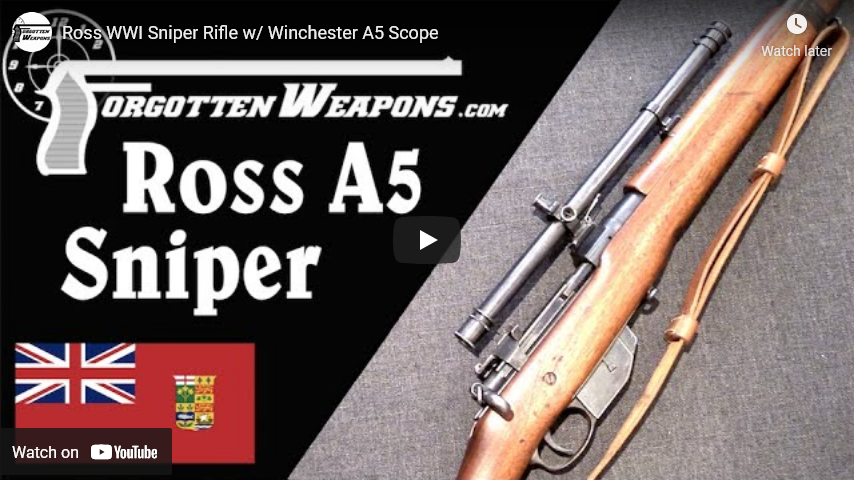
Ross WWI Sniper Rifle w/ Winchester A5 Scope
Forgotten Weapons
Published 23 Aug 2021http://www.patreon.com/ForgottenWeapons
https://www.floatplane.com/channel/Fo…
Cool Forgotten Weapons merch! http://shop.forgottenweapons.com
The standard Canadian sniper’s rifle of World War One was the MkIII Ross fitted with a Warner & Swasey “musket sight” purchased from the United States. However, armorers in the field did create sniping rifles using other scopes — in particular the Winchester A5. The A5 was a popular commercial rifle scope at the time, and it found its way onto military rifles for many nations — I have seen examples on Lebel and SMLE rifles as well as of course American Springfields and this Ross.
The A5 was a 5x magnification scope with external adjustments. We don’t know when this example was built into sniper configuration, but it’s provenance is solid (this sort of thing would be relatively easy to counterfeit). Personally, I would much prefer a Winchester A5 over the Warner & Swasey pattern…
Contact:
Forgotten Weapons
6281 N. Oracle 36270
Tucson, AZ 85740
From the comments:
Cole Harris
1 hour ago
The famed Francis Pegahmagabow used a Ross during his service with the Canadian Expeditionary Force during WWI. While the Ross was considered a pretty terrible service rifle because of reliability/durability concerns, on the range it was a superb rifle that he used to great effect. I don’t know if he used irons or not, but he built quite a reputation for marksmanship with the Ross.
If you’d like more information about Francis Pegahmagabow, The Great War channel did a bio special about him and more recently Sabaton wrote a song called “A Ghost in the Trenches” about his military service.
Comments Off on Ross WWI Sniper Rifle w/ Winchester A5 Scope
December 19, 2021
Guadalcanal Life Expectancy: 30 Days- WW2 – 173 – December 18, 1942
World War Two
Published 18 Dec 2021Just a few weeks ago massive offensives were launched in North Africa and the Soviet Union, against the Axis. These operations and offensives have now morphed into fully fledged campaigns, and the nature of these theatres of the war has been transformed.
(more…)
Comments Off on Guadalcanal Life Expectancy: 30 Days- WW2 – 173 – December 18, 1942
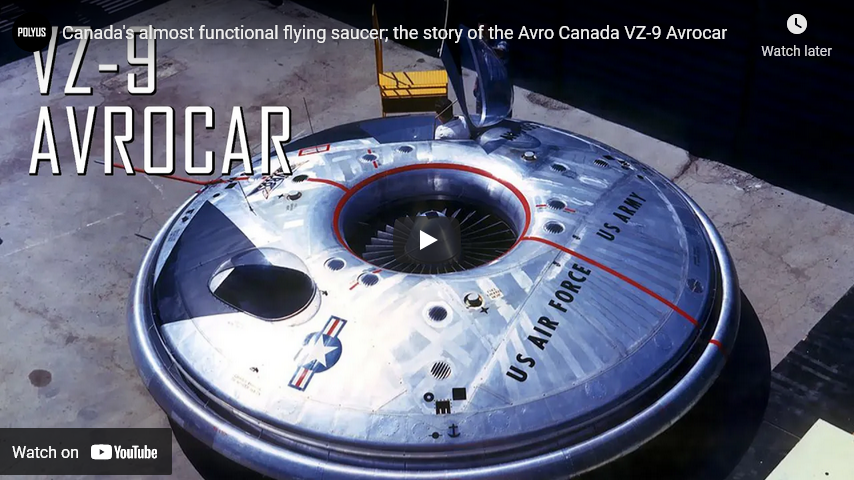
Canada’s almost functional flying saucer; the story of the Avro Canada VZ-9 Avrocar
Polyus Studios
Published 14 Jul 2018Support me on Patreon – https://www.patreon.com/polyusstudios
The Avro Canada VZ-9AV Avrocar: Canada’s first attempt at vertical take off and landing aircraft. Although the concept ultimately turned out to be a dead-end, the engineers and designers at Avro experimented with bold new ideas. Their concepts would push the limits of the imagination and reflected the extreme technological optimism of its time.
Music:
Denmark – Portland Cello ProjectResearch Sources:
“Declassified: America’s Secret Flying Saucer” – https://www.popularmechanics.com/mili…
Avro Canada VZ-9 Avrocar – https://www.aviationsmilitaires.net/v…
Avrocar: Canada’s Flying Saucer: The Story of Avro Canada’s Secret Projects by Bill Zuk (2001)
How to Build a FLYING SAUCER – https://declassification.blogs.archiv…
LaesieWorks – AVROCAR VZ-9AV – http://www.laesieworks.com/ifo/lib/AV…
The Living Moon – Project Silverbug – The Avrocar – http://www.thelivingmoon.com/49ufo_fi…Footage Sources:
Avrocar I Progress Report 01/02/1958 – 05/1959 – US National Archives (~1959)
Disc Flight Development, Avrocar I Progress Report, 05/02/1959 – 04/12/1960 – US National Archives (~1960)
Avrocar Continuation Test Program and Terrain Test Program, 06/01/1960 – 06/14/1961 – US National Archives (~1959)
Tiltwing Versatility – San Diego Air and Space Museum (~1971)Aircraft mentioned:
Project Y
Project Y-2
Project PV 704
Project 1794
Project Silverbug
Weapon System 606A
VZ-9AV Avrocar
CL-84 Dynavert#Avrocar #CanadianAerospace #Polyus
Comments Off on Canada’s almost functional flying saucer; the story of the Avro Canada VZ-9 Avrocar
QotD: Sun Tzu’s Art of War reworked for the 21st Century by General Mark Milley
… here at The Babylon Bee, we’re legit journalists, so we’ve got the exclusive scoop. Here are some excerpts from the upcoming revision of The Art of War:
“If you think you might attack an enemy, pick up the phone and give ’em a heads up. It’s only fair.”
“You have to be careful not to surprise your enemy. They really don’t like it.”
“Treason is not treason if it is the lesser of two treasons.”
“Know thy pronouns, and know thy enemy’s pronouns.”
“The supreme art of war is to surrender to your enemy without fighting.”
“All war is white rage.”
“If you surrender, you can never lose.”
“If thy commanding officer sends mean tweets, thou need not follow orders or the chain of command.”
“The enemy of my friend is my friend.”
“Keep your friends close and your enemies on speed dial.”
“You can not betray the one to which you were never loyal.”
“Ask not what your country can do for you, but what you can do for China.”
“When retreating, leave most of thy armaments behind so you know what you’ll be up against next time.”
“Chinese bros before American hoes.”
“He who turns on bad orange man gets big book deal.”
“General Milley Is Releasing A Revised Version Of The Art Of War — And We’ve Got Exclusive Excerpts”, BabylonBee, 2021-09-17.
Comments Off on QotD: Sun Tzu’s Art of War reworked for the 21st Century by General Mark Milley
December 17, 2021
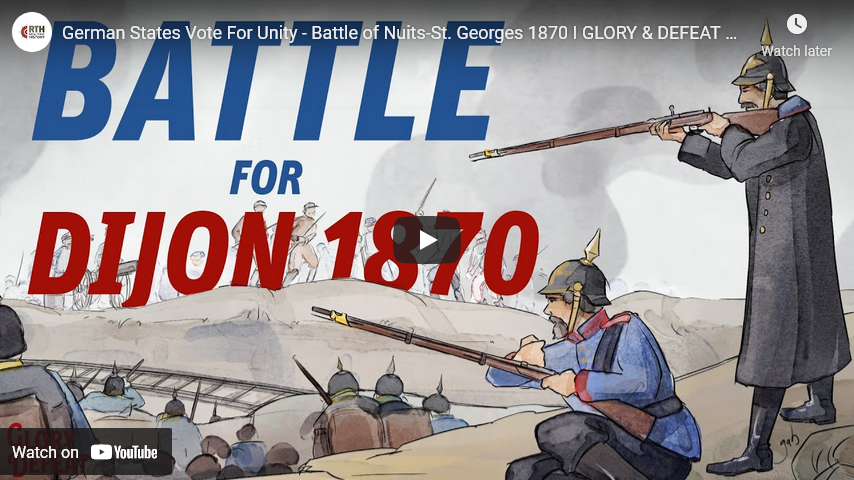
German States Vote For Unity – Battle of Nuits-St. Georges 1870 I GLORY & DEFEAT Week 23
Real Time History
Published 16 Dec 2021Sign up for Curiosity Stream and get Nebula bundled in and SAVE 26%: https://curiositystream.com/realtimeh…
While the German delegations arrive in Versailles to set in motion the unification of the German states into a German Reich, the people in nearby Paris are starving and their army is still fighting in the countryside.
» THANK YOU TO OUR CO-PRODUCERS
John Ozment, James Darcangelo, Jacob Carter Landt, Thomas Brendan, Kurt Gillies, Scott Deederly, John Belland, Adam Smith, Taylor Allen, Rustem Sharipov, Christoph Wolf, Simen Røste, Marcus Bondura, Ramon Rijkhoek, Theodore Patrick Shannon, Philip Schoffman, Avi Woolf,» OUR PODCAST
https://realtimehistory.net/podcast – interviews with historians and background info for the show.» LITERATURE
Arand, Tobias: 1870/71. Der Deutsch-Französische Krieg erzählt in Einzelschicksalen. Hamburg 2018Gouttman, Alain: La grande défaite. 1870-1871. Paris 2015
» SOURCES
Hérisson, Maurice d’: Journal d’un officier d’ordonnance. Paris 1885Kriegsgeschichtliche Abteilung des Großen Generalstabs (Hrsg.): Der deutsch-französische Krieg 1870-71. 2.2. Berlin 1880
Kürschner, Joseph (Hrsg.): Der große Krieg 1870-71 in Zeitberichten. Leipzig o.J. (1895)
Meisner, Heinrich Otto (Hrsg.): Kaiser Friedrich III. Das Kriegstagebuch von 1870/71. Berlin, Leipzig 1926
Pietsch, Ludwig: Von Berlin nach Paris. Kriegsbilder 1870-71. Berlin 1871
Schikorsky, Isa (Hrsg.): “Wenn doch dies Elend ein Ende hätte”. Ein Briefwechsel aus dem Deutsch-Französischen Krieg 1870/71. Köln, Weimar, Wien 1999
» OUR STORE
Website: https://realtimehistory.net»CREDITS
Presented by: Jesse Alexander
Written by: Cathérine Pfauth, Prof. Dr. Tobias Arand, Jesse Alexander
Director: Toni Steller & Florian Wittig
Director of Photography: Toni Steller
Sound: Above Zero
Editing: Toni Steller
Motion Design: Philipp Appelt
Mixing, Mastering & Sound Design: http://above-zero.com
Maps: Battlefield Design
Research by: Cathérine Pfauth, Prof. Dr. Tobias Arand
Fact checking: Cathérine Pfauth, Prof. Dr. Tobias ArandChannel Design: Battlefield Design
Contains licensed material by getty images
All rights reserved – Real Time History GmbH 2021
Comments Off on German States Vote For Unity – Battle of Nuits-St. Georges 1870 I GLORY & DEFEAT Week 23
Death Squads Arrive in North Africa – WAH 048 – December 1942, Pt. 1
World War Two
Published 16 Dec 2021Despite Allied occupation, the situation of the Jews in North Africa hardly improves, in newly German-occupied Tunisia it deteriorates. Meanwhile, the world learns more of the details of the Holocaust — they cannot believe their ears.
(more…)
Comments Off on Death Squads Arrive in North Africa – WAH 048 – December 1942, Pt. 1
SA80 History: L22A2 and Experimental L85 Carbines
Forgotten Weapons
Published 24 May 2017Armament Research Services (ARES) is a specialist technical intelligence consultancy, offering expertise and analysis to a range of government and non-government entities in the arms and munitions field. For detailed photos of the guns in this video, don’t miss the ARES companion blog post:
http://armamentresearch.com/british-e…
One of the original design intentions of the SA80 project was to replace the infantry rifle and the submachine gun with a single weapon that could fulfill both roles — hence the choice of a bullpup configuration. This would, theoretically, allow rifle ballistics and also SMG handling and maneuverability. As with most bullpup projects, however, this plan did not last. It quickly became clear that a shortened version of the L85 rifle could be made, which would be more suitable for troops who would previously have been issued submachine guns — notably aircraft and armored vehicle crews.
Today we take a look at a couple of early prototypes of these carbines which did not go into production. We also examine an L22A2 carbine, which did become standard issue in 2003 for some units. This carbine includes all of the H&K A2 pattern upgrades, and was given the A2 designation despite there never being an adopted L22A1.
http://www.patreon.com/ForgottenWeapons
Cool Forgotten Weapons merch! http://shop.bbtv.com/collections/forg…
If you enjoy Forgotten Weapons, check out its sister channel, InRangeTV! http://www.youtube.com/InRangeTVShow

Comments Off on SA80 History: L22A2 and Experimental L85 Carbines
December 16, 2021
Supersonic Firsts
The History Guy: History Deserves to Be Remembered
Published 20 Aug 2021On August 20, 1955, United States Air Force Colonel Horace A Hanes set the world’s first supersonic world speed record in a North American Aviation F-100C Super Sabre. Although we are well into the supersonic age, aircraft that can exceed the speed of sound are still rare machines, and marvels of engineering and pilot prowess. The early aviation pioneers who tested the terrifying sound barrier have helped scientists better understand the dynamics of superfast speeds.
This is original content based on research by The History Guy. Images in the Public Domain are carefully selected and provide illustration. As very few images of the actual event are available in the Public Domain, images of similar objects and events are used for illustration.
You can purchase the bow tie worn in this episode at The Tie Bar:
https://www.thetiebar.com/?utm_campai…All events are portrayed in historical context and for educational purposes. No images or content are primarily intended to shock and disgust. Those who do not learn from history are doomed to repeat it. Non censuram.
Find The History Guy at:
Patreon: https://www.patreon.com/TheHistoryGuy
Please send suggestions for future episodes: Suggestions@TheHistoryGuy.netThe History Guy: History Deserves to Be Remembered is the place to find short snippets of forgotten history from five to fifteen minutes long. If you like history too, this is the channel for you.
Awesome The History Guy merchandise is available at:
teespring.com/stores/the-history-guyScript by THG
#history #thehistoryguy #airforce

Comments Off on Supersonic Firsts
December 15, 2021
Is the Wehrmacht Defeated in 1942? – WW2 Special
World War Two
Published 14 Dec 2021It’s late 1942 and the German Army is close to ruin. The Ostheer alone has suffered more than a million casualties in its fight against the Red Army. If the Wehrmacht cannot find a way to return to its former strength or reap decisive strategic benefits in the near future, it will ultimately face destruction in a war of attrition.
(more…)
Comments Off on Is the Wehrmacht Defeated in 1942? – WW2 Special
December 14, 2021
Chatellerault M24/29: France’s New Wave of Post-WWI Small Arms
Forgotten Weapons
Published 26 Aug 2017France fought the Great War with an array of weapons which were all sub-par in one way or another — the Lebel rifle was obsolescent by 1914, the Berthier was a cavalry carbine forced into rifle service, the Chauchat was an emergency wartime design optimized for production volume instead of quality, and the handguns were a mixture of old revolvers and desperate imports from Spain. Once the war finally ended, the French military would move to replace the whole lot with new and modern arms.
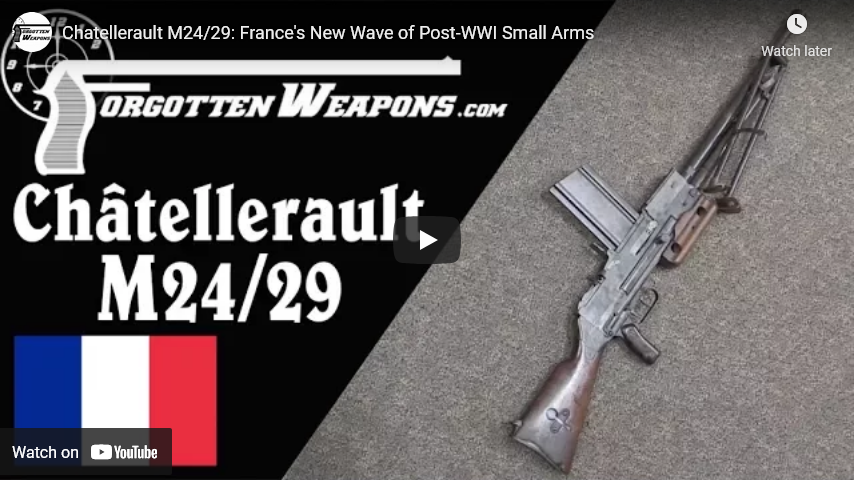
This would begin by finally replacing the 8mm Lebel cartridge with a non-tapered, rimless cartridge — something that would be well suited to use in magazines and repeating arms. Simultaneously, a new light machine gun would be found, as this was deemed to most important improvement to be made. The cartridge was adopted in 1924 as the 7.5x58mm, but it would soon be realized that there was a critical problem with that round. The French military had a large supply of German arms taken as war reparations, and the new 7.5mm cartridge looked very similar to the 8x57mm Mauser cartridge. Worse, the Mauser round would chamber and fire in the new French chambers, causing serious damage to guns when the 8mm bullet was squeezed down to 7.5mm. To fix this issue, the French cut their cartridge down by 4mm, resulting in the 1929 adoption of the 7.5x54mm round — the chamber of which would no longer fit a German 8mm round.
As for the machine gun, the first choice was to simply adopt the Browning BAR — but France insisted on obtaining the technical data package and producing the guns in France, and they could not come to an agreement with Colt over the price of such a license. So, the French held trials of other guns, looking at virtually everything then available. In the aftermath of the trials, it was decided that the Chatellerault arsenal could design its own weapon using the best features of the other existing guns. The arsenal rather quickly produced prototypes, and they were adopted in 1924 (and then updated to use the shorter version of the 7.5mm cartridge in 1929).
The Chatellerault M24/29 is a quite good weapon, especially considering how early it was designed. It uses a tilting bolt and a top-mounted 25 round magazine. It has two triggers, the front one firing in semiautomatic and the rear one in fully automatic. The wooden front handguard allows for fire from the hip or shoulder if desired, and a set of thorough dust covers keep the gun free from ingress of mud or dirt. About 188,000 would be manufactured, and it would stay in service for many decades.
http://www.patreon.com/ForgottenWeapons
Cool Forgotten Weapons merch! http://shop.bbtv.com/collections/forg…
If you enjoy Forgotten Weapons, check out its sister channel, InRangeTV! http://www.youtube.com/InRangeTVShow
Comments Off on Chatellerault M24/29: France’s New Wave of Post-WWI Small Arms
December 13, 2021
The Battle of Cannae (216 B.C.E.)
Historia Civilis
Published 29 Jun 2015Patreon | http://historiacivilis.com/patreon
Donate | http://historiacivilis.com/donate
Merch | http://historiacivilis.com/merch
Twitter | http://historiacivilis.com/twitter
Website | http://historiacivilis.comMusic is Beethoven’s “Sonata No. 32 in C Minor, Op. 111” – I. Maestoso – Allegro con brio ed appassionato, performed by Daniel Veesey

Comments Off on The Battle of Cannae (216 B.C.E.)
December 12, 2021
One Year Since Pearl Harbor – WW2 – 172 – December 11, 1942
World War Two
Published 11 Dec 2021The Japanese try and fail to supply their starving soldiers. The Allies fail to break through in Tunisia and New Guinea. The fighting in the USSR is bloody, but the Axis prepare for a new offensive there.
(more…)
Comments Off on One Year Since Pearl Harbor – WW2 – 172 – December 11, 1942
December 11, 2021
Belisarius: The Battle of Rome
Epic History TV
Published 10 Dec 2021Thank you to our sponsor Private Internet Access.
Get the Epic History TV special offer using this link: https://www.privateinternetaccess.com…Big thanks to Legendarian for Total War: Attila gameplay footage, check out his YouTube channel here: https://www.youtube.com/channel/UCOI2…
Thanks also to our series consultant Professor David Parnell of Indiana University Northwest, who you can follow on Twitter here: https://twitter.com/byzantineprof
Total War: Attila gameplay footage used with kind permission of Creative Assembly — buy the game here: https://geni.us/qDreR
Support Epic History TV on Patreon from $1 per video, and get perks including ad-free early access & votes on future topics https://www.patreon.com/EpicHistoryTV
🎨 Original artwork by Miłek Jakubiec https://www.artstation.com/milek
📚Recommended reading (as an Amazon Associate I earn from qualifying purchases):
📖 Procopius, History of the Wars https://geni.us/L3Pgc
📖 The Wars of Justinian by Michael Whitby https://geni.us/Xxrd3
📖 Rome Resurgent by Peter Heather https://geni.us/ZFoU1
📖 The Armies of Ancient Persia: the Sassanians by Kaveh Farrokh https://geni.us/jMQo3z
📖 Late Roman Cavalryman AD 236–565 (Osprey) by Simon MacDowall https://geni.us/XMGl👕 Buy EHTV t-shirts, hoodies, mugs and stickers here! teespring.com/en-GB/stores/epic-histo…
🎶Music from Filmstro: https://filmstro.com/?ref=7765
Get 20% off an annual license with this exclusive code:EPICHISTORYTV_ANN#EpicHistoryTV #RomanEmpire #EasternRomanEmpire #Justinian #Belisarius #ByzantineEmpire #Romans
Comments Off on Belisarius: The Battle of Rome


