
PauliosVids
Published 20 Nov 2018How the headquarters of NATO was moved from France to Belgium.
November 15, 2022
Look at Life — Moving Day (1967)
Comments Off on Look at Life — Moving Day (1967)
November 14, 2022
The Auschwitz Business Model – War Against Humanity 086
World War Two
Published 10 Nov 2022Hitler commemorates the twentieth anniversary of the failed Beer Hall Putsch, in Auschwitz 50 men are shot in celebration, and Arthur Liebehenschel replaces Rudolf Höss as commandant.
(more…)
Comments Off on The Auschwitz Business Model – War Against Humanity 086
Two Variants of the French RSC 1917 Semiauto WW1 Rifle
Forgotten Weapons
Published 2 Apr 2017The RSC 1917, aka FSA1917, has the distinction of being the only true semiautomatic service rifle to see significant frontline infantry use during World War One. It was introduced in 1917 as a long rifle, and about 75,000 were made in that configuration. An improved carbine model was developed in in 1918 right at the end of the war, with only a few thousand of those made. However, what we are looking at today are a pair of 1917 rifles which show a couple of differences.
One of these is a standard RSC 1917 as originally produced, and the other has been updated to a 1918 standard in two ways: the bolt handle/disassembly and the bolt holdopen mechanism. I do not know if these changes were actually implemented during the war, or in the years afterward, but they make the rifles substantially easier to field strip.
If you know of details relevant to these changes, please let me know in the comments!
(more…)
Comments Off on Two Variants of the French RSC 1917 Semiauto WW1 Rifle
November 13, 2022
Kiev Liberated! Celebrations in Moscow! – WW2 – 220 – November 12, 1943
World War Two
Published 12 Nov 2022The Red Army has driven the Axis forces out of Kiev, the third largest city in the USSR. The Allies are also advancing, albeit slowly and at great cost, in Italy, but in the South Pacific, they launch a massive air strike against Rabaul … and what is the result?
(more…)
Comments Off on Kiev Liberated! Celebrations in Moscow! – WW2 – 220 – November 12, 1943
November 12, 2022
The Final Bloody Chapter of Operation Reinhard – War Against Humanity 085
World War Two
Published 9 Nov 2022The genocide of the Jews of Eastern Europe concludes with Operation Harvest Festival — Aktion Erntefest when 42,000 are murdered in the Lublin district.
(more…)
Comments Off on The Final Bloody Chapter of Operation Reinhard – War Against Humanity 085
November 11, 2022
Mark Knopfler – “Remembrance Day”
Bob Oldfield
Published on 3 Nov 2011A Remembrance Day slideshow using Mark Knopfler’s wonderful “Remembrance Day” song from the album Get Lucky (2009). The early part of the song conveys many British images, but I have added some very Canadian images also which fit with many of the lyrics. The theme and message is universal… “we will remember them”.
Comments Off on Mark Knopfler – “Remembrance Day”
In memoriam
A simple recognition of some of our family members who served in the First and Second World Wars:
The Great War
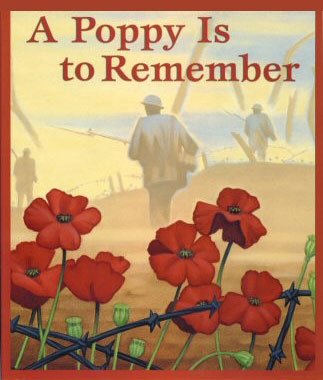 Private William Penman, Scots Guards, died 16 May, 1915 at Le Touret, age 25
(Elizabeth’s great uncle)- Private Archibald Turner Mulholland, Argyll & Sutherland Highlanders, mortally wounded 25 September, 1915 at Loos, age 27
(Elizabeth’s great uncle) - Private David Buller, Highland Light Infantry, died 21 October, 1915 at Loos, age 35
(Elizabeth’s great grandfather) - Private Harold Edgar Brand, East Yorkshire Regiment. died 4 June, 1917 at Tournai.
(My first cousin, three times removed) - Private Walter Porteous, Durham Light Infantry, died 4 October, 1917 at Passchendaele, age 18
(my great uncle) - Corporal John Mulholland, Argyll & Sutherland Highlanders, wounded 2 September, 1914 (shortly before the First Battle of the Aisne), wounded again 29 June, 1918, lived through the war.
(Elizabeth’s great uncle)
The Second World War
- Flying Officer Richard Porteous, Royal Air Force, survived the defeat in Malaya, was evacuated to India and lived through the war
(my great uncle) - Able Seaman John Penman, Royal Navy, served in the Defensively Equipped Merchant fleet on the Atlantic convoys, the Murmansk Run (he may have been on a ship in convoy PQ-17, as we know he spent a winter in Russia) and other convoy routes, was involved in firefighting and rescue efforts during the Bombay Docks explosion in 1944, lived through the war
(Elizabeth’s father) - Private Archie Black (commissioned after the war and retired as a Major), Gordon Highlanders, captured during the fall of Singapore (aged 15) and survived a Japanese POW camp (he had begun to write an autobiography shortly before he died)
(Elizabeth’s uncle) - Elizabeth Buller, “Lumberjill” in the Women’s Timber Corps, an offshoot of the Women’s Land Army in Scotland through the war.
(Elizabeth’s mother) - Trooper Leslie Taplan Russon, 3rd Royal Tank Regiment, died at Tobruk, 19 December, 1942 (aged 23).
Leslie was my father’s first cousin, once removed (and therefore my first cousin, twice removed).
My maternal grandfather, Matthew Kendrew Thornton, was in a reserved occupation during the war as a plater working at Smith’s Docks in Middlesbrough. The original design for the famous Flower-class corvettes came from Smith’s Docks and 16 (including four intended for the French Marine National) of the 196 built in the UK during the war (more were built in Canada).
For the curious, the Commonwealth War Graves Commission the Royal British Legion, and the Library and Archives Canada WW1 and WW2 records site provide search engines you can use to look up your family name. The RBL’s Every One Remembered site shows you everyone who died in the Great War in British or Empire service (Canadians, Australians, New Zealanders, South Africans and other Imperial countries). The CWGC site also includes those who died in the Second World War. Library and Archives Canada allows searches of the Canadian Expeditionary Force and the Royal Newfoundland Regiment for all who served during WW1, and including those who volunteered for the CEF but were not accepted.
In Flanders fields the poppies blow
Between the crosses row on row,
That mark our place; and in the sky
The larks, still bravely singing, fly
Scarce heard amid the guns below.We are the Dead. Short days ago
We lived, felt dawn, saw sunset glow,
Loved and were loved, and now we lie
In Flanders fields.Take up our quarrel with the foe:
To you from failing hands we throw
The torch; be yours to hold it high.
If ye break faith with us who die
We shall not sleep, though poppies grow
In Flanders fields.Lieutenant Colonel John McCrae, MD Canadian Army Medical Corps (1872-1918)
Comments Off on In memoriam
Canada, the Great War, and Flanders Fields
The History Guy: History Deserves to Be Remembered
Published 3 May 2021Canadians would distinguish themselves in the Great War, and the words of Canadian John McCrae would come to, perhaps more than any other, encapsulate the sacrifices of the soldiers of that war. The story of one of the most important poems about war ever written deserves to be remembered.
(more…)
Comments Off on Canada, the Great War, and Flanders Fields
QotD: WW1 was the first war where the artillery was destructive enough to change the landscape
So why is it always muddy? The real answer is high explosive shells (particularly, but not exclusively, penetrating high explosive shells). Heavy artillery shells in the First World War were made to penetrate into the ground and then explode, sending up a rain of loose dirt – the idea was to be able to destroy or at least bury trenches and deep bunkers. The explosions were so powerful that they uprooted trees and grass, leaving behind the “blasted moonscape” so common in pictures of the Western Front. All that remained were the deep craters which collected water and turned into often fatal mud-traps (Peter Jackson’s They Shall Not Grow Old (2018), includes a horrific description of one man, unable to assist, having to watch another man sucked under the mud to his death in such a crater).
This kind of terrain – with so much of the ground-cover blasted away – would turn into mud-soaked pits the moment it rained – particularly where water collected in the shell-holes.
That also explains why these post-battle scenes often lack any kind of local terrain features. Powerful explosive shells could annihilate terrain features like forests, roads, hedgerows, fences, fields – even hills and entire villages – with extended bombardments. And without any ground-cover left, almost any rain at all will then reduce the local terrain into a mud-soaked bog, especially if the local soil drains poorly (as it did so famously in Flanders).
The problem with depicting medieval, or even early modern battlefields this way is, of course, that these armies do not possess any weapons which can deliver this kind of destruction. Even as late as the American Civil War, field artillery – even massed field artillery – was simply not that powerful (although some heavy naval and siege guns were beginning to come close). Post-battle photography of Gettysburg – even in the approaches to Cemetery Ridge and around the Wheat Field – areas of fierce fighting – shows not only trees and ground-cover, but even fences and buildings largely intact.
Field artillery firing solid shot from 6 to 20lbs to is simply not strong enough to tear apart the terrain in the way that we often see in popular depictions of historical or fantasy battlefields; as pictured above, the guns doing that in WWI were often firing 1,000+ pound shells, 100 times the weight of shot of a normal ACW cannon (lighter artillery, like the famed French 75 (Matériel de 75mm Mle 1897) still fired lighter shells – the French 75 fired a c. 12lbs shell – but still had far more explosive power due to improvements in explosives; that said, the French 75, a capable field gun, was famously too light for ideal use in the trenches). Massed musketry won’t do it either and so massed arrow or crossbow fire, catapults or whatever else certainly won’t.
(This, as a side note, may go some distance to explaining why First World War commanders were so unprepared for the challenges the new terrain they were creating in turn inflicted on them. Doctrine said that the solution to well-entrenched infantry was to mass artillery against them – blast them out of position. It had never been the case before that such massed artillery would render the ground itself impassible, because the artillery had never before been powerful enough to do so.)
Bret Devereaux, “Collection: The Battlefield After the Battle”, A Collection of Unmitigated Pedantry, 2019-10-18.
Comments Off on QotD: WW1 was the first war where the artillery was destructive enough to change the landscape
November 10, 2022
USMC Winchester 70 Sniper – Vietnam Era
Forgotten Weapons
Published 24 Sep 2016This Winchester M70 was a rifle owned by the captain of the Camp Pendleton rifle team, and as such it is an excellent authentic example of the US sniper rifle of the early Vietnam era. It is chambered for the .30-06 cartridge, with a Winchester heavy target barrel and shorter stock. The scope is a 14x Unertl — quite high magnification, considering that the most recent official issue sniper rifle at the time was the M1D with a 2.2x scope. These rifles were used in a quasi-official capacity in Vietnam, and would ultimately evolving into the official M40 and M40A1 sniper rifles.
(more…)
Comments Off on USMC Winchester 70 Sniper – Vietnam Era
November 9, 2022
How-to Eat Like a Marine in the Field
Munchies
Published 11 Jul 2018Lieutenant Glenn-Roundtree shows us how to make his ideal MRE (Meal, Ready-to-Eat), which includes a beef ravioli taco and cherry blueberry cobbler.
(more…)
Comments Off on How-to Eat Like a Marine in the Field
November 8, 2022
Freeland to NATO? Almost certainly not
CDR Salamander explains why, despite her having good qualities that match some of what the job requires, we shouldn’t be betting any money on Deputy PM Chrystia Freeland taking over the role of Secretary General of NATO:
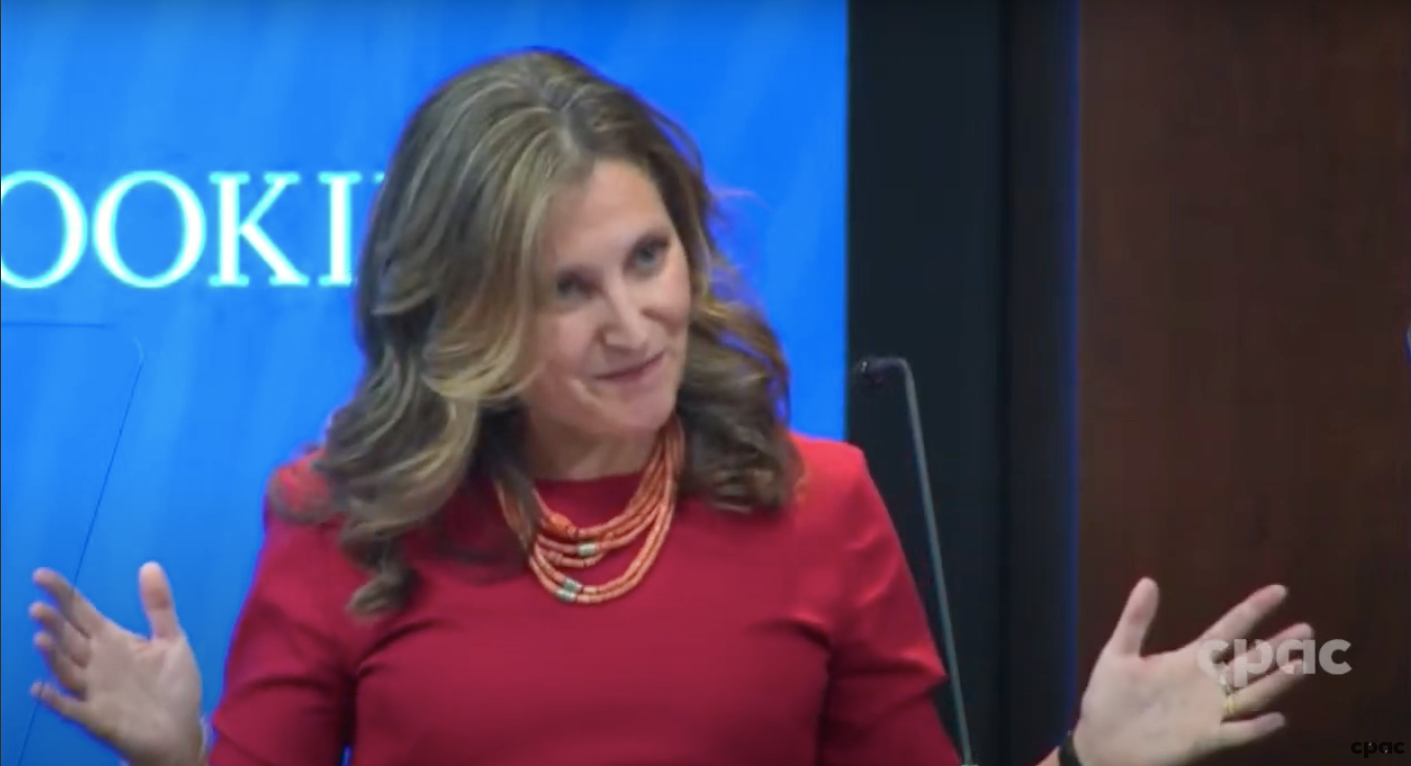
Screencap from a CPAC video of Chrystia Freeland’s speech at the Brookings Institution in October, 2022.
So, via NYT, as a war wages in Eastern Europe and NATO is looking for a new Secretary General, what is the focus?
The behind-the-scenes jockeying for who should succeed Jens Stoltenberg has begun in earnest, with a focus on women.
Here’s the CV:
While the officials cautioned that these are early days, and very often the names that surface first do not survive the bargaining among NATO’s 30 members, they said one prime candidate has surfaced in Washington: Chrystia Freeland, 54, the Canadian-Ukrainian deputy prime minister and finance minister of Canada.
Ms. Freeland, 54, a former journalist (who is married to a reporter for The New York Times), has also been Canada’s foreign minister. Her advantages are considerable: she speaks English, French, Italian, Ukrainian and Russian; she has run complicated ministries; she is good at news conferences and other public appearances; and she would be the first woman and first Canadian ever to run NATO.
The fact that word is on the street that the primary filter here is if someone is XX vs XY would be laughable if not so destructive. There is absolutely nothing wrong with a woman being Secretary General, but that should have nothing to do with the decision. The fact is leading with that as the first criteria, any woman selected as Secretary General this round, would — rightly — always have a shadow over them for this simple fact that they did not get the position on merit — but simply an attempt to signal virtue to … well … fellow members of the woke left in the West, I guess. NATO’s potential enemies will only be encouraged by such an act.
This does nothing for NATO or women — and it degrades both by the process.
That being said, as her name is being floated, let’s look at Freeland. Many US citizens may recognize her from her very undiplomatic interactions with the Trump Administration. It wasn’t just Trump, but something worse that seeps out. Even during the Biden Administration, her not-so-subtle sniffs of standard issue leftist Canadian anti-Americanism crops up on a regular basis. It only gets worse when she deals with Americans to the right of Bernie Sanders.
In NATO, you need someone who is a subtle politician — again with experience working in a vigorous multi-party coalition with highly different views, priorities, and goals. That is why Europeans make such good Secretary Generals. While Canada also has a parliamentary system, it and its parties are VERY different than the European model. Freeland only gets partial credit here.
There is also the issue of temperament. Read the links above. Freeland likes to pick fights, often in public. Worse, she seems to enjoy — again as most standard-issue Canadian leftists do — in making snide comments about the government and people of the alliance’s largest monetary and troop contributing nation — the United States of America.
The Secretary General of NATO has to be someone by temperament and habit seen as a non-partisan person toward the USA so that they can work with American administrations from all political parties. Freeland has significant issues with the American Republican Party in general and American conservatives in particular. That alone should be enough for serious alliance nations from Poland to Great Britain to be against her as a possible candidate. In summary; Freeland does not possess the skills or temperament for the position.
Now is not the time for such frivolity.
The last reason — and the most important reason for me — that Freeland should not be the Secretary General will be recognizable to regular readers here. It has nothing to do with her as a person, but her nation, Canada.
I love Canada and Canadians — but this is not personal, this is business. Serious alliance business. Simply by the numbers, Canada has not earned the position.
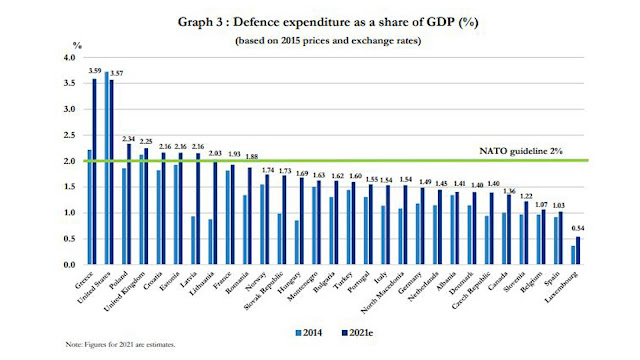
Review my post from September if needed, but Canada spends ~1.3% of her GDP on defense. This is WELL below NATO’s 2% minimum. Only Slovenia, Belgium, Spain and Luxembourg spend less.
We are well past being polite to alliance members who refuse to pull their fair share of the burden. Canada simply has not put herself in the position to reward any of her political elite with the position of Secretary General, man or woman.
Comments Off on Freeland to NATO? Almost certainly not
Look at Life — Underwater Menace (1969)
PauliosVids
Published 20 Nov 2018Dealing with the hazardous legacy of World War II.
Comments Off on Look at Life — Underwater Menace (1969)
November 7, 2022
Inside the Gulag System – WW2 Special
World War Two
Published 4 Nov 2022Even as the Allied powers condemn the German crimes against humanity, their recent victories are in part thanks to the massive system of forced labour built by Joseph Stalin’s Soviet Union. Over one million prisoners work in the Gulag to power the Soviet war economy.
(more…)
Comments Off on Inside the Gulag System – WW2 Special
November 6, 2022
Allies Launch New Phase in Pacific War – WW2 – 219 – November 5, 1943
World War Two
Published 5 Nov 2022The Allies hit the beaches of Bougainville, largest and last of the Solomon Islands. They create and expand a beachhead there and also win battles there at sea and in the skies. In the USSSR, the Soviets are closing in on Kiev and in the south have isolated the Crimea, but in spite of that, Adolf Hitler issues a new directive that Germany’s focus for the future should be in the west and the threat of an Allied invasion there.
(more…)
Comments Off on Allies Launch New Phase in Pacific War – WW2 – 219 – November 5, 1943


