Quotulatiousness

February 5, 2024

Sitzkrieg on the southern border

Filed under: Government, Media, Politics, USA — Tags: , , , , — Nicholas @ 04:00

Glenn “Instapundit” Reynolds on the stand-off between Texas governor Greg Abbot and President Joe Biden over the flood of illegal immigrants coming across the US-Mexican border:

So the war over the border between Texas and the Biden Administration is now in the “Sitzkrieg” stage. Texas Gov. Greg Abbott has essentially declared war on illegal immigration. He invoked Article I Section 10 of the United States Constitution, which forbids states from declaring war except when “actually invaded” (or in such imminent danger as to admit of no delay) and, by implication, allows them to declare war when that happens. He also invoked the Guarantee Clause of Article IV, which requires the federal government to protect the states against invasion.

Abbott’s legal argument is that since he’s being invaded, he’s entitled to respond, and since the federal government is defaulting on its obligations it has no business – it’s basically stopped from – complaining. There was a lot of huffing and puffing at the time, with members of Congress calling on President Biden to federalize the Texas National Guard and the like, but basically, nothing happened. The Supreme Court vacated an injunction forbidding the Border Patrol from cutting the barbed wire that Texas had installed along the border, but – contrary to many media reports – didn’t rule that what Texas had done was illegal, or order Texas to stop policing the border.

Now not much is going on. The big complaints about immigration are mostly coming from outside Texas, places like New York City where illegal immigrants beat police with impunity, being released without bail after being arrested. (The usual endgame for this sort of thing in other societies has been death squads, organized either by police or by police-adjacent groups, taking out those whom the legal system cannot or will not control; we’ll see what happens in New York City.)

But next month Texas’s law allowing the state to apprehend and effectively deport illegals will go into effect, and that’s when the sitzkrieg is likely to end. Following are my (very) preliminary thoughts.

To me what’s astonishing is how unpopular with everyone the immigration policies of the Administration – and a good chunk of the GOP – are. Open borders are unpopular with blacks, whites, rural and urban voters, and, really, just a vast bipartisan majority. But like “climate change”, another priority of the ruling class without matching popular support, the borders stay open.

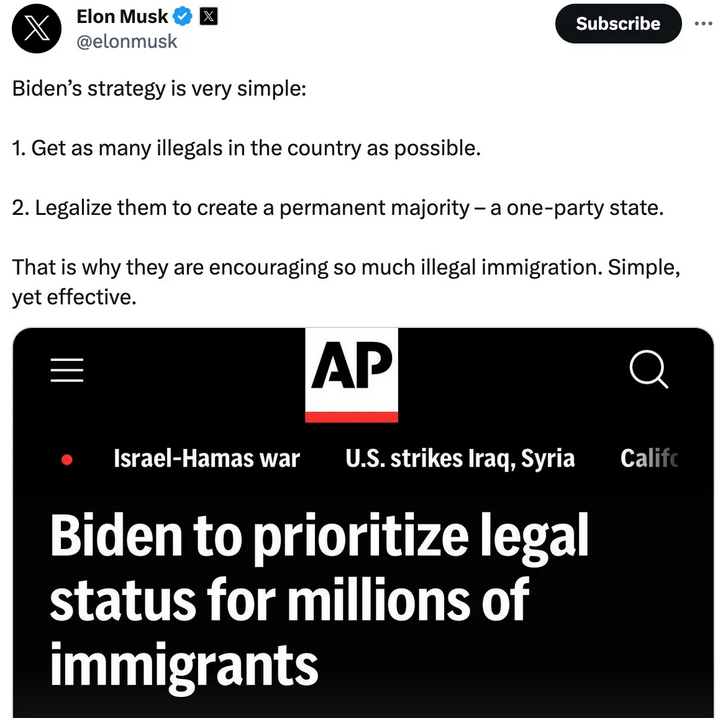
Why? Because our ruling class seeks, in Bertolt Brecht’s famous phrase, “to dissolve the populace and elect another”. As Elon Musk tweeted:

Musk’s comments met with the usual outrage, but Democrats have pretty much touted this as the plan for years. Indeed, it goes back to Ruy Teixeira’s “Emerging Democratic Majority” strategy, though it’s been accelerated in recent years. (And Teixeira himself has retreated from that plan). Sure, naturalization takes years – though they may speed that up, as it’s just a matter of statute – and there have also been some moves to allow non-citizens to vote anyway. Think that’s unlikely? Maybe, but how many things are happening these days that seemed impossibly unlikely a few years ago? And it’s a long game; a bunch of Democratic voters in 5 or 6 years will suit them fine.
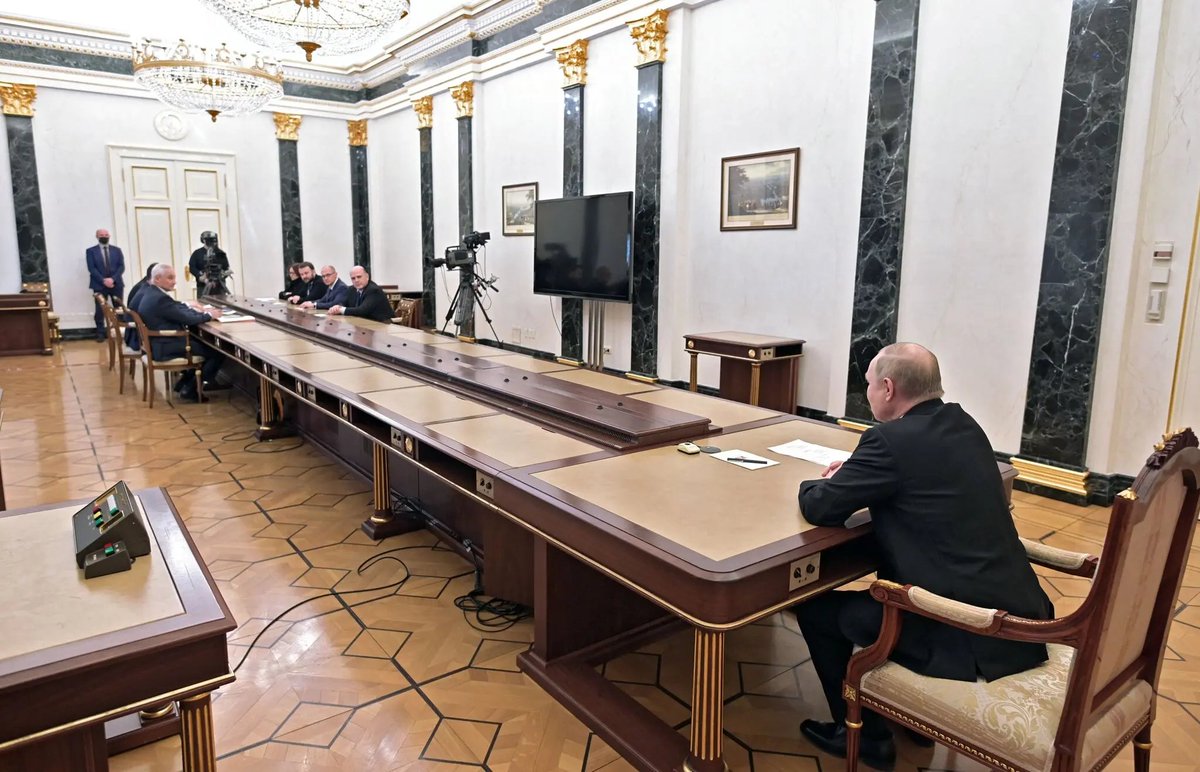
“Why can’t these Russians see how they’re being oppressed?”

Filed under: Food, Media, Politics, Russia — Tags: , , , — Nicholas @ 03:00

As the war in Ukraine has gone on, western media seem to have completely lost track of what ordinary Russians think about their government, replacing reality with a westernized imaginarium of Russia somehow being little more than a mirror of western progressive opinion:

For the average western normie, Russians are suffering under a brutal and vicious dictatorship, and cannot wait for the day that Putin loses power and western liberal democracy becomes the law of the land.

None of you reading this are normies, and all of you know full well that the overwhelming majority of Russians are not buying what western media and think tanks are selling. They have a unique (and foreign) history and culture that has at times moved towards Europe, but they have always managed to stand apart. This informs how Russians view their country and how they deal with the rulers that rule over them.

Many had hoped that the War in Ukraine would finally see Russians rise up against their own government and remove it from power. Those hopes were always misplaced and naive. Western journalists have long been blinded by their own false assumptions regarding the “superiority of western liberal democracy” and Russian sentiment. “Why can’t these Russians see how they’re being oppressed?”, is the generalized refrain. Harper’s Magazine sent two journalists to explore Russia along the Volga River, and what they found was a culture far removed from the West, and very proud of its own. It’s a long piece, so here are some highlights:

    Piotrovsky, who is mild-mannered and cerebral, and who wore his jacket loosely over hunched shoulders, seemed to have become a warrior. “Russia is many people, but one nation,” he asserted. “Russia along the Volga was able to incorporate everyone. Islam is just as much a religion of Russian tradition and identity as is Christian Orthodoxy. In Europe, in America, you speak of nothing but multiculturalism, but your cities are bursting with hate. For us, it didn’t take much to include everyone, because we’re an imperial civilization.” Then he grew more animated. “Look at the Hermitage!” he said, opening his arms to the room around us, widening his eyes. “It’s the encyclopedia of world culture, but it’s written in Russian because it’s our interpretation of world history. It may be arrogant, but that’s what we are.”

On renewed trade with Asia:

    Sergeeva took me to see the Jewish, Armenian, and Iranian neighborhoods of Astrakhan. An exhibition of photographs highlighting the civilian volunteers supporting the military was being set up outside of a park. At sunset, the elegant riverfront was swarmed with families and groups of young people talking and laughing in hushed tones. Couples sat on railings eating watermelon while food stalls projected multicolored lights on the Volga. There was a fin de siècle quality to the atmosphere, curls of smoke emanating from shashlik grills, a warm breeze delivering the lament of a distant violin. No military uniforms in sight.

    The café façades and the wrought-iron balconies reminded me of New Orleans. Sergeeva pointed out the renovations along the canal that runs through the old town, indicating the nineteenth-century wooden villas that will soon become hotels and luxury homes. “They seemed destined to crumble,” she said. “But now that money is going around, Astrakhan is once again the gateway to European Russia, Central Asia, and India. This is how it is for now. Later, we’ll see.

and

    In Astrakhan, it was rumored that the Iranians had invested billions in the development of the Caspian-Volga-Don corridor. There was talk of trafficking agricultural products and oil, but also turbines, spare mechanical parts, medicine, and nuclear components. I couldn’t verify this, but it was clear that Astrakhan is central to the anti-Western economic bloc’s efforts to turn east.

The general opinion in February of 2022 was that the Russians would easily seize much of Ukraine, but that they would pay a very large economic price, possibly the destruction of their entire economy. This was a safe bet, and it was totally wrong.

Import substitution:

    “The Russians are reacting to the sanctions in an extraordinary way, even with a weak ruble and the inevitable inflation. The prices of essential goods have held steady. And now we’re consuming better and healthier products than before the war, even exceptional cheeses.”

    I had never imagined that the rise of hyperlocal food would be one of the recurring themes of this trip. But it appears that the Western sanctions and war economy have intensified a traditional Russian gastronomy movement. Western products had piqued the palates of average urban Russians, and local producers were trying to fill their vacuum, proudly offering Russian-made Camembert and prosciutto, as if to provide some material evidence of Russkiy Mir, Putin’s ideology of Russian supremacy. As I dined along the Volga, menus often specified the farms from which ingredients had been sourced. Restaurants served svekolnik and okroshka, simple cold summer soups, exalting the quality of local radishes grown without Western fertilizers.

An ethnic Tatar foodstuffs producer from Kazan, Tatarstan on the sanctions regime leveled against Russia:

    Since then, the company’s net worth has become the stuff of legend. But Kazankov, too, is a great supporter of Western sanctions: “They’re an incredible developmental tool for Russia,” he told me. “The West should have imposed them back in the Nineties. We’d be the engine of the world by now. Too bad.” For him, the sanctions are pure adrenaline, and to prove it he added that his company has copied Italian, German, and Israeli “production means” to the letter: “We doubled processing in one year and we supply almost a thousand supermarkets in all of Russia.” Ivan believes that his “full-circle communist company” is the ideal model for “rebuilding a new Soviet Union with healthy local food from our lands.”

On the loss of vacationing in Europe:

    Was this fatalism? Indifference? Or arrogance, as Piotrovsky had implied back at the Hermitage? I struggled to find room in hotels or on ferries, all of which were overflowing with tourists forced to give up on the Mediterranean and make do with the Volga. Take Tatiana, the middle-aged manager of a supermarket chain. When I met her on a ferry in Yaroslavl, she wore a Panama hat, Gucci sunglasses, and capri sandals; she was heading downstream, to the same dacha where she had spent her summers as a girl. “I’ve had a boat docked in Mykonos for three years — who knows when I’ll see it again,” she told me. “I’m getting to know my river again. I’m running into friends I haven’t seen in thirty years. An interesting vacation.” I told her she looked a bit sad and resigned. “Russians have been sad and resigned for thousands of years,” she replied. “It’s how we stay resilient. I’m against this war, but I can’t do anything but wait, like everyone else. They manipulate us with artificial ideas. Garbage. But the West has been humiliating us for too long. Don’t we also have a right to be who we want to be without feeling like barbarians?

February 4, 2024

“[L]et’s face it head-on: you’re a social and political outlier, a dangerous extremist”

Filed under: Cancon, Government, Health, Media, Politics, USA — Tags: , , , , , , , — Nicholas @ 05:00

You, yes you are exactly the kind of dangerous extremist that mature and sensible journalists at all the right media outlets have been warning us about for years:

You’re very weird.

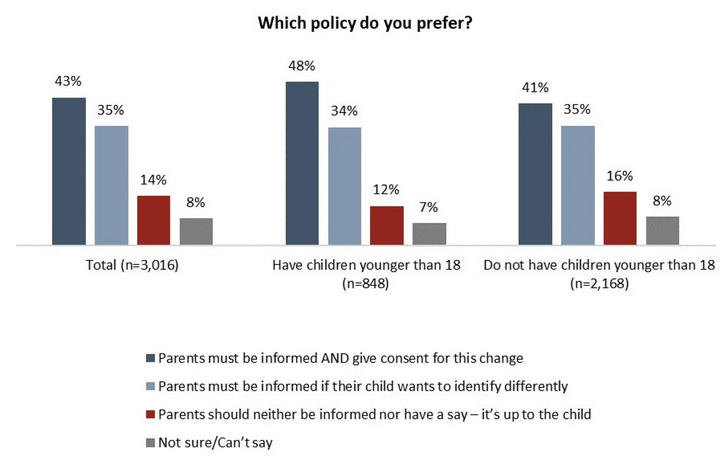
In fact, let’s face it head-on: you’re a social and political outlier, a dangerous extremist. Your views put you firmly on the fringe, and that fringe is becoming a real problem. For example, the Premier of Alberta, Danielle Smith, has just embraced a bunch of radical fringe policies about parent notification and consent regarding schools and transgender children, simultaneously limiting the ability of young children to have their bodies medically altered to match their declared gender — and some pretty disturbing people are supporting this crazy stuff. Look how appalled normal Canadians are by these extremist maneuvers to keep parents involved in the lives of LGBT children:

See the whole poll here, if you can stand the disgust from seeing extremist material, or see a detailed report on a poll of Californians that offers similar results.

Fortunately, the responsible mainstream leaders of the Liberal Party and NDP are standing strong with the 14% in the majority who want parents out of the lives of transgender children, rejecting the fringe views of the 78% who live at the extremist edges.

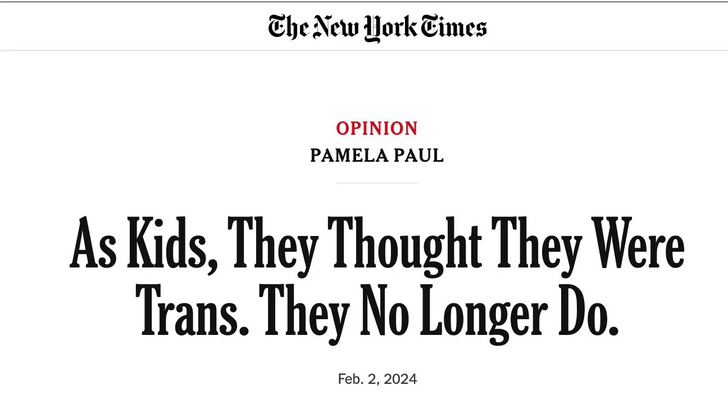
At the same time, the New York Times has just published a remarkable opinion piece on the growing concern among longtime transgender advocates, including transgendered clinicians, about the casual and rushed process by which American pediatric gender clinics are pushing children into gender transition. The essay centers on detransitioners, trans youth who change their minds and accept their biological sex.

This being the New York Times, the author is compelled to mention the true danger: “The real threat to transgender people comes from Republicans who wish to deny them rights and protections.” Ahh, but watch what comes next:

    But the doctrinal rigidity of the progressive wing of the Democratic Party is disappointing, frustrating and counterproductive.

    “I was always a liberal Democrat,” one woman whose son desisted after social transition and hormone therapy told me. “Now I feel politically homeless.”

    She noted that the Biden administration has “unequivocally” supported gender-affirming care for minors, in cases in which it deems it “medically appropriate and necessary.” Rachel Levine, the assistant secretary for health at the U.S. Department of Health and Human Services, told NPR in 2022 that “there is no argument among medical professionals — pediatricians, pediatric endocrinologists, adolescent medicine physicians, adolescent psychiatrists, psychologists, et cetera — about the value and the importance of gender-affirming care.”

Democrats are doctrinally rigid, and a top health official in the Biden administration says proudly that there is no debate. See, everyone believes the same thing, except mean Republicans, but that’s also now understood to be a sign of excessive ideological rigidity. Then the same piece in the Times also says a whole bunch of things like this:

    Studies show that around eight in 10 cases of childhood gender dysphoria resolve themselves by puberty and 30 percent of people on hormone therapy discontinue its use within four years, though the effects, including infertility, are often irreversible.

I’ve removed the links from the quoted paragraphs, because they don’t work well after cutting and pasting, but you can find them all at the link to the non-paywalled opinion piece.

Well, I guess the secret’s out:

February 3, 2024

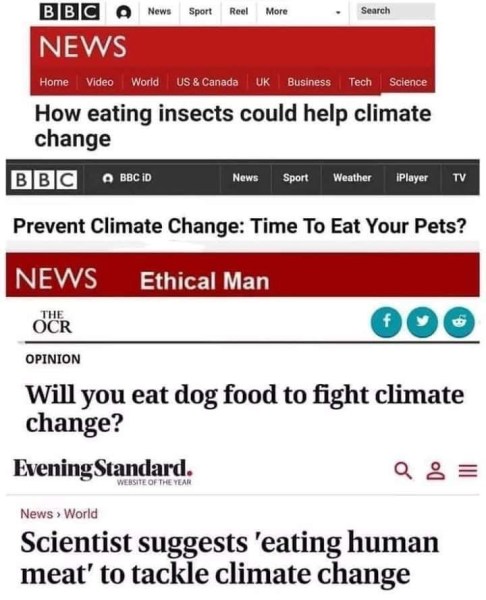
The climate alarmists long ago gave up honest scientific reporting

Filed under: Environment, Government, Media, Politics, Science, USA — Tags: , , — Nicholas @ 05:00

Tom Knighton says he used to fully buy in to the climate alarmist message, but eventually realized the fix had been in for years, especially when it came to the predictive ability of all the climate change models … as in, their total lack of predictive ability:

When Al Gore’s An Inconvenient Truth came out, I watched it. I was terrified by the world being described, and since I was still pretty liberal and sort of an environmentalist, I took it all to heart.

Over time, as my personal politics shifted, I still had concerns regarding climate change. After all, it is what it is, right?

Until I came to look deeper into the issue and the one thing that shattered my belief in the whole concept: The fact that not a single climate model has ever panned out as predicted despite pretty much none of the draconian measures we’re told we need in order to avert disaster ever coming to fruition.

Science is supposed to be predictive. If it can’t predict something in its models, then scientists need to back up and figure out what the problem is. Instead, they seemingly just keep doubling down.

[…]

Let’s be clear here, the idea of taking measurements in heat islands is freshman year stuff. There’s absolutely no way they’re unaware the effect that’s having on their readings, even as most of their instruments are subject to heat bias.

In other words, I can’t accept this is a good faith error.

No, I believe this to be malicious.

Climatology isn’t exactly a field of science that would ever be considered sexy. Before all the climate alarmism, research grants were likely few and far between. People weren’t overly worried about the climate because it simply ways.

Then scientists started screaming that we were all doomed. The end is nigh, they told us, screaming at the top of their lung and acting just shy of wearing a sandwich board in Times Square.

With that came money and prestige.

Suddenly, climatologist could get recognition and write bestselling books. They could get grants from everyone and their brother to fund their research. The thing is, they had to keep up the charade. People had to believe that we were going to die if we didn’t do something.

Maybe they actually want the draconian measures they suggest, measures that pretty much amount to going back to living in mud huts, but with solar- and wind-created electricity so we won’t need to burn wood to survive.

Or something.

Justin Trudeau doesn’t seem to understand why he’s losing so much support from voters

Filed under: Cancon, Media, Politics — Tags: , , , — Nicholas @ 04:00

Tailing on to the previous article, here are some thoughts from The Line‘s Matt Gurney about the strengths and weaknesses of Justin Trudeau — and I despise the man, but I accept he’s a very good politician — and the odd fact that he can’t seem to grasp the reason for his ongoing fall in popularity among Canadians:

… it was a specific comment by the PM that really stayed with me. It’s this:

    … Trudeau does believe, however, that Liberals are up against something relatively new in this climate, which he calls opinion-as-identity politics.

    “I don’t think that was a feature too much of other times in politics — where what you think about something actually creates the circles and the people that you actually associate with, and it defines who you are.”

I’m going to let Tom Cruise in the delightful and little-remembered sci-fi film Oblivion convey my reaction to the PM’s comment there:

This is a statement that I’m having a hard time processing, and that I’ve been reflecting on for weeks, because there is no version of Prime Minister Justin Trudeau — at least, in my understanding of the man — that is dumb enough to believe such a silly thing. Dividing ourselves into tribes identified by our opinions on stuff is exactly what human beings do, and have always done. The first monkey to get out of a tree and stand on solid ground and think to themselves, “Hey, it’s kind of cool down here,” was undoubtedly, immediately ostracized by all the other monkeys that thought that life atop the trees could not possibly ever be beaten.

And we’ve been finding new things to disagree about, and kill each other over, ever since. Which skin colour is best, which holy book contains the real guide to salvation, which ideology is the path to true human enlightenment … human beings have slaughtered each other by the millions over this stuff for as long as there have been human beings. Sure, every so often we squabble over resources. Who gets to control which oil field or prime cattle pasture and the like. But most of our nastiest fights have been over opinions about stuff. Maybe substantive matters, things like racial identity or religious affiliation, but still just opinions. And if we’re honest, some of the opinions have been pretty dumb. Not worth killing or dying over.

Hell, as I was thinking about writing this column, my young son very solemnly and seriously told me about some drama on the schoolyard he’d been part of. It turns out some kids who are normally good buddies had come to tears and almost to blows because … they liked different NFL football teams, and tensions were running high during some of the recent playoff games. I know it’s easy to dismiss this as just boys being boys, but I actually think it’s pretty useful here as an example of humans being humans. There is nothing that symbolizes the way we simian-brained weirdos approach life better than imagining a bunch of thinking, feeling people becoming emotionally overwhelmed because of a disagreement over which collection of overpaid athletic prodigies should advance while a different collection of overpaid athletic prodigies wearing another colour shirt heads home for a long break.

It’s ridiculous. But it’s us. It’s humans. Through and through. I’m a sports fan, too, and I’m well aware of the fact that sports are one of those handy things we use as a society to channel our base, primal, aggressive instincts. I get up and cheer wildly when the Leafs beat the Canadiens because it satisfies some part of my brain, and millions of other brains, that would probably otherwise result in Toronto and Montreal raiding each other for chickens. Or worse. Human beings are constantly deciding stuff and then sorting whole populations accordingly, and then getting emotionally invested in those divisions. I like it more when we channel it into sports rivalries and fights over who has the superior bagel.

How can the prime minister not understand this about us?

“There are no tangible consequences for politicians who violate ethics rules. The maximum fine is just $500”

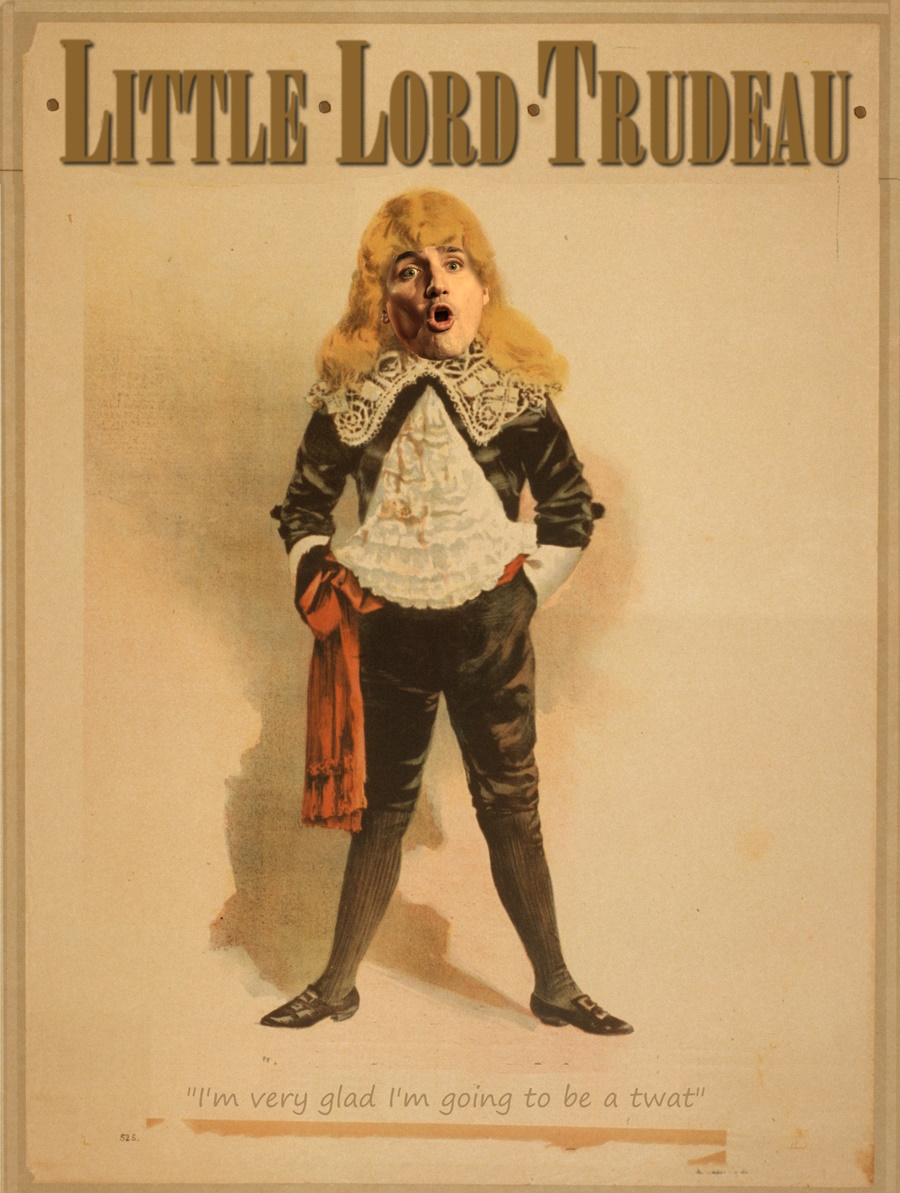
Chris Selley helpfully explains why — even if the ethics commissioner turns a blind eye, again — Justin Trudeau should avoid ostentatiously living like an aristocrat in the Ancien Régime of pre-revolutionary France:

Image from Blazing Cat Fur

Interim federal Ethics Commissioner Konrad von Finckenstein authored a great moment in Canadian political accountability on Tuesday in explaining to a parliamentary committee when and why he might investigate a very generous gift to the prime minister from a friend. (Gifts from friends are explicitly allowed for in the Conflict of Interest Act.) The gift would have to be “really exceptional,” he suggested, like “a Ferrari,” or “$1 million,” to trigger an investigation.

You can get two Ferrari 296s for $1 million. Or a Daytona SP3 for around $2.5 million. It’s a very confusing standard.

Not rising to this “exceptional” level, apparently, is the free nine-day vacation in a luxury Jamaican villa the Trudeau clan enjoyed over the Christmas break, with a retail cost of around $84,000, courtesy of family friends who own the estate.

“This is a true friend, who has no relations with the government of Canada,” von Finckenstein told the committee (read: unlike the Aga Khan, whom von Finckenstein’s predecessor Mary Dawson found not to have been a real-enough friend to escape her wrath). “What we have here is clearly a generous gift, but it’s between people who are friends and I don’t see why, just because they’re well off, they can’t exchange gifts.”

Leaving aside what the prime minister is allowed to do with his truly rich true friends, it remains utterly astonishing to me that Justin Trudeau or someone with an ounce of sway in his office wouldn’t put a stop to this conspicuously consumptive behaviour as a matter of choice.

[…]

Hard cases make bad law, and it’s almost impossible to imagine a future prime minister luxuriating in his birthright lifestyle the way Trudeau does. In fact, so long as such gifts are disclosed — which the Aga Khan caper might well not have been, had the National Post not been tipped off — I think it’s probably better to let Canadians decide for themselves what they think of their PM’s behaviour when he’s unshackled by hard-and-fast rules.

It’s not as though the ethics commissioner’s findings of guilt have any real effect. There are no tangible consequences for politicians who violate ethics rules. The maximum fine is just $500. Former finance minister Bill Morneau was dinged just $200 for forgetting to disclose his villa in Provence. (I suspect La Villa Oubliée is unavailable to rent at any price.)

February 2, 2024

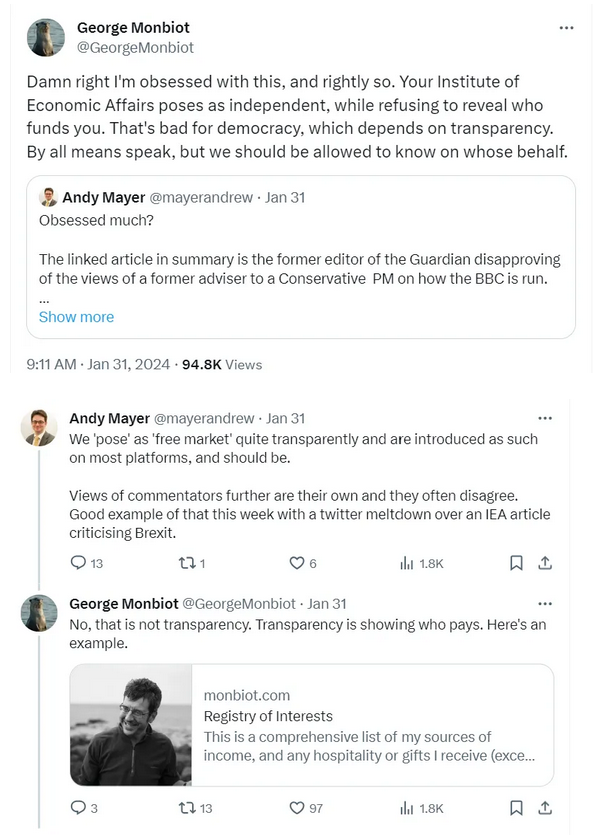
“Who funds you?”

Filed under: Britain, Business, Media, Politics — Tags: , , , , , — Nicholas @ 03:00

Tim Worstall considers George Monbiot (lovingly known as “The Moonbat” to early bloggers) and his demand that others make their sources of income transparent to show whether their opinions are being “bought” by shady interested parties:

George Monbiot has his positive attributes. His change of mind on nuclear power in the face of the evidence from Fukushima — that no one at all died from three reactors going pop, while 15k and more did from the tsunami and therefore he became in favour of nuclear — is an example. OK, that’s rather hitting someone over the head with a cluebat but it’s also true that Caroline Lucas didn’t manage to note that same point. So, there is that. Even if “more aware of reality that Caroline Lucas” is a low bar to have to clear.

George can also rather dig himself into holes. As he is here with his insistence about funding of varied think tanks and so on.

And, OK, let’s go look at George’s registry of interests […]

OK, that’s the sword that George declares he’s going to live by. Fair play and all that.

Except, except. Last year was pretty good, book royalties flowing in and more power to that typing. The core earning is The Guardian, royalties on top. Not unusual for a writer to be honest. Gain a core contract that produces an ongoing and assured income, spend time floating books or other work out there to see what happens to income. Freelancing is certainly a great deal more fun if you already know where the monthly nut is going to come from with such a core contract.

But, but.

Book royalties, umm, Penguin? Used to be part owned by Pearson, also at the time owners of the Financial Times. So that’s a connection into the shadowy world of international capitalists. It’s now Bertelsman, so foreign international capitalists to boot. Macmillan? They admitted to bribery in Sudan over a school books contract. So a link to international thieving capitalists too. HarperCollins? That’s Murdoch, no more need be said, right?

But, but, a reasonable response would be that this is all far removed from the level George works at. That would be a fair enough response too.

But note the thing here. By agreeing that there’s some level of connection which is too ephemeral to matter we are agreeing that this thing called the corporate veil exists. We can indeed don the tin foil hats and connect near anything we want. Pretty much all Europeans are 16th cousins for example. So I — and George — am/are responsible for WWI because we’re both related to the Kaiser, Emperor and Tsar all at the same time. It’s our family wot dun it, see? Within economic connections that concept, that there’s this thing ‘ere which is responsible not the further connections away from that, is called that corporate veil. I shop at Sainsbury’s sometimes. The Labour Minister husband of a Sainsbury’s heiress employed two butlers (before dumping her for his boyfriend if memory serves). It’s possible to claim that I therefore fund dual butlership but it’s not a claim that all that many are going to regard as valid.

But The Guardian, that core contract. The newspaper seems to have returned to profit recently but there was a decade or so there where it was losing tens of millions a year — and more in some 12 month periods. Those losses were covered by the profits from Autotrader more than anything else. So, George was funded by the facilitation of climate destruction through the trade in internal combustion engined cars.

If, you know, we wanted to put it that way.

January 31, 2024

The ghost of Beeching haunts model railways?

Filed under: Britain, Media, Railways — Tags: , , , — Nicholas @ 05:00

In The Critic, Richard Bratby notes the solemn departure of the very last model railway train in Britain, at least based on recent reporting on the hobby:

“Platelayers hut and coal train” by Phil_Parker is licensed under CC BY 2.0 .

The last model train has departed, and in the attics and spare bedrooms of Britain, closure notices the size of thumbnails are being glued to cardboard stations. OO gauge track is being torn up; weeds made from lichen and flock shoot up where once there were busy miniature main lines. It’s Beeching all over again, just tiny. And in a desolate parade, once-cherished model locos trundle off to 4mm scale scrapyards, to stand lifeless and forgotten until, like their real-life forebears, they are broken up to be recycled as … oh, I don’t know. iPhones. Xboxes. Something modern, anyway. Something cool.

Well, I read it in the Telegraph, so it must be true. “Death of the Model Railway” proclaimed the headline last weekend, and the same story duly popped up all over the media, usually with some variant of “running out of steam”, or “going off the rails”. I was a bit late coming to the news because it was Saturday and I’d spent the afternoon building a model goods wagon from a plywood kit. I’d just added the lettering, and it came as a jolt to learn that the hobby no longer existed. Gingerly, I poked at the varnish I’d just applied — damn, still sticky, and now there was a socking great out-of-scale thumbprint spoiling the look of the thing. That seemed real enough.

But why did those headlines seem so familiar — and ring so false? True, 2024 has begun badly in the railway modelling world. Last week the organisers of the annual Warley National Model Railway Exhibition — a giant show held at the NEC in Birmingham, and a highlight of the hobby’s annual calendar — called it quits. A few days previously, the venerable model railway shop Hattons had announced that it was closing down after 78 years. Taken together, you can see why a journo from outside this particular subculture might link unrelated events into a bigger, juicier story. And let’s face it, a dig at railway enthusiasts is always good for a laugh, isn’t it?

I won’t deny that both events stung me. As a kid in the 80s I used to visit Hattons at its original Liverpool location. Even then, it felt old-school: a gloomy, musty terraced shop, piled to the ceiling with boxes and display cases. But a Saturday visit was like entering Aladdin’s cave and we’d always leave with some new treasure, wrapped in brown paper. Hattons has long since moved to newer, brighter premises and refocused on its mail-order business. I realise with a pang of shame that I’ve never used either.

As for the Warley Exhibition; well, I was there with my dad in November. It’s a regular father and son fixture a few weeks before Christmas, and if we’re honest we probably look forward to it rather more. It was rammed — 80-odd layouts (please, never “train sets”) from the UK, Europe and America, with crowds jostling four deep, and trade stands offering everything from antique clockwork models to the latest digital tech. My 12-year old eyes would have popped out of my head at the quantity and quality of products available. One stall was using airport-stye scanners to produce miniaturised replicas of its customers, so they could ride their model trains in person. If this is a hobby in decline, I’m not seeing it.

I’m going to stick my neck out here: correlation does not imply causation, and railway modelling is actually thriving. What the headlines describe is a collision of two familiar, but separate, 21st century trends the death of the high street, and the decline of old-style social clubs. Hattons never went bust: it read the runes and decided to get out in good order. As for Warley; well, if anything, the Exhibition seems to have been a victim of its own success. Like many leisure pursuits, railway modelling in the 20th century revolved around clubs, with all the paraphernalia of committees and tea rotas. People don’t do that quite so much nowadays.

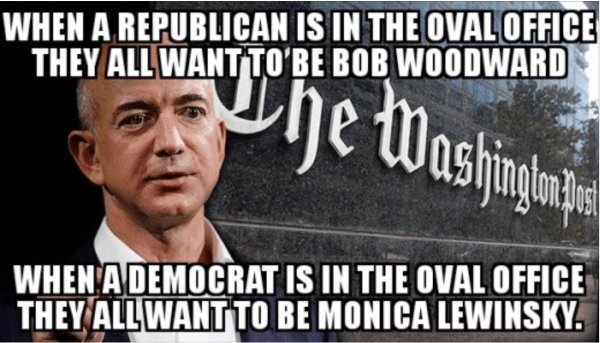
The LA Times recently laid off a bunch of “activists masquerading as reporters”

Filed under: Business, Media, Politics, USA — Tags: , , , , , — Nicholas @ 04:00

Tom Knighton illustrates one of the reasons so many legacy news organizations are being forced to cut back on staff in hopes of staying afloat:

Last week, the LA Times announced a massive layoff of journalists. They were just one of several places that kicked the activists masquerading as reporters to the curb.

This, of course, was met with consternation by the journalistic field as a whole.

Everyone seemed ready to warn of doom and gloom, telling us how important they are to society and that we need them.

Yet absolutely none of them seemed remotely interested in actually examining why the field is shrinking so horrifically.

Sure, the current landscape is very different due to technological advancements. For example, there’s places like Substack where I can reach out to readers directly instead of needing to filter things through a newspaper’s editorial voice.

But journalists also did this to themselves.

[…]

Because journalism’s “inherently political” tribe uses their politics to decide which stories are worth reporting. Journalists, if we can even really call them that anymore, aren’t simply sharing truth. They’re amplifying some stories and smothering others.

How often do we see stories claiming so-and-so is a white supremacist because he favors welfare reform or a tougher stance on illegal immigration? How many publications amplified the nonsense about Border Patrol agents “lassoing” illegal immigrants because of a picture they didn’t understand?

Journalism doesn’t represent the American people. It represents the Democratic Party.

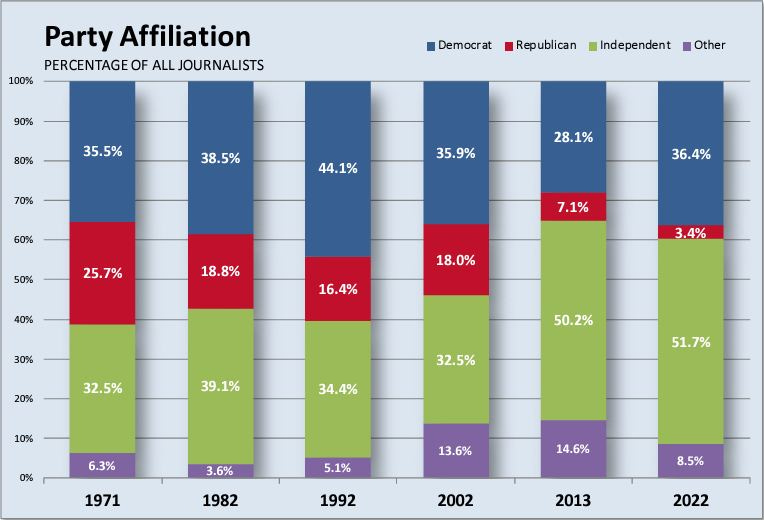
In 1971, Republicans accounted for just over a quarter of all journalists. In 2022, they were 3.4 percent.

Original can be found here – https://www.theamericanjournalist.org/

Now, in 1971, those independents were probably divided between left-leaning and right-leaning to some degree or another, though the survey didn’t capture that.

In 2022, I suspect many who called themselves independent did so because they thought the Democrats were too right-leaning for their tastes.

What’s more, despite the lack of ideological diversity, that same source found that only 21.8 percent see that as needing to change.

What’s more, starting in 2016, news publications really stopped even trying to pretend they were unbiased. A form of blatantly activist journalism became common, with virtually every news agency in the nation showing at least some signs of it.

January 30, 2024

How did Justice Mosley manage to avoid mentioning the huge pachyderm in the room?

Filed under: Cancon, Government, Law, Media, Politics — Tags: , , , , — Nicholas @ 04:00

Donna LaFramboise on the amazing ability of people in power here in Canada to avoid noticing or acknowledging the most salient facts of a situation:

“The Elephant in the Room” by BitBoy is licensed under CC BY 2.0 .

In the recent court ruling against Justin Trudeau’s use of the Emergencies Act, the elephant in the room was once again ignored.

Justice Richard Mosley is well aware that the Act is intended to be “a tool of last resort.” He says so twice in his decision, on pages 78 and 86. He also does a conscientious job of describing the arguments each side presented during various stages of the court battle.

Yet there is no indication, not even the slightest hint, that the bloody obvious received five minutes of the court’s attention: No government can claim to have exhausted all other avenues if it hasn’t even had a conversation with protesters.

It doesn’t matter who is doing the protesting, or what their cause happens to be. If you haven’t arranged a meeting, if you haven’t sat down and listened to people’s concerns, if you haven’t even tried to negotiate a resolution, it is not OK to reach for a last resort, nuclear option. That is beyond unreasonable. It is absurd.

In India, between November 2020 and November 2021, farmers protested three new pieces of agricultural legislation that were eventually repealed. Justin Trudeau publicly criticized the Indian government during that time. So let us compare and contrast.

According to the Indian Express, farmers unions called for a march to Delhi, the national capital, on November 26th and 27th. Delhi police said protesters wouldn’t be permitted to enter the city due to COVID restrictions, but the farmers came anyway. Water cannon and tear gas were used against them, but they eventually arrived in the north-west part of the capital.

On November 28th a cabinet minister “offered to hold talks with the farmers as soon as they vacate Delhi borders”. The farmers didn’t budge. The first round of talks with government took place, nonetheless, on December 3rd — a week after the Delhi protest began. Two days later, more talks took place. By December 30th, six rounds of negotiations had taken place.

In Canada, the government treated the truckers like mangy dogs rather than citizens. Not a single cabinet minister pursued dialogue. Not a single representative of the federal government met with the truckers between the time they began arriving in Ottawa on January 28th, 2022 and when police violently shut down the protest on February 18th and 19th. Get lost, peasants! was the government’s official position.

York University’s CUPE local apparently cribs their homework from the Völkischer Beobachter

Filed under: Cancon, Education, Media, Middle East, Politics — Tags: , , , , , — Nicholas @ 03:00

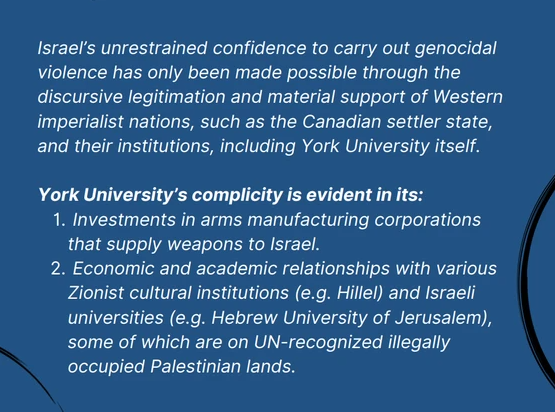
York University’s contract and part-time instructors are represented by CUPE local 3903, who’ve distributed an eye-openingly anti-semitic document with the (implied) order to interrupt normal tutorials and replace the content with Palestinian propaganda:

Detail from an official “toolkit” distributed to York University contract and part-time faculty which claims that their employer is complicit in “genocide” by the mere tolerance of Jewish groups on campus.
Photo by A Toolkit on Teaching Palestine

A new toolkit circulated to York University teaching assistants instructs them to denounce Israel at every available opportunity, even when it has no apparent relevance to the subject being studied.

“Let us collectively divert this week’s tutorials to teaching on Palestinian liberation,” reads the 15-page document circulated by CUPE 3903, the union representing York’s contract and part-time faculty.

The document adds that tutorials should be diverted to condemnations of the “Zionist Israeli state” regardless of the course that the TA is supposed to be discussing.

“It is a medical issue. An arts issue. A feminist issue. A society issue. A political issue. A cultural issue. A geography issue. An engineering issue. An architecture issue,” it reads.

The document is filled with claims denouncing Israel as a genocidal “colonial project”. Canada is treated much the same, and is referred to alternately as the “Canadian settler state” or “Turtle Island”.

The mere presence of Jewish groups on campus is also referred to as evidence of York University’s “complicity” in genocide.

The document denounces the existence of sanctioned “Zionist cultural institutions”, making explicit reference to Hillel, the world’s go-to Jewish campus organization. York is also called an accessory to genocide because of its research links with the Hebrew University of Jerusalem.

The pamphlet even provides a script for TAs to read as they inform students that the tutorial will be cancelled in favour of becoming a “teach-in … for liberation.”

“Today, I open up our classroom to bring our attention on Gaza, to speak up and stand in solidarity with the Palestinian liberation movement, and contribute in ending Canada’s and York’s complicity with genocide and the settler-colonial occupation of Palestinian land and life,” reads one introductory line.

January 29, 2024

Peter Hitchens isn’t onboard with the march to yet another war

Filed under: Britain, History, Media, Military, Politics, Russia, USA — Tags: , , , — Nicholas @ 04:00

Writing in the Daily Mail, Peter Hitchens decries the apparent drift by western politicians into yet another war:

Are we the baddies? What if the Ukraine war is just as stupid and wrong as the Iraq war, but the state propaganda has been more successful and hardly anybody has realised … yet?

Many people to this day still think the damaging and morally dubious Western attacks on Serbia and Libya were justified. Many still think the gory attempt to destroy Syria was a good thing. It took ages for opinion to swing on the Vietnam war, back in the 1960s. And, as one who opposed the Iraq war, I remember only too well just how many (who now think they were against it all the time) were fooled into backing Sir Anthony Blair and George W. Bush.

The issue is more pressing as generals and admirals warn we must live in a militarised society and prepare for what they think is an inevitable war against Russia. They could get their way. If you go on backing this policy, you could be condemning yourself, your children or grandchildren to a world of war, privation and perhaps conscription into some sort of military service.

[…]

This is what I have never been able to work out. We have a Defence Secretary, Grant Shapps, who has perfected the art of shouting loudly while carrying a very small stick – thunderous, belligerent declarations while our Armed Forces melt away thanks to neglect and badly targeted spending. Perhaps, if the long-feared Russian invasion of Western Europe takes place, we can fend it off by dispatching our troops on the pestilential e-scooters and e-bikes which are this former Transport Secretary’s major contribution to the nation.

Certainly these vehicles are terrifying to those not riding them. They have nearly killed me more than once. And, piled up in heaps, they make formidable obstacles, as the people of London are finding.

What Mr Shapps does not seem to grasp is that Britain became great by staying out of continental conflicts, and letting others do the fighting. Even in the battle against Bonaparte, we paid our European allies to do most of the hard work.

Our greatness ceased when bombastic moralising took over, in 1914. We flung ourselves, supposedly nobly, into a Russo-German war. Within two years we were bankrupt, and bereft of the flower of our young manhood.

People still refuse to believe me when I say accurately that Britain has not paid off its huge 1914-18 war debts (now worth about £40 billion) to the USA. But I promise you it is true.

Four years of terrible loss left the Russo-German problem unsolved and we had to do it all again in 1939. After that we were even more bankrupt, and in 1946 had to ration bread, like some desperate People’s Republic. But for many years afterwards we were largely governed by grown-ups who had fought in actual wars and been wounded, and had seen death very near them, or endured bombing and a war economy. And so we largely stayed out of major foreign trouble.

The residential school system in the historical record and in current politics

Filed under: Books, Cancon, History, Media, Politics — Tags: , , , , — Nicholas @ 03:00

Barbara Kay discusses the residential school system debate that’s likely to become one of the issues in the next federal election:

Canadians deserve to know the truth“, Pierre Poilievre told reporters earlier this week, regarding 2021 claims made — but never investigated — of unmarked graves at the Kamloops, B.C. Indian residential school. Poilievre said he was open to “a full investigation into the potential remains at Residential Schools”, wherever that may lead.

This is a bold move, taken in the full knowledge that the Liberals will put a demonizing spin on his comments, even though the Conservative leader also said that “the residential schools were an appalling abuse of power by the state and by the Church at the time”. If Poilievre feels confident to, as he put it, “stand in favour of historical accuracy” on this file, then he believes a critical mass of Canadians will support the proposal.

Trudeau’s government, by contrast, is wedded to the unquestioning, emotive approach to IRS history. From the day that First Nations announced the “discovery” of 215 unmarked graves in Kamloops, arising solely from a finding of “soil disturbances” by ground penetrating radar the Liberals sprang into supportive action. They were emboldened by an overzealous media, starting with the New York Times, which falsely claimed a “mass grave” had been found. Flags were lowered, and Trudeau issued a plangent apology for the children “whose lives were taken” at Kamloops.

Only there was no evidence of lives illicitly “taken”. To date, in spite of the government’s allocation of $7.9 million for the task, no excavation has been done at Kamloops. Excavations in other suspected sites have not turned up human remains. But the media long avoided contrarian copy. (Post columnist Terry Glavin’s May 2022 feature article on the graves in these pages broke the mainstream silence.)

Not that there wasn’t any published pushback. There was plenty, from a cadre of highly accredited scholars, investigative journalists, judges, lawyers and independent researchers, who have amongst themselves amassed probably a million hours of research into all facets of government-Indigenous relations, including the IRS. Only they appeared in non-mainstream media, such as C2C Journal, the Dorchester Review, True North, the Western Standard, the Frontier Centre for Public Policy, Quillette and in some cases their own substacks. For their pains, most of them were labelled “deniers” by media and politicians.

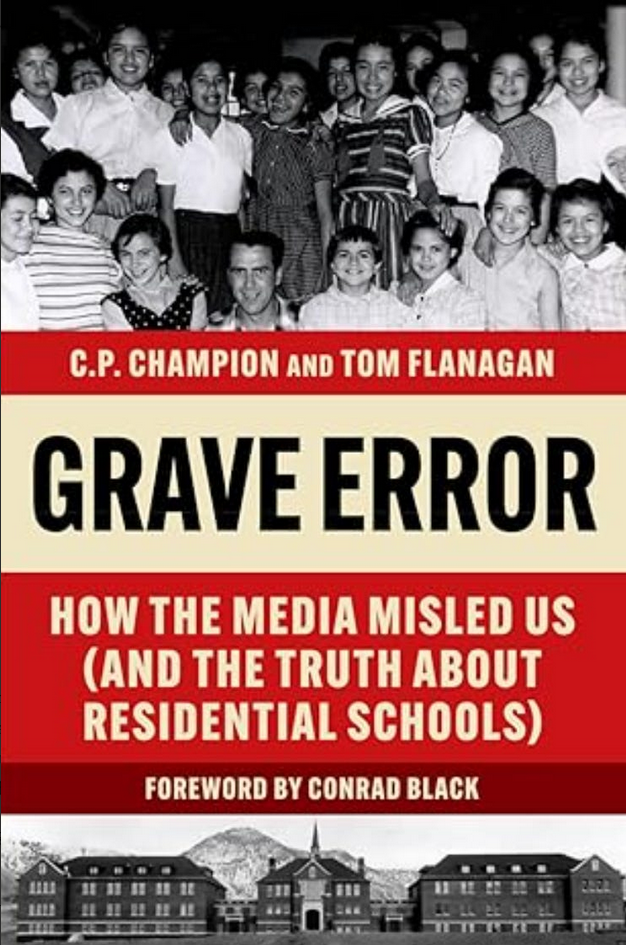
Excellent articles on the IRS by these indefatigable researchers have now been compiled into a single volume, Grave Error: How the media misled us (and the truth about residential schools), edited by historian Chris Champion, publisher of the Dorchester Review, and Tom Flanagan, professor emeritus of political science at the University of Calgary and chair of the Indian Residential Schools Research Group (I am an IRSRG board member).

January 28, 2024

We had to destroy the democracy to save it

Filed under: Media, Politics, USA — Tags: , , , , — Nicholas @ 05:00

Matt Taibi asks if there’s already an “electoral fix” in place, as we see more and more evidence that Joe Biden and the Democrats will stop at nothing to keep Trump — and would-be Democratic challengers — off the ballot completely:

The fix is in. To “protect democracy”, democracy is already being canceled. We just haven’t admitted the implications of this to ourselves yet.

On Sunday, January 14th, NBC News ran an eye-catching story: “Fears grow that Trump will use the military in ‘dictatorial ways’ if he returns to the White House”. It described “a loose-knit network of public interest groups and lawmakers” that is “quietly” making plans to “foil any efforts to expand presidential power” on the part of Donald Trump.

The piece quoted an array of former high-ranking officials, all insisting Trump will misuse the Department of Defense to execute civilian political aims. Since Joe Biden’s team “leaked” a strategy memo in late December listing “Trump is an existential threat to democracy” as Campaign 2024’s central talking point, surrogates have worked overtime to insert existential or democracy in quotes. This was no different:

“We’re about 30 seconds away from the Armageddon clock when it comes to democracy,” said Bill Clinton’s Secretary of Defense, William Cohen, adding that Trump is “a clear and present danger to our democracy”. Skye Perryman of Democracy Forward, one of the advocacy groups organizing the “loose” coalition, said, “We believe this is an existential moment for American democracy”. Declared former CIA and defense chief Leon Panetta: “Like any good dictator, he’s going to try to use the military to basically perform his will”.

Former Acting Assistant Attorney General for National Security at the U.S. Department of Justice and current visiting Georgetown law professor Mary McCord was one of the few coalition participants quoted by name. She said:

    We’re already starting to put together a team to think through the most damaging types of things that he [Trump] might do so that we’re ready to bring lawsuits if we have to.

The group was formed by at least two organizations that have been hyperactive in filing lawsuits against Trump and Trump-related figures over the years: the aforementioned Democracy Forward, chaired by former Perkins Coie and Hillary Clinton campaign attorney Marc Elias, and Protect Democracy, a ubiquitous non-profit run by a phalanx of former Obama administration lawyers like Ian Bassin, and funded at least in part by LinkedIn magnate Reid Hoffman.

The article implied a future Trump presidency will necessitate new forms of external control over the military. It cited Connecticut Senator Richard Blumenthal’s bill to “clarify” the Insurrection Act, a 1792 law that empowers the president to deploy the military to quell domestic rebellion. Blumenthal’s act would add a requirement that Congress or courts ratify presidential decisions to deploy the military at home, seeking essentially to attach a congressional breathalyzer to the presidential steering wheel.

NBC’s quotes from former high-ranking defense and intelligence officials about possible preemptive mutiny were interesting on their own. However, the really striking twist was that we’d read the story before.

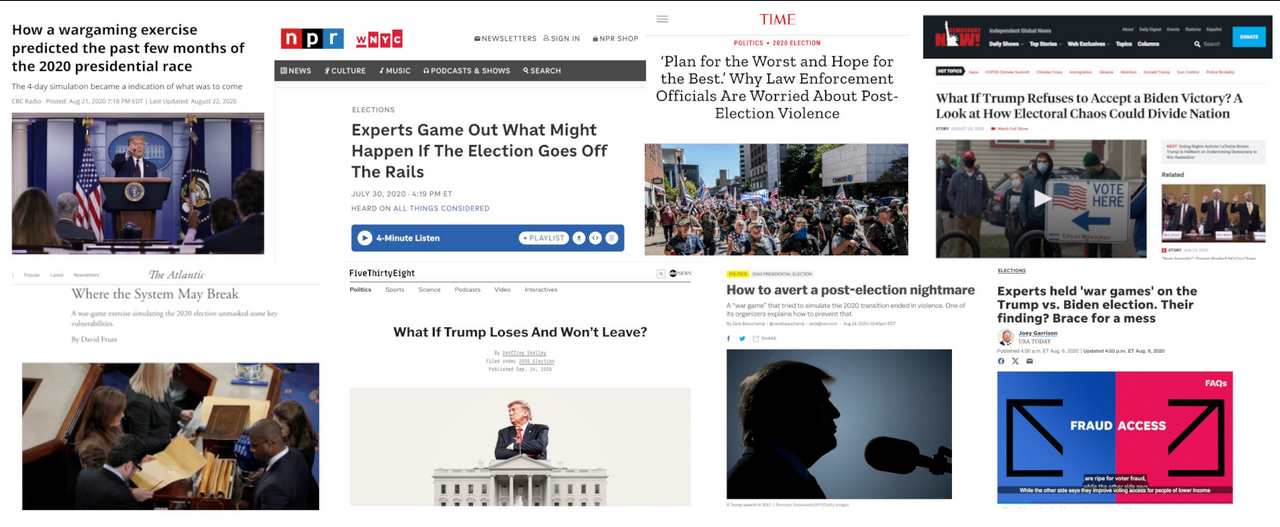
Summer, 2020. The TIP media blitz.

For over a year, the Biden administration and its surrogates have dropped hint after hint that the plan for winning in 2024 — against Donald Trump or anyone else — might involve something other than voting. Lawsuits in multiple states have been filed to remove Trump from the ballot; primaries have been canceled or invalidated; an ominous Washington Post editorial by Robert Kagan, husband to senior State official Victoria Nuland, read like an APB to assassins to head off an “inevitable” Trump dictatorship; and on January 11th of this year, leaders of a third party group called “No Labels” sent an amazing letter to the Department of Justice, complaining of a “conspiracy” to stop alternative votes.

Adolescence is “a profoundly unnatural life-stage”

Filed under: Business, Education, Europe, Health, Media, USA — Tags: , , , , , , , — Nicholas @ 03:00

Sarah Hoyt on the plight of the younger Millennials and the Gen Z kids in our over-supervised safety-at-all-costs culture today:

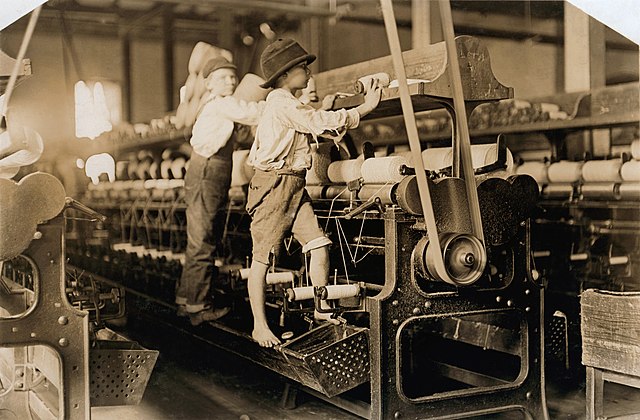
Child labour laws did generally get younger children out of dangerous places like mines, mills, and factories. Modern child labour laws instead keep young adults from gaining work experience in many cases.
Photo of pre-teen children working in a mill in Macon, Georgia in 1909. Photo NCLC.01581, Library of Congress via Wikimedia Commons.

Mostly, it gets attributed to “kids these days” but unless you have kids, these days, you don’t know how they are bound. And even if you do, you might not realize it, because all you see is the infantilization of a generation, and not that they, themselves, aren’t the ones doing the infantilizing, but all those “good rules” and regulations and laws are doing it.

I realized about 10 years ago that my son’s generation was about 10 years behind where we were. In their mid twenties they were doing things we did in our teens. It was disconcerting. And even I had no idea why, other than too much regimentation in school, too much of a never end of button counting, and not enough room or freedom to think or be on their own.

Since then … I’ve seen more. And a lot of the reason they are younger than we were is that the entire world is geared not to let them grow up. I mean, let’s be glad that — unprepared or not — they’re legal adults at 18, or people would be denouncing them for walking alone down the street, without an “adult” at 25.

There’s also … adolescence is in some ways a profoundly unnatural life-stage, and more or less invented in the 20th century. In the past, sure, people were children, and people grew to be adults, but there wasn’t this protracted time period where they were adults in size and at least some ability, but weren’t allowed to be adults: they weren’t allowed to earn or spend, or make their own decisions, for years.

The earn or spend thing is important. Kids used to grow along with their tasks. Read Tudor or colonial memoirs, and you find four year olds looking after cows or horses, or learning Latin, or other unlikely things even for twelve year olds in our time.

Mom went to work at 10 and started getting a salary. It wasn’t much, and 90% of it went to her parents’ budget. But she was working, holding down a job, doing things that were maybe not at adult level, but could lead to it, eventually, if she applied herself. This was normal for her generation. In my own generation, amid the working class, most people went to work at 10. Heck, amid the middle class, most people went to work at 15 or so, after 9th grade. Were they more mature than the rest of us that went all the way to college?

I wouldn’t have thought that at the time, but yes, of course they were. Most of my elementary school classmates were married, with kids by the time my biggest worries were final exams. Of course, with my intellectual pride I looked down on them but now I understand they were managing a very difficult job, which at the time I could not have done.

I always feel stunned and shocked when someone says the kids should be “holding down two jobs like I was at 16” or “working to pay their way through college”. (That last is a giggle as it has two impossibilities. Finding a job that pays enough after college which has a lot of make-work expectations, and making a full-time middle-class salary, which is what college costs these days.) Two Jobs. At 16. The difficulties in giving work to 16 year olds, increasingly restriction of hours, etc. combined with chaotic scheduling in the only unskilled jobs remaining (mostly just retail) means that until recently none of them could find A job. Let alone two. And the recently was during Covid. I haven’t seen so many little 16 year olds cashiering, or serving at tables recently. And that’s because most people I’m seeing are around my age: I guess unemployment is biting hard.

But you know, all these strong rules against “child labor” mean that most kids hit 18 or, if they’re going to college, 22 or — more likely, as most degrees (remember make work?) are taking 6 or 7 years — 24, with absolutely no job experience. Which means their applications aren’t even looked at. Not seriously.

Honestly, almost every young person — particularly young men — I know who found a job, and is doing relatively well, did so through contacts. Through friends of friends. Through knowing someone.

This is a bad sign, because it’s how Portugal functions, and it is not in any way shape or form meritocracy, which in turn contributes to other things falling apart.

But more and more what I’m seeing is young people hitting their mid twenties lost, and doing this, and doing that, and trying this and trying that, and nothing ever gels. To make things worse, they don’t have the habits mom had by 10, because they haven’t been allowed to acquire them.

There was a similar generation — one, while here we’re well into two — in Portugal, where unemployment was so bad (the generation before mine) that most people weren’t “established” on a path till their mid thirties. I’d guess about half of them never got the knack of it: of the day to day of working, fulfilling the work duties, just … the unglamorous day to day that makes us adults.

« Newer PostsOlder Posts »

Powered by WordPress