Quotulatiousness

September 26, 2024

The government is too big to let Donald Trump get his hands on it, so here’s what we do …

Filed under: Government, Media, Politics, USA — Tags: , , — Nicholas @ 04:00

Chris Bray finds himself — surprisingly — agreeing with someone he previously dismissed out-of-hand, even writing that “father-of-anti-Trump-lawfare Norm Eisen as a fool, a sad sack, and the central figure in ‘a George Grosz painting come to life’.”

America, I was wrong. Norm Eisen is a genius, and I declare myself to be his political ally.

Eisen is circulating a “No Dictators Declaration”, and asking elected officials to sign on to the thing. He warns that the federal government is dangerously large and powerful, and the ORANGE DEVIL may return to the presidency and use all that power, and so we have to limit the power of the federal government as much as possible so we can protect against Dictator Trump. It’s quite rare to see a former Obama administration official, a longtime progressive activist and D.C. insider, arguing in public that the federal government is dangerous and should have much less power. And, look, what can I possibly say against that? I concede. Norm Eisen is right.

Let’s look at the details:

  1. To reduce the threat of dictatorship, Congress should limit the president’s ability to declare bogus domestic and foreign emergencies to seize power and bypass Congressional legislative authority.
    • The U.S. currently has 42 national emergencies declared, some decades-old. Under emergency powers, a president can claim the authority to divert funds, seize property, and bypass Congress.

This is terrifying, see, because Trump might use those extensive emergency powers that are very good and progressive when every other president uses them. So the progressive Norm Eisen wants to sharply limit the power of the President of the United States to declare emergencies without congressional authority. You know, to stop Trump.

I … uh … yes? We definitely need to stop Trump by making it almost impossible for a president, or for any executive branch official, to unilaterally declare an emergency that confers substantial authority on federal officers. I’m especially worried that Trump might use public health emergencies to be a dictator, so we should restrain this very frightening man Trump with immediate and permanent restrictions on the emergency public health powers of the federal government. Imagine a dictator using the authority of an Anthony Fauci figure to impose a lot of harsh restrictions on Americans! That … would be scary … if … Trump did that.

  1. To reduce the threat of dictatorship, Congress should ensure that presidents who abuse their powers to commit crimes can be prosecuted like all other people.

Again, Eisen just absolutely nails the danger that Donald Trump poses, and I agree. We should ensure that any President of the United States who might abuse their power in order to commit crimes can be sent to prison. Like, hypothetically, if any POTUS ordered a drone strike that killed a US citizen who was a minor and not a terrorist, or sent his own son out to gather cash from foreign powers in exchange for political influence, we would for sure want to send that president to prison. To stop Trump, I’m saying. This is a great idea, Norm Eisen. We should make it much easier to prosecute presidents, and I have a whole list right here, ready to go.

Glimmers of hope for lower taxes on US taxpayers

J.D. Tuccille welcomes the discussion among the Presidential candidates about lowering the taxes Americans have to pay, and points out that the economic distortions of the current tax code (including “temporary” measures introduced during WW2) make everyone less well-off:

Three months after proposing to end federal taxing of tips — an idea promptly confiscated without compensation by Kamala Harris’s campaign — Donald Trump doubled down by saying “we will end all taxes on overtime” if he’s elected president. Without a doubt, millions of Americans who resent government’s ravenous bite out of their paychecks immediately began contemplating just how much of their income they could shield from the tax man that way.

Tips and Overtime for Everybody!

“Can someone get paid in primarily tips and overtime?” quipped the Cato Institute’s Scott Lincicome. “Asking for a few million friends.”

On a more serious note, the Competitive Enterprise Institute’s Sean Higgins thought exempting overtime pay “wouldn’t necessarily be a bad idea … but, overall, it is not likely to make that much of a difference to most workers because overtime isn’t that common”. He’d been more strongly supportive of exempting tips because that “would put more money directly in the pockets of working Americans without either costing employers more or raising prices for customers”. He also liked that freeing tips from taxation would “keep tipping out of the reach of the regulatory state”.

But what if overtime pay becomes more common precisely because it’s not taxed?

The people at the Tax Foundation expect that’s exactly what will happen, just as Lincicome joked. Thinking through the implications of exempting overtime pay from taxation, Garrett Watson and Erica York warned that “exempting overtime pay from income tax would significantly distort labor market decisions. Employees would be encouraged to take more overtime work, and hourly or salaried non-exempt jobs may become more attractive if the benefit is not extended to salaried employees who are exempt from Fair Labor Standards Act (FLSA) overtime rules.”

The Tax Foundation’s Alex Muresianu had a similar reaction to the proposals to exempt tips from taxes from both Trump and Harris. He thinks “the proposal would make more employees and businesses interested in moving from full wages to a tip-based payment approach”. He foresaw “substantial behavioral responses, such as previously untipped occupations introducing tipping”.

Of course, a world in which more Americans receive their pay beyond the reach of the tax man is a welcome prospect to many of us. If politicians want to phase out income taxes, even unintentionally, who are we to complain? Hang on a minute while I set up my virtual tip jar. In fact, there’s precedent for government policy around wages to cause major unintended consequences. Take, for example, employer-provided healthcare coverage.

Government Policy Has Distorted Compensation Before

“One of the most important spurs to growth of employment-based health benefits was — like many other innovations — an unintended outgrowth of actions taken for other reasons during World War II,” according to the 1993 book, Employment and Health Benefits: A Connection at Risk. “In 1943 the War Labor Board, which had one year earlier introduced wage and price controls, ruled that contributions to insurance and pension funds did not count as wages. In a war economy with labor shortages, employer contributions for employee health benefits became a means of maneuvering around wage controls. By the end of the war, health coverage had tripled.”

Given that health benefits became a substitute form of compensation to escape a wage freeze, it’s not difficult to imagine the United States moving toward a situation in which a lot more people receive the bulk of their pay from untaxed tips and overtime pay.

September 25, 2024

Freddie deBoer on “deference politics”

Filed under: Media, Politics, USA — Tags: , , , , — Nicholas @ 03:00

In the first of a series of articles, Freddie deBoer discusses the phenomenon of “deference politics” practiced by many (most?) progressives in the United States (and equally in Canada):

When I talk about deference politics, I’m referring to the tendency of left-leaning people to substitute interpersonal obsequiousness towards “marginalized groups” for the actual material change those groups demand.

If you’ve lived in any left-aligned spaces in the past decade, you’ve encountered deference politics many times. A white person in a humanities seminar, an organizing meeting, an industry convention, a workplace gathering, etc., who makes the conscious decision to avoid engaging or to engage from a position of proactive apology towards various identity groups is engaged in deference politics. Someone who insists that members of “dominant groups” should censor themselves or speak softly or avoid speaking too much or defer to or otherwise “make space” for members of minority identities is advocating for deference politics; someone from a dominant group who tells others in that group that they should defer is practicing (self-aggrandizing) deference politics. “Maybe men should just shut up for awhile,” voiced by a man, is quintessential deference politics. “I sat my white ass down and listened” is deference politics. “Teach me how not to oppress you,” spoken at an academic conference by a straight person to LGBTQ people on a panel, is deference politics. Avoiding sharing a challenging opinion on an issue of controversy for fear of running afoul of the wrong kind of identity accusation is deference politics.

The infamous image above, of Democratic leaders wrapped in kente cloth and taking a knee in memory of George Floyd, actually preceded a meaningful attempt at material change, the George Floyd Justice in Policing Act. While that bill would not have been a sufficient overhaul of America’s criminal justice system — it’s hard to use the federal government to reform policing, which tends to be governed by state policies and influenced by local conditions — it would have been a good start. The Democrats, sadly, were not able to pass the bill in two tries, though perhaps it could still be revived. That the party simply didn’t have the votes to make the bill law isn’t something that we should be particularly hard on the Democrats about, but the contrast between its failure and the theatrics that attended its announcement is deference politics in its essential form: at a moment of mass discontent over the state of race and policing, Black Americans got the absurd performance from Congressional leaders but not the substance of better policy. And this is core to the critique of deference politics; the point is not that the good intentions of the people who practice them are worthless but that the people who practice deference politics never seem to recognize that all of the deferring never makes positive action more likely. Like many great political crimes, deference politics privileges the communicative and the emotional over the material and the actual.

It’s important to point out that many Black activists and writers recoiled at the deference politics practiced after George Floyd’s death and pointed out that they had never asked for such theatrics.

Is “deference politics” just a way to say “woke”?

No. Deference politics could conceivably be practice or demanded in any given political context and by members of any given political tendency. Conservatives do occasionally advocate for deference politics, such as when they insist that only veterans should comment on issues of war and peace. Nor do woke people assertively practice deference politics all the time; in fact, for various demographic reasons most people practicing social justice politics are themselves members of dominant groups, and they have a tendency to assert their own superior right to speak rather than to defer to others. The term “deference politics” should likewise not be used to refer to all cringey elements of “allyship”, which involves a diverse suite of questionable tactics and attitudes, but certainly deference politics are core to the behavior of the modern ally. The practice epitomizes the modern liberal obsession with defining politics as a matter of interpersonal niceties rather than as the systems through which human values are expressed in material terms in the real world.

September 24, 2024

Trust, once lost, is very difficult to re-gain

Filed under: Health, Media, Politics — Tags: , , , , , — Nicholas @ 03:00

Public officials and legacy media often complain about the public’s significant decrease in trust for once highly trusted organizations, yet rarely seem to realize that they’ve done everything they could to destroy the public’s confidence in them and their actions:

Dr. Jay Varma, 21 April, 2021.
Photo by the New York City Health Department via Wikimedia Commons.

I don’t want to be a cynic.

While I don’t think anyone should blindly trust anything or anyone who hasn’t earned it, I don’t want to blindly distrust everything and everyone, either.

However, there are areas where distrust is warranted.

Over the weekend, a number of stories popped up in my various feeds that sort of illustrated the point pretty well from a number of different angles.

Let’s start with partying in the time of COVID.

    New York City’s former COVID czar was caught on a hidden camera boasting about having drug-fueled sex parties mid-pandemic — and admitting New Yorkers would have been “pissed” if they had found out at the time.

    Dr. Jay Varma — who served as senior health adviser to then-Mayor Bill de Blasio and was tasked with running the Big Apple’s pandemic response — made the confession in secretly recorded conversations with a so-called undercover operative from conservative podcaster Steven Crowder’s “Mug Club“.

    “I had to be kind of sneaky about it … because I was running the entire COVID response in the city,” Varma was filmed telling the unidentified woman on Aug. 1 in what appears to be a restaurant.

    The edited clips of the hidden camera footage, which were all recorded between July 27 and Aug. 14 in New York, were released by Crowder on Thursday. The Post has not reviewed the full, unedited recordings.

Now, let’s remember that Varma admits to doing the exact opposite of what he was telling everyone else to do. He was part of the government and part of the effort to shape New York’s response to COVID-19.

And the city is large enough that their response was likely to inform other communities.

Meanwhile, he’s out partying it up while everyone else is sitting at home, trying to figure out how to survive.

Remember how our current problems stem from this time. People like Varma told us we all had to stay inside. Most of us couldn’t go to work, couldn’t go to bars or restaurants, couldn’t go out to the movies or to take part in activities. As a result, people suffered and the economy suffered. Stimulus plans were put in place to flush trillions of dollars into the economy, only to remain there as more and more got pumped in later, creating inflation and making the economy worse in the long run, but that time locked up was essential because we had to stop the virus.

And this twit is out sexing it up while the rest of us were shut inside trying not to go nuts.

He wasn’t alone, either. A number of folks from various institutions were part of the “rules for thee but not for me” crowd, such as California Gov. Gavin Newsom’s trip to dinner at The French Laundry — which is the dumbest name for a restaurant ever — during the lockdowns or Austin’s mayor telling everyone to stay inside while he went to Mexico.

Of course, bad public officials are nothing new. We’ve all seen them over the years.

But our media is also failing us.

September 23, 2024

Berlin’s Der Tagesspiegel wants to help you keep your kids from the perils of right-wing ideology

Filed under: Education, Germany, Media, Politics — Tags: , , , , , — Nicholas @ 03:00

eugyppius on the help Berlin’s leading daily newspaper is offering to their readers whose kids are hearing the siren call of non-progressive politics:

This obviously charming, cheerful and not at all withered or overwrought woman is named Eva Prausner. She is a social worker, and she directs something called the “Project for Strengthening Parents“, which provides “Training, networking, and counselling in the area of family and right-wing extremism”. This means that she runs around telling parents what to do when they suspect their children are succumbing to political wrong-think. And this in turn makes Frau Prausner the woman of the hour, for never before in the history of the Federal Republic have so many undemocratic children bloomed under the noses of so many upstanding democratic parents.

It is very hard to understand how this happened. The leftists and the Greens, after all, have been doing the Lord’s work teaching leftism and Greenism in schools for decades now, but despite their valiant efforts we are rapidly losing our youth to malign antidemocratic forces. It can’t be that elevating leftoid lunacy into an establishment ideology has backfired, transforming the once cool, counter-cultural left into a political movement for middle-aged scolds and schoolmarms – the kind of thing from which teenagers flee in terror. No, nothing could be less plausible. The real reason for the pandemic of right-wing children must simply be that we haven’t indoctrinated them enough. If parents will not do their part and bring indoctrination also to the home, our democracy will collapse and it will be 1933 all over again, just like it was 1933 all over again two weeks ago after the elections in Thüringen and Saxony.

For these reasons, Der Tagesspiegel, Berlin’s largest daily newspaper, interviewed Prausner on her advice for parents who find themselves forced to deal with their evil, right-leaning spawn. The product is a prescient write-up for the ages bearing the headline “Help, my child is turning right-wing! Eight tips for democratic parents with undemocratic children“.

    The rightward shift in East Germany is a shift above all among the youngest, as the elections in Saxony and Thüringen have shown. One in three young people there voted for the far right. In Thüringen, as many as 38% of 18- to 34-year-olds cast their ballot for the AfD – more than in any other age group. Many a parent who values living in a democracy will have wondered: “What have we done wrong?”

    In Brandenburg, too, it is becoming clear that even the youngest are now leaning towards the right. In the under-16 vote a week before the state election, the AfD came out on top with around 30% … In the state elections on 22 September, the AfD could become the strongest force, thanks in part to young first-time voters.

    Do parents still have any influence over their AfD-voting children?

Alas, Prausner is not very certain that they do, but she believes that democratic parents “should at least try” to rescue their children from the grave heresy of voting for the wrong political parties. Children in Brandenburg are particularly endangered, because Brandenburg is largely rural, and Prausner has discovered that the countryside is absolutely dripping with “condensed prejudicial attitudes”. There is so much racial prejudice in the Brandenburg air that it is collecting on cool surfaces, like windows and beer glasses, that is how bad things are there. Also all children everywhere are in danger because the internet is a powerful right-wing force that helps bad organisations like the AfD pump their fascist mind virus directly into millions of young yet-forming cerebral cortices.

September 22, 2024

History and story in HBO’s Rome – S1E1 “The Lost Eagle”

Filed under: Europe, History, Media, Military, Weapons — Tags: , , , , , , — Nicholas @ 02:00

Adrian Goldsworthy. Historian and Novelist
Published Jun 12, 2024

Starting a series looking at the HBO/BBC co production drama series ROME. We will look at how they chose to tell the story, at what they changed and where they stuck closer to the history.

September 20, 2024

I guess I’ve been reading a lot of Substack posts lately …

Filed under: Media — Tags: , — Nicholas @ 03:00

Substack helpfully sent me a pre-rolled draft post for “my” Substack … this is a very clever trick to get Substackers (like me) who primarily read other peoples’ posts to begin sharing their own posts. Here are the highlights:


QotD: The Matrix, Harry Potter and “The One Pop Culture Thing”

Filed under: Education, Media, Quotations — Tags: , , , , , , — Nicholas @ 01:00

Part of the appeal of Harry Potter must be that can somehow be intellectualized, though — at least, if the number of people incorporating it, in all apparent seriousness, into college classes can be believed. Here again, I’m not talking the English Department, which might have a legitimate reason — to study the narrative technique or whatever (for certain stretched-farther-than-Trigglypuff’s-sweatpants values of “legitimate”, anyway). I mean classes like “PHIL 101: Harry Potter and Philosophy”, which started showing up first in goofy California colleges, then all over the damn place, somewhere around 2002.

That certainly seems to be the appeal of The Matrix, and indeed The Matrix stopped being The One Pop Culture Thing very quickly, I hypothesize, because it made “intellectualizing” it too easy. The Matrix is pretty much just Jean Baudrillard: The Movie, and while that’s fun and even useful — Baudrillard did have a point, despite it all — it’s just too clever … by which I mean, The Matrix did too much of the heavy lifting, so that you don’t get too many Very Clever Persyn points for noting that we’re all, just, like, simulations in other people’s minds, dude. Descartes can go fuck himself; Keanu Reeves has solved the mind-body problem with kung fu.

Also, Baudrillard-lite is everywhere now. We’re all Postmodernists, in the same way we’re all Marxists, so even the kids who slept through most of their one required Humanities course has at least vaguely heard of this stuff. A show like True Detective, on the other hand, hearkens back to much older philosophy — as tiresome as the wannabe-Foucaults were back in the late 1980s, as a culture we’ve pretty much forgotten about them, so the brooding wannabe existentialist douchebag seems new now. I just googled up “best true detective quotes”. Here’s a small sampling:

    This is a world where nothing is solved. You know, someone once told me time is a flat circle. Everything we’ve ever done or will do, we’re gonna do over and over and over again.

Also:

    … to realize that all your life, all your love, all your hate, all your memory, all your pain, it was all the same thing. It was all the same dream you had inside a locked room — a dream about being a person. And like a lot of dreams, there’s a monster at the end of it.

That “flat circle” thing is a direct quote from Schopenhauer, I’m pretty sure, and the idea of “eternal recurrence” came from Vedic philosophy via him to Nietzsche. Here, for instance, the Manly Mustache Man summarizes the plot of True Detective, season 1:

    What, if some day or night a demon were to steal after you into your loneliest loneliness and say to you: “This life as you now live it and have lived it, you will have to live once more and innumerable times more; and there will be nothing new in it, but every pain and every joy and every thought and sigh and everything unutterably small or great in your life will have to return to you, all in the same succession and sequence — even this spider and this moonlight between the trees, and even this moment and I myself. The eternal hourglass of existence is turned upside down again and again, and you with it, speck of dust!”

    Would you not throw yourself down and gnash your teeth and curse the demon who spoke thus? Or have you once experienced a tremendous moment when you would have answered him: “You are a god and never have I heard anything more divine.” If this thought gained possession of you, it would change you as you are or perhaps crush you. The question in each and every thing, “Do you desire this once more and innumerable times more?” would lie upon your actions as the greatest weight. Or how well disposed would you have to become to yourself and to life?

Here again, I don’t blame the average HBO viewer for having their minds blown by this (or at least pretending to), but people with PhDs should damn well know better. This is existentialism for dummies, but since they spent most of their off hours in grad school reading Harry Potter

Severian, “The One Pop Culture Thing”, Rotten Chestnuts, 2021-09-16.

September 19, 2024

German opinions are changing on the migration question

Filed under: Germany, Media, Politics — Tags: , , , , , — Nicholas @ 04:00

On of our key European commentators is back from a brief internet vacation and reports on recent changes in official German views on mass immigration:

There are other matters too, but before I can get to any of them, I must get this piece on the changing politics of mass migration in Germany off my chest. This is the most important issue facing Europe right now – more important than the folly of the energy transition, more crucial even than the fading memory of pandemic repression.

For nearly ten years, migration has felt like one of the most intractable problems in our entire political system. However crazy the policies, however contradictory and irrational, there was always only the towering mute wall of establishment indifference. It felt like the borders would be open forever, that we would have to sing vapid rainbow hymns to the virtues of diversity and inclusivity for the rest of our lives.

Suddenly, it no longer feels like that. Over the past weeks, a perfect storm of escalating migrant violence and electoral upsets in East Germany have changed the discourse utterly.

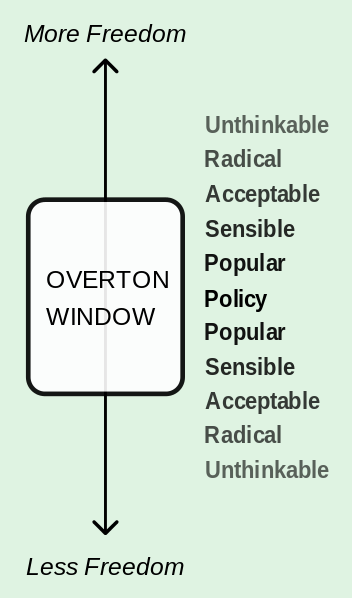
The cynical among you will say that none of this matters, that the migrants are still coming, that our borders are still open, and of course that’s true – as far as it goes. But it’s also true that there’s an order of operations here. A lot of things have to happen before we can turn return to a regime of normal border security, and I suspect they have to happen in a specific sequence: 1) Migrationist political parties have to feel electoral pressure and taste defeat at the ballot box first of all. 2) Then, as the establishment realises they are up against the limits of their ability to manipulate public opinion, the discourse around mass migration will have to shift, to deprive opposition parties of Alternative für Deutschland of their political advantage. Specifically, the lunatic oblivious press must begin to question the wisdom of allowing millions of unidentified foreigners to take up residence in our countries. This will then open the way for 3) the judiciary to revise their understanding of asylum policies and begin to interpret our laws in more rational, sustainable ways.

In Thüringen and Saxony, we have already had the electoral defeat of 1), and we will soon have more of it in Brandenburg. As a consequence of 1), we are now seeing some powerful glimmerings of 2). This is very important, because as the press expands the realm of acceptable discourse, a great many heretofore tabu thoughts and opinions are becoming irreversibly and indelibly conceivable.

Ten years ago, diversity was our strength, infinity refugees were our moral obligation and there were no limits to how many asylees we could absorb. Since August, not only Alternative für Deutschland but also that offshoot from the Left Party known as the Bündnis Sahra Wagenknecht, the centre-right Christian Democrats, a substantial centrist faction of the Social Democrats, and many others beyond whatever “the extreme right” is supposed to be, agree that migration is in fact an enormous problem. They also agree that our moral obligations to the world’s poor and disadvantaged are finite, and that there are indeed clear limits to the number of asylees Germany can support. What is more, they are saying all of these things in the open.

September 18, 2024

Sexual objectification … is it okay when you do it to yourself?

Filed under: Britain, Media, Politics — Tags: , , , — Nicholas @ 05:00

On her Substack, Janice Fiamengo talks about the “Curious Case of the Self-Objectifying Feminist”:

Not long ago, a British campaign for affirmative consent legislation featured images of women paired with the slogan “I’m asking for it“. The whole point, of course, is that they’re not asking for “it”. The phrase is meant to evoke men who justify their sexual assaults of women by claiming that the victim wanted to be raped. What the women are asking for is legislation to make it a criminal offence for a man to have a sexual encounter with a woman without eliciting an explicit “Yes” from her at every stage (how far we have moved from the relatively simple “No means no”).

The most striking of the ads features the face of Charlotte Proudman, the well-known feminist barrister and zealous anti-male advocate who once denounced a fellow lawyer for complimenting her LinkedIn photo. In the picture, Proudman confronts the viewer with a sexy, smoldering look and a slight half-smile. Her face is carefully made up to accentuate her feminine sexuality, with dark-tinted eyelashes and gleaming red lips outlined in vivid lip gloss. In order to object to men’s sexualization of women, Proudman has sexualized herself.

We are told that the campaign was “deliberately bold and intentionally provocative”. It was designed to “stop viewers in their tracks“, so that we would think about how women are mistreated under the law. Male viewers whose minds stray to sex are, one can only assume, to be brought up short, ashamed and convicted of sin.

The double messaging is deliberate — but confusing. Most people looking at Charlotte Proudman’s sex-kitten face will not, in my opinion, contemplate misogynistic attitudes or the scourge of sexual violence. On the contrary, most viewers will be “stopped in their tracks” by the overtness of Proudman’s sensual self-display. It seems odd that an ad claiming that women should not be seen to invite sexual advances features a woman who seems to be inviting sexual advances.

Feminists have for decades claimed that such sexualization has been forced on women to their detriment. In the fashion industry, in movies, and in daily life, according to feminist philosophers like Sandra Lee Bartky, men compel women to advertise their sexuality as their primary power, to redden their lips, assume sexual poses and flatter the voracious male gaze, becoming “object and prey for the man“.

For centuries, we’re told, patriarchal societies denied women the opportunity to do anything with their lives but live out male sexual fantasies, whether as virgin or whore, Madonna or muse. A male-defined culture made the woman accentuate her youth, shave her legs, remain svelte, and present herself for visual consumption, “living her body as seen by another, an anonymous patriarchal Other“: a degrading spectacle from which all women would be better off free.

Yet here is a campaign designed by feminists to support alleged rape victims, with the same (objectionable) self-presentation by the ad’s primary subject, who is obviously not posing against her will and obviously has many choices about how to present herself. The only difference, it seems, is that in this case, the woman’s self-display is entirely of her own defiant volition.

One wouldn’t think that would be sufficient for a diehard feminist like Proudman, or for any equality-minded modern woman with a thousand choices about what to do with her life.

When I was a little girl in the early 1970s, I took it for granted that self-respecting women wanted to be appreciated for the qualities of their minds and characters. One of the first slogans I remember was the somewhat puzzling “Love me for my mind, not my body”. At the time, around six or seven years old, I thought it would be nice to be loved for any reason. Only later did I understand the implication: to be loved for one’s body was not truly to be loved at all, for the body was a superficial, mutable aspect of the self, destined to deteriorate with time. Moreover, according to the general feminist perspective, the body was all that sexist men cared about, especially the sexual parts. This was objectification, the reduction of the whole woman with all she had to offer (her kindness, her wit, her unique thoughts) to a thing. It was shameful and degrading.

D-Day 80th Anniversary Special, Part 1: Paratroopers, with firearms expert Jonathan Ferguson

Filed under: Britain, History, Media, Military, USA, Weapons, WW2 — Tags: , , , , , — Nicholas @ 02:00

Royal Armouries
Published Jun 5, 2024

This year marks the 80th anniversary of D-Day, the Allied invasion of France which took place on 6th June 1944. From landing on the beaches of Normandy, the Allies would push the Nazi war machine and breach Hitler’s Atlantic Wall.

To commemorate this, we’re collaborating with Imperial War Museums to release a special two-part episode as Jonathan will look at some of the weapons that influenced and shaped this historic moment in history.

Part 1 is all about the “tip of the spear”, the Paratroopers.

0:00 Intro
0:55 STEN MK V
1:40 History of the Sten
3:00 Mark V Details
6:23 Usage in D-Day
8:38 M1A1 Carbine
10:38 M1A1 Details
14:09 Usage in D-Day
15:01 ACME ‘Cricket’ Clicker
17:31 The Longest Day
19:30 Outro

[NR: I’m glad Jonathan discussed that bloody clicker scene in The Longest Day … it bugged me the very first time I watched the movie as a young army cadet in the mid-1970s.]
(more…)

September 17, 2024

Noormohamed: “Nice newspaper, National Post. It’d be a shame if …”

Filed under: Business, Cancon, Media, Politics — Tags: , , — Nicholas @ 03:00

One of the more blatant examples of Liberals saying the quiet part out loud:

We need to talk about Liberal MP Taleeb Noormohamed and his not so subtle reminder to the National Post that it wouldn’t exist without the benefaction of Prime Minister Justin Trudeau’s government.

Noormohamed, Parliamentary Secretary for Heritage – the ministry responsible for media welfare – did so via a post on X in which he told NP Comment senior editor Terry Newman: “Your paper wouldn’t be in business were it not for the subsidies that the government that you hate put in place — the same subsidies your Trump-adjacent foreign hedge fund owners gladly take to pay your salary.”

I wrote at length about this for The Line and, being aware that there is some crossover among subscribers, I won’t repeat that, but here’s a summary, followed by an update and then we’ll dig a little deeper into government funding for media, trans activist extremism in the Senate and other juicy stuff.

As I wrote in The Line concerning the government’s willingness to put the squeeze on media, “Nothing Noormohamed said was untrue. He and I are in perfect alignment in the view that were it not for the patronage of the Justin Trudeau government, Postmedia (and likely the Toronto Star) would by now have ceased to exist. Some of its titles may have sold for parts, but most of its zombie products would have been dispatched long ago with a bankruptcy bullet to the brain, allowing new media to spring forth from decay.”

You can read it all here.

But the most alarming part of this story isn’t that Noormohamed said what he said. That was appalling but predictable. What’s truly chilling is that he could flex his muscles, whip out his influence and intimidate what was once a free and independent press in this country and get away with it.

There were just a handful of media responses to his highly inappropriate but not unexpected behaviour. A week later, I could find no fiery or even gentle editorials condemning his statements. My Google search revealed just three news stories (Western Standard, True North & Rebel News) while none of the nation’s leading commentators cleared their throats to object.

Perhaps this is because media decided it was no big deal that an influential government MP was reminding them to keep in mind just who is paying their bills when they sit down to write. It could also be that they are bothered by it but don’t wish to draw the public’s attention to their new role as government dependents because they know it undermines public trust in them. Or, they have just given up on the idea of freedom of the press but want to keep it as their dirty little secret. Maybe all three. All I could hear was the silence of the lambs being led to the slaughter.

September 16, 2024

Anger sells – “Words like ‘wrong’, ‘bad’, ‘awful’, ‘hate’, ‘sick’, ‘fight’, and ‘scary’ each predict a 2.3% increase in click-through rates”

Filed under: Media, Politics, Technology, USA — Tags: , , , , , , — Nicholas @ 03:00

Rob Henderson explains the incentives that lead to provoking as much anger as possible among readers (and especially voters):

It seems like people are angrier than ever. According to a poll by CBS News, 84 percent of Americans believe we are angrier than previous generations. Another survey recently found that nine in ten Americans can name either a recent news event or something about American politics that made them angry, while only half could identify a recent news event or something about American politics that made them proud.

What explains this feeling of rage? One noteworthy reason is that exploiting anger is politically convenient.

The strategic use of anger in politics has transformed it from a natural human emotion into a weapon of division, with far-reaching consequences for our social cohesion and democratic governance.

According to Steven Webster, author of “American Rage: How Anger Shapes Our Politics” and assistant professor of political science at Indiana University, “Anger provides ample benefits to those politicians who are able to use it most skillfully”.

Indeed, across political settings, angry people are more likely to vote than those who are not angry. In other words, politicians who can stoke anger can use it to motivate their base. The angrier voters are at the opposing party, the more likely they are to show up to the polls to support their own party. As Webster puts it, “angry voters are loyal voters”.

Political anger has consequences that extend beyond how Americans view their governing institutions or the opposing political party. When American voters are angry about politics, they are inclined to avoid social interactions or social events where they are likely to come into contact with those whose political leanings differ from their own.

In a chapter titled “Emotions in Politics” published last year, the psychologists Florian van Leeuwen and Michael Bang Peterson suggest that along with other emotions, anger “seems to be a distinct strategy for increasing what one is entitled to in the minds of others”.

Provoking rage against selected groups is an effective way to promote unity in politics. Today, many Americans across the political spectrum are encouraged to feel they are being victimized. It’s no coincidence that one of Donald Trump’s go-to lines on the campaign trail is “They’re laughing at us”. Being laughed at induces humiliation, which often quickly transforms into rage.

In a notable historical illustration of a political movement using anger as a limitless source of ideological fuel, consider the case of the “Recalling Bitterness” campaign in Maoist China. In the 1960s, the communist dictator Mao Zedong grew worried that ordinary Chinese citizens were developing lukewarm attitudes about the socialist revolution. In response, the regime forced people into rituals in which they publicly announced how bad life was before they had been liberated. Mao ordered writers and artists to rewrite history through the lens of class struggle to suit the needs of his political agenda. Regime officials held meetings encouraging peasants to describe how much better life was now compared to pre-liberation, hoping to convince them that the revolution’s successes outnumbered its failures. The “devils” here were reactionaries, landlords, rich farmers, and counterrevolutionaries. Documenting the rituals of the Recalling Bitterness campaign, the historian Guo Wu has written, “Only poor peasants were allowed to speak; former landlords and rich peasants were silenced”.

September 15, 2024

My Man Godfrey (1936) with William Powell and Carole Lombard

Filed under: Humour, Media, USA — Tags: , , , , , — Nicholas @ 02:00

The Film Detective
Published Nov 15, 2018

During the height of the Great Depression, a scavenger hunt party game brings a pair of spoiled sisters, Irene and Cornelia Bullock (Carole Lombard and Gail Patrick) to a city dump looking for a “forgotten man”. They find down-and-out hobo Godfrey Parks (William Powell), who accompanies one of the sisters back to the party to be presented as a scavenger hunt find, and ends up warily accepting her offer to become the family butler. Irene falls for Godfrey, but is unaware of his mysterious past. Nominated for six Academy Awards, My Man Godfrey might be the screwiest of all screwball comedies.

Director: Gregory La Cava
Writers: Morrie Ryskind, Eric Hatch
Starring: William Powell, Carole Lombard, Alice Brady, Gail Patrick, Eugene Pallette, Jean Dixon

September 14, 2024

QotD: Academia

Filed under: Education, Humour, Media, Quotations, USA — Tags: , , — Nicholas @ 01:00

… the ivory tower — that is to say, an institution where all the drama is entirely self-manufactured by vain, petty people who think they’re much smarter than they actually are. That rules out most genres people actually enjoy reading right there. There’s comedy, I guess, and I considered giving that a go, but the modern university is beyond parody. Maybe Joseph Heller at his absolute apex could pull it off, but I’m no Joseph Heller. Nor am I Franz Kafka, who is the onlie begetter of the only other genre that would cover academia: Surrealist, absurdist, dystopian horror. The adjective “Kafkaesque” describes graduate school perfectly, no doubt, but if you somehow need a dose of that, just go read The Trial. Or watch the film Brazil, and imagine everyone is twice as polysyllabically self-important …

Severian, “Storytelling Fail”, Rotten Chestnuts, 2021-07-13.

« Newer PostsOlder Posts »

Powered by WordPress