Quotulatiousness

September 13, 2024

“The problem [with America] is and has always been the people and their beliefs”

Filed under: Books, History, Media, Politics, USA — Tags: , , , — Nicholas @ 04:00

Chris Bray puts on the old biohazard suit and goes wading into the political book section, this time looking at two recent tomes by NeverTrumpers Robert Kagan and Tom Nichols:

Robert Kagan speaking in Warsaw, 2008-04-17.
Photo by Mariusz Kubik via Wikimedia Commons.

If you want to know where we are as a country, get your hands on a copy of Robert Kagan’s new book, Rebellion. Don’t worry, you won’t even need to crack the spine and open it. Kagan, who married the Queen of Eternal War Victoria Nuland and helped found the now defunct neoconservative Project for a New American Century, has written a warning about the dangerous renascence of antiliberalism in American political life: intolerance, a rejection of minority rights, hatred of progress. America is in deep trouble, Kagan warns. We’re close to losing our democracy! You can already see the freshness and originality of his thought.

Flip it. Take the book, turn it around, and look at that back cover, which carries an excerpt from inside, getting right to the meat of the thing. The problem isn’t the media, Kagan concludes. And it isn’t government. It isn’t a problem with institutions at all: “The problem is and has always been the people and their beliefs”. The thing that’s wrong with America is Americans, full stop. The country works brilliantly, except for the existence of the population. Imagine how healthy we would become if we could just get rid of them.

Should you make the mistake of opening the book, your experience will get worse in a hurry. The intellectual muddle is fatal. Here’s Kagan’s summary of the one big problem that runs through all of American history: “A straight line runs from the slaveholding South in the early to mid-nineteenth century to the post-Reconstruction South of the late nineteenth and early twentieth centuries, to the second Ku Klux Klan of the 1920s, to the Dixiecrats of the 1940s and 1950s, to Joseph McCarthy and the John Birch Society of the 1950s and 60s, to the burgeoning Christian nationalist movement of recent decades, to the New Right of the Reagan Era, to the Republican Party of today.”

All of those movements are precisely the same, you see. Ronald Reagan was a latter-day Ben Tillman, the Birchers merely a rebrand for the 1940s Southern Democrats, and Barry Goldwater was a fitting heir to Nathan Bedford Forrest. A shrewd mind is at work here. All, Kagan concludes, were figures representing “antiliberal groups”: “All have sought to ‘make America great again,’ by defending and restoring the old hierarchies and traditions that predated the Revolution.” The American Revolution, he means. The Dixiecrats and the Birchers and Reagan and Trump all want to restore Parliamentary supremacy and the landed aristocracy, or … something.

But pretend, for a moment, that Kagan has made some form of coherent statement about American history. He is arguing for the protection of the liberal order, the dignity of the common man and the premise that we’re all created equal. At the same time, he says, the biggest problem with America is … the American people themselves. How do those two claims fit together? What kind of politics can we frame around the dignity and inherent worth of the common man, who is stupid and worthless?

See also, on this theme, anything the former U.S. Naval War College professor Tom Nichols has written in the last decade, such as his warning in Our Own Worst Enemy: The Assault from Within on Modern Democracy that “our fellow citizens are an intolerable threat to our own safety” — a claim that closely mirrors Kagan’s warning about America being plagued by Americans. Consider this framing very carefully: if a threat is intolerable, what do you have to do about it?

Kagan’s base argument sounded better in the original German.

Fiction should have heroes, not merely the morally ambivalent “heroes” modern writers prefer

Filed under: Books, Media — Tags: , , , — Nicholas @ 03:00

Tom Knighton is nostalgic for some of the books and movies of his youth, which often had an actual hero you could root for:

Somewhere along the way, fiction started changing.

In my childhood, the nihilism that seems to be so common today wasn’t really a thing. We had grand adventures with heroes who might not have been perfect but were still heroes.

Today, we have a lot of fiction where no one is really the good guy. Rings of Power has been trying to humanize the orcs, making all the good races of Middle Earth darker than they were. Game of Thrones saw just about every truly heroic character killed while so many of the despicable characters lasted until the end.

And that’s a problem. Why?

Well, let’s start with this bit from C.S. Lewis:

Now, I grew up in the era of Rambo and John McClain. I had tough-guy heroes and I also had those that were just regular folks thrust into bad situations.

But there were always good guys and there were always dark forces at work.

The world is more muddied than that, sure, but entertainment doesn’t have to reflect reality perfectly. I mean if that were true, how did Lord of the Rings do so well? Elves and orcs and uruk-hai aren’t exactly real, now are they? Neither are hobbits, Jedi, terminators, or any of a million other fictional creations.

Yet what existed in all of those stories were good guys fighting to put down the evil that arose.

As Lewis argues, it taught my generation and those before and right after mine that cruel enemies can be defeated.

Today, though, we see all too many stories where the enemies prevail, where good fails to triumph over evil, and evil is allowed to remain.

For a while, there was a certain amount of shock value to that. This was when this was the exception rather than a normal thing you would see. It was that moment at the end when you realize the good guy lost despite their best efforts, that revealed at the end that the hero who sacrificed himself to kill the bad guy failed to actually kill him.

September 11, 2024

“You call someplace paradise, kiss it goodbye”

At The Upheaval, N.S. Lyons reviews The Total State: How Liberal Democracies Become Tyrannies by Auron MacIntyre:

Even when our nation’s dysfunction becomes too obvious to ignore, average Americans tend to comfort themselves with the story that it at least remains a democratic, constitutional republic. For such Americans, it’s probably been a confusing summer.

One moment the sitting president was, according to the near-universal insistence of mainstream media, sharp as a tack — all evidence to the contrary declared merely dangerous disinformation. The next he was suddenly agreed to be non compos mentis, unceremoniously ousted from the ballot for reelection, and replaced, not in a democratic primary but through the backroom machinations of unelected insiders. Overnight, the same media then converged to aggressively manufacture a simulacrum of sweeping grassroots enthusiasm for that replacement, the historically unpopular Kamala Harris. To call this a palace coup via The New York Times would seem not to stray too far from observable events.

What, some may wonder, just happened to our sacred democracy?

For those on the growing segment of American politics broadly known as the “New Right,” none of this was a surprise. The basic premise of the New Right — whose ranks notably include now-vice presidential candidate J.D. Vance — is that the governance of our country simply doesn’t function as we’re told it does. In fact, the United States has not operated as a constitutional republic for some time now; it is only the façade of one, effectively controlled by an unevictable cadre of rapacious plutocratic elites, corrupt party insiders, unelected bureaucrats, and subservient media apparatchiks — in short, a wholly unaccountable oligarchy.

Among the sharpest recent guides to this argument—and, in my view, to our current broader political moment—is a slim new book by the columnist and influential young New Right thinker Auron MacIntyre, titled The Total State: How Liberal Democracies Become Tyrannies.

MacIntyre provides a dispassionate dissection of how, without any cabal or specific conspiracy, an elite class captured all our major public and private institutions, hollowed them out, set them all marching in lockstep against the American middle-class, and made a mockery of the notion of constitutional “checks and balances”. The resulting “total state” now operates in increasingly flagrant contradiction to the interests of the American people and democratic government while “wearing the old regime like a skinsuit”.

Essential to understanding this total state is the concept of managerialism, an idea first pioneered by an older generation of political thinkers like James Burnham which has been recovered from relative obscurity and re-employed by the New Right. In this framing, America is today effectively run by a “managerial elite”, which presides over a broader professional managerial class — think college administrators, corporate HR managers, and non-profit activists. Fundamentally, the business of such people is not producing or building anything, providing any essential service, or even making critical leadership decisions, but the manipulation and management — that is, surveillance and control — of people, information, money, and ideas.

The story of the fall of the American republic is the story of the managers’ rise to power everywhere.

In part, this was the inevitable outcome of technological and economic change following the industrial revolution, which made it necessary to expand the ranks of people schooled in managing large, complex organizations. But, as MacIntyre demonstrates, it was also the result of a deeply misguided urge, pioneered by early progressives, to de-risk and “depoliticize” politics by handing over decision-making to technocratic “experts”. The hope was that these experts could rationally and neutrally administer government and society from the top down, through the same principles and processes of “scientific management” first applied to the assembly line.

This proved disastrous.

⚔️Parry! ⚔️Parry! 🗡️Thrust! 🗡️Thrust! GOOD!

Filed under: Britain, History, Humour, Media — Tags: , , , , — Nicholas @ 02:00

Jill Bearup
Published Jun 3, 2024

They’re MEN. They’re men in TIGHTS (tight tights!) Please enjoy the extended edition of this video with many random digressions that will mostly be cut for the public version 😀

00:00 Robin Hood: Men in Tights
00:50 The Plot, It Goeth Thusly
03:03 Prince of Thieves/Men in Tights/Maid Marian and Her Merry Men
04:50 What kind of fight do you like?
06:19 Setup for the ending fight
07:03 The Prince of Thieves fight
07:38 The Adventures of Robin Hood fight
07:53 FIGHT!
08:53 My favourite thing (compare and contrast)
10:03 The first phrase
10:39 The second phrase
11:24 The third phrase
11:43 The fourth phrase
12:29 The fifth phrase
12:40 and FIN
13:13 I love it, I really do
14:17 Book chat
15:52 Men hitting each other with sticks
17:40 Matching vibes
18:46 Just Stab Me Now audiobook update
(more…)

QotD: The preposterous tactics of George R.R. Martin’s Dothraki nomads

We do not see the Dothraki engage in large-scale warfare in the books; we see the aftermath of such fighting (AGoT, 555ff) or it occurs “off-screen” (ASoS, 487), but we do not see it. The closest we get is Jorah’s description of them, that they are “utterly fearless … [they] fire from horseback, charging or retreating, it makes no matter, they are full as deadly … and there are so many of them” AGoT, 325-6). Evidently they also scream on the attack, since their warriors are repeatedly called “screamers”.

As a description, it is hard for this to be very much wrong because it is so very vague, but the attentive reader will note that Jorah’s assertion that there are “so many” must be wrong for either Eurasian Steppe Nomads or Great Plains Native Americans, both of whom were routinely outnumbered by settled enemies, often dramatically so. Let’s put a pin in that, though, because of course while Martin gives only vague description of Dothraki warfare, the show, Game of Thrones, shows it to us on screen quite vividly.

We see a bit of Dothraki warfare in S6E9 when Daenerys’ Dothraki charge down the Sons of the Harpy at Mereen, but the really sustained look at how they fight has to wait for S7E4 and the Loot Train Battle and S8E3 and the Battle of Winterfell, both of which, happily, we have already discussed! In all three cases, the Dothraki do exactly the same thing. They charge, in a pell-mell rush, while giving high-pitched war-calls. While some of the Dothraki may fire arrows on the approach (they have them stand up to do this, which is not how actual Mongols or Native Americans fired from horseback; it looks cool and is stupid, like most of Game of Thrones season 7 and 8), they otherwise charge directly into contact and begin fighting from horseback with their arakhs as the primary weapon.

This is not how horse-borne nomads fought.

As we’ve discussed repeatedly before, the key weapon for Steppe nomads was the bow, shot from horseback at high speed (on this, note May, “The Training of an Inner Asian Nomad Army” JMH 70 (2006) and Mongol Art of War (2007)). Thus the crucial maneuver was the caracole, where the rider approaches the target at high speed, firing arrows as he goes, before making an abrupt turn (it is actually the turn that is technically called a caracole, but the whole tactic goes by this name) and retreating, before trying again. Pulling this tactic off en masse required a great deal of both individual skill at horsemanship and archery, but also quite a lot of group cohesion and coordination, since a collision of horses at speed is very likely to be fatal for everyone – humans and horses – involved.

This tactic can then be repeated – charge and retreat, charge and retreat – until the psychological toll on the defender becomes too great and they either break and retreat or else charge out to try to catch “retreating” nomads. In either case, it was at that moment when the Steppe nomads could press home and destroy the disorganized enemy. These tactics were brutally effective, but they were also a necessary casualty control measure. Shock combat – that is massed melee combat in close quarters – is simply far too lethal for low-population nomadic societies to sustain in the long-term on the regular (a hoplite battle might result normally in c. 10% casualties for instance (but note this discussion of that figure) – think of what that would mean in a society where 100% of adult males participate in each battle – you’d run out of men pretty quickly!).

And fascinatingly, we can actually see that calculus play out in North America, where the arrival of firearms, which suddenly make pitched “missile exchange” battles (especially on foot) as lethal as shock combat (it seems notable that the introduction of musketry into Old World warfare did not come with a significant increase or decrease in battlefield lethality, at least until the rifled musket – on that, see B. Gibbs, The Destroying Angel (2019), but also note E.J. Hess, The Rifle Musket in Civil War Combat: Reality and Myth (2008)), the pitched battle vanishes. It was simply too lethal to be a viable option in the long term for societies with low population density and very high military participation rates.

Instead, the raid came to dominate warfare on the Great Plains, with mass-casualty events generally being restricted to situations where a raiding party caught an enemy group unawares (McGinnis, op. cit., 45-6, 57-9). To be clear, that’s not to say the Great Plains Native Americans were peaceful, after all the goal of all of this raiding was to cause one of those rare mass-casualty surprise attacks and – as McGinnis notes again and again, warfare was part of the Plains Native American way of life, as the social status of males was directly and powerfully tied to success in war.

In short, the need to keep lethality relatively low is one of the most important factors which shaped nomadic horse-borne warfare, both on the Steppe and on the Great Plains. And here is where I think that even Martin’s description – which could, if read with friendly eyes, be taken as a description of the Steppe caracole described above – falls short: the Dothraki are dangerous because they are so many. But actual nomadic warfare was fundamentally conditioned by the shortage of men created by the low population density of the Steppe or the Great Plains. This weakness could be somewhat made up for by making every male into a warrior, but only if casualty rates remained low. A war of attrition with settled peoples would wear the nomads out quickly, which is why such attritional warfare was avoided (unless you are the Mongols, who use the sedentary armies of conquered states, notably using the armies of Northern China to conquer Southern China; that said, Drogo is clearly not Chinggis Khan or any such sort of Khal-of-Khals)

So where does this model of warfare come from? Well, when it comes to the show, we needn’t actually look far, because the creators tell us. The director of the episode, Matt Shakman, noted in an interview that his primary reference for the Dothraki charge was John Ford’s Apache attack in his 1939 film Stagecoach (you can see the scene he means here). And in the S7 special feature, “Anatomy of a Scene: The Loot Train Attack”, David Benioff notes that the charge “definitely got a bit of that western feel” while VFX producer Steve Kullback says, of the battle, it’s “sort of like Cowboys and Indians”.

In Stagecoach (1939), the Apache aren’t a real humanized culture, but an elemental force of destruction. Their charge at the titular stagecoach is essentially mad and heedless of all losses (in the same featurette, Camilla Naprous, Game of Thrones‘ horse master, describes the Dothraki as “they’re just these absolute mad men on horses”, in case you thought that connection was only subtext). The position of “Indians” as particularly “rapey” is also explicit in Stagecoach, where the one of the white male defenders of the coach saves his last bullet to spare the one woman, Mrs. Mallory, from being captured and raped by the approaching cavalry [NR: I think Dr. Devereaux means “Indians” here, but given the historic reputation of the cavalry …] (the concern about white women being raped by non-white men being a paramount fixation of early American film; see also The Birth of a Nation (1915); or, you know, don’t.) And the tactics (or lack thereof) of the Dothraki, charging madly forward with no order or concern for safety, also map neatly on to Stagecoach‘s Apache attack (and not on to actual Apache attacks).

I don’t think this lazy use of old Western tropes is limited to merely the show, however. Having written this far, I find myself convinced that there is a longer article or perhaps a video-essay waiting to be written by a different sort of scholar than myself – that is, a film historian – on how Martin’s depiction of the Dothraki and their world is fundamentally rooted in the racist tropes of the Hollywood Western and its portrayal of Native Americans in a frontier environment where, as Sergio Leone put it, “life has no value“. Quite a lot of parallels with Martin’s Dothraki emerge after even a brief overview of the representation of Native Americans in film. The emphasis on taking captives (especially white women) to no apparent purpose besides sexual violence, the distinctive “screaming” of Dothraki warfare (which, yes, Native Americans used a range of intimidating war cries, but so did basically everyone else in the pre-modern world, so why are the Dothraki the only ones who do it in Westeros?), its lack of tactics or order, and – as we’ve discussed already – the grossly simplified form of dress all seem to have their roots in racist Hollywood depictions of Native Americans. The Dothraki Sea is, essentially a “Cavalry and Indian Story” with the cavalry removed.

That is not a pure creation of Benioff and Weiss. The show simply takes that subtext and makes it text.

Bret Devereaux, “Collections: That Dothraki Horde, Part IV: Screamers and Howlers”, A Collection of Unmitigated Pedantry, 2021-01-08.

September 10, 2024

Chilling effect (with a British accent) – “No one is now sure what they are allowed to say”

Filed under: Britain, Liberty, Media, Politics — Tags: , , , , , — Nicholas @ 04:00

Spaceman Spiff makes a bid to star in one of Gauleiter Keir Stürmer’s big show trials, coming far too soon to a town hall near you:

In Britain many of us now walk on eggshells.

The country and its systems are broken. Free speech is being outlawed. Many are frightened to say anything, although it doesn’t stop them noticing and thinking.

Recent emphasis on invented categories of offence — misinformation, disinformation and now malinformation — mean almost anything can come under the purview of the State and its informers, from ill-timed comments to jokes and humorous observations.

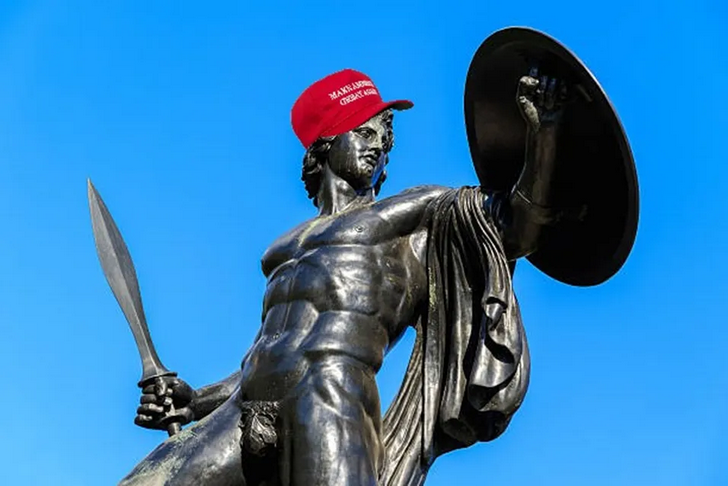
Famously, memes based on simple observation are admissible in Britain’s world-famous show trials, including this one no doubt:1

It is difficult to know what people are thinking when they endorse the importation of people who want to kill them for their lifestyle choices.

Everything must be monitored because less and less can be tolerated by those in positions of authority. Their narratives are failing, and they are panicking. They are getting desperate.

Noticing is verboten

Many of the topics that trigger the strongest response by the British Government are simply unpopular policies that normal people can no longer ignore.

More accurately, policies that directly affect growing numbers of law-abiding taxpayers who did not vote for them.

Do not discuss immigration

Mass immigration is the supreme example. Britain’s cities are being flooded with “asylum seekers”, most of whom are economic migrants with no right to settle in the country.

Many are alien peoples from distinct cultures with no connection to Europe and a poor track record of assimilation.

They are aided by an army of well-funded human rights lawyers who distort laws designed to help the genuinely dispossessed, which most immigrants are not.

Thanks to our generosity many privileges are extended to foreigners that are unavailable to natives such as free housing and financial help on the understanding these are used sparingly and temporarily to aid the desperate.

These myriad of kindnesses did not emerge to serve those who want the benefits of first-world living while dodging the corresponding costs; the development of high-trust social structures, the communal spirit that transcends tribalism, and the selflessness it all requires. These are rare phenomenon much of the world cannot produce or maintain, and they are being squandered in Western nations by the selfish obsessed with demonstrating their own virtue.

No serious discussion of immigration is tolerated at any level in Britain. However, this does not stop the erosion of goodwill upon which most of their schemes depend. The generosity they abuse is a limited resource and the magnanimity upon which it depends is evaporating quickly.


    1. Many are being jailed in Britain for posting memes and related social media content. The judges often go to some lengths to confirm it is not the content of the material they are questioning as they are perfectly legal, but the perceived intent behind the posting itself.

    This unprecedented legal descent into clairvoyance, hate speech and arrogance is relatively new. It will not age well and tells us more about the decline in competency in the judiciary than anything else. Standards are clearly not what they once were.

    To put this kind of absurd reasoning on display in irremovable public court records speaks to the level of delusion and arrogance we are now dealing with in Britain. Our social betters are truly lost in a world of their own.

“The world has gone mad. But nothing is as crazy as the AI news”

Filed under: Media, Technology — Tags: , , , — Nicholas @ 03:00

Ted Gioia is covering the AI beat like nobody else. In this post he shares several near-term predictions involving AI development and deployment:

The world has gone mad. But nothing is as crazy as the AI news.

Every day those AI bots and their human posse of true believers get wilder and bolder — and recently they’ve been flexing like body builders on Muscle Beach.

The results are sometimes hard to believe. But all this is true:

We truly live in interesting times — which is one of the three apocryphal Chinese curses.

(The other two, according to Terry Pratchett, are: “May you come to the attention of those in authority” and “May the gods give you everything you ask for”. By tradition, the last is the most dangerous of all.)

I get some credit for anticipating this. On August 4, I made the following prediction:

But it’s going to get even more interesting, and very soon. That’s because the next step in AI has arrived — the unleashing of AI agents.

And like the gods, these AI agents will give us everything we ask for.

Up until now, AI was all talk and no action. These charming bots answered your questions, and spewed out text, but were easy to ignore.

That’s now changing. AI agents will go out in the world and do things. That’s their new mission.

It’s like giving unreliable teens the keys to the family car. Up until now we’ve just had to deal with these resident deadbeats talking back, but now they are going to smash up everything in their path.

But AI agents will be even worse than the most foolhardy teen. That’s because there will be millions of these unruly bots on our digital highways.

September 9, 2024

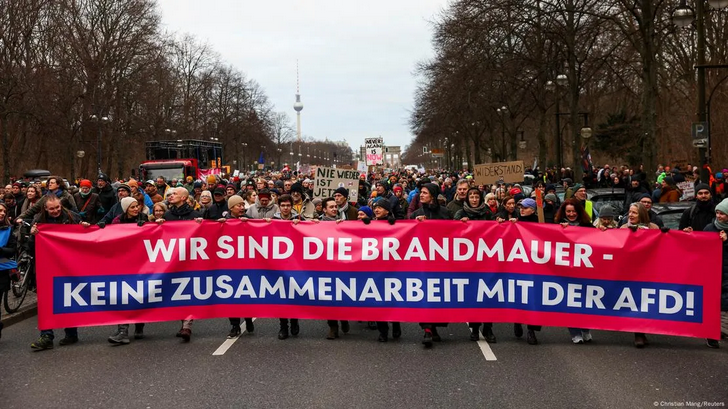
Update your Overton Window – “[A]nyone to the immediate right of 2024 liberal democracy is a fascist”

Filed under: Europe, Germany, Media, Politics, USA — Tags: , , , , , — Nicholas @ 04:00

In Niccolo Soldo’s weekly commentary, a few insights into European “mainstream” political views on extreme right-wing crypto-fascists like … everyone who doesn’t support far left positions:

If you think that US media is bad, you should check out just how awful their German colleagues are. Their media is filled to the brim with daily hysteria about the Russians, Nazis, fascists, and so on. Every single day is a struggle to survive against these existential threats.

To the mainstream German media, a conservative Christian Democrat (the kind that ruled much of Western Europe during the Cold War) like Viktor Orban is a fascist in disguise. To the mainstream German media, a statist centrist like Vladimir Putin is Hitler without the disguise. A 90s Clinton Liberal like Donald Trump is both.

Thankfully, Der Spiegel reached out to writers and researchers who specialize in fascism to tell us that all of the above are fascists, and some are Nazis too:

    The reversion to fascism is a deep-seated fear of modern democratic societies. Yet while it long seemed rather unlikely and unimaginable, it has now begun to look like a serious threat. Vladimir Putin’s imperial ambitions in Russia. Narendra Modi’s Hindu nationalism in India. The election victory of Giorgia Meloni in Italy. Marine Le Pen’s strategy of normalizing right-wing extremism in France. Javier Milei’s victory in Argentina. Viktor Orbán’s autocratic domination of Hungary. The comebacks of the far-right FPÖ party in Austria and of Geert Wilders in the Netherlands. Germany’s AfD. Nayib Bukele’s autocratic regime in El Salvador, which is largely under the radar despite being astoundingly single-minded, even using the threat of armed violence to push laws through parliament. Then there is the possibility of a second Trump administration, with fears that he could go even farther in a second term than he did during his first. And the attacks on migrant hostels in Britain. The neo-Nazi demonstration in Bautzen. The pandemic. The war in Ukraine. The inflation.

Meloni, Modi, Milei, Wilders, Bukele … all are suspected of crypto-fascism here.

Trump? “Fascist”, says neo-conservative Robert Kagan:

    In May 2016, Donald Trump emerged as the last Republican standing following the primaries, and the world was still a bit perplexed and rather concerned when the historian Robert Kagan published an article in the Washington Post under the headline “This is how fascism comes to America.”

    The piece was one of the first in the U.S. to articulate concerns that Trump is a fascist. It received significant attention around the world and DER SPIEGEL published the article as well. It was an attention-grabbing moment: What if Kagan is right? Indeed, it isn’t inaccurate to say that Kagan reignited the fascism debate with his essay. Interestingly, it was the same Robert Kagan who had spent years as an influential member of the Republican Party and was seen as one of the thought leaders for the neocons during the administration of George W. Bush.

    The article has aged well. Its characterization of Trump as a “strongman”. Its description of his deft use of fear, hatred and anger. “This is how fascism comes to America, not with jackboots and salutes,” Kagan wrote, “but with a television huckster, a phony billionaire, a textbook egomaniac ‘tapping into’ popular resentments and insecurities, and with an entire national political party – out of ambition or blind party loyalty, or simply out of fear – falling into line behind him.”

Jason Stanley, the Jacob Urowsky Professor of Philosophy at Yale University, says that fascism has already come to America:

    Six years ago, Stanley published a book in the U.S. called How Fascism Works: The Politics of Us and Them. The German translation only appeared two months ago, a source of annoyance for Stanley. He also has German citizenship and says that he loves the country despite everything.

    So how does fascism work? Modern-day fascism, Stanley writes, is a cult of the leader in which that leader promises rebirth to a disgraced country. Disgraced because immigrants, leftists, liberals, minorities, homosexuals and women have taken over the media, the schools and cultural institutions. Fascist regimes, Stanley argues, begin as social and political movements and parties – and they tend to be elected rather than overthrowing existing governments.

Timothy Snyder says that both Trump AND Putin are fascists:

    Timothy Snyder speaks thoughtfully and quietly, but with plenty of confidence. Putin is a fascist. Trump is a fascist. The difference: One holds power. The other does not. Not yet.

    “The problem with fascism,” Snyder says, “is that it’s not a presence in the way we want it to be. We want political doctrines to have clear definitions. We don’t want them to be paradoxical or dialectical.” Still, he says, fascism is an important category when it comes to understanding both history and the present, because it makes differences visible.

Austrian Political Scientist Natascha Strobl says that fascists are now everywhere:

    But this kind of violence can be seen everywhere, says the Austrian political scientist Natascha Strobl. It merely manifests itself differently than it did in the 1920s, when, early on in the fascist movement in northern Italy, gangs of thugs were going from village to village attacking farmer organizations and the offices of the socialist party, killing people and burning homes to the ground. Today, says Strobl, violence is primarily limited to the internet. “And it is,” says Strobl, “just as real. The people who perpetrate it believe they are involved in a global culture war, a struggle that knows no boundaries. An ideological civil war against all kinds of chimeras, such as ‘cultural Marxism’ or the ‘Great Replacement’.”

For Bulgarian think-tanker Ivan Krastev, AfD is a fascist organization:

    It is all rather perplexing. Back in Berlin, Ivan Krastev makes one of his Krastevian jokes. An American judge, he relates, once said that he may not be able to define pornography, “but I know it when I see it”. The reverse is true with fascism, says Krastev: It is simple to define, but difficult to recognize when you see it.

    The “F-word”. F as in fascism or F as in “Fuck you”. It is permissible, as a court in Meiningen ruled, to refer to Höcke as a fascist. The question remains, though, what doing so actually achieves.

So there you have it: anyone to the immediate right of 2024 liberal democracy is a fascist.

Bill C-63, the Online Harms Act

In the National Post, Barbara Kay explains why the Trudeau government will probably be urgently trying to get Bill C-63 through into law when Parliament resumes sitting later this month:

The sands of time were already running low for Justin Trudeau’s government. Jagmeet Singh’s just-announced withdrawal from their mutually supportive contract has widened the waist of the hourglass. Parliament resumes sitting on Sept. 16, and the Liberals will urgently seek to pass Bill C-63, the Online Harms Act, now in its second reading.

If passed in its present incarnation, this deeply flawed bill will drastically curtail freedom of speech in Canada (which, to be fair, is not an outlier on digital crackdowns in the West. Switzerland, of all places, just passed similar legislation).

We already have hate-crime laws in the Criminal Code that address advocacy for genocide, incitement of hatred and the wilful promotion of hatred. Apart from its laudatory intentions in removing online content that sexually victimizes children, Bill C-63 seeks to curb all online hate speech through unnecessary, inadvisable and draconian measures inappropriate to a democracy.

The law would create a new transgression: an “offence motivated by hated” which would raise the maximum penalty for advocacy of genocide from five years to life imprisonment. What kind of mindset considers the mere expression of hateful ideas as equivalent in moral depravity to rape and murder? Such instincts call to my mind the clever aperçu by anti-Marxist pundit David Horowitz that “Inside every progressive is a totalitarian screaming to get out”.

Another red flag: The law would give new powers to the federal cabinet to pass regulations that have the same force as legislation passed by Parliament, and that could, say, shut down a website. Unlike legislation, regulations created by cabinet do not require debate, votes or approval of Parliament. They can be decided in secrecy and come into force without public consultation or debate.

Yet another is the restoration of the “communication of hate speech” offence to the Canadian Human Rights Act, a provision similar to the one repealed in 2012. Frivolous or malicious complaints could be made against persons or organizations, granting complainants significant potential for financial reward at no personal cost, win or lose. Moreover, under this law, a complainant’s sense of injury from published words would trump a defence of objective truth. This is an open invitation for myriad social malcontents and grievance-mongers to swarm the system, with no regard for the inevitable harm done to those who they target.

September 8, 2024

The last dispatch from Toronto before the catastrophe began

Filed under: Business, Cancon, Media, Politics, Wine — Tags: , , , , — Nicholas @ 03:00

Toronto, in fact all of Ontario, may no longer be there when you get up tomorrow morning. As Chris Selley explained in his brave, final communiqué from the doomed province:

Doug Ford, the form of the destructor Ontario chose.

Dear non-Toronto friends,

This city is in crisis. This may be my last communiqué before the telex goes down for good, and I feel honour-bound to tell the world of my city’s plight. If the worst should occur, which it almost certainly will, please tell our story.

The unthinkable has occurred: Doug Ford’s madmen and women at Queen’s Park have licensed hundreds upon hundreds of new locations — called “convenience stores”, in local parlance — to sell beer, wine, cider and pre-mixed cocktails.

They did this instead of fixing health care, if you can believe that. And, outrage upon outrage, the government even made a map of such locations — as if delivering fallen Ontarians one by one to Mr. Booze himself.

Why, within just a few hundred metres of where I write, through my tears, I can discern on the map more than five such new locations. There’s Mei Convenience, Mimi Variety, Lucy Grocery and Meat, Queen & Jarvis Convenience … the list goes on, and on, my God. Church attendance is reportedly soaring as Torontonians steel themselves for the forthcoming.

Ford’s government did this entirely to solicit corporate donations to his party (some say that’s actually illegal, but whatever) from his buddies at convenience-store empires 7-Eleven and Couche-Tard … and presumably from Mimi and Lucy, whoever they are. Very rich women, clearly.

Instead of fixing health care!

Until recently, some semblance of sanity prevailed: The nearest government-run liquor store to where I sit now is a 15-minute walk away; the nearest Beer Store, the privately owned former quasi-monopoly where you’re still supposed to return your bottles and cans, is nearer to 20 minutes.

And now, suddenly, a bottle or can is shockingly near to hand. And this will lead to more alcohol-related harms. Of this there is no doubt, as one expert recently told the Toronto Methodist Star: “Harm will increase in Ontario. That is straightforward.”

It is true that many jurisdictions around the world report similar or lower levels of alcohol consumption and related harms than Ontario despite having much greater access to retail alcohol — Italy, Greece, the United States — but that is not germane to this discussion. Ontarians are not like other people. Ontario is not like other places. We are worse. Or maybe better. Or some combination of the two.

It’s true! Even saintly Bowmanville has been sullied with the demon liquor thanks to Premier Ford’s diabolical plan:

September 7, 2024

What is Jagmeet Singh’s actual plan here?

Filed under: Cancon, Government, Media, Politics — Tags: , , , , — Nicholas @ 05:00

In The Line, Jen Gerson outlines the NDP leader’s options now that the Confidence and Supply Agreement has been “ripped up”:

Federal NDP leader Jagmeet Singh announces the end of the Confidence and Supply Agreement.
Screencap from the NDP official video via The Line,

… I’m starting to consider the possibility that Jagmeet Singh is bad at politics.

I mean, think about this.

We at The Line have long pointed out that CASA was a bad deal for the NDP. It earned the party only a few piecemeal spending concessions like two-treatment Pharmacare and a half-baked dental program. It’s the Liberals who will, and have, taken full credit for both.

Meanwhile, Singh has lost all credibility as a government critic. What blows he can level at the Liberals are fatally undermined by the fact that he’s supported them for years. If the Liberals are complacent in enabling corporate greed, then Singh is demonstrably an enabler of a government that is “too weak, too selfish and too beholden to corporate interest to fight for people”?

I realize that nobody in Liberal-land is going to take this advice seriously, but I’m going to offer it anyway. On its current trajectory, Canada is heading toward a two-party system. Either the Liberals are going to eat the NDP, or the NDP is going to eat the Liberals. Until Wednesday, I put my money on the latter. Now, I’m not so sure.

If the Liberals maintain any existential instinct at all, they’d call Singh’s bluff. Drop the writ on a party that’s demonstrably unprepared to fight the battle it’s proclaimed. Eat the left, and survive to fight on another day. The meal is right there for the taking.

Singh’s big announcement about “ripping up” CASA — meep meep — gains him absolutely nothing. What additional leverage can he expect to acquire in a post-CASA parliament that he didn’t already possess?

Perhaps Wednesday’s announcement was merely a gambit to soothe internal problems, or distance himself from the Liberals. Okay, fine. This might be a viable strategy if it buys Singh a few months to trash Trudeau and raise funds off the effort while frantically trying to wash off the stinky stain of hypocrisy.

But what’s going to happen when the Liberals face their next confidence motion, presumably as soon as the Conservatives can arrange one? What happens at the next one, and the next one after that?

What credibility can Singh possibly hope to maintain if he votes for the Liberals, again? How in the world is the NDP seriously going to claim to have ripped up CASA while effectively acting as if it is in a CASA? The NDP cannot credibly distance itself from the sitting government while spending the next year propping up said government again and again and again in successive confidence motions. Especially after such a brazen display of pulling out of the deal.

No. They’re going to have to pull the trigger, and soon. Obviously. Clearly.

Singh sees this.

Right?

Trump’s visit to Arlington broke all the norms – no President has ever done this before!

Not being an American, I didn’t realize that sitting and former Presidents were banned from the grounds of Arlington National Cemetery, so Trump’s norm-obliterating visit has attracted widespread vilification from all corners of the nation:

If you read the news, Donald Trump recently did something so shocking and unprecedented that observers are staggered by his descent into evil:

He went to Arlington National Cemetery and brought a photographer, so the only possible comparison is to Literally Adolf Hitler. It was so outrageous for Trump to perform the Nazi maneuver of being photographed at Arlington that the son of the late Senator John McCain was forced to make an announcement to the world, revealing that the horror of the event had forced him to change his party registration and support the Democratic presidential candidate:

Sample framing from that story:

    Jimmy McCain, who has served for 17 years in the military and is an intelligence officer, said he was angered by Trump’s conduct at the cemetery last week, adding “it was a violation.”

    “It just blows me away,” he told CNN. “These men and women that are laying in the ground there have no choice” about being in a political ad.

See how evil Donald Trump is? No McCain man would ever stand for some bastard shooting a political ad at Arlington National Cemetery. Also, you can click here to watch the political ad that John McCain shot at Arlington National Cemetery.

[…]

QotD: Instrumental music doesn’t always need or want lyrics attached

Filed under: Media, Quotations — Tags: — Nicholas @ 01:00

When a piece of instrumental music is popular, it’s hard to resist the temptation to put words to it, and thus make it even more popular. As noted in this space over the years, a big chunk of Duke Ellington’s “songs” aren’t songs at all, but jazz instrumentals to which a lyric has been awkwardly appended: “Yoooooooooo…. must Take The A-Train/Toooooooo… get to Sugar Hill way up in Harlem.” Who needs it? Just about any instrument playing that line would do a better job than those words do. And “Take The A Train”‘s lyric is a work of genius by comparison with “Prelude To A Kiss”. Ira Gershwin always resisted offers to put words to “Rhapsody in Blue” or “An American in Paris”. He and his brother had written plenty of songs over the years, and he figured if George had wanted “Rhapsody” to have lyrics he’d have mentioned it at the time. Leroy Anderson liked words: He spoke at least nine languages (English, Swedish, Norwegian, Danish, Icelandic, French, German, Italian, Portuguese) and, indeed, fancied himself as a lyricist in at least a couple of them. But he didn’t think as a songwriter; he thought as a composer. Unlike, say, Cole Porter or Richard Rodgers, he orchestrated his own music, and so he conceived it instrumentally rather than vocally. Although you can find texts that were written for his most popular pieces, they sound very much like words set to pre-existing notes which don’t particularly require them.

Mark Steyn, “Sleigh Ride”, Steyn Online, 2019-12-08.

September 6, 2024

Climate catastrophism in a phrase – “The sky gods are angry and we’re all gonna pay”

Filed under: Environment, History, Media, Politics, USA — Tags: , , , , — Nicholas @ 04:00

Relax, weather-panic true believers — this is a post from Jim Treacher who gets paid to write funny stuff. This means you can mock everything in it as “fake news”:

I’m pretty old at this point, and for my whole life, the media has been predicting the weather will kill us all.

When I was a kid, the news was all about the coming Ice Age.

Brrrrr! Iran was a bunch of terrorist assholes even back in the ’70s, but the existential threat to America hadn’t been updated yet. They thought the cold was gonna get us.

And that dumb magazine was only $1.25 an issue! Everything might be more expensive 45 years later, but at least we haven’t all frozen to death.

Then the big threat became “global warming”. But when people noticed it wasn’t getting any warmer outside, despite the climate models that were supposed to horrify us, the scare tactic became “climate change”. They didn’t think we’d notice, I guess.

And through it all, there was one constant refrain: The sky gods are angry and we’re all gonna pay.

Do you leave your phone charger plugged in when you’re not using it? Do you drive a gas-powered car because it actually works? Then you’re destroying the planet, according to a pack of millionaires with yachts and private jets.

But now the celebrities and other climate supplicants are in dismay. The weather is letting them down again! Yet another of their predictions hasn’t come true, and they want to know why their climate deities have abandoned them.

Judson Jones, NYT:

    Halfway through an Atlantic hurricane season that forecasters expected would be one of the most active on record, there has been a considerable interlude in storms during what is typically the busiest portion of the season, leaving observers to wonder if the forecast was a bust — or if the worst may be yet to come.

    Often, at this time of the year, it isn’t uncommon to see two, three or even four named storms occurring simultaneously. But on Wednesday there were no current storms, and there hasn’t been one since Hurricane Ernesto formed, beginning as a tropical storm, on Aug. 12 …

    Despite the reprieve in recent weeks, though, “it is too early to dismiss the seasonal hurricane outlook as a bust,” said Dan Harnos, a meteorologist at the NOAA Climate Prediction Center.

You got that? We haven’t endured as many deadly, destructive hurricanes as the scientists predicted. And they’re worried about it. They want people to suffer and die, but they’re hopeful that nature will still unleash its fury on us.

There’s still time for the worst to happen. Fingers crossed!

“I support Jagmeet Singh’s right to terminate his half pregnancy”

Filed under: Cancon, Media, Politics — Tags: , , , , — Nicholas @ 03:00

Matt Gurney on NDP Leader Jagmeet Singh’s decision to pull the plug on the Confidence and Supply Agreement that had propped up Justin Trudeau’s government, long after it became clear that the Liberals were garnering all the benefits and the NDP were losing core supporters over the arrangement:

Let us start with words of affirmation and support: I support Jagmeet Singh’s right to terminate his half pregnancy. How could anyone not? His constant daily humiliation was getting uncomfortable to observe.

I know you might be expecting some kind of political analysis here. What will the end of the Confidence and Supply Agreement — or Supply and Confidence Agreement (we probably should’ve settled on one before the thing collapsed)—mean for Canadian politics, the upcoming elections, and the next general federal election? But the truth is, I don’t know. No one does. All we can say with any particular certainty is that our minority government situation has become more complicated. The Conservatives will keep trying to bring the government down. Don’t be surprised if they try to make everything a confidence motion, if only to further embarrass Singh. The NDP, for their part, will face some brutal decisions. Most polls show them heading for a wipeout, with half of their seats looking likely to flip to someone else. They’d need a huge spike in the polls just to break even. So, that’s going to be fun for them to navigate. Then, of course, there’s Justin Trudeau and the Liberals. Their prospects look awfully bleak, too. But it’s entirely possible they might decide to rip the Band-Aid off and call an election at some point in the reasonably near future.

Am I predicting any of these things? No. Like I said, I have no idea what’s going to happen. If I had to guess, I’d say the NDP will continue to support the government unofficially for the foreseeable future while all the parties reassess the new reality on the ground. But that guess is entirely subject to revision as events unfold. Time will tell. What more can I offer you?

So, in terms of political commentary on yesterday’s news, that’s about it. I don’t expect any immediate changes, and we’ll see where things shake out. Thanks for reading.

But there is a related point I’d like to make. And though it may sound snarky, I mean it with total sincerity. I am so, so happy for Jagmeet Singh. Since the deal was announced, he’s had to keep Trudeau in office while also acting like he was as disgusted with the PM as the typical Canadian voter seems to be. It was, truly, cringe-inducing, a real-life manifestation of the first half of the Hot Dog Car sketch (the back half gets weird).

I wasn’t kidding when I said it was painful to watch. And it wasn’t just me who noticed — a few podcasts ago, Jen and I had a laugh at Singh getting hit by Twitter’s Community Notes fact-checking service. After one of his regular tweets attacking Trudeau, a note was added to it, reminding readers that Singh was officially, as per a signed agreement, responsible for keeping Trudeau in power. It was laugh out loud funny, and, alas for the NDP leader, we were very much laughing at him, not with him.

That’s finished now. His nightmare is over. He can stop looking so goddamn ridiculous every day now. The deal is dead.

And now that it is, we can finally take a long look back at it and wonder how the hell Singh ever decided that the deal, or at least how he behaved during the deal, was a good idea.

In the National Post, Chris Selley seems a bit less charitable toward Singh, for largely the same reason … the pain and humiliation was almost entirely self-inflicted:

So, the deal is off. NDP leader Jagmeet Singh apparently located a few scraps of dignity in some long-forgotten kitchen drawer or closet. Just minutes before Prime Minister Justin Trudeau was set for a press conference to give himself yet more credit for the NDP’s national school-lunch program, Singh announced he was calling off the NDP’s two-and-a-half-year-old confidence-and-supply agreement with the governing Liberals.

“Canadians are fighting a battle … for the future of the middle class,” Singh pronounced. “Justin Trudeau has proven again and again he will always cave to corporate greed.” Reports suggest it was the Liberals last month ordering the railway unions back to work and into binding arbitration with their employers that finally soured the milk in Dipperland.

“In the next federal election, Canadians will choose between Pierre Poilievre’s callous cuts or hope” Singh continued, casting himself as the Barack Obama figure in the forthcoming contest — “hope,” he specified, “that when we stand united, we win; that Canada’s middle class will once again thrive together.”

Because a Canadian political announcement must come with some impenetrable bafflegab, Singh added the following: “It’s always impossible until it isn’t. It can’t be done until someone does it.”

Up is left. Forward is up. United we dance. The future.

All the reasons for the NDP to cut the Liberals loose on Wednesday were so myriad and obvious that it’s difficult to remember what on earth the point of this agreement was supposed to be. Singh got no cabinet seats out of it, maybe just a few “thanks for your contribution” pats on the back from Trudeau and his ministers along the way. But the NDP essentially gave away any policy wins to the Liberals.

New Democrats understand better than anyone else the fundamentally amoral nature of the Liberal Party of Canada. They understand the Liberals’ all but total conflation of the party’s best interests with the country’s, and therefore its utter lack of shame. Anything the Liberal party does, anything it says, even if it’s completely the opposite of it did and said yesterday, is precisely the medicine Canada needs. And the NDP understands as well as the Conservatives do how mainstream Canadian media privileges the Liberals in that regard.

« Newer PostsOlder Posts »

Powered by WordPress