Quotulatiousness

May 5, 2023

JunkScientific American

Filed under: Health, Media, Politics, Science — Tags: , , , , , — Nicholas @ 05:00

Stephen Knight calls out the woke editors of once-proud publication Scientific American for their anti-scientific support of the gender warriors:

A dangerous strain of utopian thinking has taken hold of the “progressive” left. Many now share the delusion that if we pretend certain falsehoods are true, then various forms of oppression and bigotry will magically disappear. Worse still, the proponents of these falsehoods demand their unequivocal affirmation from the rest of us.

Today’s leftists rightly insist on the importance of scientific truth when it comes to questions like climate change, vaccine safety and evolution. But they will discard scientific facts the moment they become inconvenient to their own worldview. Nowhere is this hypocrisy more pronounced than on the issue of gender, where transgender ideology has almost entirely supplanted scientific truth among the left. More alarming still is the fact that many scientists and scientific institutions, which really should know better, are colluding in this deception.

The latest scientific institution to promote gender pseudoscience is the once-venerable Scientific American magazine, which this week published an article headlined “Here’s why human sex is not binary”.

Make no mistake, sex in human beings really is binary and immutable. There are few things more emphatically true in our scientific understanding of the world than the human sex binary. Human beings cannot change their sex – we are either male or female, as determined by which type of gametes our biology is organised to produce (sperm or eggs). These are observable, testable scientific facts. And this objective truth matters in very real and consequential ways – to our society, to law, to healthcare and to the safety of women and children.

Trans ideologues claim that the categories of male and female are on a “spectrum”, or that they represent nothing more than a subjective feeling. These ideas have already had disastrous consequences for society. It is thanks to these ideas that male rapists have been placed in women’s prisons in the UK. It is why, just this weekend, a biological man won an elite women’s cycling race in America – finishing 89 seconds ahead of the closest female competitor and netting $35,350 in prize money. We would simply recognise this as “cheating” were it not for the hold that gender ideology has over our institutions – and for the opprobrium that is visited on anyone who dissents.

After some silly and irrelevant trivia about the biology of lizards and fish (humans are neither fish nor lizards), the Scientific American article concludes by claiming that anyone who upholds the human sex binary is “trying to restrict who counts as a full human in society”. This single claim inadvertently reveals a great deal about what is wrong with the trans movement. Unable to refute the truth of the human sex binary, gender ideologues resort to demonising those who notice it as having ulterior, sinister motives.

This isn’t the first time Scientific American has lent its (now waning) credibility to gender nonsense. Back in 2018, it published an article titled “Sex redefined: the idea of two sexes is overly simplistic”. To this day, this piece is gleefully shared around by gender activists, emboldened by this apparent vindication of their ideology from a credible, scientific publication. However, the author of the piece has since clarified that reality actually is as simplistic as humans having only “two sexes”.

Canada’s new internet rules have become law. What now?

J.J. McCullough
Published 4 May 2023

Bill C-11 has passed. But there’s still time.
(more…)

May 4, 2023

Despite all the evidence, Canada’s official motto doesn’t translate as “we broke it”

In The Line, Justin Ling adds more to the towering pile of evidence that “Canada is broken”:

If The Line has an editorial position, it is probably thus: Everything is broken.

This newsletter, of course, comes at the idea more earnestly than, say, the leader of the Conservative party. When my friend Matt Gurney advances that proposition, it is a lament. When Pierre Poilievre does: It’s wishful thinking.

While citizens of this country can’t always agree on what, exactly, is busted in our country, or why, or who is responsible — we can all agree, I hope, that things in this country could use a tune-up, at the very least. Canadians, after all, are imbued with a cloying optimism. An insufferable belief that things can be fixed. It’s a good thing.

Lucky for us, we have plenty of words written about how to fix much of what ails us. Because we, as a country, have a compulsive need to inquire about those problems. Our national pastime isn’t hockey, it’s the royal commission.

And we’ve got a government in office that loves to study the nature of the problem. There’s good work, these days, for the special rapporteurs and retired judges amongst us. And if you’re a Canadian that loves a good public consultation, you must be run ragged.

Yet we also have a government in office that has a pathological inability to take advice. And this problem may help explain why it feels like we’re sliding backwards.

[…]

When the government tapped an expert panel to study the use of solitary confinement in Canada’s prisons — literally torture — Correctional Services Canada blocked them from doing their job, and the public safety minister ignored their cries for help and then let their contracts lapse. Thanks to some scrutiny, the government renewed the study, then ignored it when the numbers showed they were still torturing people. Oops!

The National Security and Intelligence Committee of Parliamentarians — a body Trudeau created — warned in 2019 that Ottawa wasn’t taking foreign interference seriously, particularly when it came to China. “In short, government responses were piecemeal, responding to specific instances of foreign interference but leaving unaddressed the many other areas where Canadian institutions and fundamental rights and freedoms continue to be undermined by hostile states.” Prescient!

One of the most absurd examples is the sexual misconduct crisis in the Canadian Armed Forces. When Trudeau came into office in 2015, he had an external review on his desk from Marie Deschamps. One good external review deserves another, so the Liberals ordered one from Louise Arbour in 2022. What she found was harrowing: “We have been here before. Little seems to change.” Not only had the government failed to implement the Deschamps report, it was still failing to live up to the recommendations from the 1997 Somalia Inquiry. Fuck!

[…]

At the very centre of this tootsie-pop is, surprise, elitism. This Liberal government, armed with its paper-thin mandate, is convinced that they — and only they — are the verifiers of good ideas. And we should be grateful for whatever decision they deign to make.

If they farm out an idea to the public service, and the idea doesn’t come back in the form they envisioned, no matter: Send out the McKinsey signal. For just a few million dollars, their crack team of subject matter non-experts can prepare a PowerPoint presentation laying out the exact policy the political staff wanted in the first place.

The Liberals take a similar approach to consulting with the unwashed masses. When the government consulted the public on their plan to police “online harms,” they published a “what we heard” report that was broadly supportive of their plan.

Can we see the submissions? Journalists and academics asked. No. Came the reply.

QotD: Gesamtkunstwerk

Filed under: Media, Quotations, Technology — Tags: , , , , , — Nicholas @ 01:00

… it occurs to me that movies aren’t the best example of the Current Year’s creative bankruptcy — music is. Somewhere below, I joked that Pink Floyd’s album The Wall was a modern attempt at a Wagnerian Gesamtkunstwerk, a “total art work”. Wagner thought opera should be a complete aesthetic experience, that a great opera would have not just great music, but a great story in the libretto, great poetry in the lyrics, great painting in the set design, and so on, all of which would combine to something much greater than the sum of its already-excellent parts.

As I said, that’s awfully heavy for an album whose most famous song asks how can you have any pudding if you don’t eat your meat, but it’s nonetheless an accurate description of what Roger Waters was trying to do with the integrated concept album / movie / stage show. Whether or not he knew he was attempting a Gesamtkunstwerk in the full Wagnerian sense is immaterial, as is the question of whether or not he succeeded. Nor does it matter if The Wall is any good, musically or cinematically or lyrically.* The point is, he gave it one hell of a go … and nobody else has, even though these days it’d be far, far easier.

Consider what a band like Rush in their prime would’ve done with modern technology. I’m not a musician, but I’ve been told by people who are that you can make studio-quality stuff with free apps like Garage Band. Seriously, it’s fucking free. So is YouTube, and even high-quality digital cameras cost next to nothing these days, and even laptops have enough processor power to crank out big league video effects, with off-the-shelf software. I’m guessing (again, I’m no musician, let alone a filmmaker), but I’d wager some pretty good money you could make an actual, no-shit Gesamtkunstwerk — music, movie, the whole schmear — for under $100,000, easy. You think 2112-era Rush wouldn’t have killed it on YouTube?

I take a backseat to no man in my disdain for prog rock, but I have a hard time believing Neal Peart and the Dream Theater guys were the apex of rock’n’roll pretension. I realize I’ve just given the surviving members of Styx an idea, and we should all be thankful Kilroy Was Here was recorded in 1983, not 2013, because that yawning vortex of suck would’ve destroyed all life in the solar system, but I’m sure you see my point.** Why has nobody else tried this? Just to stick with a long-running Rotten Chestnuts theme, “Taylor Swift”, the grrl-power cultural phenomenon, is just begging for the Gesamtkunstwerk treatment. Apparently she’s trying real hard to be the June Carter Cash of the New Millennium™ these days, and hell, even I’d watch it.***

The fact that it hasn’t been attempted, I assert, is the proof that it can’t be done. The culture isn’t there, despite the tools being dirt cheap and pretty much idiot proof. Which says a LOT about the Current Year, none of it good.


    * The obvious comment is that Roger Waters is no Richard Wagner, but that’s fatuous — even if you don’t like Wagner (I don’t, particularly), you have to acknowledge he’s about the closest thing to a universal artistic genius the human race has produced. It’s meaningless to say that Roger Waters isn’t in Wagner’s league, because pretty much nobody is in Wagner’s league. And philistine though I undoubtedly am, I’d much rather listen to The Wall than pretty much any opera — I enjoy the symphonic bits, but opera singing has always sounded like a pack of cats yodeling to me. I’m with the Emperor from Amadeus: “Too many notes.”

    ** If you have no idea what I’m talking about, then please, I’m begging you, do NOT go listen to “Mr. Roboto.” Whatever you do, don’t click that link …

    … you clicked it, didn’t you? And now you’ll be randomly yelling “domo arigato, Mister Roboto!!” for days. You’ll probably get punched more than once for that. Buddy, I tried to warn you.

    *** Anthropological interest only. I know I’m in the distinct minority on this one, but she never turned my crank, even in her “fresh-scrubbed Christian country girl” stage. Too sharp featured, and too obviously mercenary, even back then.

Severian, “More Scattered Thoughts”, Rotten Chestnuts, 2020-10-13.

May 2, 2023

QotD: The musical importance of the city of Córdoba

Filed under: Europe, History, Media, Quotations — Tags: , , , , , , , — Nicholas @ 01:00

Which city is our best role model in creating a healthy and creative musical culture?

Is it New York or London? Paris or Tokyo? Los Angeles or Shanghai? Nashville or Vienna? Berlin or Rio de Janeiro?

That depends on what you’re looking for. Do you value innovation or tradition? Do you want insider acclaim or crossover success? Is your aim to maximize creativity or promote diversity? Are you seeking timeless artistry or quick money attracting a large audience?

Ah, I want all of these things. So I only have one choice — but I’m sure my city isn’t even on your list.

My ideal music city is Córdoba, Spain.

But I’m not talking about today. I’m referring to Córdoba around the year 1000 AD.

I will make a case that medieval Córdoba had more influence on global music than any other city in history. That’s probably not something you expected. But even if you disagree — and I already can hear some New Yorkers grumbling in the background — I think you will discover that the “Córdoba miracle,” as I call it, is an amazing role model for us.

It’s a case study in how communities foster the arts — and in a way that benefits everybody, not just the artists.

[…] a thousand years before New Orleans spurred the rise of jazz, and instigated the Africanization of American music, a similar thing happened in Córdoba, Spain. You could even call that city the prototype for all the decisive musical trends of our modern times.

“This was the chapter in Europe’s culture when Jews, Christians, and Muslims lived side by side,” asserts Yale professor María Rosa Menocal, “and, despite their intractable differences and enduring hostilities, nourished a complex culture of tolerance.”

There’s even a word for this kind of cultural blossoming: Convivencia. It translates literally as “live together.” You don’t hear this term very often, but you should — because we need a dose of it now more than ever. And when scholars discuss and debate this notion of Convivencia, they focus their attention primarily on one city: Córdoba.

It represents the historical and cultural epicenter of living together as a norm and ideal.

Even today, we can see the mixture of cultures in Spain’s distinctive architecture, food, and music. These are both part of Europe, but also separate from it. It is our single best example of how the West can enter into fruitful cultural dialogue with the outsider — to the benefit of both.

Ted Gioia, “The Most Important City in the History of Music Isn’t What You Think It Is”, The Honest Broker, 2023-01-26.

May 1, 2023

“And I, for one, welcome our new CRTC internet overlords”

Filed under: Bureaucracy, Cancon, Government, Media — Tags: , , , , , , — Nicholas @ 06:00

In this week’s Dispatch from The Line, among other maple-flavoured items is the discussion of how the newly passed Bill C-11 will impact Canadians’ everyday online experience:

We at The Line have spent a lot more time trashing Bill C-18 than its cousin, C-11; the reason for that is fairly simple, if unflattering. Both bills are unwieldy little monsters, rife with competing agendas and we only have so much time and energy to spare. Of the two, though, C-18 affects us and our business more directly as it attempts to force Big Tech companies into secret negotiations to prop up dying legacy media outlets.

C-11, which passed this week, is the Liberals’ attempt to overhaul the Broadcasting Act to bring major streaming services like YouTube and Netflix under the heel of the CRTC. This is generally a pretty bad idea — and we’ll get into that in a second. But the passing of the first major overhaul of the act since the ’90s will, we expect, be heralded by the usual suspects of CanCon leeches who see in the legislation an opportunity to siphon evil Big Tech profit while forcing major platforms to force-feed Canadians into consuming more home-grown shite.

Anyway, part of the bill, it is hoped, will force online streamers to feature more Canadian content for Canadian users, particularly content that highlights the usual progressive checkboxes. And while this does make us roll our eyes a bit — just make good stuff and let people choose what they want for themselves! — we admit that this provision is the less objectionable aspect of C-11.

After this, matters get much more dicey. The attempts to force tech companies to pay for more CanCon will almost certainly backfire in the long run: companies like YouTube have already promised that they will comply with legislation by creating pass-through fees for their creators. In other words, if the government forces YouTube to pay a percentage of its profits into a CanCon fund, YouTube will generate that revenue the only way it can — by skimming more cash from its content creators and re-directing some to the creation of Canadian shows that are then commercialized by major broadcasting networks like Rogers. Seems fair!

Where the bill goes off the rails is over years-long battle over user-generated content protections. Upon hitting the upper chamber, the senate actually advocated for amendments that would ensure that Joe Blow YouTuber wasn’t going to fall under the auspices of CRTC regulation — changes that were rejected by the House. How the CRTC defines a content generator worthy of its regulation, or uses any of its new powers, is now up for consideration by the CRTC itself.

Obviously, we at The Line are concerned about how a regulator is going to employ poorly defined and vaguely stipulated legislative powers to control how Canadians are presented which content, and by whom. We are open to the hopeful possibility that the CRTC is so completely in over their heads that all of the concerns about the bill prove fruitless and overblown. But as a rule, we don’t like to rely on the incompetence of our betters to assure our protections and freedoms.

And that brings us to the major philosophical problems with C-11; the first is that legislation should generally not generate more confusion and uncertainty. As a rule, we think that our laws should be written in such a way that an ordinarily intelligent person with a standard education should be able to understand the laws that govern them. By this measure, the Broadcasting Act — like many others — fail a very basic test. C-11 is written so poorly that even experts seem to disagree about the scope of the bill and how our media landscape will be affected by it in the years to come.

[…]

There is, arguably, no reason for the CRTC, nor for the Broadcasting Act in its current form, to exist anymore. Digital space isn’t finite. Canadians can easily find news and entertainment that is relevant to them. We don’t need the government to ensure that Canadian content is produced and funded. Or, if some government intervention is deemed necessary, it need not amount to anything more complicated than a simple tax, with revenues diverted to one of this country’s myriad granting agencies to aid production. Instead, we have a government that seems hellbent on extending the power of a regulator at the very moment in history that this regulator is most redundant.

Given that we’re being led by an increasingly insular government that equates all criticism to disingenuous misinformation, and seems to want to stamp out the evils of wrong opinions on the Internet in the coming Online Harms bill, well, let’s just say we’re increasingly concerned and perturbed.

The Presidential re-match nobody wants

Filed under: Media, Politics, USA — Tags: , , , , — Nicholas @ 04:00

At Oxford Sour, Christopher Gage contemplates the potential re-match of Joe Biden and Donald Trump in the 2024 election … and shudders:

Perhaps for good reason, any American with their eyes on the White House must be at least 35 years of age when assuming office. Mercifully, this rule prevents anyone with a TikTok account from being taken too seriously.

Apparently, Americans apply this rule to its very extreme.

This week, President Joe Biden announced his bid for re-election, promising in a video announcement to “finish the job”. Quite what job he refers to is anyone’s guess. Though in better shape than Great Britain (a bar so low it’s a carpet) America is not having the best of days, weeks, months, years, decades, or twenty-first centuries.

Biden wasted no time. His sales pitch? He’s not Donald Trump. Evidently, the Biden team assumes Trump will steamroller over Ron DeSantis en route to the Republican party nomination. It’s 2020 again.

I don’t know about you, dear reader, but every time I see “2020” written down, or the mere words “twenty-twenty” seep into my eardrums, my heart flutters, my brain jangles, and a panic attack seizes control of my body with all the charm and consideration of a central African coup d’état.

Americans seem to agree. Seventy percent of Americans don’t think the 80-year-old Biden should run for re-election. Even 51 percent of Democrats nod their heads. Meanwhile, sixty percent, including one-third of Republicans say Trump, 76, should not run for president.

President Biden is not the most spring of chickens. Half of those who think he should sit this one out say Biden’s age is a “major” reason behind their thinking.

To put it mildly, this decade hasn’t quite gone the way of the “Roaring Twenties”. In 2019, I told anyone with ears that this decade would be the decade of decades. Reader, the jury is out. By “out” I don’t mean they’re busy making their considerations. By “out” I mean the jury is riddled with hollow-point bullets.

Perhaps that’s why a 38 percent plurality told pollsters they felt “exhausted” over the very idea of a Biden versus Trump rematch. Twenty-nine percent said they felt “fear” whilst just under a quarter felt both “sadness and fear”.

Which brings me to vice president Kamala Harris. This week, we learned of Biden’s intention to rehabilitate Harris’ image. Harris hasn’t had the most illustrious of tenures. Why? Well, let’s just say VP Harris is suited to other modes of employment. Ideally, Harris would find her feet in jobs which don’t require speaking in coherent, plain sentences and jobs which place a premium upon one’s ability to laugh at the most inappropriate of times. Reader, I’m about as socially attuned as a headbutt. Unlike Harris, I’m not literally one stopped heart away from the presidency.

It cannot be that a country of 330 million people, one which correctly claims to be the greatest country on earth, must limit itself to re-running the worst year in recent history.

And yet, there’s quite some time to go before the serious business of campaigning kicks into gear. If this horrendous decade has taught me anything, it’s that conventional wisdom isn’t worth the paper it’s printed on.

Doctor Sketchy and the Strange Case of the Syndrome of Doom

Filed under: Britain, Humour, Media — Tags: , , , — Nicholas @ 02:00

Lindybeige
Published 24 Jan 2023

I teamed up with the highly-skilled Alasdair Beckett-King and together we threw together this sketch. Can you tell that he went to film school?
(more…)

April 30, 2023

Sarah Hoyt – “I told you so”

At According to Hoyt, Sarah reminds us that she was right and won’t apologize for being right … and will say “I told you so” as often as necessary:

Only infants and the mentally incompetent could look at locking up the vast majority of the population and think it would have NO effect on the economic well being of this country. Worse, only infants, the mentally incompetent and indoctrinated Marxists (BIRM) could think — after the numbers from the Diamond Princess were out there for everyone to read — that either COVID-19 was the end of the world, or that we should put the entire population under house arrest to prevent people dying of it. As though it wouldn’t become endemic anyway.

And it took a particular level of bizarre insanity to believe that COVID-19 would kill you at your favorite restaurant or church but not in Walmart.

We won’t even get into the specialness that caused a bunch of you to tell me that it was okay for the homeless to be congregating in every street corner (and in Denver in proliferating encampments EVERYWHERE with all the shared needles, trash, etc. of such encampments) WITHOUT dropping like flies, because they lived outdoors and were “particularly hardy”. Dudes, if you ever work in any emergency room, you’ll learn that not only aren’t the homeless “particularly hardy” but that they have the most bizarre medieval diseases. Yes, there are jokes about “tooth to tattoo ratio” and that low/high means they live forever, but in truth if you see before and after pictures, you know homeless people tend to die early and hard and not just because most of them are crazy and drug addicted (though that’s a contributing factor.) IF THIS HAD BEEN A REALLY DANGEROUS PANDEMIC, the kind those videos from China — some of which were manifestly fakes, like where people put out their hands to break the fall when they “drop dead” in the street — suggested, the homeless would have first been very sick, then dead.

Also, note the same people then said it was very important to wear masks OUTSIDE WHILE JOGGING because this virus was some kind of magical and could hang suspended in the air outside in a “cloud” so that if you walked through it hours later, you could catch the dread disease.

AND let’s not forget treating us like lunatics when we explained that the masks did nothing, and that yes, they’re used in operating rooms — where they’re changed every few minutes, btw — to PREVENT THE SURGEON from coughing on an open wound.

And I want to award no prizes, and may G-d have mercy on your souls to those that told me that the Diamond Princess‘s numbers were as low as they seemed to be because “They have the best of care in cruise ships”. This when cruise ships are known as floating illness barges and the population aboard is the oldest of any gathering in the nation.

Oh, oh, oh, and a special mention goes to everyone who ran around with their heads on fire because “the ER is at 95% capacity” when it is at 100% capacity every flu season, AND also all the “special wards” built for “overflow” patients saw not ONE patient. All these facts were available and easily looked up.

QotD: Propaganda, dezinformatsiya, and maskirovka in the Current Year

Filed under: Books, History, Media, Quotations, Russia, USA — Tags: , , , , — Nicholas @ 01:00

… I don’t speak Russian, but as an amateur Sovietologist I’m aware of the KGB’s rich lexicon of “information warfare”. Disinformation is, of course, either a loan word or a calque, depending on how you want to look at it — dezinformatsiya. (A loan word comes over directly, like “concerto”; a calque is a literal translation of a foreign term, like “flea market”). And then there’s the maskirovka, a whole class of specifically military deceptions. No nation poured more resources into this stuff than the Soviets. A KGB defector named Golitsyn wrote a study, New Lies for Old, that’s interesting. A general in the Securitate, the Romanian secret police, named Ion Mihail Pacepa wrote another, called Disinformation. Good stuff.

Looking at the “news” these days is a fraternal socialist experience, comrades. Of course, we must be careful to distinguish between disinformation and propaganda. As we know from Theodore Dalrymple, propaganda is designed to humiliate you. All the “Biden won” stories, obviously, are pure propaganda — we know they’re not true, they know they’re not true, but by shoving them down our throats, they emphasize the almost total power differential between them and us. This is obvious, therefore uninteresting.

The dezinformatsiya, though, that’s fun. You know it’s a lie — is it in the Media? then it’s a lie — but the purpose of the lie is often opaque. For instance, this new variant of COVID supposedly making the rounds in England. You don’t have to wear a tinfoil hat to find the timing of that pretty damn suspicious. After all, we’re all supposed to have our “warp speed” mandatory goop shots here in a month, which means no more masks, no more lockdowns, no more of the führer-iffic fun our Glorious Leaders are jonesing for. We can’t be having that, and so hey, whaddaya know, just in time for Christmas, a new pox …

[…]

The problem with any disinfo op, of course, is that you have to pitch it at not just how smart the enemy actually is, but how smart he thinks he is. The KGB used to use two-stage deceptions all the time. There was a clumsy, obvious ploy that was designed to fail. The counterintelligence people would sniff it out, then congratulate themselves for seeing through those goofy commies and their hilarious misunderstandings of the free world. Meanwhile, the second caper sailed right through, because the counterintel boys stopped looking after busting the first one.

Severian, “Stojak”, Rotten Chestnuts, 2020-12-22.

April 29, 2023

Justin can’t let Joe steal his thunder on this critical issue!

Justin Trudeau’s love of the vastly expensive and utterly useless virtue signal is almost unmatched among western leaders, but as Bruce Gudmundsson relates here, some of Joe Biden’s lower-echelon cronies in the Pentagram Pentagon have put up a virtue signal that will be very hard for Justin to top:

In the United States, the president enjoys the privilege of appointing 4,000 of his supporters to positions within the Executive Branch. When the president is a Democrat, the best connected of these invariably prefer perches in the vast social service bureaucracy, there to reign (but rarely rule) over like-minded civil servants.* Those with the fewest friends, alas, end up in the Pentagon.

I’m honestly surprised that the number of direct appointees is so low … I’d have guessed at least ten times that number. I was vaguely aware that the formal “spoils” system was broken up late in the 19th century, but the US federal government and its various arms-length agencies are several orders of magnitude larger than they were back then.

The appointees who suffer the latter fate know nothing of the work they supposedly supervise. Indeed, having been raised in homes in which there were “no war toys for Christmas”, they cannot distinguish a sailor from an airman, let alone explain the difference between a soldier and a Marine. What is worse, like impoverished Regency belles, obliged to spend the Season wearing last year’s frocks, Defense Department Democrats live in constant fear of losing caste.

With this in mind, it is not surprising that the aforementioned appointees embrace, with great enthusiasm, projects of the sort they can discuss at Georgetown cocktail parties. During the Obama years (2009-2017), many of these bore the brand of “green energy”. (No doubt, the appointees in question made much of the double entendre.) As might be expected, many of these programs went into hibernation during the presidency of Donald Trump (2017-2021), only to spring back to life after the inauguration (in 2021) of Joseph Biden.

In a recent post on his Substack, the indispensable Igor Chudov lays bare the folly of one of these initiatives. Part of the Climate Strategy unveiled by the US Army in 2022, this plan calls for the progressive replacement, over the course of twenty-eight years, of petroleum dependent cars, trucks, and tanks with their battery-powered counterparts.

I mean, on the plus side, it would mean that wars could only take place on sunny days (for solar-powered tanks) or windy days (for wind-powered tanks). The sheer stupidity of the notion would be laughable, except they really seem to be serious about military combat vehicles running on batteries recharged with solar cells, windmills, or unicorn farts. I’d call it peak Clown World, but it’s a safe bet that they can get even crazier without working up a sweat.

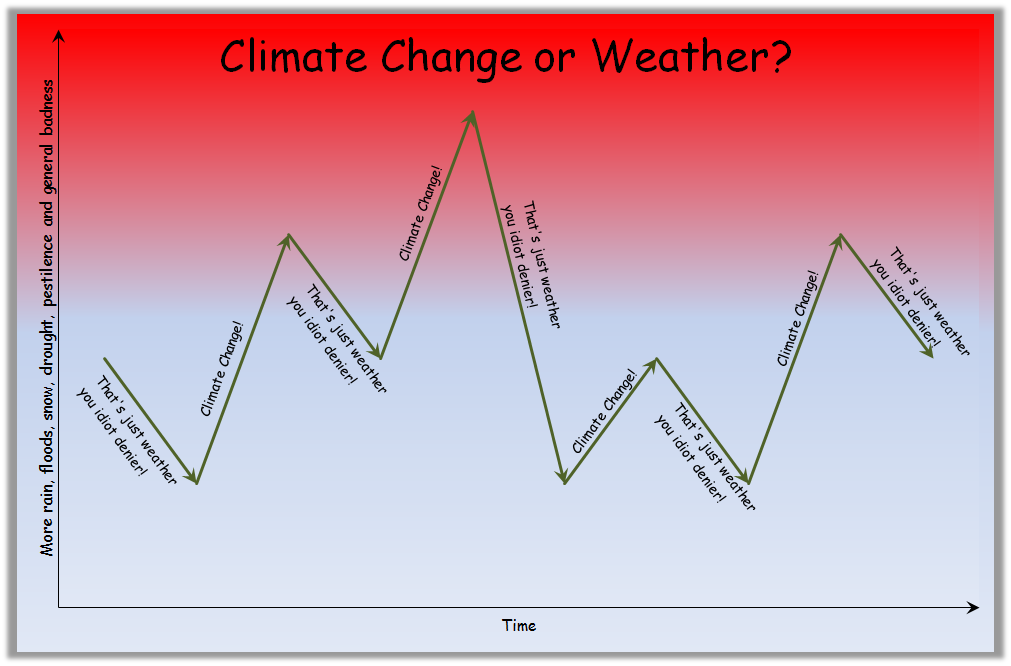
Searching for an appropriate graphic to go with this article, I found this gem at Iowa Climate Change from back in 2021:


    * Lest you think, Gentle Reader, that this post serves a partisan political purpose, I will mention that am convinced that the one Republican political appointee with whom I am well-acquainted is a knucklehead of the first order. Indeed, if I ever manage to locate the proper forms, I intend to nominate him for a place of particular honor in the Knucklehead Hall of Fame.

Bad advice for Robert Kennedy Jr.

C.J. Hopkins proffers advice to the declared candidate for the Democratic presidential nomination:

Robert F. Kennedy, Jr. speaking in Urbana, Illinois on October 14, 2007.
Photo by Daniel Schwen via Wikimedia Commons.

Robert Kennedy, Jr. is running for president. I could not possibly be more excited. So, I’m going to give Bobby some unsolicited advice, which, if he knows what’s good for him, he will not take.

I feel OK about doing this because, even if Bobby, in the wee hours of the night, when the mind is vulnerable to dangerous ideas, were to seriously consider taking my advice, I am sure he has people — i.e., PR people, campaign strategists, pollsters, and so on — that would not hesitate to take him aside and disabuse him of any inclination to do that.

OK, before I give Bobby this terrible advice, I have to do the “full disclosure” thing. I’m a pretty big fan of RFK, Jr. I don’t generally get involved in electoral politics, but, if I were a Democrat, I would definitely vote for him. Also, he was kind enough to blurb my book (which isn’t going to make his PR people happy) and invite me onto his podcast, RFK, Jr. The Defender, to talk about “New Normal” totalitarianism. So, I am fairly biased in favor of Bobby Kennedy. I think he is an admirable, honorable human being. I would love to see him in the Oval Office.

That isn’t going to happen, of course. The global-capitalist ruling classes are never going to let him near the Oval Office. They learned their lesson back in 2016. There are not going to be any more unauthorized presidents. The folks at GloboCap are done playing grab-ass, and they want us to know that they are done playing grab-ass. That’s what the last six years have been about.

As I put it in a column in January, 2021

    … This, basically, is what we’ve just experienced. The global capitalist ruling classes have just reminded us who is really in charge, who the US military answers to, and how quickly they can strip away the facade of democracy and the rule of law. They have reminded us of this for the last ten months, by putting us under house arrest, beating and arresting us for not following orders, for not wearing masks, for taking walks without permission, for having the audacity to protest their decrees, for challenging their official propaganda, about the virus, the election results, etc. They are reminding us currently by censoring dissent, and deplatforming anyone they deem a threat to their official narratives and ideology … GloboCap is teaching us a lesson. I don’t know how much clearer they could make it. They just installed a new puppet president, who can’t even simulate mental acuity, in a locked-down, military-guarded ceremony which no one was allowed to attend, except a few members of the ruling classes. They got some epigone of Albert Speer to convert the Mall (where the public normally gathers) into a “field of flags” symbolizing “unity”. They even did the Nazi “Lichtdom” thing. To hammer the point home, they got Lady Gaga to dress up as a Hunger Games character with a “Mockingjay” brooch and sing the National Anthem. They broadcast this spectacle to the entire world.

Does that sound like the behavior of an unaccountable, supranational power apparatus that is prepared to stand by and let Bobby Kennedy, Jr., or Donald Trump, or any other unauthorized person, become the next president of the United States?

So, here’s my bad advice for Bobby.

Fuck them. They’re not going to let you win, anyway. They are going to smear you, slime you, demonize you, distort every other thing you say, and just generally lie about who you are and what you believe in and what you stand for. They are going to paint you as a bull-goose-loony, formerly smack-addled, conspiracy-theorizing, anti-vax fanatic no matter what you do. If you tone down your act and try to “heal the divide” and “end the division,” they are going to have you for lunch, and then sit around picking their teeth with your bones. You know, and I know, and the American people know, that the things you say you want to do as president — which I know you sincerely want to do as president and are crazy enough to actually try to do, i.e., “to end the corrupt merger of state and corporate power that is threatening now to impose a new kind of corporate feudalism in our country” — are things … well, as Michael Corleone once put it, that they would “use all their power to keep from happening”.

So, fuck it, and fuck them. Tell the truth.

Not the ready-for-prime-time truth. Not the toned-down-for-mainstream-consumption truth. The truth. The ugly, unvarnished truth. The scary, crazy-sounding truth. The angry, divisive, uncensored truth.

Yes, there is a “divide”. A great divide. A chasm. A schism. A gulf. An abyss. A gaping, yawning, unbridgeable fissure. A Grand Canyon-sized fault in the foundation of society. A rupture in the very fabric of reality.

H/T to Robert Swanson for the link.

Of course, not everyone is as fond of RFK, Jr. — and for good reason, as Matt Welch points out:

Ever since the 69-year-old conspiratorial activist Robert F. Kennedy Jr. declared his candidacy for the Democratic presidential nomination last week, a curious new category has appeared among the commentariat—libertarians and/or right-of-center journalists expressing strange new respect for a Hugo Chavez–admiring scion of the Establishment who has serially fantasized about throwing his political opponents in jail.

“I’m quite certain that I’ve never heard a more erudite speech in any political context,” enthused Brownstone Institute President Jeffrey Tucker after attending Kennedy’s announcement rally. “As [a] Democrat he must be bad on all sorts of things,” tweeted Antiwar.com’s Scott Horton, “But not the ones that matter the most.” The Libertarian Party of Colorado tweeted (and then deleted) “Bravo and godspeed hero.” Tablet, a publication not usually known for boosting overheated analogies to murderous 20th-century totalitarians, gave RFK Jr. an 18,000-word valentine with such soft-toss “questions” about his previous controversial statements (like terming the impact from childhood vaccines “a holocaust”) as: “You activated an automated outrage machine that was looking for a gotcha.”

The newly Kennedy-curious are intrigued by the rabble-rouser’s potential to disrupt an otherwise rubber-stamped Democratic primary, sure, but also by him having the right enemies — the media, the military-industrial complex, and, most of all, a political class that backed COVID-19 lockdowns and mandates.

“Just as Donald Trump … retrieved political themes from the deep past of the Republican Party,” National Review‘s Michael Brendan Dougherty mused, “so it must be that a Democrat should come along and try to revive left-leaning skepticism of government and corporate power, to denounce crony capitalism, censorship, and the CIA to boot.”

Recasting RFK Jr. as a foe of censorship and potential tamer of government requires ignoring what he has been and imagining things he’ll never be. Among a lifetime of eyebrow-raising public activities, Bobby Kennedy’s son has repeatedly egged on government to punish those who disagree with his idiosyncratic understandings of science.

[…]

Yet in 2023, Kennedy can plausibly claim (to those with short memories) the mantle of anti-censorship, for having been on the receiving end of Big Social Media’s often government-pressured pandemic speech-policing. He was banned from Instagram in February 2021 “for repeatedly sharing debunked claims about the coronavirus or vaccines”, and his anti-vaccine-mandate nonprofit Children’s Health Defense was similarly booted by both Instagram and Facebook in August 2022. He published a book last year called A Letter to Liberals: Censorship and COVID: An Attack on Science and American Ideals. As Tablet‘s David Samuels wrote, in one of that piece’s many eye-popping passages, “At this point, the fact that Robert F. Kennedy is the country’s leading ‘conspiracy theorist’ alone qualifies him to be president.”

So is the enemy of your enemy your friend? Depends on your tolerance for unlikely conspiracy theories, and your comfort level in Kennedy’s proposed punishments for alleged perpetrators. Where Jeffrey Tucker sees an orator with a “command of facts, history, and issues,” motivated both by “truth-telling in an age of nonstop lies” and a genuine urge to “heal” the political divide, I see someone whose presentation of facts — including grave accusations of criminality — have been repeatedly and persuasively found lacking.

QotD: The problem of war-elephants

The interest in war elephants, at least in the ancient Mediterranean, is caught in a bit of a conundrum. On the one hand, war elephants are undeniably cool, and so feature heavily in pop-culture (especially video games). In Total War games, elephants are shatteringly powerful units that demand specialized responses. In Paradox’s recent Imperator, elephant units are extremely powerful army components. Film gets in on the act too: Alexander (2004) presents Alexander’s final battle at Hydaspes (326) as a debacle, nearing defeat, at the hands of Porus’ elephants (the historical battle was a far more clear-cut victory, according to the sources). So elephants are awesome.

On the other hand, the Romans spend about 200 years (from c. 264 to 46 B.C.) mopping the floor with armies supported by war elephants – Carthaginian, Seleucid, even Roman ones during the civil wars (Thapsus, 46 B.C.). And before someone asks about Hannibal, remember that while the army Hannibal won with in Italy had almost no war elephants (nearly all of them having been lost in the Alps), the army he lost with at Zama had 80 of them. Romans looking back from the later Imperial period seemed to classify war elephants with scythed chariots and other failed Hellenistic “gimmick” weapons (e.g. Q. Curtius Rufus 9.2.19). Arrian (a Roman general writing in the second century A.D.) dismisses the entire branch as obsolete (Arr. Tact. 19.6) and leaves it out of his tactical manual entirely on those grounds.

This negative opinion in turn seeps into the scholarship on the matter. This is in no small part because the study of Indian history (where war elephants remained common) is so under-served in western academia compared to the study of the Greek and Roman world (where the Romans functionally ended the use of war elephants on the conclusion that they were useless). Trautmann, (2015) notes the almost pathetic under-engagement of classical scholars with this fighting system. Scullard’s The elephant in the Greek and Roman World (1974) remains the standard text in English on the topic some 45 years later, despite fairly huge changes in the study of the Achaemenids, Seleucids, and Carthaginians in that period.

All of which actually makes finding good information on war elephants quite difficult – the cheap sensational stuff often fills in the gaps left by a lack of scholarship. The handful of books on the topic vary significantly in terms of seriousness and reliability.

Bret Devereaux, “Collections: War Elephants, Part I: Battle Pachyderms”, A Collection of Unmitigated Pedantry, 2019-07-26.

April 27, 2023

“… the Department of Defense is rejoicing that Tucker Carlson has been driven off of Fox News”

Filed under: Business, Government, Media, Military, USA — Tags: , , , — Nicholas @ 04:00

Chris Bray on the odd phenomenon of the US military formally having opinions on who is sitting at the big desk for Fox News these days:

In 2001, I was a nominal infantryman assigned to some exceptionally tedious duty at Fort Benning, Georgia. That spring, the Chief of Staff of the United States Army decided to symbolically make the whole army feel elite by changing the uniform and putting everyone into the black beret that had been unique to the Ranger battalions. See, now you have a special hat, so morale and esprit de corps and stuff.

Because I was in the infantry, surrounded all day every day by infantrymen, I can report the absolutely rock-solid consensus in the combat arms branches with complete confidence: we wondered why we were being led by idiots.* Quietly, but not quietly enough, we said things like, “See, the lethality of a combat force is tied directly to the quality of its fashion design“. A series of impromptu briefings and formal training sessions reminded us that we were not allowed to express open contempt for our senior leaders, so shut up about the dumbassery with the berets.

In retrospect, I think history shows us that new hats really were the most pressing challenge facing the American military as we rolled into the summer of 2001, but whatever.

So Politico, the most reliably wrong publication in the history of the known universe, reports this week that the Department of Defense is rejoicing that Tucker Carlson has been driven off of Fox News.

See, Tucker Carlson was an authoritarian, a Trumpian protofascist. For example, he criticized the leadership of the military, who therefore rejoiced in his departure. Anti-authoritarianism, on the other hand, is when the leaders of the armed forces have a hand in shaping the culture and deciding who’s allowed to speak in the public sphere. Fascism is open discourse, so we need the military to say who should be on television so we can have freedom.

[…]

See, it’s good when the military “smites” civilian critics and expresses “revulsion” for them. In fascist countries, critics of the military are just allowed to speak freely. The culture has gone full Alice In Wonderland, and freedom is compliance.


    * See also the switch from BDUs and ACUs.

QotD: The unexpected sources of musical innovation

Filed under: History, Media, Quotations, USA — Tags: , , , , — Nicholas @ 01:00

First, I need to provide some background on the sources of musical innovation. Over the course of three decades of research into this matter, I kept encountering new styles of song emerging in unexpected places — but these locations always had something in common.

These epicenters of musical innovation are always densely populated cities where different cultures meet and mingle, sharing their distinctive songs and ways of life. This intermixing results in surprising hybrids — new ways of making music that nobody can foresee until it actually happens in this hothouse environment.

New Orleans provides a great example. Around the time jazz originated in New Orleans, it was the most diverse city in the world — an intense intermixing of French, Spanish, African, Caribbean, Latin American, and other cultures. And the mixture was enhanced by the huge number of travelers and traders who came to the region because of the prominence of the Mississippi River as a business and distribution hub.

Here’s how I described this process in the appendix to my book Music: A Subversive History, where I shared 40 precepts on the evolution of human songs.

I wish I had time to defend these assertions here with empirical evidence. But we don’t have the space to do that. Let me say, however, that these statements are amply documented and supported with dozens of examples and case studies in the course of that book.

Ted Gioia, “The Most Important City in the History of Music Isn’t What You Think It Is”, The Honest Broker, 2023-01-26.

« Newer PostsOlder Posts »

Powered by WordPress