Quotulatiousness

June 25, 2023

British schoolchildren mock their oh-so-woke teachers

Filed under: Britain, Education, Law, Media, USA — Tags: , , , , — Nicholas @ 05:00

In Christopher Gage’s weekly round-up, I discovered that I shared a trait with Ted Kaczynski (“austere anarchist scholar” as US mainstream media might have described him). Not just any trait, but the one that ended up putting him in prison after nearly twenty years of sending bombs through the mail:

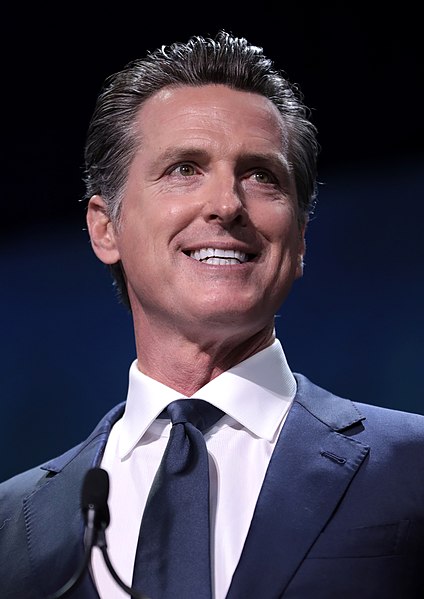
Elliot Rodger, Ed Kemper and Ted Kaczynski.
Photos from Quillette.

… Ted insisted on the proper use of the idiom, “You can’t eat your cake and have it, too”. Ted rejected the common and logically fraught version: “You can’t have your cake and eat it, too”. Indeed, you can. You must have your cake if you are to eat your cake. You cannot have your cake once you’ve eaten your cake.

That turn of phrase helped F.B.I agents snare Ted. His sister-in-law read his essay, recognised the writing style, and the peculiar diction, and then grassed him up to the rozzers.

For the record, this may be the only point of agreement I have with that noted austere scholar, although I’ve never read any of his writings to find out.

Another amusing incident involved children taking the Mickey out of ultra-progressive teachers in British schools:

Last week, schoolchildren in Sussex dropped themselves into the soup after suggesting that their fellow classmate is not actually a cat.

Two thirteen-year-old girls at Rye College were told they “should go to a different school” if they didn’t believe that a girl could identify as a cat.

During a “life education” class, the pair said there was “no such thing as agender” and: “If you have a vagina, you’re a girl, and if you have a penis, you’re a boy — that’s it.”

When they queried how someone could identify as a cat, the pair were blasted for questioning their classmate’s identity.

An investigation found children at schools across the land now identify as dinosaurs and horses. Another often dons a cape and demands to be acknowledged as a moon. Another identifies as Bambi.

After the hysteria simmered, it became obvious what was going on here. And it too became obvious that this is a good thing.

Reader, these children are taking the Mickey.

When confronted with obvious nonsense held by their preachy, supposedly superior teachers, these kids cannot resist mocking them to a nub.

After all, if one can identify as whatever one wants then that includes anything one wants. For teenagers primed with mischief, this is just too good a brew not to sup on a daily basis.

And it is a promising sign. Ridicule, the sharp-elbowed sister of truth, is essential to all progress. Clearly, these kids are unafraid to think for themselves and are determined to see that which is beyond their own nose.

Perhaps this is the beginning of the end of what almost everybody knows to be patent nonsense. As history assures us, once something becomes a laughingstock it soon dies of ridicule.

As James Thurber put it, that which cannot withstand laughter is not a good thing.

Fifty years after The Princess Bride was published

Filed under: Books, Humour, Media, USA — Tags: , , , — Nicholas @ 03:00

William Goldman’s novel The Princess Bride was not a blockbuster, nor did the movie adaptation get a huge box office when it released in 1987. Yet despite apparent early mediocrity, it became a cult classic. It’s now fifty years after the book came out, and Kevin Mims has a look back at both the novel and the movie:

Even by the eccentric standards of fantasy literature, William Goldman’s 1973 novel The Princess Bride is extremely odd. The book purports to be an abridged edition of a classic adventure story written by someone named Simon Morgenstern. In a bizarre introduction (more about which in a moment), Goldman claims merely to have acted as editor. Unlike Rob Reiner’s much-loved 1987 film adaptation, the book’s full title is The Princess Bride: S. Morgenstern’s Classic Tale of True Love and High Adventure, The “Good Parts” Version. Yes, all that text actually appeared on the cover of the book’s first hardcover edition (all but the first three words have been scrubbed from the covers of most subsequent editions).

In the 1990s, I worked at a Tower Books store in Sacramento. Every few months, someone would come into the store and ask if we had an unabridged edition of S. Morgenstern’s The Princess Bride. The first time this happened, a younger colleague who had worked there longer than I had told my customer, “The Princess Bride was written by William Goldman. There is no S. Morgenstern. Goldman made him up.” The customer wasn’t convinced. “It’s metafiction,” my colleague explained. “A novel that comments on its own status as a text.” When the customer had left, my colleague told me that a lot of people still believe there is an original version of the novel available somewhere, written by Morgenstern. Having fallen in love with the story via the Hollywood film, they were now looking for the ur-text.

Although I was a big fan of William Goldman, I had never read The Princess Bride. My wife and I saw the film when it first appeared in American theaters, and we have rewatched it several times since on VHS and DVD. Only about 10 years ago did I actually get around to reading the novel. And when I did, I found myself sympathizing with all those people who still believe that, somewhere in the world, there exists an unedited edition.

In his introduction, Goldman tells us that S. Morgenstern was from the tiny European nation of Florin, located somewhere between Germany and Sweden, which is where the story’s action takes place. Such a place never existed, but it’s not surprising that many 21st-century American readers don’t know the names of every current and former European kingdom. European history is littered with microstates that rose briefly and then vanished without leaving much of a trace. Back in the 1990s, before Internet access became commonplace, confirming the existence of a small defunct European statelet would have involved a trip to the library.

But readers in the 1970s might have been more alive to Goldman’s ruse. Back then, metafiction was all the rage. John Barth became a literary superstar (among the academic set, anyway) with books like The Sot-Weed Factor (which, like The Princess Bride, is a fantastical comic adventure supposedly written by a fictional author) and Giles Goat-Boy (the text of which, Barth writes in the foreword, was said to have been written by a computer). In 1983, Goldman would publish a second novel behind the Morgenstern pseudonym, titled The Silent Gondoliers, but this time he removed all mention of himself, even from the copyright page.

QotD: We won’t be seeing any rebooted TV shows from the 1990s

Filed under: Government, Humour, Media, Quotations, USA — Tags: , , , , , — Nicholas @ 01:00

… most 1990s entertainment would be impossible to “reboot” now, simply because so much of it presumes a baseline level of social and especially governmental competence. Take The X-Files, for instance. The “hot take” on the show back then was that it reflected our widespread social unease with an all-powerful government. The truth is out there!

Thirty years on, we can only dream of a government competent enough to cover up contact with extraterrestrials. As someone remarked at Z Man’s the other day, our government is now so retarded, Eric Swalwell — a high-ranking member of the House intelligence committee and putative presidential candidate — couldn’t successfully bone a hooker. Sorry, gang, the aliens won’t be stopping by; they only want to make contact with intelligent life.

Severian, “Random Thoughts”, Rotten Chestnuts, 2020-12-17.

June 24, 2023

Canada’s Online News Act already impacting news delivery for smaller outlets

Filed under: Business, Cancon, Law, Media — Tags: , , , — Nicholas @ 04:00

A local site I use regularly has already begun to feel the negative effects of the federal government’s Online News Act (aka Bill C-18):

Durham Radio News (DRN) doesn’t normally post editorial content, but when local news is being attacked we refuse to stay silent.

Bill C-18 is now law and will have a very negative impact on local independent newsrooms such as DRN.

The bill forces major tech companies such as Google and Meta to pay news outlets for content.

The vast majority of referrals to our DRN site come from Facebook and Google.

Both platforms have been instrumental in growing our audience.

Despite multiple warnings from Meta and Google that they would block news, the Liberal government proceeded with Bill C-18.

It’s now law and in a statement Meta says news will no longer be available on Facebook and Instagram.

Google is expected to follow suit.

Both tech giants have publicly said they don’t make much money off links to news stories so it doesn’t make financial sense for them to pay news providers.

Prime Minister Justin Trudeau called their threats to remove news a bullying tactic and said it will not work with his government.

It really appears the Liberals thought they were bluffing, we now know they were not.

DRN has been trying to get our voices heard for months on the negative impact this bill would have on our business.

We were drowned out by larger media outlets who would stand to benefit from this bill.

We will not be naming other outlets and we don’t begrudge the financial help they are already receiving.

Meta provides funding through fellowships with some media partners, and it is these outlets that became greedy and were asking for more.

For them it doesn’t matter if they get kicked off social media platforms.

For us it will make a huge impact.

June 23, 2023

From Operation Barbarossa in 1941 to the disinformation and cover-up over the origins of the Wuhan Coronavirus

Chris Bray outlines the utterly amazing situation between the Soviet Union and Nazi Germany on the eve of Hitler launching Operation Barbarossa — where Stalin refused to believe that Hitler would attack Russia despite overwhelming evidence from many sources — to the parallel situation over Covid:

Several sources quite specifically reported to the Soviet government that the Germans would invade around dawn on June 22. Their reports can be found in the Soviet archives in a “folder of dubious and misleading reports”. Then, shortly before dawn on June 22, Germany invaded the Soviet Union. Military leaders on the border called in reports of the invasion, and the people they talked to in Moscow declined to believe them. Soviet border troops held their fire, seeing Germans while being ordered to understand that no true invasion could possibly be underway. Stalin knew better, and contradicting Josef Stalin was known to be a fatal mistake. Achieving an entirely avoidable surprise, the Germans destroyed much of the Soviet air force on the ground, parked wingtip-to-wingtip for the convenience of the invader’s bombers.

[…]

An invasion that could have been met with brutal severity from the first moment instead achieved considerable initial success against a supine nation because the Soviet leader, and the chain of subordinates beneath him who were forced to adopt his conception of facts and truth, assumed that things they didn’t wish to believe constituted disinformation. Millions of lives were wasted for that illusion. A society that categorizes inconvenient truths in this way is committing a form of suicide, hiding from hard facts that demand acknowledgment.

Now: In 2021, the lab leak theory was a disgusting lie with “racist roots”.

In June of 2023, the, uh, first people who got sick with Covid turn out to have been, uh, scientists at the lab in Wuhan. BUT THEY PROBABLY HAD SOME BAT SOUP AT THE WET MARKET, IS WHY, or something.

Stupid conspiracy theorists, you people are such MORONS, do you actually bel— okay, that one’s true too.

We’ve somehow developed an industry of professional information barriers, dimwitted parasitical human garbage whose sole function in life is to prevent understanding by pasting “disinformation” stickers on things that you’re not supposed to know.

June 22, 2023

Any news about weather or climate is bad news

Filed under: Cancon, Environment, Health, Media, USA — Tags: , , , , , — Nicholas @ 03:00

The transition of weather from merely reporting on weather conditions and relaying (somewhat) authoritative forecasts is pretty much complete, as now every change in the weather pretty much has to be linked to the dreaded anthropogenic climate change. New York City’s recent poor air quality due to Canadian wildfires highlights a change they haven’t been pushing — how much better air quality in major cities has become:

Earlier this month, as wildfires ravaged Canada, the Northeastern United States experienced heavy air pollution problems from the smoke.

The out of control fires and subsequent pollution is a tragedy, certainly. But the fact that a low-visibility New York City was national news highlights how much things have changed.

Pollution has dramatically declined over the past few decades. To get a clear picture of how much, look at this graph.

This shows the number of days air quality is considered to be at “unhealthy levels” by the US government in seven major metros in the U.S.

All seven metros have improved their air quality since 1980. This is good news!

In the NYC metro, nearly 300 days in 1980 had unhealthy air quality. Today it’s less than 50.

So what’s going on here? Well, some might argue regulation is the primary source. It’s certainly possible that environmental regulations in the end of the 20th century resulted in less pollution. As our technology has improved, we’ve gained the ability to police people polluting the air of their neighbors. But this isn’t the full story.

June 18, 2023

Brendan O’Neill’s new book, A Heretic’s Manifesto

Filed under: Books, Britain, Media, Politics — Tags: , , , , , — Nicholas @ 05:00

This is an extract from A Heretic’s Manifesto thanks to Spiked:

Words hurt, they say. This is the ideological underpinning to so much censorship today – the idea that words wound, as a punch might wound. The imagery of violence is deployed in almost every call for censure in the 21st-century West. Speech has been reimagined as aggression, hence “microaggressions”. People speak of feeling “assaulted” by speech. “Words, like sticks and stones, can assault; they can injure; they can exclude” – that’s the thesis of Words That Wound, an influential tome published in 1993. Activists claim to feel “erased” by controversial or disagreeable utterances. Trans campaigners speak darkly of “trans erasure”, as if words from the other side of the divide, the speech of gender-critical feminists, might contain that most awesome and nullifying power of genocide.

Words make us feel “unsafe”, people say. Witness the rise and rise of Safe Spaces on university campuses, designed to ensure students’ psychic security against the terrible threat of their hearing an idea they disagree with. Safe Spaces recreate the state of childhood, complete with colouring books and ice cream, speaking to how determinedly some long to retreat from the adult world of hurtful chatter and brickbats.

The United Nations wrings its hands over “hate speech and real harm” (my emphasis). The “weaponisation of public discourse for political gain” can lead to “stigmatisation, discrimination and large-scale violence”, it says. Better keep a check on those hurtful words. One US university even maintains a list of “words that hurt“. It includes the phrase “You guys”. That scandalous utterance “erases the identities of people who are in the room” and “generalise[s] a group of people to be masculine”. Shut it down. Silence that act of violence.

Both the formal and informal punishment of words rests on the belief that they can wound. Laws in Europe claim to guard people from speech that is alarming, distressing, hurtful. The overlords of social media censor speech for “the wellbeing of our community“. Everywhere the cry goes up: words injure, they can cut like a knife, they can be used as “weapons to ambush, terrorise, wound, humiliate and degrade“. And just as the law protects us from such dreadful things when they are done to our bodies with fists and kicks, surely it should also protect us from them when they are done to our minds with words and ideas. Surely our psychic wellbeing should be accorded as much respect by the powers-that-be as our physical integrity is.

The temptation of many of us who believe in freedom of speech, in the liberty of all to utter their beliefs and ideas, is to damn this claim that “words hurt” as a libel against public discourse. As a slippery untruth that is cynically designed to depict words as all-powerful, as containing so much energy, so much heat, that they can lay waste to self-esteem and even make us fret over erasure, over being wiped out entirely by that sore comment or that disturbing idea. Actually, we often say, words are just words. They’re not sticks, they’re not stones, they’re words. They won’t kill you, they won’t hurt you, you’ll be fine. They say words are a force of nature like no other, we say: “Relax. It’s just speech.”

We need to stop doing this. We need to stop countering the new censors by accusing them of exaggerating the power and the potency of words. We need to stop responding to their painting of speech as a dangerous, disorientating force by defensively pleading that words don’t wound because they’re just words. We need to stop reacting to their branding of speech as a weapon, as a tool of ambush and degradation, by effectively draining speech of its power and saying: “It’s only speech.” As if speech were a small thing, almost an insignificant thing, more likely to contain calming qualities than upsetting ones, more likely to help us overcome conflict rather than stir it up, more likely to offer a balm to your soul than to stab at it as a knife might stab at your body.

For when we do this, we play down the power of words. And that includes the power of words to wound. Words do wound. It’s true. Words hurt people, they hurt institutions, they hurt belief systems. Words make churches tremble and ideologies quake. Words inflict pain on priests and princes and ideologues. Words upend the social order. Words rip away the comforting ideas people and communities might have wrapped themselves in for decades, centuries perhaps. Words ambush the complacent and degrade the powerful. Words cause discord, angst, even conflict. Isn’t every revolution in history the offspring of words? Of ideas? Words do destabilise, they do disorientate. People are right to sometimes feel afraid of words. Words are dangerous. When they say words wound, we should say: “I agree.”

Today, “‘gender-critical’ is a jargonny way of describing the ordinary views held by the vast majority of the planet’s population”

Filed under: Australia, Media, Politics — Tags: , , , , , , — Nicholas @ 03:00

The Quillette Editorial Board on the startling difference between LGBT activists’s views and the default view of most of humanity:

“What is feminism? Who is it for? Can men be feminists, or only allies? What is intersectionality, and must feminism be intersectional?” These are some of the questions tackled in a University of Melbourne course on the philosophy of feminism, formally designated in the university’s handbook as PHIL20046. Prospective students are informed that course content will include “a range of feminist theories, including both radical feminism and liberal feminism, and from all four ‘waves’ (with an emphasis on second wave feminism). We’ll also consider a range of applied topics like prostitution and pornography, inclusion of transwomen, theories of gender, gendered social norms, and reproductive rights.”

Content that is not included in PHIL20046, on the other hand, includes white supremacist propaganda, neo-Nazi talking points, and an approving literary exegesis of Mein Kampf. This might seem like an odd detail to note. But it is important to state for the record, given the profusion of stickers and posters recently plastered around the University of Melbourne campus, accusing the course instructor, Holly Lawford-Smith, of crafting her syllabus for the exclusive benefit of “fascists”.

Those who are familiar with the mantras of “intersectional feminism” likely won’t require an explanation for the quantum logic leap by which feminist philosophizing might be casually equated with the doctrines of Hitler, Mussolini, and Franco. But for those unschooled in such matters, the basis of complaint here is that Lawford-Smith is a “gender-critical feminist” — a term indicating one’s belief that biologically rooted differences between men and women are real; and so must be considered when marking the boundaries of female-protected spaces, such as women’s sports leagues, prisons, and domestic-violence centres.

Which is to say that “gender-critical” is a jargonny way of describing the ordinary views held by the vast majority of the planet’s population. And it speaks to the shocking extent of academia’s radicalization that Lawford-Smith’s belief in biological science would be regarded as the academic equivalent of a Nazi salute.

Gender-critical feminists trace their roots to the radical-feminism movement of the 1960s. They often focus on the pernicious effects of gender stereotypes; and critique the industries that profit from women’s pain, such as pornography. This kind of analysis focuses attention on the hardships that have historically gone along with existing as a woman. It also focuses attention on the real policy solutions required to address such hardships, including, where necessary, the maintenance of safe single-sex spaces. As one might assume, gender-critical feminists typically have little time for men who, having recently announced the discovery of some soul-like spark of womanhood within them, commence hectoring women about the imperfect nature of their intersectional feminism.

Gender crits speak their mind at their professional peril. In 2021, Kathleen Stock, a British analytic philosopher, was forced to abandon her academic position at Sussex University following a prolonged harassment campaign. Like other prominent gender-critical intellectuals, Stock is perfectly forthright about her support for the rights of trans people to live, study, and work as they please, free from discrimination and harassment — while also being equally forthright about the plain fact that transwomen are not literal women. As a consequence of expressing such (again, widely held) views, Stock was advised to install CCTV cameras in her home and to venture onto campus only when accompanied by bodyguards.

June 16, 2023

Blackadder at 40

Filed under: Britain, History, Humour, Media — Tags: , , , , — Nicholas @ 03:00

Ed West remembers his first encounter with the brilliant, devious, and hilarious Edmund Blackadder:

What do these famous figures from British history all have in common? Elizabeth I, George III, George IV, Victoria and Albert, the Duke of Wellington, Dr Samuel Johnson, Sir Walter Raleigh, Sir Douglas Haig, Richard III, er Richard IV, William Pitt the Younger, William Pitt the Even Younger …

They’re all, of course, characters in the greatest tale of our island story, a giant rollercoaster of a comedy in four sizzling chapters, one that was first shown 40 years ago today.

New British stamps issued on the 40th anniversary of the BBC comedy series Blackadder

I was probably always going to love history — my dad was obsessed with it — but Blackadder helped imprint the idea that the past can be one great black comedy. History is funny because people’s behaviour is often quite irrational, or spiteful, or motivated by petty reasons that contrast with their high-minded principles — and no doubt we will seem the same to future generations, too.

That was the whole idea behind Blackadder because, as creator Richard Curtis points out in a documentary screened tonight on Gold, he’s “a modern person in the stupidity of ancient times”.

Yet when the idea was first proposed by Curtis and Rowan Atkinson, they were advised that there are two sitcom premises that can never work — shows set in heaven and hell, or those in historical settings. And Blackadder was lucky to survive its first season.

Atkinson and Curtis had met at Oxford, going on to work together on Not the Nine O’Clock News, where they’d met producer John Lloyd. The two men were inspired by Fawlty Towers, but were also determined to avoid any comparison with John Cleese and Connie Booth’s great creation, so decided on a setting as far removed from a south coast hotel as possible.

Aired on 15 June, 1983, The Black Adder was quite lavish. There were location shots in places like Alnwick Castle and huge amounts spent on costumes and horses. Curtis says that one of the hats Atkinson wore was worth more than he was paid for writing the episode. It featured such big names as Brian Blessed and Peter Cook, the godfather of alternative comedy whose presence granted the show its place in the apostolic succession. But, while the first series has its moments, it was flawed; the original Blackadder was a weasel-like and pathetic figure, and less clever than his sidekick Baldrick. The comedy didn’t exactly work.

I was fortunate enough to encounter the second series, set in Elizabethan England, before I saw any of the first series. The original has its funny moments, but Ed is quite correct that it’s less than the sum of its parts. Brian Blessed steals every scene he’s in (as always), and Peter Cook’s portrayal of Richard III is great. The rest … is kinda funny if you know a bit of the history. Thankfully, there was more to come.

Blackadder II aired at the start of January 1986, and had a much smaller budget and a simpler set up — and it was far, far funnier, the protagonist no longer a conniving weasel but a court sycophant with Baldrick and Percy as comedy punchbags.

“Well, it is said, Percy, that civilised man seeks out good and intelligent company, so that through learned discourse he may rise above the savage and closer to God. Personally, however, I like to start the day with a total dickhead to remind me I’m best.”

(Fans of comedy shows who quote the lines endlessly can become quite tedious but, well, tough.)

Or: “The eyes are open, the mouth moves, but Mr. Brain has long since departed, hasn’t he, Percy?”

Towards Baldrick he is somewhat more indulgent, telling him that “Thinking is so important“.

“I’ve been in your service since I was two and a half my Lord,” his dogsbody protests upon being thrown out: “Well that is why I am so utterly sick of the sight of you.”

Elton also thought the medieval era to be too squalid and wanted Season 2 set in the “sexier” Elizabethan era (and indeed Edmund’s outfit is rather sexy, as Percy might put it).

June 15, 2023

Sarah Hoyt objects to being an “imaginary creature”

Filed under: Media, Politics, USA — Tags: , , , , , , , — Nicholas @ 03:00

Recent revisions to the quasi-official dictionary of the woke English language seem to have classified individuals like Sarah as “non-men”:

I was born female in a country that was profoundly patriarchal and, back then, patriarchal without guilt. So, it was acceptable to make jokes about women being dumber than men. And it was acceptable for teachers to assume you were dumb because female.

Most of these things amused me. It was always fun in mixed classes after the first test to watch the teacher look at my test and at the boys in the class trying to figure out what parent was so cruel as to name their son a girl’s name.

I enjoyed breaking people’s minds. And once I was known in a group or place, I was not treated as inferior. The only things that truly annoyed me were the ones I thought were arbitrary restrictions, like not going out after 8 pm alone. Took flaunting them a few times to find out they weren’t arbitrary. Or rather, they were arbitrary but since culture-wide flaunting was dangerous, and I was lucky not to pay for the flaunting with life or limb.

Yes, I went through a phase of screaming that I was just as good as any man. Then realized it was true and stopped screaming it.

Then got married and had kids, and realized I was just as good but different. I could do things men couldn’t do. Parenthood is different as a woman. And none of it mattered to my worth, just like being short and having brown hair doesn’t make me inferior to tall blonds. Just different.

And even though I’m a highly atypical woman, at the beginning of my sixth decade, I find myself completely at peace with the fact I am a woman and not apologetic at all for it.

Imagine my surprise when I found out women don’t exist. There’s only man and non-man.

This nonsense, from here, has got to stop. When you get so “inclusive” you’re excluding an entire biological sex (but curiously not the other) you might want to re-evaluate your principles. Also, your sanity.

Yes, I know, saying this makes me a TERF, which is nonsense. Maybe a TERNF, since I’ve not called myself a feminist since I was 18 and realized feminism aimed for making women “win” at men’s expense. It wasn’t aiming for equality but for “equity” and since I never needed a movement to outcompete males, I decided it was spinach and to h*ll with it.

Also I’m not trans-exclusionary. If women don’t exist, what the heck are men who are trans trans TO? Non-man? Uh … what? What are drag queens imitating? Is it just non-man?

QotD: Incels

Filed under: Health, Media, Quotations, USA — Tags: , , , — Nicholas @ 01:00

Incidentally, I am thoroughly convinced that a majority of self-described incels are men who could find meaningful and fulfilling sexual and romantic success, both short-term and long, but who have developed such a wildly unrealistic idea about what actual human women look like that their standards are laughably high. And it’s easy to make fun of that, but I also think that the conditioning inherent to constantly looking at filtered and photoshopped pictures is powerful.

Freddie deBoer, “Some Reasons Why Smartphones Might Make Adolescents Anxious and Depressed”, Freddie deBoer, 2023-03-07.

June 14, 2023

Wednesday web-droppings

Filed under: Britain, Economics, Education, Media, Military, Politics, USA — Tags: , , , — Nicholas @ 22:22

A few items that I didn’t feel required a full post of their own, but might be of interest:

“‘Misogyny’ is overtaking ‘fascist’ in the ‘I Don’t Own a Dictionary’ championships”

Filed under: Europe, Media, Politics — Tags: , , , , — Nicholas @ 03:00

Christopher Gage suspects that George Orwell lived in vain:

In his essay, “Politics and the English Language”, George Orwell lamented the decline in the standards of his mother tongue.

For Orwell, all around him lay the evidence of decay. Orwell argued sloppy language came from and led to sloppy thinking:

    A man may take to drink because he feels himself to be a failure, and then fail all the more completely because he drinks. It is rather the same thing that is happening to the English language […] It becomes ugly and inaccurate because our thoughts are foolish, but the slovenliness of our language makes it easier for us to have foolish thoughts.

With his effortless knack for saying in plain English the resonant and enduring, Orwell’s dictum is obvious as soon as uttered.

Orwell wrote that back in 1946. What would the author of Animal Farm and 1984 make of today’s standards?


“Misogyny” is overtaking “fascist” in the “I Don’t Own a Dictionary” championships.

Spend five minutes online, and you’ll encounter words defined in their starkest definitions. Words like “misogyny”, “misandry”, and “narcissist”, once possessed specific meanings. Now they mean whatever the speaker claims they mean.

The beauty of the English language lies in its precision. Sadly, those who populate the land which spawned the English language wield the language with all the grace and precision of a meat hook.

According to The Guardian, the recent Finnish election was suppurated with misogyny and fascism.

In that election, the one debased in misogyny and fascism, the losing incumbent Sanna Marin, a woman, won more seats in parliament than in 2019. The three candidates with the most votes — Riikka Purra, Sanna Marin and Elina Valtonen — were all women. Women lead seven of the nine parties returned to parliament — including the “far-right” Finns Party.

The Guardian didn’t permit reality to spoil a good headline.

As Orwell had it, “Fascism” is a hollow word. In the essay mentioned above, he said: “The word Fascism has now no meaning except in so far as it signifies ‘something not desirable’.” In modern parlance, the same applies to “misogyny”. “misandry”, “narcissism”, “gaslighting”, and just about every other buzzword shoehorned into a HuffPost headline.

June 13, 2023

Liberal woman frustrated she can’t find non-conservative but traditionally masculine men

Filed under: Media, Politics, USA — Tags: , , , , — Nicholas @ 05:00

Tom Knighton responds to a progressive woman’s lament:

Originally found on fark.com about 15 years ago, artist unknown.

    She is at a loss because she wants to be with a masculine man but doesn’t want to compromise her morals and values. She asks her followers if she is asking for too much when she requests a man she can be “equal” with while he still provides for her.

What she doesn’t seem to get is that it was women like her that basically destroyed manhood to the point that there’s little chance she’ll find a liberal guy with traditional values.

See, liberal men are basically obligated to take the subservient role. They’re required by their ideology to accept that the woman is just as capable — and obligated — to be at least an equal in providing for the family, if not the provider herself.

Failure to act according to this, at least in their minds, is to undermine the feminist values the left claims to hold so dear.

It didn’t have to be this way. It was always possible to empower women without trying to tear masculinity down, which is what has been happening.

Opening doors for women, for example, is one of those things guys used to do all the time. It wasn’t that women were somehow incapable of operating a doorknob. It was because it was just something a gentleman did.

Now, if a man opens the door for a woman, he’s taking a chance. Will she appreciate it or will she launch into a feminist diatribe about the patriarchy?

Leftist men already know which they expect, so they do no such thing. Guys with more of a traditional lean, however, can and will open that door because they’re not impressed with feminist screeching.

The surprisingly authoritarian reflexes of the “true” anti-authoritarian

Filed under: Government, Media, Politics, USA — Tags: , , , , — Nicholas @ 04:00

Chris Bray surveys the “anti-authoritarian” stances and actions of Professor Ruth Ben-Ghiat, a dedicated opponent of all things Trump:

I’ve called the NYU professor Ruth Ben-Ghiat, an “expert” on authoritarianism, an inversion blender, a narrative-producing machine with an astonishing gift for turning meaning upside-down. Your decision to drive north is ironclad proof that you intend to travel to the south! You’re spraying water on that fire to make it bigger! You gave me a sandwich because you want me to starve to death!

Currently, Ben-Ghiat’s frantic production of anti-authoritarian messaging on Twitter, the preferred platform of true intellectuals, is tightly focused on the dangerous authoritarianism of the megafascist Donald Trump, who is doing what all true authoritarians do: questioning and criticizing the government. Go stroll through Ruth Ben-Ghiat’s Twitter posts. It’s like having lunch with Felix Dzerzhinsky. Only the guilty and the fascist elements resist the cleansing power of the state and its gloriously pure-hearted investigative apparatus!

A suggestion up front from the maître d’hotel: What you’re about to consume is the filet mignon of dimwitted propaganda. Chew it slowly. Savor. Let’s start with a light appetizer, a mere retweet, to tease the ironic gustation:

Archie Bunker and Meathead have become one, united by the power of the Trump. If a prosecutor charges you, the case is airtight, full stop. Government never charges innocent people with crimes. To criticize a prosecutor is to oppose the rule of law, which can only be defended by the immediate presumption of guilt. Here, let’s try it out:

Prosecutors wouldn’t be charging Rick Perry with crimes if they didn’t believe they had an airtight case.

Prosecutors wouldn’t be charging Kyle Rittenhouse with crimes if they didn’t believe they had an airtight case.

Prosecutors wouldn’t be charging Tom Robinson with crimes if they didn’t believe they had an airtight case. Atticus Finch is an authoritarian!

This is why criminal defense lawyers are all so infamously right-wing, by the way. Especially public defenders.

[…]

Nothing says progressive anti-authoritarian like the sacralization of national security as a preeminent value. If government says that something has been done in the name of national security, you must accept it and support it without question. Or else you’re an authoritarian, doubting the state security apparatus. Fascists always do that.

There is, of course, a long and deeply established tradition on the American political left of criticism directed at the FBI and DOJ — and at federal law enforcement in general, and at law enforcement in general, and the “carceral state” — as hegemonic instruments. Historians and activists on the left have long viewed the FBI with political suspicion, and with reason.

Until pretty much right this instant, because Trump.

« Newer PostsOlder Posts »

Powered by WordPress