World War Two
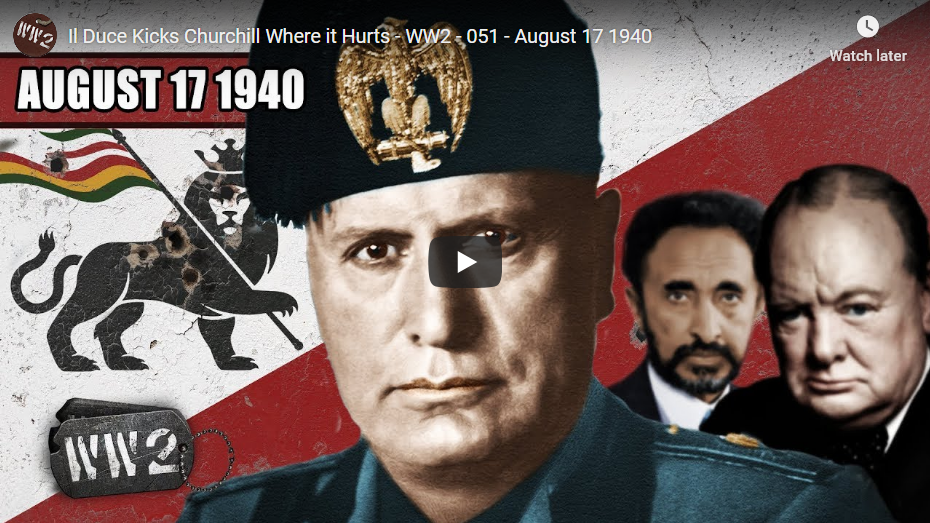
Published on 17 Aug 2019As the Battle of Britain reaches not seen before levels of intensity, one of the British colonies is lost to the Italians.
Join us on Patreon: https://www.patreon.com/TimeGhostHistory
Or join The TimeGhost Army directly at: https://timeghost.tvFollow WW2 day by day on Instagram @World_war_two_realtime https://www.instagram.com/world_war_t…
Join our Discord Server: https://discord.gg/D6D2aYN.
Between 2 Wars: https://www.youtube.com/playlist?list…
Source list: http://bit.ly/WW2sourcesWritten and Hosted by: Indy Neidell
Produced and Directed by: Spartacus Olsson and Astrid Deinhard
Executive Producers: Bodo Rittenauer, Astrid Deinhard, Indy Neidell, Spartacus Olsson
Creative Producer: Joram Appel
Post-Production Director: Wieke Kapteijns
Research by: Indy Neidell
Edited by: Iryna Dulka
Map animations: EastoryColorisations by Norman Stewart and Julius Jääskeläinen https://www.facebook.com/JJcolorization/
Eastory’s channel: https://www.youtube.com/channel/UCEly…
Archive by Screenocean/Reuters https://www.screenocean.com.Sources:
– Banda groups scan by Localcivis
– Freepngimg.com
– Original photograph of Simon Gauleiter by Mykemalone on Wikimedia Commons
– Membership card photo Photograph by Zinneke on Wikimedia Commons
– IWM: E 1168, E 4350, NA 1670A TimeGhost chronological documentary produced by OnLion Entertainment GmbH.
August 18, 2019
Il Duce Kicks Churchill Where it Hurts – WW2 – 051 – August 17 1940
AAI 2nd Gen SPIW Flechette Rifles
Forgotten Weapons
Published on 24 Jun 2019http://www.patreon.com/ForgottenWeapons
Cool Forgotten Weapons merch! http://shop.bbtv.com/collections/forg…
The SPIW program began in 1962 with entries from Colt, Springfield, AAI, and Winchester. The first set of trials were a complete failure, and both Colt and Winchester abandoned the project at that point. AAI pressed on, producing these second generation rifles – one for trials in 1966 and one after. Both are chambered for the XM-645 5.6x57mm single-flechette cartridge. Under testing, both showed multiple serious problems in reliability, noise, cook-offs, and accuracy. The company would struggle on for years continuing to develop the flechette rifle system, but would be ultimately unsuccessful.
Thanks to the Rock Island Arsenal Museum for allowing me access to film this very interesting rifle! If you are in the Quad Cities in Illinois or Iowa, the Museum is definitely worth a visit. They have a great number of small arms on display as well as an excellent history of the Rock Island Arsenal.
http://www.arsenalhistoricalsociety.o…
Contact:
Forgotten Weapons
PO Box 87647
Tucson, AZ 85754
August 17, 2019
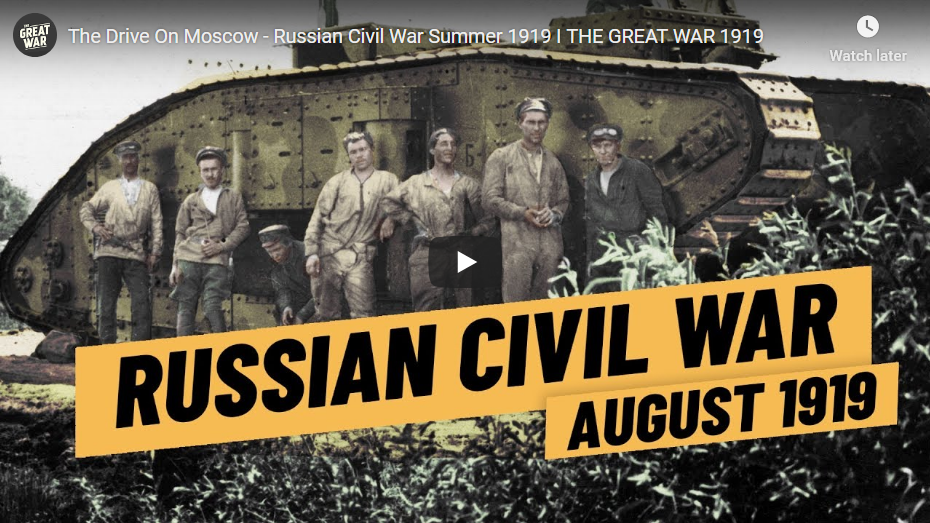
The Drive On Moscow – Russian Civil War Summer 1919 I THE GREAT WAR 1919
The Great War
Published on 16 Aug 2019Register for our free newsletter: https://realtimehistory.net/subscribe
The summer of 1919 was a pivotal moment in the Russian Civil War. Backed with Allied support the White movement went on the offensive in the East under Alexander Kolchak and in the South under Anton Denikin. However, the Bolsheviks were not wasting time either. They consolidated their power and got the Red Army into shape to crush the enemy once and for all.
» SUPPORT THE CHANNEL
Patreon: https://realtimehistory.net/patreon
Merchandise: https://realtimehistory.net/spreadshirt
Become a member: https://realtimehistory.net/join» BUY OUR SOURCES IN OUR AMAZON STORES
https://realtimehistory.net/amazon» SOURCES
Smele, Jonathan. The “Russian” Civil Wars 1916-1926 (London: Hurst, 2015).Makhno, Nestor. The Struggle Against the State and Other Essays. AK Press: Edinburgh & San Francisco, 1996.
Mawdsley, Evan. The Russian Civil War (New York: Pegasus Books, 2005).
Robert Gerwarth, The Vanquished. Why the First World War Failed to End, 1917-1923 (Penguin, 2017)
Sumpf, Alexandre. “Russian Civil War”, in 1914-1918 online. International Encyclopedia of the First World War. https://encyclopedia.1914-1918-online.
Mawdsley, Evan. “International Responses to the Russian Civil War”, in 1914-1918 online. International Encyclopedia of the First World War. https://encyclopedia.1914-1918-online…
Leonhard, Jörn. Der überforderte Frieden. Versailles und die Welt 1918-1923 (CH Beck, 2018).
Figes, Orlando. A People’s Tragedy. The Russian Revolution (London: The Bodley Head, 2017 [1996]).
Gilley, Christopher: “Makhno, Nestor Ivanovich”, in: 1914-1918-online. International Encyclopedia of the First World War, ed. by Ute Daniel, Peter Gatrell, Oliver Janz, Heather Jones, Jennifer Keene, Alan Kramer, and Bill Nasson, issued by Freie Universität Berlin, Berlin 2014-10-08 https://encyclopedia.1914-1918-online…
»CREDITS
Presented by: Jesse Alexander
Written by: Jesse Alexander
Director: Toni Steller & Florian Wittig
Director of Photography: Toni Steller
Sound: Toni Steller
Editing: Toni Steller
Mixing, Mastering & Sound Design: http://above-zero.com
Maps: Daniel Kogosov (https://www.patreon.com/Zalezsky)
Research by: Jesse Alexander
Fact checking: Florian WittigChannel Design: Alexander Clark
Original Logo: David van StepholdA Mediakraft Networks Original Channel
Contains licensed material by getty images
All rights reserved – Real Time History GmbH 2019
From the comments:
The Great War
7 hours ago
Register for our free newsletter and win $250 worth of our recommended history books: https://realtimehistory.net/win **Instead of paying Facebook, Twitter & Co. money for the possibility to reach you with our content, we’d rather get in touch with you directly and spend the money on history books and the production of the show.
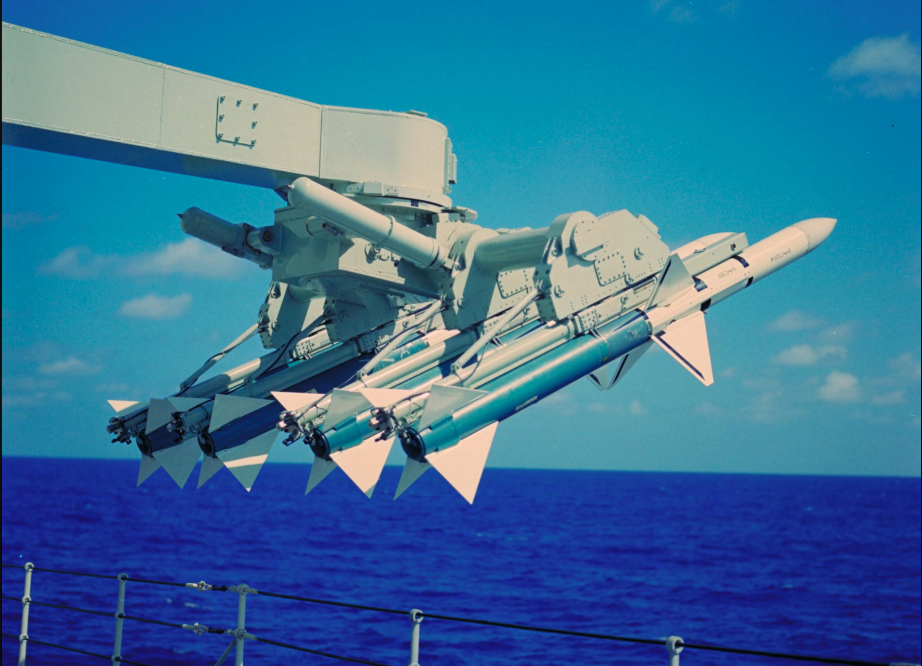
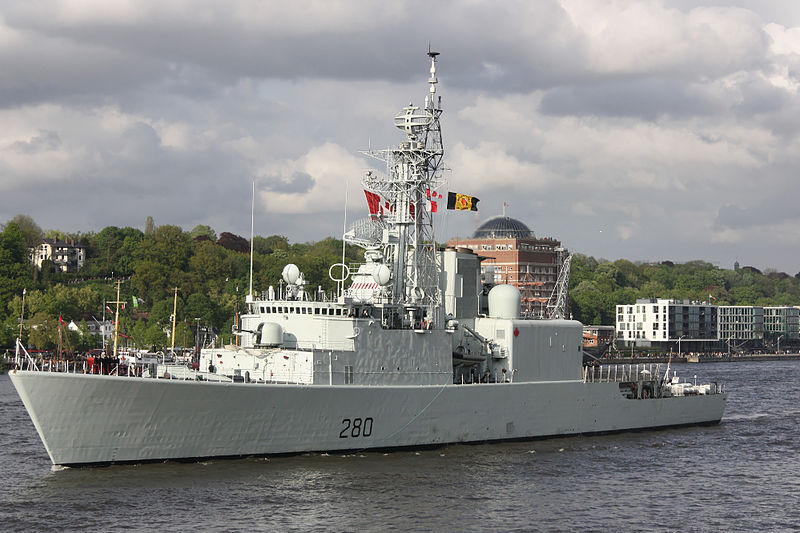
The “remarkably worthless” Sea Sparrow missile launchers on RCN Iroquois-class destroyers
Earlier this week, Tyler Rogoway posted a fascinating article about one of the original weapon systems installed on Royal Canadian Navy Iroquois-class destroyers. It was developed specifically for this class, and was eventually replaced with modern Mark 41 Vertical Launch Systems during the ships’ mid-life modernization refits:
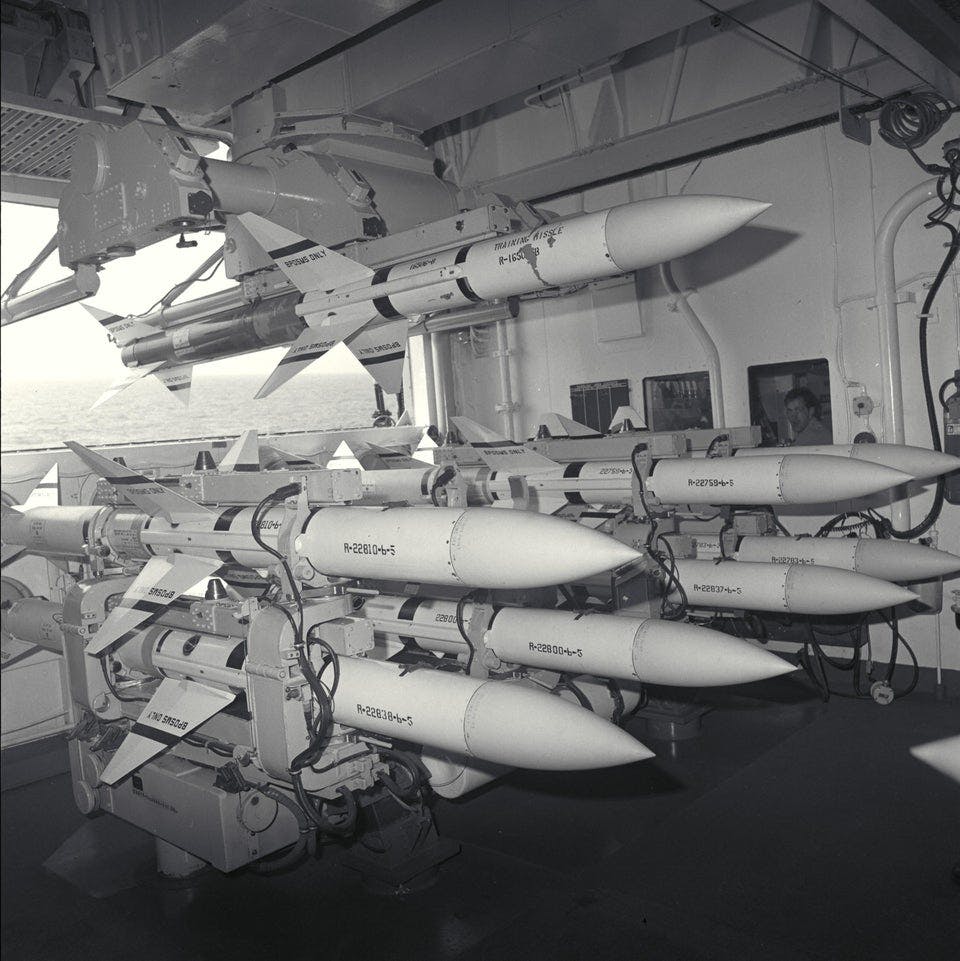
From manually aimed box launchers, to automated ones like the Mk29 still in use today, to vertical launch variants, the Sea Sparrow was adapted for many different launching methods. Yet the strangest had to the one found on Canada’s Iroquois class. About seven years ago, someone who had worked with RIM-7s on U.S. Navy vessels told me about how nuts the Canadian launch system was that he had seen demonstrated in the late 1980s. In fact, he said it was so clumsy and slow reacting, that it largely defeated the main purpose of the missile system, at least in a multitude of circumstances. “Remarkably worthless” was the way he described it. I had long forgotten about this exchange until recently when pictures of this exact system popped up on the always lively Reddit page r/Warshipporn. At first, when I saw the images I was flabbergasted as to how weird the setup was, then the memory of the conversation hit me. This is what my contact was talking about!
Four Iroquois-class destroyers were commissioned between 1972 and 1973 and all served until 2005, with the last example being retired two years ago, in 2017. They featured the MKIII Sea Sparrow system fitted inside their forward deckhouse, with doors that opened up on each side and overhead swing-arm launchers carrying four missiles each (eight in total, four on each side) that extended out from their garage-like enclosure that hung out off the side of the ship strangely when at the ready. The whole arrangement looks like something far from conducive to high sea state, not to mention rocket blast from the missiles, or a combat environment, for that matter. 32 missiles were carried in all, with twelve at the ready on each side, but reloading the system as a whole was a slow process.
In addition, it’s said that the Hollandse Signaal Mk22 Weapon Control System wasn’t really up to the task and just deploying the missiles and warming up their guidance systems could take minutes or longer. All of this is far from ideal for what is supposed to have been a fast-reacting point defense system capable of quickly fending off sea-skimming anti-ship missiles that arrive with little warning from over the horizon.
History Summarized: Malta
Overly Sarcastic Productions
Published on 16 Aug 2019Go to https://NordVPN.com/overlysarcastic and and use code
OVERLYSARCASTICto get 75% off a 3 year plan and an extra month for free. Protect yourself online today!Malta, the Island of A Dozen Empires, chilling in the middle of the Mediterranean Sea, is one of the most social butterflies in History. Having played host to or fought against every major power in the Mediterranean, this island bears a gorgeous architectural and linguistic record of its past, and is still a treasure to behold in the modern day. I’ve covered a lot of nations and empires in my time here, but between the rich cultural blends, the overflowing artistic treasures, and the Still-In-One-Piece-ness of it all, Malta may have one of the strongest claims to being the Winner of History in my book. What’s so special about Malta? Watch and find out!
NOTE on 7:00 – 7:08 — I’m cheating the time-scales a little here. This church, the Rotunda of Mosta, was actually built mid 1800s. Malta’s lavish church construction continued nearly unabated from C. 1565 to the modern day, so I use this example here — but St Paul’s Co-Cathedral in Valletta, shown from 6:27-6:33 is a better example of pure original Baroque construction. Honestly, all of the churches in Malta deserve a look if you’re curious.
PATREON: https://www.Patreon.com/OSP
DISCORD: https://discord.gg/sS5K4R3
The British Empire in retrospect
It’s been fashionable to dismiss the British Empire as a positive force in history for about 100 years (partly in reaction to the losses during the First World War), but Casey Chalk reviews a recent book that counter-cherry-picks the facts to show it wasn’t all an authoritarian dystopia and cultural wasteland:
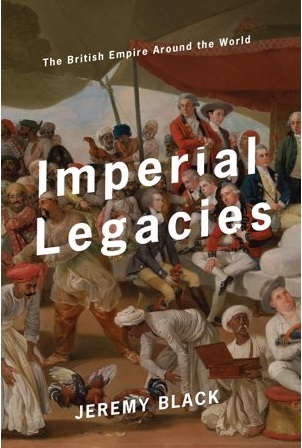
… the central argument of University of Exeter professor of history Jeremy Black’s new book Imperial Legacies: The British Empire Around the World, which, according to the book jacket, is a “wide-ranging and vigorous assault on political correctness, its language, misuse of the past, and grasping of both present and future.” The imperial legacy of Great Britain is also, in a way, an instructional lesson for the United States, which, much like the British Empire of the early to mid-20th century, is experiencing a slow decline in influence.
As a former history teacher who has visited many former British colonies in Africa and Asia, I’ve been well catechized in how British imperialism is interpreted. The British, so we are told, were violent aggressors and expert political manipulators. Using their technological superiority and command of the seas, they subjugated cultures across the globe, applied the “divide and rule” policy to set ethnic and linguistic groups against one another, extracted resources for profit, and stole cultural artifacts that now collect dust in their museums. Thus, so the story goes, blame for many of the world’s current problems lies squarely at the feet of the British Empire, for which she should still be paying reparations.
Yet, Black notes, “there is sometimes a failure to appreciate the extent to which Britain generally was not the conqueror of native peoples ruling themselves in a democratic fashion, but, instead, overcame other imperial systems, and that the latter themselves rested on conquest.” Take, for example, the Indian subcontinent, which was a disparate collection of kingdoms and competing empires — including Mughals, Sikhs, Afghan Durranis — during the early centuries of British intervention. All of these were plenty brutal and intolerant towards those they subjugated. Moreover, Hinduism promoted not only the oppressive caste system, but also sati, or the ritual of widow burning, in which widows were either volitionally or forcibly placed upon the funeral pyres of their deceased husbands. It was the British who stopped this practice, and others, with such legislation as the Hindu Widows’ Remarriage Act of 1856, the Female Infanticide Prevention Act of 1870, and the Age of Consent Act of 1891.
Nor has India been able to escape the same imperialist tendencies as the British. Just ask the Sikhs, whose demands to “free Khalistan” have gone unheeded by New Delhi, and who in 1984 suffered great atrocities at the hands of the Indian military and civilian mobs. Or ask Indian Muslims, of whom more than 1,000 died in the 2002 Gujarat riots and who suffer increasing persecution under the ruling Hindu nationalist party BJP. There’s also not a few folks in Kashmir who happen to call the Indians imperialists. One might note here that many of the problems in former European colonies are not solely, or even largely the result of European imperialism, but can be attributed to many other causes, population increase, modernization, and globalization among them. Corruption in some former colonies, including India, is almost certainly higher than it was during British rule.
India is only one such example where the modern narrative ignores both historical and contemporary realities, including, one might add, the fact that India as it now exists is largely a creation of British colonial efforts. It was Britain that united a disparate group of people into a single cohesive unit with a national identity. Indeed, as Black rightly notes, “modern concepts of nationality have generally been employed misleadingly to interpret the policies and politics of the past.”
This is further complicated by the fact that in many places, especially India, “alongside hostility, opposition and conflict,” between the imperialists and the colonized, “there was inter-marriage, intermixing, compromise, co-existence, and the process of negotiation that is sometimes referred to as the ‘middle-ground.'” One need look no further than the First and Second World Wars, in which more than 1.5 million and approximately 2.5 million Indians, respectively, fought willingly and bravely in the service of the British crown.

August 16, 2019
Rule Britannia, Britannia Rules the Salt | BETWEEN 2 WARS I 1930 Part 1 of 1
TimeGhost History
Published on 15 Aug 2019After the Great War, the British empire is at its peak in terms of population and size. However, resistance against colonialism is starting to brew in the British colonies and dominions.
Join us on Patreon: https://www.patreon.com/TimeGhostHistory
Hosted by: Indy Neidell
Written by: Spartacus Olsson and Francis van Berkel
Directed by: Spartacus Olsson and Astrid Deinhard
Executive Producers: Bodo Rittenauer, Astrid Deinhard, Indy Neidell, Spartacus Olsson
Creative Producer: Joram Appel
Post-Production Director: Wieke Kapteijns
Research by: Francis van Berkel
Edited by: Wieke Kapteijns
Sound design: Iryna DulkaPortrait Colorizations by Daniel Weiss.
Sources: National Portrait Gallery, Library and Archives Canada, Jenny Scott
A TimeGhost chronological documentary produced by OnLion Entertainment GmbH.
“White Death” – Finnish Sniper Simo Häyhä – Sabaton History 028 [Official]
Sabaton History
Published on 15 Aug 2019One of the deadliest snipers ever to roam the face of the earth was Simo Häyhä, who fought on the Finnish side during the Winter War in 1939 and 1940. He was also known as White Death, as he killed an estimated 500 Russians in the cold snowy winter.
Support Sabaton History on Patreon: https://www.patreon.com/sabatonhistory
Watch our episode on “Talvisota” here: https://youtu.be/6grVeu3EWis
Listen to Coat of Arms (where “White Death” is featured):
CD: http://bit.ly/CoatOfArmsStore
Spotify: http://bit.ly/CoatOfArmsSpotify
Apple Music: http://bit.ly/CoatOfArmsAppleMusic
iTunes: http://bit.ly/CoatOfArmsiTunes
Amazon: http://bit.ly/CoatOfArmsAmzn
Google Play: http://bit.ly/CoatOfArmsGooglePlayHosted by: Indy Neidell
Written by: Markus Linke and Indy Neidell
Directed by: Astrid Deinhard and Wieke Kapteijns
Produced by: Pär Sundström, Astrid Deinhard and Spartacus Olsson
Creative Producer: Joram Appel
Executive Producers: Pär Sundström, Joakim Broden, Tomas Sunmo, Indy Neidell, Astrid Deinhard, and Spartacus Olsson
Maps by: Eastory
Edited by: Iryna Dulka
Sound Editing by: Marek KaminskiEastory YouTube Channel: https://www.youtube.com/channel/UCEly…
Archive by: Reuters/Screenocean https://www.screenocean.com
Music by Sabaton.Sources: SA-Kuva, Finish wartime archive.
An OnLion Entertainment GmbH and Raging Beaver Publishing AB co-Production.
© Raging Beaver Publishing AB, 2019 – all rights reserved.
From the comments:
Sabaton History
2 days ago (edited)
This episode is one of the most frequently requested songs for Sabaton History. And while the story of Simo Häyhä is a compelling story, the Winter War was about much more than the deadliest sniper of World War Two. We have made an earlier episode about the Winter War, based on the Sabaton Song “Talvisota”, which is Finnish for Winter War. You can watch that right here: https://youtu.be/6grVeu3EWis. If after that, you’re keen to dive even deeper into the history of the Winter War, I suggest you check out Indy’s World War Two channel, where he covered the Winter War (and everything before and after that) week by week. You can check that out right here: https://www.youtube.com/c/worldwartwo
QotD: It’s not really accurate to call the French “cheese-eating surrender monkeys”
It is a truth universally acknowledged that, en masse if not individually, E2 has a slight nagging tendency towards anti-French sentiment. For the Brits it’s sort of traditional/historic, dating back to the Hundred Years War and all that (in which the English gloriously won, as they will be sure to note, at Crecy and Agincourt; strangely, at the end of it all, the French owned all of France, including the bits that the English had owned previously) and quite a lot of subsequent ones, mainly fought in Belgium, while for the Americans it seems to be something to do with the fact that they needed French help to run a revolution properly, along with the proximity of uppity Quebeckers and the fact that the French are marginally less prepared than the rest of the world to roll over and be McDisneyfied™; not being one I can’t say definitively. But I digress.
When it comes to military history, this particular bias mostly comes out in references to three weeks in May 1940, and specifically one piece of particularly crap judgement by General Gamelin and one bypassed fortress line. The fact that that the allied participants — France, Britain, the Netherlands and Belgium — have spent most of the time since blaming each other and trying to work out who sold out whom has been allowed to mask the fact that this particular campaign was successful beyond all reasonable expectations for the Germans, and that when the French actually had troops in the right places, they were perfectly capable of fighting the advancing Panzers to a standstill at a tactical or operational level. Visitors to Paris may wish to note that the big — rather bigger than you think until you actually see it in the flesh — structure at one end of the Champs Elysées is called the Arc de Triomphe, and not the Arc de Defaite; it bears an admittedly tedious and tasteless, but indubitably long, list of battles at which the French did rather well. The fact that your school history lessons may have taught you rather more about Paul Revere or Clive of India than about Charles Martel is not relevant in the greater scheme of things.
Albert Herring, “Why neither the French nor the Italians are the worst military nation”, Everything2, 2002-01-07.
August 15, 2019
Slavery in the American colonies
Tim Worstall outlines the history of slavery in the area under British rule that eventually became the United States:
This is so well known, what did in fact happen, that even Wikipedia has it unencumbered by wokeness.
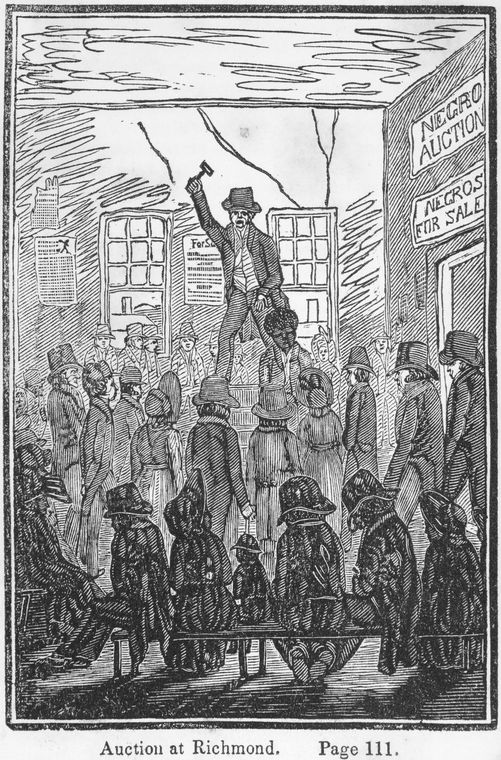
Auction at Richmond. (1834)
“Five hundred thousand strokes for freedom; a series of anti-slavery tracts, of which half a million are now first issued by the friends of the Negro.” by Armistead, Wilson, 1819?-1868 and “Picture of slavery in the United States of America” by Bourne, George, 1780-1845
New York Public Library via Wikimedia Commons.
The first 19 or so Africans to reach the English colonies arrived in Jamestown, Virginia, in 1619, brought by English privateers who had seized them from a captured Portuguese slave ship. Slaves were usually baptized in Africa before embarking. As English custom then considered baptized Christians exempt from slavery, colonists treated these Africans as indentured servants, and they joined about 1,000 English indentured servants already in the colony. The Africans were freed after a prescribed period and given the use of land and supplies by their former masters. The historian Ira Berlin noted that what he called the “charter generation” in the colonies was sometimes made up of mixed-race men (Atlantic Creoles) who were indentured servants, and whose ancestry was African and Iberian. They were descendants of African women and Portuguese or Spanish men who worked in African ports as traders or facilitators in the slave trade. For example, Anthony Johnson arrived in Virginia in 1621 from Angola as an indentured servant; he became free and a property owner, eventually buying and owning slaves himself. The transformation of the social status of Africans, from indentured servitude to slaves in a racial caste which they could not leave or escape, happened gradually.
There were no laws regarding slavery early in Virginia’s history. But, in 1640, a Virginia court sentenced John Punch, an African, to slavery after he attempted to flee his service. The two whites with whom he fled were sentenced only to an additional year of their indenture, and three years’ service to the colony. This marked the first legal sanctioning of slavery in the English colonies and was one of the first legal distinctions made between Europeans and Africans.
That’s the 1640 start, if you prefer that. When the distinction was made between black and white runaways from that indenture.
Worth noting that there was nothing unusual about indenture. Very similar indeed to the idea and practice of apprenticeship at the time. In effect, a time limited ownership of the labor – not the person – in return for certain benefits such as transport, sustenance, training and so on. This was actually the manner in which anyone at all entered the skilled working class. Sure, it all sounds a bit feudal but then that’s because it was rather the overhang of that feudal system. And it really did apply to people irrespective of skin colour or racial – even national – background.
England hadn’t had chattel slavery since the Anglo Saxons – Scotland and certain miners being evidence that all of Britain wasn’t so lucky – and it was rather more the Moors, Ottomans, Arabs, various places below the Olive Line, who still had full on slavery.
This then full changed in the colonies. And Anthony Johnson, that arrival from Angola in 1621, who makes the history here:
When Anthony Johnson was released from servitude, he was legally recognized as a “free Negro.” He became a successful farmer. In 1651 he owned 250 acres (100 ha), and the services of five indentured servants (four white and one black). In 1653, John Casor, a black indentured servant whose contract Johnson appeared to have bought in the early 1640s, approached Captain Goldsmith, claiming his indenture had expired seven years earlier and that he was being held illegally by Johnson. A neighbor, Robert Parker, intervened and persuaded Johnson to free Casor.
Parker offered Casor work, and he signed a term of indenture to the planter. Johnson sued Parker in the Northampton Court in 1654 for the return of Casor. The court initially found in favor of Parker, but Johnson appealed. In 1655, the court reversed its ruling. Finding that Anthony Johnson still “owned” John Casor, the court ordered that he be returned with the court dues paid by Robert Parker.
This was the first instance of a judicial determination in the Thirteen Colonies holding that a person who had committed no crime could be held in servitude for life. Though Casor was the first person declared a slave in a civil case, there were both black and white indentured servants sentenced to lifetime servitude before him.
That first instance of that full on chattel slavery in the colonies that became the US was firstly in 1655 – we even know the date, March 8 – and it was of a black owning a black. Oh, and free blacks owning slaves themselves was something that never did entirely disappear from American life, not until slavery itself did in the 1860s.
This all is more than mere pendantry too. Because slavery was not simply the invention of white Europeans to oppress black Africans. A few places in NW Europe – see England above – didn’t have slavery for several hundred years before the Atlantic trade. The rest of the world carried on, quite gaily, having it. To the point that the very word “Slav” is cognate with slave. The Mamluks who ruled Egypt were a caste of mercenaries composed of slaves. The Ottoman Sultan took as his tribute from the Balkans and elsewhere male children who were then sent to Egypt to enlist. Their own children could not join that ruling caste and army. It was a non-hereditary ruling army of slaves, weird as it may seem. Africa itself was awash with slavery and the Arab slave trade up into North Africa and the Mediterranean was a trade in something already happening.
August 14, 2019
Summer Stupidity: Hercules 2014 (Media Review!)
Overly Sarcastic Productions
Published on 13 Aug 2019“I’ve seen The Rock act before and he’s really fun and charismatic! Surely this movie starring him will be a Good Time!” I thought, foolishly.
PATREON: https://www.Patreon.com/OSP
MERCH LINKS: https://www.redbubble.com/people/OSPY…
OUR WEBSITE: https://www.OverlySarcasticProductions.com
Find us on Twitter https://www.Twitter.com/OSPYouTube
Find us on Reddit https://www.Reddit.com/r/OSP/
1950s Willys Jeep Promotional Film – The Jeep Family Of 4 Wheel Drive Vehicles
PeriscopeFilm II
Published on 3 Sep 2015Willys, the “World’s Largest Manufacturer of Utility Vehicles,” presents the Jeep Family of 4-Wheel Drive Vehicles and Special Equipment, a circa 1954 black-and-white film promoting Jeeps produced for civilian use. Following the success of Jeeps during World War II, the film opens with an explanation of how the vehicles soon their way to civilian use. Some of the vehicles seen in this film are used by construction companies, farmers, firefighters, and even at airports to tow aircraft and move cargo trailers and plow snow. At mark 02:49 the film introduces other types of Jeep equipment, such as a generator that turns the vehicle “into a mobile source of electric power to operate saws, communication equipment, motion picture equipment, flood and spotlights. And indeed any electrical equipment that must be moved around over bad terrain or in bad weather.” Scenes also capture telephone company repair crews, oil field crews, plus local and state road crews and construction companies. A Jeep is shown at a cemetery at mark 04:03 moving sand, shrubs, and burial equipment around the grounds in addition to lifting memorial markers. The viewer learns about variable engine speeds beginning at mark 05:55 with an up-close look at an engine and a discussion of its power, as well as various ways that power can be tapped for various operations. As it continues the film touts the Jeep rotary cutter (mark 07:45) as high brush is cut down, a hammer mill (mark 08:15), and a trencher (mark 08:30). There are forklift attachments, front and rear winches, as a front winch is shown pulling a dead tree from the ground (mark 10:10). The sales pitch rolls on at mark 11:42 showing some Jeep steel tops including the half-cab, master, and standard top — “each one designed for a special purpose but all three designed to stand up in rough hard service year after year.” Mark 12:00 begins an explanation of the vehicle’s 4-wheel drive capabilities, meaning that the vehicle “can go anywhere to do its job” including remote camping and hunting spots, while by mark 13:48 there’s a look at a Willys sedan delivery vehicle as grocery store employees are shown loading items into the back, and the Willys pick-up trick at mark 14:52. Other models are shown hauling grain and livestock, as well as an ambulance (mark 17:00).
Jeep is a brand of American automobiles that is a division of FCA US LLC (formerly Chrysler Group, LLC), a wholly owned subsidiary of Fiat Chrysler Automobiles. The original Jeep was the prototype Bantam BRC. Willys MB Jeeps went into production in 1941 specifically for the military, arguably making them the oldest four-wheel drive mass-production vehicles now known as SUVs. The Jeep became the primary light 4-wheel-drive vehicle of the United States Army and the Allies during World War II, as well as the postwar period. The term became common worldwide in the wake of the war. The first civilian models were produced in 1945. It inspired a number of other light utility vehicles, such as the Land Rover. Many Jeep variants serving similar military and civilian roles have since been designed in other nations. Willys-Overland and Ford, under the direction of Charles E. Sorensen (Vice-President of Ford during World War II), produced about 640,000 Jeeps towards the war effort, which accounted for approximately 18% of all the wheeled military vehicles built in the U.S. during the war.
From 1945 onwards, Willys took its four-wheel drive vehicle to the public with its CJ (Civilian Jeep) versions, making these the first mass-produced 4×4 civilian vehicles. In 1948, the U.S. Federal Trade Commission agreed with American Bantam that the idea of creating the Jeep was originated and developed by American Bantam in collaboration with some U.S. Army officers. The commission forbade Willys from claiming, directly or by implication, that it had created or designed the Jeep, and allowed it only to claim that it contributed to the development of the vehicle. However, American Bantam went bankrupt by 1950, and Willys was granted the “Jeep” trademark in 1950.
This film is part of the Periscope Film LLC archive, one of the largest historic military, transportation, and aviation stock footage collections in the USA. Entirely film backed, this material is available for licensing in 24p HD and 2k. For more information visit http://www.PeriscopeFilm.com
QotD: Proto-progressive thought
[Robert Southey] conceives that the business of the magistrate is not merely to see that the persons and property of the people are secure from attack, but that he ought to be a jack-of-all-trades, architect, engineer, schoolmaster, merchant, theologian, a Lady Bountiful in every parish, a Paul Pry in every house, spying, eavesdropping, relieving, admonishing, spending our money for us. His principle is, if we understand it rightly, that no man can do anything so well for himself as his rulers, be they who they may, can do it for him, and that a government approaches nearer and nearer to perfection in proportion as it interferes more and more with the habits and notions of individuals.
Thomas Babington Macaulay, “Southey’s Colloquies on Society”, 1830.
August 13, 2019
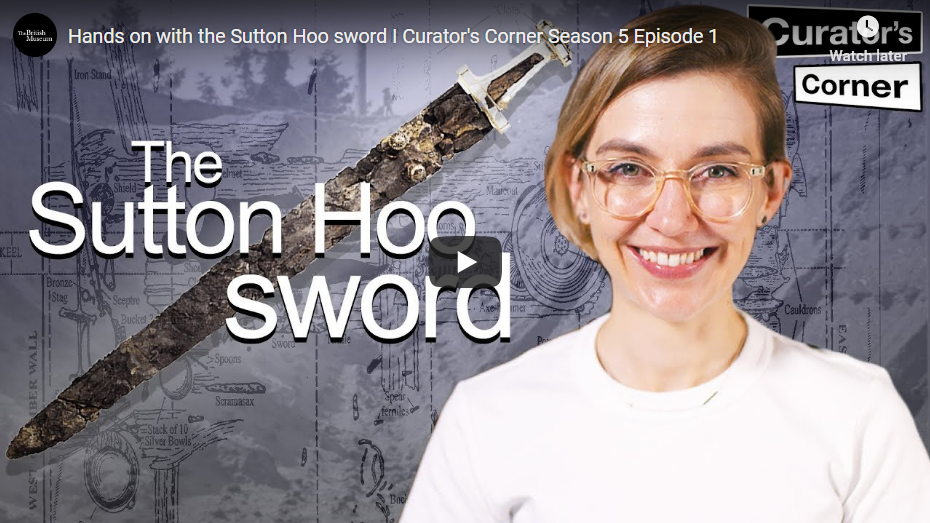
Hands on with the Sutton Hoo sword I Curator’s Corner Season 5 Episode 1
The British Museum
Published on 5 Aug 2019Sue Brunning and her trusty foam sword (newly dubbed Flexcalibur by commentator Pipe2DevNull) are back for another sword story. This time Sue takes us up close and personal with one of the most famous swords ever discovered.
Sue has also written a blog about Sutton Hoo available here: https://bit.ly/2yQkfYV (there are lots of other great articles there too!)
#CuratorsCorner #SwordswithSue #SuttonHooSue
August 12, 2019
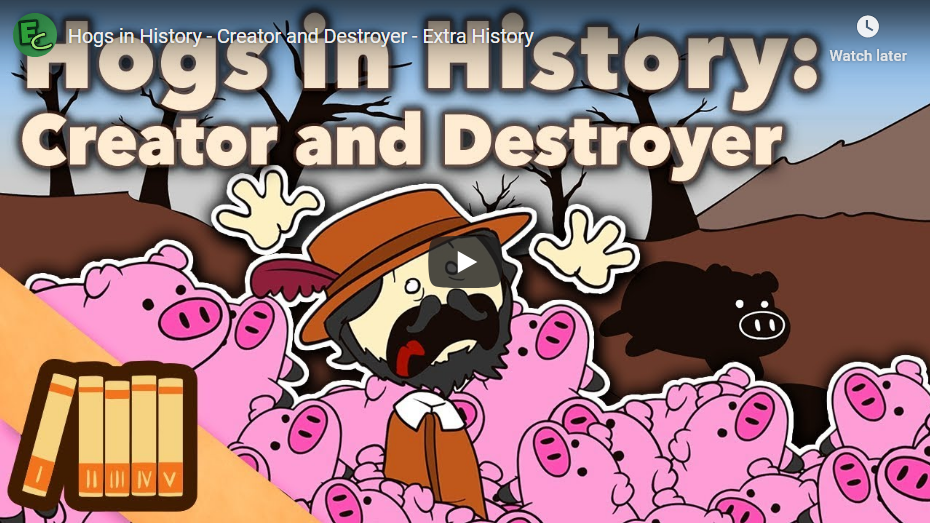
Hogs in History – Creator and Destroyer – Extra History
Extra Credits
Published on 10 Aug 2019Download the World of Tanks game for free https://tanks.ly/2yj0usN and use the invite code
EXTRATANKS1to claim your $15 starter pack.In 1494, among the colonization forces from Spain, eight pigs arrived in Cuba. With multiple uses in culinary and craft trades, as well as their general top-tier hardiness, pigs would naturally propagate themselves throughout the Caribbean, and then to Central, South, and North America — but they were also incredibly destructive.
Visit TierZoo to learn about how OP pigs are: https://www.youtube.com/watch?v=6xbQ2…
Join us on Patreon! http://bit.ly/EHPatreon