Quotulatiousness

July 17, 2020

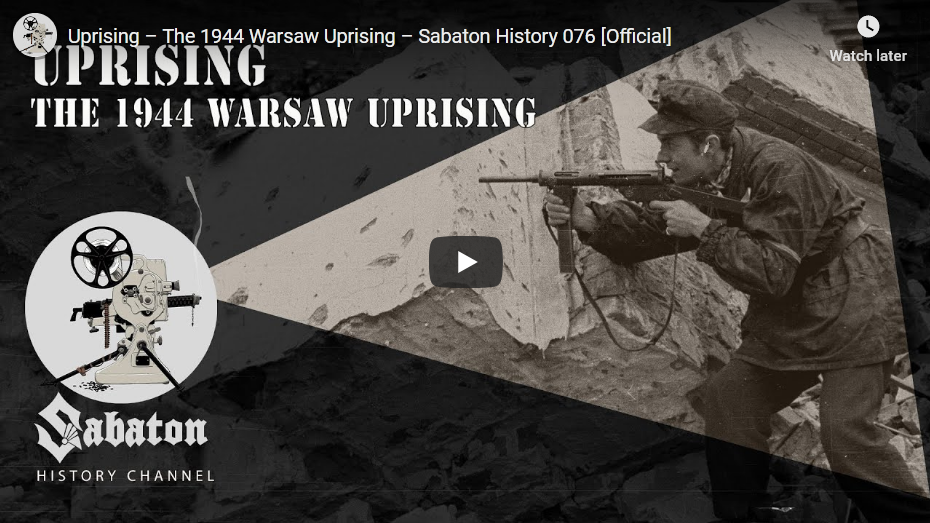
“Uprising” – The 1944 Warsaw Uprising – Sabaton History 076 [Official]

Filed under: Europe, Germany, History, Media, Military, WW2 — Tags: , , , , , — Nicholas @ 06:00

Sabaton History
Published 16 Jul 2020

August 1944. After nearly 5 years of suffering and oppression at the hands of the Nazis, the Polish resistance in Warsaw was ready to rise up against the German occupation. With the Red Army approaching towards the Vistula from the east, the insurgents planned to take over much of the Polish capital and hold it until help from their Allies arrived. In the early morning hours of August 1, groups of armed young men broke the curfew and stormed official buildings and German warehouses. But as insurgents fought for their lives and future, the outside world however, remained eerily quiet to their pleas for help.

Support Sabaton History on Patreon: https://www.patreon.com/sabatonhistory

Listen to “Uprising” on the album Coat Of Arms:
“CD: http://bit.ly/CoatOfArmsStore
Spotify: http://bit.ly/CoatOfArmsSpotify
Apple Music: http://bit.ly/CoatOfArmsAppleMusic
iTunes: http://bit.ly/CoatOfArmsiTunes
Amazon: http://bit.ly/CoatOfArmsAmzn
Google Play: http://bit.ly/CoatOfArmsGooglePlay

Watch the Official Music Video of “Uprising” here:
https://www.youtube.com/watch?v=01IaK…

Listen to Sabaton on Spotify: http://smarturl.it/SabatonSpotify
Official Sabaton Merchandise Shop: http://bit.ly/SabatonOfficialShop

Hosted by: Indy Neidell
Written by: Markus Linke and Indy Neidell
Directed by: Astrid Deinhard and Wieke Kapteijns
Produced by: Pär Sundström, Astrid Deinhard and Spartacus Olsson
Creative Producer: Joram Appel
Community Manager: Maria Kyhle
Executive Producers: Pär Sundström, Joakim Broden, Tomas Sunmo, Indy Neidell, Astrid Deinhard, and Spartacus Olsson
Post-Production Director: Wieke Kapteijns
Edited by: Iryna Dulka
Sound Editing by: Marek Kaminski

Eastory YouTube Channel: https://www.youtube.com/channel/UCEly…
Archive by: Reuters/Screenocean https://www.screenocean.com
Music by Sabaton

Colorizations by Mikołaj Kaczmarek – Kolor Historii – https://www.facebook.com/KolorHistorii/

Sources:
– Imperial War Museum: H 4963.
– Mil.ru
– Bundesarchiv, CC-BY-SA 3.0: Bild_183-S73507, Bild_146-2005-0038, Bild_101I-695-0411-02A, Bild_183-97906, Bild 101I-695-0425-13, Bild_146-1973-113-23, Bild_146-1996-057, Bild_146-1994-054-30
– Liftarn from Wikimedia

An OnLion Entertainment GmbH and Raging Beaver Publishing AB co-Production.

© Raging Beaver Publishing AB, 2019 – all rights reserved.
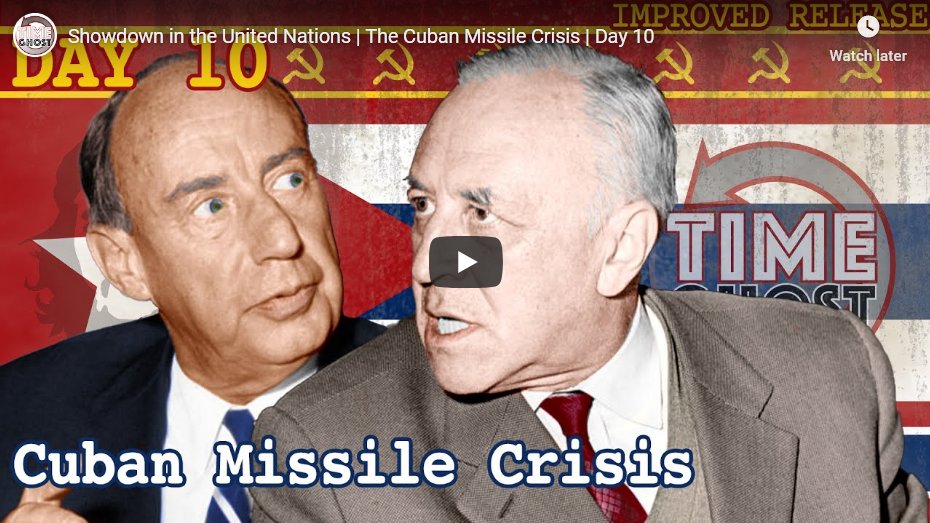
Showdown in the United Nations | The Cuban Missile Crisis | Day 10

TimeGhost History
Published 16 Jul 2020

On October 25, 1962 while the US Navy are looking for something to do in the Caribbean, US Ambassador to the UN Adlai Stevenson is about to face off with USSR Ambassador to the UN, Valerian Zorin in a historic showdown at the United Nations headquarters in New York.

Join us on Patreon: https://www.patreon.com/TimeGhostHistory

Hosted by: Indy Neidell
Written by: Spartacus Olsson
Director: Astrid Deinhard
Producers: Astrid Deinhard and Spartacus Olsson
Executive Producers: Astrid Deinhard, Indy Neidell, Spartacus Olsson, Bodo Rittenauer
Creative Producer: Joram Appel
Post-Production Director: Wieke Kapteijns
Research by: Spartacus Olsson
Edited by: Spartacus Olsson, Jonas Klein & Karolina Dołęga
Sound design: Marek Kamiński

Colorizations:
Carlos Ortega Pereira, BlauColorizations, https://www.instagram.com/blaucoloriz…
Klimbim

Archive by Screenocean/Reuters https://www.screenocean.com.

A TimeGhost chronological documentary produced by OnLion Entertainment GmbH.

QotD: Gandhi’s views on chastity

Filed under: Health, History, India, Quotations, Religion — Tags: , , , — Nicholas @ 01:00

… even more important, because it is dealt with in the movie directly — if of course dishonestly — is Gandhi’s parallel obsession with brahmacharya, or sexual chastity. There is a scene late in the film in which Margaret Bourke-White (again!) asks Gandhi’s wife if he has ever broken his vow of chastity, taken, at that time, about forty years before. Gandhi’s wife, by now a sweet old lady, answers wistfully, with a pathetic little note of hope, “Not yet.” What lies behind this adorable scene is the following: Gandhi held as one of his most profound beliefs (a fundamental doctrine of Hindu medicine) that a man, as a matter of the utmost importance, must conserve his bindu, or seminal fluid. Koestler (in The Lotus and the Robot) gives a succinct account of this belief, widespread among orthodox Hindus: “A man’s vital energy is concentrated in his seminal fluid, and this is stored in a cavity in the skull. It is the most precious substance in the body … an elixir of life both in the physical and mystical sense, distilled from the blood … A large store of bindu of pure quality guarantees health, longevity, and supernatural powers … Conversely, every loss of it is a physical and spiritual impoverishment.” Gandhi himself said in so many words, “A man who is unchaste loses stamina, becomes emasculated and cowardly, while in the chaste man secretions [semen] are sublimated into a vital force pervading his whole being.” And again, still Gandhi: “Ability to retain and assimilate the vital liquid is a matter of long training. When properly conserved it is transmuted into matchless energy and strength.” Most male Hindus go ahead and have sexual relations anyway, of course, but the belief in the value of bindu leaves the whole culture in what many observers have called a permanent state of “semen anxiety.” When Gandhi once had a nocturnal emission he almost had a nervous breakdown.

Gandhi was a truly fanatical opponent of sex for pleasure, and worked it out carefully that a married couple should be allowed to have sex three or four times in a lifetime, merely to have children, and favored embodying this restriction in the law of the land. The sexual-gratification wing of the present-day feminist movement would find little to attract them in Gandhi’s doctrine, since in all his seventy-nine years it never crossed his mind once that there could be anything enjoyable in sex for women, and he was constantly enjoining Indian women to deny themselves to men, to refuse to let their husbands “abuse” them. Gandhi had been married at thirteen, and when he took his vow of chastity, after twenty-four years of sexual activity, he ordered his two oldest sons, both young men, to be totally chaste as well.

Richard Grenier, “The Gandhi Nobody Knows”, Commentary, 1983-03-01.

July 16, 2020

The Witchfinder General Defends the Great State of Massachusetts

Filed under: History, Humour, Religion, USA — Tags: , , , , , — Nicholas @ 06:00

Atun-Shei Films
Published 14 Jul 2020

The greate Common-Wealth of Massachusetts is oft unjustly slandered. The Ignorant shall saye that the inhabitants of this fair colonie drive Carriages like mad-men; that they are too much enamored with Crimson Stockings and Those Who Love Their Countrie; and that they are as sullen and cruel as a New-England winter. The Witchfinder General dis-proves this Slander, and denounces it for the Profession of Heresy that it is.

Support Atun-Shei Films on Patreon ► https://www.patreon.com/atunsheifilms

Leave a Tip via Paypal ► https://www.paypal.me/atunsheifilms (Between now and October, all donations made here will go toward the production of The Sudbury Devil, our historical feature film)

Original Music by Dillon DeRosa ► http://dillonderosa.com/

#Puritan #Witch #Boston

Watch our film ALIEN, BABY! free with Prime ► http://a.co/d/3QjqOWv
Reddit ► https://www.reddit.com/r/atunsheifilms
Twitter ► https://twitter.com/atun_shei
Instagram ► https://www.instagram.com/atunsheifilms
Merch ► https://atun-sheifilms.bandcamp.com

From the comments:

Atun-Shei Films
1 day ago
The awesome baroque song at the end of this video is the brand-new Witchfinder General theme composed by the insanely talented Dillon DeRosa, who’s currently hard at work putting together a new theme for Checkmate Lincolnites and a bunch of other incidental music for this channel. His music was also one of the best parts of my movie ALIEN, BABY! and he’s done a bunch of other film scores as well. Check out his website, and never forget that thou art a wretched sinner, utterly unworthy of God’s love: http://dillonderosa.com/

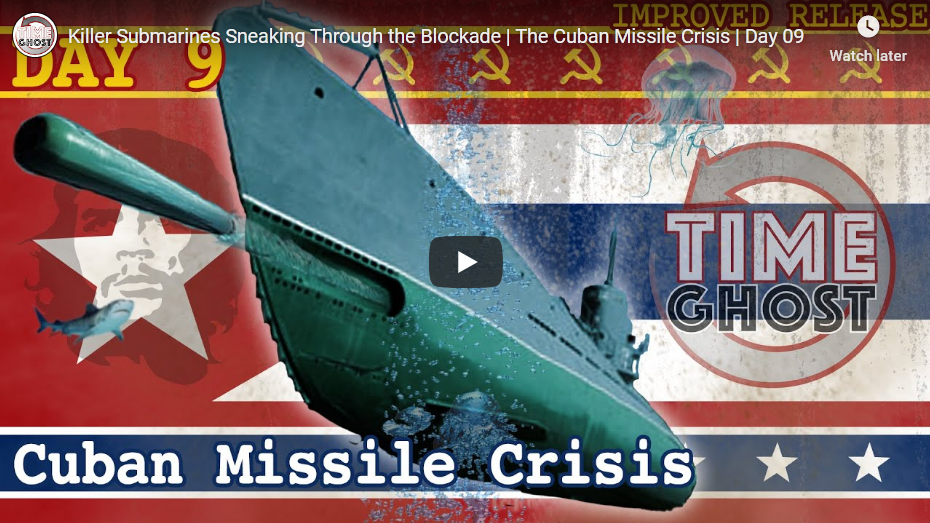
Killer Submarines Sneaking Through the Blockade | The Cuban Missile Crisis | Day 09

TimeGhost History
Published 15 Jul 2020

On October 24, 1962, the US-led blockade on Cuba goes into effect, but it’s not the showdown that it looks like! At least not on the surface …

Join us on Patreon: https://www.patreon.com/TimeGhostHistory

Hosted by: Indy Neidell
Written by: Spartacus Olsson
Director: Astrid Deinhard
Producers: Astrid Deinhard and Spartacus Olsson
Executive Producers: Astrid Deinhard, Indy Neidell, Spartacus Olsson, Bodo Rittenauer
Creative Producer: Joram Appel
Post-Production Director: Wieke Kapteijns
Research by: Spartacus Olsson
Edited by: Spartacus Olsson, Jonas Klein & Karolina Dołęga
Sound design: Marek Kamiński

Colorizations:
Carlos Ortega Pereira, BlauColorizations – https://www.instagram.com/blaucoloriz…
Dememorabilia – https://www.instagram.com/dememorabilia/

Visual Sources:
National Archives NARA

Music:
“Car Chase in Virginia” – White Bones
“Mexican Standoff” – Walt Adams
“Moving to Disturbia” – Experia
“Symphony of the Cold-Blooded” – Christian Andersen
“Under the Dome” – Philip Ayers
“When They Fell” – Wendel Scherer
“Try and Catch Us Now” – David Celeste
“Cold Eyes” – Elliot Holmes

Archive by Screenocean/Reuters https://www.screenocean.com.

A TimeGhost chronological documentary produced by OnLion Entertainment GmbH.

Tank Chats #75 M5A1 Stuart | The Tank Museum

Filed under: History, Military, USA, Weapons, WW2 — Tags: , — Nicholas @ 02:00

The Tank Museum
Published 17 May 2019

David Fletcher on the last in the Stuart series. Known unofficially as “Honeys”, the M5A1 Stuart was an improved version of the American’s M3 light tank. They were used by British armoured regiments and by most other Allied armies during WW2. They were fast, reliable and popular with their crews, but outclassed by the German tanks of 1944.

Support the work of The Tank Museum on Patreon: ► https://www.patreon.com/tankmuseum

Visit The Tank Museum SHOP: ► https://tankmuseumshop.org/
Twitter: ► https://twitter.com/TankMuseum
Tiger Tank Blog: ► http://blog.tiger-tank.com/
Tank 100 First World War Centenary Blog: ► http://tank100.com/ #tankmuseum #tanks #tankchats

QotD: The young Herbert Hoover

Herbert Hoover was born in 1874 to poor parents in the tiny Quaker farming community of West Branch, Iowa. His father was a blacksmith, his mother a schoolteacher. His childhood was strict. Magazines and novels were banned; acceptable reading material included the Bible and Prohibitionist pamphlets. His hobby was collecting oddly shaped sticks.

His father died when he is 6, his mother when he is 10. The orphaned Hoover and his two siblings are shuttled from relative to relative. He spends one summer on the Osage Indian Reservation in Oklahoma, living with an uncle who worked for the Department of Indian Affairs. Another year passes on a pig farm with his Uncle Allen. In 1885, he is more permanently adopted by his Uncle John, a doctor and businessman helping found a Quaker colony in Oregon. Hoover’s various guardians are dutiful but distant; they never abuse or neglect him, but treat him more as an extra pair of hands around the house than as someone to be loved and cherished. Hoover reciprocates in kind, doing what is expected of him but excelling neither in school nor anywhere else.

In his early teens, Hoover gets his first job, as an office boy at a local real estate company. He loves it! He has spent his whole life doing chores for no pay, and working for pay is so much better! He has spent his whole life sullenly following orders, and now he’s expected to be proactive and figure things out for himself! Hoover the mediocre student and all-around unexceptional kid does a complete 180 and accepts Capitalism as the father he never had.

His first task is to write some newspaper ads for Oregon real estate. He writes brilliant ads, ads that draw people to Oregon from every corner of the country. But he learns some out-of-towners read his ads, come to town, stay at hotels, and are intercepted by competitors before they negotiate with his company. Of his own initiative, he rents several houses around town and turns them into boarding houses for out-of-towners coming to buy real estate, then doesn’t tell his competitors where they are. Then he marks up rent on the boarding houses and makes a tidy profit on the side. Everything he does is like this. When an especially acrimonious board meeting threatens to split the company, a quick-thinking Hoover sneaks out and turns off the gas to the building, plunging the meeting into darknes. Everyone else has to adjourn, the extra time gives cooler heads a change to prevail, and the company is saved. Everything he does is like this.

(on the other hand, he has zero friends and only one acquaintance his own age, who later describes him to biographers as “about as much excitement as a china egg”.)

Hoover meets all sorts of people passing through the Oregon frontier. One is a mining engineer. He regales young Herbert with his stories of traveling through the mountains, opening up new sources of minerals to feed the voracious appetite of Progress. This is the age of steamships, skyscrapers, and railroads, and to the young idealistic Hoover, engineering has an irresistible romance. He wants to leave home and go to college. But he worries a poor frontier boy like him would never fit in at Harvard or Yale. He gets a tip – a new, tuition-free university might be opening in Palo Alto, California. If he heads down right away, he might make it in time for the entrance exam. Hoover fails the entrance exam, but the new university is short on students and decides to take him anyway.

Herbert Hoover is the first student at Stanford. Not just a member of the first graduating class. Literally the first student. He arrives at the dorms two months early to get a head start on various money-making schemes, including distributing newspapers, delivering laundry, tending livestock, and helping other students register. He would later sell some of these businesses to other students and start more, operating a constant churn of enterprises throughout his college career. His academics remain mediocre, and he continues to have few friends – until he tries out for the football team in sophomore year. He has zero athletic talent and fails miserably, but the coach (whose eye for talent apparently transcends athletics) spots potential in Hoover and asks him to come on as team manager. In this role, Hoover is an unqualified success. He turns the team’s debt into a surplus, and starts the Big Game – a UC Berkeley vs. Stanford football match played on Thanksgiving which remains a beloved Stanford football tradition.

Scott Alexander, “Book Review: Hoover”, Slate Star Codex, 2020-03-17.

July 15, 2020

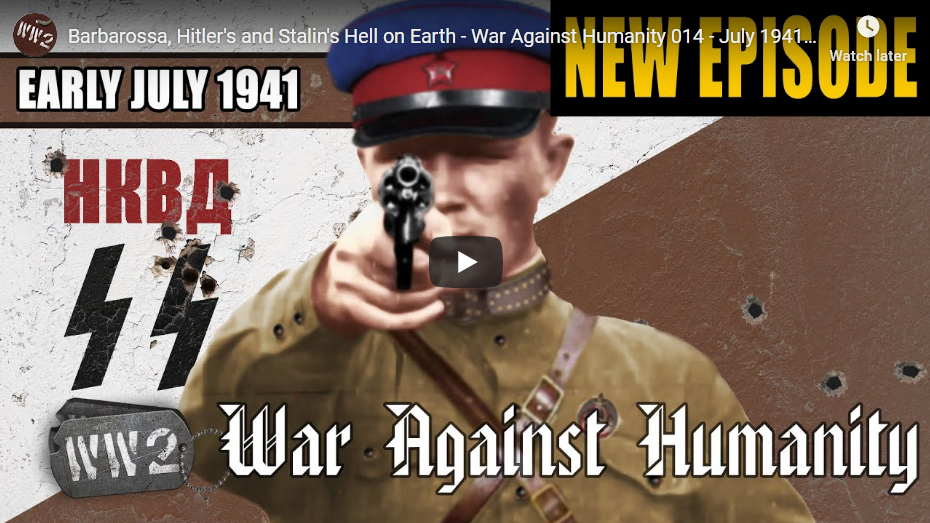
Barbarossa, Hitler’s and Stalin’s Hell on Earth – War Against Humanity 014 – July 1941, Part 01

Filed under: Germany, History, Military, Russia, WW2 — Tags: , , , , , , , — Nicholas @ 06:00

World War Two
Published 14 Jul 2020

When the German armed forces invade the USSR, they come with an order to exterminate from Hitler. Now the defending Soviet armed forces receive similar orders from Stalin. The bloodshed that follows defies human imagination.

Join us on Patreon: https://www.patreon.com/TimeGhostHistory
Or join The TimeGhost Army directly at: https://timeghost.tv

Follow WW2 day by day on Instagram @World_war_two_realtime https://www.instagram.com/world_war_two_realtime
Between 2 Wars: https://www.youtube.com/playlist?list…
Source list: http://bit.ly/WW2sources

Hosted by: Spartacus Olsson
Written by: Spartacus Olsson and Joram Appel
Director: Astrid Deinhard
Producers: Astrid Deinhard and Spartacus Olsson
Executive Producers: Astrid Deinhard, Indy Neidell, Spartacus Olsson, Bodo Rittenauer
Creative Producer: Joram Appel
Post-Production Director: Wieke Kapteijns
Research by: Joram Appel and Spartacus Olsson
Edited by: Mikołaj Cackowski
Sound design: Marek Kamiński
Map animations: Eastory (https://www.youtube.com/c/eastory)

Colorizations by:
Julius Jääskeläinen – https://www.facebook.com/JJcolorization/
Jaris Almazani (Artistic Man) – https://instagram.com/artistic.man?ig…
Klimbim – https://www.flickr.com/photos/2215569…

Sources:
Bundesarchiv
Yad Vashem 55AO6, 145CO2, 142GO5, 1019/2, 5648/40, 143EO1, 5648/39, 73BO2, 74FO7, 2725/17, 1564/2, 4360/49, 90DO9, 90DO8, 1278/19, 112GO7, 97GO2, 1597/11, 145CO1, 80DO5, 145AO, 5138/95
USHMM
Vilna Gaon State Jewish Museum

Soundtracks from the Epidemic Sound:
Skrya – “First Responders”
Philip Ayers – “Trapped in a Maze”
Farrell Wooten – “Mystery Minutes”
Cobby Costa – “From the Past”
Cobby Costa – “Flight Path”
Gunnar Johnsen – “Not Safe Yet”
Farrell Wooten – “Blunt Object”
Fluow – “Endlessness”
Jon Bjork – “Icicles”
Jon Bjork – “For the Many”

Archive by Screenocean/Reuters https://www.screenocean.com.

A TimeGhost chronological documentary produced by OnLion Entertainment GmbH.

From the comments:

World War Two
8 hours ago (edited)
However hard it is to watch this horror, it’s important that we document it, and learn from it. Each and everyone of us can, and we must for the sake of ourselves and our fellow human beings do so. The steps that led the people involved in these atrocities to this point were small, sometimes innocent, or at least uninformed decisions that took many years to reach this level of inhumanity. It starts with denying facts, imagining conspiracies as the root of your own problems, and demonizing your imagined enemies. In this void you are already on a slippery slope that may lead into the abyss. On that note, the events depicted here are based on solid research, and verified sources that are irrefutable. Wherever there is uncertainty, we have mentioned it. The purpose of this documentation is neither to scapegoat any one side, nor exonerate anyone from blame. These are the facts. This is what happened. Think about that, because the perpetrators here were like us, they didn’t come out of their mother’s womb with the intent to torture and murder anyone. And the victims were also like all of us, ordinary people just trying to get on with their lives according to their best ability. They had dreams and goals in life, some of them political perhaps, but mostly they just got on with their everyday life, banal and difficult as that might be, until they ended up in the hands of someone who had learnt to hate them without even knowing them. Remember that – this could have been anyone of us, on both sides of the events. To have that humility is the beginning of a journey to do good.

Spartacus

PS. and if you wonder how we put up with making this kind of content; it’s difficult. I cried bitterly after recording this, and tears still well up when I think about it. While we write it’s easier to turn off, switch on the coping mechanisms, pretend that its just absurd facts and numbers. But when you act out the words… that what defies imagination is suddenly horribly real.

The Start of World War III? | The Cuban Missile Crisis | Day 08

TimeGhost History
Published 14 Jul 2020

On October 23 , 1962 as the blockade on Cuba is being prepared, US President John F. Kennedy and USSR Chairman Nikita Khrushchev question their own actions realising that they might have gone a step too far.

Join us on Patreon: https://www.patreon.com/TimeGhostHistory

Hosted by: Indy Neidell
Written by: Spartacus Olsson
Director: Astrid Deinhard
Producers: Astrid Deinhard and Spartacus Olsson
Executive Producers: Astrid Deinhard, Indy Neidell, Spartacus Olsson, Bodo Rittenauer
Creative Producer: Joram Appel
Post-Production Director: Wieke Kapteijns
Research by: Spartacus Olsson
Edited by: Jonas Klein & Karolina Dołęga
Sound design: Marek Kamiński

Colorizations:
Dememorabilia – https://www.instagram.com/dememorabilia/
Carlos Ortega Pereira, BlauColorizations – https://www.instagram.com/blaucoloriz…

Music:
“Cold Eyes” – Elliot Holmes
“From the Depths” – Walt Adams
“Juvenile Delinquent” – Elliot Holmes
“Moving to Disturbia” – Experia
“Under the Dome” – Philip Ayers
“When They Fell” – Wendel Scherer
“Zoot Suit” – Elliot Holmes
“Try and Catch Us Now” – David Celeste

Visual Sources:
Bundesarchiv

Archive by Screenocean/Reuters https://www.screenocean.com.

A TimeGhost chronological documentary produced by OnLion Entertainment GmbH.

When The Dutch Ruled The World: Rise and Fall of the Dutch East India Company

Filed under: Asia, Business, Europe, History, India — Tags: , , , , , , — Nicholas @ 02:00

Business Casual
Published 14 Sep 2018

Thanks to Cheddar for sponsoring this episode! Check out their video on the iconic ad campaign that saved Old Spice here: https://chdr.tv/youtu8b4a6

⭑ Subscribe to Business Casual → http://gobc.tv/sub
⭑ Enjoyed the vid? Hit the like button!

Follow us on:
► Twitter → http://gobc.tv/twtr
► Instagram → https://gobc.tv/ig
► LinkedIn → https://gobc.tv/linkedin
► Reddit → https://gobc.tv/reddit
► Medium → https://gobc.tv/medium

July 14, 2020

A previously unpublished photo of the 1917 Halifax explosion

Filed under: Cancon, History, WW1 — Tags: , , , — Nicholas @ 05:00

I’ve posted a few items about the Halifax explosion, so Colby Cosh linking to this CBC News article caught my attention:

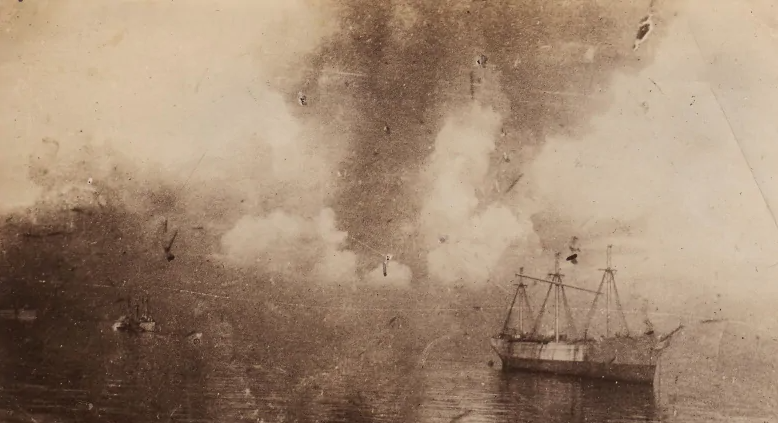
Previously unpublished photo of the Halifax explosion in December 1917 taken by Mate Reg Stevens, RCN.
Original image from the Community Archives of Belleville and Hastings County, via CBC News.

“The photo has the look of a very troubling dream,” Dan Conlin says as he studies an old black-and-white image.

Conlin is a transportation historian who’s spent a lifetime studying images of ships, trains and aircraft. He’s also a former curator of Halifax’s Maritime Museum of the Atlantic, which houses a large collection of materials from the 1917 Halifax Explosion.

The image he’s studying surfaced recently on Reddit with a user from Halifax, England, wondering if it was a “new” image of the 1917 disaster.

“You have these tranquil little wavelets in the foreground and some stately, anchored vessels — including a sailing ship,” Conlin said. “But in the background there are these awful, nightmarish clouds, including a horrible column that is rising into the sky. It looks like a surreal nightmare.”

When Conlin first looked at it, the crisp details of the foreground and the blurry background raised his skeptical eyebrows. “There was quite a tradition in the World War I era of faking photos by doing composite photos, where you layer one image on top of another,” he said.

One well-known photo of the explosion taken from McNabs Island was later suspected to have been doctored by a company. They seem to have added clouds for dramatic effect — and to sell more postcards.

But Conlin thinks in the nightmarish photo, it’s more likely that the clouds are moving from the force of the explosion, while the ships were untroubled by any winds. The disaster killed nearly 2,000 people and badly hurt thousands more. It levelled the Richmond district in the north end.

“It’s carnage and destruction out of Dante at the base of that cloud. People are dying and fires are starting and this awful event has hit Halifax in the distance,” he said.

“That angry cloud gives you an idea of the violence and tragedy that is unfolding even as the shutter clicks. It’s really rare and that photo, as far as I can tell, has never been published.”

The End of the World Will be Televised | The Cuban Missile Crisis I Day 07

TimeGhost History
Published 13 Jul 2020

On October 22, in the world’s first televised announcement of an international military crisis, US President John F. Kennedy sets off panic and sudden fear of a third world war, with nuclear arms involved.

Join us on Patreon: https://www.patreon.com/TimeGhostHistory

Hosted by: Indy Neidell
Written by: Spartacus Olsson
Director: Astrid Deinhard
Producers: Astrid Deinhard and Spartacus Olsson
Executive Producers: Astrid Deinhard, Indy Neidell, Spartacus Olsson, Bodo Rittenauer
Creative Producer: Joram Appel
Post-Production Director: Wieke Kapteijns
Research by: Spartacus Olsson
Edited by: Daniel Weiss
Sound design: Marek Kaminski

Colorizations:
– Carlos Ortega Pereira (BlauColorizations) – https://www.instagram.com/blaucoloriz…

Sources:
PX 65-105:179 from LOOK Magazine 8405-1-26

Soundtracks from Epidemic Sound:
– “Cold Eyes” – Elliot Holmes
– “From the Depths” – Walt Adams
– “Juvenile Delinquent” – Elliot Holmes
– “When They Fell” – Wendel Scherer
– “Kid Me Not” – Elliot Holmes

Archive by Screenocean/Reuters https://www.screenocean.com.

A TimeGhost chronological documentary produced by OnLion Entertainment GmbH.

British EM-2: The Best Cold War Battle Rifle that Never Was

Filed under: Britain, History, Military, Weapons — Tags: , , , , , — Nicholas @ 02:00

Forgotten Weapons
Published 12 Jul 2017

Armament Research Services (ARES) is a specialist technical intelligence consultancy, offering expertise and analysis to a range of government and non-government entities in the arms and munitions field. For detailed photos of the guns in this video, don’t miss the ARES companion blog post:

http://armamentresearch.com/british-j…

The EM-2 was the rifle that the British pushed for NATO trials in 1950. It was a rifle well ahead of its time in several areas — as a select-fire bullpup rifle, it was intended to replace both the infantry rifle and the submachine gun. Its .280 caliber cartridge was designed with combat ranges of 600 yards and less, acknowledging the reality that engagements beyond even 300 yards were extremely rare, and not important enough to base rifle design on. It was also designed to use primarily optical sights, long before this concept would be embraced elsewhere. Unfortunately, the potential of the EM-2 was lost to the political decision that compatibility with American ordnance choices was a more significant benefit than an improved infantry rifle.

Mechanically, the EM-2 is heavily based on the German G43 flapper-locking system. It uses a long stroke gas piston in place of the G43’s short stroke one, though. To help account for the slower handling of a bullpup configuration, the EM-2 would both lock open when its magazine was empty and also automatically close the bolt and chamber a round when a fresh magazine was inserted. The safety was much like that of the M1 Garand, and the selector lever was of the push-through type like on the German Sturmgewehr.

The optic on the EM-2 is quite tiny, and offers no magnification. Its purpose is to reduce the two-element sight picture of traditional iron sights to a single plane that can be more quickly and easily placed on the target.

In total, only 55 EM-2 rifles were manufactured, including the paratrooper model in this video and a number of 7.62mm NATO examples made as a last ditch effort to remain competitive in NATO trials. Where most failed prototype rifles were rejected for very legitimate technical shortcomings, the EM-2 is (I believe) a prime example of an outstanding weapon that fell victim to politics unrelated to its actually qualities.

http://www.patreon.com/ForgottenWeapons

Cool Forgotten Weapons merch! http://shop.bbtv.com/collections/forg…

If you enjoy Forgotten Weapons, check out its sister channel, InRangeTV! http://www.youtube.com/InRangeTVShow

July 13, 2020

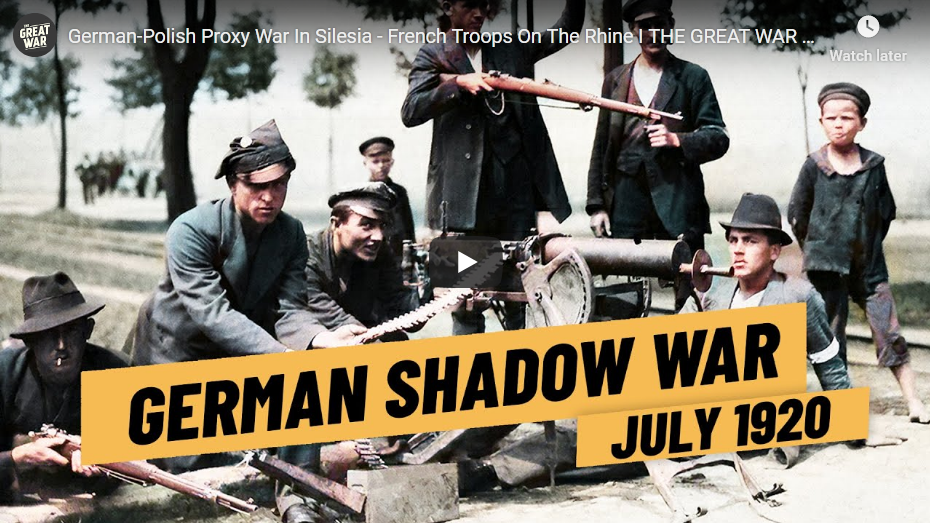
German-Polish Proxy War In Silesia – French Troops On The Rhine I THE GREAT WAR 1920

Filed under: France, Germany, History, Military — Tags: , , , , — Nicholas @ 06:00

The Great War
Published 11 Jul 2020

Sign up for Curiosity Stream and get Nebula bundled in: https://curiositystream.com/thegreatwar

The summer of 1920 was marked by escalating tensions on the borders of the German Reich. In the Rhineland, a neutral zone per the Versailles Treaty, the revolutionary uprising after the failed Kapp Putsch was put down with the help of the army and the Freikorps. In Upper Silesia, the conflict between Poland and Germany was escalating into a proxy war. And all that while the German government was negotiating the payments of reparations at the Spa Conference.

» SUPPORT THE CHANNEL
Patreon: https://www.patreon.com/thegreatwar

» OUR PODCAST
https://realtimehistory.net/podcast – interviews with World War 1 historians and background info for the show.

» BUY OUR SOURCES IN OUR AMAZON STORES
https://realtimehistory.net/amazon *
*Buying via this link supports The Great War (Affiliate-Link)

» SOURCES
Buat, Edmond. 8 (Perrin, 2015)
Beaupré, Nicolas. Occuper l’Allemagne après 1918 (Revue historique des armées, 2009)
Böhler, Jochen. Civil War in Central Europe, 1918-1921 (Oxford University Press, 2019)
Gietinger, Klaus. Kapp-Putsch (Stuttgart: Schmetterling, 2020)
le Naour, Jean Yves. La Honte Noire (Hachette, 2004)
Le Figaro, numéro du 8 avril 1920 (via Gallica)
Stengers, Jean. L’accord militaire franco-belge de 1920 et le Luxembourg (Revue belge de de Philologie et d’Histoire, 2004)
https://www.dhm.de/lemo/jahreschronik…
Pöppinghege, Rainer: Republik im Bürgerkrieg. Kapp-Putsch und Gegenbewegung an Ruhr und Lippe 1919/1920 (2019)
van Galen Last, Dick. Des soldats noirs dans une guerre de blancs (1914-1922): une histoire mondiale (Editions de l’Université de Bruxelles, 2015)

» MORE THE GREAT WAR
Website: https://realtimehistory.net
Instagram: https://instagram.com/the_great_war
Twitter: https://twitter.com/WW1_Series
Reddit: https://reddit.com/r/TheGreatWarChannel

»CREDITS
Presented by: Jesse Alexander
Written by: Jesse Alexander
Director: Toni Steller & Florian Wittig
Director of Photography: Toni Steller
Sound: Toni Steller
Editing: Toni Steller
Motion Design: Philipp Appelt
Mixing, Mastering & Sound Design: http://above-zero.com
Maps: Daniel Kogosov (https://www.patreon.com/Zalezsky)
Research by: Jesse Alexander
Fact checking: Florian Wittig

Channel Design: Alexander Clark
Original Logo: David van Stephold

Contains licensed material by getty images
All rights reserved – Real Time History GmbH 2020

“The Richard of Richard III is often regarded as a caricature, a cardboard-cutout villain rather like the Sweeney Todd of Victorian melodrama”

Filed under: Britain, History — Tags: , , , , — Nicholas @ 05:00

Theodore Dalrymple discusses two Shakespeare characters, the protagonists of Richard II and Richard III:

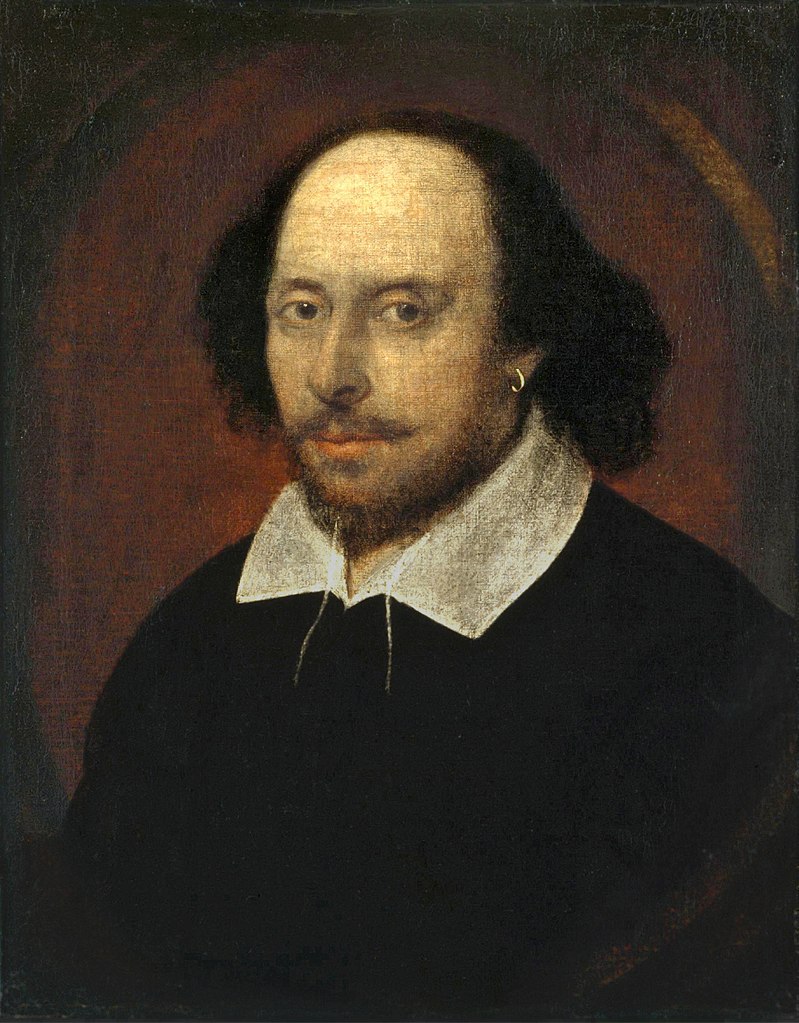
This was long thought to be the only portrait of William Shakespeare that had any claim to have been painted from life, until another possible life portrait, the Cobbe portrait, was revealed in 2009. The portrait is known as the “Chandos portrait” after a previous owner, James Brydges, 1st Duke of Chandos. It was the first portrait to be acquired by the National Portrait Gallery in 1856. The artist may be by a painter called John Taylor who was an important member of the Painter-Stainers’ Company.
National Portrait Gallery image via Wikimedia Commons.

… if we cannot know Shakespeare’s positive thoughts about any major question, as Nutall puts it, we can at least surmise some of the things that he did not believe. No one, I think, could imagine that Shakespeare romanticized the common man or was impressed by a crowd’s capacity for deep reflection. If there is one thing that he was not, it is a utopian.

Apart from the absence of direct evidence, one reason that it is so difficult to know what Shakespeare thought is that he seemed uniquely able to imagine himself into the minds of an almost infinite number of characters, so that he actually became them. He was, in a sense, like an actor who has played so many parts that he no longer has a personality of his own. A chameleon has many colors, but no color. What is perhaps even more remarkable is that, by some verbal alchemy, Shakespeare turns us into a pale version of himself. Through the great speeches or dialogues, we, too, enter a character’s world, or even become that character in our minds. I know of no other writer able to do this so often and across so wide a spectrum of humanity.

Included in this spectrum are the two King Richards, the Second and the Third. Shakespeare wrote the two plays in reverse historical order, about four years apart. The usurpation of Richard II’s throne in 1399 by Henry Bolingbroke, Henry IV, led to political instability and civil war in England that lasted until the death of Richard III in battle in 1485. Because everyone loves an unmitigated villain, Richard III is said to be the most frequently performed of all Shakespeare’s plays, but its historical verisimilitude is much disputed. It is clearly an apologia for the Tudor dynasty, for if Richard III were not the absolute villain he is portrayed as having been (and such is the power of Shakespeare’s play that everyone’s image of the king, except for those specially interested, derives from it), then Henry VII, whose dynastic claims to the throne were meager, to say the least, was not legitimately king — in which case neither was Henry VIII, Queen Elizabeth’s father, nor, therefore, was Queen Elizabeth legitimately queen: a dangerous proposition at the time Shakespeare wrote. So reminiscent of sycophantic Soviet historical apologetics does a Soviet emigré friend of mine find the play that he detests it. In 1924, a surgeon in Liverpool, Samuel Saxon Barton, founded what became the Richard III Society, which now has several thousand members globally, to rescue the reputation of the king from the Bard’s calumnies.

If Richard III were merely a propaganda play on behalf of the Tudors, however, it would hardly have held its place in the repertoire. It does so because it tackles the perennially fascinating, and vitally important, question of evil in the most dramatic manner imaginable; its historical inaccuracy does not matter. Richard III may not have been the dark figure Shakespeare portrays, but who would dare to say that no such figure could ever have existed?

The two plays offer a contrast between different political pathologies: that of ambitious malignity and that of arrogant entitlement, both with disastrous results, and neither completely unknown in our time. They share one rather surprising thing in common, however: before reaching the throne, both usurpers — Richard III, when still Duke of Gloucester; and Henry IV, when still Duke of Hereford — felt obliged to solicit the good opinion of the common people. This is perhaps surprising, in view of the extremely hierarchical nature of society in both the age depicted in the plays and the age in which they were written, and suggests a nascent populism, if not real democracy. However powerful the king or nobility, the Peasants’ Revolt of 1381, early in the reign of Richard II (as much a revolt of merchants as of peasants), must have alerted them to the need to keep the populace at least minimally satisfied.

Update: Fixed broken link and mis-placed image.

« Newer Posts — Older Posts »

Powered by WordPress