
The most frequently assigned book on science in universities (aside from a popular biology textbook) is Thomas Kuhn’s The Structure of Scientific Revolutions. That 1962 classic is commonly interpreted as showing that science does not converge on the truth but merely busies itself with solving puzzles before lurching to some new paradigm that renders its previous theories obsolete; indeed, unintelligible. Though Kuhn himself disavowed that nihilist interpretation, it has become the conventional wisdom among many intellectuals. A critic from a major magazine once explained to me that the art world no longer considers whether works of art are “beautiful” for the same reason that scientists no longer consider whether theories are “true.” He seemed genuinely surprised when I corrected him.
The historian of science David Wootton has remarked on the mores of his own field: “In the years since Snow’s lecture the two-cultures problem has deepened; history of science, far from serving as a bridge between the arts and sciences, nowadays offers the scientists a picture of themselves that most of them cannot recognize.” That is because many historians of science consider it naïve to treat science as the pursuit of true explanations of the world. The result is like a report of a basketball game by a dance critic who is not allowed to say that the players are trying to throw the ball through the hoop.
Many scholars in “science studies” devote their careers to recondite analyses of how the whole institution is just a pretext for oppression. An example is a 2016 article on the world’s most pressing challenge, titled “Glaciers, Gender, and Science: A Feminist Glaciology Framework for Global Environmental Change Research,” which sought to generate a “robust analysis of gender, power, and epistemologies in dynamic social-ecological systems, thereby leading to more just and equitable science and human-ice interactions.”
More insidious than the ferreting out of ever more cryptic forms of racism and sexism is a demonization campaign that impugns science (together with the rest of the Enlightenment) for crimes that are as old as civilization, including racism, slavery, conquest, and genocide.
This was a major theme of the Critical Theory of the Frankfurt School, the quasi-Marxist movement originated by Theodor Adorno and Max Horkheimer, who proclaimed that “the fully enlightened earth radiates disaster triumphant.” It also figures in the works of postmodernist theorists such as Michel Foucault, who argued that the Holocaust was the inevitable culmination of a “bio-politics” that began with the Enlightenment, when science and rational governance exerted increasing power over people’s lives. In a similar vein, the sociologist Zygmunt Bauman blamed the Holocaust on the Enlightenment ideal to “remake the society, force it to conform to an overall, scientifically conceived plan.”
In this twisted narrative, the Nazis themselves are somehow let off the hook (“It’s modernity’s fault!”). Though Critical Theory and postmodernism avoid “scientistic” methods such as quantification and systematic chronology, the facts suggest that they have the history backwards. Genocide and autocracy were ubiquitous in premodern times, and they decreased, not increased, as science and liberal Enlightenment values became increasingly influential after World War II.
Steven Pinker, “The Intellectual War on Science”, Chronicle of Higher Education, 2018-02-13.
April 18, 2020
QotD: Distorting the history of science
April 17, 2020
Charles De Gaulle – The Flame of French Resistance? – WW2 Biography Special
World War Two
Published 16 Apr 2020Charles De Gaulle is a towering figure in history, and not just because of his height. Becoming increasingly political in the interwar years due to his unorthodox views on military strategy, The Fall of France will thrust him into the limelight.
Join us on Patreon: https://www.patreon.com/TimeGhostHistory
Or join The TimeGhost Army directly at: https://timeghost.tvFollow WW2 day by day on Instagram @World_war_two_realtime https://www.instagram.com/world_war_t…
Between 2 Wars: https://www.youtube.com/playlist?list…
Source list: http://bit.ly/WW2sourcesHosted by: Indy Neidell
Written by: Francis van Berkel
Director: Astrid Deinhard
Producers: Astrid Deinhard and Spartacus Olsson
Executive Producers: Astrid Deinhard, Indy Neidell, Spartacus Olsson, Bodo Rittenauer
Creative Producer: Joram Appel
Post-Production Director: Wieke Kapteijns
Research by: Catherine Burton
Edited by: Mikołaj Cackowski
Sound design: Marek Kamiński
Map animations: Eastory (https://www.youtube.com/c/eastory)Colorizations by:
Carlos Ortega Pereira, BlauColorizations, https://www.instagram.com/blaucoloriz…
Dememorabilia – https://www.instagram.com/dememorabilia/
Norman Stewart – https://oldtimesincolor.blogspot.com/
Adrien Fillon – https://www.instagram.com/adrien.colo…
Sources:
Outdoor family portrait, with lurkers (c.1920), courtesy pellethepoet https://flic.kr/p/ompxgf
IWM A 1464, E 2324, D 1966
Frederick Milthorp collectionSoundtracks from the Epidemic Sound:
Max Anson – “Ancient Saga”
Farell Wooten – “Blunt Object”
Johannes Bornlof – “Deviation in Time”
Reynard Seidel – “Deflection”
Johannes Bornlof – “The Inspector 4”
Phoenix Tail – “At the Front”Archive by Screenocean/Reuters https://www.screenocean.com.
A TimeGhost chronological documentary produced by OnLion Entertainment GmbH.

“Diary Of An Unknown Soldier” – Lost in the Great War – Sabaton History 063 [Official]
Sabaton History
Published 16 Apr 2020The bells rang on Armistice Day 1920 in the 11th hour, and two minutes of silence followed. One minute for the soldiers that had fought in the Great War and had come back. The second for those who did not. Those unfortunate souls that had been left behind. They had died like so many others, but had been denied a final resting place due to the violence of war. They had vanished, without a trace, without an identity. Those men where the Unknown Soldiers.
Support Sabaton History on Patreon: https://www.patreon.com/sabatonhistory
Listen to “Diary of an Unknown Soldier” on the album The Last Stand:
CD: http://bit.ly/TheLastStandStore
Spotify: http://bit.ly/TheLastStandSpotify
Apple Music: http://bit.ly/TheLastStandItunes
iTunes: http://bit.ly/TheLastStandItunes
Amazon: http://bit.ly/TheLastStandAmz
Google Play: http://bit.ly/TheLastStandGooglePlayWatch the official lyric video of “Diary Of An Unknown Soldier” here:
https://www.youtube.com/watch?v=Jhkz5…Check out the trailer for Sabaton’s new album The Great War right here: https://www.youtube.com/watch?v=HCZP1…
Listen to Sabaton on Spotify: http://smarturl.it/SabatonSpotify
Official Sabaton Merchandise Shop: http://bit.ly/SabatonOfficialShopHosted by: Indy Neidell
Written by: Markus Linke and Indy Neidell
Directed by: Astrid Deinhard and Wieke Kapteijns
Produced by: Pär Sundström, Astrid Deinhard and Spartacus Olsson
Creative Producer: Joram Appel
Executive Producers: Pär Sundström, Joakim Broden, Tomas Sunmo, Indy Neidell, Astrid Deinhard, and Spartacus Olsson
Post-Production Director: Wieke Kapteijns
Edited by: Iryna Dulka
Sound Editing by: Marek Kaminski
Maps by: Eastory – https://www.youtube.com/c/eastoryArchive by: Reuters/Screenocean https://www.screenocean.com
Music by Sabaton.Sources:
– National Library of Scotland
– National Library of France
– Imperial War Museum: Q 10378, Q 100373, Q 57227, Q 100624, Q 53727, Q 29155, ART 3991 a, Q 109517, Q 100928, Q 100699, Q 100913, Q 45814, Q 23706, Q 14963, Q 31518, Q 31494, RAF-T 3129, Q 31514, Q 909, Q 87441, Documents.5323, Q 100486, Q 48929A, Q 78614An OnLion Entertainment GmbH and Raging Beaver Publishing AB co-Production.
© Raging Beaver Publishing AB, 2019 – all rights reserved.
From the comments:
Sabaton History
2 days ago
Something different this time. Since we already have two episodes about the fighting in the Argonne, we thought this time we’d talk about the sacrifice and the legacy of the “Unknown Soldier”. Of those who fought and died but were not fortunate enough to have a last known resting place. We hope you still enjoy the episode!
Prototype Mauser 1917 Trench Carbine
Forgotten Weapons
Published 20 Dec 2019http://www.patreon.com/ForgottenWeapons
Cool Forgotten Weapons merch! http://shop.bbtv.com/collections/forg…
In the latter stages of World War One, the German military was looking for new arms for its Sturmtruppen. Without a reliable self-loading rifle design to use, they instead focused on pistol-caliber arms. The first to be used was the existing P08 artillery Luger, fitted with a drum magazine. At the very end of the war, these were being replaced by Bergmann MP-18,I submachine guns. But there was another gun that was tested but not adopted — the 1917 trench carbine variation of Mauser’s C96 “Broomhandle” pistol. Only about 40 of these guns were made as prototypes and trials models, and they were not adopted for reasons that are not entirely clear (but cost is probably a significant element). Only a few examples survive, and they vary substantially in their details. In addition, they are substantially different from both standard C96 pistols and also the sporting carbines made before the war.
All the 1917 trench carbines used a magazine developed from the 1906/08 pistol; an excellent double-stack, double-feed type. Magazines of 10, 20, and 40-round capacity were made, although all known examples were only semiautomatic (the full-auto Schnellfeuer Mausers would not come until the early 1930s).
Contact:
Forgotten Weapons
6281 N. Oracle #36270
Tucson, AZ 85704

QotD: Rommel arrives in North Africa
Rommel had his orders, but he had ignored orders in the past and been decorated for it. With British forces stripped to fight an exceedingly ill-advised campaign in Greece, he carried out a quick personal reconnaissance in his trusty little Fieseler Storch airplane, then launched an offensive in concert with his Italian partners (Ariete armored division and the infantry divisions of X Corps, Bologna and Pavia). He penetrated British defenses at El Agheila on March 24th, then drove on to Mersa el Brega on March 31st, pausing only long enough to take (and ignore) a number of radio messages from Berlin and Rome warning him not to do anything rash. Finally, he smashed the British defenders at Agedabia (elements of the green 2nd Armoured Division, equipped partially with captured Italian M13/40 tanks), pinning them in front with the infantry of 5th Light Division while dispatching his Panzers on a ride around the open desert flank to the south, the first use of a tactic that would become his signature move.
These three tiny encounters, none of them exceeding regimental strength, were enough to unhinge the entire British defensive position in Cyrenaica. Rommel now expanded his “reconnaissance in force” into a general offensive, although the forces involved were still minuscule. One column headed up the coast road towards Benghazi, while two more sliced across the Cyrenaican bulge, scooping up a mountain of British supplies at Msus and Mechili. The British rear was in chaos. On April 6th, a German motorcycle patrol actually captured the British commander in Cyrenaica, General Philip Neame, as well as General Richard O’Connor, the victor of Beda Fomm. By April 11th, the Germans had surrounded the coastal fortress of Tobruk while smaller formations pressed on to the east, taking Bardia and reaching the Egyptian border at Sollum and Ft. Capuzzo.
This was top speed maneuver, and the distances were vast, with the Afrika Korps covering over 600 miles in less than two weeks. An amazing feat, to be sure, but may we not legitimately ask, Six-hundred miles to where? Rommel had lunged from central Libya to the Egyptian border in a great bound, but now he had an unconquered fortress sitting in his rear, a serious threat to his lines of communication and supply. Two hastily marshaled attempts to storm Tobruk went badly wrong. In the “Easter battle” (April 10th-14th) and the “battle of the Salient” (April 30th-May 4th), the defenders of the 9th Australian Division hung tough. Minefields channeled the German attacks, while direct fire from artillery, antitank guns, and supporting tanks shot up the assault forces quite badly and killed General Heinrich von Prittwitz, commander of 15th Panzer Division.
The very presence of an unconquered Tobruk rendered the drive across the desert pointless. Indeed, for all the fame it had brought Rommel in the world press, this first campaign won him few friends among command echelons in Berlin. General Halder was especially unimpressed. Rommel, he wrote, “storms around all day long with formations strewn all over the place.” The man had apparently “gone insane.” There was some justice to the complaint. A German division-plus had overrun territory — a vast wasteland, to be precise — but it hadn’t really won anything. There had been no battle of annihilation, no Kesselschlacht, nor could there have been. The Afrika Korps had come a long way, but now sat precariously on the edge of nowhere. Although Rommel and his command had shown a satisfying level of aggression, something the entire officer corps understood, most of them saw his drive to the Egyptian border as a misfire.
Robert Citino, “Drive to Nowhere: The Myth of the Afrika Korps, 1941-43″, The National WWII Museum, 2012. (Originally published in MHQ, Summer 2012).
April 16, 2020
The (temporary) return of “dazzle” paint schemes for the Royal Canadian Navy
Well, two RCN ships, if not the entire fleet … Joseph Trevithick reports for The Drive:
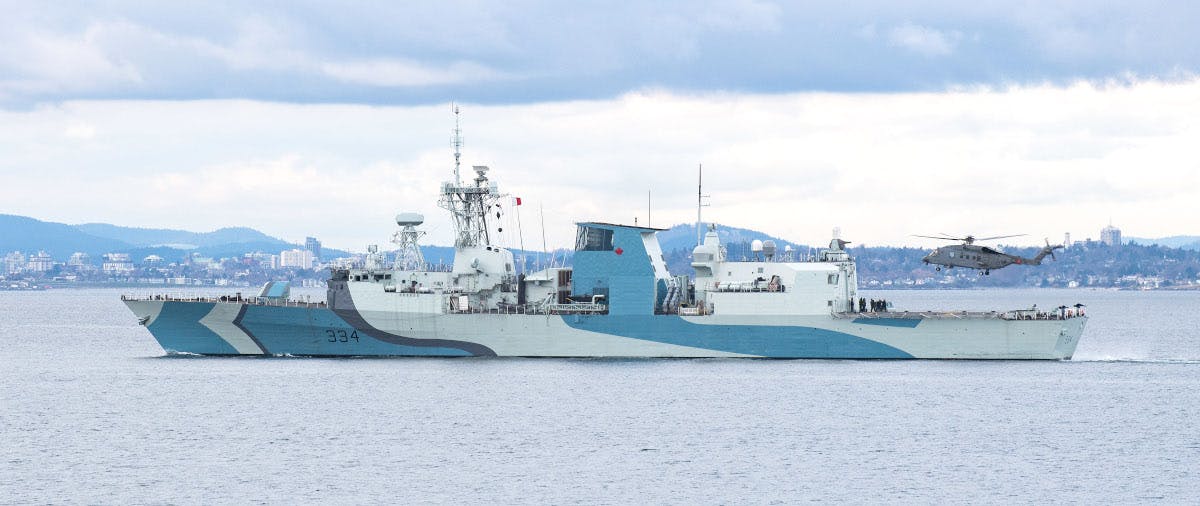
HMCS Regina in her dazzle camouflage paint taking part in Task Group Exercise 20-1 in April, 2020.
Canadian Forces photo via The Drive.
Air forces around the world will often give their aircraft specialized paint jobs to commemorate anniversaries and other notable occasions, but it’s far less common to see navies do the same thing with their ships. Recently, however, the Royal Canadian Navy’s Halifax class frigate HMCS Regina recently took part in a training exercise wearing an iconic blue, black, and gray paint job, commonly known as a “dazzle” scheme, a kind of warship camouflage that first appeared during World War I.
At the end of March 2020, Regina, and her unique paint job, had joined HMCS Calgary, another Halifax-class frigate, along with the Kingston-class coastal defense vessel HMCS Brandon and two Orca-class Patrol Craft Training (PCT) vessels, Cougar* and Wolf*, for Task Group Exercise 20-1 (TGEX 20-1) off the coast of Vancouver Island in the northeastern Pacific Ocean. The training continued into the first week of April. TGEX 20-1 was part of Calgary‘s Directed Sea Readiness Training (DSRT) in preparation for that particular ship’s upcoming deployment.
Regina had first emerged in the dazzle scheme in October 2019 ahead of the U.S. Navy-led Rim of the Pacific (RIMPAC) exercise, a massive naval training event that takes place every two years and includes U.S. allies and partners from around the Pacific region. It reportedly took 272 gallons of paint and cost the Royal Canadian Navy $20,000 to give Regina the dazzle treatment.
The frigate will wear the camouflage pattern until the end of 2020. The Royal Canadian Navy also painted up the Kingston-class HMCS Moncton, which is homeported in Halifax on the other side of the country, in a similar scheme. The paint job on both ships is in commemoration of the 75th anniversary of the end of the Battle of the Atlantic. This refers to the Allied fight to both enforce a naval blockade of Germany during World War II and secure critical maritime supply routes from North America to Europe. The battle officially ended with the surrender of the Nazi regime in May 1945.
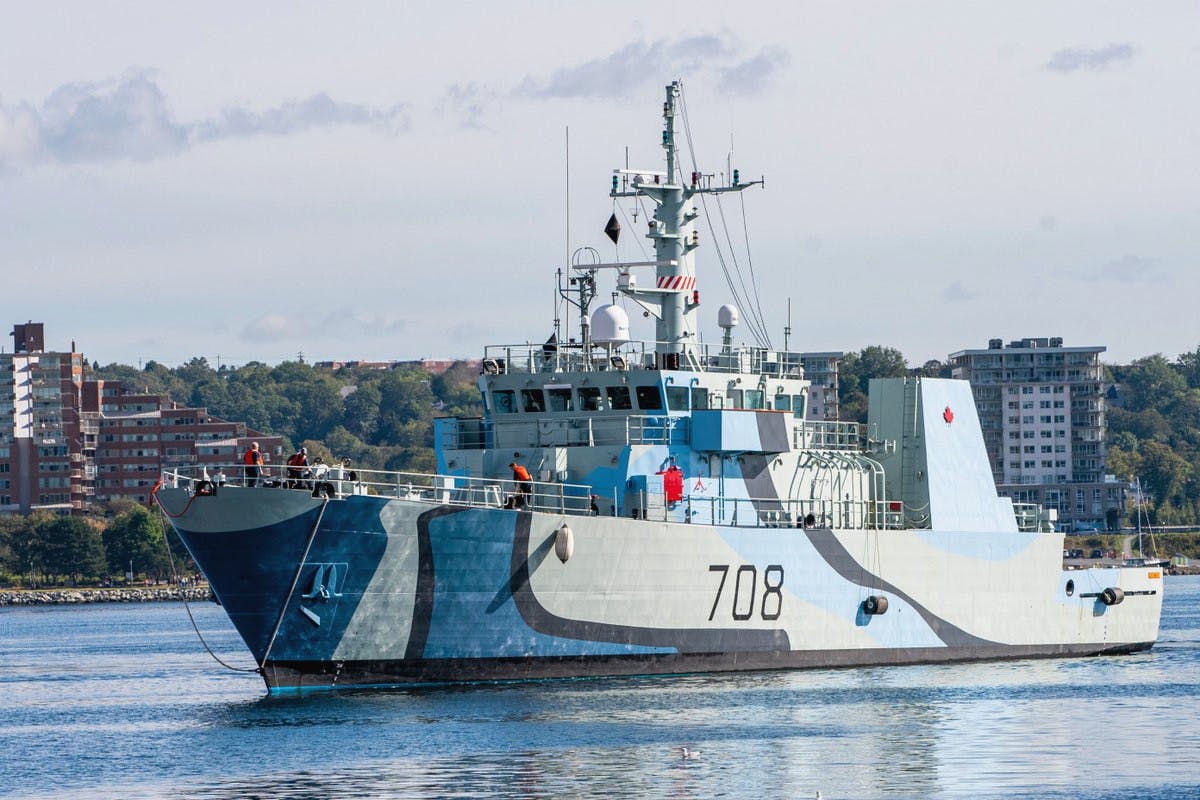
HMCS Moncton in dazzle camouflage, 2020.
Canadian Forces photo via The Drive.
* Wikipedia points out that the Orca-class are not formally commissioned ships in the RCN and therefore do not carry the designation “Her Majesty’s Canadian Ship” (HMCS).
Prologue: The Dutch Colonial Whip | The Indonesian War Of Independence
TimeGhost History
Published 15 Apr 2020This is the prologue to our five-part Indonesian War of Independence Miniseries. It sets the stage of brutal colonial repression, a growing sense of Indonesian Nationalism and ultimately the desire to be free.
Join us on Patreon: https://www.patreon.com/TimeGhostHistory
Hosted by: Indy Neidell
Written by:
Spartacus Olsson and Joram Appel
Directed by: Astrid Deinhard
Produced by: Astrid Deinhard and Spartacus Olsson
Executive Producers: Astrid Deinhard, Indy Neidell, Spartacus Olsson, Bodo Rittenauer
Creative Producer: Joram Appel
Post-Production Director: Wieke Kapteijns
Research by: Joram Appel and Isabel Wilson
Edited by: Wieke Kapteijns, Guido Becker
Sound design: Marek KamińskiColorizations by: Dememorabilia – https://www.instagram.com/dememorabilia/
Research Sources: https://bit.ly/IndoSources
Visual Sources:
Tropenmuseum, part of the National Museum of World Cultures
Wellcome ImagesIcons retrieved via The Nounproject: gold by Phạm Thanh Lộc, slaves by Salaidinovich, silver by Marie Van den Broeck, spice by ahmad, Opium Poppies by Matt Wasser.
Music:
“Disciples of Sun Tzu” – Christian Andersen
“Weapon of Choice” – Fabien Tell
“Guilty Shadows 4” – Andreas Jamsheree
“Road To Tibet 5” – Rannar Sillard
“Sailing for Gold” – Howard Harper-Barnes
“The Inspector 4” – Johannes Bornlöf
“The Dominion” – Bonnie Grace
“Heroes On Horses” – Gunnar Johnsén
“Not Safe Yet” – Gunnar JohnsenA TimeGhost chronological documentary produced by OnLion Entertainment GmbH.
From the comments:
TimeGhost History
2 days ago (edited)
This is the prologue to our new ‘Indonesian War of Independence’ mini-series. Now, we initially only wanted to do five episodes, but episode one became double as long as we imagined, so we decided to cut the historical context out and put it in a prologue. These series are mainly written by Joram and Isabel, two historians from the Netherlands and the United Kingdom. Now, you might say that we are not in the best position to talk about European Imperialism because of that. However, as we’re both academically trained historians, we believe that we’re able to overcome any bias through the use of academic methods and peer-reviewed academic sources. If anyone is interested to take a look at our source-list, you can find it right here: https://bit.ly/IndoSourcesThese mini-series have been chosen out of a bigger selection by our TimeGhost Army. They fund almost our entire production – this would not exist without them. Become one of them to choose future series and to support the creation of content just like this! You can do that at patreon.com/timeghosthistory or https://timeghost.tv.
Cheers,
Joram
Was the Afrika Korps worth it?
Military History not Visualized
Published 20 Apr 2018Was it worth it to send the Afrika Korps at all? In this video we look at the Mediterranean Campaign in World War 2, which is usually overshadowed by the “Desert Warfare” between Rommel and Montgomery.
»» SUPPORT MHV ««
» patreon – https://www.patreon.com/mhv
» paypal donation – https://www.paypal.com/cgi-bin/webscr…»» MERCHANDISE – SPOILS OF WAR ««
» shop – https://www.redbubble.com/people/mhvi…»» SOCIAL MEDIA ««
» twitter – https://twitter.com/MilHiVisualizedMilitary History Vlogs is a support channel to Military History Visualized with a focus personal accounts, answering questions that arose on the main channel and showcasing events like visiting museums, using equipment or military hardware.
» SOURCES «
Ball, Simon: “The Mediterranean and North Africa, 1940-1944”, in: Cambridge History of the Second World War – Volume I, p. 358-388
Preston, Paul: “Spain: betting on a Nazi victory”; in: Cambridge History of the Second World War: Volume II: Politics & Ideology, p. 324-349
Das Deutsche Reich und der Zweite Weltkrieg, Band 3: Der Mittelmeerraum und Südosteuropa 1940-1941 (English Version below)
ENGLISH VERSION: Germany and the Second World War, Volume 3, The Mediterranean, South-east Europe, and North Africa, 1939-1941Das Deutsche Reich und der Zweite Weltkrieg – Band 6 – Der Globale Krieg
ENGLISH VERSION: Germany and the Second World War – Volume 6 – The Global WarDas Deutsche Reich und der Zweite Weltkrieg – Band 8
ENGLISH VERSION: Germany and the Second World War – Volume 8 – The Eastern Front 1943-1944: The War in the East and on the Neighbouring Fronts» CREDITS & SPECIAL THX «
Song: Ethan Meixsell – “Demilitarized Zone”#AfrikaKorps #AfricaCorps #WW2
April 15, 2020
The Industrial Revolution and the Society for the Encouragement of Arts, Manufactures and Commerce
In the latest from Anton Howes’ Age of Invention newsletter, we are introduced to the Society for the Encouragement of Arts, Manufactures and Commerce:
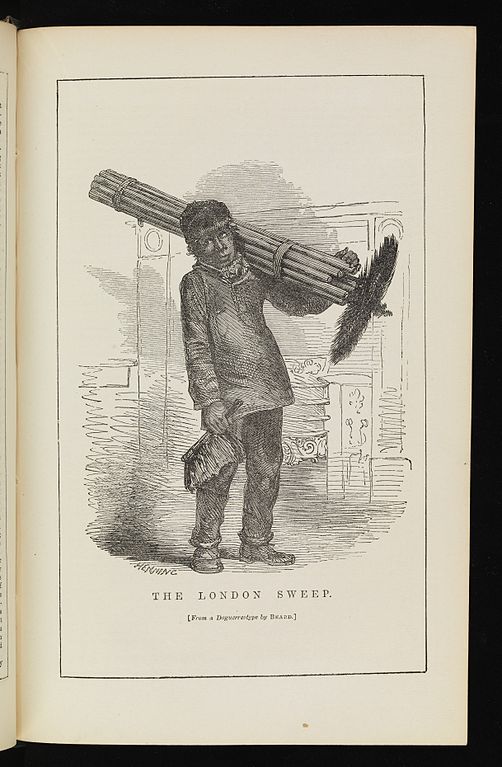
The London Sweep (from a Daguerreotype by BEARD).
Image from London labour and the London poor : a cyclopaedia of the condition and earnings of those that will work, those that cannot work, and those that will not work, 1851, via the Wellcome Collection.
When we think of the British Industrial Revolution, the image that springs to mind tends to be of soot-belching factories and foundries, of child labour and squalid cities. The inventors who spring to mind tend to be James Watt and his steam engines, or Richard Arkwright and his cotton-spinning machines. But what people tend to forget is that the Industrial Revolution was unleashed by a much broader tide of accelerating innovation — as I never tire of repeating, it touched everything from agriculture to watchmaking, and everything inbetween. Just as some inventors pioneered the use of factories, other inventors sought solutions to industrialisation’s social ills.
Last time, I mentioned the Society for the Encouragement of Arts, Manufactures and Commerce, set up in 1754 in a London coffee house (the Society of Arts for short). What’s so fascinating about the organisation — which still exists today, now called “Royal” — is that it was closely involved with many of the more socially-oriented innovations of the period. By this, I mean the kinds of inventions that were rarely immediately profitable, but which aimed to save lives, to alleviate suffering, or to remedy some other social ill. The Society advertised premiums — cash prizes or honorary medals — for solutions to the problems that its members identified. And it offered similar rewards, which they called bounties, for unsolicited inventions.
It awarded a bounty of fifty guineas and a gold medal to Henry Greathead, for example, one of the claimants for the invention of the lifeboat. It gave another fifty guineas to a sergeant of the Royal Artillery, John Bell, for a method of firing a rope and grapple by mortar from a ship to the shore, to save people on board from shipwreck during storms. (Some years later, it even gave a gold medal to another inventor for a device that did the opposite, firing from shore to ship.) The Society awarded a medal to a Sheffield schoolmaster, John Hessey Abraham, for a magnetic apparatus that would prevent metal dust getting into the eyes and lungs of workers employed in grinding the points of needles. And in 1767 it awarded a bounty to a clockmaker, Christopher Pinchbeck, for a safer crane — cranes at the time were like gigantic hamster wheels, but for humans. When lines snapped, the results could be fatal, so Pinchbeck added a pneumatic braking mechanism.
The list goes on — in all, over the course of about a century, the Society of Arts awarded over two thousand premiums and bounties for inventions. But there is one that really stands out: a premium for the invention of a mechanical means of cleaning chimneys. With such an invention, the Society hoped to abolish the employment of children, sometimes as young as 4, who were forced to climb up inside chimneys in order to clean them. These children were sometimes abducted by the master chimney sweeps, and frequently perished in horrific accidents or of soot-induced cancers. Strikingly, the use of climbing boys was thought to be unique to Britain — the “peculiar disgrace of England” as the campaigners put it (though I don’t think this was quite true). The Society’s idea was that if a technological replacement could be found, then the case for outright abolition could be made — they wanted to create a machine to take the children’s jobs.
The Society of Arts played its role with the offer of a premium, but it acted alongside another campaign run by a few of its members, who ran the snappily titled “Society for Superseding the Necessity of Climbing Boys, by Encouraging a New Method of Sweeping Chimnies, and for Improving the Condition of Children and Others Employed by Chimney Sweepers”, founded in 1803 at the London Coffee-House on Ludgate Hill. Let’s call it the SSNCB for short. There had been earlier campaigns to abolish the use of climbing boys, one of the most prominent being run by Jonas Hanway (a prominent philanthropist, also a member of the Society of Arts, whose various claims to fame include being the first man in London to sport an umbrella). But the 1803 campaign was to prove the most successful, drawing on wider political support. The SSNCB’s key members included William Wilberforce, who later became famous for his zeal in abolishing the slave trade.
Girls Armed With Pitchforks – The Women’s Land Army – On the Homefront 002
World War Two
Published 14 Apr 2020Now that the labour-needs and the availability of manpower has changed due to the outbreak of World War Two, Women are required to join the workforce. They’re put to work in the Women’s Land Army.
Join us on Patreon: https://www.patreon.com/TimeGhostHistory
Or join The TimeGhost Army directly at: https://timeghost.tvFollow WW2 day by day on Instagram @World_war_two_realtime https://www.instagram.com/world_war_t…
Between 2 Wars: https://www.youtube.com/playlist?list…
Source list: http://bit.ly/WW2sourcesHosted by: Anna Deinhard
Written by: Spartacus Olsson and Francis van Berkel
Produced and Directed by: Spartacus Olsson and Astrid Deinhard
Executive Producers: Bodo Rittenauer, Astrid Deinhard, Indy Neidell, Spartacus Olsson
Creative Producer: Joram Appel
Post-Production Director: Wieke Kapteijns
Research by: Tom Meaden
Edited by: Mikołaj Cackowski
Map animations: Eastory (https://www.youtube.com/c/eastory)Colorizations by:
Dememorabilia – https://www.instagram.com/dememorabilia/
Julius Jääskeläinen – https://www.facebook.com/JJcolorization/Sources:
IWM A 19891, Q 54607, Q 54601, Q 54602, D 8793, D 204, D 199, D 18050, D 8463, D 18062, D 20722, D 8833, D 2973, D 14123, D 115, D 11256, D 14090, D 8806, TR 911, D 21057, D 128, CH 4119, D 3324, TR 912, D 18057, IWM TR 1568, D 21958, D 8794, TR 913
Picture of Women’s Land Army memorial in Scotland, courtesy of IWM, Martin Briscoe (WMR-69248)
Library of Congress
Portrait of Hilda Gibson, taken 2008 at 10 Downing Street, courtesy BBC PM blog http://www.bbc.co.uk/blogs/pm/2008/07…Soundtracks from the Epidemic Sound:
Johannes Bornlof – “Deviation In Time”
Wendel Scherer – “Defeated”
Johannes Bornlof – “Magnificent March 3”
Reynard Seidel – “Deflection”
Max Anson – “Ancient Saga”
Johannes Bornlof – “The Inspector 4”
Christian Andersen – “Quiet Contemplation”Archive by Screenocean/Reuters https://www.screenocean.com.
A TimeGhost chronological documentary produced by OnLion Entertainment GmbH.
From the comments:
World War Two
22 minutes ago (edited)
This is the second instalment of our monthly ‘On the Homefront’ series and it’s about the Women’s Land Army. Now, with these series we’re planning to cover the events and cultural and social changes that occurred during World War Two, as well as the organisations and individuals that lived through them. As with the other specials, we want to cover all the homefronts, from all nations all across the world. If you have any good ideas for future episodes, please let us know in the comments!
Cheers and stay safe!
Joram
When the Fed Does Too Much
Marginal Revolution University
Published 22 Aug 2017In the 2000s, the Fed kept interest rates low to stimulate aggregate demand. But the cheap credit also helped fuel the housing market bubbles. We’ll look at the case of the Great Recession as an example of where the Fed did too much in one area, and perhaps not enough in others.

April 14, 2020
Curator at Home | Tanks: 100 Years of Evolution | The Tank Museum
The Tank Museum
Published 12 Apr 2020Join The Tank Museum’s Curator, David Willey, at home, as he reviews the book: Tanks – 100 Years of Evolution by Richard Ogorkiewicz.
Support the work of The Tank Museum on Patreon: ► https://www.patreon.com/tankmuseum
Visit The Tank Museum SHOP & become a Friend: ► https://tankmuseumshop.org/Twitter: ► https://twitter.com/TankMuseum
Instagram: ► https://www.instagram.com/tankmuseum/
Tiger Tank Blog: ► http://blog.tiger-tank.com/
Tank 100 First World War Centenary Blog: ► http://tank100.com/

Socialism and the environment
Luke Warren on the vast gulf between the “environmental consciousness” of fans of the socialist worldview and the real-world environmental impact of socialist policies:
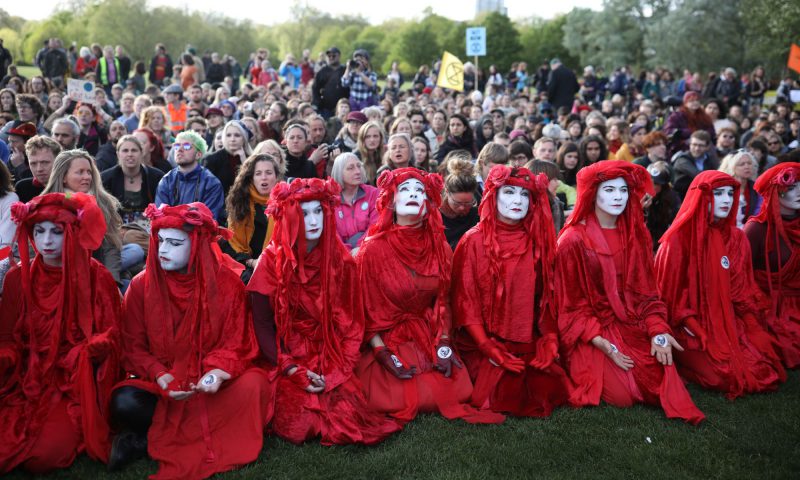
Modern environmentalists often identify as socialists. Members of Extinction Rebellion, for example, often advocate tearing down capitalism and supplanting it with “eco-socialism”. Go to any “climate strike” or similar type of event, and you will see more hammer and sickle flags, raised fist symbols and Socialist Workers party posters than you can count.
Indeed, socialism and environmentalism are perceived by many as two sides of the same coin, and the idea that climate change is a “crisis of capitalism” has become conventional wisdom. It is now seemingly a contradiction to be both a capitalist and an environmentalist. This is not just a matter of rhetoric, but it is also reflected in the policy prescriptions of both environmentalists and socialists. Look at proposals for a “green new deal”, calls for large-scale nationalisation in the name of the environment.
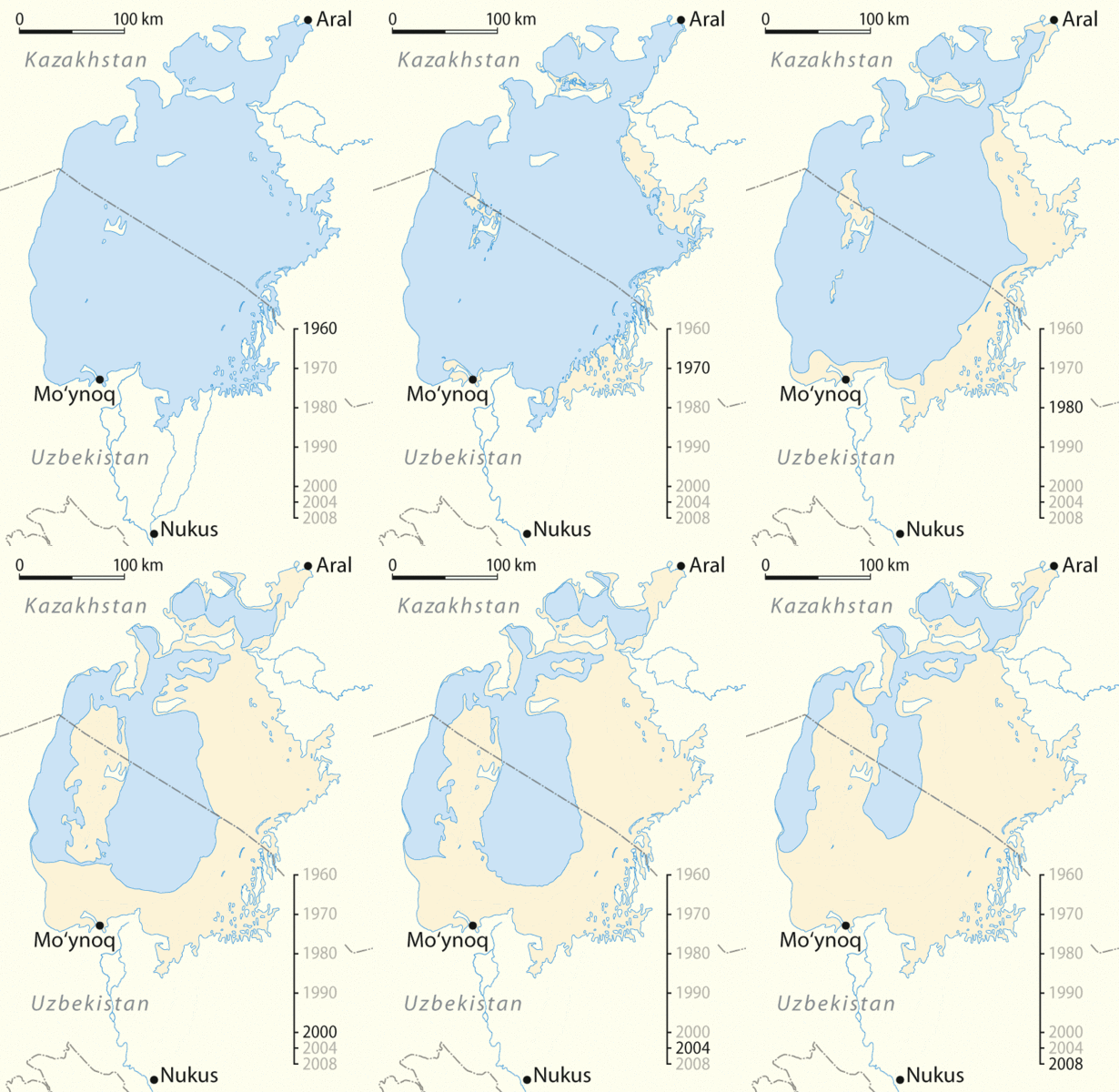
Animated map of the shrinking of the Aral Sea between 1960 and 2008 (via Wikipedia)
But what is the story of socialism and environmentalism?
One only has to look back at the failed experiments of socialism to see just how environmentally catastrophic it has been. As the Soviet Union collapsed and the iron curtain was torn down, the rest of the world finally saw the environmental damage caused by socialist command economies. Economist Jeffrey Sachs stated that the socialist states had “some of the worst environmental problems on the entire globe” All of this, it is worth noting, occurred against a backdrop of a wide array of environmental laws and regulations that supposedly protected the public interest.
Air pollution provides an excellent example. Total greenhouse gas emissions in the USSR in 1988 equated to 79 per cent of the US total. However, the Soviet Union’s gross national product (GNP) was only 54 per cent of the USA’s, according to one very generous estimate (it was, in all likelihood, far less than that). This means that the USSR generated at least one and a half times as much pollution as the USA per unit of GNP (and again, in all likelihood, far more than that).
Accounts of those who travelled across the Soviet Union post-collapse recall swathes of the country where smog clung to the air. An article from Multinational Monitor in 1990 highlighted that 40 per cent of the Soviet people lived in areas where air pollutants, such as carbon dioxide, sulphur dioxide and nickel dioxide, were three to four times the maximum allowable levels.
The destruction of the Aral Sea, perhaps one of the worst environmental disasters, can be directly blamed on the process of socialist planning. In an attempt to make the USSR self-sufficient in cotton production, vast amounts of water were diverted to arid areas for irrigation. Much of the Aral Sea dried up, leaving port cities, Muynak for example, and fishing villages marooned miles from the shore. Worse, the exposure of the salty sea bed and extensive use of pesticides had catastrophic impacts on the health of the local population. Respiratory problems and lung diseases became widespread as people inhaled pollutants.

The Aral Sea in 2000 on the left and 2014 on the right. Photograph: Atlas Photo Archive/NASA
History Summarized: England
Overly Sarcastic Productions
Published 10 Apr 2020English history has a reputation for being nigh incomprehensible — what with all the kings, civil wars, succession crises, and slapfights with France. But with the right perspective (and a little royal-restraint), England can become quite a straightforward story. So let’s take a look at this slice of Britain, and see how it grew into the master of the Isles.
SOURCES & Further Reading: “History of England from the Tudors to the Stuarts”, lecture series for The Great Courses by Robert Bucholz, a great look at Renaissance and Early Imperial England.
“Ten Minute History of England and Britain” Parts 1-18, by History Matters, a lengthy chronicle of English history from the Roman conquest through the Union of the Crowns. Good watch if you have the time.
Foundation by Peter Ackroyd, the first book in a mammoth 6-volume History of England, which covers everything up to the death of Henry VII. If you really want to dig into English history, this is the book for you.This video was edited by Sophia Ricciardi AKA “Indigo”. https://www.sophiakricci.com/
Our content is intended for teenage audiences and up.PATREON: https://www.Patreon.com/OSP
DISCORD: https://discord.gg/h3AqJPe
MERCH LINKS: https://www.redbubble.com/people/OSPY…
OUR WEBSITE: https://www.OverlySarcasticProductions.com
Find us on Twitter https://www.Twitter.com/OSPYouTube
Find us on Reddit https://www.Reddit.com/r/OSP/

The role of disease and climate change in the fall of the western Roman Empire
In Quillette, Jaspreet Singh Boparai reviews a new book by Kyle Harper that tries to incorporate what we have learned about epidemics and climate change into the narrative on the decline of Rome:
Why did the Roman Empire fall? The classic answer is given by Edward Gibbon (1737 — 1794), in chapter 38 of the third volume of The History of the Fall and Decline of the Roman Empire (1776 — 1789):
The decline of Rome was the natural and inevitable effect of immoderate greatness. Prosperity ripened the principle of decay; the causes of destruction multiplied with the extent of conquest; and as soon as time or accident had removed the artificial supports, the stupendous fabric yielded to the pressure of its own weight.
Kyle Harper, Senior Vice President and Provost of the University of Oklahoma, seeks to complement Gibbon’s account by emphasising the role of nature, and specifically climate change and infectious disease, in the fall of Rome in his provocative, exceptionally well-written book The Fate of Rome: Climate, Disease and the End of an Empire. Is Harper correct? Were plagues and climate events fatal for Rome?
Harper accepts the conventional view that Rome’s civilizational collapse began in the later second century AD, accelerated amidst chaos and bloodshed during the third century, and culminated in the humiliations of the fifth century, when Rome was famously sacked by barbarians, and the last, weak, insignificant Roman Emperor was pushed off the throne in AD 476.
[…]
Harper begins The Fate of Rome with a description of Rome as it advertised itself in AD 400. Contemporary inventories record: 28 libraries, 19 aqueducts, two circuses, 37 gates, 423 neighborhoods, 46,602 blocks of flats, 1,790 grand houses, 290 granaries, 856 public baths, 1,352 cisterns, 254 bakeries, 46 brothels, and 144 public latrines. The population is estimated at 700,000 or so. This figure diminished rapidly after August 24th, AD 410, when Rome was sacked by an army of Goths.
The traditional date of Rome’s fall is September 4th, AD 476, when the 16-year-old Emperor Romulus Augustus, the son of a former secretary to Attila the Hun, was forced to abdicate the throne by a barbarian warlord, and dismissed to spend the rest of his days at a seaside villa near Naples. His date of death is not recorded; he was too unimportant to fear assassination. At this point, the city of Rome’s population was still as high as 400,000.
Rome was invaded and sacked a few times over the centuries; more and more of it was abandoned; by the 10th century it was a suburb to nowhere surrounded by malarial swamps, and may have had only 9,000 inhabitants. Most of the economy was related to religious pilgrimages; the city was controlled by gangsters and petty warlords. What was left amidst the ruins was sacked again in AD 1084 by an army that outnumbered residents by as much as three to one.
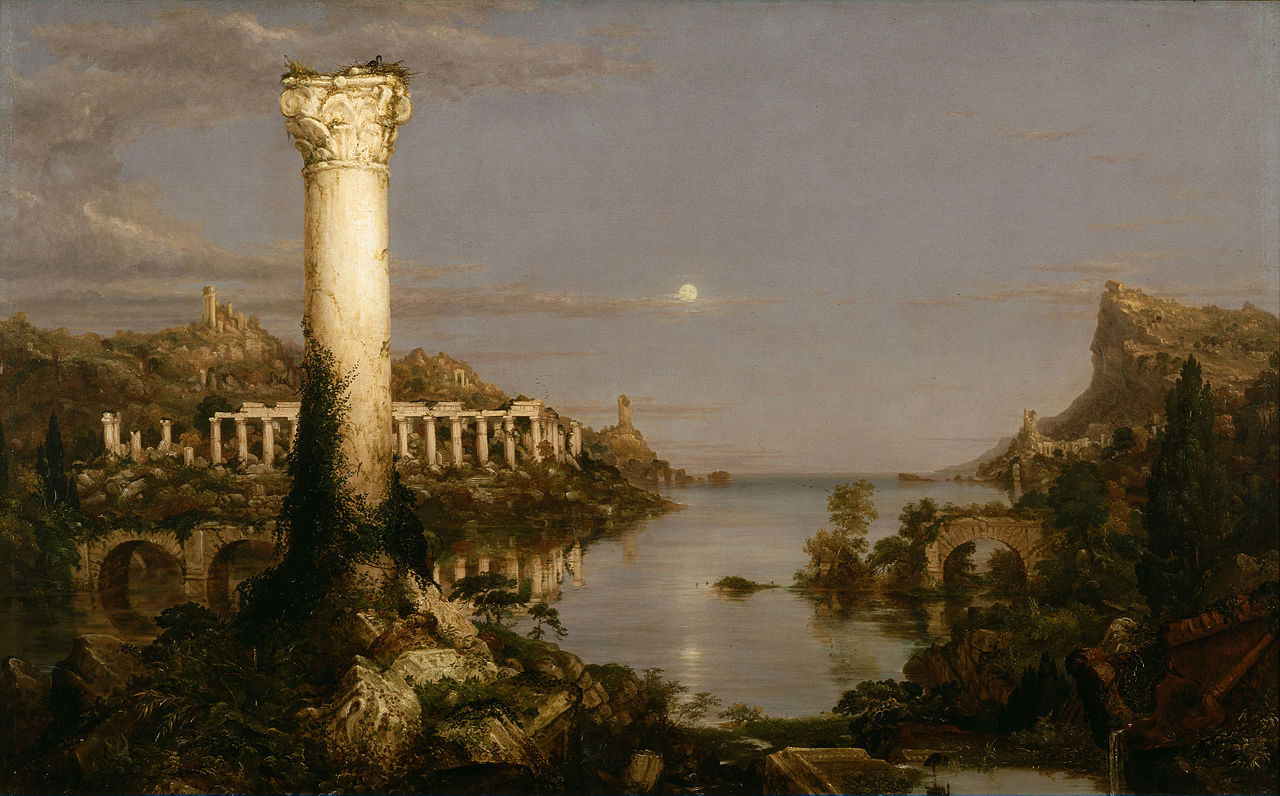
“The Course of Empire – Desolation” by Thomas Cole, one of a series of five paintings created between 1833 and 1836.
Wikimedia Commons.


