Quotulatiousness

March 18, 2020

SMLE Rifle Grenade Launcher

Filed under: Britain, History, Military, Weapons, WW1, WW2 — Tags: , , — Nicholas @ 02:00

Forgotten Weapons
Published 2 Feb 2017

While rifle-launched grenades date back hundreds of years, they first came into widespread use during World War One, on all sides of the conflict. The first years of the war saw the use of rod grenades, but their downsides (mediocre accuracy, bulkiness, and a propensity to damage rifle bores) led to the British adopting a 2.5” cup grenade discharger in late 1917. This new launcher used slightly modified Mills bomb hand grenades, and could launch them with significant accuracy from 80 to 200 yards. They would become a staple of WWI combined arms infantry tactics, and be used clear through WW2 until replaced by the 22mm NATO style spigot grenades.

http://www.patreon.com/ForgottenWeapons

Cool Forgotten Weapons merch! http://shop.bbtv.com/collections/forg…

If you enjoy Forgotten Weapons, check out its sister channel, InRangeTV! http://www.youtube.com/InRangeTVShow

QotD: The “magic” of capitalism

Filed under: Economics, History, Quotations, USA — Tags: , , — Nicholas @ 01:00

Warren Buffett has told us that there’s something magical about American capitalism. This isn’t quite true, because other countries have achieved much the same thing. What is true about it is that it is the system itself which has caused the incredible wealth we all enjoy in this modern world. Buffett writes:

    In 1776, America set off to unleash human potential by combining market economics, the rule of law and equality of opportunity. This foundation was an act of genius that in only 241 years converted our original villages and prairies into $96 trillion of wealth.

Other places which did much the same thing — that mixture of capitalism, the rule of law and free markets — achieved much the same end. We generally refer to those places as the developed world, while those that didn’t are still the Third World. There is nowhere at all that has become rich, absent some vast natural resource, without adopting this system.

We can show this, too, with the numbers from Angus Madison. The average GDP per capita over history, all countries, all empires, was some $600 a year or so — That’s in today’s dollars, meaning history was, by our standards, abject destitution for everyone. This is also why we use $1.90 a day (at modern American prices) as our measure of global absolute poverty. Because that’s just what the past was and we celebrate when people, a country, a nation, rise above that historical existence.

Tim Worstall, “Appalachia’s woes show the success of American capitalism”, Washington Examiner, 2018-01-09.

March 17, 2020

Tank Chats #64 Leopard 1 | The Tank Museum

Filed under: Germany, History, Military, Weapons — Tags: , , , — Nicholas @ 02:00

The Tank Museum
Published 11 Jan 2019

The Leopard 1 Main Battle Tank was built on Germany’s lessons from the Second World War. It entered service in 1965 and has since been exported worldwide.

Tank Museum Curator David Willey talks through this Cold War vehicle.

Support the work of The Tank Museum on Patreon: ► https://www.patreon.com/tankmuseum

Visit The Tank Museum SHOP: ► https://tankmuseumshop.org/
Twitter: ► https://twitter.com/TankMuseum
Tiger Tank Blog: ► http://blog.tiger-tank.com/
Tank 100 First World War Centenary Blog: ► http://tank100.com/ #tankmuseum #tanks #tankchats

March 16, 2020

University lectures developed historically due to the extremely high cost of books…

Filed under: Economics, Education, History — Tags: , , — Nicholas @ 03:00

… now that books are extremely cheap, universities should long since have adapted:

University College, University of Toronto, 31 July, 2008.
Photo by “SurlyDuff” via Wikimedia Commons.

As Brad Delong has been pointing out for years the very method of university teaching arose from a technological issue. Books were expensive. No, expensive. A scholar might amass a library of 50 volumes in a lifetime if they were assiduous at the game. Hundreds indicated an active collector spending significant sums. At which point, to educate the impecunious – students have never been known as the rich – it makes sense for education to be one person with a book reading it to a room full of others. The lecture that is.

Books are now cheap. That education method no longer needs to be.

So too with this idea of essays. Sure, it’s a good thing to be able to research, write down an argument and all these things. But that world out there has changed. Getting someone else to do it for you is now cheap. Less than the money you could earn pulling pints in the time it might take to do it. Well, -ish, -ish, around and about.

This is also all global. Changing UK law to ban the [essay] mills isn’t going to change matters a jot. Nor tittle in fact.

What needs to be changed is the method of education which leads to students being asked to produce essays unsupervised.

What’s so odd is that the educational establishment is near entirely Marxist. The state of technology determines the mode of social relations of whatever it is. OK, technology has changed, the mode of educational relations needs to change.

Essays – just as an example here – must be produced under exam conditions. Done, problem solved.

March 15, 2020

Nigerians Chasing Italians Like Cheetahs Hunt a Bull – WW2 – 081 – March 14, 1941

Filed under: Africa, Europe, Germany, Greece, History, Italy, Military, USA, WW2 — Tags: , , , , — Nicholas @ 06:00

World War Two
Published 14 Mar 2020

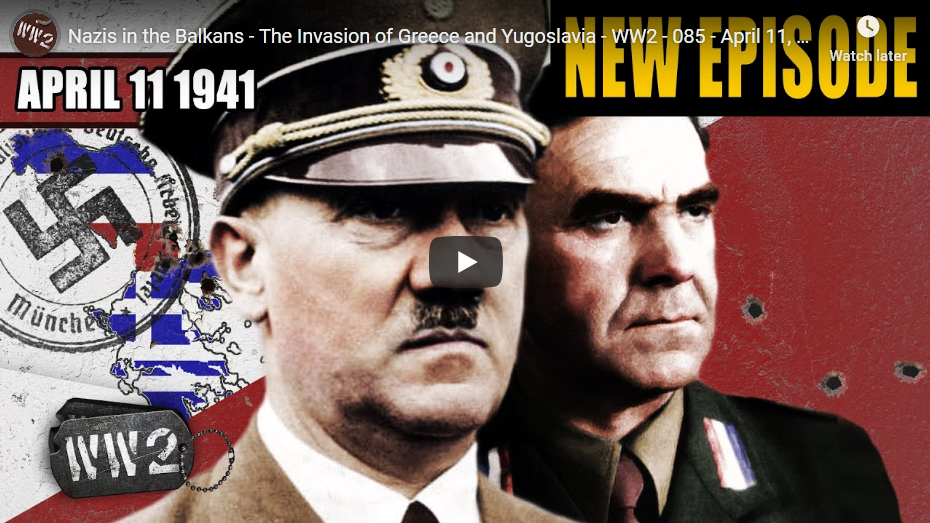
An Italian offensive into Greece is prepared, just as the Germans are preparing to also attack Greece via Bulgaria. Meanwhile, a daring and spectacular dash is made by the Nigerian army.

Join us on Patreon: https://www.patreon.com/TimeGhostHistory
Or join The TimeGhost Army directly at: https://timeghost.tv

Follow WW2 day by day on Instagram @World_war_two_realtime https://www.instagram.com/world_war_t…
Between 2 Wars: https://www.youtube.com/playlist?list…
Source list: http://bit.ly/WW2sources

Written and Hosted by: Indy Neidell
Produced and Directed by: Spartacus Olsson and Astrid Deinhard
Executive Producers: Bodo Rittenauer, Astrid Deinhard, Indy Neidell, Spartacus Olsson
Creative Producer: Joram Appel
Post-Production Director: Wieke Kapteijns
Research by: Indy Neidell
Edited by: Iryna Dulka
Map animations: Eastory (https://www.youtube.com/c/eastory)

Colorizations by:
– Julius Jääskeläinen – https://www.facebook.com/JJcolorization/
– Daniel Weiss
– History Colorizer M.B – https://www.facebook.com/mohamedbayou…

Sources:
– Bundesarchiv
– boat sound by bockelsound from freesound.org

Archive by Screenocean/Reuters https://www.screenocean.com.

A TimeGhost chronological documentary produced by OnLion Entertainment GmbH.

Irish War of Independence – Black and Tans vs. IRA Guerrillas I THE GREAT WAR 1920

Filed under: Britain, History, Military — Tags: , , , , , — Nicholas @ 04:00

The Great War
Published 14 Mar 2020

Sign up for Curiosity Stream and Nebula: https://curiositystream.com/thegreatwar

The movement for more Irish self determination had turned into a full out revolutionary movement by 1919. The British Empire was losing control over Ireland and by early 1920 was in a full out guerrilla war against the Irish Republican Army (IRA). To regain control more police forces were recruited with wide ranging authorities – and a lack of actual police training. With their mismatched equipment made from war supplies, they soon got the nickname “Black and Tans”.

» SUPPORT THE CHANNEL
Patreon: https://www.patreon.com/thegreatwar
Merchandise: https://shop.spreadshirt.de/thegreatwar/

» SOURCES

Bowen, Tom, “The Irish Underground and the War of Independence 1919-21” Journal of Contemporary History Vol. 8, No. 2 (Apr., 1973), pp. 3-23

Hopkinson, Michael, The Irish War of Independence, (Montreal & Kingston : McGill-Queen’s University Press, 2002)

Leeson, David, The Black and Tans: British Police and Auxiliaries in the Irish War of Independence, 1920-1921, (Oxford : Oxford University Press, 2011)

Lowe, W.J., “Who Were the Black-and-Tans”, History Ireland (Autumn 2004)

Townshend, Charles, The Republic: The Fight for Irish Independence 1918-1923, (London : Penguin Books, 2013)

» SOCIAL MEDIA
Instagram: https://instagram.com/the_great_war
Twitter: https://twitter.com/WW1_Series
Reddit: https://reddit.com/r/TheGreatWarChannel

»CREDITS
Presented by: Jesse Alexander
Written by: Mark Newton, Jesse Alexander
Director: Toni Steller & Florian Wittig
Director of Photography: Toni Steller
Sound: Toni Steller
Editing: Jose Gamez, Toni Steller
Mixing, Mastering & Sound Design: http://above-zero.com
Maps: Daniel Kogosov (https://www.patreon.com/Zalezsky)
Research by: Mark Newton
Fact checking: Florian Wittig

Channel Design: Alexander Clark
Original Logo: David van Stephold

A Mediakraft Networks Original Channel

Contains licensed material by getty images
All rights reserved – Real Time History GmbH 2020

M1918 BAR: America’s Walking Fire Assault Rifle

Filed under: History, Military, USA, Weapons, WW1 — Tags: , , , — Nicholas @ 02:00

Forgotten Weapons
Published 14 Oct 2017

Sold for $34,500 (transferrable).

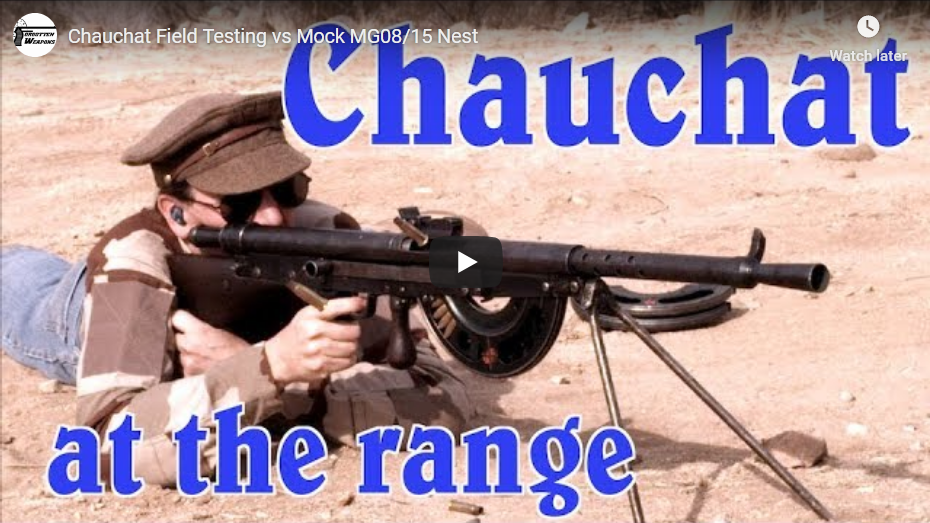
John Browning developed the Browning Automatic Rifle for use by American troops in World War One, taking inspiration from the other light automatic weapons in service including the Chauchat, Lewis, and MG08/15. Rather than being used as a light machine gun as we would understand it today, the BAR was an “automatic rifle”, intended to be used in much the same way as the Germans would use the Sturmgewehr in WWII. It would be fired in semiautomatic mode from the shoulder or hip while advancing on the enemy, using steady fire to keep them pinned down. Once troops broke into close contact, the gun could be switched to fully automatic to provide overwhelming firepower for the final assault on a position. While the walking fire from the hip was not particularly realistic in practice, the fully automatic firepower was a huge boon to the infantry. While it filled the game role as the Chauchat, the BAR was a much more refined weapon and much easier to use effectively.

The BAR was showed to the US Ordnance Department in 1917, and the first order for them was placed with Colt in July of 1917. In short order further contracts would be placed with Winchester and Marlin-Rockwell, although it would take many months to fabricate the production tooling and perfect the design for mass production. A few hand-fitted guns were ready in February 1918 for a public demonstration, but significant quantities were not being built until July of 1918.

These guns would be shipped to France for use by the AEF, but not actually put into combat service until the Meuse-Argonne offensive in late September of 1918, due to General Pershing’s desire to keep them secret from the Germans until a large number could be used at once. As a result, the guns saw only very limited use before the war ended on November 11th. In total 102,173 BARs would be built, about half of them being finished into 1919, after the armistice. They would go on to be changed and updated for use in World War Two, but that is a discussion for another day. This particular gun is an excellent example of an M1918 BAR in correct World War One configuration, which is a rare find today.

http://www.patreon.com/ForgottenWeapons

Cool Forgotten Weapons merch! http://shop.bbtv.com/collections/forg…

If you enjoy Forgotten Weapons, check out its sister channel, InRangeTV! http://www.youtube.com/InRangeTVShow

March 14, 2020

History Summarized: Ethiopia

Overly Sarcastic Productions
Published 13 Mar 2020

Ethiopian History gets started early and just keeps on going. From the dawn of humanity itself through the medieval period and into the modern day, the history of the kingdom at the end of the Blue Nile is full of surprises.

SOURCES & Further Reading: Harold Marcus A History of Ethiopia and John Jackson’s Ethiopia and the Origins of Civilization, see also Kenneth Vickery’s lecture “Ethiopia: Outpost of Christianity” and William Cook’s lecture “The Rock-Hewn Churches of Ethiopia” via The Great Courses.

This video was edited by Sophia Ricciardi AKA “Indigo”. https://www.sophiakricci.com/

Our content is intended for teenage audiences and up.

PATREON: https://www.Patreon.com/OSP

DISCORD: https://discord.gg/h3AqJPe

MERCH LINKS: https://www.redbubble.com/people/OSPY…

OUR WEBSITE: https://www.OverlySarcasticProductions.com
Find us on Twitter https://www.Twitter.com/OSPYouTube
Find us on Reddit https://www.Reddit.com/r/OSP/

The still-secret “settlement” between the federal government and five hereditary chiefs of the Wet’suwet’en

Filed under: Cancon, Government, History, Law, Politics — Tags: , , , , — Nicholas @ 03:00

Chris Selley points out some of the disturbing features of the as-yet-unrevealed agreement between Her Majesty’s Canadian government and five unelected First Nation chiefs that eventually got the railways running again:

“DSC02285” by Bengt 1955 is licensed under CC BY-NC 2.0

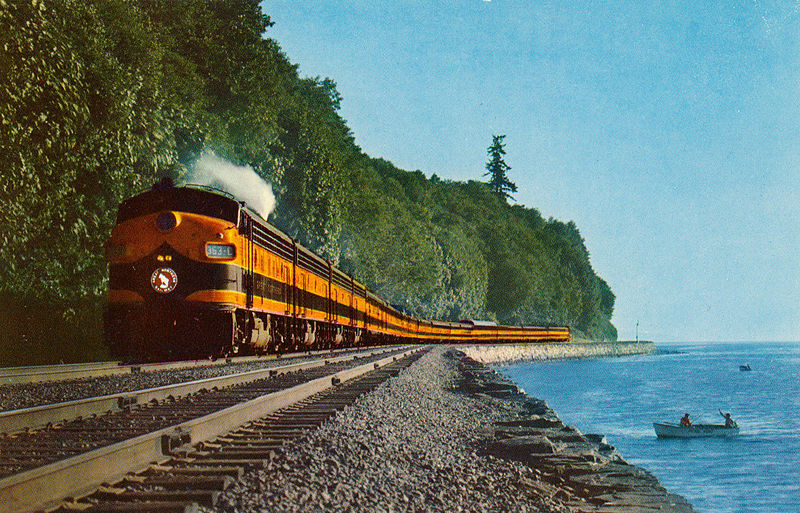
For starters, we still don’t know the details of the arrangement, struck earlier this month between Wet’suwet’en hereditary chiefs and federal and provincial government officials, that allowed for pipeline work to resume. Those details could well represent positive progress on establishing just what the Wet’suwet’en’s legal claim on their lands — affirmed by the Supreme Court in 1997 — really means. But did the government have any business negotiating with the chiefs in question in the first place?

Tait-Day doesn’t think so. The Office of the Hereditary Chiefs of the Wet’suwet’en, she told the committee, is “not accountable to the (Wet’suwet’en) nation.”

“By refusing to hear from elected councils, these governments have without merit prevented the most credible current governing voices from being heard,” she told the committee. “The Indian Act system must be reformed, but that does not invalidate the role of the elected councils. While imperfect, they continue to speak for the people until a better model is implemented.”

Even setting aside the exclusion of elected councils, the negotiations were of dubious legitimacy. They weren’t with the hereditary chiefs per se; rather, they were with the hereditary chiefs who oppose the pipeline. Not all do, and some support it — including Tait-Day, Gloria George and Darlene Glaim, founders of the Wet’suwet’en Matrilineal Coalition. For their apostasy, male chiefs simply stripped them of their titles. This is not in dispute: “We’ve stripped the names from three female hereditary chiefs for supporting the pipeline,” John Ridsdale, whose hereditary title is Chief Na’Moks, told APTN News in 2018. “A name is more important than money.”

Using the title of Chief Woos, Frank Alec has become the leading public face of the anti-pipeline hereditary chiefs. On his behalf, Canadians both Indigenous and non-Indigenous have shut down rail lines and blocked access to the B.C. legislature and marched in the streets. Until 2018, the title of Chief Woos belonged to Glaim. He took it from her precisely because she dared support the pipeline and the benefits that will flow from it to her people.

“By negotiating directly with (the Office of the Hereditary Chiefs of the Wet’suwet’en), Canada and British Columbia give legitimacy to a group of bullies and abusers of women,” Tait-Day told the committee. “We cannot be dictated to by a group of five guys.”

QotD: Apartheid

Filed under: Africa, History, Law, Quotations — Tags: , , , — Nicholas @ 01:00

To anyone who was exposed to its machinations — let alone directly affected by it, as most South African Blacks were — apartheid was truly evil: only the absence of extermination camps differentiated it from the Nazism of the 1940s. In actuality, Blacks couldn’t live or work in “White” areas except by permit, couldn’t own businesses in White areas, couldn’t be promoted past a certain point when they did work outside the “Black” areas, and were forcibly resettled into Black “homelands” without legal redress or the ability to resist. Social intercourse between Blacks and Whites were restricted, by law, to business interactions only — any kind of interracial sexual activity was legally classified as “immorality” and summarily banned, carrying appallingly-high penalties in the breach thereof. Crimes by Whites against Blacks carried penalties far more lenient — to the extent of semi-official toleration — than those by Blacks against Whites, which were severely punished. The education system favored White children over Black children and continued throughout life — to where “White” universities were ubiquitous but “Black” universities could be counted on one hand, with a couple fingers left over. (Lest anyone is offended by the comparison to Nazism, simply substitute “Jews” for “Blacks” and “Aryans” for “Whites”. That would have been Germany, from 1933 to 1945.)

So the disappearance of apartheid cannot be seen as anything other than a Good Thing.

Kim du Toit, “Tough Question, Simple Answer”, Splendid Isolation, 2019-12-05.

March 13, 2020

Fallschirmjäger – Germany’s Finest – WW2 Special Episode

Filed under: Germany, History, Military, WW2 — Tags: , , , , — Nicholas @ 06:00

World War Two
Published 12 Mar 2020

The Fallschirmjäger were Germany’s own paratrooper branch, designed to deal a swift and fatal blow behind the enemy’s lines. They were deployed with great success in Scandinavia and the Benelux, but they come too close to the sun when they attempt to invade Crete.

Join us on Patreon: https://www.patreon.com/TimeGhostHistory
Or join The TimeGhost Army directly at: https://timeghost.tv

Follow WW2 day by day on Instagram @World_war_two_realtime https://www.instagram.com/world_war_t…
Between 2 Wars: https://www.youtube.com/playlist?list…
Source list: http://bit.ly/WW2sources

Hosted by: Indy Neidell
Written by: Joram Appel and Izzy Wilson
Produced and Directed by: Spartacus Olsson and Astrid Deinhard
Executive Producers: Bodo Rittenauer, Astrid Deinhard, Indy Neidell, Spartacus Olsson
Creative Producer: Joram Appel
Post-Production Director: Wieke Kapteijns
Research by: Joram Appel and Izzy Wilson
Edited by: Mikołaj Cackowski
Map animations: Eastory (https://www.youtube.com/c/eastory)
Sound design by: Marek Kaminski

Colorizations by:
Julius Jääskeläinen – https://www.facebook.com/JJcolorization/
Ruffneck88 – https://commons.wikimedia.org/wiki/Fi…

Sources:
IWM E 3066E

Soundtracks from the Epidemic Sound:
Rannar Sillard – “March Of The Brave 4”
Reynard Seidel – “Deflection”
Rannar Sillard – “Easy Target”
Gunnar Johnsen – “Not Safe Yet”
Johannes Bornlof – “Last Man Standing 3”
Fabien Tell – “Last Point of Safe Return”

Archive by Screenocean/Reuters https://www.screenocean.com.

A TimeGhost chronological documentary produced by OnLion Entertainment GmbH.

From the comments:

World War Two
1 day ago
This is the first of many proper specials that we want to do to add on the weekly World War Two episodes, the War Against Humanity series, the Biographies, our Out of the Foxholes Q&A series and our upcoming On the Homefront sub-series. In these specials, we’ll cover any additional topics in depth — think about hardware, tactics, special forces, bills or decryption systems. We’re interested to hear your suggestions! What do you want to see covered in an upcoming special epsiode?

“The Price of a Mile” – The Battle of Passchendaele – Sabaton History 058 [Official]

Filed under: Britain, Germany, History, Media, Military, WW1 — Tags: , , , , — Nicholas @ 04:00

Sabaton History
Published 12 Mar 2020

So tell me what’s the price of a mile? The Battle of Passchendaele in 1917 is often remembered as a dismal and dreadful campaign. Fighting over endless mud, waterlogged shell-holes and unrecognizable, bombed out ground, the battle became a slog where everybody was just miserable. Hundreds of thousands of men became casualties for the advance of a handful of miles.

The Art of War online: https://sites.ualberta.ca/~enoch/Read… [PDF]

Support Sabaton History on Patreon: https://www.patreon.com/sabatonhistory

Listen to “Price of a Mile” on the album The Art of War:
CD: http://bit.ly/TheArtOfWarStore
Spotify: http://bit.ly/TheArtOfWarSpotify
Apple Music: http://bit.ly/TheArtOfWarAppleMusic
iTunes: http://bit.ly/TheArtOfWariTunes
Amazon: http://bit.ly/TheArtOfWarAmz
Google Play: http://bit.ly/TheArtOfWarGooglePlay

Check out the trailer for Sabaton’s new album The Great War right here: https://www.youtube.com/watch?v=HCZP1…

Listen to Sabaton on Spotify: http://smarturl.it/SabatonSpotify
Official Sabaton Merchandise Shop: http://bit.ly/SabatonOfficialShop

Hosted by: Indy Neidell
Written by: Markus Linke and Indy Neidell
Directed by: Astrid Deinhard and Wieke Kapteijns
Produced by: Pär Sundström, Astrid Deinhard and Spartacus Olsson
Creative Producer: Joram Appel
Executive Producers: Pär Sundström, Joakim Broden, Tomas Sunmo, Indy Neidell, Astrid Deinhard, and Spartacus Olsson
Post-Production Director: Wieke Kapteijns
Edited by: Karolina Kosmowska
Sound Editing by: Marek Kaminski
Maps by: Eastory – https://www.youtube.com/c/eastory

Archive by: Reuters/Screenocean https://www.screenocean.com
Music by Sabaton.

Sources:
– Imperial War Museum: Q 20705;Q 45462;Q 5989;6Q 2890;Q 3117 Q 3008;Q 2712;Q 23779;Q 7806;Q 5937;Q 5726;Q 2902;Q 2713;Q 57299;Q 57247;Q 45390;Q 51569;Q 1426;Q 540;Q 17868;Q 50237;Q 47725;Q 45382;Q 2639;Q 29088;Q 42251;Q 5714;Q 2868;Q 5938;Q_005935;Q 2625;Q 5723;Q 2627;Q 29090;Q 52862;Q 88098;Q 88017;Q 2706;Q 5936;Q 5904;Q 5940;Q 5941;Q 5902;Q 47741;Q 3001;Q 5947;Q 6458;Q 3252;Q 29088;Q 5767;Q 45461;Q 42251;Q 2682;Q 20705;Q 6346;Q 6223;Q 11688;Q 2708.;Q 47719;Q 3103;Q 2679;;Q 2640;Q 2858;Q 2735;Q 2707;Q 2757;Q 5901;Q 3006.;Q 5904;Q 5928;Q 3104;Q5903;Q 29089;Q 5865;Q 11668;Q 3002;Q 2978;Q 3121;Q5706;Q 47741;Q 2755;Q 55558;Q 3012;Q 5874;Q 5888;Q 7806;Q 6327;Q 54408;Q 2866;Q 56567;Q 6047;Q 6049;Q 3252; 3140;Q 2868;Q 61034;Q 42250;Q 3025;Q 7814.;Q 2893;Q 2737;E00777;Q 3029;Q 2763;Q 5773;Q 2756;Q 47741;Q 45369;Q 2707;Q 6327;Q 5902.;Q 3006;Q 5871;Q 5733; CO 1757;CO 2241;CO 1757;CO 2252;CO 2241;CO 1757;CO 2246;CO 2252;CO 1763;CO 2241; E(AUS) 941;(E(AUS) 719);E(AUS) 1233.;(E(AUS) 719),
– Art IWM: ART 1921; ART 1150,
– The Australian War Memorial: E00693; E04678; E01912; E00874; E00807; E00874; E01229; A02653; E00927
– National Army Museum: 1952-01-33-55-391; 1985-04-48-412; 2001-02-256-96;1997-12-75-81; 2010-01-56-40; 1994-12-31-1; 1978-11-157-24-36;
1965-10-209-27; 1972-08-67-1-40; 1917-07-31,
– Canadian War Museum: CWM 19930013-511;CWM 19890222-001;CWM 19930013-464;CWM 19930013-511;CWM 19710261-0093.;
165-BO-1503,
– Library and Archives Canada: 040139

An OnLion Entertainment GmbH and Raging Beaver Publishing AB co-Production.

© Raging Beaver Publishing AB, 2019 – all rights reserved.

QotD: Rommel’s generalship

Filed under: Africa, Germany, History, Military, Quotations, WW2 — Tags: , , , , — Nicholas @ 01:00

Yes, the reader might respond, but surely we are on firmer ground with regard to [Rommel’s] military skill! After all, no less a figure than British Prime Minister Winston Churchill called him “a great general” on the floor of the House of Commons. Even here, it is possible to make a counterargument. Rommel’s daring exploits at the head of the Afrika Korps (later enlarged and renamed Panzerarmee Afrika) were exciting, to be sure, but many officers in his own army reckoned them as an ultimately valueless sideshow. His disinterest in the dreary science of logistics, his “bias for action,” his tendency to fly off wherever the fighting was hottest are qualities that may make for an exciting movie, but they are problematic in an army commander under modern conditions, and they all contributed materially to the disaster that ultimately befell him and his army in the desert.

[…]

When Rommel arrived in Africa, he brought with him a fully realized art of war. He’d won a Pour le Mérite (the famed “Blue Max“) for a series of nail-biting mountain exploits in the 1917 Caporetto campaign; he had been a very popular tactical instructor at the Dresden Infantry School between the wars; he had commanded one of the army’s precious Panzer divisions (the 7th) during the 1940 campaign in the West. In France, Rommel had behaved more like an 18th century hussar cut loose on a raiding mission than a divisional commander. He led from the front, braved enemy fire on numerous occasions, and turned off his radio from time to time rather than risk receiving orders to rein himself in. He drove forward so rapidly that the 7th Panzer became known as the “ghost division” for its tendency to drop off the situation maps and reappear where least expected. There were many in the German high command, including the chief of the General Staff Franz Halder, who didn’t much appreciate Rommel running amok, but as one analyst put it, “it was impossible to court martial such a successful general, so Rommel instead got the Ritterkreuz” [the Knight’s Cross of the Iron Cross].

Robert Citino, “Drive to Nowhere: The Myth of the Afrika Korps, 1941-43″, The National WWII Museum, 2012. (Originally published in MHQ, Summer 2012).

March 12, 2020

WW2 On The Homefront Starts next week!

Filed under: Asia, Europe, History, Pacific, USA, WW2 — Tags: — Nicholas @ 06:00

World War Two
Published 11 Mar 2020

Next week our monthly new sub series On The Homefront premieres hosted by Anna Deinhard. This is why…

Join us on Patreon: https://www.patreon.com/TimeGhostHistory
Or join The TimeGhost Army directly at: https://timeghost.tv

Follow WW2 day by day on Instagram @World_war_two_realtime https://www.instagram.com/world_war_t…
Between 2 Wars: https://www.youtube.com/playlist?list…
Source list: http://bit.ly/WW2sources

Hosted by: Anna Deinhard
Produced and Directed by: Spartacus Olsson and Astrid Deinhard
Executive Producers: Bodo Rittenauer, Astrid Deinhard, Indy Neidell, Spartacus Olsson
Edited by: Anna Deinhard and Spartacus Olsson

Archive by Screenocean/Reuters https://www.screenocean.com.

A TimeGhost chronological documentary produced by OnLion Entertainment GmbH.

The Road to the Holocaust – Kristallnacht | BETWEEN 2 WARS I 1938 Part 3 of 4

TimeGhost History
Published 11 Mar 2020

After years of gradually increasing persecution, the Nazis institute a nationwide pogrom on the night of November 9, 1938. It will signal the end of Jewish life in Germany.

Join us on Patreon: https://www.patreon.com/TimeGhostHistory

Hosted by: Indy Neidell
Written by: Francis van Berkel
Directed by: Spartacus Olsson and Astrid Deinhard
Executive Producers: Bodo Rittenauer, Astrid Deinhard, Indy Neidell, Spartacus Olsson
Creative Producer: Joram Appel
Post-Production Director: Wieke Kapteijns
Research by: Francis van Berkel
Edited by: Daniel Weiss
Sound design: Marek Kamiński

Sources:
Bundesarchiv_Bild:
102-04051A, 102-14469, 102-16475, 119-03-16-06,
119-04-29-36, 119-04-29-38, 119-2671-07, 119-5592-03A,
133-075,_Worms, 146-1970-041-46, 146-1970-061-65,
146-1979-046-22, 146-1982-174-26, 146-1982-174-27,
146-1984-092-26, 146-1988-078-07, 146-1989-071-05,
152-64-25A,_Wien, 152-64-29A,_Wien, 152-65-04,_Wien,
183-1982-0809-502, 183-1987-0703-514, 183-2006-0429-502,
183-R99542, 183-S21437, 183-S72707, 183-86686-0008,

From the Noun Project:
noun_Government by Adrien Coquet,
noun_jail by Strongicon,
noun_Death by Icon Island,

Colorizations by:
– Daniel Weiss

Soundtracks from Epidemic Sound:
– “The Inspector 4” – Johannes Bornlöf
– “Not Safe Yet” – Gunnar Johnsen
– “Last Point of Safe Return” – Fabien Tell
– “Guilty Shadows 4” – Andreas Jamsheree
– “Imperious” – Bonnie Grace
– “Death And Glory 1” – Johannes Bornlöf
– “Deviation In Time” – Johannes Bornlof
– “Dark Beginning” – Johan Hynynen
– “An Ancient Dome” – Trabant 33
– “Death And Glory 3” – Johannes Bornlöf
– “First Responders” – Skrya

A TimeGhost chronological documentary produced by OnLion Entertainment GmbH.

« Newer PostsOlder Posts »

Powered by WordPress