
Published on 1 Apr 2016
David Willey, The Tank Museum Curator and co-author of the Tiger Tank Owner’s Workshop Manual, presents this Tank Chat on the subject of the most famous tank in the Bovington collection – and perhaps the world – the German Tiger 1 from the Second World War, also known as Tiger 131.
August 29, 2017
Tank Chats #17 Tiger I
Comments Off on Tank Chats #17 Tiger I
August 28, 2017
Great Northern War – II: A Good Plan – Extra History
Published on 26 Aug 2017
The wrath of Charles XII was now aimed directly at Poland-Lithuania. But their leader had a plan! ..A terrible plan.
Augustus the Strong was determined to prove his might by defeated Charles XII on the battlefield. He gathered his Polish-Lithuanian forces, met the Swedes, and proceded to… lose. And lose. And lose. Then he got deposed and started a civil war which of course he also lost.
Comments Off on Great Northern War – II: A Good Plan – Extra History
Heavy Machine Guns of the Great War
Published on 14 Aug 2015
Check out The Great War’s complete playlist here for your easy binge-watching enjoyment:
https://www.youtube.com/playlist?list=PLB2vhKMBjSxMK8YelHj6VS6w3KxuKsMvT
I have been really enjoying The Great War series, so I figured I ought to take advantage of an opportunity to look at several WWI heavy machine guns side by side. This is a video to give some historical context to the guns, and not a technical breakdown of exactly how they work (that will come later). These really were the epitome of industrialized warfare, and they wrought horrendous destruction on armies of the Great War.
The guns covered here are the German MG08, British Vickers, and French Hotchkiss 1914.
Hammer Prices:
Vickers: $20,000
MG08: $11,000
Hotchkiss 1914: $7,000Other heavies used in the war include the Austrian Schwarzlose 1907/12, the Russian 1905 and 1910 Maxims, the Italian Fiat-Revelli, and the American Browning 1895. The book I was quoting from towards the end was Dolf Goldsmith’s unmatched work on the Maxim, The Devil’s Paintbrush.
Comments Off on Heavy Machine Guns of the Great War
August 26, 2017
Inside A British Mark IV WW1 Tank I THE GREAT WAR Special
Uploaded on 25 Aug 2017
Check out The Tank Museum on YouTube: http://youtube.com/thetankmuseum
Indy and Tank Museum curator David Willey take a look at the British Mark IV tank. Over 1000 of these tanks were built and they are an iconic symbol of early tank warfare during World War 1. We discuss crew conditions and other important details in this episode.
Comments Off on Inside A British Mark IV WW1 Tank I THE GREAT WAR Special
When is an archaeological artifact merely “recyclable”?
In Sweden, apparently, it’s actually becoming a common practice to discard “excess” metal artifacts for literal recycling:
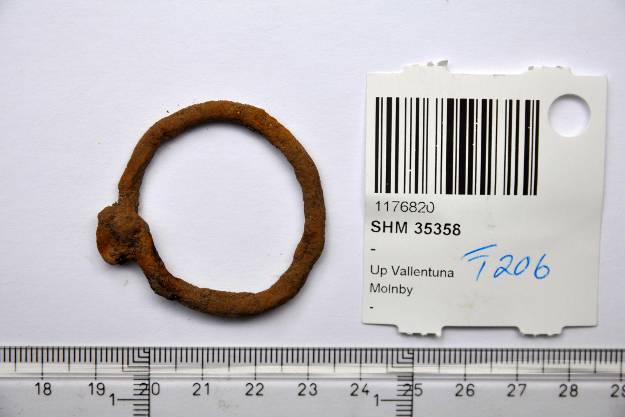
One of the amulet rings from the Iron Age that archaeologists are recycling. Previously, this type of object was saved, says archaeologist Johan Runer.
(Photo from Svenska Dagbladet, caption from Never Yet Melted)
Rough translation from Swedish language article in Svenska Dagbladet:
While the debate about burning books is raging in the media, Swedish archaeologists throw away amulet rings and other ancient discoveries. It feels wrong and sad to destroy thousands of years of ritual arts and crafts, and I’m not alone in feeling so.
“What you do is destroy our history! Says Johan Runer, archaeologist at Stockholm County Museum.
Amulet rings from the Iron Age, like Viking weights and coins, belong to a category of objects that, as far as Runer knows, were previously always saved.
He tried to raise the alarm in an article in the journal Popular Archeology (No. 4/2016), describing how arbitrary thinning occurs. Especially in archeological studies before construction and road projects, the focus is on quickly and cheaply removing the heritage so that the machine tools can proceed.
He works himself in these kinds of excavations. Nobody working in field archeology wants to get a reputation as an uncooperative “find-fanatic” but now he cannot be quiet any longer.
“It’s quite crazy, but this field operates in the marketplace. We are doing business,” says Runer.
Often, especially in the case of minor excavations, there is a standing order from the county administrative boards that as few discoveries as possible should be taken.
If you think it seems unlikely, I recommend reading the National Archives Office’s open archive, such as report 2016: 38. An archaeological preamble of settlement of bronze and iron age before reconstruction by Flädie on the E6 outside Lund.
In the finds catalog, coins, knives, a tin ornament, a ring and a weight from the Viking Age or early Middle Ages have been placed in the column “Weeded Out”.
Comments Off on When is an archaeological artifact merely “recyclable”?
August 25, 2017
The 2nd Battle Of Verdun – Lost Opportunities On The Isonzo River I THE GREAT WAR Week 161
Published on 24 Aug 2017
The 11th Battle of the Isonzo river continued this week and the Italians manage to break through parts of the Austro-Hungarian lines, they hesitate to exploit the breakthrough though and the opportunity is lost. Meanwhile the French break through the German lines at Verdun and Herbert Plumer comes up with a plan to defeat the German Hindenburg Line.
Comments Off on The 2nd Battle Of Verdun – Lost Opportunities On The Isonzo River I THE GREAT WAR Week 161
Great Northern War – I: When Sweden Ruled the World – Extra History
Published on 19 Aug 2017
A young boy king had inherited the crown of the Swedish Empire, and his neighbors saw an opportunity to attack. To their surprise, young Charles XII of Sweden turned out to be a fearsome opponent who quickly repelled their assaults – and then sought revenge.
Comments Off on Great Northern War – I: When Sweden Ruled the World – Extra History
The End of the Bronze Age
Published on 28 Sep 2015
Around 1200 BC, the countries of the Eastern Mediterranean went into major cultural decline: The Late Bronze Age came to a sudden end.
Kingdoms that had wielded immense power completely disappeared. For several centuries after this, agriculture was people’s only means of subsistence. These were pivotal changes in history. Explaining them remains one of the big challenges in Mediterranean archaeology.
In this video, the foundation Luwian Studies presents a comprehensive and plausible scenario of what might have happened.
Comments Off on The End of the Bronze Age
August 24, 2017
The Story of Western Philosophy
Published on 26 May 2017
Relevant mystery link: https://youtu.be/myc7eHGg5y4
If you notice any factual errors in this week’s video, please just bear in mind that life is ultimately meaningless in the first place.
Comments Off on The Story of Western Philosophy
August 23, 2017
On the most recent figures, people do want to pay more tax … just not many of ’em, and not very much
Last month, I posted an item on the Norwegian experiment in encouraging taxpayers to pay more than they owed in national tax. More recently, Tim Worstall reports an uptick in UK taxpayers voluntarily sending Her Majesty’s government more than they owed:
… the greater publicity of this ability to pay more has indeed led to more people making those extra voluntary payments. Further, to a more regular reporting of how many do so:
Jeremy Corbyn’s claim that many people want to pay “more tax” to clear the national debt or fund public services has been undermined by official figures.
Figures disclosed by the Government show that just 15 taxpayers made financial gifts worth less than £200,000 to the Government over the past two years.
15 people is of course more than 5.
The Debt Management Office said that £180,393 in 2016/17 and £14,558 in 2015/16 was made in these voluntary payments.
Most of this came from a single bequest of £177,700 in the last financial year. The other donated or bequeathed by the other 14 people were for relatively trivial sums. Someone gave 1p, another gave 3p and a third person handed over £1.84 to the Government.
Although not that much more then if we’re honest about it.
[…]
At which point something economists are most insistent upon. What people say is nowhere near as good a guide to their beliefs as what people do is. Expressed preferences are all very well but the truth comes from revealed preferences. Many might say they will pay higher taxes in order to gain more government. Very few do, so few that we can dismiss the expressed wish as being untrue.
It could of course be true that many would like other people to pay more in taxes, it could even be true that some to many would happily pay more if others did as well. But those are different things, the argument that people wish to pay higher taxes themselves and themselves alone has been tested and been found to be wrong–simply because when the opportunity is made available people don’t.
Once again, for my Canadian readers, it’s totally legal and acceptable to pay Her Majesty in right of Canada any additional monies you might feel are appropriate…
Comments Off on On the most recent figures, people do want to pay more tax … just not many of ’em, and not very much
One definite success from the Dieppe raid
The allied attack on Dieppe in August, 1942 was an operational failure: nearly 60% of the raiding force were killed, wounded or captured and the tactical objectives in the harbour area were not achieved. I’ve mentioned the speculations on an Enigma side-operation (which does not seem to be given credence by most historians), using the main Canadian attack as cover for an attempt to snatch the latest German encryption device from one or more high-security locations within the target area. A second side-mission was also conducted to capture one of the newest German radar stations at Pourville, just down the coast from Dieppe:
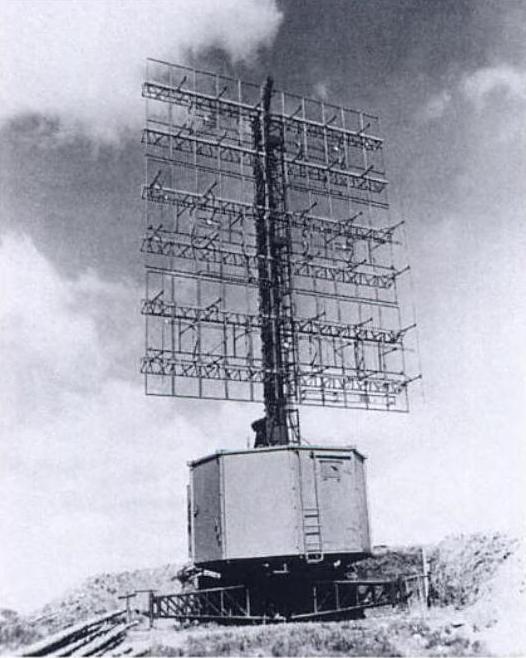
Aerial reconnaissance photos indicated that one of these new Freya radar sets had been installed at Pourville-sur-Mer, near Dieppe. A military raid on Dieppe, to test British and Canadian plans for an amphibious invasion, was already being planned. Senior officers immediately added a sub-plan to the Dieppe raid: a small force would be detached to attack the Pourville radar station. There, a radar expert would dismantle the station’s vital equipment and transport it back to the UK for analysis.
Nissenthall, a Jewish cockney who had a lifelong fascination with electronics and radio technology, had joined the Air Force as an apprentice in 1936. By the outbreak of the war in 1939 he was assigned to RAF radio direction finding stations (RDF, the short-lived original term for radar) and rapidly built up a reputation as a competent and technically skilled operator. Before the war he had also worked directly with Robert Watson-Watt, widely regarded today as the father of radar.A German FuMG 401 “Freya LZ” radar station of the type installed at Pourville. (US National Archives and Records Administration image, via Wikimedia)
[…]
More than 5,000 soldiers of the First Canadian Division set off from the south coast of England in the early hours of 19 August 1942. Embedded with A Company of the South Saskatchewan Regiment, Nissenthall’s 11-man bodyguard landed on French soil – but on the wrong side of the Scie River from the radar station.
After finding their way to their intended starting point, the team ran into stiff German resistance. Casualties soon mounted up as they probed the area, looking for a way into the radar station.
Thanks to the Bruneval raid six months previously, the Germans had beefed up their defences around coastal radar stations. This, combined with the naivete of the Allied planners back in Britain, had left the Canadians exposed and vulnerable. Though Nissenthall’s team had just about reached the radar station, there was no hope they would be able to get inside it, much less examine it, dismantle it and take away the most valuable parts of the Freya set inside.
Comments Off on One definite success from the Dieppe raid
August 22, 2017
Romanian Guns of WW1 I THE GREAT WAR Special feat. C&Rsenal
Published on 21 Aug 2017
Othais’ episode about the Romanian Mannlicher: https://www.youtube.com/watch?v=MhuuFnaCMOw
In this special episode, Indy and Othais talk about the Romanian rifles and pistols of WW1, namely the Mannlicher M1893 and a very odd Spanish revolver that still puzzles Othais.
Comments Off on Romanian Guns of WW1 I THE GREAT WAR Special feat. C&Rsenal
The Bronze Age Collapse – Lies – Extra History
Published on 12 Aug 2017
How did the Bronze Age Collapse affect civilizations other than the four discussed in our series? When trade fell apart, why didn’t those who relied on bronze switch to forging with other metals? James and Soraya look back on these questions on Lies!
Comments Off on The Bronze Age Collapse – Lies – Extra History
How to Pronounce German Ship Names – World of Warships & Historical Background
Published on 8 Aug 2017
Pronunciation of German ship names from World of Warships with some background information on the person and location.
Military History Visualized provides a series of short narrative and visual presentations like documentaries based on academic literature or sometimes primary sources. Videos are intended as introduction to military history, but also contain a lot of details for history buffs. Since the aim is to keep the episodes short and comprehensive some details are often cut.
Comments Off on How to Pronounce German Ship Names – World of Warships & Historical Background
August 21, 2017
Top Five Tanks – Indy Neidell
Published on 11 Aug 2017
For the fourth in our Top 5 series, Great War Channel presenter Indy Neidell came to The Tank Museum to share his 5 favourite tanks. https://www.youtube.com/TheGreatWar
It’s all about opinions, so please feel free to agree or disagree in the comments below.
Whose Top 5 would you like to see next?
Comments Off on Top Five Tanks – Indy Neidell


